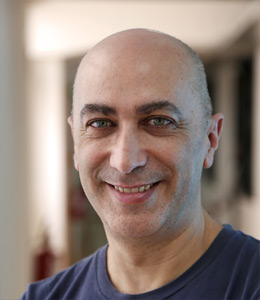
Gabriele Cocco is an Associate Professor of Germanic Philology at the Department of Foreign Languages, Literatures and Cultures at the University of Bergamo. He serves as the Rector's Delegate for Relations with Students, reflecting his administrative engagement. Primary research areas: Medieval Germanic traditions, Old English Christian literature, and Wolfram von Eschenbach's courtly poetry. Teaching: Courses on Germanic Philology, Material Culture in the Germanic Middle Ages, and Intercultural Heritage. Key publication trends: Focus on translation strategies (e.g., Minnesänger, Old English texts) and interdisciplinary analysis of medieval works.
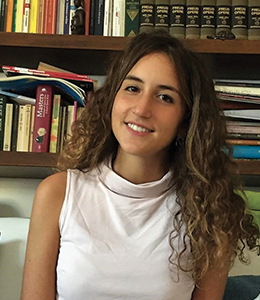
Davide Checchi is a Research Fellow at the University of Bergamo , Department of Languages, Literatures and Foreign Cultures. He holds a PhD in Romance Philology from Scuola Normale Superiore - Italian Institute of Human Sciences in Naples (2015) and graduated summa cum laude in Modern Philology from the University of Pavia (2011). His work bridges philology, metrics, and digital humanities, with a focus on medieval textual culture and Arthurian traditions. Key research areas include: Romance Philology Early Italian Lyric Poetry Manuscript Transmission Ars Nova Project (ERC-funded) Arthurian Cycles in Prose His recent publications analyze the interplay between poetic forms and metrical conventions, with a particular emphasis on Sicilian rhyme and virtual vowels. Awards include the Aldo Rossi Prize (2016) and Marco Praloran Fellowship (2018–2019) . Currently, he teaches courses in Romance Philology and Medieval Italian Literature at the University of Bergamo. Scientific Awards: Aldo Rossi Prize (2016) Marco Praloran Fellowship (2018–2019) Grants and mentorship roles include participation in the PRIN 2015 project COVO (Corpus of Original Italian Vocabulary) and editorial contributions to the European ArsNova project. He has held visiting positions at the University of Lausanne and University of Liège.
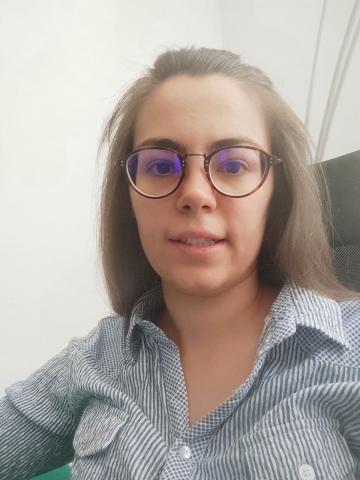
Roberta Grassi serves as an Associate Professor in the Department of Foreign Languages, Literatures and Cultures at the University of Bergamo, teaching courses across multiple departments including Modern Foreign Language Teaching, Fundamentals of Language Teaching, Institutions of Linguistics, and English Language Laboratory V for Primary Education Sciences. Her research centers on multilingual educational practices, with particular expertise in translanguaging phenomena in academic contexts. Professor Grassi employs qualitative case study methodologies to investigate how multilingual students leverage their full linguistic repertoires during collaborative writing tasks and classroom interactions. Her work documents significant patterns in language acquisition processes within both primary school and university settings. Translanguaging in academic writing contexts Corrective feedback mechanisms in bilingual classrooms Professional development needs of EMI lecturers Language acquisition in multilingual primary schools Integrated content and language teaching approaches Teacher cognition regarding language pedagogy Analysis of her publication trajectory reveals consistent focus on practical applications of language teaching theories, particularly examining how translanguaging practices support academic success for international students. Her longitudinal studies tracking EMI lecturers' perceived needs before and after specialized training have documented important shifts in instructors' confidence and competence when delivering content courses in English. Professor Grassi's teaching philosophy emphasizes integrated content and language instruction, with specific attention to developing students' metalinguistic awareness and professional language skills for teaching contexts. Her courses implement methodologies including PPP, task-based learning, and CLIL modules while minimizing unnecessary L1-L2 alternation to maximize language exposure.
Ekaterina Neretina serves as an Assistant Professor in the Department of Accounting at Bocconi University, actively teaching for the 2025/2026 academic year. Her course assignments include: NLP AND MACHINE LEARNING FOR BUSINESS DECISIONS (Course code: 20985) FINANCIAL ACCOUNTING - MODULE 2 (Course code: 30693) Her research integrates computational methodologies with core accounting principles, focusing on: Financial Accounting frameworks Machine Learning applications in business contexts Natural Language Processing for decision support systems Quantitative Business Analytics techniques No scientific awards are documented in the available institutional records. Information regarding student supervision, research grants, laboratory affiliations, or collaborative teams is not provided in the source material, though her course development suggests engagement with data-driven business education initiatives.
Aldo Gangemi is a Full Professor at the University of Bologna and Director of the Institute for Cognitive Sciences and Technologies (ISTC) at the Italian National Research Council (CNR). He co-founded the Semantic Technology Lab (STLab) in 2008 and currently coordinates the Horizon 2020 SPICE project. His academic career spans interdisciplinary research at the intersection of semantic technologies, cognitive science, and data science. Affiliations: University of Bologna, CNR-ISTC, IMT School for Advanced Studies Lucca (Board of Directors) Research Interests: Semantic Technologies integrating Knowledge Engineering, Web Science, Cognitive Science, and NLP. Applications span Cultural Heritage, Robotics, Medicine, Law, eGovernment, Agriculture, and Business. His theoretical focus includes hybrid symbolic/sub-symbolic methods for knowledge pattern representation and discovery across data, ontologies, language, and cognition. Scientific Leadership: He has served as Editor-in-Chief or editorial board member for journals like Semantic Web and Web Semantics , chaired major conferences (EKAW2008, WWW2015, ESWC2018/9), and coordinated 8 EU projects.
Gaia Gambarelli is a PhD student and Postdoctoral Researcher at the University of Bologna, affiliated with the Department of Classical Philology and Italian Studies (FICLIT). She earned a Master’s degree in March 2019 in Italianistica, Scienze Linguistiche e Culture Letterarie Europee with a focus on Computational Linguistics. Her current research centers on protection of Sensitive Data through textual identification , and she works concurrently as a conversational agent expert at Ellysse srl. Her academic and professional work bridges Digital Humanities and Computational Linguistics , emphasizing data privacy and textual analysis in interdisciplinary contexts.
Misael MONGIOVI' serves as an Associate Professor of Computer Science (INFO-01/A) at the Department of Mathematics and Computer Science (DMI) of the University of Catania. His academic responsibilities encompass both teaching and research activities in computer science disciplines. His research interests include: Natural Language Processing Programming Languages Artificial Intelligence Computer Science Education Software Engineering Machine Learning Professor MONGIOVI' teaches core computer science courses including Programming II and Natural Language Processing across multiple student channels (A-E, F-N, O-Z). His teaching methodology combines theoretical instruction with practical laboratory sessions, as evidenced by the numerous written and practical examinations he administers in facilities like the Archimede laboratory. He maintains regular office hours in room 346 on Tuesdays and Thursdays from 10:00 to 11:00, requiring students to contact him by email in advance. He actively serves as an academic tutor for undergraduate students, organizing initial meetings with freshmen identified by enrollment numbers to provide academic guidance. His departmental involvement extends to coordinating tutoring activities for Programming II, with dedicated communication channels including a Telegram group for student support.
Marco Brambilla is a Full Professor of Computer Science and Engineering at Politecnico di Milano, Italy. He leads the Data Science Lab within the DEIB (Department of Electronics, Information and Bioengineering) and serves as director of the Computer Science and Engineering B.Sc. and M.Sc. curricula at the university. His research focuses on AI Explainability and Transparency , Web Science , Big Data Analysis , Social Media Analytics , and Model-driven Development . He is the co-inventor of the Interaction Flow Modeling Language (IFML) standard by the OMG and holds 2 patents on crowdsourcing and multi-domain search. His recent scholarly work demonstrates expertise across multiple domains of computer science, with particular emphasis on graph-based RAG architectures for energy efficiency, human-AI interaction studies, and interpretable network visualizations for CNN-based image classification. His publications show a consistent focus on practical applications of theoretical computer science concepts. Co-inventor of IFML standard by OMG 2 patents on crowdsourcing and multi-domain search GSE Academic Award for Excellence for correlating twitter sentiment analysis and stock price variations Author of multiple books including Model Driven Engineering in Practice , Web Information Retrieval , and Model-Driven UI Engineering of Web and Mobile Apps with IFML Professor Brambilla has been involved in the creation of four startups: WebRatio, Servitly, Fluxedo, and Quantia. He teaches Enterprise ICT Architectures, Systems and Methods for Big and Unstructured Data, Web Science, Digital Innovation Lab, and Model-driven Engineering courses. His Data Science Lab at Politecnico di Milano drives research in multiple cutting-edge areas of computer science and AI.
Burcu Sayin Günel serves as a Research Fellow at the Department of Information Engineering and Computer Science, University of Trento, where she conducts cutting-edge research at the intersection of artificial intelligence and real-world critical systems. Her work bridges theoretical machine learning with practical implementations in high-stakes environments requiring human oversight. Her research portfolio centers on: Value-aware and cost-sensitive machine learning frameworks Human-AI collaboration mechanisms for medical diagnostics Safety-critical integration of ML in cyber-physical infrastructure Hybrid intelligence systems combining human cognition with algorithmic processing Active learning optimization for resource-constrained scenarios Economic valuation of machine learning models Analysis of her 2021-2025 publications reveals a consistent trajectory toward making AI systems more reliable, economically viable, and human-compatible. Key contributions include novel methodologies for prediction rejection in critical CPS, collaborative diagnostic tools like MedSyn for physician-AI teams, and value-based active learning frameworks that optimize data acquisition costs. Her work increasingly addresses medical domain challenges while maintaining strong foundations in cyber-physical systems safety. No scientific awards, grant funding details, or student supervision activities were documented in the available materials. Similarly, no specific laboratory affiliations or team leadership roles were mentioned within the provided institutional context.
Emanuele Castano is a Professor at the University of Trento, affiliated with both the Department of Sociology and Social Research and the Department of Psychology and Cognitive Sciences. His research bridges social psychology with cognitive science, focusing on the interplay between fictional narratives and social cognition. Key research themes include theory of mind, emotion recognition, and affective computing Active in experimental psychology and psycholinguistics Develops datasets for facial expression analysis Recent publications demonstrate a strong focus on: How fictional language enhances emotional intelligence Intergroup dynamics during global crises (e.g., pandemic contexts) Ecological approaches to self-perception and agency Computational methods in emotion analysis He maintains active collaborations across disciplines, including computer science (ACM publications) and cognitive neuroscience (Perception journal), while preserving commitment to open-access research through IRIS institutional repository.
Michela Quadrini is an Assistant Professor at the University of Camerino with expertise spanning Bioinformatics , Computational Biology , and Graph Neural Networks . Her academic work focuses on RNA structure analysis, human activity recognition, and formal methods for collective adaptive systems. Research Interests include: RNA pseudoknots comparison and classification Machine learning applications in biomedical signal processing Spatial logics for complex system modeling Protein-protein interaction site prediction Ontology-based frameworks for activity recognition Publications demonstrate methodological innovation across: RNA structure alignment and translation tools (TARNAS) Graph neural network programming languages (μG) Stress detection from wearable sensor data Formal verification of collective systems Immunoinformatics feature engineering Technical Expertise combines computational biology with advanced machine learning techniques, evidenced by contributions to: Topological data analysis for RNA structures Convolutional neural network architectures Semantic ontologies in mechatronic systems Integral equation numerical methods
Luca Cagliero is an Associate Professor (L.240) at the Department of Control and Computer Science (DAUIN) at Politecnico di Torino . He serves as Coordinator of the Interdepartmental Center SmartData@PoliTO - Big Data and Data Science Laboratory and Scientific Advisor for the Partnership Agreement with TIERRA. His research spans Data Science , Machine Learning , and Natural Language Processing , with a focus on Financial Data Mining , Generalized Pattern Mining , and Legal AI . Scientific Branch: IINF-05/A - Information Processing Systems (Area 0009 - Industrial and Information Engineering) ERC Sectors: PE6_7 (Artificial Intelligence), PE6_9 (Human Computer Interaction), PE6_11 (Machine Learning), PE6_10 (Web and Information Systems) His scientific awards include the GiovedìScienza Award (2013), Working Capital PNI (2011), and Optime. Recognition of Merit in the Study (2008). He is a Fellow of ACM (2010-) and Effective Member of IEEE (2010-). As an Associate Editor for journals like Expert Systems with Applications and Machine Learning with Applications , he contributes to academic publishing. His conference roles include Program Committee memberships at ACM SIGMOD 2023, IEEE ICDM 2021, and ACM CIKM 2018. Luca supervises PhD students in areas such as AI-driven Cybersecurity , Conversational AI , and Neural Explainers , including Aurora Gensale, Giuseppe Gallipoli, and Irene Benedetto. His commercial research contracts involve projects like AI for Trend Analysis (Intesa Sanpaolo), Predictive Maintenance , and Legal Document Processing . Key research trends include Retrieval Augmented Generation for visually-rich documents, Bias Mitigation in speech models, and Shapley Value Estimation for model explainability. His work bridges Natural Language Processing with Cybersecurity in automotive systems.
Edoardo Fadda is a Fixed-term tenure-track Assistant Professor at the Department of Mathematical Sciences (DISMA), Politecnico di Torino . He serves as a member of the College of Mathematical Engineering and College of Electronic, Telecommunications and Physics Engineering . Specializes in Operations Research and Mathematical Programming Active in stochastic optimization , reinforcement learning , and control applications Teaching roles include Optimization Methods for Control Applications and Stochastic Programming courses His research spans supply chain optimization , logistics , and AI-integrated decision systems , focusing on uncertainty modeling and multi-stage stochastic programming. He leads the Development of Decision Support Systems and the SUPERSONIC project for ecological logistics, alongside commercial consulting for RIDIX SPA through Fondimpresa contracts. Notable collaborations include Paolo Brandimarte and Francesca Maggioni . Edoardo supervises PhD candidates Alessia De Crescenzo (39th cycle) and Lorenzo Mazza (40th cycle). His publications emphasize stochastic customer behavior , perishable product policies , and kernel-based system identification , with applications in aerospace, smart cities, and industrial manufacturing.
Floriano Scioscia is an Associate Professor at the Polytechnic University of Bari, Italy, specializing in Information Processing Systems (SSD ING-INF/05). His research bridges Semantic Web technologies, Knowledge Representation, and Artificial Intelligence to develop innovative solutions for Internet of Things, Blockchain, and smart city infrastructures. His primary research domains include Semantic Web, Knowledge Representation and Reasoning, Internet of Things, Blockchain, Edge Computing, and Artificial Intelligence. He applies these to solve critical problems in smart mobility (e.g., blockchain-enhanced ridesharing), last-mile logistics optimization, energy infrastructure management, and healthcare decision support. His work consistently focuses on creating lightweight, scalable frameworks like Tiny-ME for resource-constrained environments and semantic-enhanced platforms for real-world system integration. Analysis of his 2023-2025 publications reveals a dominant trend toward edge-centric semantic technologies. Key themes include OWL reasoning on constrained devices (Tiny-ME Wasm), blockchain integration for transparent service platforms (RideMATCHain), and AI-driven optimization for logistics/smart cities. His work demonstrates exceptional cross-domain applicability, with consistent emphasis on explainability, scalability, and practical implementation in transportation, energy, and healthcare infrastructure. The publications show strong synergy between theoretical knowledge representation advances and deployable system architectures.
Wojciech Borkowski is a researcher affiliated with the University of Warsaw , focusing on social simulation and agent-based modeling. His work explores computational tools for simulating political decisions, societal dynamics, and agent intelligence within resource-constrained systems. He advocates for standardizing social simulation frameworks and optimizing programming languages like Processing (for educational purposes) C++ (for serious computational tasks) CUDA (for GPU-accelerated simulations) to enhance interdisciplinary collaboration. His research intersects with the Humane AI Network and the AI4Europe initiative, supported by the European Union's Horizon 2020 program (grant agreement No 952026).