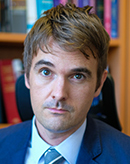
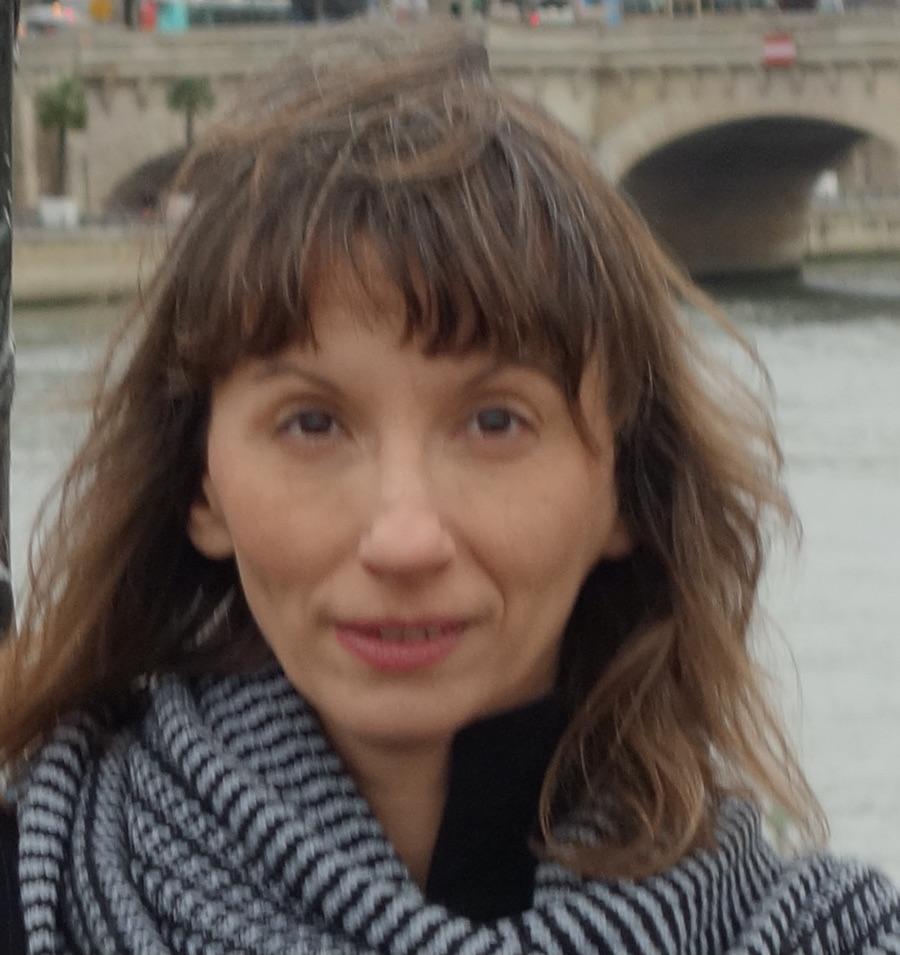
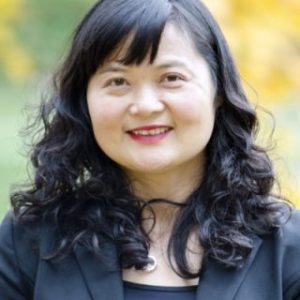
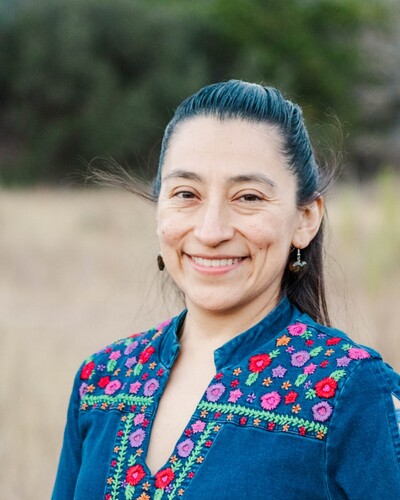
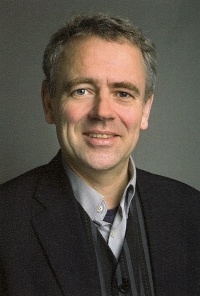
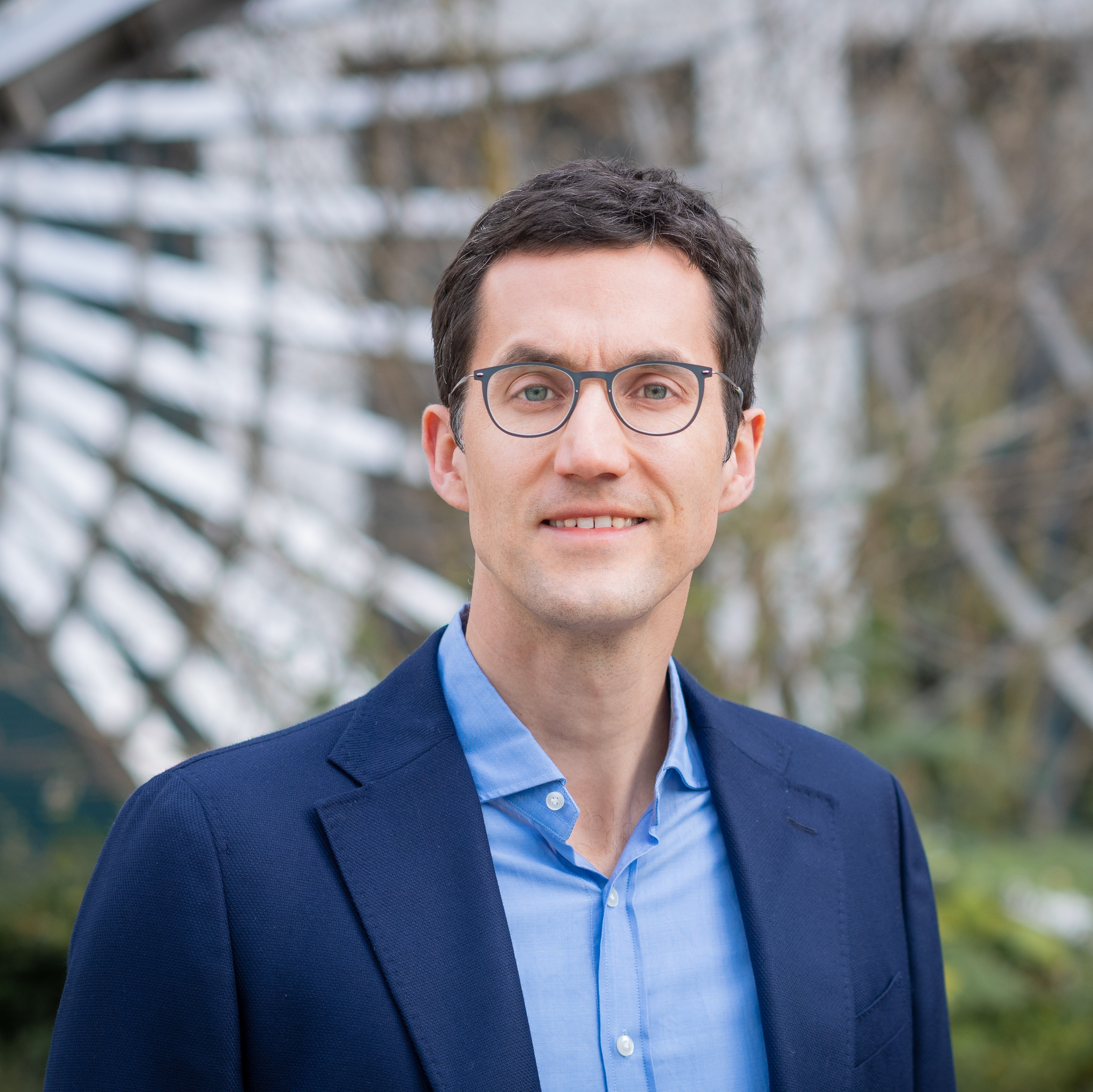
Lindell Bromham is a Professor at the Research School of Biology , Australian National University, focusing on evolutionary biology, cultural evolution, and interdisciplinary research. Their work spans genomic mutation rates to global linguistic diversity, with notable projects on language endangerment and Galton’s problem in cross-cultural studies. Broad research themes: evolutionary biology, cultural evolution, macroecology, linguistics Key contributions: interdisciplinary funding disparities, language evolution models, parasite-culture interactions Recent articles emphasize language endangerment risk factors, methodological innovations in cross-cultural analysis, and population size effects on language evolution. Awards include Eureka Prize Finalist (2021) and media recognition in Nature and New Scientist . Supervises students in evolutionary and linguistic research.
Matteo Magnani is a Professor in the Division of Computing Science at the Department of Information Technology, Uppsala University. He leads the Uppsala University Information Laboratory and is a founding member of the Uppsala University Computational Social Science Lab. His research spans network science, artificial intelligence, data science, and computational social science, with a focus on social data mining and multilayer networks. PhD in Computer Science, University of Bologna, 2006 Graduated with honours in Information Sciences, University of Bologna, 2002 Studies in Computer Science at University of Marne la Vallée and Imperial College London Matteo Magnani's research interests include social network analysis, multilayer and probabilistic networks, community detection, visual analytics, and the application of AI to digital media and climate communication. His work bridges computer science and social sciences, particularly in analyzing online discourse and digital intermediaries. He has contributed significantly to the understanding of network structures, uncertainty in networks, and the ethical dimensions of algorithmic analysis. His recent publications highlight trends in fairness in community detection, visual saliency in network layouts, emotional reactions to climate visuals online, and deep learning applications in social media. Topics frequently involve YouTube, Twitter, and online public debates, using advanced network and machine learning methods. Rotary Prize for best student of the Science Faculty Best Paper Award Funniest Presentation Award Best Poster Award Pedagogical Prize from UTN Distinguished University Teacher (Sweden) Docent title (Sweden) Magnani has supervised numerous students and collaborated widely, particularly with Luca Rossi, Alexandra Segerberg, and Davide Vega. He has secured funding from major sources including VR, H2020, STINT, and MIUR. He leads active research labs focused on information systems and computational social science, fostering interdisciplinary collaboration and innovation in network-based research.
Stuart Hargreaves is an Associate Professor at the Faculty of Law , The Chinese University of Hong Kong . His research focuses on information and privacy law and constitutional law and legal theory , reflecting his prior legal practice and academic background. Education: SJD, University of Toronto (2013) BCL, Oxford University (2008) JD, Osgoode Hall Law School (2006) BA in Politics & Sociology, McGill University (2000) His work examines the intersection of artificial intelligence and legal education , with projects like “Teaching Avatars” using AI for educational content creation. He also investigates surveillance technologies , privacy law , and constitutional rights in the context of Hong Kong’s political and legal environment. Scientific Awards and Grants: CUHK Teaching Excellence Award (2017) CUHK Direct Grant for Research University Grants Committee Teaching Development Grant Research Grants Council General Research Fund Joseph-Armand Bombardier Canada Graduate Scholarship Google Policy Fellowship He has contributed to AI in legal pedagogy through multiple conference presentations (e.g., “Teaching Avatars” at the 2024 CUHK Teaching & Learning Innovation Expo) and serves on the Board of Advisors for Teach for Hong Kong . His external roles include journal reviewing and LAWASIA membership.
Bo Chen is a postdoctoral researcher at the Siebel School of Computing and Data Science and the Coordinated Science Laboratory at the University of Illinois at Urbana-Champaign. His work focuses on AI-system co-design for immersive computing, particularly in extended reality (XR) and multi-modal content delivery over wireless networks. Ph.D. in Computer Science (2022), advised by Klara Nahrstedt B.S. in Computer Science from Shanghai Jiao Tong University (2016) His research integrates AI techniques with system-level optimizations to address challenges in XR infrastructure , including multi-view video streaming , NeRF-based content delivery , and uncertainty management in video transmission . He has pioneered methods like Loose Frame Referencing for learned codecs and Context-Aware NeRF Serving for mobile XR applications. Bo Chen's recent publications span top venues like ACM MobiSys, ACM SenSys, and USENIX NSDI. Key themes include AI-driven compression , dynamic 3D rendering , and reliable streaming over mobile networks . He has received recognition including the Rising Star Best Presentation Award (ACM MobiSys 2025) and Best Student Paper Award (ACM MMSys 2022). Bayesian optimization for XR systems Multi-view video aggregation at edge networks 3D Gaussian Splatting for immersive media
Ketika Garg is a Postdoctoral Scholar Research Associate in the Division of the Humanities and Social Sciences at the California Institute of Technology (Caltech), with an office in the Broad Center for Biological Sciences. Her research focuses on the interplay between individual and social decisions, using experimental and computational methods to explore how social environments influence decision-making and collective behavior. She investigates contexts ranging from traditional foraging paradigms to modern social media landscapes, developing innovative experimental frameworks to study these dynamics. Her research interests span computational neuroscience, social media analysis, and collective behavior, with a particular emphasis on understanding exploration-exploitation trade-offs in both natural and digital environments. She has contributed to studies on hunter-gatherer foraging networks, online toxicity dynamics, and the evolution of search strategies in collective foraging systems. Her work bridges disciplines such as psychology, ecology, and computer science to address fundamental questions in decision-making and social interaction. Dr. Garg’s publications reflect her interdisciplinary approach, covering topics like synergy in collective problem-solving, the roots of online toxicity, and the application of Lévy walks in virtual foraging experiments. While no formal awards or grants are explicitly listed in the provided materials, her research trajectory demonstrates a commitment to advancing methodologies in computational social science. Contact: kgarg@caltech.edu Office: Broad Center for Biological Sciences (96) Phone: 626-395-1755
Benjamin Steinberg is a Professor in the Mathematics Department at the City College of New York (CCNY) and the CUNY Graduate Center. He holds a Ph.D. from the University of California, Berkeley (1998) under John Rhodes and has held positions at the University of Porto (Portugal) and Carleton University (Canada). His research focuses on algebra, including semigroups, geometric group theory, algebraic combinatorics, representation theory, and automata theory, with notable work on etale groupoids, inverse semigroups, and ring theory. He is the author of several books, including *The q-theory of Finite Semigroups* and *Representation Theory of Finite Monoids*. Steinberg serves as Managing Editor of the *International Journal of Algebra and Computation* and has organized conferences such as the International Conference on Semigroups and Groups in Honor of John Rhodes. Research interests include the interplay between algebraic structures and their applications, such as in automata theory and Markov chains. His work bridges pure mathematics with combinatorial and geometric approaches, often involving categorical and topological methods. Recent articles explore topics like Nekrashevych algebras, twisted Steinberg algebras, and Lyndon's identity theorem for monoids. He has contributed to the study of profinite groups and their connections to symbolic dynamics. Steinberg’s editorial roles and conference organization reflect his leadership in the mathematical community. Despite his defunct blog, his academic contributions remain prolific, with ongoing editorial work and research in algebraic combinatorics and representation theory.
Professor Anna Traianou is a distinguished academic at Goldsmiths, University of London, where she serves as Professor of Education and Director of the Centre for Identities and Social Justice. Her work spans multiple dimensions of educational research with a particular focus on the intersection of policy, practice, and ethics in contemporary educational contexts. Her research interests center on culture, learning and teacher 'expertise' in contemporary policy and politics; the contestation of education policy in contemporary Europe, austerity and the changing form of the education state; and philosophical perspectives on ethics and their implications for researcher autonomy. She has published extensively on these topics, with notable works including 'Understanding Teacher Expertise in Primary Science: a sociocultural approach' (2006) and 'Ethics in Qualitative Research: Controversies and Contexts' (2012) co-written with Martyn Hammersley. More recently, she co-edited 'Austerity and the Remaking of European Education' (2019) with Ken Jones. Her recent publications reveal a strong focus on education policy under austerity conditions, particularly in Greece, where she has examined the role of trade unions in education reform and the intricacies of conditionality in policy implementation. She has also made significant contributions to research ethics, particularly regarding the concept of vulnerability in social research and its application to studies involving political elites. Professor Traianou teaches on the BA (Honours) Education Culture and Society, MA Education: Culture Language and Identity, and MPhil/PhD Education programmes. Her doctoral supervision focuses on education policy, particularly the interplay between supranational policy influence and national traditions; learning and teacher 'expertise' in contemporary policy and politics; and research ethics as situated practice. She has secured significant research funding, including from the British Academy (2019-2022) for research on structural adjustment in Greece (2010-2018) and from the National Education Union (NEU) for her current project on teachers' curriculum autonomy. Her recent report 'Are you on slide 8 yet?' examines the impact of standardized curricula on teacher professionalism.
Yaoqing Yang is an Assistant Professor at the Department of Computer Science, Dartmouth College. He earned his PhD in Electrical and Computer Engineering (ECE) from Carnegie Mellon University (CMU) and completed postdoctoral research at UC Berkeley's RISE Lab. His work focuses on robustness in machine learning systems, spectral analysis of neural networks, and algorithm design for structured data like graphs and point clouds. PhD in ECE, Carnegie Mellon University Postdoc, RISE Lab, UC Berkeley BS in Electrical Engineering, Tsinghua University Research interests include diagnosing and mitigating model failures through heavy-tailed spectral analysis, decision boundary studies, and loss landscape visualization. He develops methods such as AlphaPruning and SharpBalance to enhance large language models and ensemble learning. Recent work spans 2025 publications on spectral evolution of neural networks, agentic AI for science, and LLM safety. Key collaborations include Michael W. Mahoney and other researchers. Burke Research Initiation Award, Dartmouth (2024) DOE grant for scientific foundation models (2024) DARPA grant for AI robustness (2024) He serves as Area Chair at NeurIPS 2025 and ICLR 2026, and has presented at Google Research, Lawrence Berkeley National Laboratory, and leading universities worldwide. His lab at Dartmouth engages in theoretical and applied research, with connections to UC Berkeley's RISE Lab and collaborations across institutions like CMU and Tsinghua University.
Barbara Plank is a full professor and chair for AI and Computational Linguistics at Ludwig Maximilian University of Munich (LMU), where she heads the Munich AI and NLP (MaiNLP) lab and co-directs the Center for Information and Language Processing (CIS). She additionally serves as a visiting full professor at the IT University of Copenhagen, maintaining active dual institutional affiliations in computational linguistics and NLP research. Her research focuses on human-centric natural language processing challenges, particularly learning under sample selection bias (domain adaptation, transfer learning) and annotation bias, learning with limited data through continual/semi-supervised/weakly-supervised methods, multimodal learning at language-vision-speech interfaces, and fortuitous supervision for variety-space aware language understanding. She pioneers methodologies addressing human label variation as a critical factor in model robustness rather than mere noise. Recent publications (2024-2025) reveal dominant trends in modeling human label variation across NLP tasks, especially natural language inference and entity recognition, alongside dialectal language processing and LLM evaluation frameworks. Her work systematically investigates how human disagreement in annotations can be leveraged to build more robust, adaptable systems rather than treated as errors. Scientific recognition includes: ERC Consolidator Grant for the DIALECT project advancing natural language understanding for non-standard languages and dialects ACL 2024 Area Chair Award for the paper 'VariErr NLI: Separating Annotation Error from Human Label Variation' Leading the MaiNLP lab at CIS (LMU), she directs research integrated with MCML (Munich Center for Machine Learning), Munich Intelligent Robotics, ELLIS Unit Munich, UniDive, and COST action. Current projects include ERC-funded DIALECT and KLIMA-MEMES, focusing on human-facing NLP solutions for real-world language diversity challenges. She actively shapes the field through ACL leadership as VP-Elect and numerous keynotes emphasizing human-centric approaches. The MaiNLP lab at Akademiestr. 7, 80799 Munich, drives innovation in computational linguistics through interdisciplinary collaboration, maintaining strong ties with European research networks while developing practical applications for language variation and robust NLP systems. The lab's work directly informs her teaching in LMU's Computational Linguistics programs, bridging research and education in cutting-edge NLP methodologies.
Guofang Li is a Professor in the Department of Language and Literacy Education at the Faculty of Education, affiliated with the Centre for Early Childhood Education & Research (CECER). Her work centers on bilingual development and literacy education within multicultural contexts, particularly focusing on Chinese-Canadian communities. Her research interests include: Early bilingual development Family literacy practices Early literacy instruction methodologies Early education for minority learners Teacher education for multilingual classrooms Analysis of her 2021-2025 publications reveals a concentrated focus on Chinese-Canadian children's bilingual development, examining home literacy environments, digital technology impacts, and pandemic-related disruptions. She consistently advocates for equity-focused approaches in superdiverse educational settings, emphasizing translanguaging practices and critical perspectives on linguistic justice. Scientific Awards: No awards explicitly mentioned in source materials Advising and Grants: No specific student names or grant information provided in source materials Labs and Teams: Centre for Early Childhood Education & Research (CECER): An interdisciplinary hub facilitating collaborative research between academics, educators, and community partners focused on advancing evidence-based early childhood education practices through longitudinal studies and community-engaged projects.
Dr. Martha Sidury Christiansen is a Professor of Applied Linguistics/TESOL at the University of Texas at San Antonio , where she serves in the College of Education and Human Development . She is the Principal Investigator of Project RESPETO , a NSF-funded initiative exploring racial equity in engineering education. Her work spans sociolinguistics, digital literacies, and raciolinguistic analysis, with a focus on transnational multilingual communities. Born in Veracruz, Mexico Ph.D. in Foreign/Second Language Education (Ohio State University, 2013) M.A. in English Composition (Indiana University, 2007) B.A. in English Language Teaching (Universidad Veracruzana, 2002) Her research examines how transnational youth navigate digital spaces through multiliteracies , challenges Western academic writing norms via Mexican decolonial methodologies , and investigates raciolinguistic intersections in identity formation. The 15 most recent publications reveal a strong focus on digital communication , transnationalism , and critical pedagogy across journals like TESOL Quarterly and Language@Internet . 2023-2025: Expanding raciolinguistic frameworks in digital contexts 2021-2022: Analyzing multimodal identity construction 2019-2020: Exploring Mexican bilinguals' online language use She has received multiple honors including ACUE Fellow (2023), Fulbright Scholar (2017), and Faculty Leadership Fellow (2021-2022). Her presentations at conferences like ICOLLITE and DDVM Lab highlight her expertise in critical sociolinguistic awareness and digital discourse analysis . Dr. Christiansen actively consults for nonprofits on linguistic equity and multilingual education .
Manfred Droste is a Professor at the Institute of Computer Science of the University of Leipzig, where he leads the Research Group on Automata and Formal Languages. He serves as Director of the Graduate Centre Mathematics, Computer Science and Natural Sciences and is Vice-speaker of the DFG-Research Training Group Quantitative Logics and Automata. His academic career spans decades of research and leadership in theoretical computer science and algebra. Prof. Droste's research focuses on theoretical computer science, particularly automata theory, logic, algebraic models for concurrent systems, and domain theory. In algebra, his interests include model theory, automorphism groups, and ordered algebraic structures. His work bridges theoretical foundations with practical applications in formal language theory and quantitative systems. His extensive publication record demonstrates a consistent focus on weighted automata, formal languages, and their logical characterizations. Over the years, his research has evolved to address increasingly complex quantitative models, with recent work focusing on weighted complexity classes, weighted linear dynamic logic, and decidability boundaries for weighted automata. Prof. Droste has received significant recognition including election to Academia Europaea, an honorary doctorate from Immanuel Kant Baltic Federal University, and fellowship in the Asia-Pacific Artificial Intelligence Association. These honors reflect his substantial contributions to theoretical computer science. He has supervised numerous PhD students including Dietrich Kuske, Paolo Boldi, and Karin Quaas, many of whom have become prominent researchers. His extensive grant portfolio includes multiple DFG projects on weighted automata and international collaborations through DAAD funding. Prof. Droste leads a vibrant research team including Andrea Hesse, Karin Quaas, Erik Paul, and others. He has organized the international workshop series "Weighted Automata: Theory and Applications" since 2002, fostering global collaboration in this specialized field.
Marwa Elshakry is an Associate Professor at Columbia University, specializing in the history of science, technology, and medicine in the modern Middle East. Her research bridges cultural and intellectual history with the study of scientific exchange and adaptation. Ph.D. — Princeton University (2003) M.A. — Princeton University (1997) B.A. — Rutgers University (1995) Her work critically examines the cultural politics of scientific translation, the role of religion in shaping scientific discourse, and the transnational movement of ideas. She has published extensively on topics like Darwinism in Arabic, the intersection of science and scripture, and the colonial dynamics of scientific knowledge transfer. Marwa's publications highlight themes such as the historiographical challenges of mapping science's global journey, the theological interpretations of scientific concepts in Islamic contexts, and the impact of missionary activities on scientific education in the Ottoman Empire. Her scholarship underscores the agency of non-Western actors in recontextualizing scientific knowledge.
Reinhard Heckel is a Tenured Associate Professor (equivalent to Professor) of Machine Learning at the Department of Computer Engineering, Technical University of Munich (TUM), and Adjunct Faculty in Electrical and Computer Engineering at Rice University. He was previously an Assistant Professor at Rice (2017–2019), a postdoc in the Berkeley Artificial Intelligence Research (BAIR) Lab at UC Berkeley, and a researcher at IBM Research Zurich. Education: PhD, 2014 – ETH Zurich Visiting PhD student – Department of Statistics, Stanford University Research Interests: His work centers on machine learning and information processing with three major thrusts: (1) developing algorithms and theoretical foundations for deep learning, especially for accelerated magnetic resonance imaging ; (2) establishing rigorous mathematical and empirical underpinnings for modern machine-learning systems; and (3) leveraging DNA as a digital information-storage medium , including error-correction coding and system design for DNA-based storage. Across more than 100 peer-reviewed papers since 2017, Heckel’s research exhibits a strong interdisciplinary blend of computational imaging , machine-learning theory , and molecular data storage . Recent 2024–2025 publications show intensive focus on robust MRI reconstruction using diffusion priors, evaluation of bias in large web-text corpora, and state-of-the-art error-correcting codes for DNA storage channels. A forthcoming book, Deep Learning for Computational Imaging (Oxford University Press), consolidates his contributions to the field. Outreach & Media: Keynote and panel talks at DLD, TUM, and major ML conferences Op-eds in Frankfurter Allgemeine on ChatGPT and DNA storage Science features on Netflix, BBC, and German television (Galileo, “Gut zu Wissen”) Research Environment: At TUM he leads a group investigating theoretical and applied aspects of deep learning, compressed sensing, and coding for DNA storage. Open-source repositories on GitHub (e.g., dna_data_storage , supplement_deep_decoder ) provide code and data supplements accompanying his publications.
Chiara Cannella serves as Interim Dean and Professor of Teacher Education at Fort Lewis College, where she has been faculty since 2010. Based in the Teacher Education Department, she is a leading scholar in culturally responsive and anti-bias education, with expertise spanning sociocultural research, American Indian education, and social justice frameworks. Her educational background includes: Ph.D. in Anthropology and Education, University of Arizona (2009) M.A. in Anthropology and Education, University of Arizona (2004) B.A. in English Language & Literature, University of Michigan (1996) Dr. Cannella's research centers on education for marginalized students and identity construction through critical sociocultural lenses. She investigates how teacher leadership programs shape professional identity, examines academic identity formation among marginalized youth, and develops counter-hegemonic research methodologies. Her work consistently connects classroom practice to broader social justice movements through community-based partnerships and humanizing pedagogical approaches. Analysis of her publications (2008-2015) reveals persistent focus on resistance-based educational frameworks, particularly in contexts of political pressure like Tucson's ethnic studies ban. Her scholarship bridges anthropology and education through qualitative methodologies that center student and teacher agency, with recurring themes of civic identity development, community resistance to disinvestment, and culturally sustaining pedagogy. Dr. Cannella actively translates research into practice through: Professional development for regional school districts on supporting marginalized students Co-founding the Southwest Colorado Culturally, Linguistically, and Economically Diverse Working Group Service on the Durango 9-R Achievement Gap Task Force Committee work for American Educational Research Association's Division G Consulting engagements with tribal education programs including presentations at Northeastern State University Her collaborative approach extends to research partnerships documented in co-authored works with scholars like Luis Moll and Julio Cammarota, emphasizing community cultural wealth models and sociocultural perspectives on educational relationships.