Máté Szabó is an Assistant Professor at the University of Debrecen , affiliated with the Faculty of Informatics and the Department of Information Technology . His email contact is szabo.mate@inf.unideb.hu . He works in areas such as Machine Learning , Smart Cities , and Mobile Computing . His research spans topics like microservice architecture for ensemble models, Markov modeling of traffic flows, and distributed machine learning on mobile platforms. He has explored neural models for conversational AI and gamification in programming education through Minecraft-based challenges. His work also addresses edge computing and data parallelism in mobile environments. His publications (2016–2024) reflect trends in machine learning deployment on Android platforms smart city traffic analytics gamified educational tools cognitive modeling of numerical understanding microservice-based model integration .
Dr. Gábor Pintér holds dual academic appointments as Assistant Professor at Károli Gáspár Reformed University's Faculty of Humanities and Social Sciences (Department of Japanology) and as Associate Professor at Kobe University's School of Languages and Communication. Born in Hungary in 1977, he earned his MA (2005) and PhD (2008) in Linguistics from Kobe University, Japan, with a dissertation on asymmetrical segment distributions in Japanese. His research focuses on three interconnected domains: phonological theory (especially Japanese phonology), experimental phonetics, and applications of automatic speech recognition in language education. Specific interests include vowel devoicing patterns, prosodic perception in L2 learners, phonotactic constraints, and diachronic sound changes in Japanese. Pintér actively contributes to international research collaborations, including the JSPS-funded project 'Stochastic & theoretical phonological research' and serves as chair of the Phonology Association in Kansai (PAIK). His 15 most recent publications demonstrate methodological diversity, combining theoretical linguistics with computational approaches and experimental studies, primarily focused on Japanese phonetics and speech technology applications. Professional memberships include board positions in The Phonological Society of Japan and memberships in the International Speech Communication Association and Association for Laboratory Phonology.
Katalin Piniel is an Assistant Professor at the Department of English Applied Linguistics within the School of English and American Studies at Eötvös Loránd University, Budapest. Her work bridges applied linguistics and educational psychology , focusing on the dynamic interplay of emotions , including language anxiety , motivation, and self-efficacy in foreign language learning contexts, particularly in Hungary. PhD in Language Pedagogy (ELTE) Associate Editor of Studies in Second Language Learning and Teaching Active reviewer for applied linguistics journals Her research integrates complex dynamic systems theory to analyze longitudinal changes in affective variables and employs meta-analytic techniques to validate anxiety measurement tools like the Foreign Language Classroom Anxiety Scale (FLCAS) . She explores formative and summative assessment practices in Hungarian high schools and investigates flow experiences during language tasks. Her methodological interests include quantitative tools (e.g., Rasch analysis), collaborative research , and cross-cultural comparisons (e.g., Hungarian-Kazakh studies). Recent publications highlight trends in emotion-motivation dynamics , skills-based anxiety measurement , and the impact of online education on affective variables. She collaborates on projects examining special needs learners , including Deaf and hard-of-hearing students , in foreign language acquisition. Contact: brozik-piniel.katalin@btk.elte.hu | ORCID | Google Scholar | ResearchGate
Dorottya Holló is a Habilitated Associate Professor at the Department of English Language Pedagogy, School of English and American Studies, Eötvös Loránd University. She specializes in Intercultural Communication, English Language Teaching (ELT), and Australian cultural studies. Email: hollo.dorottya@btk.elte.hu Office: Room 406, Address: 1088 Budapest, Rákóczi út 5. Phone: 4399 Her research focuses on: Intercultural Communication Competence (ICC) Cultural dimensions and discourse analysis Nonverbal communication across cultures Historical and media representations of national cultures She teaches courses including: BA Level : Australia through Documentaries, Skills Development for ICC MA Level : Researching Intercultural Communication PhD Level : Research Seminar 3 and 4
Karolina Lendák-Kabók is an Associate Professor at the Department of Minority Studies, Faculty of Social Sciences, Eötvös Loránd University (ELTE) in Budapest, Hungary. She simultaneously holds an Assistant Professorship at the Faculty of Philosophy, University of Novi Sad, Serbia. Currently serving as a Marie Skłodowska-Curie Postdoctoral Fellow (2022-2024), her academic journey spans multiple institutions across Europe including visiting researcher positions at Central European University, University of Sydney, Université Paris-Est Créteil, University of Lausanne, Purdue University, and University of Victoria. Her educational background includes a BA (2010) and MA (2012) in Law from the University of Novi Sad, followed by a PhD in Gender Studies (2019) from the Center for Gender Studies at the same institution. Her research focuses on the intersection of ethnicity, gender, and language barriers within academic and social contexts, with particular emphasis on ethnic minorities in Serbia, intermarriage dynamics, and gender disparities in higher education. Dr. Lendák-Kabók's scholarly output reveals a consistent focus on ethnic minority experiences in Central and Eastern Europe, particularly examining how language barriers and gender intersect to create unique challenges for minority communities. Her publications demonstrate expertise in both quantitative and qualitative methodologies, with recurring themes of identity formation, social integration, and the impact of historical conflicts on contemporary interethnic relations. She has made significant contributions to understanding intermarriage patterns across different European contexts, contrasting Western Europe's immigrant-host society dynamics with Central and Eastern Europe's minority-majority relationships. Her scientific recognition includes the ELTE Promising Researcher Award (2023), Anđelka Milić Award for enhancing gender equality (2022), Crystal Ball Award (2017), and the prestigious Bolyai János Research Scholarship (2024). She has received multiple scholarships including the National Excellence scholarship in Hungary (2014) and the Collegium Talentum research scholarship (2013-2016). ELTE Promising Researcher Award (2023) Anđelka Milić Award for gender equality (2022) Crystal Ball Award for outstanding scientific contribution (2017) Bolyai János Research Scholarship (2024) National Excellence scholarship in Hungary (2014) Collegium Talentum research scholarship (2013-2016) As a mentor, she has supervised MA students Nisreen Alsoudi (who received the Best MA Award) and Julia Pecker, and collaborates with PhD student Rebeka Bakos on research related to the Marie Curie Fellowship. Her scholarly work has resulted in over 50 publications including the monograph Ethnic Minorities in Serbian Academia – the Role of Gender and Language Barrier (Palgrave Macmillan, 2022) and the edited volume Üvegplafon? (Glass ceiling?, Forum 2020). She has also established research collaborations across multiple countries, conducting fieldwork in Japan, Australia, France, Switzerland, USA, and Canada.
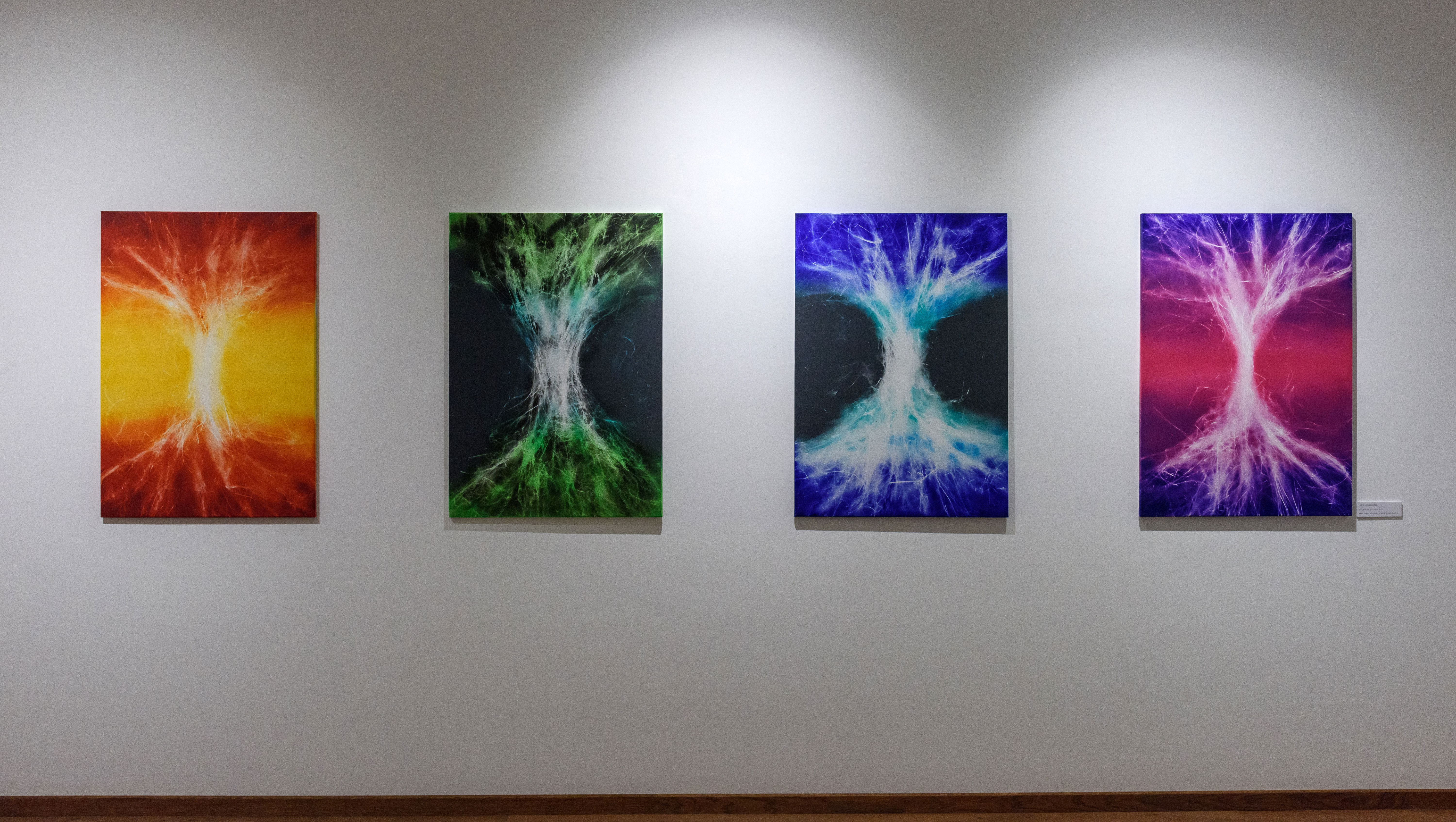
Zsigmond Lucza (born 1978 in Budapest) is a Hungarian contemporary artist and university assistant professor at the Hungarian University of Fine Arts, Department of Visual Art since 2022. He holds a DLA (Doctor of Liberal Arts) degree from the University of Pécs Faculty of Arts (2011-2014) and has extensive international experience including studies at the University of Lapland in Finland (2012-2013). Lucza's educational background includes dual Master's degrees from the Hungarian University of Fine Arts (2002-2007) in both Painting and Visual Art Teacher programs, along with foundational training at the Buda Drawing School (2000-2002). His academic career includes teaching positions at Jelky András Applied Arts Vocational High School (2014-2018), Modell Fashion School (2008-2012), and Kolumbusz Humanities High School (2005-2007). Lucza's artistic practice spans contemporary painting, transmedia art, and mixed media works, with significant focus on digital integration in traditional art forms. His research interests center on transmedia tendencies in contemporary Hungarian painting, visual communication, and the evolving relationship between digital and physical art spaces. His work often explores identity, perception, and the integration of technology in artistic expression, creating pieces that bridge traditional painting techniques with contemporary digital aesthetics. His artistic output shows a consistent evolution from figurative works toward more experimental transmedia approaches, with recent projects focusing on environmental reflection, digital portraiture, and collaborative installations. Lucza's work demonstrates a sophisticated understanding of both traditional painting techniques and contemporary digital media, creating a distinctive visual language that addresses current artistic concerns while maintaining strong technical foundations. Lucza has received multiple awards including an Erasmus scholarship for study at the University of Lapland, a scholarship from the Budapest Gallery and Kunststiftung Baden-Württemberg, and first prizes in national competitions. His professional affiliations include membership in the Hungarian Artists' Association (MAOE) since 2007, the MAMŰ Society since 2015, and non-academic membership in the Hungarian Academy of Arts (MMA) since 2022. As an educator, Lucza has conducted numerous workshops internationally including the Experimental Drawing Course at the Latvian Academy of Arts and Transmedia Workshops at the University of Pécs. His curatorial work includes the 'Medium Summoners' exhibition at MAMŰ Gallery in Budapest (2017). Lucza maintains an active exhibition schedule with solo shows across Hungary, Finland, and Slovenia, alongside participation in numerous international artist colonies and collaborative projects.
Csaba Horvath (born 1967) is an associate professor at the Department of Modern Hungarian Literature and Comparative Literature within the Faculty of Humanities and Social Sciences at Károli Gáspár Reformed University. He holds a habilitation from ELTE (2017) and earned his PhD from ELTE in 2002 with a dissertation on 'Education and narration in the European novel.' Previously, he worked as a senior research fellow at the Petőfi Literary Museum and as a secondary school teacher at Óbudai Gimnázium. His educational background includes an MA in Hungarian language and literature from ELTE (1993) and a Diploma in advanced studies from Ecole des Hautes Etudes en Sciences Sociales in Paris (1994). Horvath's research focuses on contemporary Hungarian literature, 20th century Hungarian literature, aesthetics, literary theory, and popular culture, with particular emphasis on post-postmodern and epimodern literary theory. Horvath has published extensively from 1995 to 2025, with recent work exploring epimodern Hungarian literature, contemporary narrative structures, and the relationship between literature and philosophy. His publications reveal a consistent engagement with Hungarian literary modernity and its evolution through postmodern and epimodern phases, examining how contemporary Hungarian authors navigate historical consciousness, narrative form, and aesthetic innovation. National Research, Development and Innovation Office (NRDIO) Project No. 150051: 'Researches of ERA (Epimodern Research Atelier)' Contemporary Central European Novel Research Group Hungarian Literary History for Foreigners MTA-ELTE Elegy research group Lajos Grendel research group Biofiction Research Group Horvath has served as a doctoral supervisor for Adam Barta (ELTE, 2023) and as an opponent in doctoral defenses for Janos Fejes (2018), Deák Szebeni Imola (2024), and András Pikó (2025). He has held numerous guest professorships across Europe including at Ecole des Hautes Etudes en Sciences Sociales in Paris (2006, 2012), Charles University in Prague (2019, 2022), Nouvelle Sorbonne in Paris 3 (2021, 2023), and the University of Warsaw (2023).
Gyula Tankó is a habilitated Associate Professor at the Department of English Applied Linguistics , School of English and American Studies, Eötvös Loránd University . His research focuses on language assessment validity , particularly for advanced-level English exams. Research interests include: Constructive justification of EFL school-leaving examinations Psychometric challenges in reading and listening comprehension assessments Alignment of national language policies with assessment practices Development of analytic rating scales for EAP (English for Academic Purposes) Cognitive processes in L2 listening behaviors Selected publications address topics like: Test fairness and generalizability Impact of punctuation errors on EFL assessment CEFR taxonomy in listening evaluation His work contributes to improving language proficiency certification and university admissions in Hungary. Contact : Email: tanko.gyula@btk.elte.hu Address: Room 430, Eötvös Loránd University, Faculty of Humanities, Rákóczi út 5, Budapest, H-1088
Agnes Melinda Kovacs serves as Associate Professor in the Department of Cognitive Science at Central European University (CEU), where she directs the Cognitive Development Center and co-leads the Center for Belief Update and Debiasing (DEBIAS) as Project Leader and Principal Investigator. Her research investigates early social cognition—including perspective taking, theory of mind, and tracking others' epistemic states (knowledge, belief, uncertainty)—alongside foundational abstract thought processes like generalization, compositionality, and evidence-based belief updating in children and adults. This work has been featured in Nature , Scientific American , The New York Times , and major international media outlets. Scientific Awards: ERC Starting Independent Research Grant Advising and Grants: She supervises multiple PhD candidates and has graduated students including Dora Kampis and Martin Freundlieb (as co-supervisor). Her DEBIAS project received FWF Special Research Area funding for investigating coherent belief systems. Current PhD advisees include Maja Blesic and Maria Mavridaki. Labs and Teams: She directs CEU's Cognitive Development Center and co-founded the Center for Belief Update and Debiasing (DEBIAS), focusing on experimental paradigms to study cognitive biases and developmental trajectories.
Joop van der Horst is an associate professor at Károli Gáspár Reformed University, Faculty of Humanities and Social Sciences, specializing in Dutch Studies. Previously, he held professorial roles at KU Leuven and the University of Amsterdam. PhD in Linguistics (University of Amsterdam, 1986) MA in Dutch Language and Literature (Leiden University, 1975) His research spans historical linguistics, focusing on grammaticalization, collocations, and language change, as well as descriptive linguistics (syntax, morphology) and sociolinguistics. He has extensively studied fixed verb constructions, Dutch-French grammatical comparisons, and long-term language-society interactions. His publications and conference contributions from 2002-2013 highlight trends in Dutch syntax evolution, comparative German-Dutch verb patterns, and the decline of Renaissance language culture in Europe. Key themes include grammatical theory, European multilingualism, and language education reforms. LOT Publication Award Our Language Award He has supervised PhD students Freek Van de Velde, Judith Schonenboom, and Bert Cappelle, while serving as an opponent in doctoral defenses including Evie Coussé and Rinaldo Neels. His guest professorships include institutions in Berlin, Maastricht, Cologne, Münster, and Wroclaw.
Dr. Orsolya Nador is an Associate Professor at the Department of Hungarian Linguistics, Institute of Hungarian Language, Literature and Cultural Studies, Faculty of Humanities and Social Sciences at Károli Gáspár Reformed University in Budapest, Hungary. With a PhD in Linguistics and Applied Linguistics from the Hungarian Academy of Sciences (1998), she has dedicated her career to the study of language policy, Hungarian as a foreign language, and the linguistic landscape of East-Central Europe. Her work bridges academic research with practical applications in language teaching and policy development across Central and Eastern European contexts. PhD in Linguistics and Applied Linguistics, Hungarian Academy of Sciences (1998) MA in Hungarian Language and Literature, Eötvös Loránd University (1983) Habilitation, University of Pécs (2001) Dr. univ. in Contemporary Hungarian Literature, Eötvös Loránd University (1988) Teacher of Hungarian-Russian Primary School, Eger Teacher Training College (1981) Dr. Nador's research focuses on language policy history, Hungarian as a foreign language (including educational policy and psycholinguistic aspects), Hungarian as a language of origin, the history of Hungarian applied linguistics, and diachronic analysis of linguistic-ethnic issues in East-Central Europe. Her interdisciplinary approach connects historical linguistics with contemporary language policy challenges, particularly regarding minority languages in the Carpathian Basin region. She has pioneered research on language identity formation and the relationship between linguistic diversity and social cohesion in multi-ethnic contexts, examining how language policies shape national identities across Central Europe. Her recent publications reveal a consistent focus on the linguistic landscape of the Carpathian Basin, with particular attention to language policy development, minority language rights, and the teaching of Hungarian as both a foreign and heritage language. Dr. Nador's scholarly work demonstrates how historical language policies continue to influence contemporary linguistic practices and identity formation across East-Central Europe. Her research increasingly addresses digital aspects of language teaching and the evolving role of Hungarian in the European multilingual context, reflecting her commitment to adapting linguistic research to contemporary educational challenges. Teacher of the Year, Károli Gáspár Reformed University (2015) Brassai Prize, Hungarian Association of Applied Linguists and Language Teachers (2023) Dr. Nador has supervised numerous doctoral students working on language policy issues across Europe, including research on Norwegian language policy, Swiss multilingualism, Hungarian language in Burgenland, and media discourse analysis. She has led international research projects including Te-Le-Hu (2008-2010) and Hungarobox (2013-2015), focusing on language teaching methodologies for Hungarian as a foreign language. Her editorial work includes serving as editor-in-chief for Modern Language Teaching journal since 2018 and previously for THL2 - Journal of Hungarian Language Teaching (2005-2018), where she shaped the discourse on Hungarian language pedagogy for over a decade. As leader of the Hungarology Research Group, Dr. Nador coordinates collaborative research on Hungarian language and culture across international borders. Her team works closely with institutions in Slovakia, Croatia, Romania, and Serbia to document and analyze the linguistic practices of Hungarian minority communities throughout the Carpathian Basin, creating a comprehensive picture of how Hungarian functions as both a majority and minority language in different national contexts.
Ildikó Király is a Professor at the Institute of Psychology, Eötvös Loránd University, Budapest, currently serving as Head of the Department of Cognitive Psychology and lecturer. Her research focuses on developmental psychology, particularly social cognition, imitation behavior, and theory of mind in early childhood. Key areas: Social Cognition , Developmental Neuroscience , and Cognitive Development Recent work examines preschoolers' exploration tendencies, joint action observation effects, and linguistic group membership's role in perspective taking. She leads the Social Minds Research Group , investigating how cultural knowledge transmission shapes cognitive development. Her 2021-2025 publications reveal trends in: Imitative behavior's sensitivity to social norms and group identity Memory flexibility in adapting to changing contexts Interactions between semantic processing and mentalization in social situations Comparative studies on human and non-human primate cognition
Dr. habil. Dringó-Horváth Ida is an Associate Professor at the Faculty of Humanities and Social Sciences of Károli Gáspár University of the Reformed Church in Hungary (KRE). She serves as Head of the ICT Research Center under the Rector's Office and as Head of the Educational Informatics Continuing Education Center at KRE BTK. Her leadership extends to multiple research projects focused on educational technology in higher education, particularly examining digital competencies, teacher development, and the integration of information and communication technologies in academic settings. Dr. Dringó-Horváth earned her PhD in German Studies/Linguistics from Eötvös Loránd University in 2004, with a dissertation titled "Analysis and Evaluation of the Modern Teaching and Learning Medium 'Elektronisches PC-Wörterbuch'." She completed her habilitation in Educational Science at the same institution in 2019. Her academic background includes an MA in German from Eötvös Loránd University (1998) and additional qualifications in educational informatics and social work. Her research focuses on the intersection of educational technology and higher education pedagogy, with particular emphasis on digital competence development for teachers, dictionary skills in language learning, and the digital transformation of educational practices. Dr. Dringó-Horváth leads the "Educational Informatics in Higher Education" research project, which examines effective learning/teaching opportunities in electronic learning environments and maps ICT indicators of higher education lecturers. Her work explores how reflection processes contribute to long-term teacher competency development in the digital age. Analysis of her recent publications reveals a strong focus on artificial intelligence in higher education, technostress reduction, and digital competence measurement. Her research shows how digital transformation impacts both teaching practices and student learning experiences. She has made significant contributions to understanding how educators develop digital competencies and integrate technology into their teaching practices across different disciplines. Károli Kiválóság Díj (2022) for Q1 publication Károli Kiválóság Díj (2023) for Q1 publication Károli Kiválóság Díj (2023) for Q2 publication A. S. Hornby Trust Grant for dictionary research presentation at EURALEX Conference Dr. Dringó-Horváth actively mentors doctoral students including Sebestyén Lilla Anna, Veres Violetta, and Gulmira Kusajynkyzy. She serves as institutional coordinator for multiple significant research projects including "PROFFORMANCE+" (2022-2025), "Ensuring Quality Digital Higher Education in Hungary" (2022-2023), and "Support of Digital Transformation of Hungarian Higher Education" (2021-2022). Her grant portfolio demonstrates strong institutional support for her work in educational technology and faculty development. As leader of the ICT Research and Training Centre (Educational Technology Research and Training Centre), Dr. Dringó-Horváth oversees a dynamic team conducting research on information and communication technologies in higher education. The center collaborates with international and domestic institutions to develop best practices for digital learning environments. Her team's work has significantly influenced Hungarian higher education policy regarding digital transformation and teacher development.
Péter Balla is a distinguished University Professor and current International Relations Vice-Rector at Károli Gáspár Reformed University (KRE), where he has served since 1994. He is Head of the New Testament Department at the Faculty of Theology and has held numerous leadership positions including Rector (2011-2019), Religious Vice-Rector, and previously served as Deputy Dean. His academic journey began with theological studies at the University of Edinburgh, where he earned his PhD in 1994 with a dissertation on New Testament theology. Ball has made significant contributions to New Testament scholarship with his research focusing on Pauline studies, New Testament canon history, biblical exegesis, and the child-parent relationship in biblical context. His major publications include commentaries on Galatians and 2 Corinthians, as well as foundational works on New Testament writings and theology. His scholarly approach combines rigorous textual analysis with historical contextualization and contemporary application. Ball's academic output demonstrates consistent engagement with both theoretical theological questions and practical biblical interpretation. His works span from detailed linguistic studies of New Testament Greek to broader examinations of New Testament theology's coherence and relevance. The trajectory of his scholarship shows increasing focus on the practical application of biblical texts in contemporary contexts while maintaining scholarly rigor. Bolyai Plaque (2009) from the Hungarian Academy of Sciences Pro Universitate Award (2019) from KRE Soli Deo Gloria Award (2019) from Nagykőrösi Reformed Church Knight's Cross of the Order of Merit of Hungary (2024) As a dedicated educator, Ball has supervised numerous doctoral students and served on various academic committees. His research has been supported by prestigious grants including multiple MTA Bolyai János Research Scholarships and Alexander von Humboldt Foundation awards. Internationally, he has maintained significant academic connections, particularly with Stellenbosch University in South Africa where he served as Research Fellow and Research Associate for over a decade. His work bridges Hungarian Reformed theological tradition with international scholarly discourse in New Testament studies.
Eloise Adde is an Associate Professor and MA Program Director in the Department of Historical Studies at Central European University (CEU) in Vienna. She holds dual PhDs in Medieval History from Paris Panthéon Sorbonne and Czech Literature from Sorbonne Université. Her research focuses on nation-building, political thought, subjectivity, and manuscript culture in late medieval Bohemia and Brabant, with a particular emphasis on vernacular literature and the legitimization of power. Her academic journey includes prestigious fellowships such as the Marie Skłodowska-Curie fellowship and multiple grants from the FNR Luxembourg. She has held research positions at institutions including Saint-Louis University Brussels, the University of Luxembourg, and Humboldt University Berlin. Her research interests include: Nation-Building and National Identity in the Middle Ages Political Thought and Legitimacy Vernacular Literature and Language Politics Manuscript Transmission and Textual Reception State Formation and Feudal Opposition Medieval Czech and Brabant History Her recent publications reveal a strong thematic focus on the emergence of national subjects, the naturalization of political power, and the role of the nobility in shaping political discourse. Her work often employs comparative frameworks between Bohemia and Brabant, analyzing how different socio-political structures influenced the development of national consciousness. She has received significant recognition through scientific awards including: Marie Skłodowska-Curie fellowship (2020-2022) FNR-CORE grant (2015-2018) FNR-AFR grant (2013-2015) Fernand Braudel-Clemens Heller grant (2013) MAEE, CNRS, CEFRES, Prague grant (2011-2012) Eloise Adde supervises PhD students and has advised Samuel Beňa on the reign of George of Poděbrady. She teaches courses such as The Medieval Nation, Historiography, and Manuscripts, Textual Flow, New Audiences. She is currently preparing a monograph titled Nation – Power – Subjectivity: The Making of National Subjects in Late Medieval Bohemia and Brabant (1300-1450) . She is also co-editing several conference proceedings on Luxembourg dynasty, naturalization of power, and premodern nation-building.