Ben Livneh is an Associate Professor at the University of Colorado Boulder , affiliated with both the Civil, Environmental, and Architectural Engineering Department and the Cooperative Institute for Research in Environmental Sciences (CIRES) . As Director of the Western Water Assessment , he bridges academic research with regional climate resilience initiatives. Ph.D. in Civil Engineering (Hydrology), University of Washington (2012) MESc in Civil Engineering, University of Western Ontario (2006) His research explores hydrologic responses to climate and land-cover changes , focusing on snowpack dynamics, wildfire impacts on water quality, sediment transport, and drought predictability. Key projects include simulations of montane snowpack for wolverine habitat preservation and post-fire landslide susceptibility analysis . Recent publications highlight continental-scale hydraulic geometry datasets , climate-energy nexus challenges , and global lake level reconstructions using satellite data. His work has been recognized by the AGU Hydrologic Sciences Early Career Award (2022) and NASA New Investigator Program (2018) . Scientific Awards AGU Hydrologic Sciences Early Career Award (2022) NASA New Investigator Award (2018) Symposium Scholar, DISCCRS VIII (2013) CIRES Visiting Fellowship (2012) Ben leads interdisciplinary collaborations with institutions like the University of Alaska Southeast and NOAA , addressing climate-water-energy-food nexus challenges through advanced modeling and remote sensing techniques.
Christophe Ancey is an Associate Professor at the École Polytechnique Fédérale de Lausanne (EPFL), where he serves in the School of Architecture, Civil and Environmental Engineering (ENAC), specifically in the Institute of Civil Engineering (IIC) and the Environmental Hydraulics Laboratory (LHE). He also holds teaching appointments in SGC-Teaching and EDME-Teaching departments at EPFL. His office is located at GC A1 401, Station 18, 1015 Lausanne, Switzerland. Dr. Ancey holds both a PhD and engineering degree from Ecole Centrale de Paris and Grenoble National Polytechnic Institute. After completing his doctoral work (1994-1997) on rheology of granular flows under Pierre Evesque, he worked as a researcher at Cemagref before joining EPFL in 2004. He directs the Environmental Hydraulics Laboratory and serves as associate editor for Water Resources Research, a leading journal in hydrology. Dr. Ancey's research spans fluid dynamics, rheology, and hydraulics with emphasis on geophysical flows and natural hazards. His work focuses on three interconnected themes: rheology of concentrated suspensions (particularly granular flows in avalanches and mudflows), inverse problems in rheology (determining microscopic behavior from macroscopic measurements), and particle entrainment in turbulent suspensions (erosion and sediment transport processes). His recent publications (2022-2025) demonstrate continued innovation in sediment transport modeling, experimental techniques like PIV for complex flows, and integration of machine learning approaches. The research shows progression from fundamental fluid mechanics to practical applications in natural hazard assessment and river engineering, with particular attention to granular segregation, avalanche-obstacle interactions, and river morphodynamics. Associate Editor, Water Resources Research Co-founder of Toraval, an engineering consulting firm specializing in avalanche risk management Dr. Ancey teaches courses on Fluid Mechanics, Flood and Dam Break Waves, Hydrological Risks and Structures, and Similarity and Transport Phenomena in Fluids. He has supervised numerous PhD students whose work spans environmental hydraulics, granular flows, and sediment transport, with current students including Chen Yanan, Farazande Sofi, and Giboulot Axel Loïc among others.
Dr. Alister Smith is a Reader (Associate Professor) in Geotechnics at Loughborough University, where he directs the £1M National Engineered Slope Simulator (NESS) – the world’s first climate-controlled facility testing clay slope deterioration. His £6.7M research portfolio addresses geotechnical infrastructure resilience under climate change. Innovations include acoustic emission (AE) landslide early warning systems deployed across five continents, with the Community Slope SAFE project recognized in REF2021. Current work includes the RAINDROP doctoral training cluster on infrastructure prognosis and the £4.9M EPSRC ACHILLES programme on climate impacts. Awards: Philip Leverhulme Prize, ICE Thomas Telford Premium (twice), and Hawley Award for Engineering Innovation. He serves on the Lilly Fellows Program Board and edits for the International Journal of Christianity and Education.
Scott McDougall is an Associate Professor in the Department of Earth, Ocean & Atmospheric Sciences at the University of British Columbia (UBC). He specializes in geohazards, particularly landslides and related risks, with a focus on improving risk assessment and mitigation strategies. His work integrates field data, statistical analysis, numerical modeling, and laboratory experiments to understand landslide dynamics. Education: PhD in Geological Engineering, UBC (2006) BASc in Civil Engineering, University of Toronto (1998) Research Interests: Landslide mobility and runout modeling Tailings dam breaches and their impacts Risk evaluation frameworks for geohazards Shoreline erosion and landslide-generated waves Applications of machine learning in hazard prediction Key Contributions: Development of the UBC Geohazards Research Team to advance landslide risk reduction Leadership in the CanBreach project to improve tailings dam breach analysis Pioneering probabilistic runout prediction models for rock avalanches and debris flows Awards: Engineering Geology Best Paper Award 2024 CDA Published Paper Award Advising & Grants: Supervised over 15 graduate students and postdoctoral fellows Active industry collaborations with mining and engineering firms Funded by NSERC, Mitacs, and industry partnerships Labs & Teams: UBC Geohazards Research Team CanBreach Collaborative Research and Development Project
Prof. Dr. Johan Robertsson is a Full Professor of Applied Geophysics and Head of the Exploration and Environmental Geophysics (EEG) Group at ETH Zürich's Department of Earth and Planetary Sciences. He holds a MSc from Uppsala University (1991) and a PhD in Geophysics from Rice University (1994). Before joining ETH in 2012, he spent 15 years at Schlumberger in R&D roles, leading projects that revolutionized marine seismic data acquisition. His research focuses on wave propagation physics, seismic data inversion, and applications in exploration and environmental geophysics. He pioneered the use of Distributed Acoustic Sensing (DAS) for landslide monitoring and contributed to Mars seismology via the InSight mission. Education: MSc in Engineering Physics, Uppsala University (1991) PhD in Geophysics, Rice University (1994) Research Interests: Seismic wavefield modeling and inversion Planetary seismology (Mars, Moon) Acoustic metamaterials and wave control Environmental geohazard monitoring Marine seismic acquisition techniques His work on the Martian soil properties using InSight data and lunar exploration instrumentation (ALGEP) reflects his cross-disciplinary approach. He holds 90+ patents and has secured prestigious grants like the ERC Advanced Grant. Awards: EAGE Guido Bonarelli Award (2020) ERC Advanced Grant MATRIX (2017) EAGE Conrad Schlumberger Award (2018) Grants & Advising: Led the MATRIX ERC project advancing seismic imaging algorithms Advised over 20 PhD/MS students (names not listed) Secured Schlumberger's largest R&D project in marine seismic sampling His EEG Group operates cutting-edge labs for immersive wave experimentation and planetary geophysical instrumentation. Current initiatives include lunar subsurface exploration and acoustic invisibility experiments.
Hyuck Jin Park is a Full Professor in the Department of Energy Resources and Geosystems Engineering at Sejong University, South Korea, where he has been teaching and conducting research since 2003. With a Ph.D. in Engineering Geology from Purdue University, his expertise spans geotechnical engineering, landslide analysis, and geospatial technologies. Professor Park has built a distinguished career in landslide hazard assessment, combining traditional geotechnical approaches with modern machine learning techniques to improve prediction accuracy and risk management. His educational background includes: B.S. in Geology from Yonsei University (1990) M.S. in Geophysics from Yonsei University (1993) Ph.D. in Engineering Geology from Purdue University (2011) Professor Park's research focuses on the spatial and temporal probability of landslide occurrence, utilizing fuzzy logic, probabilistic analysis, GIS, Monte Carlo simulation, and machine learning for landslide hazard assessment. His work integrates physically based models with statistical approaches to better understand landslide mechanisms and improve prediction capabilities. He has made significant contributions to the development of methodologies that account for geological uncertainties in hazard assessment, with applications ranging from rock slope stability to rainfall-induced shallow landslides. His recent publications demonstrate a clear trend toward integrating explainable artificial intelligence with traditional geotechnical approaches for natural hazard assessment. Professor Park's work increasingly focuses on making machine learning models transparent and interpretable while maintaining high predictive accuracy. The research spans multiple hazard types including landslides, earthquakes, and floods, with a growing emphasis on climate change impacts and data-scarce environments. With an h-index of 28 and over 3,421 citations, Professor Park has established himself as a leading researcher in his field. His work has been published in high-impact journals including Engineering Geology, Landslides, and Catena, reflecting the significance and quality of his contributions to geotechnical engineering and natural hazard assessment. Professor Park has mentored numerous researchers through collaborative projects and has secured funding for his innovative work in landslide prediction and hazard assessment. His research has involved significant international collaboration, particularly with researchers from Malaysia, Australia, and Yemen, addressing landslide and flood risks in diverse geographical contexts. He leads research activities within the Department of Geoinformation Engineering at Sejong University and has contributed to the development of specialized tools like DEWS (Distance, Elevation, Watershed, and Slope unit) for landslide early warning systems.
Shunde Yin serves as an Associate Professor in the Department of Energy & Petroleum Engineering at the University of Wyoming's College of Engineering & Physical Sciences, based in Room 4019 of the Engineering Building. His research focuses on advanced computational methods in petroleum geomechanics with practical applications to reservoir engineering challenges. His educational background includes a Ph.D. in Geotechnical Engineering from the University of Waterloo (2008), an M.S. in Geotechnical Engineering from the Chinese Academy of Sciences (2003), and a B.E. in Civil Engineering from Shijiazhuang Railway Institute (1999). Dr. Yin specializes in Coupled thermal-hydraulic-mechanical-chemical (THMC) modeling and soft computing applications within petroleum geomechanics. His work integrates computational techniques to address subsidence, reservoir depletion, and seismic monitoring challenges, bridging theoretical geomechanics with field applications in energy extraction. Analysis of his 2002-2008 publications reveals consistent innovation in numerical methods for reservoir geomechanics, featuring displacement discontinuity techniques, finite element analysis, and machine learning applications across thermal, hydraulic, mechanical, and chemical domains. No scientific awards were documented in the source material. Information regarding student advising, research grants, and laboratory facilities was not provided in the available documentation.
Pengfei Wang is an Assistant Professor in the Department of Civil & Environmental Engineering at Old Dominion University (ODU). He holds a Ph.D. in Geotechnical Engineering and an M.S. in Statistics from UCLA, alongside a B.S. in Transportation Engineering from Tongji University. Prior to ODU, he conducted postdoctoral research at UCLA. His expertise focuses on Geotechnical Engineering , Engineering Seismology , and Applied Statistics , with emphasis on regional geo-hazard modeling, multi-hazards risk assessment, and statistical learning applications. Key research interests include seismic site response analysis, liquefaction susceptibility, and probabilistic risk frameworks for infrastructure resilience. Dr. Wang’s work integrates geospatial analysis and statistical methodologies to address challenges in earthquake engineering. He has developed frameworks for regional landslide and liquefaction risk assessments, particularly in vulnerable regions like California’s Sacramento-San Joaquin Delta. His contributions include advancing HVSR (Horizontal-to-Vertical Spectral Ratio) methodologies and ergodic site response modeling. He maintains active collaborations with institutions globally and contributes to open-source databases for seismic data, promoting transparency and reproducibility in geotechnical research. His educational background in transportation engineering enriches interdisciplinary approaches to civil infrastructure resilience.
Professor Atilla Ansal is a distinguished academic in Civil Engineering at Özyeğin University's School of Engineering, where he has served as a full-time professor since March 2012 and previously as the Founding Chair of the Civil Engineering Department from 2012-2019. With an extensive career spanning over five decades, Professor Ansal has held prominent positions at Istanbul Technical University, Bogaziçi University's Kandilli Observatory and Earthquake Research Institute, and has served as a visiting professor at numerous international institutions including Northwestern University, University of California, and Tokyo University. Northwestern University, 1978 (Doctorate) Civil Engineering, Istanbul Technical University, 1969 (Master's) Civil Engineering, Istanbul Technical University, 1969 (Bachelor's) Professor Ansal's research focuses on Earthquake Geotechnical Engineering, Soil Dynamics, Seismic Hazard Analysis, Landslide hazard analysis, Seismic Microzonation, and Laboratory and In-Situ Testing of Soil Properties. His work has significantly advanced our understanding of soil behavior under seismic loading, site response analysis, and seismic microzonation methodologies. His research has direct applications in urban planning, earthquake risk mitigation, and performance-based seismic design. Professor Ansal has pioneered approaches to site-specific earthquake characterization and developed methodologies for seismic microzonation that have been implemented in numerous Turkish cities and adopted internationally. His extensive publication record demonstrates consistent contributions to earthquake engineering, with recent work focusing on probabilistic seismic microzonation, 2D basin effects, site-specific response analysis, and performance-based design approaches. His research shows a clear evolution from fundamental soil behavior studies to practical applications in urban risk assessment and mitigation. 7th Prof.N.Ambraseys Lecturer (2024), European Association for Earthquake Engineering 15th Nonveiller Lecturer (2017), Croatian Geotechnical Society Third Prof.Dr. Rıfat Yarar Lecturer (2015), Turkish Civil Engineers Association Third Ord.Prof.Dr. Hamdi Peynircioglu Lecturer (1988) Professor Ansal has advised 15 PhD students and 27 Master's students, shaping the next generation of earthquake engineers. His leadership extends to editorial roles as Editor-in-Chief of the Springer journal 'Bulletin of Earthquake Engineering' since 2002 and Editor-in-Chief for the Springer book series on 'Geotechnical, Geological and Earthquake Engineering'. He served as Secretary General (1994-2014), President (2014-2018), and Vice President (2018-2022) of the European Association for Earthquake Engineering, significantly influencing the field internationally. His work has been supported by numerous grants from Turkish government agencies, international organizations including UNESCO, and collaborative research projects across Europe. Professor Ansal has been instrumental in establishing geotechnical monitoring systems in Istanbul, including vertical arrays for site response analysis. His leadership in the 'Earthquake Master Plan for Istanbul' and 'Seismic Microzonation for Municipalities' projects has created critical infrastructure for earthquake risk management in Turkey's most populous city. His work with GeoIst, Geotechnical Earthquake Engineering and Consultancy Inc. has translated academic research into practical engineering solutions for seismic risk mitigation.
Dr. Gaël Kermarrec is a researcher at the Boundary Layer Meteorology Group , part of the Institute of Meteorology and Climatology within the Faculty of Mathematics and Physics at Leibniz University Hannover . His work focuses on atmospheric turbulence, GNSS applications, and remote sensing for environmental monitoring. Boundary layer meteorology Turbulence theory GNSS signal processing Terrestrial laser scanning Climate change impacts Geodetic time series analysis His research integrates advanced mathematical models like LR B-splines and Matérn covariance with large eddy simulations to study: Atmospheric turbulence effects on optical/GNSS signals Hydrospheric mass loading Deformation analysis of terrain/port infrastructure Climatic sea-level changes Machine learning for remote sensing The 15 most recent articles (2025-2023) demonstrate his focus on: GNSS-based turbulence detection AI-enhanced climate mapping Advanced surface approximation techniques Multi-sensor data fusion Stochastic modeling of geodetic observations Environmental impacts on optical measurements He has developed tools like the Klimascanner QGIS plugin for urban climate resilience and contributes to: Understanding atmospheric scale lengths Improving TLS/GNSS deformation monitoring Analyzing hydrospheric changes Wavefront modeling Ionospheric corrections
Babak Moaveni is a Professor in the Department of Civil and Environmental Engineering at Tufts University, serving as the Associate Chair since September 2024. He also holds a joint appointment as a Professor in Electrical and Computer Engineering. His research focuses on structural health monitoring, Bayesian inference, earthquake engineering, and offshore wind energy systems. Moaveni earned his Ph.D. in Structural Engineering from the University of California San Diego (2007), following an M.S. (2001) and B.S. (1999) from Sharif University of Technology in Tehran, Iran. His research interests span probabilistic system identification, signal processing, uncertainty quantification, and verification/validation of computational models. Notable grants include leadership in the PIRE project on offshore wind energy digital twins and the Coastal Virginia Offshore Wind Pilot Project. He has supervised multiple Ph.D. and M.S. students, with current advisees including Mehdi Akhlaghi and Nasim Partovi-Mehr. Moaveni has received the Best Presentation Award at the 2022 EDGE Symposium and serves on editorial boards for journals like Structural Health Monitoring and Frontiers in Built Environment . His lab, the Structural Health Monitoring Lab, specializes in infrastructure management and offshore wind energy systems. Key professional activities include membership in the American Society of Civil Engineers (ASCE) and roles on Tufts' Tenure and Promotion Committee. His teaching includes courses on structural health monitoring, numerical methods, and structural reliability.
Eduardo Alonso Pérez de Agreda is a faculty member at the Universitat Politècnica de Catalunya in the Departament d'Enginyeria del Terreny, Cartogràfica i Geofísica . He leads research in geotechnical engineering and rock mechanics, particularly focusing on landslides, tunneling in expansive rocks, and multiphase soil interactions. Research Highlights Analyzing soil saturation dynamics using digital imaging Modeling tunnel lining in anhydritic claystones Studying mineral precipitation impacts on infrastructure Recent Article Trends Over 15 articles (2021–2025) on landslides, tunneling, soil liquefaction, and multiphase interactions Keywords span geotechnical engineering, computational methods, rock mechanics, and material science Subfields include stress-dilatancy, material heterogeneity, swelling rocks, and landslide triggering mechanisms Awards Baker Medal (2017) Telford Gold Medal (2019) Advising Advised PhD students: G. Di Carluccio (2020), C. Alvarado (2017), M. Alvarado (2021) Co-advised: L. Tapias, Y. Salami, R. Fuentes Labs & Collaborations Active in the MSR - Mecànica del Sòls i de les Roques and GGMM - Grup de Geotècnia i Mecànica de Materials research groups Collaborated with institutions in Spain, Italy, and China
Roger Flage is a Professor of Risk Management at the University of Stavanger, affiliated with the Faculty of Science and Technology and the Department of Security, Economics and Planning. His research focuses on foundational and applied aspects of risk analysis, uncertainty quantification, and decision-making under uncertainty, with applications in critical infrastructure, environmental systems, and offshore energy. Roger Flage's research interests lie at the intersection of risk science, safety engineering, and decision theory. He investigates how uncertainty—especially epistemic uncertainty and assumptions—affects risk assessments, and advocates for more transparent and robust frameworks. His work spans theoretical advances, such as the treatment of 'black swan' events and the concept of 'real risk', as well as practical applications in offshore safety, power systems, and geohazards. He emphasizes the integration of data-driven methods, AI, and digital twins while critically assessing their limitations and associated security risks. His recent publications show a strong trend toward integrating dynamic, data-rich, and interdisciplinary approaches to risk analysis. Themes include the role of time in risk, AI applications, infrastructure interdependencies, and environmental risk in the oil and gas sector. He frequently publishes in top-tier journals like Risk Analysis , Reliability Engineering & System Safety , and Safety Science , often in collaboration with leading scholars such as Terje Aven and Seth Guikema. No scientific awards are mentioned in the provided text. Roger Flage has supervised or collaborated with several researchers, though no formal list of advisees is provided. His work is supported through academic collaborations and institutional affiliations rather than explicit grant mentions. He is actively involved in advancing risk science methodology, particularly in the treatment of assumptions and uncertainty, and contributes to both theoretical foundations and real-world applications in safety-critical domains. He is associated with research groups and collaborative networks at the University of Stavanger, particularly within the Department of Security, Economics and Planning. His work often involves interdisciplinary teams focusing on risk in complex engineered systems, including energy, transportation, and environmental systems.
Marco Barla is a Full Professor of Geotechnical Engineering at the Department of Structural, Building and Geotechnical Engineering (DISEG) at the Polytechnic of Turin, where he also leads a research group focused on energy geostructures, tunneling, slope stability, and numerical modeling. He serves as Editor-in-Chief of the ASCE International Journal of Geomechanics and holds leadership roles in international organizations such as the International Society for Energy Geostructures (President, 2025–2029) and ELGIP (Past President). He is actively involved in multiple EU and national research projects, including GEOREFIT, REGENERATE, and FOLIAGE. Research Interests: Thermoactive geostructures for shallow geothermal energy Tunnel design and construction under challenging conditions Real-time detection of debris flows and snow avalanches using fiber optics Numerical modeling of geotechnical systems Energy retrofitting of existing underground infrastructure His recent publications (2024–2025) demonstrate a strong focus on sustainable urban development through geothermal energy integration, particularly in tunnels and buildings. Key themes include energy geostructures, thermal storage, landslide monitoring, and climate resilience, reflecting his commitment to SDGs 7, 9, 11, and 13. He frequently publishes in top venues such as Tunnelling and Underground Space Technology , Geothermics , and Landslides . Scientific Awards: Telford Premium, Institution of Civil Engineers (2016) IACMAG Excellent Contributions Award (2011) Best Paper, 11th ISRM Congress (2007) Iacmag Award (2005) Top 5 Project Nominee, European Geothermal Innovation Award (2018) Advising and Grants: He supervises multiple PhD students in civil and environmental engineering and has led over 70 research projects, securing more than 2 M€ in funding from national and international sources. His projects span fundamental research (e.g., PRIN, H2020) and applied consulting (e.g., tunnel safety, landslide risk, structural monitoring). He is the scientific responsible for numerous contracts with public and private entities, including Autostrade per l’Italia and regional governments. Labs and Teams: He leads the Rock Mechanics and Rock Engineering research group at Politecnico di Torino ( www.rockmech.polito.it ), which conducts laboratory testing, field monitoring, and numerical simulations. The team is active in international collaborations and coordinates the COST Action FOLIAGE, dedicated to scaling up energy geostructure deployment.
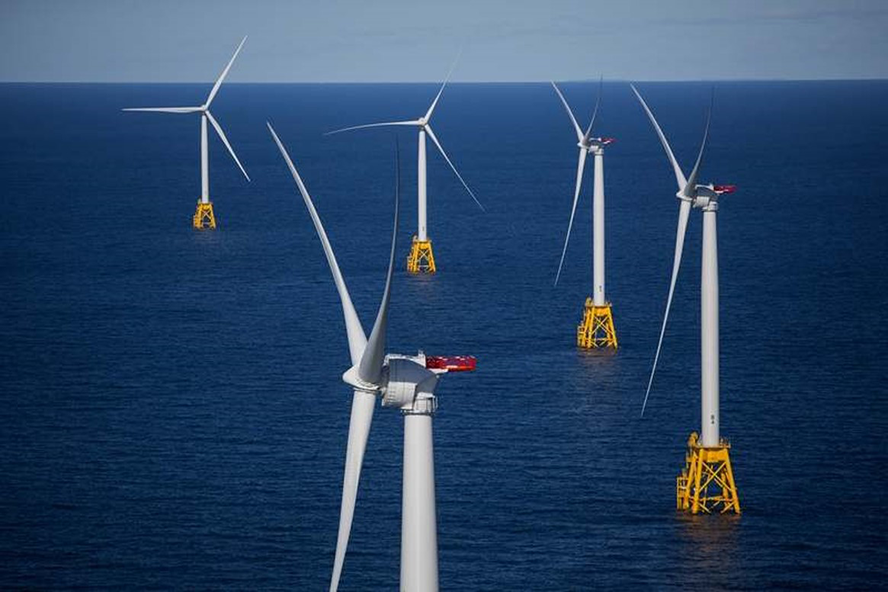
Annette R. Grilli is a Research Professor in the Department of Ocean Engineering at the University of Rhode Island , focusing on ocean renewable energy and coastal hazard assessment. Her work integrates numerical modeling and statistical analysis to study extreme events like tsunamis and storms. Ph.D. in Climatology, University of Delaware (2000) M.S. in Oceanography, University of Liege (1984) B.S. in Geography & Education, University of Liege (1983) Her research spans offshore wind farm siting optimization , tsunami propagation modeling , and coastal erosion dynamics . Recent publications highlight applications of phase-resolving wave models and machine learning to coastal resilience and marine renewable energy systems. Grants include collaborations with NOAA , Department of Energy , and NSF , focusing on coastal hazard visualization , tsunami detection algorithms , and design elevation mapping under climate change scenarios. She contributes to digitalCommons@URI with over 100 publications in Ocean Engineering and Civil Engineering domains.