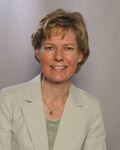
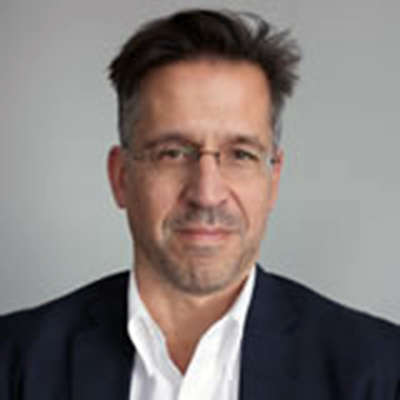
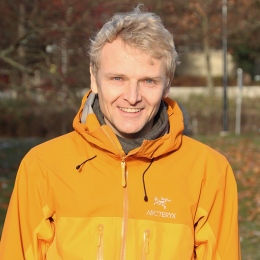
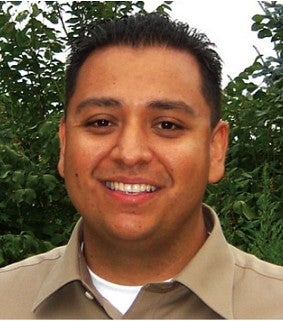
Prof. Dr. Kirsten Jung is a faculty member at the Department of Microbiology , Faculty of Biology , Ludwig Maximilian University of Munich . Her research focuses on bacterial signal transduction, stress response mechanisms, and systems biology approaches to understand microbial regulatory networks. Key research areas include stress-dependent gene expression in bacterial populations Structural and functional analysis of membrane-integrated receptors Metabolism-based chemical communication in bacteria Integration of experimental and computational systems biology Recent publications highlight her lab's work on Escherichia coli epitranscriptomic modifications under heat stress, m 5 C rRNA dynamics, and the role of RNA methylation in host-pathogen interactions. Collaborative studies address bacterial acid stress responses and their implications for antibiotic tolerance. Her interdisciplinary work bridges microbiology with ecological studies, as evidenced by research on biodiversity conservation in forest and urban ecosystems. Publications also demonstrate expertise in advanced imaging techniques (e.g., arterial spin labeling for glioma analysis) and bioinformatics approaches. Current advisees include Gloria Gessinger and Tania P. Gonzalez-Terrazas . She can be contacted at jung@lmu.de .
Jaimejuan Mar Cabeza is a Senior University Lecturer at the University of Helsinki, affiliated with the Faculty of Biological and Environmental Sciences, Organismal and Evolutionary Biology Research Programme, and the Helsinki Institute of Sustainability Science (HELSUS). She leads the Global Change and Conservation Lab and serves as a supervisor for the Doctoral Programme in Interdisciplinary Environmental Sciences and the Doctoral Programme in Wildlife Biology. University of Helsinki: Senior University Lecturer Faculty of Biological and Environmental Sciences Organismal and Evolutionary Biology Research Programme Helsinki Institute of Sustainability Science (HELSUS) Global Change and Conservation Lab (Principal Investigator) Dr. Cabeza's research focuses on ecology, evolutionary biology, and conservation science with particular emphasis on human-wildlife conflicts, climate change impacts on biodiversity, and sustainable pastoral systems. Her work spans multiple continents with significant field research in Madagascar and Kenya. She employs interdisciplinary approaches that integrate ecological, social, and cultural dimensions of conservation. Her recent publications reveal strong trends in bat ecology and pest suppression services, human-carnivore coexistence, and the role of traditional ecological knowledge in conservation. The research demonstrates increasing integration of social science perspectives with ecological studies, particularly examining how cultural practices and governance systems affect conservation outcomes. Best International Teacher (2010) Commendation for good thesis supervision (2009, 2011) Best Talk, Student Conference on Conservation Science (2000) Dr. Cabeza actively supervises 4 PhD students and 3 MSc students, with a strong commitment to education at multiple levels from school children to advanced doctoral candidates. She coordinates the RESPECT field course in Madagascar and has developed novel pedagogical approaches for conservation education. Her research is supported by multiple active projects including 'Thinking like an elephant' (2025-2028), 'Conservation trade-offs' (2024-present), and 'Pastoralism as a global herbivory socio-ecosystem' (2023-2026). She leads the Global Change and Conservation Lab, which brings together researchers from diverse disciplines to address complex conservation challenges at the intersection of ecology, social science, and policy. The lab maintains strong international collaborations, particularly with institutions in Africa where much of their field research takes place.
Jean Daudelin serves as an Associate Professor at Carleton University's Norman Paterson School of International Affairs in Ottawa, specializing in Latin American political dynamics with concentrated expertise on Brazil and Central America. His academic profile integrates conflict studies, development theory, and security policy through extensive field research on armed insurgencies, indigenous mobilizations, and urban violence. His research program critically examines property rights frameworks, illegal market governance, and the political economy of violence, with recent fieldwork focused on drug markets in Recife, Brazil. He investigates how inequality shapes deterrence mechanisms and homicide reduction policies, notably analyzing Pernambuco's "Pact for Life" initiative. His scholarship bridges theoretical contributions in tenure regimes with empirical studies of land conflicts and religious movements across the Global South. Analysis of his 2017-2023 publications reveals dominant thematic clusters around Brazilian urban violence (particularly crack markets in Recife), hemispheric security policy, and foreign policy analysis of Canada-Brazil relations. The work demonstrates methodological innovation in studying illegal economies while maintaining policy relevance for security governance in Latin America.
Christopher Bronk Ramsey is Professor in Archaeological Science and Head of the School of Archaeology at the University of Oxford, affiliated with Merton College. As chair of the INTCAL committee, he oversees global radiocarbon calibration. His expertise spans archaeological science, Quaternary environmental research, and nuclear instrumentation development. Research focuses on radiocarbon dating, Bayesian chronological modeling, and AMS techniques. Key areas include Quaternary chronology, human evolution, climate change impacts, and archaeological applications in the eastern Mediterranean, Amazonia, and Anglo-Saxon England. He develops the OxCal software for statistical chronology analysis. Recent publications emphasize radiocarbon calibration advancements, pre-Columbian land-use in Amazonia, European Neolithic chronologies, and high-precision dating methods. His work integrates archaeology, environmental science, and data science to address chronological challenges across diverse temporal and spatial scales. No specific scientific awards were detailed in the source material. He supervises numerous doctoral students on topics ranging from dendrochronology to digital archaeology and Middle Stone Age chronology. Major projects include FeedSax (Anglo-Saxon agriculture) and HERCA (Amazonian human-environment interactions), securing research grants for interdisciplinary teams. Professor Ramsey directs the OxCal project and co-leads IntCal, IntChron, FeedSax, and HERCA initiatives. These teams develop calibration standards, integrate chronological data, and investigate past human adaptations to environmental change, particularly in Amazonia and Europe.
Konrad Burchardi is Professor of Economics at the Institute for International Economic Studies (IIES) at Stockholm University. His academic work focuses on understanding economic development processes and the social foundations of economic behavior, with significant contributions to development economics and migration studies. Professor Burchardi obtained his PhD in Economics from the London School of Economics (LSE), with prior studies conducted in Munich, Aix-en-Provence, and at LSE. His educational background reflects a strong international foundation in economic theory and development perspectives. His research primarily centers on productivity growth at early stages of economic development and the social underpinnings of economic interactions. Key contributions include field experiments on sharecropping contracts in developing countries, demonstrating how output-sharing rules affect agricultural productivity, and research showing how migration ancestry influences foreign direct investment patterns. His work spans agricultural economics, migration studies, experimental economics, and economic networks, often employing rigorous field and natural experimental designs to establish causal relationships. Analysis of Professor Burchardi's publication record reveals consistent contributions to top economics journals with a focus on development and labor economics. His work shows an evolution from examining micro-level economic behaviors in developing countries to broader questions about migration networks and their economic impacts. His recent publications indicate increasing attention to historical economic data and financial inclusion, with work scheduled through 2025.
Potsdam Institute for Climate Impact ResearchGermany
Hermann Lotze-Campen is an agricultural economist and Head of Research Department 2 'Climate Resilience' at the Potsdam Institute for Climate Impact Research (PIK). He holds a professorship in Sustainable Land Use and Climate Change at Humboldt-Universität zu Berlin within the Faculty of Life Science, Department of Agricultural Economics. His work bridges climate science, agricultural economics, and food systems research with significant policy implications. Lotze-Campen's research focuses on the interplay between climate change, food systems, land use, and economic modeling. His expertise spans agricultural economics, climate change impacts, land use modeling, food systems transformation, sustainable development pathways, and bioeconomy transitions. He has developed global land use modeling frameworks for assessing climate impacts, food and bioenergy demand, agricultural land and water use, trade, and environmental consequences. His research investigates economic model inter-comparisons, lifestyle impacts on food systems, and monitoring land use change and biodiversity transitions. Analysis of his recent publications reveals a strong focus on food system transformations, dietary shifts, and their environmental and economic implications. His work increasingly examines China's food system, planetary boundaries, and the integration of climate mitigation with sustainable development goals. Lotze-Campen frequently employs economic modeling approaches including Applied General Equilibrium (AGE) modeling of agricultural policies and trade. His research demonstrates growing attention to equity considerations in bioeconomy transitions and the connections between food systems and climate targets. Lotze-Campen is actively involved in major international research initiatives including the Food System Economics Commission (FSEC), the FABLE initiative (Food, Agriculture, Biodiversity, Land-Use, and Energy), and the World in 2050 initiative. He has contributed to significant policy reports including 'The Economics of the Food System Transformation: Global Policy Report' and 'Transformations to Achieve the Sustainable Development Goals.' His work has substantial policy relevance for climate mitigation strategies, food security, and sustainable land management. At PIK, Lotze-Campen leads the Climate Resilience research department and has been instrumental in developing integrated assessment models that connect climate science with economic and social dimensions. His work frequently appears in high-impact journals including Nature Sustainability, Nature Communications, and The Lancet Planetary Health, reflecting the interdisciplinary nature and policy relevance of his research.
Gerard Francisco Sandoval is a Professor in the School of Planning, Public Policy and Management at the University of Oregon, where he also serves as Associate Director of the Center for Latino/a and Latin American Studies. He actively contributes to Oregon's public policy landscape as a Commissioner on the Land Conservation and Development Commission (term 2019-2023) and as a councilmember on the State's Housing Stability Council. Dr. Sandoval's educational background includes: PhD in City and Regional Planning, University of California, Berkeley (2007) MCP in City and Regional Planning, University of California, Berkeley (2002) BS in Community and Regional Development, University of California, Davis (2000) His scholarly research focuses on the intersection of city planning, immigration, and sustainable neighborhood revitalization. Sandoval employs detailed narrative case studies to explore ethnic identity, equity, and bioregionalism, with particular attention to how planning can achieve equitable outcomes through environmental ethics, affordable housing access, inclusive land-use policies, and transparent public participation mechanisms. His work often centers on immigrant communities, examining gentrification, displacement, infrastructure, and the socio-economic implications of development in marginalized neighborhoods. Born in Guatemala, Sandoval's personal connection to immigration issues stems from his family's experience leaving Guatemala during its civil war. Analysis of Sandoval's publications reveals a consistent focus on urban equity, with particular emphasis on how immigrant communities navigate and shape urban spaces. His research trajectory shows an evolution from studying transnational networks of undocumented workers to broader examinations of racial equity in planning, gentrification, and sustainable neighborhood revitalization. The geographic scope of his work spans from specific case studies in places like MacArthur Park in Los Angeles and Postville, Iowa, to theoretical explorations of planning ethics and practices across the Galápagos Islands and Oregon's forest communities. Dr. Sandoval's significant contributions to the field have been recognized with several prestigious awards: Chester Rapkin Award (2014) for best planning article Paul Davidoff Book Award honorable mention (2013) Barclay Gibbs Jones Award for best dissertation in planning (2009) Rev. Dr. Martin Luther King Jr. Award from the University of Oregon for promoting diversity, social justice, and equity As an academic leader, Sandoval serves as the Dean's Fellow for Diversity at the College of Design and leads the college's Diversity and Inclusion Committee. His public service extends beyond academia through his appointments to state commissions where he applies his expertise to address Oregon's housing and land use challenges. His research has attracted media attention, with coverage in Newsweek, Los Angeles Times, and Oregon Quarterly. Sandoval's work bridges academic research with practical planning applications, particularly in the context of immigrant integration and sustainable community development. Dr. Sandoval maintains active research connections with communities in Oregon, Guatemala, and the Galápagos Islands, where he studies bioregional revitalization. His current research examines equitable planning outcomes achieved through integrating environmental ethics, providing access to affordable housing, supporting inclusive land-use policies, recognizing generative economic development, and designing transparent public participation mechanisms to revitalize urban cities and rural towns.
Prof. Dr. Endriatmo Soetarto is a faculty member at IPB University , affiliated with the Faculty of Human Ecology and the Department of Communication & Community Development . He is based in Gedung FEMA, L5 W1, Jalan Kamper Kampus IPB Darmaga, Bogor, Indonesia. His research focuses on social transformation processes and sustainable resource use in rural Indonesia, particularly in Jambi. His work addresses critical intersections of land transfer, social vulnerability, and economic development policy, aiming to enhance understanding of sustainable resource governance in agrarian societies.
Dr. Christopher De Sousa is a Professor at the School of Urban and Regional Planning, Toronto Metropolitan University, where he has served as school director (2011–2018) and associate director (2022–2024). He previously held roles at the University of Wisconsin-Milwaukee and the University of Toronto, where he earned his BA, MScPL, and PhD. His expertise spans brownfields redevelopment, sustainability, environmental management, and park planning. Education: BA in Environment and Resource Management (University of Toronto) MSc in Planning (University of Toronto) PhD in Geography (University of Toronto) Research Interests: Dr. De Sousa's work focuses on brownfields redevelopment, sustainability reporting, parks planning, and green building strategies. His multidisciplinary approach integrates environmental science, policy analysis, and urban design to address challenges in contaminated land reuse and sustainable urban development. Current projects include a SSHRC-funded study on brownfields financing in Canada. Grants & Awards: Recipient of Canada’s Brownfielder of the Year (2018) SSHRC Insight Grant for brownfields financing research ATSDR Honor Award for public health service (2014) Labs & Initiatives: He leads the Brownfields Research Lab (brownfieldsresearchlab.com) and collaborates with organizations like the Canadian Brownfields Network and the ATSDR Brownfields/Land Reuse Health Initiative. His work bridges academia and practice, informing policy and urban planning strategies globally.
Dr. Christoph Trinkl serves as Head of the Institute of new Energy Systems (InES) at Technische Hochschule Ingolstadt, a position he has held since 2008. His work focuses on renewable energy technologies and sustainable energy systems development, with particular expertise in solar thermal applications and system integration. His research interests include: Green Technologies Renewable Energy Technologies Solar Energy Engineering Solar Heating and Cooling Renewable Energy Systems for Industrial, Domestic and Mobility Applications Technology Transfer and Network Management Dr. Trinkl's educational background includes a PhD in Engineering from De Montfort University Leicester's Institute of Energy and Sustainable Development (UK) in 2007, following his work as a researcher at Technische Hochschule Ingolstadt from 2001-2007. His degree course in Mechanical Engineering and Business (1997-2001) provided the foundation for his interdisciplinary approach to energy systems. His recent publications demonstrate a strong focus on practical applications of renewable energy technologies, particularly in solar thermal systems, heat pump integration, and district heating networks. His research spans from fundamental engineering analysis of collector technologies to large-scale system integration and optimization, with increasing emphasis on real-world implementation challenges and optimization techniques including AI-driven approaches. Dr. Trinkl's extensive publication record spanning over two decades shows an evolution from fundamental collector technology research to broader energy system integration, addressing both technical and practical implementation considerations across diverse contexts from industrial applications to rural energy access solutions.
Marten Scheffer is a Full Professor at Wageningen University & Research , specializing in Aquatic Ecology and Water Quality Management . His work bridges ecology, climate science, and mental health, focusing on tipping points in ecosystems and social systems. He has received the prestigious Spinoza Prize 2009 , Netherlands' highest scientific honor. Research Interests: His research explores Anthropocene dynamics , ecological resilience , climate change impacts , and psychiatric disorders through dynamical systems theory . Notable projects include studying boreal forest collapse and trust dynamics in economies. His work also addresses global sustainability and early warning signals for critical transitions in social-ecological systems. Recent Articles: His 2025 publications highlight trust erosion in weak governance , ecological tipping points , and revolutionizing psychiatric diagnosis . 2024 work includes computational models of panic disorders and resilience indicators for disease outbreaks. Advising & Grants: He supervises PhD students including Agrawal (river commons), Capriati (marine protected areas), and Delecroix (infection warnings). Active in projects funded across ecosystem resilience , AI applications , and climate policy . Labs & Collaborations: Collaborates globally on tipping points research and mental health systems. Datasets include boreal forest dynamics and human climate niche models.
Professor Kathy Douglas is the Associate Deputy Vice Chancellor, Learning, Teaching & Quality in RMIT University's College of Business and Law. She leads initiatives in pedagogy innovation, program development, and educational governance. With over 20 years in dispute resolution (ADR), her research spans legal education, mediation practices, and technology-enhanced learning. Previously, she served as Dean of the Graduate School of Business and Law (2018–2022), receiving the 2020 Vice Chancellor’s Leadership Award for Imagination. Her work integrates transformative educational experiences with impactful research, focusing on community, industry, and staff engagement. Research Interests: Alternative Dispute Resolution (ADR) practices and education Legal pedagogy and blended learning Technology’s role in dispute resolution and legal training Mediation ethics and emotional intelligence Awards: Vice Chancellor’s Leadership Award for Imagination (2020) Advising & Grants: Supervises research projects in mediation and legal practice innovation Prior grants focused on ADR training and educational technology integration Labs/Teams: Leads the College’s Learning & Teaching Quality portfolio, collaborating with academic boards and industry partners.
Ryan Galt is a Professor in the Department of Community & Regional Development at the University of California, Davis. His research focuses on the governance of agrifood systems, political ecology, and the intersection of agriculture, environment, and society across scales. He holds a Ph.D. (2006) and M.S. (2001) in Geography from the University of Wisconsin, Madison, and a B.A. (1999) in Geography from UC Berkeley. Key research themes include: (1) pesticide use and regulation in global food systems, (2) community-based food systems like CSA models, (3) wildfire resilience in agricultural landscapes, and (4) agroecological transitions in the Corn Belt. He emphasizes participatory methodologies and critical pedagogy in sustainability education. Recent work explores pandemic impacts on direct-market farmers, pesticide trade inequities, and institutional pathways for agricultural diversification. His publications span 30 years of addressing systemic challenges in food systems through interdisciplinary approaches.
Douglas Bird is Professor of Anthropology at Penn State, researching interactions between social/ecological systems in foraging societies. His collaborative fieldwork with Martu Aboriginal communities examines hunting, fire ecology, and landscape evolution. Key research areas: Ethnoarchaeology of hunter-gatherers Anthropogenic fire regimes Co-evolution of humans/ecosystems Coastal archaeology Field sites include Australia's Western Desert and Torres Strait Islands.
University of California, Los AngelesUnited States
Michael Manville is a Professor and Chair of Urban Planning at the UCLA Luskin School of Public Affairs. His research focuses on transportation policy, land use regulation, and housing affordability, with a particular emphasis on the interplay between these fields. He holds an MA and PhD in Urban Planning from UCLA Luskin, and previously served as Assistant Professor at Cornell University's City and Regional Planning department. Dr. Manville's work examines topics such as road/parking pricing, determinants of transit use, and the impact of land use policies on housing markets. He has received funding from the John Randolph Haynes Foundation, TransitCenter, and University Transportation Centers. His research has been published in top journals across planning, economics, and urban studies. His recent articles highlight trends in transportation equity, housing policy contradictions, and the consequences of parking requirements. Key publications include analyses of post-pandemic transit ridership decline, equity implications of road-user charges, and the regulatory barriers to housing development. Awards: ACSP Distinguished Educator (2017) Consulting: Advised developers, environmental groups, local governments, and the United Nations Grants: Over $2.5M in research funding from multiple foundations and agencies He leads UCLA's urban policy research initiatives and collaborates with municipal governments to translate academic findings into actionable policies. His lab focuses on innovative solutions to urban challenges like housing shortages and sustainable mobility.