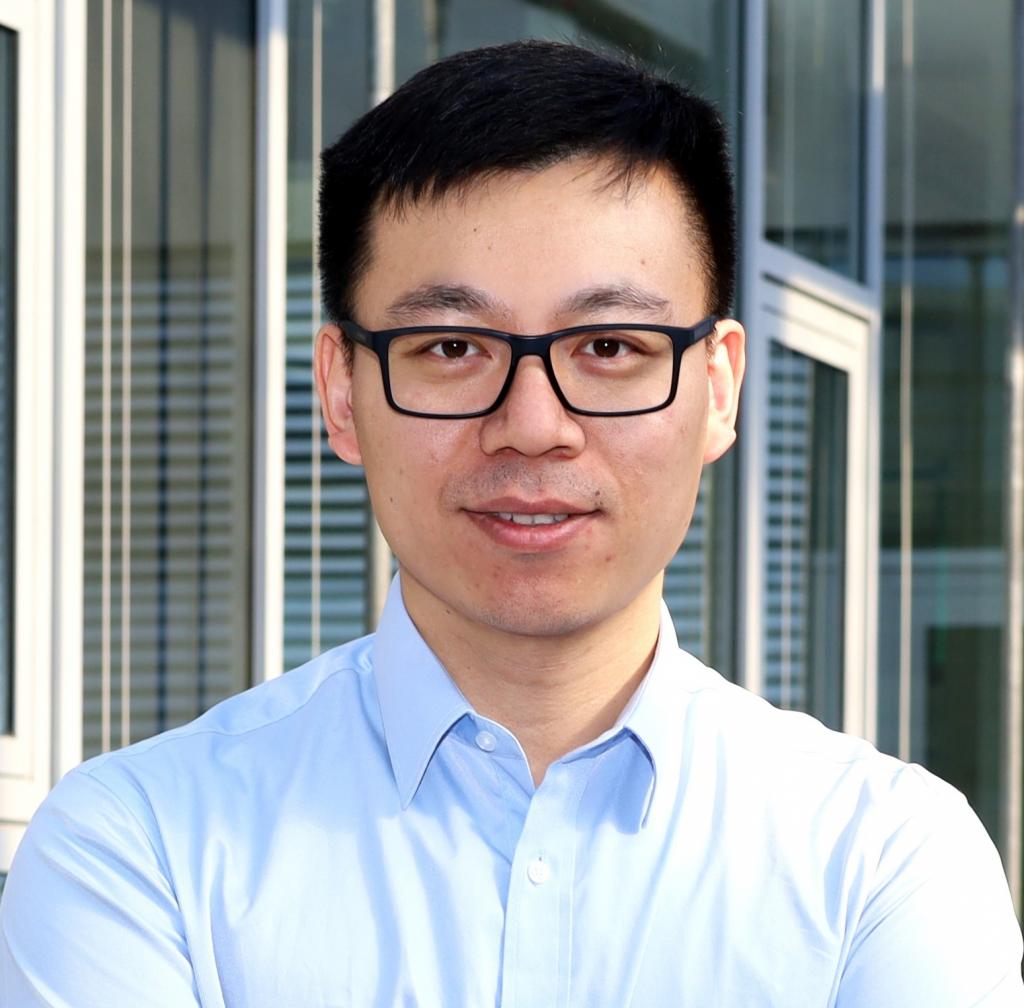
Dr. Jian Wang is the Head of an independent research group at the DWI Leibniz Institute for Interactive Materials, focusing on interfacial chemistry and functional materials. His work bridges plasma-liquid synthesis, polymer mechanochemistry, and biomedical applications. He holds a PhD from EPFL (2021) and completed postdoctoral research at UIUC, supported by Swiss National Science Foundation fellowships. Education: Bachelor's: Jilin University (2012) Master's: Renmin University of China (under Prof. Yapei Wang) PhD: EPFL (under Prof. H.-A. Klok) Research Interests: Plasma-liquid synthesis for sustainable materials Piezoelectric polymer brushes for drug delivery Mechanochemistry in biomedical polymers Plasma electrochemistry for organic synthesis Awards: EPFL Thesis Distinction 8% Award (2021) Swiss National Science Foundation Postdoc Mobility Fellowship (2022) Best Paper Award at ACS Polymer Mechanochemistry Symposium (2023) Grants & Collaborations: Swiss National Science Foundation mobility grants Collaborations with nuclear/plasma engineering teams Led the development of injectable mechanochemical nanoparticles and plasma-based synthesis platforms. His interdisciplinary work addresses sustainability and healthcare challenges through innovative material design.
Małgorzata Mirgos is an Assistant Professor in the Department of Vegetable and Medicinal Plants at Warsaw University of Life Sciences, where she has been actively contributing to research and education since 2005. Her work is deeply rooted in horticultural science with a focus on sustainable cultivation methods and plant quality. Her research interests span Horticulture and vegetable production Medicinal and aromatic plants Hydroponic and soilless culture systems Effects of artificial lighting (LED, HPS) on crop yield and quality Bioactive compounds, particularly phenolics Mineral nutrition in protected cultivation She employs experimental approaches to optimize plant growth and nutritional quality under controlled environments. Her recent publications (2010–2025) reveal a strong thematic focus on the impact of lighting technologies on crops such as cucumber, tomato, and basil, as well as phytochemical analysis of medicinal species like elderberry, dropwort, and Primula. These studies combine agronomic practices with analytical chemistry to assess both productivity and health-promoting properties of plants. While no scientific awards are listed in the available record, her consistent publication output in reputable journals such as Scientia Horticulturae , Agronomy , and Journal of Chromatography A reflects sustained scholarly engagement. She frequently collaborates with researchers from similar disciplines, indicating active participation in research teams, though specific lab affiliations are not mentioned. There is no information available regarding graduate student supervision or external grant funding. However, her involvement in multi-year experimental studies suggests potential participation in funded research projects.
Marek Gajewski is a Professor in the Department of Vegetable and Medicinal Plants at Warsaw University of Life Sciences, where he has been employed since October 1, 2010. His academic career at the same institution dates back to 1990, indicating a long-standing and significant contribution to horticultural science. Institution: Warsaw University of Life Sciences Department: Department of Vegetable and Medicinal Plants Position: Professor Start Date (Current Role): 2010-10-01 His research interests center on horticulture, particularly focusing on postharvest physiology, plant quality, nutrient management, and sustainable cultivation practices. He investigates the biochemical and physiological aspects of vegetables and medicinal plants, including carotenoid metabolism, antioxidant properties, and the effects of growing conditions on produce quality. The recent publications of Marek Gajewski demonstrate a consistent focus on the postharvest quality, storage behavior, and nutritional composition of horticultural crops such as tomatoes, cucumbers, lettuce, pumpkins, potatoes, carrots, and specialty crops like mulberry and mint. His work spans controlled environment agriculture, organic and biodynamic farming systems, and the use of advanced technologies like LED lighting and 1-MCP treatments to optimize yield and quality. While no scientific awards are explicitly mentioned in the provided data, his extensive publication record in high-impact horticultural journals reflects a strong research profile. No formal advising roles or student supervision are listed in the available records. There is no mention of specific grants or funding sources. His research often involves collaboration with interdisciplinary teams across institutions in Poland and Lithuania, focusing on practical and sustainable improvements in horticultural production and postharvest management.
Marco Schewa is a doctoral candidate at the Technical University of Munich (TUM) under the Chair of Circuit Design (Prof. Brederlow). He also serves as Managing Director of Schewa & Friesen Technologies, a company he co-founded in 2020, specializing in customized hardware solutions, 3D product visualization, and LED technology. His academic background includes a B.Sc. and M.Sc. in Electrical and Computer Engineering from TUM, with a focus on microwave engineering and hardware development. Professional experience includes roles at DLR, Intel, and the Max-Planck Society’s semiconductor laboratory, alongside student projects that deepened his expertise in hardware design. Research Interests: His academic work centers on low-power analog circuits, piezoelectric sensor amplifiers, and DEPFET pixel detector amplifiers. His commercial activities extend to integrated amplifier circuits, modular LED lighting systems (Agriphoton EVO series), and photorealistic 3D product visualization services. Professional Roles: Doctoral Candidate, Chair of Circuit Design, TUM (since 2020) Managing Director, Schewa & Friesen Technologies Labs/Teams: Associated with the TUM Chair of Circuit Design and actively involved in his company’s R&D initiatives.
Mari Suoheimo is a prominent academic at the University of Lapland's Faculty of Art and Design, specializing in service design, wicked problems, and cultural heritage. She has led/co-led four major research projects funded by the EU and Finnish ministries, including ILO (2021-2023), Korona Co-creation (2020-2021), ARKTORI (2018-2022), and VOITTO (2017-2021). Her work bridges design thinking with societal challenges, particularly in education and public policy. Research interests focus on systemic service design, inclusive education frameworks, and community engagement through interactive storytelling. She has authored/co-authored 41 publications since 2016, with recent works exploring systemic design integration (2025) and wicked problem-solving in education (2024). Awarded the Heritage Prize (2001) and Silent Hike recognition (2018), Suoheimo also serves on academic review boards and conference organizing committees. Her lab activities include leading workshops on empathic service design and collaborating internationally on multispecies creative explorations.
Mihail Nazarov is an Associate Professor and Leading Scientific Researcher at the Laboratory of Physics of Semiconductor Compounds 'Sergiu Radautsan' within the Institute of Applied Physics, University of Moldova. His research focuses on luminescent materials, semiconductor compounds, and optical properties of advanced phosphors. He has extensive experience in synthesizing and characterizing materials like SrAl2O4:Eu2+, YTaO4:Eu3+, and YNbO4:Tb3+ through combustion methods and other techniques. Education: PhD in Physics His work spans cathodoluminescence, photoluminescence, and structural analysis of materials under various excitations (UV, X-ray, electron beams). Key contributions include studies on persistent phosphors for biomedical and environmental applications, such as coral surface luminescence and underwater visibility. He collaborates on EU-funded projects (H2020-MSCA-RISE) and bilateral initiatives. His publications emphasize energy transfer mechanisms, defect centers in crystals, and computational modeling of electronic structures using DFT. Labs/Teams: Active in the Laboratory of Physics of Semiconductor Compounds and participates in interdisciplinary projects involving materials synthesis, optical spectroscopy, and device applications.
Thomas Lapauw is a postdoctoral researcher at the Vrije Universiteit Brussel (VUB), affiliated with the Electronics and Informatics department in the Research - Development - Innovation division. His work focuses on advancing fluorescence lifetime imaging (FLT) systems, particularly through the development of novel time-gated cameras and sensors. He has contributed to projects like CoDaFlight and IOF GEAR, which aim to enhance tumor imaging and surgical guidance using fluorescent tracers and imaging technologies. His research interests span biomedical engineering, photonics, and medical imaging, with a focus on real-time fluorescence lifetime imaging systems, time-gated camera design, and applications in oncology. Lapauw received the IMEC award for best master thesis in 2017 and was part of the team honored with the SPIE Europe 2022 Innovation prize for their project on fluorescence imaging systems. Lapauw’s work involves collaborations on fluorescent probe development, endoscopy imaging, and preclinical studies using animal models. His contributions include the design of compact sub-nanosecond time-gated cameras like the tauCAMTM, which enable high-speed FLT imaging for clinical and diagnostic applications. Key Projects: CoDaFlight: Developing fluorescence imaging for tumor detection. IOF GEAR: Exploring single-domain antibodies in fluorescence-guided surgery. Notable Publications: Fluorescence Lifetime Endoscopy with a Nanosecond Time-Gated CAPS Camera (2025) Near-Infrared azaBODIPY Probes for In Vivo Imaging (2025)
Dr. Daniel Burgarth holds an honorary appointment in the Department of Mathematics at Aberystwyth University. His research focuses on quantum control theory, mathematical physics, and quantum technology. He has contributed to areas such as quantum decoherence, open quantum systems, and quantum information processing. Recent work includes advancements in optomechanical correlations, numerical methods for quantum systems, and theoretical frameworks for quantum simulators. Burgarth has led or co-led multiple externally funded projects, including grants from the Engineering and Physical Sciences Research Council (EPSRC) and the London Mathematical Society. His projects span topics like blind quantum control, noisy quantum device characterization, and quantum system identification. Key publications include studies on dynamical decoupling of Hamiltonians, hidden Markov models, and Lindbladian purification. Collaborations with international researchers highlight his work on quantum dynamics, parameter estimation, and software tools like the QuTiP-BoFiN library. Education: Advanced degrees in theoretical physics and mathematics (not explicitly detailed in text). Labs/Teams: Works with interdisciplinary teams in quantum control and computational physics. Grants: PI roles in 5 major grants (2012–2021), including £ funding for quantum device research and summer schools.
Piotr Matyba is an Assistant Professor in the Department of Physics at Umeå University. His research focuses on optoelectronic materials, particularly light-emitting electrochemical cells (LECs), organic semiconductors, and carrier dynamics in functional materials. He has contributed to understanding doping mechanisms, device stability, and energy conversion processes in organic electronics. Key research interests include perovskite solar cells, graphene-based optoelectronics, and ultrafast phenomena in materials. His work bridges condensed matter physics with practical applications in renewable energy and flexible electronics. Publications highlight advancements in LEC design, plasma-assisted doping, and attosecond spectroscopy. Collaborations with institutions like the Royal Society of Chemistry and American Chemical Society underscore his interdisciplinary approach.
Thomas Van Den Dries is a postdoctoral researcher at the Vrije Universiteit Brussel (VUB), affiliated with the Department of Electronics and Informatics (ETRO). His research focuses on developing sub-nanosecond time-gated image sensors (Current-Assisted Photonic Samplers, CAPS) for real-time fluorescence lifetime imaging applications, particularly in medical diagnostics and surgical guidance. He holds a PhD in micro- and nano-electronics from VUB (2023) and an M.Sc. in Electrical Engineering (2018), both with highest honors. Key research areas include image sensor design, CMOS chip technology, and photonics. He has contributed to projects like CoDaFlight (2022–2026), focusing on fluorescent light imaging. His work spans preclinical studies using animal models, endoscopy imaging systems, and novel fluorophore development for in vivo applications. Affiliations: VUB, ETRO Department, CoDaFlight Project Grants: Active EUAR96 grant (CoDaFlight) Labs/Teams: Collaborates with Hernot, Lapauw, and Ingelberts on FLIM systems Notable awards include the BrEA Prize (2018), IMEC’s Best Master Thesis (2018), and SPIE Europe Innovation Award (2022). He has authored over 20 peer-reviewed publications and contributed to conferences on biomedical imaging and sensor technology.
Sonia Mohamadnia is a Postdoc Researcher in the Department of Chemical and Biochemical Engineering at Technical University of Denmark (DTU), working with the Bio Conversions team and DTU Microbes Initiative. Her research directly contributes to multiple UN Sustainable Development Goals through innovative biochemical engineering solutions. Her primary research interests include: Carotenoid research encompassing structures, biological activities, and market analysis Microalgal biotechnology focusing on lutein and β-cryptoxanthin production Photobiology applications using specialized LED lighting systems Advanced biomaterials development for wound care applications Dr. Mohamadnia employs cutting-edge methodologies including Design of Dynamic Experiments (DoDE) to optimize production systems. Her work bridges fundamental biochemical research with practical applications in nutrition, pharmaceuticals, and sustainable biotechnology. Her recent publication portfolio demonstrates strong interdisciplinary collaboration across multiple institutions, with emphasis on optimizing microalgal production systems and developing novel biomaterials. The research shows particular innovation in manipulating light spectra to enhance carotenoid yields and creating multifunctional hydrogel composites for medical applications.
Katarzyna Retzer serves as a Principal Investigator at the Institute of Forest Ecology, University of Natural Resources and Life Sciences Vienna. Her work bridges plant biology, cell dynamics, and ecological applications. Education: PhD in Applied Genetics and Cell Biology (2002-2007), University of Vienna Research Focus: Auxin transporter dynamics, root mechanobiology, and development of imaging systems for dark-grown roots Her recent publications highlight: Elucidating SnRK1.1 as a master regulator of organ-specific growth-defense programs Innovations in Dynamic Dark Root Chamber for non-invasive phenotyping Exploring KIN10 integration of carbon availability in directional root growth Mechanistic insights into PIN2 sorting and ubiquitination in Arabidopsis
Manuel A. Pouchon is a Maître d'enseignement et de recherche at École Polytechnique Fédérale de Lausanne (EPFL), affiliated with the School of Basic Sciences (SB), the Institute of Physics (IPHYS), and the Laboratory of Reactor Physics and Systems Behaviour (LRS). He is also a senior researcher at the Paul Scherrer Institute (PSI), where he serves as Head of the Laboratory for Nuclear Materials (LNM) and Leader of the Advanced Nuclear Materials (ANM) Group. His work bridges academic research and national laboratory innovation in nuclear science. His educational background includes a PhD in Interdisciplinary Sciences from the University of Geneva (1999) focusing on zirconia-based nuclear fuels for plutonium utilization in light water reactors, and a physics diploma from ETH Zurich (1996) on photorefractive effects in waveguides. His academic journey began as a PhD student at PSI in 1997, followed by an International Fellowship at Japan’s JNC (now JAEA) from 2000 to 2002. Manuel Pouchon's research focuses on the development and characterization of nuclear fuels and structural materials for advanced nuclear reactors. Key areas include radiation damage mechanisms, sample miniaturization techniques, thermal conductivity, sintering behavior, and mechanical interactions in ceramic fuel beds. He employs finite element modeling to simulate material behaviors and has led projects such as the FUJI project and the Inert Matrix Fuel Project, involving international collaborations with JNC (Japan) and NRG (Netherlands). Recently, he has initiated research on particle fuel production and application. His teaching at EPFL includes graduate-level courses such as Nuclear Fuels and Materials , Advanced Topics in Nuclear Reactor Materials , Effects of Radiation on Materials , and Fusion and Industrial Plasma Technologies . He has supervised multiple PhD theses, including those of Bhattacharya Shaileyee, Cavaliere Andrea, Choi Kwanghoon, and others, reflecting his strong mentorship in nuclear materials science. Head, Laboratory for Nuclear Materials (LNM), PSI (2015–present) Leader, Advanced Nuclear Materials (ANM) Group, PSI (2012–present) Materials Scientist, PSI (2008–present) International Fellow, Japan Nuclear Cycle Development Institute (JNC) (2000–2002) He has not received any explicitly mentioned scientific awards. His research leadership includes directing major programs in nuclear fuel development and radiation effects, contributing to both national and international nuclear energy research agendas. He is not part-time, not retired, and remains an active academic and research leader.
Irene Brückle is a Professor for Conservation and Restoration of Works of Art on Paper at the State Academy of Fine Arts Stuttgart. With a career spanning over 25 years, she has held key roles including Head of the Conservation and Restoration Program (since 2008) and former leadership positions at Berlin State Museums. Her expertise bridges theoretical and practical conservation, emphasizing scientific rigor and historical material analysis. Doctorate from State Academy of Fine Arts Stuttgart (2007) Editorial roles: Associate Editor of Studies in Conservation (since 2019), co-editor of Restaurator (2007–2013) Research interests focus on: Paper degradation mechanics under environmental stressors Historical and modern bleaching techniques Chemical interactions in conservation treatments Preservation of graphic works, archives, and library materials Recent publications highlight advancements in LED bleaching, hydrogen peroxide alternatives, and structural support systems for fragile materials, reflecting her commitment to innovative yet scientifically validated methods across Journal of Paper Conservation , Restaurator , and Topics in Photographic Preservation . Scientific awards include: Sheldon and Caroline Keck Award for Conservation Education (2005) Getty Senior Fellowship (1990–1991) Samuel H. Kress Foundation Fellowship (2001) She supervises doctoral students like GJ Dietz (16th-century charcoal drawings) and L. Stiber (16th–17th-century Italian woodcuts), and leads DFG-funded projects on optical radiation damage prediction and Piranesi print identification.
Nicolas Johannes Diercks is a Doctoral Assistant at the Laboratory for Molecular Engineering of Optoelectronic Nanomaterials (LIMNO) at École Polytechnique Fédérale de Lausanne (EPFL), within the School of Basic Sciences and the Institute of Chemical Sciences and Engineering. He is also a Doctoral Student in the Chemistry and Chemical Engineering program under the EDOC doctoral school. His research focuses on the molecular engineering of optoelectronic nanomaterials, bridging chemistry, materials science, and nanotechnology. This interdisciplinary work aims at designing novel functional materials for optoelectronic applications such as solar cells, LEDs, or sensors. The available data does not include any scientific awards or publications. Nicolas is actively contributing to research at EPFL as part of the LIMNO lab team but there is no information available about students he may be advising or any grants he has received. The research is conducted within the Laboratory for Molecular Engineering of Optoelectronic Nanomaterials (LIMNO), a research group at EPFL focused on the synthesis, characterization, and application of advanced nanomaterials for light-matter interaction technologies.