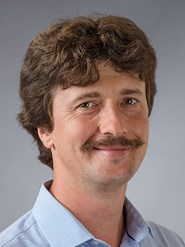
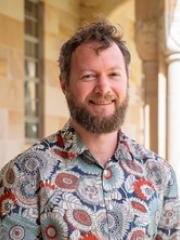
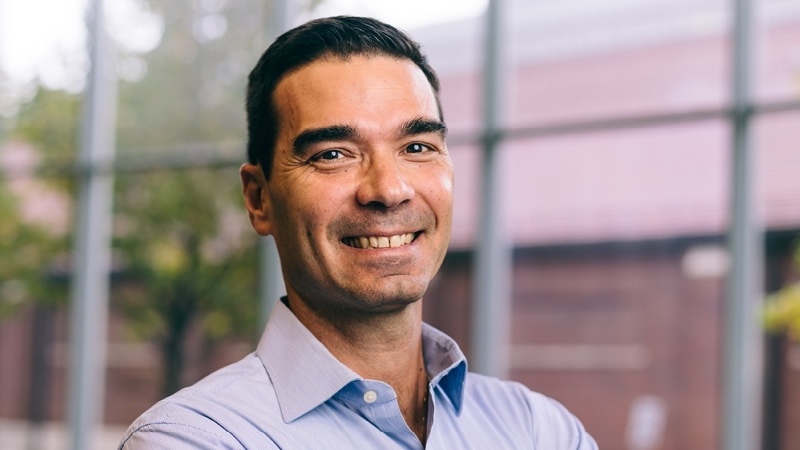
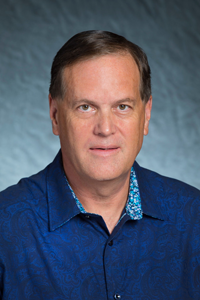
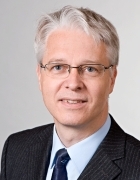
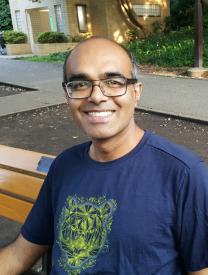
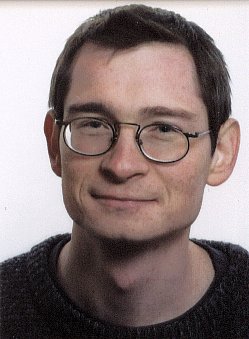
Roman Iakymchuk is an Associate Professor at the Department of Computing Science within Umeå University, Sweden. His work focuses on numerically reliable and sustainable algorithmic solutions, emphasizing accuracy, reproducibility, and energy efficiency in high-performance computing environments. Research Interests: Numerical linear algebra, parallel programming models, sustainable computing, and optimization of distributed systems. Teaching: Courses on scientific computing, CUDA/OpenMP/MPI-based parallel programming, and floating-point error correction. The articles highlight his contributions to mixed-precision computing, numerical reliability in Krylov solvers, and energy-efficient practices in HPC systems. His work spans algorithm design, tool-assisted implementation, and European collaborative projects like CEEC.
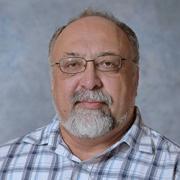
Diego Ayala is a researcher in the Department of Mathematics and Statistics at McMaster University, focusing on interdisciplinary work at the intersection of Analysis, Optimization, and Numerical Analysis. His research primarily investigates fluid dynamics through partial differential equations and computational methods. Research areas: Computational Fluid Dynamics, Numerical Methods for PDEs, Optimization, and applications to urban development. Teaching experience: Instructor for MATH 1F03 (Calculus) and MATH 4Q03/6Q03 (Numerical Methods), with prior roles as Teaching Assistant in advanced differential equations and mathematical physics courses. Publications highlight his work on Navier-Stokes equations, palinstrophy/enstrophy growth analysis, and vortex dynamics simulations using Krylov Subspaces solvers. Contact: ayalada@math.mcmaster.ca . Videos of his numerical simulations are available online.
Prof. Alexander Gelfgat is a faculty member at the School of Mechanical Engineering , part of the Faculty of Engineering at Tel Aviv University . His research focuses on hydrodynamic stability , bifurcations , flow control , and computational fluid dynamics (CFD) , particularly in crystal growth , MHD , and high-performance computing contexts. Research Interests: Hydrodynamic stability and bifurcations Convection and rotating flows Shear layer dynamics Moving boundary tracking Crystal growth and melt flow His work spans three-dimensional flow instabilities , with applications to Czochralski crystal growth , Dean flows , and two-phase stratified channels . Recent studies emphasize non-modal disturbances and quasi-two-dimensional flow projections for enhanced visualization. Prof. Gelfgat has advised notable researchers including Yuri Feldman and Helena Vitoshkin . His publications address critical challenges in boundary layer instability , cross-flow wave propagation , and pressure-velocity coupled formulations for lid-driven flows in complex geometries.
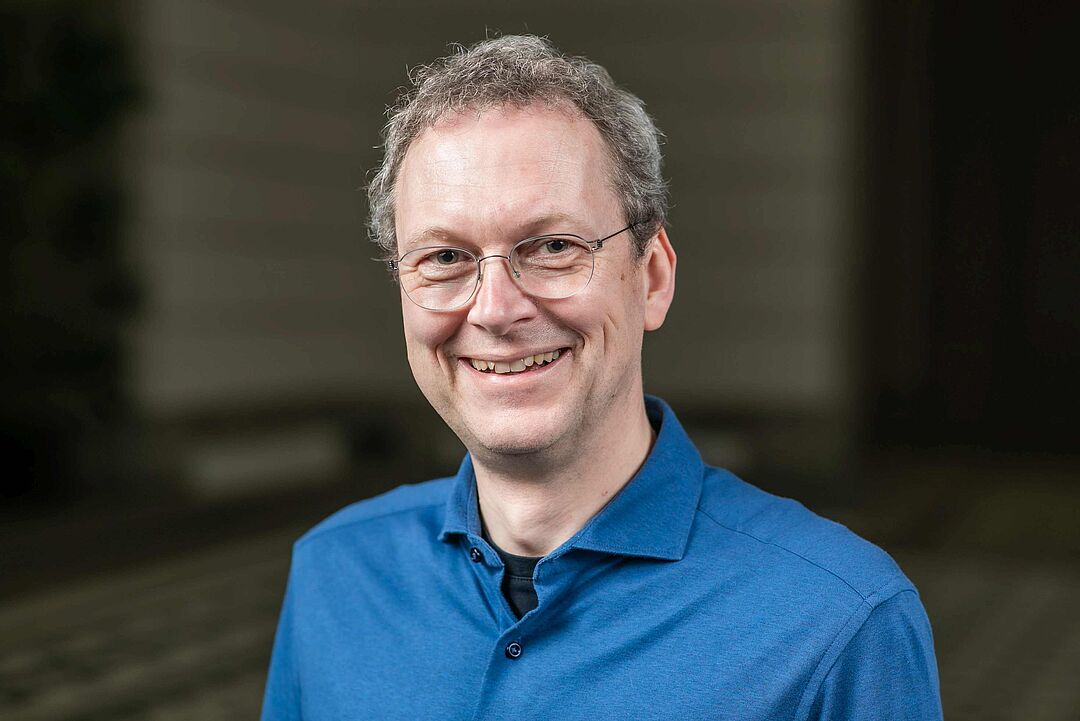
Jörg Liesen is a Professor at the Institute of Mathematics , Technical University of Berlin, specializing in Numerical Linear Algebra within Faculty II - Mathematics and Natural Sciences. He is actively engaged in research, teaching, and international collaborations. Editorial Board Member: Calcolo (Springer) and SIAM Journal on Matrix Analysis and its Applications Co-founder: E-NLA Online Series Leadership Roles: Heisenberg Professor, Former Emmy Noether Group Leader His research spans numerical methods for linear systems, matrix functions, differential-algebraic equations, and historical mathematical analysis. Recent activities include co-organizing international conferences like the Gene Golub Summer School and Grassmann Bicentennial Conference. Liesen's publications focus on krylov subspace methods , matrix iterations , and gravitational lensing . His work bridges classical mathematical theory with modern computational applications. Scientific Awards Alston S. Householder Award DFG Heisenberg Professorship Emmy Noether Group Fellowship He balances teaching and research through mathematical communication , emphasizing "aha moments" for students. International collaborations with Czech Republic and US researchers highlight his global engagement.
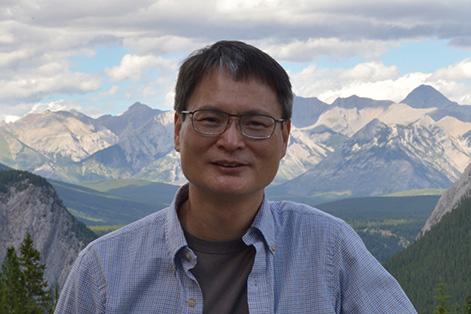
Qiang Ye is a Professor in the Department of Mathematics at the University of Kentucky. His research focuses on machine learning, deep learning, numerical analysis, and optimization algorithms, with a particular emphasis on neural network architectures, generative adversarial networks (GANs), and numerical methods for solving large-scale linear systems and eigenvalue problems. He has contributed to advancements in recurrent neural networks, batch normalization preconditioning, and symmetry-exploiting convolutional networks. Ye's work bridges theoretical foundations and practical applications, including speech enhancement, molecular representation learning, and industrial welding process monitoring. His research often integrates insights from numerical linear algebra to improve the stability and efficiency of machine learning models. Recent efforts include developing adaptive optimization techniques and regularization methods to address challenges in deep learning training and model accuracy. Awards and grants are not explicitly listed in the provided information. Ye collaborates on interdisciplinary projects, as evidenced by co-authored papers with researchers from engineering and computational chemistry domains. His lab's activities likely center on computational methods for scientific and engineering problems, though specific lab names or teams are not mentioned.
Professor Anne Greenbaum specializes in numerical analysis at the University of Washington's Department of Applied Mathematics, with adjunct appointments in Statistics. Her work spans matrix computations, iterative linear solvers, and numerical methods for partial differential equations. Research investigates non-normal matrices, convergence properties of iterative algorithms, and error estimation techniques. Seminal contributions include analysis of Lanczos and conjugate gradient methods under finite precision arithmetic. Honors include SIAM Fellowship and the Bolzano Medal for mathematical sciences. Author of 'Iterative Methods for Solving Linear Systems' and co-author of numerical methods textbooks.
Associate Professor Rowan Gollan serves as Director of HDR Students and faculty member at the School of Mechanical and Mining Engineering , University of Queensland. His work focuses on hypersonics and computational fluid dynamics with applications to spacecraft re-entry systems. Research Highlights: Developing Eilmer - an open-source hypersonic flow solver Advancing magnetohydrodynamic aerobraking for planetary entry Optimizing air intake systems for next-gen launch vehicles Investigating boundary layer transition in hypersonic flows Scientific Achievements: Awarded ARC DECRA (2014) for hypersonic propulsion research Recipient of John Simmons Prize (2010) and Dean's Award (2010) Secured over 10 research grants from institutions like DSTO and ARC Academic Leadership: Currently supervises 8 PhD students as Principal/Associate Advisor Authored 108 publications (33 journal + 69 conference papers) Active in hypersonic facility development (T6 Stalker Tunnel, X2/X3 expansion tubes)
Petros S. Drineas is a Professor and Department Head of Computer Science at Purdue University. He holds a PhD from Yale University (2003) and a BS from the University of Patras (1997). His research focuses on Randomized Numerical Linear Algebra (RandNLA), its applications to data science, and computational biology. He has pioneered methods like CUR matrix decomposition and applied RandNLA to genomic studies, disproving hypotheses about Minoan and Mediterranean population origins. Education: PhD in Computer Science (Yale, 2003); BS in Computer Engineering (University of Patras, 1997). Research highlights include: RandNLA's foundational contributions, genetic studies on Crete and Peloponnese populations, and scalable algorithms like TeraPCA. He has advised numerous PhD students who have joined institutions like IBM, Oak Ridge National Lab, and academia. Awards include SIAM Fellow (2023), NSF CAREER Award, and Purdue Faculty Scholar. Awards: SIAM Fellow (2023), Purdue Faculty Scholar (2022), College of Science Diversity Award (2023). His work has been featured in Nature Communications , PNAS , and media like National Geographic. Labs/Teams: Leads Purdue's Computer Science department and collaborates on projects with IBM, Sandia National Labs, and international institutions. His group focuses on algorithmic foundations for big data and genomics.
Julien Langou is a Professor and Department Chair in the Department of Mathematical and Statistical Sciences at the University of Colorado Denver, part of the College of Liberal Arts and Sciences. His expertise lies in Computational Mathematics, focusing on numerical linear algebra, parallel algorithms, and high-performance computing. He has contributed significantly to the development of software libraries such as PLASMA and MAGMA, advancing dense linear algebra computations on modern architectures. His research emphasizes communication-avoiding algorithms, fault-tolerant numerical methods, and optimization of data movement in large-scale systems. Langou's work includes foundational contributions to matrix factorization techniques, such as QR and Cholesky algorithms, as well as innovations in distributed memory systems. He has led projects like the BALLISTIC initiative to modernize linear algebra libraries for exascale computing. His research has been supported by grants from NSF and other agencies, addressing challenges in parallel computing efficiency and algorithmic robustness. Key awards include the NSF CAREER award for foundational work in numerical linear algebra and leadership in collaborative research frameworks. Langou has authored numerous publications on topics ranging from error handling in numerical libraries to optimization of I/O-bound algorithms. His academic leadership includes roles in curriculum development and fostering interdisciplinary collaboration in computational science.
Andrei Draganescu is an Associate Professor in the Department of Mathematics and Statistics at the University of Maryland, Baltimore County (UMBC). He holds a Ph.D. in Applied Mathematics from the University of Chicago (2004) and a B.Sc. in Mathematics from the University of Bucharest, Romania (1993). Before joining UMBC in 2006, he completed a postdoctoral appointment at Sandia National Laboratories. He currently serves as the Graduate Program Director for the Applied Mathematics program at UMBC. His research focuses on numerical analysis of partial differential equations, particularly multilevel algorithms for PDE-constrained optimization. He has led or co-led multiple grants funded by the National Science Foundation (NSF) and Department of Energy (DOE), including projects on multigrid methods, optimal control of PDEs, and optimization-based domain decomposition. Draganescu has advised several Ph.D. students and postdocs, including Sumaya Alzuhairy (2021), Mona Hajghassem (2017), and Jyoti Saraswat (2014). His publications span topics such as multigrid preconditioning, PDE-constrained optimization, and numerical linear algebra, with contributions to journals like SIAM Journal on Numerical Analysis and Numerical Linear Algebra with Applications . He has organized conferences such as the 2024 Fall Finite Element Circus and the Sayas Numerics Days. His teaching spans graduate and undergraduate courses in numerical analysis, matrix analysis, and differential equations.
Xiangmin (Jim) Jiao is an Associate Professor in the Department of Applied Mathematics and Statistics at Stony Brook University, affiliated with the Computer Science Department and the Institute for Advanced Computational Science. He holds a B.S. from Peking University, M.S. from UC Santa Barbara, and Ph.D. in Computer Science from UIUC. His research focuses on high-performance geometric and numerical computing, including algorithms and software for dynamic surfaces, mesh optimization, and multiphysics coupling in applications like computational fluid dynamics and biomedical engineering. He has received awards such as the Outstanding Teacher Award (2010-2012) and the David J. Kuck Outstanding Ph.D. Thesis Award (2001). His teaching spans courses like AMS 527 (Numerical Methods) and AMS 561 (Computational Science). Key research contributions include work on finite element methods, preconditioning techniques, and surface reconstruction. He has led projects on adaptive mesh refinement and multilevel linear solvers, with applications in climate modeling and structural mechanics. His lab, the Numerical Geometry Group (NumGeom), develops open-source software tools for numerical simulations. Collaborations include interdisciplinary work in biomedical computing and climate science. Recent research emphasizes robust numerical methods for singular systems and high-order surface integration techniques.
Bruce A. Wade is a Professor & Department Head at the University of Louisiana at Lafayette, holding the C.B.I.T. TC/LEQSF Regents Professorship. He is also an Emeritus Professor at the University of Wisconsin-Milwaukee (UW-M). His academic journey includes a Ph.D. in Mathematics (1987) from UW-Madison, followed by a post-doctoral fellowship at Cornell University. He served 29 years at UW-Milwaukee as a faculty member, holding roles such as Associate Chair and Director of the Center for Industrial Mathematics, before transitioning to Louisiana in 2017 as Department Head. Dr. Wade’s research focuses on numerical analysis, computational mathematics, and partial differential equations (PDEs). He specializes in developing algorithms for reaction-diffusion systems, including models like the Black-Scholes, Fitzhugh-Nagumo, and Kuramoto-Sivashinsky equations. His work emphasizes efficient numerical schemes that preserve PDE properties and handle low regularity or mismatched boundary conditions. Recent projects include machine learning applications, missing data imputation, and Ridge Functions. He has authored/co-authored over 70 publications, including influential works on exponential time differencing (ETD) methods, fractional calculus, and parameter estimation. His editorial roles include serving on journals like International Journal of Computational Mathematics and co-founding the Computational and Mathematical Methods in Science and Engineering (CMMSE) conference series. Dr. Wade’s professional service includes organizing conferences, advising graduate students (though specific names are not listed), and securing grants for interdisciplinary research. His academic leadership extends to departmental administration and fostering collaborations between academia and industry.
Prof. Dr.-Ing. Boris Lohmann is a full Professor of Control Engineering at the Technical University of Munich (TUM), leading the Chair of Control Engineering within the TUM School of Engineering and Design. His expertise spans linear/nonlinear control theory, mechatronics, automotive systems, and predictive control methods. He holds a doctorate from the University of Karlsruhe and habilitation from the Hamburg University of Technology. Education: 1982–1987: Electrical Engineering (Control Engineering focus) at University of Karlsruhe 1988–1991: Doctorate in Control Systems at Karlsruhe 1994: Habilitation in System Dynamics and Control Engineering at Hamburg University of Technology His research integrates theoretical advancements with industrial applications, including 19 patents in mechatronics and plant control. He has authored over 250 publications and 12 books, emphasizing adaptive control, AI integration, and distributed systems. Awards include repeated teaching excellence recognitions from TUM students and administration. Prof. Lohmann served as Head of Mechanical Development at Siemens Electrocom and later as Professor and Institute Director at the University of Bremen. He currently chairs DFG review committees and holds leadership roles in TUM's School Councils. His lab focuses on autonomous systems, vehicle dynamics, and robotics, with experiments on humanoid robots like Rollin' Justin.
Vijay Balasubramanian is the Cathy and Marc Lasry Professor of Physics at the University of Pennsylvania’s Department of Physics and Astronomy, within the College of Arts & Sciences. His research spans High Energy Physics, Biophysics, Neuroscience, and statistical inference, focusing on information processing in natural and artificial systems. He holds a PhD in Theoretical Physics from Princeton and dual BS/MS degrees in Physics/Computer Science from MIT. He has held visiting roles at École Normale Supérieure (Paris) and Vrije Universiteit Brussel, and is affiliated with the Aspen Center for Physics and ICTP (Trieste). Research interests include spacetime emergence in quantum gravity, neural circuit organization (vision, olfaction, spatial cognition), and the interplay between complexity and generalization in models. Awards include the Ira H. Abrams Teaching Award and Penn Fellow (2012). His lab investigates computational principles in biology, from immune systems to neural networks, and their parallels with machine learning. Education: PhD (Princeton), MS/BS (MIT) Key roles: Harvard Society of Fellows Junior Fellow, Santa Fe Institute Fellow Visiting appointments: ENS Paris, VUB Brussels Publications bridge theoretical physics and biology, with recent work on quantum gravity microstates, neural coding efficiency, and immune system adaptation. His work on Occam’s Razor quantifies trade-offs between model simplicity and predictive power across disciplines.
Dr. Sven Groß is a researcher at the Institute for Geometry and Practical Mathematics at RWTH Aachen University, Germany, with an office in Hauptgebäude 237. His work focuses on advanced numerical methods for fluid dynamics, particularly incompressible two-phase flows, and he is a core developer of the DROPS software package for parallel flow simulations. He maintains active research collaborations across computational mathematics and chemical engineering disciplines. His educational background includes a diploma thesis (2002) and doctoral thesis (2008), both completed at RWTH Aachen University. The doctoral work, titled "Numerical methods for three-dimensional incompressible two-phase flow problems," earned him the prestigious Borchers-Plakette award. Groß's research centers on Computational Fluid Dynamics with emphasis on Finite Element Methods for interface problems. His expertise spans adaptive 3D FE techniques, level set methods, XFEM implementations, and parallelization strategies for two-phase flow systems. Current investigations address preconditioning for unfitted finite element methods, mass transfer in falling films, and high-performance computing approaches for gas absorption processes. His methodologies bridge theoretical numerical analysis with industrial applications in chemical process engineering. Analysis of his recent publications reveals a strong trajectory toward robust preconditioning techniques for interface problems and high-fidelity simulations of reactive multiphase systems. The work increasingly integrates high-throughput computing with traditional numerical methods, demonstrating growing emphasis on computational efficiency for complex industrial-scale problems while maintaining mathematical rigor in error analysis. His scientific recognition includes: Borchers-Plakette (RWTH Aachen, 2009) for doctoral studies Friedrich-Wilhelm-Preis (RWTH Aachen, 2003) for diploma thesis Springorum-Denkmünze (RWTH Aachen, 2003) for diploma Groß has secured significant research funding through Collaborative Research Center SFB 540, leading Project C7 on numerical methods for wavy falling film simulations and contributing to former Project C6 on parameter estimation. He actively mentors students through research collaborations and has supervised numerous diploma/PhD projects, with co-authors including Kirchhart, Ludescher, and Jankuhn appearing consistently in his publication record. As a principal investigator for the DROPS project, he leads a cross-disciplinary team developing parallel adaptive multigrid techniques for incompressible flow simulations. The project maintains strong industry connections with chemical engineering groups focused on falling film reactors and mass transfer optimization, with recent extensions into high-performance computing architectures for industrial-scale simulations.