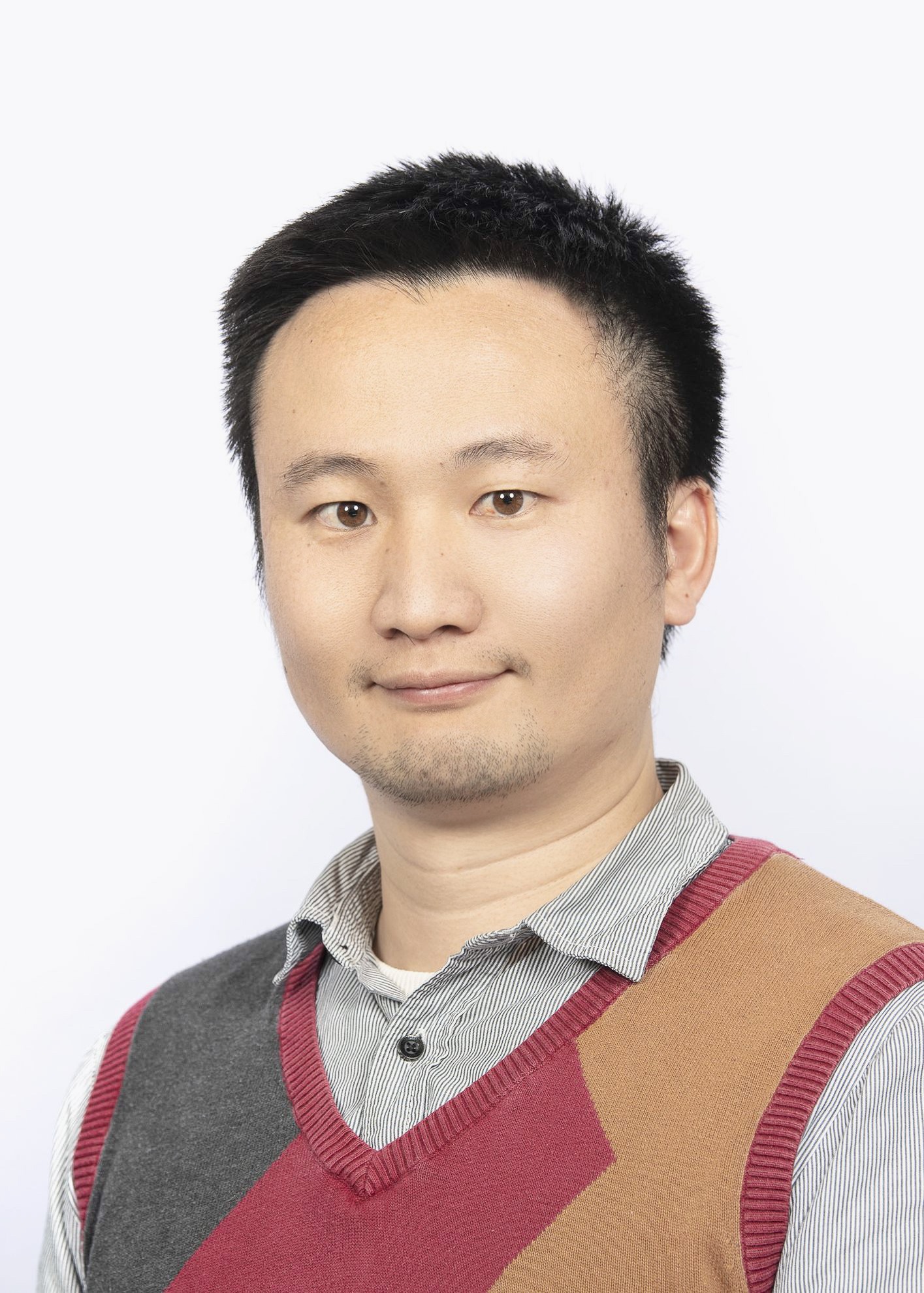
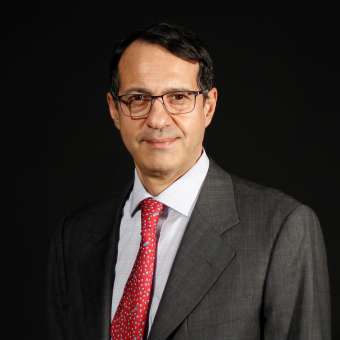
Heng Ji is a Professor at the Siebel School of Computing and Data Science , affiliated with the Department of Computer Science , Electrical and Computer Engineering Department , and multiple research labs including the Coordinated Science Laboratory and Carl R. Woese Institute for Genomic Biology at the University of Illinois Urbana-Champaign. She serves as an Amazon Scholar and Founding Director of the Amazon-Illinois Center on AI for Interactive Conversational Experiences (AICE) and CapitalOne-Illinois Center on AI Safety and Knowledge Systems (ASKS) . B.A. and M.A. in Computational Linguistics from Tsinghua University M.S. and Ph.D. in Computer Science from New York University Her research bridges Natural Language Processing with Vision-Language Models , Knowledge-Enhanced LLMs , and AI for Science (e.g., chemical language modeling). She leads major multi-institutional projects such as DARPA ECOLE MIRACLE , KAIROS RESIN , and DEFT Tinker Bell , while advising governments (U.S. Air Force Data Analytics Expert Panel) and industry (Amazon, Google, IBM). Her work on multimodal reasoning, agent-based systems, and chemical language models (e.g., mCLM ) has been supported by NSF, DARPA, and corporate partners. Recent publications (2025) focus on LLM agents , vision-language integration , and scientific knowledge acquisition . Awards include NSF CAREER , IEEE Intelligent Systems' AI's 10 to Watch , and multiple Outstanding Paper Awards at ACL/NAACL. She advises students like Chi Han (ACL/NAACL awardee) and post-docs Xiusi Chen and Yuji Zhang , and leads the BLENDER Lab , which develops frameworks like WiNELL (Wikipedia updating) and ProteinZero (protein generation). She has also served as NAACL Secretary and Program Co-Chair for ACL-IJCNLP2022. Outstanding Paper Award at ACL2024 Two Outstanding Paper Awards at NAACL2024 Young Scientist by World Laureates Association (2023-2024) AI's 10 to Watch by IEEE (2013) NSF CAREER (2009) Google/IBM/Bosch Research Awards
Mazdak Nik-Bakht is an Associate Professor at Concordia University's School of Building, Civil, and Environmental Engineering. His work bridges construction engineering with digital innovation, focusing on smart infrastructure and sustainable development. PhD, Construction Engineering & Mgmt., University of Toronto PhD, Structural Engineering, Iran University of Science & Technology MASc & BASc, Structural and Civil Engineering, Iran University of Science & Technology His research integrates Artificial Intelligence and Social Network Analysis into construction management systems. Key areas include: Smart infrastructure and urban computing Deconstruction and circular economy principles Building Information Modeling (BIM) and digital twinning Process mining in Architecture, Engineering, and Construction (AEC) industry Decision models in construction project management Semantic computing and computational linguistics applications Recent publications show a focus on BIM analytics , urban resilience , and social media's role in infrastructure planning . Papers often combine AI and network theory to solve complex construction challenges. 2015 Outstanding paper award - Built Environment Project and Asset Management journal He teaches courses on: Big Data Analytics for Smart City Infrastructure Building Information Modeling (BIM) for Construction Building Economics Project Cost Estimating
Dr. Zara Ersozlu is a Senior Lecturer in Mathematics Education within the School of Education at the University of Newcastle, Australia. With a distinguished international career spanning multiple continents, she has held academic positions at prestigious institutions including North Carolina State University (USA), Gazi and Gaziosmanpasa Universities (Turkey), National Taiwan Normal University (Taiwan), The University of Western Australia, Murdoch University, and Deakin University. Her academic journey includes tenured positions as an Associate Professor and leadership roles as Department Head and Chair in teacher education disciplines. Currently, she teaches undergraduate and postgraduate courses in mathematics education, including Effective Pedagogies in Primary Mathematics, K-6 Mathematics, K-6 Numeracy, and Digitally Supported Learning. Dr. Ersozlu earned her Doctor of Philosophy from Firat University in Turkey and her Master of Art from Sakarya University. Her extensive academic preparation is complemented by five years of practical teaching experience in public schools prior to entering academia. This blend of theoretical knowledge and practical classroom experience informs her approach to teacher education and educational research. At the broadest level, Dr. Ersozlu's research investigates solutions to real-life problems impacting people's well-being, success, and capacity to achieve. Her scholarly work spans primary and secondary mathematics education, the psychology of mathematics (including metacognition, self-regulation, and anxiety), cross-cultural educational studies, teacher education, virtual simulated learning environments, and educational assessment. She has increasingly focused on the transformative potential of AI and machine learning in education, exploring how these technologies alter teaching, learning, and research processes. Her methodological expertise encompasses both quantitative and qualitative approaches, allowing her to effectively analyze both small and large educational datasets. Analysis of Dr. Ersozlu's recent publications reveals a strong emphasis on mathematics anxiety, teacher education, and the integration of technology in learning environments. Her work demonstrates a consistent focus on practical applications of educational research to address real-world challenges in mathematics education. The interdisciplinary nature of her research connects educational psychology, technology integration, and cross-cultural perspectives, with particular attention to how these elements intersect in teacher preparation and student learning outcomes. 2023 ATEA Research Recognition Award from the Australian Teacher Education Association 2021 Fellow of the Higher Education Academy (Advance HE, UK) 2010 Fellowship Program for Postdoctoral Researchers from the Council of Higher Education of Turkey Dr. Ersozlu is deeply committed to mentoring the next generation of scholars, currently supervising four PhD students and having successfully guided ten students to completion. Her grant portfolio includes significant funding for projects such as Best Practice Guidelines for RPL in Initial Teacher Education Programs ($60,000), Exploring the Reciprocal Relationship Between Mathematics Anxiety and Mathematical Resilience ($2,599), and multiple conference travel awards. She serves as an Associate Editor for several prominent journals including the International Electronic Journal of Mathematics Education and as Editor for Interdisciplinary STEM Education. Her editorial work reflects her standing as a respected voice in mathematics education research. Dr. Ersozlu's academic leadership extends to her role in developing innovative teaching approaches that integrate virtual simulation technology and learning analytics. Her work with TeachLivE™, a mixed-reality classroom simulation platform, demonstrates her commitment to creating authentic learning experiences for teacher education students. Through these initiatives, she bridges the gap between educational theory and classroom practice, preparing future educators to effectively implement evidence-based teaching strategies in diverse learning environments.
Steve Hailes is a Professor of Wireless Systems at the Department of Computer Science, University College London. He has served as Head of Department since 2019 and Deputy Head from 2005. His research spans wireless networks, computational trust, AI, and sensor systems for health, ecological, and environmental applications. Education: PhD and undergraduate degree from Cambridge University Appointment: Joined UCL in 1991 (postdoc), Lecturer in 1992 Research interests include: Trust and security in networked systems (co-founder of computational trust) Security of industrial control systems AI/ML applications in security and causal discovery Multi-agent reinforcement learning and moral behavior modeling Gas sensor fabrication and deployment for diverse applications Recent publications focus on feature selection for cybersecurity , moral alignment in LLM agents , trust-based consensus algorithms , and causal discovery using reinforcement learning . Collaborations include co-authors like Westphal, Musolesi, and Tennant. Applications span healthcare (dementia, JIA), ecology (endangered species in Botswana), and environmental monitoring (CO distribution, meth lab detection).
Dr. Arnab Bhattacharya is a Professor in the Department of Computer Science and Engineering at the Indian Institute of Technology (IIT) Kanpur since December 2020. He previously served as Associate Professor (2014–2020) and Assistant Professor (2007–2014) at IIT Kanpur. Education: PhD in Computer Science (2007), University of California, Santa Barbara MS in Computer Science (2007), University of California, Santa Barbara Bachelor of Computer Science and Engineering (2001), Jadavpur University Research Focus spans Databases , Data Mining , Information Retrieval , and Artificial Intelligence . His work emphasizes graph analytics , skyline queries , probabilistic data , and knowledge graph management . Article Trends reveal expertise in graph neural networks , trajectory-aware systems , statistical significance in databases , and legal/medical data mining . His methodologies often integrate chi-square statistics , approximate indexing , and provenance tracking . Scientific Awards: IBM Faculty Research Award Yahoo! Faculty Research and Engagement Program Award Best Paper at COMAD 2011 Best Student Paper at COMAD 2010 Top-Five Student Paper at ICDM 2005 ICDM Student Travel Award sponsored by IBM Contact: Office RM 409, Department of Computer Science and Engineering, IIT Kanpur Email: arnabb@iitk.ac.in | Phone: +91-512-259-7650
Vasileios Mavroeidis is an Associate Professor in Digital Security at the Department of Informatics, University of Oslo (UiO). He specializes in security automation and orchestration (SOAR) and cyber threat intelligence (CTI) representation, reasoning, and sharing. He actively contributes to European cybersecurity initiatives, including Horizon Europe, Connecting Europe Facility, and the European Defense Fund, and serves as the primary representative of UiO at the OASIS standards development organization since 2017. Role : Associate Professor Department : Digital Security (SEC), University of Oslo Standardization Involvement : Chairman of OASIS Threat Actor Context (TAC), Leading Contributor to CACAO and OpenC2 Projects : Concordia, CyberHunt, JCOP (Joint Cyber Security Operations Platform), Oslo Analytics, P4C (Partnership for Cybersecurity) His research focuses on cyber threat intelligence (CTI), exploring its taxonomies, sharing standards (STIX, CACAO), and ontologies, with contributions to the European Union Agency for Cybersecurity (ENISA) Cybersecurity Playbooks task force. He analyzes quantum computing's impact on cryptography, develops automated threat detection systems using machine learning (e.g., recurrent neural networks for malware-generated domains), and investigates privacy issues under GDPR. Recent publications highlight his work on LLMs for code stylometry , neurosymbolic AI for cyber defense , and knowledge management systems for CACAO playbooks . His articles span 2017–2025, emphasizing formal verification, biometric data protection, and incident response automation. He collaborates with organizations like OASIS (Threat Actor Context, CACAO, OpenC2) and FIRST (Traffic Light Protocol), and participates in European research projects. His work includes standardization efforts in cybersecurity playbooks , MITRE ATT&CK representation, and quantum-resistant cryptography .
Amin Hammad is a Professor at the Concordia Institute for Information Systems Engineering, with an additional appointment as Affiliate Professor in Building, Civil, and Environmental Engineering at Concordia University. His research focuses on advancing construction technology through digital transformation, automation, and AI integration. He leads work in BIM applications, 4D simulation, robotic systems, and sustainable infrastructure management. His interdisciplinary approach bridges civil engineering with computer science and data analytics. Key research areas include: Automation and robotics in construction (Construction 4.0) BIM and digital twin lifecycle management AI-driven defect detection and inspection systems Occupational safety through exoskeleton performance evaluation Multi-purpose utility tunnel optimization Energy-efficient building systems Recent work emphasizes applying machine learning to construction equipment activity recognition, UAV path optimization for infrastructure inspection, and ontology development for integrated systems. His research addresses industry challenges in productivity, safety, and sustainability through data-driven solutions.
Jishen Zhao is an Assistant Professor in the Department of Computer Science and Engineering at the University of California, San Diego (Jacobs School of Engineering). His research focuses on computer architecture, non-volatile memory systems, and deep learning acceleration. Dr. Zhao has published extensively in top venues including ISCA, MICRO, ASPLOS, and IEEE Transactions. He collaborates with researchers at UCSD and beyond to advance systems for emerging applications in AI and autonomous vehicles. Dr. Zhao's primary research areas include persistent memory systems, hardware/software co-design for deep learning, and safety-critical computing. He develops techniques for crash consistency, memory disaggregation, and efficient neural network deployment. His work on autonomous vehicles addresses scenario generation and perception-aware system design. Recent projects explore LLM applications for software engineering and hardware verification. Analysis of Dr. Zhao's 2024-2025 publications reveals a strong shift toward AI-integrated systems research. He applies large language models to tasks like RTL verification and software issue localization while continuing to innovate in memory systems for serverless computing. There is growing emphasis on safety-critical systems for autonomous vehicles and energy-efficient neural network training using novel hardware architectures. Information about Dr. Zhao's scientific awards, advising activities, grants, and laboratory facilities was not available in the provided documentation.
Yiyu Yao is a Professor in the Department of Computer Science at the University of Regina, Faculty of Science. He holds a B.Eng. from Xi'an Jiaotong University and earned both his M.Sc. and Ph.D. from the University of Regina. His office is located in College West 308.6, and he can be reached at Yiyu.Yao@uregina.ca or by phone at (306) 585-5226. Dr. Yao's research spans multiple interconnected domains in intelligent systems. His primary focus is on three-way decisions, which serves as a unifying framework for his work in granular computing, rough sets, and decision-theoretic models. He has developed significant theoretical contributions to decision-theoretic rough sets (DTRS) and probabilistic rough sets, creating bridges between uncertainty management and practical decision-making applications. His work extends to web intelligence, information retrieval systems, and multiview data analysis, where he applies his theoretical frameworks to real-world problems in data science and artificial intelligence. Analysis of Dr. Yao's recent publications reveals a strong continuing focus on three-way decision theory, with increasing applications across diverse domains. His work demonstrates evolution from foundational theoretical contributions to sophisticated applications in multi-criteria decision making, conflict analysis, and explainable AI. The research shows integration of granular computing principles with modern machine learning techniques, particularly in handling uncertainty and developing interpretable models. Recent publications indicate growing interest in the intersection of three-way decisions with fuzzy sets, shadowed sets, and cognitive approaches to data analysis. Dr. Yao has mentored numerous graduate students and has hosted many visiting scholars, primarily from Chinese institutions including Nanjing University Posts and Telecommunication, Harbin Normal University, Shaanxi Normal University, and others. He serves as Area Editor on Rough Sets for the International Journal of Approximate Reasoning and as Associate Editor for Information Sciences. He is also Associate Editor-in-Chief for the Journal of Emerging Technologies in Web Intelligence and serves on multiple editorial boards including LNCS Transactions on Rough Sets and Web Intelligence and Agent Systems. He has organized significant conferences including the International Joint Conference on Rough Sets (IJCRS 2017) and served on the Steering Committee for the International Symposium on Fuzzy and Rough Sets.
See Kiong Ng serves as Professor of Practice in the Department of Computer Science at the School of Computing, National University of Singapore (NUS), while concurrently holding leadership roles as Director of AI Technology at AI Singapore and Deputy Director of NUS's Institute of Data Science (IDS). His work focuses on translational data science research and developing integrated capabilities for Singapore's Smart Nation initiative through industry and public agency collaborations. His academic credentials include a B.S. in Applied Mathematics (Computer Science Track) from Carnegie Mellon University (1989), an M.S.E. in Computer & Information Science (Artificial Intelligence) from the University of Pennsylvania (1990), and a Ph.D. in Computer Science from Carnegie Mellon University (1998), supported by Singapore's National Computer Board overseas scholarship. Professor Ng's research bridges artificial intelligence with real-world applications across diverse domains. His primary interests span Data Mining, Machine Learning, Natural Language Processing, Smart Cities, and Computational Biology, with emphasis on extracting value from big data through interdisciplinary approaches. He actively pioneers applications in urban systems and bioinformatics, demonstrating data science's transformative potential beyond traditional boundaries. His publication record reveals consistent innovation in algorithm development for complex data challenges, with recent work focusing on taxonomy construction, single-cell genomics analysis, urban transportation systems, and imbalanced time series classification. These contributions demonstrate his commitment to solving practical problems through cutting-edge data science techniques. His major recognitions include: MTI Borderless Award (2014) as Green Growth Working Group project member Minister for National Development's R&D Award 2017 (Distinguished Award) for city-level analytics platform innovation A*STAR Borderless Award (2014) as Urban Systems Initiative team leader MTI Innovation Award (2013) for Strategic Technology Translation in Business Analytics Professor Ng has established significant research infrastructure including founding A*STAR's Data Analytics Department and leading the Urban Systems Initiative. His translational research model emphasizes industry partnerships and practical implementation, particularly in smart city development where he connects data science with urban planning challenges across Singapore's government agencies.
Jon Atle Gulla is a Professor at NTNU and Director of the Norwegian Research Centre for AI Innovation (NorwAI). He holds academic leadership roles, including former Head of the Department of Computer Science and Informatics at NTNU. His expertise spans Semantics, Language Technology, Recommender Systems, and AI-driven innovation. He has nearly 150 international publications and advised over 100 students across MSc, PhD, and postdoctoral levels. Education: MSc in Computer Science (1988), PhD in Computer Science (1993) from Norwegian Institute of Technology (NTH) MSc in Linguistics (1995), University of Trondheim MSc in Management (Sloan fellowship, 2003), London Business School Research interests focus on Semantics and Language Technology applied to Recommender Systems, Information Retrieval, and Text Analysis. He explores AI-based innovations in digitalization and entrepreneurship, advising industry on AI adoption and commercialization. Notable projects include Big Data collaborations with DNB, RecTech for news recommendation, and Trondheim Analytica analyzing political texts/social media. Publications emphasize AI applications in news recommendation, political text analysis, and Scandinavian language models. His work addresses ethical AI, copyright implications, and cross-lingual NLP challenges. Awards: Member of the Royal Norwegian Society of Arts and Sciences. Advising/grants: Supervised 30 PhD students and 70 MSc students. Involved in startups like Fast Search & Transfer (acquired by Microsoft) and Mito.ai/Strise.ai. Active in reviewing for journals like Data & Knowledge Engineering and conferences like ACL. Labs/teams: Leads NorwAI, co-founder of INRA and NOBIDS workshops. Collaborates with industry and academia on AI-driven solutions.
Dr. H.V. Jagadish is a Professor in the Computer Science and Engineering department, focusing on database systems, data science, and ethical AI. He emphasizes mentorship and independence in research, guiding students to become colleagues through collaborative growth. Research Focus His work spans Data integration and fairness in machine learning Query processing and knowledge graph analysis Reproducibility and ethical data management Advising and Research Dr. Jagadish encourages open communication, frequent feedback, and proactive student-driven research. He supports internships and conference attendance, prioritizing SIGMOD and VLDB for presentations.
Zaiqiao Meng is a Lecturer (Assistant Professor) at the University of Glasgow's School of Computing Science, affiliated with the Information Retrieval Group and IDA section. He also holds an Affiliated Lecturer position at the University of Cambridge's Language Technology Lab. His research focuses on the intersection of machine learning, knowledge graphs, and NLP, particularly in biomedical applications. Key areas include AI agents, large language models, and healthcare informatics. Current roles include co-leading the Glasgow AI4BioMed Lab, which develops AI solutions for biomedical knowledge extraction. He has extensive postdoctoral and visiting research experience, including at KAUST's MINE lab. Meng has published widely in top conferences like ACL and EMNLP, with over 40 publications since 2019. His work spans topics such as drug-target interaction prediction, clinical summarization, and knowledge graph construction. Teaching includes courses on Recommender Systems and Data Science at both undergraduate and graduate levels. He advises multiple PhD students on projects involving LLMs, biomedical entity representation, and conversational agents.
Dr. Jia Zhang is the Inaugural Robert H. Dedman Jr. Endowed Department Chair and Professor of Computer Science at Southern Methodist University (SMU Lyle School of Engineering). She holds the Cruse C. and Marjorie F. Calahan Centennial Chair in Engineering and has a courtesy appointment in the Department of Operations Research and Engineering Management. Her research focuses on applying machine learning, natural language processing, and information retrieval to data science infrastructure, particularly scientific workflows, provenance mining, software discovery, knowledge graphs, cloud computing, immune AI, and applications in earth science and healthcare. Education: Ph.D. in Computer Science, University of Illinois at Chicago M.S. in Computer Science, Nanjing University B.S. in Computer Science, Nanjing University Dr. Zhang's work emphasizes data science infrastructure and machine learning for scientific workflows and knowledge graphs. Her recent publications highlight deep learning , graph neural networks , and optimization algorithms in cloud computing, cybersecurity, and environmental applications. Key trends include spatiotemporal modeling , hybrid neural architectures , and AI-driven service ecosystems . Scientific Awards: Best Paper Awards IEEE SCC (2011, 2017) Best Student Paper Awards IEEE ICWS (2014, 2018), IEEE ICCC (2018) Distinguished Paper Award ICSOC (2023) First Outstanding Service Award IEEE Technical Committee on Services Computing (2016) She has secured over $5 million in federal grants (as PI) and $11 million as PI/Co-PI from NSF, NASA, NIH, UTSW, Ericsson, SAP, and Google. Her lab (Caruth Hall 308) actively recruits research assistants. She previously served as a faculty member at Carnegie Mellon University, Northern Illinois University, and Nanjing University, and worked in industry as a software architect.
Professor Tolga Akçura is a distinguished faculty member at Özyeğin University's Faculty of Business, Department of Business Administration. With over 25 years of academic experience, he has developed and taught courses on marketing strategy, marketing analytics, and marketing research at prestigious institutions including Carnegie Mellon University, Purdue University, and Long Island University. At Özyeğin University, he teaches Marketing Strategy, Integrated Marketing Communication Strategies, Innovation, Business Model Development, and Advanced Topics in Marketing for undergraduate, graduate, and executive students. Professor Akçura holds a B.Sc. in Industrial Engineering from Boğaziçi University (1990), an MA in Business Administration from Boğaziçi University (1996), an MBA from Carnegie Mellon University (1998), and a Ph.D. in Quantitative Marketing from Carnegie Mellon University (2000). Before joining academia, he worked for Procter & Gamble across multiple European locations including Brussels, London, Manchester, and Istanbul. His research focuses on the intersection of Information Technology and Marketing, Brand Valuation, Consumer Learning Behavior, Structural Choice Models, Brand Equity dynamics, and Competitive Pricing Strategies. Professor Akçura has made significant contributions to marketing science through his extensive publication record in top-tier journals. His recent scholarly work demonstrates a strong trend toward digital marketing, AI applications in marketing analytics, healthcare marketing, and the strategic implications of data-driven decision making. His publications span from foundational work on brand equity to cutting-edge research on patient-generated health data and deep learning applications in campaign participation prediction. William W. Cooper Award (awarded twice for publications in Management Science and Marketing Science) Professor Akçura has successfully bridged academic research with practical business applications through his role as founder of eBrandValue A.Ş. and as a Y-Combinator alum (YCW15). He is an active member of professional organizations including the Institute for Operations Research and Management Science, American Marketing Association, and Direct Marketing Institute. His industry experience complements his academic work, providing students with valuable real-world insights into marketing strategy and implementation.