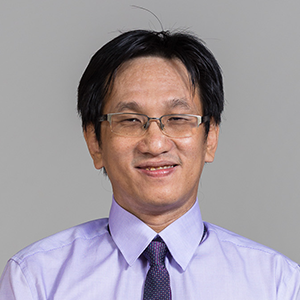
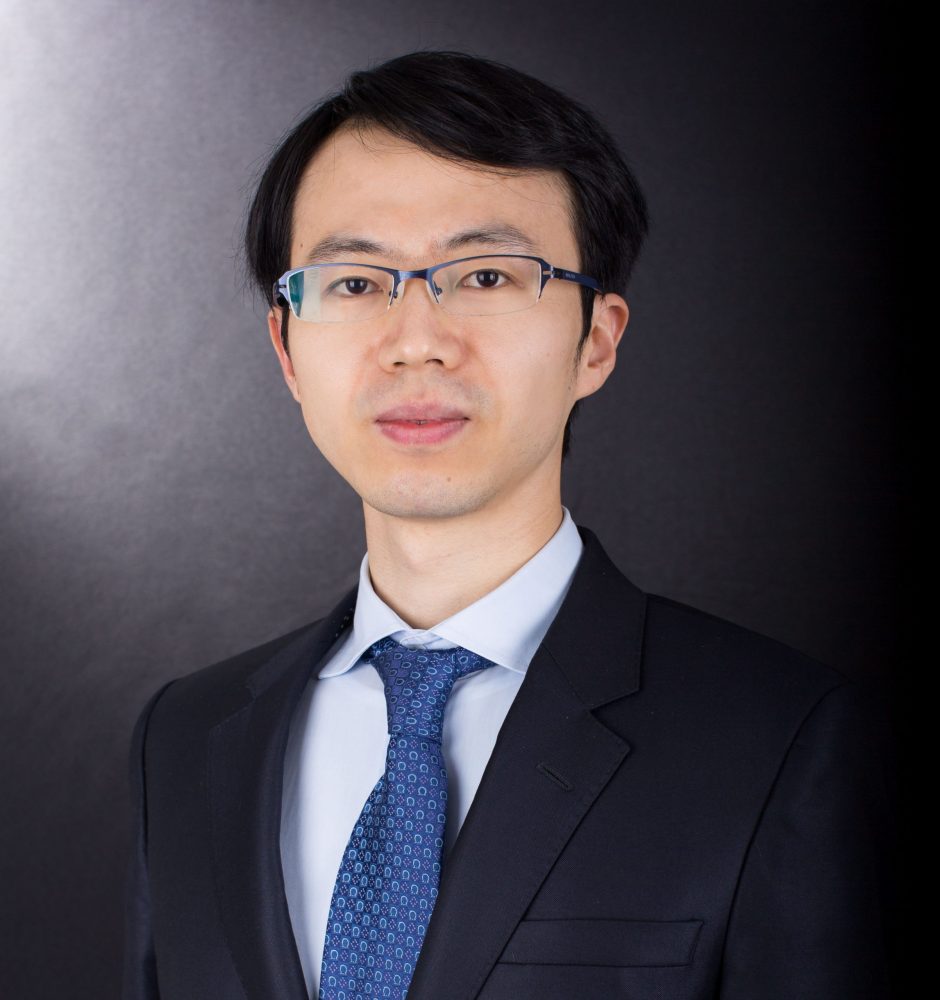
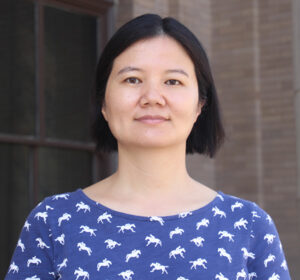
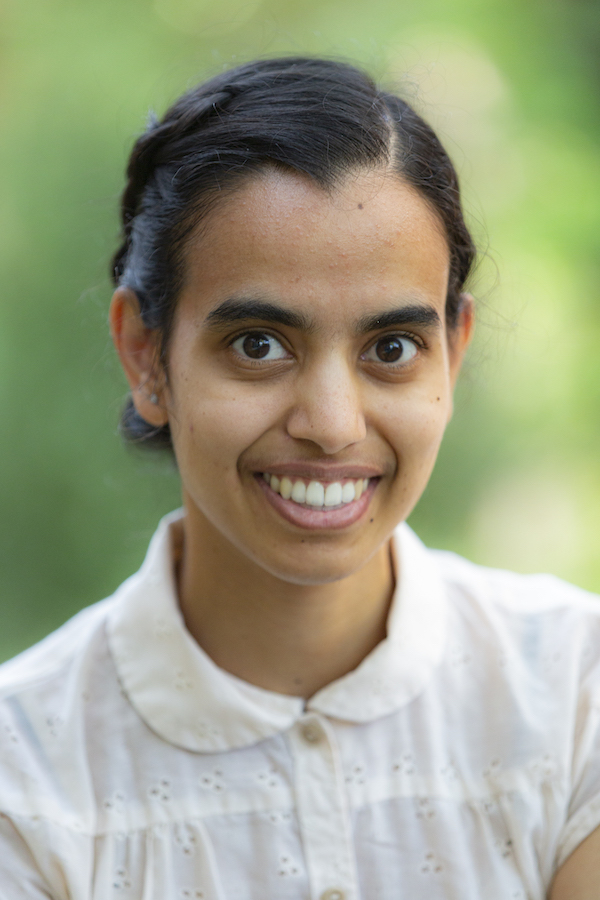
Andreas Ekelhart is a Researcher at TU Wien's Department of Information and Software Engineering. His work focuses on cybersecurity, cyber-physical systems, and industrial control systems. He specializes in developing frameworks like SLOGERT for automated log analysis and Kyrstal for attack discovery using knowledge graphs. His research also explores digital twin technology for threat detection and semantic web applications in machine learning systems. Key contributions include the VloGraph framework for distributed security log analysis and the QualSec approach for automated security risk identification in production systems. He collaborates on standards like AutomationML and emphasizes privacy-preserving data analysis through semantic architectures.
Anthony TUNG Kum Hoe is a Professor in the Department of Computer Science at the National University of Singapore (NUS), where he has established himself as a leading researcher in database systems and data mining. He is also affiliated with the NUS Graduate School for Integrative Sciences and Engineering and serves as a SINGA supervisor. His educational background includes a Ph.D. in Computer Science from Simon Fraser University (2001), an M.Sc. in Information Systems & Computer Science from NUS (1998), and a B.Sc. with 2nd Class Upper Honours in Information Systems & Computer Science from NUS (1997). Professor Tung's research spans several interconnected areas within database systems and data mining. His primary focus is on developing efficient methods for indexing and searching complex data structures including time series, trajectories, trees, graphs, and high-dimensional objects. He has pioneered work in visual query processing, keyword search, and ranking systems. His GENIE (Generic Inverted Index) and LAMP (semi-Lazy Mining Paradigm) projects represent significant contributions to big data analytics, particularly in handling the 'variety' aspect of big data by providing unified frameworks for processing diverse data structures while preserving semantic meaning. His research bridges theoretical database concepts with practical applications in visual data mining, collaborative analytics, and just-in-time model construction. His recent publications reveal a clear evolution from traditional database research toward more complex analytics on diverse data types. While maintaining his core expertise in database indexing and query processing, his work has expanded to incorporate machine learning techniques, particularly in areas like nearest neighbor search, anomaly detection, and predictive analytics. There's a noticeable trend toward interdisciplinary applications, with publications spanning computer vision, natural language processing, transportation systems, and social computing. His research group consistently publishes in top-tier venues including SIGMOD, VLDB, ICDE, and KDD, demonstrating both theoretical rigor and practical relevance. 2005 Best Paper Award for 'Indexing DNA Sequences Using q-grams' 2007 Invited panel speaker on 'Advice for a successful database researcher career in Asia' at SIGMOD 2010 Guest Lecturer for VLDB Database School 2012 VLDB 2012 Research PC Co-chairs 2015 10 Years Best Paper Award, DASFAA 2015 Invited to SIGMOD 2008 and SIGKDD 2008 Program Committees Professor Tung has supervised numerous PhD students and research associates throughout his career, including notable researchers like Zhang Zhenjie (recipient of the 2007 President Graduate Fellowship) and Wang Nan (published in SIGMOD'08). His research group has been consistently productive, with students publishing in top conferences including SIGMOD, ICDE, and VLDB. His professional service is extensive, having served as PC Chair for COMAD'06, Research PC Co-chair for VLDB 2012, and on program committees for virtually all major database and data mining conferences over the past two decades. His research has been supported by various grants that have enabled significant contributions to database technology. His GENIE and LAMP projects represent a cohesive research direction focused on developing systematic approaches to big data analytics. GENIE provides a unified platform for storage and retrieval of big data with various structures, while LAMP introduces a novel paradigm for predictive analytics that combines the strengths of lazy and eager learning approaches. These projects have evolved to incorporate GPU acceleration and parallel processing capabilities, reflecting his commitment to addressing real-world scalability challenges in data-intensive applications.
Hailiang Chen serves as Professor in Innovation and Information Management, Assistant Dean (Taught Postgraduate), and Director of the Artificial Intelligence Research Institute at HKU Business School, The University of Hong Kong. His academic journey includes a PhD and MS from Purdue University and a BM from Tsinghua University. Doctoral Degree: Management Information Systems, Purdue University Master Degree: Economics, Purdue University Bachelor Degree: Information Management and Information Systems, Tsinghua University Professor Chen's research spans artificial intelligence, FinTech, social media analytics, and platform economics, with significant contributions to understanding how digital interactions shape financial markets and consumer behavior. His work frequently examines the intersection of technology adoption and economic outcomes, particularly in cryptocurrency markets, live-stream commerce, and venture capital decision-making. His research methodology combines large-scale data analysis with experimental designs to uncover causal relationships in digital ecosystems. His publications in elite journals like Journal of Financial Economics and Management Science demonstrate consistent impact, with multiple ESI Highly Cited Papers. Current projects include Gov-RAG for e-government services and comparative studies of AI search tools. His research has received continuous funding from Hong Kong's Research Grants Council for five consecutive years (2019-2023). Faculty Outstanding Researcher Award, HKU Business School (2022-23) INFORMS ISS Sandra A. Slaughter Early Career Award (2022) Association for Information Systems Early Career Award (2019) Three ESI Highly Cited Papers (Top 1% in field) Professor Chen actively contributes to academic service as Associate Editor for Journal of Management Information Systems and MIS Quarterly , and serves as Program Chair for the International Conference on Smart Finance. His industry collaborations include Alibaba, HSBC, and China Construction Bank, bridging academic research with real-world business applications in AI implementation and digital transformation.
Prof. Dr. Axel-Cyrille Ngonga Ngomo is a Professor at the University of Paderborn , affiliated with the Faculty of Electrical Engineering, Computer Science and Mathematics and the Institute of Computer Science . He leads the Data Science group at the Heinz Nixdorf Institute and is a member of the Sonderforschungsbereich Transregio 318 (Constructing Explainability). His roles include heading the Informatik Rechnerbetrieb (IRB) team. Research Focus : Knowledge graphs, semantic web technologies, explainable AI, and distributed systems. Selected Projects : SAIL (Sustainable Life Cycle of Intelligent Sociotechnical Systems), TRR 318 (Constructing Explainability), Colide (Co-training for Industrial Data), 3DFed (Dynamic Data Distribution), and SFB 901 (On-The-Fly Computing). Contact : Email axel.ngonga@uni-paderborn.de , Office F1.225 (Fürstenallee 11) and TP6.3.106 (Technologiepark 6), Paderborn. Teaching : Courses include Seminar on Recent Advances in Knowledge Graphs, Project Groups on SPARQL Query Processing, Large Language Model Training, Retrieval Augmented Generation, and Foundations of Knowledge Graphs.
Dr. Min Liu is a Professor and the Abdallah H. Yabroudi Endowed Professor in Sustainable Civil Infrastructure at Syracuse University, where she directs the Syracuse University Infrastructure Institute. She holds a Ph.D. in Engineering Project Management from UC Berkeley, and prior degrees from National University of Singapore and Xi’an University of Architecture and Technology. Her research focuses on integrating human and engineering aspects in construction planning, with emphasis on Lean Construction, Digital Twin design, and machine learning applications. She has published over 50 articles in top-tier journals and won prestigious awards such as the 2021 ASCE Thomas Fitch Rowland Award. Dr. Liu advises numerous graduate students and postdocs, offering positions in Construction Engineering and Management. Her lab develops innovative approaches for infrastructure project delivery, worker mental health, and bridge preservation strategies. Education: Ph.D. in Engineering Project Management, UC Berkeley (2007) MSCE, Xi’an University of Architecture and Technology (1997) MSc in Building Science, National University of Singapore (2001) BSc in Civil Engineering, Qingdao University of Technology (1994) Research Highlights: Large language models for construction planning reliability Ontology-based knowledge systems for construction methods Lean techniques for worker mental health improvement Socioeconomic analysis of bridge preservation strategies Awards: 2021 ASCE Thomas Fitch Rowland Award Multiple Best Paper Awards (2017-2018) "Thank a Teacher" awards (2011-2018) Her advising record includes notable students like Chuanni He (2023 Chinese Government Award) and Gongfan Chen (2022 Three-Minute Thesis Award). Current opportunities include Ph.D. financial support and postdoc positions. Dr. Liu’s work appears in journals like ASCE Journal of Management in Engineering and Engineering, Construction and Architectural Management.
Chandrika Sadanand is an Assistant Professor in the Department of Mathematics at Bowdoin College. She holds a PhD from Stony Brook University and a BS from the University of Toronto. Her research focuses on low-dimensional topology and geometry, specifically exploring curves on surfaces, hyperbolic geometry, billiards, translation surfaces, and 3-manifolds. She has held postdoctoral positions at the University of Illinois Urbana Champaign, Technion, and Hebrew University of Jerusalem. Dr. Sadanand teaches courses in mathematical reasoning, geometry, and topology. Her recent courses include MATH 2020 (Introduction to Mathematical Reasoning), MATH 2404 (Geometry), and MATH 3402 (Topology). She has also mentored undergraduate research projects on flat surfaces and participated in outreach activities through programs like the Stony Brook Math Summer Camp and WISE. Her research contributions include studies on translation surfaces of infinite type, billiards dynamics, and geometric structures. She has contributed to innovative conferences like the Nearly Carbon Neutral Geometry and Topology Conferences through video presentations. Her work bridges pure mathematics with computational methods, addressing questions in geometric topology and dynamical systems.
Patrick T. Brandt is a Professor of Political Science, Public Policy, and Political Economy at the University of Texas at Dallas , affiliated with the School of Economic, Political and Policy Sciences . His work integrates advanced statistical methods with political science, focusing on time series analysis, machine learning, and Bayesian modeling to study political dynamics. His research spans international relations , political economy , terrorist targeting , and conflict forecasting . He specializes in developing novel models for event count time series, including the Bayesian Poisson Vector Autoregression and MS-BVAR packages for R. His NSF-funded projects focus on event data generation and real-time conflict forecasting. Recent publications emphasize domain-specific language models (ConfliBERT variants), graph neural networks for conflict prediction, and machine translation challenges in political text analysis. He maintains the OpenEvent Data Repository and develops software like MSBVAR and PESTS for academic use. Scientific Awards : Robert H. Durr Award for Best Methodology Paper, Midwest Political Science Association (2006)
Dr hab. Krzysztof Węcel serves as Professor and current Head of the Department of Economic Informatics at Poznan University of Economics and Business (UEP), appointed on October 4, 2024. His primary affiliation spans over 25 years with UEP's Department of Economic Informatics, which maintains one of Poland's longest-running academic websites since 1998. He holds dual recognition through habilitation from University of Potsdam (2020) and professorship conferred by UEP (June 24, 2020). His academic milestones: Habilitation degree in Economic Informatics, University of Potsdam (2020) Professor title, Poznan University of Economics and Business (2020) Węcel's research centers on Semantic Technologies and data quality assessment across multilingual Wikipedia, with emphasis on company information verification, citation analysis, and open data applications. His work bridges Big Data analytics with practical business solutions, particularly in maritime logistics where he pioneered evolutionary algorithm-based AIS data processing. Current investigations focus on generative AI's dual role in creating and combating disinformation, including ChatGPT's impact on academic writing and fake news propagation. Recent publications (2022-2025) reveal three dominant trends: First, systematic analysis of Wikipedia's reliability across languages during crises like the pandemic and Ukraine war. Second, development of AI-driven fact-checking frameworks (e.g., OpenFact project's CLEF 2023 victory). Third, exploration of generative AI's societal impact ranging from student creativity to disinformation campaigns. Scientific awards received: Best Paper Award at ICIST 2017 Conference Award for most innovative article at NATCON 2018 conference Microsoft Azure for Research Award (2016) As academic advisor, he leads the 'Semantic Technologies' diploma seminar attracting high-achieving students, with participants winning the 29th UEP Foundation Competition (2025) and Eurostat's Web Intelligence Challenge (2024). His grant portfolio includes the 'Maritime Big Brother' project (2017) for ship voyage prediction using AIS data and Microsoft Azure funding for Wikipedia quality enhancement. Ongoing initiatives include OpenFact (fake news detection) and GOBLIN projects. He actively collaborates with SKN Data Science student circle (evidenced by 2024/2025 inaugural meeting) and international consortia like CLEF and QOD workshops. Departmental leadership involves managing the OpenFact research team that achieved top results in CheckThat! Lab competitions, alongside maritime data analytics groups applying evolutionary algorithms to shipping networks.
Mehrtash Harandi is an Associate Professor in the Department of Electrical and Computer Systems Engineering at Monash University. He joined Monash in 2018 after five years at Canberra Research Laboratory-NICTA working with Prof. Richard Hartley and Prof. Fatih Porikli, and earlier at Queensland Research Laboratory-NICTA with Prof. Brian Lovell. His research focuses on machine learning, computer vision, and geometric learning with applications in medical imaging and diffusion models. Recent Research Trends (2025): 3D Gaussian splatting compression, diffusion transformers for visual correspondence, hyperbolic geometry in hierarchical structures, and robust learning from noisy labels. Scientific Awards: Outstanding Reviewer, CVPR'21 Advising Highlights: Mentored students contributing to papers at ICCV'24, CVPR'25, ICLR'25, and Nature Machine Intelligence. Labs & Teams: Collaborates with Data61-CSIRO, ARC, and US Air Force Research Laboratory.
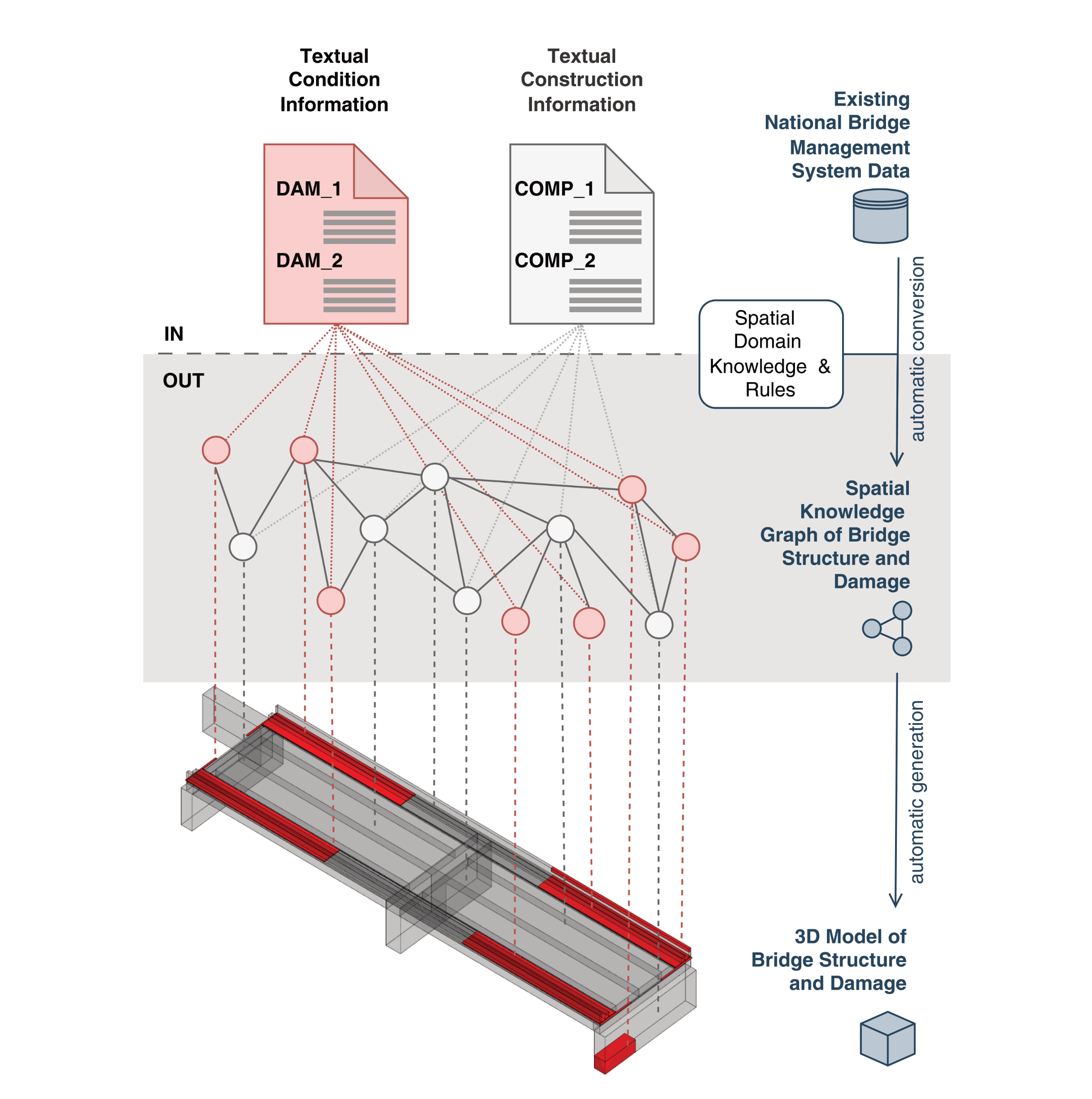
Prof. Dr. Jakob Beetz serves as a University Professor at RWTH Aachen University's Faculty of Architecture, leading the Design Computation (DC) research group. His work addresses critical challenges in sustainable built environments through digital innovation, focusing on integrating knowledge, information, and data across disciplines to reduce the sector's energy and material consumption—which accounts for over one-third of global totals—while advancing climate goals under the European Green Deal. His research spans Building Information Modeling (BIM), digital twins, and artificial intelligence, with emphasis on graph-based data federation, semantic web technologies, and large language models in construction. Key interests include evidence-based planning, parametric design optimization, building physics simulation, and networked knowledge modeling. Recent projects explore federated digital twin ecosystems for infrastructure management, intelligent damage assessment systems, and AI-driven solutions for wood structure preservation, directly contributing to sustainable development targets. Analysis of his 2024-2025 publications reveals a cohesive trajectory toward decentralized data environments and AI integration in Architecture, Engineering, and Construction (AEC). His work bridges theoretical foundations in knowledge representation with practical applications in bridge maintenance, road infrastructure, and timber construction, demonstrating consistent innovation in spatial data querying, federated issue management, and ontology-based process modeling. Prof. Beetz actively supervises PhD candidates, as evidenced by DC.Promotions 2024, and drives international collaboration through events like the Forum Construction Informatics 2025 and CIB W78 conferences. His research group engages with industry standards including Industry Foundation Classes (IFC) and Common Data Environments (CDEs), emphasizing open data principles and interoperability to transform construction workflows.
Rafail Ostrovsky is the Norman E. Friedman Chair in Knowledge Sciences at UCLA Samueli School of Engineering, where he serves as a Distinguished Professor of Computer Science and Mathematics. He also directs the Center for Information and Computation Security at UCLA. His academic leadership extends to his role as a foreign member of Academia Europaea and his fellowship in multiple prestigious organizations including the National Academy of Inventors, AAAS, ACM, IEEE, and IACR. Professor Ostrovsky's research spans multiple domains in theoretical computer science, with primary focus on cryptography, secure computation, and algorithms. His work on garbled circuits, zero-knowledge proofs, and private information retrieval has had significant theoretical and practical impact. He has pioneered research in secure multi-party computation, oblivious RAM, and cryptographic protocols that maintain privacy while enabling complex computations on sensitive data. His research bridges theoretical foundations with practical applications in secure systems, ranging from database security to hardware-based cryptographic primitives. Ostrovsky's publication record shows a consistent trajectory of innovation in cryptographic theory and its applications. His recent work focuses on optimizing secure computation protocols for efficiency while maintaining strong security guarantees, with particular attention to communication complexity, round complexity, and practical implementations. He has made significant contributions to homomorphic encryption, non-malleable commitments, and zero-knowledge proofs, often developing techniques that transform theoretical constructs into practically viable solutions. 1993 Henry Taub Prize 2017 IEEE Computer Society Edward J. McCluskey Technical Achievement Award 2018 RSA Award for Excellence in Mathematics (RSA Prize) 2022 W. Wallace McDowell Award (highest award from IEEE Computer Society) Fellow of National Academy of Inventors, AAAS, ACM, IEEE, and IACR Foreign member of Academia Europaea With over 350 peer-reviewed publications and 16 issued USPTO patents, Professor Ostrovsky has significantly shaped the field of cryptography and secure computation. His mentorship has cultivated numerous students and postdocs who have gone on to make their own contributions to the field. His editorial roles on prestigious journals including Journal of ACM and Algorithmica reflect his standing in the theoretical computer science community. His leadership extends to chairing major conferences including FOCS 2011 and serving on over 40 international conference program committees. As Director of the Center for Information and Computation Security at UCLA, Professor Ostrovsky leads a team focused on advancing the theoretical foundations and practical applications of secure computation. His center serves as a hub for interdisciplinary research connecting cryptography with systems security, network protocols, and hardware security. The center's work spans from foundational cryptographic primitives to real-world applications requiring privacy-preserving computation.
Binil Starly is an Adjunct Professor at North Carolina State University's Edward P. Fitts Department of Industrial and Systems Engineering, part of the College of Engineering. He leads the Data Intensive Manufacturing Laboratory (DIME Lab), focusing on digital-physical integration in manufacturing, additive manufacturing, and biofabrication. His work emphasizes democratizing manufacturing access through machine learning and smart systems. Starly holds a B.S. in Mechanical Engineering from the University of Kerala (2001) and a Ph.D. from Drexel University (2006). He previously worked at the University of Oklahoma on tissue engineering platforms. His research spans digital factories, smart manufacturing, and biometrology, with over 45 journal publications. His awards include the NSF CAREER Award (2009), SME Young Manufacturing Engineer Award (2011), and multiple teaching/research recognitions at NC State. He teaches courses on product development, additive manufacturing, and Python for industrial engineers. Starly’s research trends emphasize blockchain in manufacturing ecosystems, cybersecurity for IoT devices, and knowledge graphs for service discovery. He co-leads the Functional Tissue Engineering (FTE) Program, integrating regenerative medicine with scalable manufacturing processes. His grants focus on smart manufacturing innovation, blockchain platforms, and real-time bioprinting monitoring. He advises 7 graduate and 3 undergraduate students, having guided 22 M.S. and 6 Ph.D. students. His outreach includes online courses on smart manufacturing and Python programming through NC State’s Wolfware Outreach. The DIME Lab develops advanced manufacturing technologies, including digital twins for industrial metaverse applications and machine authentication systems. Collaborations span academia, industry, and government to advance personalized manufacturing solutions.
Dr. Yanjie Fu is an Associate Professor in the School of Computing and AI at Arizona State University, part of the Ira A. Fulton Schools of Engineering. He maintains his office in BYENG 506 at the Tempe campus and can be reached at yanjie.fu@asu.edu. Dr. Fu received his Ph.D. from Rutgers University in 2016, the B.E. degree from the University of Science and Technology of China, and the M.E. degree from the Chinese Academy of Sciences. His industry research experience includes positions at Microsoft Research Asia and IBM Thomas J. Watson Research Center. His research focuses on developing disruption-robust machine intelligence that can handle imperfect and complex data. Dr. Fu's work spans two major efforts: Data for AI (D4AI), exploring how structure knowledge of data can guide AI, and AI for Data (AI4D), investigating how AI can augment, reprogram, and knowledgeize data. His current research interests include space-time intelligence, data-centric AI, sim2decision, multimodal reasoning, and LLM with agentic AI. His lab has contributed projects including D4AI-spatial, D4AI-timeseries, D4AI-causal outliers, AI4D-RL, AI4D-Gen, and AI4D-LLM. Dr. Fu's recent publications reveal a strong trend toward integrating causal reasoning with deep learning for robust anomaly detection, advancing time series forecasting with novel normalization techniques, and applying generative AI to urban planning. His work increasingly bridges traditional machine learning with large language models, particularly focusing on data-centric approaches for tabular data transformation and feature engineering. US NAE FOE early career engineer (2023) US NSF CAREER (2021) NSF CRII (2018) ACM KDD18 Best Student Paper Finalist IEEE ICDM Best Paper Finalist (2014, 2021, 2022) ACM SIGSpatial Best Paper Runner-up (2020) 2022 Baidu Scholar global top Chinese young scholars in AI 2021 Aminer.org AI 2000 Most Influential Scholar Award Honorable Mention Dr. Fu has successfully mentored multiple Ph.D. students who have secured tenure-track faculty positions at prestigious institutions including University of Kansas, Chinese Academy of Sciences, Great Bay University, Portland State University, and University of Macau. His research has been supported by significant grants including the NSF CAREER award, and he currently serves as Associate Editor of ACM Transactions on Knowledge Discovery from Data. He is also a senior member of both ACM and IEEE. Dr. Fu leads a research group focused on developing trusted and safe machine intelligence. The lab connects computing issues across representation learning, self-supervised learning, interactive learning, adaptive learning, and stream learning to build disruption-robust frameworks. The group executes two key steps: data representation construct (integrating structure knowledge, self-optimization, explainability) and learning strategy construct (integrating robust representations with adaptive and interactive learning).
Amir Aryani is an Associate Professor at the School of Business, Law and Entrepreneurship , Swinburne University of Technology . He leads the Social Data Analytics (SoDA) Lab within the Social Innovation Research Institute , focusing on data-driven solutions for health and social challenges. His work involves large-scale cross-institutional projects with international collaborators including the British Library , ORCID , and NIH . Research Focus: Data modeling, real-time analytics, and information retrieval for social-good initiatives Collaborations: CERN, Data Archiving and Networked Services (DANS), and Global Information Systems (GESIS) His research explores data science applications in mental health, community resilience, and sustainable development. Key trends in his publications include: Mapping research to United Nations Sustainable Development Goals Developing hybrid expert-finding models using NLP and graph algorithms Creating interoperable research graphs for cross-platform discovery Assessing social impact of data projects in non-profit sectors Amir is actively involved in PhD supervision and has secured funding from Australian Research Council , National Health and Medical Research Council , and philanthropic foundations . He also contributes to community data projects through the SoDA Lab , which builds tools for social connection analysis and humanitarian response optimization.
Craig Knoblock serves as Keston Executive Director of the Information Sciences Institute (ISI) at the University of Southern California (USC), Vice Dean of the USC Viterbi School of Engineering, and Research Professor of Computer Science and Spatial Sciences. He also directs the Data Science Program and the Center on Knowledge Graphs at USC. His educational background includes a Ph.D. and M.S. in Computer Science from Carnegie Mellon University (1991, 1988) and a B.S. with honors in Computer Science from Syracuse University (1984). Knoblock's research focuses on data semantics , specializing in source modeling, schema and ontology alignment, entity and record linkage, data cleaning, Web data extraction, and knowledge graph construction. His work bridges computer science, geospatial analysis, and artificial intelligence to solve complex data integration challenges. Recent projects emphasize historical map digitization, geospatial knowledge graphs, and smart city applications. His 300+ publications demonstrate consistent contributions to knowledge graphs and geospatial data integration, with a growing emphasis on historical map analysis and urban applications. The research trajectory shows increasing interdisciplinary collaboration across computer vision, geoinformatics, and domain-specific applications. IEEE Fellow (2020) ACM Fellow (2017) AAAI Fellow (2004) Robert S. Engelmore Memorial Lecture Award (2014) Donald E. Walker Distinguished Service Award (IJCAI, 2018) Use-Inspired Research Award (USC Viterbi, 2018) As Executive Director of ISI, Knoblock oversees one of USC's premier research centers with significant federal funding. His leadership extends to directing the Center on Knowledge Graphs and the Data Science Program. While specific grant details aren't provided, his extensive publication record and leadership roles indicate substantial research funding across data integration, knowledge representation, and geospatial applications. His work bridges theoretical computer science with practical applications in historical preservation, urban planning, and resource management through collaborative projects with government agencies and industry partners. Knoblock leads the Center on Knowledge Graphs at USC, focusing on developing techniques for building and utilizing knowledge graphs across diverse domains. His team combines expertise in artificial intelligence, geospatial analysis, and data integration to tackle challenges in historical map digitization, urban applications, and resource discovery. The research group maintains strong connections with both academic and government partners through the Information Sciences Institute's extensive network.