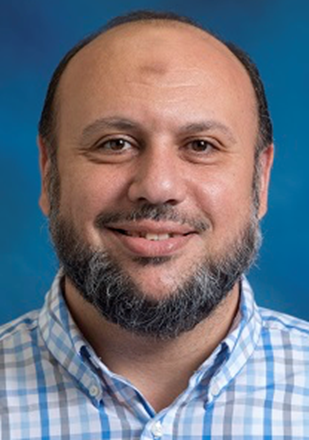
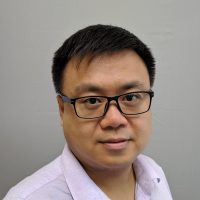
Thomas Pasquier is an Assistant Professor in the Department of Computer Science at the University of British Columbia, affiliated with the Systopia Lab and UBC Security & Privacy Group. His research focuses on digital provenance, system auditing, intrusion detection, and performance optimization. He investigates systems security through provenance graph analysis, developing practical frameworks for intrusion detection (including PROVNET and Kairos) and provenance summarization tools. His work combines machine learning with systems research to enhance cybersecurity transparency. Recent Publications (2022-2025) Provenance-based intrusion detection systems analysis Whole-system provenance for practical security eBPF kernel extension security enhancements LLM-driven provenance summarization Research code quality assessment Scientific Awards Incredible Instructor Awards Amazon Science Research Award He supervises graduate students in systems security research and teaches courses on security & privacy and operating systems. His lab welcomes diverse students for thesis-based research opportunities.
Lin Zhong is the Joseph C. Tsai Professor of Computer Science at Yale University, leading the Efficient Computing Lab. He holds a Ph.D. from Princeton University and M.S./B.S. degrees from Tsinghua University. Previously, he served at Rice University from 2005 to 2019. His research focuses on optimizing computing efficiency, quantum error correction, operating systems, and mobile systems. Education: Ph.D., Princeton University M.S., Tsinghua University B.S., Tsinghua University Research Interests: His work spans quantum computing (e.g., decoding algorithms for surface codes), operating systems (safety, correctness, and lightweight kernels), and mobile/networking systems (massive MIMO, energy-efficient designs). Recent trends include integrating large language models (LLMs) into robotics and securing cloud-based AI workflows. Awards: NSF CAREER Award ACM SIGMOBILE RockStar (2014) and Test of Time (2022) Fellowships from IEEE and ACM Best Paper Awards at ACM MobileHCI, IEEE PerCom, ACM MobiSys, and more Lab & Teams: His Efficient Computing Lab explores systems for quantum error correction (e.g., FPGA-based decoders), secure embedded systems, and LLM-driven robotics. Projects include TimelyLLM (real-time LLM serving) and Blindfold (confidential memory management).
Mads Dam is a Professor in Teleinformatics at the School of Computer Science and Communication at Kungliga Tekniska Högskolan (KTH), where he heads the Department of Theoretical Computer Science. His research focuses on computer security, formal methods, and program logics, with particular emphasis on the formal modeling and verification of low-level hardware and software execution platforms for security and application isolation. His educational background includes: PhD in Computer Science from the University of Edinburgh (1990) MSc in Computer Engineering from Aalborg University, Denmark BSc in Information Technology from Aalborg University, Denmark Mads Dam's research interests center on computer security, formal methods, and program logics. His current work focuses on the formal modeling and verification of low-level hardware and software execution platforms such as hypervisors and OS kernels and their underlying hardware. He has made significant contributions to information flow security, verification of microarchitectural systems, and network programming language security. His research bridges theoretical foundations with practical security applications. His recent publications show a strong trend toward verifying low-level systems, with a focus on information flow security for processors, network programming languages (particularly P4), and microarchitectural vulnerabilities. His work combines formal methods with practical security concerns, developing verification techniques that address real-world security challenges in hardware and software systems. The research spans theoretical foundations in temporal and epistemic logics to practical applications in network security and processor verification. His scientific awards and recognition include: Two framework grants from the Swedish Foundation for Strategic Research A junior individual grant from the Swedish Foundation for Strategic Research Project grants and a five-year research fellowship from the Swedish Research Council (VR) Project grants from Ericsson, Microsoft Research, US Air Force, and Vinnova (the Swedish Innovation Agency) Mads Dam has been a principal investigator on numerous research projects and has supervised many graduate students. He has been a partner in several European projects including HATS, S3MS, VerifiCard, LOMAPS, and UaESMC. His research has been supported by substantial grants from major funding bodies, reflecting the significance and impact of his work in computer security and formal methods. He is a founding member of several research centers at KTH, including Access, the CASTOR software research center, and the CDIS center for cyber defense and information security. These centers bring together researchers from multiple disciplines to address complex challenges in cybersecurity and software engineering.
Emin Gün Sirer is an Associate Professor at the Department of Computer Science , College of Engineering , Cornell University . He co-directs the Initiative for Cryptocurrencies and Smart Contracts and leads the Meridian and HyperDex projects. Research in operating systems, networking, and distributed systems Focus on secure operating systems, high-performance cloud infrastructure, and peer-to-peer networks Developed systems like Nexus (secure OS), OpenReplica (Paxos implementation), and Trickles (stateless network protocol) Prominent Projects : Meridian - Lightweight network location service without virtual coordinates Cubit - Decentralized peer-to-peer search Kimera - Network-centric Java verification SPIN - Extensible microkernel for application-specific services Scientific Contributions : Leading work in blockchain security and peer-to-peer systems Patents in executable content rewriting and distributed virtual machines Advising & Collaborations : Advises projects in network positioning and content distribution Collaborates with institutions like Usenix , SIGCOMM , and NSDI Personal Background : Ph.D. and M.S. in Computer Science from the University of Washington B.S.E. in Computer Science from Princeton University High school at Robert College
Ye Wang is an Assistant Professor in the Department of Political Science at the University of North Carolina at Chapel Hill since 2022. He previously held postdoctoral and predoctoral research positions at UC San Diego’s School of Global Policy and Strategy (2020–2022). His research bridges political methodology and comparative politics, focusing on statistical tools for policy spillover effects, research transparency, and social learning under non-democratic regimes. He also explores electoral dynamics in contentious political contexts. Ye earned a PhD in Political Science from New York University (2021), with a committee including Nathaniel Beck, Matthew Blackwell, Adam Przeworski, Cyrus Samii, and Joshua Tucker. He holds an MA in Economics from Peking University (2014) and a BS in Mathematics from Fudan University (2011). He withdrew voluntarily from a concurrent PhD in Economics at the University of Wisconsin-Madison (2014–2015). His research interests emphasize causal inference methodologies and their application to understanding political phenomena in non-democratic settings. He develops statistical techniques to address interference in temporal, spatial, and networked data, while also studying how protests and international tensions impact political systems and scientific collaboration. Recipient of the John T. Williams Dissertation Prize (2020), Chiang Ching-kuo doctoral fellowship (2020), and NYU’s MacCracken fellowship (2015–2020). In advising and teaching, Ye has served as a teaching assistant for courses in political methods, comparative politics, and quantitative methods at NYU and the City University of Hong Kong. He has also taught workshops on quantitative methods at Renmin University and contributed to academic seminars at institutions like Yale and Tsinghua. His programming skills include C++, R, Python, GIS, and Stata, complementing his work in methodological research.
Jooyeoun Jung is an Assistant Professor in the Department of Food Science & Technology at Oregon State University. She holds affiliations with the university's Food Science and Techno Headquarters and has been part of the OSU Main Campus since 2016. Her career includes roles as a Senior Researcher and Assistant Professor of Practice at the University of Nebraska-Lincoln (2018-2021) before returning to Oregon State in 2022. Educated at Oregon State University with a Ph.D. in Food Science & Technology, her research focuses on sustainable food processing, value-added food product development, and innovative food packaging solutions. Key areas include edible coatings using nanocellulose, antimicrobial packaging technologies, and utilization of agricultural byproducts for eco-friendly materials. Her work emphasizes enhancing food shelf-life through advanced coating technologies, improving packaging functionality, and addressing challenges in food preservation such as mold control, lipid oxidation, and microbial inhibition. She has pioneered studies on hazelnut processing, blueberry anthocyanin stabilization, and fruit pomace valorization. Jung teaches courses like Introduction to Sustainable Food Processing (FST327) and collaborates on interdisciplinary projects involving food safety, material science, and agricultural engineering. Her research has led to innovations in molded pulp packaging, radiofrequency pasteurization, and functional food film development. Professional affiliations include the Institute of Food Technologists, reflecting her commitment to advancing food science through industry collaboration and academic rigor.
Jarno Vanne is a Professor at the Department of Computing Sciences, Faculty of Information Technology and Communication Sciences at Tampere University. His research focuses on video coding standards, real-time systems, and hardware acceleration, particularly in the context of FPGA implementations and open-source tools. He leads projects involving VVC (Versatile Video Coding), V-PCC (Volumetric Video Coding), and HEVC (High Efficiency Video Coding), with an emphasis on efficiency, low latency, and machine learning integration. Key research interests include point cloud compression, saliency-guided encoding, parallelization schemes, and real-time video communication protocols. His work often addresses challenges in multi-party video streaming, embedded systems, and encryption mechanisms for privacy protection. He has contributed to open-source projects like the UVG dataset, Kvazaar encoder, and CiThruS simulation frameworks. Recent publications highlight advancements in VVC intra encoding optimizations, machine learning-driven partitioning schemes, and FPGA-accelerated solutions for edge computing. His research bridges theoretical video coding algorithms with practical implementations, aiming to improve compression efficiency while maintaining real-time performance.
Anthony D. Joseph is a Chancellor's Professor in the Department of Computer Science at the University of California, Berkeley, within the College of Engineering. He is a faculty member in the Computer Science Division and part of the RISE Lab and AMP Lab at UC Berkeley. His research spans multiple domains in computer science with a focus on security, distributed systems, and networking. Education: 1998, Ph.D., Computer Science, MIT 1988, S.M./S.B., Electrical Engineering and Computer Science/Computer Science and Engineering, MIT Professor Joseph's primary research interests include Computer and Network Security, Distributed Systems, Mobile Computing, Wireless Networking, Software Engineering, Operating Systems, Genomics, Secure Machine Learning, and Datacenters. His work has significant implications for both theoretical computer science and practical applications in industry. He leads multiple research projects including Mesos, SecML (Secure Machine Learning), D-Trigger, DETER, and Tapestry/Brochure. His research has been instrumental in advancing the fields of distributed systems and security, particularly in the context of machine learning applications. His publications reflect a strong focus on the intersection of security and distributed systems, with recent work emphasizing secure machine learning techniques and resource management in data centers. Professor Joseph's research has evolved from foundational work in networking and distributed systems to addressing contemporary challenges in cloud computing and AI security. Scientific Awards: Diane S. McEntyre Award for Excellence in Teaching Computer Science (2007) NSF Faculty Early Career Development Award (CAREER) (2000) Okawa Research Grant (1999) Professor Joseph has advised numerous graduate and undergraduate students, many of whom have gone on to make significant contributions in academia and industry. His research has been supported by various grants, including the NSF CAREER award. He has been actively involved in teaching core computer science courses including CS162: Operating Systems and Systems Programming and CS262: Advanced Topics in Computer Systems. He leads several research groups including the AMP Lab (which focuses on data analytics) and has been instrumental in projects like Mesos (for resource sharing in data centers) and SecML (focusing on the security of machine learning systems). His labs work on cutting-edge problems at the intersection of systems, networking, and security, with applications ranging from cloud computing to critical infrastructure protection.
Prof. Dr. Ahmet ÖZMEN is a Professor at Sakarya University's Faculty of Computer and Information Sciences, Department of Software Engineering. He has held various administrative positions including Head of the Software Engineering Department (2019-2028) and Director of the Computer Research and Application Center (2019-2022). With extensive experience in academia since 1991, he has made significant contributions to computer vision, traffic monitoring systems, and sensor technologies. Sakarya University: Professor (2019-present), Associate Professor (2011-2019) Dumlupınar University: Assistant Professor (2001-2011), Research Assistant (2000-2001, 1993-1998) Istanbul Technical University: Research Assistant (1991-1993) Prof. ÖZMEN's research spans computer vision applications for traffic monitoring, indoor air quality systems, parallel computing, and sensor technologies. His work bridges theoretical computer science with practical engineering applications, particularly in developing vision-based systems for nighttime vehicle detection, traffic flow monitoring, and environmental sensing. His interdisciplinary approach combines machine learning, image processing, and embedded systems to solve real-world problems in transportation and environmental monitoring. His publication record shows a clear evolution from parallel and distributed systems in his early career to computer vision and sensor applications in recent years. The majority of his recent work focuses on traffic monitoring systems using computer vision techniques, particularly for nighttime conditions, and indoor air quality monitoring systems using sensor networks. His research demonstrates strong industry and societal relevance, with applications in smart transportation, environmental protection, and educational technology. TÜBİTAK Publication Awards (2006, 2008, 2009, 2010) Physical implementation award from TÜBİDER (2008) Microsoft Certified Professional Certificate (2005) YÖK overseas study scholarships (1993, 1998) Elginkan graduate scholarships (1990, 1991) Prof. ÖZMEN has supervised numerous graduate students across multiple institutions, with a focus on practical engineering problems. His research has been supported by various projects including TÜBİTAK projects, institutional research grants, and industry collaborations. He has led significant research initiatives in traffic monitoring systems, indoor air quality monitoring, and educational technology platforms. His administrative leadership has included directing research centers and shaping curriculum development in software engineering. His work has involved establishing research teams focused on computer vision applications, sensor network development, and educational technology. These teams have produced numerous publications, developed practical systems, and trained the next generation of computer engineers. Current research directions include advanced traffic monitoring systems using deep learning and multi-camera setups for urban planning applications.
Soumaya Cherkaoui is a Full Professor in the Department of Computer Engineering and Software Engineering at Polytechnique Montréal. Previously, she served as a Full Professor at Université de Sherbrooke and held industrial roles as an aerospace project manager. Her research integrates artificial intelligence with telecommunications, focusing on quantum computing, frugal edge intelligence, and applications in connected vehicles and IoT. Current Position: Full Professor, Polytechnique Montréal Prior Academic Role: Full Professor, Université de Sherbrooke Industry Experience: Aerospace Project Manager Research Interests: Convergence of AI and communications, quantum computing for networking, frugal intelligence at the edge, and applications in autonomous vehicles, industrial IoT, and smart grids. She leads government and industry-funded projects, including a $6 million quantum initiative in 2025. Recent Publication Trends: Her 2025–2024 work emphasizes quantum-enhanced anomaly detection (via QGANs), Open RAN slicing with quantum optimization, and reinforcement learning for secure cognitive radio networks. Topics span 5G/6G, vehicular networks, and zero-trust architectures. Scientific Awards: IEEE Communication Society Distinguished Lecturer (2020) ACM Mirela Notare Award (2023) IEEE Bio-Inspired Computing STC Leadership Award (2023) N2Women: Stars in Networking and Communications (2023) Best Paper Awards at IEEE ICC 2017, IEEE LCN 2021, ICCSPA 2024 Advising and Grants: Supervised 3 Master's students in 2024, with research on quantum GANs and federated learning for vehicular networks. Secured grants like the $6 million quantum project (2025) and participated in CFI-QC government funding (2022). Editorial and Leadership: Served as Associate Editor for IEEE, Wiley, and Elsevier journals. Chaired conferences like IEEE LCN 2019 and IEEE ICC2025, and held leadership roles in IEEE Communications Society committees.
Dr. David Cock is a Senior Lecturer and Senior Researcher at ETH Zürich's Department of Computer Science, affiliated with the Systems Group. He holds a PhD from UNSW (2014) and a B.Sc. (hons) from UNSW (2004). His research focuses on formal verification, trustworthy systems, and hardware-software co-design, with notable contributions to projects like Enzian (a CPU/FPGA platform) and seL4 (formally verified kernel). He teaches Advanced Operating Systems and Informal Methods courses. Key achievements include the ACM Software System Award (2022) for seL4 and leadership in projects addressing hardware complexity and security. Research interests include formal methods for hardware modeling (Sockeye project), runtime verification, and mitigating timing channels. His work bridges theoretical foundations with practical systems, emphasizing secure and reliable computing platforms. Projects like Trustworthy BMC aim to enhance baseboard management systems' assurance. Collaborations span academia and industry, with open-source contributions to hardware designs and formal tools. Publications span formal verification, hardware modeling, and secure systems, with recent focus on heterogeneous computing and declarative hardware specifications. Teaching emphasizes practical formal techniques and OS design, leveraging real-world hardware (e.g., Barrelfish). His lab, the Systems Group, explores cutting-edge challenges in systems software and architecture.
Sherif Khattab is a Teaching Assistant Professor in the Department of Computer Science at the University of Pittsburgh's School of Computing and Information. With a Ph.D. in Computer Science from the University of Pittsburgh (2008), he brings extensive expertise in cybersecurity systems with applications across cloud computing, Internet of Things, electronic voting, and Big Data security. His research focuses on the systems aspects of cybersecurity, maintaining an h-index of 16 (Google Scholar) and 10 (Scopus) with over 60 publications. Khattab has successfully supervised more than 15 graduate students throughout his academic career. Prior to his position at Pitt, he served as an Associate Professor at Cairo University's Department of Computer Science, Faculty of Computers and Information. Professor Khattab teaches numerous undergraduate and graduate courses, with particular emphasis on hands-on ethical hacking and security education. His current teaching portfolio includes Algorithms and Data Structures (CS 0445) and Network Security (CS 1653), with extensive experience teaching operating systems, formal methods, and computer networks across multiple semesters. His research publications reveal consistent focus on practical security solutions for emerging technologies, with recent work addressing IoT security frameworks, blockchain-based voting systems, and cloud security challenges. The publication trend shows increasing emphasis on practical implementation aspects alongside theoretical security models. With industry experience from internships at Google Inc., Ericsson Data Networks, and Bosch Research, Khattab bridges academic research with real-world security challenges. His educational background includes a Bachelor's in Computer Engineering from Cairo University (1998) and both M.Sc. and Ph.D. in Computer Science from the University of Pittsburgh (2004 and 2008).
Lianying Zhao is an Associate Professor in the School of Computer Science at Carleton University and serves as a Director of the Carleton Computer Security Lab (CCSL). His research focuses on low-level platform security, including hardware, firmware, hypervisor, and operating systems, with an emphasis on trusted computing, authentication, privacy preservation, and security metrics. He leads the CCSL research group, collaborating with interdisciplinary teams to address critical security challenges in IoT, cloud systems, and web applications. Education: Not explicitly listed in provided texts. Roles: CCSL Director, Research Supervisor, and Graduate Program Advisor. Dr. Zhao’s work spans hardware security improvements, firmware vulnerability analysis, and user-centric security metrics. Recent research highlights include studies on router configuration habits, tracker detection in web browsers, and CVSS score discrepancies. He has supervised numerous graduate students in cybersecurity domains, contributing to over 30 peer-reviewed publications since 2013. His lab affiliations include CCSL and CISL, where he collaborates on projects such as secure deletion frameworks, TLS validation vulnerabilities, and hybrid decision-making models for cloud security. Current research also explores cross-regional login throttling mechanisms and AI-driven vulnerability detection in embedded systems.
Edwin Langmann is a Professor of Physics at KTH Royal Institute of Technology in Stockholm, Sweden. He holds a PhD in Theoretical Physics from the University of Vienna (1990) and has held academic positions including Assistant Professor at KTH (1994–1998), Postdoc at the University of British Columbia (1991–1994), and various roles at Swedish institutions since 2000. His research focuses on mathematical physics, integrable systems, and superconductivity theory, with contributions to quantum many-body systems and exactly solvable models. Affiliations: Department of Condensed Matter Theory, KTH Royal Institute of Technology Educations: PhD (Theoretical Physics, University of Vienna, 1990), M.Sc. (Technical Physics, TU Graz, 1986) Langmann teaches courses in physics and mathematical methods, advising numerous master’s theses. His work bridges theoretical physics and mathematics, addressing topics like Calogero-Sutherland models, fractional quantum Hall effects, and Hubbard model phase diagrams. Recent research includes antiferromagnetic order in 3D systems and BCS superconductivity with finite-range potentials. He has supervised students including Frode Boman (2021), Max Oliveberg (2021), and Charles Gilljam (2020). His publications span journals such as Communications in Mathematical Physics and Physical Review B , emphasizing integrable systems and quantum field theory.
Mahdi Soltanolkotabi is a Professor in the Departments of Electrical and Computer Engineering, Computer Science, and Industrial and Systems Engineering at the University of Southern California's Viterbi School of Engineering. He serves as the inaugural Director of the USC Center on AI Foundations for Science (AIF4S). His academic journey includes a Ph.D. in Electrical Engineering from Stanford University (2014) under Emmanuel Candes, followed by a postdoctoral position at UC Berkeley's AMPLAB mentored by Ben Recht and Martin Wainwright. Dr. Soltanolkotabi's research spans both theoretical and applied dimensions of data science. On the theoretical side, he develops mathematical foundations for modern data science, focusing on generative AI, deep learning, machine learning, signal processing, and computational imaging. His work draws upon nonconvex optimization, high-dimensional probability, statistical estimation, empirical processes, and learning theory. On the applied side, he develops reliable AI systems for healthcare and scientific applications, collaborating with physicians and domain scientists to enhance AI reliability, develop new architectures, and create rigorous evaluation frameworks. His recent publications demonstrate strong focus on medical AI applications, image reconstruction, and theoretical foundations of deep learning. His work bridges the gap between theoretical guarantees and practical implementations, particularly in medical imaging where reliability is critical. His research group has made significant contributions to understanding the behavior of nonconvex optimization algorithms in high-dimensional settings. David and Lucile Packard Fellow Information Theory Society Best Paper Award NIH Director's new innovator award Sloan Research Fellowship NSF Career award Airforce Office of Research Young Investigator award (AFOSR-YIP) Viterbi school of engineering junior faculty research award Faculty awards from Google and Amazon Dr. Soltanolkotabi has received multiple research grants including Amazon Research Awards for projects on "Artificial intelligence for fast and portable medical imaging" and "Reliable AI for Generation of Medical Reports from MRI Scans." He actively collaborates with medical professionals and leads educational outreach initiatives with local schools through USC's Viterbi Adopt-a-School program. His work demonstrates a strong commitment to translating theoretical advances into practical healthcare solutions while maintaining rigorous mathematical foundations.