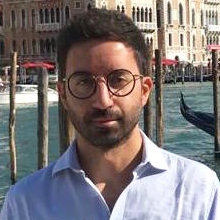
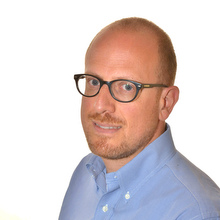
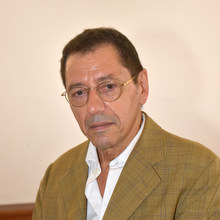
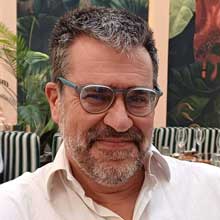
Dario MICCOLI is an Associate Professor at Ca' Foscari University of Venice, serving as Director's Delegate for Job Placement. He is affiliated with the Department of Asian and North African Studies, focusing on Jewish history, Mediterranean studies, and diaspora narratives. His research emphasizes cultural memory, colonial legacies, and transnational Jewish communities. His research interests include the history of Jewish communities in Egypt, Morocco, Rhodes, and Israel, with a particular focus on migration, literary representation, and digital preservation of cultural heritage. Key works explore Sephardic and Mizrahi identities, postcolonial Mediterranean dynamics, and the intersection of literature and nationalism. Recent publications highlight studies on Egyptian Jewish bourgeoisies, Rhodesian colonial experiences, and Mizrahi radicalism. His work frequently bridges historical analysis with contemporary cultural discourse, examining how marginalized communities narrate their histories. Miccoli has curated several volumes on ethnic museums and edited collections on Jewish cultural expression. His teaching and administrative roles reflect a commitment to interdisciplinary approaches to Middle Eastern and Mediterranean studies.
Gerhard Wolf is a Professor and Managing Director of the Kunsthistorisches Institut in Florenz (KHI), a research institute of the Max Planck Society since 2002. He has served as director of the KHI since 2003. Wolf leads the Department Gerhard Wolf, which focuses on Image, Object, Site. Mediterranean / Transcultural Art Histories , exploring concepts and practices of images and things in transcultural perspectives. Wolf earned his PhD in art history, Christian archaeology, and philosophy from the University of Heidelberg in 1989, and completed his habilitation at the Free University of Berlin in 1995. He previously held a professorship in art history at the University of Trier until 2003. His academic career includes numerous honorary professorships at institutions including EHESS in Paris, Bibliotheca Hertziana in Rome, and Columbia University in New York. Wolf's research spans transcultural art history, material culture studies, and ecological approaches to art history. His department investigates how objects and images participate in the formation and transformation of environments, with focus on migratory and transcultural dynamics, locative practices, and the interrelations between heritage and environment. His long-term projects include 'The Art of Containment' (studying vessels and containers across cultures), 'Ecology and Aesthetics,' and research on sacred topographies. His publications reveal a consistent engagement with transcultural object studies, particularly focusing on vessels, material metaphors, and the relationship between images and objects. His work bridges historical analysis with contemporary ecological and political concerns, demonstrating art history's relevance to current debates about heritage, environment, and cultural exchange. Wolf has received significant recognition including honorary memberships in CAIA (Centro Argentino de Investigadores de Arte), Amici delle Pietre Dure in Florence, and the Accademia delle Arti del Disegno. He was awarded the 'Hanno und Ilse Hahn' Award in 1994. As director, Wolf mentors numerous doctoral candidates and postdoctoral researchers, fostering the next generation of art historians. His department hosts extensive research projects examining the intersection of art history with environmental studies, catastrophe theory, and transcultural exchange. The department maintains active collaborations with international institutions and regularly organizes conferences addressing contemporary challenges in art historical research.
Paolo Lucca is a Researcher in the Department of Asian and North African Studies at Ca' Foscari University of Venice. His academic work focuses on Armenian studies, Hebrew language, religious texts, and cultural history, particularly in the context of Christian doctrine, manuscript transmission, and interfaith relations. University: Ca' Foscari University of Venice Department: Department of Asian and North African Studies Academic Rank: Researcher Email: paolo.lucca@unive.it His research spans philology, biblical translation, Ottoman Armenian history, and the cultural activities of the Mechitarist order. He has published extensively on Armenian religious texts, Dominican missions, forced conversions, and the history of Bible translation. The recent publications reveal a strong focus on Armenian Christian identity, textual analysis of religious manuscripts, and cross-cultural exchanges between Armenians, Jews, and Catholics in the early modern period. His work often involves critical editing, translation, and historical contextualization of rare texts. Notable themes include: Mechitarist educational and cultural initiatives Armenian Catholic relations with Rome Comparative studies of Jewish and Armenian chronicles Illustrated catechisms and religious pedagogy Latin-Armenian linguistic interactions Paolo Lucca has also curated academic volumes and translated major works on biblical and philosophical topics. He has not received any explicitly mentioned scientific awards in the provided texts. He likely supervises students given his doctoral background and collaborative research, though no formal list is available. His work is deeply rooted in archival and philological methods, contributing significantly to the understanding of Armenian cultural and religious history in the Mediterranean and Ottoman contexts.
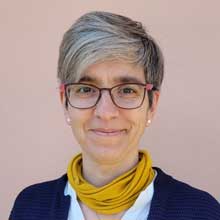
Piera Rossetto is a Researcher at the Department of Asian and North African Studies, Ca' Foscari University of Venice. Her work bridges Jewish studies, migration, memory, and creative methodologies, with a focus on postcolonial North African and Middle Eastern Jewish communities, especially from Libya. She leads major research projects and teaches Hebrew language and social research methods. PhD in Languages and Civilizations of Asia and the Mediterranean Africa, Ca' Foscari University and EHESS Toulouse (2015) MA in South and Western Asia: Languages, Cultures, and Institutions, Ca' Foscari University (2011) Her research explores memory, identity, and belonging through narrative cartography and co-creative methods. She investigates Jewish Mediterranean migrations, particularly of Libyan Jews, using oral histories, literary sources, and digital tools. Her work emphasizes marginalized voices and interdisciplinary, artistic approaches to research. The recent articles highlight a strong trend in narrative and creative cartography, Jewish postcolonial memory, and interdisciplinary research-creation. Themes include the poetics of identity, mapping invisible migrations, and digital documentation of diasporic memories. Her publications span monographs, journal articles, book chapters, and multimedia outputs. Scientific awards and fellowships include: Rita Levi Montalcini Program for Young Researchers (Principal Investigator) FWF Hertha Firnberg Postdoctoral Fellowship Fondazione Rothschild Doctoral Fellowship Fondazione CDEC Research Fellow She has secured competitive grants, including the FWF-funded "Europe's (In)Visible Jewish Migrants" and the ongoing Rita Levi Montalcini project on gender, aging, and migration. She has advised collaborative, interdisciplinary research teams and supervised creative digital projects. Her work often involves partnerships across Europe and digital humanities platforms. She leads the research project "Genere, invecchiamento e migrazioni: memorie e mascolinità ebraiche del Nord Africa e del Medio Oriente" and previously led an FWF-funded project at the University of Graz. She also contributes to digital initiatives like the World Jewish Congress’s MENA Jewish legacy project and co-developed interactive visualizations and audio-documentaries.
Mario Caramitti is an Associate Professor in the Department of Modern Literature and Culture at Sapienza University of Rome, specializing in Russian literature and language. He teaches a diverse range of courses including Russian Literature II, Russian Language and Literature I, Russian Studies, and Russian Translation III across multiple degree programs such as Languages, Cultures, Literatures, Translation; Linguistics; English and Anglo-American Studies; and Linguistic and Intercultural Mediation. Professor Caramitti's research interests focus on Russian literary tradition spanning from the 19th to 21st centuries. His scholarly work demonstrates particular expertise in authors such as Tolstoy, Dostoevsky, Gogol, Chekhov, Nabokov, and contemporary writers like Maria Stepanova and Mikhail Shishkin. His teaching portfolio includes specialized courses on Turgenev's short prose, Chekhov's dramaturgy, twentieth-century Russian poetry, and Gogol's genius. His extensive publication record reveals a strong focus on literary criticism, with numerous essays published primarily in ALIAS SUNDAY and academic journals. The analysis of his recent publications shows a consistent engagement with Russian literary tradition, examining both canonical works and contemporary developments. His work often explores narrative structure, psychological depth in characterization, and the interplay between historical context and literary creation. Professor Caramitti maintains an active academic schedule with office hours through September 2025 and current Google Classroom pages for the 2024-25 academic year, teaching courses such as 'Twentieth-century Russian poetry,' 'The extraordinary modernity of Gogol's genius,' 'Russian Studies,' and 'Russian Translation III.' His teaching locations include the Ex Vetrerie Sciarra building at via dei Volsci 122 in Rome.
Simon Levis Sullam is a Full Professor of Contemporary History at Ca' Foscari University of Venice, Department of Humanities. He maintains an active teaching schedule across multiple programs including History, Letters, Cultural Anthropology, and Italian Philology. His academic profile shows consistent engagement with the university community through office hours scheduled for the 2025 spring semester. Levis Sullam earned his BA and PhD in History from Ca' Foscari University after studying at UCLA and the EHESS in Paris. His academic journey includes prestigious fellowships at Columbia University, UC Berkeley, the European University Institute, and the University of Oxford. He has held visiting positions at Sciences Po in Paris and the University of Cambridge. His research focuses on the intersection of Italian history, Jewish history, and the study of antisemitism and the Holocaust. Levis Sullam examines 19th- and 20th-century Italian political and cultural history with particular attention to intellectual history, the history of ideas, and the historical development of antisemitic thought. His work bridges methodological approaches from both Italian and international historiography. His recent publications demonstrate a sustained engagement with the history of antisemitism, Holocaust studies, and the intellectual history of fascism and its aftermath. Levis Sullam's scholarship shows a methodological sophistication that combines close textual analysis with broader historical contextualization, particularly evident in his work on the language of antisemitism and the representation of Jews in historical discourse. Fellow of the Einaudi Foundation in Turin (2000) Research Associate Fellow at the Italian Academy of Columbia University (2005-6) Andrew W. Mellon Postdoctoral Fellow at UC Berkeley (2006-8) Max Weber Postdoctoral Fellow at the European University Institute (2008-9) Leverhulme Research Fellow at Oxford University (2009-10) Polonsky Fellow at Oxford University (2016-17) Rita Levi Montalcini Young Researchers Program recipient (2011-15) Levis Sullam has taught extensively across multiple degree programs at Ca' Foscari, supervising numerous theses and contributing to curriculum development in contemporary history, historiography, and European history. His teaching portfolio demonstrates a commitment to interdisciplinary approaches, connecting historical methodology with broader questions of cultural and political development in modern Europe.
Andreina Lavagetto is an Associate Professor in the Department of Humanities at Ca' Foscari University of Venice, specializing in German Literature (SSD GERM-01/B). She has been a faculty member at Ca' Foscari since 2001, after previously serving as an Associate Professor at the University of Ferrara (1998-2001). Her academic career spans over three decades, with institutional responsibilities including coordinator of the master's degree program in European, American and Postcolonial Languages and Literatures, member of various teaching committees, and involvement in PhD programs. Lavagetto's research spans several interconnected fields centered around German literature and its intersections with philosophy, cultural studies, and Jewish thought. Her primary interests include the works of Rainer Maria Rilke, Franz Kafka, and Martin Buber; the German-Jewish cultural symbiosis from the late 18th century to 1933; Holocaust studies; biopolitics and literature; and the theory and practice of literary translation. She has made significant contributions to the historical-critical edition of German literary works and has explored the relationship between mysticism, theology, and modern thought. Her recent publications demonstrate a consistent scholarly trajectory with increasing focus on German-Jewish intellectual history, particularly examining how Italian Germanists navigated the racial laws of Fascist Italy. Her work shows expertise across literary criticism, translation, and editorial scholarship, with particular attention to German-Italian cultural relations and the transmission of philosophical ideas across linguistic boundaries. The recurring themes in her research include the relationship between aesthetics and politics, the representation of historical trauma, and the philosophical dimensions of literary form. National scientific qualification for full professor (2018) DAAD Scholarships for study in West Berlin (1983-1987) Coordinator of Unit 2 of the ARCGER award project (2015-2022) Co-director of the scientific journal "Annali di Ca' Foscari" (2015-2016) Member of the scientific committee of "Prospero. Journal of Foreign Literature, Comparative Literature and Cultural Studies" Lavagetto serves as a referee for national and international research projects, including the ARCGER Project on German studies archives in Italy (1930-1955). She has held visiting positions at the University of Augsburg (2017) and the Deutsches Literaturarchiv in Marbach am Neckar (2019). Her research funding includes projects from the Italian Institute of Germanic Studies, focusing on the archives of German studies in Italy and the history of Italian Germanistics during the Fascist period.
Stefano Rapisarda is a Full Professor of Romance Philology and Linguistics at the Department of Humanities, University of Catania. He has held academic positions since 2002, progressing from Researcher to Associate Professor (2018) and Full Professor (2021). He is President of the Master's Degree in "Linguistic Sciences for Education and Interculturality" at the Special Teaching Structure of Ragusa and serves on multiple university commissions. He has been delegated to lead the Special Educational Structure of Ragusa and represents the University of Catania on the Board of Directors of the Ibleo University Consortium. His research focuses on three interrelated areas: the philology of medical-scientific and magical-divinatory texts; intercultural contacts in the Mediterranean from Late Antiquity to the Early Modern period; and the intersections between philology, history, politics, and ideology. He has conducted extensive textual editions of medieval works, including the Thesaurus pauperum , Nicole Oresme’s Contre la divination , and various chiromantic and scapulomantic texts. His work emphasizes material manifestations of interculturality such as bilingual glossaries, multilingual inscriptions, and codices with mixed scripts. The 15 most recent publications highlight a sustained engagement with medieval divination, philology in wartime, intercultural textual practices, and the political dimensions of language and scholarship. Key themes include prognostication, textual criticism, linguistic hybridity, and the role of intellectuals during periods of conflict. His recent books examine the global history of the Spanish language and the ideological uses of philology in the 19th and 20th centuries. Scientific Awards and Honors: Candidate for the 'Premio Prezzolini per la Traduzione Letteraria' Qualified under the Fulbright Program for teaching at Northwestern University (2011) Advising and Grants: While no specific students are listed, Rapisarda has been a member of doctoral committees at the University of Macerata and the University of Catania. He has served as Principal Investigator on multiple funded research projects, including 'Scholars in Arms' (€15,500), 'Transnational Intellectual Networks' (€22,500), and 'Scholarship in Wartimes' (€30,000), managing over €70,000 in institutional funding. He has contributed to major national research initiatives (PRIN) and international collaborations, including a HERA-funded proposal on academics in wartime. Labs and Research Groups: He directs the 'Professori in Guerra' Digital Library, an archive of autobiographies and militant texts by scholars. He co-directs the 'Divinatoria' book series with Classiques Garnier and has organized international workshops on divination. He is a founding member and treasurer of the International Society for the Critical Study of Divination and serves on the editorial board of the International Journal of Divination and Prognostication .
Giacomo Petrarca is an Assistant Professor in Theoretical Philosophy at Vita-Salute San Raffaele University, Milan, specializing in political theology, Jewish thought, and the intersection of philosophy and religious studies. He earned his PhD at the same university with a dissertation on the problem of Law in Paul and Franz Rosenzweig. Current affiliation: Faculty of Philosophy, Department of Theoretical Philosophy Visiting scholar: Bucerius Institute for Research of Contemporary German History and Society (University of Haifa, 2016) His research focuses on: Political Theology : Law, sovereignty, and theological-political critiques Jewish Thought : Spinoza, Hermann Cohen, Franz Rosenzweig, and scriptural interpretation Philosophy-Religion Dialogue : Hermeneutics, liturgy, and existential theology Recent publications explore Sartre's anti-Semitism, Spinoza's prophecy problem, and Aristotelian biological metaphors. Awards include the Premio Sainati (2016) and Premio Pontecorvo (2012). Academic Memberships : Internationale Rosenzweig Gesellschaft, Italian Society of Theoretical Philosophy (SIFT), Société Francophone de philosophie de la religion Doctoral Supervision : Active member of the PhD College in Philosophy (cycles 35-40, 2019-2024) He co-founded the Diaporein research center's outreach initiatives and organized summer schools on power and philosophy.
Luca Iori is a fixed-term Researcher in Greek History at the University of Parma, Department of Humanities, Social Sciences and Cultural Enterprises. He teaches courses in Greek History, History of Ancient Historiography, and Methodologies of Historical Research, while actively contributing to critical editions and interdisciplinary projects. Teaching: Greek History (Bachelor's and Master's programs), History of Ancient Historiography, Methodologies of Historical Research Leadership: Principal Investigator for 'Global Thucydides: Editors, Readers, Translators (1848-2024)', co-editor of the Clarendon Edition of Hobbes' works Research Interests: Focuses on Greek historiography's reception in modernity, particularly Thucydides' influence on Hobbes, Athenian democracy's legacy, classical scholarship under Fascism, and Digital Humanities applications. Publication Trends: His recent work emphasizes Thucydidean reception, cross-temporal political theory, and the intersection of classical studies with modern ideological frameworks, supported by Digital Humanities methodologies. Scientific Awards: Nominated for the 2016 Viareggio-Rèpaci Prize ('Essays' Section) Fellow of the Academy of Sciences of Turin (2025) Research Fellow at The Huntington Library (2019) Projects & Collaborations: Lead PRIN and ERC projects on Greek history, classical scholarship, and digital papyrology; collaborator in international critical editions and conferences.
Vincenzo Allegrini is a Researcher at the Department of European, American and Intercultural Studies (Sapienza University of Rome). He contributes to the editorial boards of OBLIO (ANVUR band A) and Leopardiana , and participates in the Doctoral College in Italian Studies (Sapienza). His research focuses on Giacomo Leopardi's intertextuality, semantics, and reception in 20th-century Italian poetry, with secondary interests in German-Italian cultural exchange, the art of memory, and intersections between literature and visual arts. Key research areas: Leopardi's philosophical dialogues, classical reception, historical semantics Teaching: Outlines of Contemporary Italian Literature (Sustainable Tourism Sciences, Modern Letters) Selected Publications: Fragments of Memory (2020), The Passing Wave (2022), and forthcoming With Gazettes in Their Hands (2025).
Giorgio Politi serves as Senior Researcher in Modern History (M-STO/02) at Ca' Foscari University of Venice's Department of Humanities, where he has been a core member since the department's inception. He previously taught at Milan's Academy of Fine Arts and University of Milan from 1975-1980 while pioneering academic IT infrastructure as departmental webmaster, IT manager, and faculty IT committee coordinator. Politi earned his Philosophy degree from the University of Milan in 1971. His scholarly trajectory bridges traditional historiography with digital innovation, reflecting early adoption of microcomputers for historical text processing and desktop publishing in the 1980s-90s. His research centers on Early Modern European social dynamics, particularly peasant revolts like the 1525 Tyrolean uprising led by Michael Gaismair and urban history of Spanish-era Cremona. Later work explores historical epistemology, cultural memory, and digital humanities methodologies, evidenced by his co-founded academic series em-studi di storia europea protomoderna with Reinhold C. Mueller. Analysis of his 66+ publications (1976-2016) reveals three thematic clusters: foundational studies on Gaismair and Tyrolean revolts (1980s-90s), methodological critiques of historical practice ( History as a Dead Language , 2009), and interdisciplinary explorations of cultural memory ( The Chosen People , 2015). His 2009 thesis-writing manual remains widely used in Italian academia. Though no formal awards are documented, Politi's institutional impact is evident through his leadership in academic technology and the influential publication series he co-directs. His advisory roles are reflected in collaborative editorial projects rather than formal student supervision. Politi co-founded and directs the em-studi di storia europea protomoderna series, creating a dedicated platform for early modern European historical research that bridges Italian and international scholarship through digital publishing frameworks he developed.
Michela Gardini is a Full Professor of French Literature at the University of Bergamo, Department of Languages, Literatures and Foreign Cultures, where she also serves as Coordinator of the PhD Program in Transcultural Humanities (2024–2027). She teaches French Literature and Intercultural Imaginaries in both undergraduate and master’s programs, including the international track in Intercultural Studies in Languages and Literatures. Her academic work is deeply rooted in interdisciplinary and transcultural approaches to French literary studies. Her research focuses on 19th- and 20th-century French literature, particularly the novel, with a strong emphasis on interdisciplinary and transcultural perspectives. Key areas include literature and religion, myth rewriting (e.g., Joan of Arc), literature and justice, word-image relationships (especially the motif of the portrait), intertextuality, metatextuality (with attention to the translator as a literary figure), narratives of place, intercultural imaginaries, and Maghrebian Francophone writings. These interests reflect a commitment to understanding literature as a dynamic site of cultural negotiation and transformation. The analysis of her recent publications (2020–2025) reveals a consistent engagement with French literary figures such as Georges Bernanos, Théophile Gautier, Léon Bloy, André Gide, and Maurice Barrès, often through the lenses of religion, identity, myth, and cultural memory. Her work spans original scholarly chapters and articles, as well as critical reviews in leading journals like French Studies and Revue d’Histoire Littéraire de la France , demonstrating both creative and evaluative scholarly contributions across French literary and cultural studies. Michela Gardini has not received any explicitly mentioned scientific awards in the provided text. She advises PhD students as Coordinator of the Transcultural Humanities PhD program and is actively involved in academic mentorship and curriculum development. While specific grant details are not listed, her sustained publication record and leadership role suggest active research funding and institutional support. She teaches core courses in French literature and intercultural studies, shaping the next generation of scholars in transcultural literary analysis. Michela Gardini is affiliated with the Department of Languages, Literatures and Foreign Cultures at the University of Bergamo, where she contributes to research, teaching, and doctoral supervision. She is part of a scholarly community focused on modern foreign languages and literatures, with particular strength in French studies and transcultural humanities.
Piero Capelli is a Full Professor in the Department of Asian and North African Studies at Ca' Foscari University of Venice, where he specializes in Hebrew language and Jewish studies. His academic work spans biblical interpretation, rabbinic literature, Jewish mysticism, and medieval interreligious polemics. University: Ca' Foscari University of Venice Department: Department of Asian and North African Studies Academic Rank: Professor Email: piero.capelli@unive.it Capelli’s research focuses on the development of Jewish thought from antiquity through the medieval period, particularly in areas such as apocalyptic literature, the problem of evil, textual transmission, and the interaction between Jewish and Christian intellectual traditions. He has published extensively on topics including Ezekiel’s Merkavah vision, the figure of Satan in early Judaism, and the interpretation of Deuteronomy in late antique sources. His scholarly interests also extend to the cultural and theological dimensions of Jewish-Christian polemics in the Middle Ages, especially concerning figures like Nicolas Donin and Pablo Christiani. His recent publications demonstrate a sustained engagement with both primary textual analysis and broader thematic explorations. From 2023 to 2025, his work includes studies on apocalyptic texts like 1 Enoch, 2 Baruch, and 4 Ezra, as well as critical editions and translations of rabbinic and mystical writings. He has also contributed prefaces, introductions, and editorial leadership to journals such as Skenè and Humanitas , curating special issues on Jewish theatres and demonic traditions in Western culture. While no formal awards are listed in the provided text, his prolific output and editorial roles indicate significant recognition within the academic community. Capelli has advised on bibliographic projects and contributed to collective volumes, showing strong mentorship and collaborative engagement. He has not supervised any named students in the data provided, but his role as a professor implies teaching and guidance responsibilities. He leads no named labs or research teams in the available information, but his editorial and curatorial work suggests leadership in scholarly networks and academic publishing. His career reflects deep commitment to advancing the study of Jewish texts and their reception across historical and cultural contexts.
Pierfrancesco Fiorato is an Associate Professor at the University of Parma , Department of Humanities, Social Sciences and Cultural Enterprises. He specializes in Moral Philosophy and Philosophy of History , with a focus on Neo-Kantianism and German-Jewish Thought . Formerly at the University of Sassari (2002–2021) Tenured high school teacher at Liceo Scientifico Statale "L. Lanfranconi" since 1987/88 Research interests include: The philosophical works of Hermann Cohen Intersections between Jewish thought and contemporary philosophy Ethical dimensions of historical consciousness Translational projects of German-Jewish intellectual works Recent publications analyze Cohen's metaphysical and ethical systems, Jewish cultural identity debates, and the concept of "enemy love" in religious philosophy. He actively participates in international research collaborations and serves on editorial boards including Nuova Corrente .