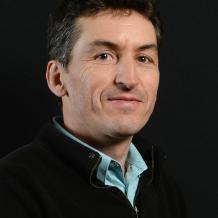
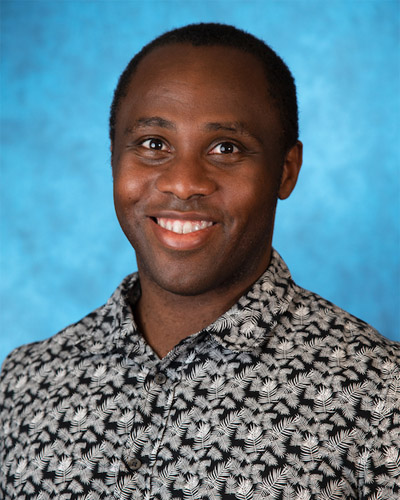
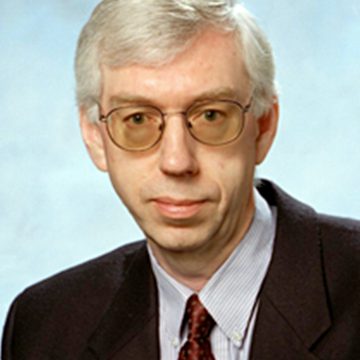
Freddy Bouchet is a Directeur de Recherche at CNRS and a Professeur attaché at École Normale Supérieure de Paris (ENS-PSL). His work bridges mathematical physics, climate science, data science, and statistical mechanics , focusing on turbulent flows, climate extremes, and large deviation theory . He will lead the Laboratoire de Météorologie Dynamique (LMD) starting 2025. Research Themes : Statistical mechanics of geophysical flows (Jupiter's jets, ocean currents). Large deviation theory for rare events in turbulence and climate. Non-equilibrium phase transitions in atmospheric/oceanic systems. Ensemble inequivalence in systems with long-range interactions. Scientific Awards : Three Physicists Prize Collaborations : Tapio Schneider, Antoine Venaille, J. Laurie, O. Zaboronski, B. Dubrulle, A. Venaille. Labs & Teams : Climate and Statistical Mechanics group at ENS de Lyon Future director of Laboratoire de Météorologie Dynamique (LMD/IPSL) Publications span climate dynamics, turbulence, statistical mechanics, and large deviation theory , with applications to Jupiter's atmosphere, ocean vortices, and non-equilibrium systems . His work often challenges paradigms like Tsallis non-extensive statistics.
Yayue Pan is a Professor at the Department of Mechanical and Industrial Engineering, University of Illinois Chicago (UIC) , and serves as the Director of NASA MIRO Center for In-Space Manufacturing: Recycling and Regolith Processing (CISM-R2) . Her research focuses on advancing Additive Manufacturing (AM) technologies for applications in biomedical engineering , energy storage , and smart structures . Ph.D., Industrial and Systems Engineering, University of Southern California (2014) M.S., Mechanical Manufacturing and Automation, Zhejiang University, China (2010) B.S., Industrial Engineering, Zhejiang University of Technology, China (2007) Her work addresses technical challenges in AM such as multi-material printing , multi-scale fabrication , and field-assisted processes . Notable projects include: Development of electrostatically-assisted direct ink writing (eDIW) for high-speed, high-resolution printing Continuous projection stereolithography for rapid solid object manufacturing Acoustic field-assisted particle patterning for smart composites Light-curable hydrogels for corneal repair applications Her 15 most recent publications (2022–2025) span topics in: Multi-material AM (conductive polymers, hierarchical composites) Biomedical applications (soft robotics, corneal repair) Energy components (battery electrolytes, supercapacitors) Field-assisted processes (acoustic, electrostatic, magnetic) Scientific Awards : 2024 ASME Chao and Trigger Young Manufacturing Engineer Award 2022 UIC Researcher of the Year Rising Star Award 2020 ASME CIE TC Leadership Award 2019 UIC Outstanding Teaching Award 2017 SME Outstanding Young Manufacturing Engineer Award NSF REU Supplements (2023–2024) Advising : Mentored 24+ graduate/undergraduate researchers, including 17 NASA/GPIP interns. Former advisees hold academic positions at University at Buffalo and University of North Carolina at Charlotte , and industry roles at Apple , GE Healthcare , and ANSYS . Grants : Recipient of a $4.65M NASA grant and multiple NSF awards. Collaborations include Northwestern University, University of Michigan, and NASA centers.
Sebastian Schemm is a Heisenberg Fellow at the Department of Applied Mathematics and Theoretical Physics (DAMTP), University of Cambridge, a position regarded as equivalent to a non-permanent Associate Professor. He leads research within the Atmosphere-Ocean Dynamics group and previously held an ERC Starting Grant-funded Assistant Professorship (without tenure track) at ETH Zurich. Education and Career Path PhD (2013) and MSc (2010), ETH Zurich, Switzerland Postdoctoral researcher, University of Bergen, Norway (2014–2017) Postdoctoral researcher, Laboratoire de Météorologie Dynamique, ENS Paris (2017–2018) Assistant Professor (ERC Starting Grant), ETH Zurich (2020–2024) Heisenberg Fellow, DAMTP, University of Cambridge (2025–present) Research Focus Schemm’s work centres on atmospheric and climate dynamics, spanning turbulence to planetary scales. Core themes include the physics of extratropical cyclone life cycles, jet-stream and storm-track dynamics, Rossby waves and teleconnection patterns, high-resolution atmospheric modelling, and the integration of machine-learning techniques for parameter estimation, data assimilation, and kilometre-scale global simulations. He also contributes to large-scale initiatives such as ECMWF’s WeatherGenerator. Scientific Awards and Editorial Service DFG Heisenberg Fellowship (2025) ERC Starting Grant (2020–2024) European Meteorological Society Young Researcher Medal (2019) Co-Editor, Weather and Climate Dynamics (EGU) Co-Editor, Quarterly Journal of the Royal Meteorological Society PhD Supervision & Funding He currently supervises PhD students at both Cambridge and ETH Zurich, with funding streams including the Cambridge CREATES Doctoral Training Partnership and Swiss/EU grants. Ongoing students explore reinforcement-learning parameterisations, jet-stream–storm-track relationships, mid-latitude eddy energetics, machine-learning ensemble forecasting, and Bayesian parameter estimation in LES. Active Projects EU Horizon project WeatherGenerator (led by ECMWF) PASC HiRAD-Gen : High-Resolution Atmospheric Downscaling Using Generative Models
Dr. Joshua Brinkerhoff is an Associate Professor in Mechanical Engineering at the University of British Columbia Okanagan Campus. He serves as the Associate Director for Research & Industrial Partnerships in the School of Engineering and leads the UBC-Okanagan Computational Fluid Dynamics Laboratory. His research spans computational fluid dynamics, turbomachinery, multiphase flows, hydrogen safety, wind energy, and biofluid mechanics. He teaches courses in mechanics of materials, alternative energy systems, turbulence, computational fluid dynamics, and aircraft design. PhD, Aerospace Engineering (Carleton University, Ottawa, ON) BEng, Aerospace Engineering (Carleton University) Dr. Brinkerhoff’s research interests include: Computational Fluid Dynamics (CFD) for laminar-to-turbulent transition and instability analysis Wind energy systems and turbine aerodynamics Hydrogen storage and safety protocols for transportation Biofluid mechanics for respiratory diseases and aneurysm modeling Multiphase flows in industrial and environmental contexts His publications focus on CFD simulations for: Aerosol dispersion and mitigation in indoor environments Wind farm interactions and atmospheric gravity waves Cavitation and phase transitions in cryogenic and LNG systems Heat transfer optimization in industrial and thermal systems Instability dynamics in buoyancy-driven and swept flows Turbulent structures in fluidized beds and reactors Dr. Brinkerhoff has no listed scientific awards in the provided data but has extensive contributions to renewable energy, hydrogen safety, and medical fluid dynamics. His laboratory develops open-source tools like TOSCA for large-eddy simulations and investigates practical applications in urban air quality, dental aerosol control, and turbine wake modeling.
Univ.-Prof. Aiko Voigt is a Professor and Head of the Department of Meteorology and Geophysics at the University of Vienna. Her research focuses on climate dynamics, cloud physics, and atmospheric processes. She leads the Environment and Climate Research Hub and teaches advanced courses like 'Climate Modelling Lab' and 'Cloud Physics.' Her work explores cloud-radiative interactions, climate change impacts, and extreme weather dynamics. Recent studies analyze energy imbalances, high-cloud feedbacks, and tropical precipitation patterns. Voigt's contributions bridge climate modeling with observational data, emphasizing high-resolution simulations and interdisciplinary approaches. Teaching includes courses such as 'Climate System of the Earth,' 'Scientific Communication,' and 'Introduction to Computational Meteorology.' Her research spans from present-day climate to Snowball Earth scenarios, addressing both modern and paleoclimatic challenges. Publications highlight advancements in radiative transfer algorithms, cyclone dynamics under warming, and uncertainties in climate model predictions. Her work underscores the critical role of clouds in amplifying climate sensitivity and reshaping atmospheric circulation patterns.
Professor Klaus McDonald-Maier is a full Professor in the School of Computer Science and Electronic Engineering (CSEE) at the University of Essex , where he leads the Embedded and Intelligent Systems (EIS) Research Laboratory and heads the Intelligent Embedded Systems and Environments Research Group . He is also Director of Impact , Visiting Professor at the University of Kent, and Visiting Research Affiliate at NASA Jet Propulsion Laboratory, California Institute of Technology. Education PhD in High-Performance Parallel Neural Network Architectures, Friedrich-Schiller-University Jena (Germany, 1999) Electronic Engineering studies, University of Ulm (Germany) Electronic Engineering studies, Cardiff University (Wales) Electronic Engineering studies, École Supérieur de Chimie Physique Électronique de Lyon (CPE-Lyon) (France) Research Interests Professor McDonald-Maier’s research integrates embedded systems , System-on-Chip (SoC) architectures , and AI-driven robotics . He pioneers visual place recognition techniques that remain robust under severe appearance and viewpoint changes, develops cybersecurity frameworks based on ICMetrics for autonomous vehicles and IoT, and designs approximate real-time computing solutions for energy-constrained multicore and FPGA platforms. His work on radiation-tolerant systems supports space and nuclear applications, while his bio-inspired algorithms enable lightweight, neuromorphic perception on resource-limited robots. Publication Trends Between 2022 and 2025 his output converges on FPGA-accelerated AI , secure edge intelligence , visual navigation for autonomous systems , and healthcare analytics . He repeatedly couples rigorous algorithmic innovation with practical hardware deployment, yielding energy-efficient, real-time systems validated in domains ranging from autonomous driving to post-stroke rehabilitation. Scientific Awards & Recognition Best Paper Award – IEEE Transactions on Sustainable Computing (2024) Best Paper Award – IEEE/ACM DATE (2024) Best Paper Award – IEEE Systems Journal (2022) Best Paper Award – IEEE Sensors Journal (2021) Best Paper Award – IEEE Access (2020) Research Grants & Industrial Collaboration He has secured major funding from EPSRC , EU Horizon 2020 , Innovate UK , and industry partners. Current projects span trustworthy autonomy, radiation-hardened edge AI, and AI-enhanced rehabilitation technologies. He is Chief Scientist of UltraSoC Technologies Ltd and CEO of Metrarc Ltd , commercialising University research in semiconductor debug and cybersecurity respectively. Laboratory & Team Leadership As Director of the Embedded and Intelligent Systems Laboratory (EIS Lab) , he oversees a multidisciplinary team of researchers and PhD students, providing state-of-the-art FPGA, robotics, and embedded-systems facilities. The lab collaborates closely with NASA JPL, UK Atomic Energy Authority, and leading semiconductor firms to translate fundamental research into high-impact industrial solutions.
Lukas Papritz is a Lecturer at the Department of Environmental Systems Science at ETH Zürich , Switzerland. He specializes in atmospheric dynamics, focusing on large-scale weather systems, Arctic climate processes, and air-sea interactions. Research Interests : Dynamics of extratropical cyclones and atmospheric blocking Arctic climate system, including air mass transformations Atmospheric and oceanic energy exchanges Physics of temperature extremes (cold/warm) Development of dynamical frameworks for weather system analysis His recent publications examine baroclinic wave energetics, heatwave thermodynamics, cold-air outbreak dynamics, and synoptic-scale moisture transport. These works integrate Lagrangian methods, climatological analysis, and regional climate modeling. Current Affiliation : Professorship for Atmospheric Dynamics (Professur für Atmosphärendynamik), ETH Zürich
Bhuvana Srinivasan is a Professor in the Department of Aeronautics and Astronautics at the University of Washington, directing the PLASMAWISE Laboratory. Previously, she held the rank of Associate Professor and served as Director of the Plasma Dynamics Computational Laboratory at Virginia Tech, supported by the Crofton Faculty Fellowship. Her research focuses on fusion energy, plasma-based propulsion, and computational plasma physics, with an emphasis on plasma-material interactions and instabilities across diverse plasma regimes. She has authored over 30 peer-reviewed publications and secured grants from the NSF, DOE, and AFOSR. Education: Ph.D. in Aeronautics and Astronautics, University of Washington (specializing in computational plasma physics) M.S. in Aeronautics and Astronautics, University of Washington B.S. in Aerospace Engineering and Mechanical Engineering, Illinois Institute of Technology Research Interests: Her work spans fusion energy concepts, plasma propulsion systems, high-energy-density plasma instabilities, and ionospheric dynamics. Key areas include plasma-surface interactions in fusion devices, magnetic field effects on plasma mixing, and algorithm development for fluid-kinetic models. She emphasizes high-fidelity multi-fluid simulations using discontinuous Galerkin methods. Awards & Recognition: NSF CAREER Award (2019-2024) Crofton Faculty Fellow (Virginia Tech, 2021-2023) Dean’s Outstanding Assistant Professor (Virginia Tech, 2017) Amelia Earhart Fellowship (Zonta International, 2007-2009) Advocacy & Leadership: She chairs DEI initiatives in academic departments and serves on national committees including the DOE Fusion Energy Sciences Advisory Committee and the APS Division of Plasma Physics Executive Board. Her work bridges computational plasma physics with societal impact, including fusion energy democratization and space exploration propulsion systems.
Richard Anantua is an Assistant Professor in the Department of Physics and Astronomy within the College of Sciences at the University of Texas at San Antonio (UTSA), and also serves as an Adjunct Professor at Rice University since 2024. His research group is pioneering Event Horizon Telescope (EHT) science in Texas, focusing on computational and theoretical astrophysics related to black holes and relativistic phenomena. Assistant Professor, UTSA – 2022–Present Adjunct Professor, Rice University – 2024–Present Postdoctoral Fellow, Harvard-Smithsonian Center for Astrophysics – 2019–2021 Postdoctoral Fellow, UC Berkeley – 2016–2019 Education: Ph.D. in Physics – Stanford University M.S. in Physics – Stanford University B.S. in Physics and Philosophy – Yale University B.S. in Economics and Mathematics – Yale University Ed.M. in Education Policy and Management – Harvard University Richard Anantua’s research focuses on computational astrophysics , particularly the modeling of emission near supermassive black holes using general relativistic magnetohydrodynamic (GRMHD) simulations. His work bridges theoretical models with observational data from cutting-edge instruments like the Event Horizon Telescope (EHT) and its next-generation counterpart (ngEHT). Key areas include black hole accretion flows, relativistic jets, plasma physics, and neutrino emission. He has developed methodologies to connect simulation variables—such as electron temperature, magnetic field strength, and current density—to observable signatures across the electromagnetic spectrum. The recent publications from his group reflect a strong trend in high-resolution modeling of black hole environments , with emphasis on M87, Sgr A*, and theoretical constructs like primordial black holes and dark matter alternatives. These works integrate numerical simulations with observational predictions, particularly for EHT and ngEHT capabilities, covering emission morphology, jet stability, plasma composition, and neutrino physics. The interdisciplinary nature of his research spans astrophysics, plasma physics, and computational science. Scientific Engagement and Mentorship: Active mentor of postdoctoral researchers, PhD students, master’s students, and undergraduates at UTSA. Group members regularly present at national conferences such as the American Astronomical Society (AAS) and SCEECS. Supervised master’s thesis on GRMHD emission modeling. Anantua has been involved in major collaborations, including the Event Horizon Telescope Collaboration during his postdoc at Harvard, and continues to lead a vibrant research group at UTSA. His lab focuses on advancing computational tools for black hole imaging and theoretical modeling of extreme astrophysical environments.
Rudie P.J. Kunnen is an Associate Professor at the Faculty of Applied Physics and Science Education , Eindhoven University of Technology, leading the Turbulent and Multiphase Flows group. His research focuses on heat, mass, and particulate transport in turbulent flows, with applications in geophysics and industry. Active in UN Sustainable Development Goals related to environmental protection Collaborator in projects like Active Contamination Control for Equipment and SubstrateS Research Interests : Turbulent flow dynamics, rotating convection, vortex structures, thermophoresis, plasma-liquid interactions, and geostrophic turbulence. His work combines experimental and numerical approaches (e.g., direct numerical simulation, particle image velocimetry). Scientific Awards : NWO Vici Prize (2024) Advising and Collaborations : Supervised multiple BSc and MSc theses at TU/e. Collaborates with researchers like F. Toschi and H.J.H. Clercx on turbulence projects.
Amanda Maycock is Professor in Climate Dynamics at the University of Leeds' School of Earth and Environment, where she directs the Institute for Climate and Atmospheric Science (ICAS). She holds an MPhys from Manchester (2006), MSc (2008) and PhD (2012) in Atmosphere, Oceans and Climate from Reading. Her research specializes in climate dynamics, atmospheric circulation, stratosphere-troposphere interactions, and radiative transfer, with ongoing projects including ExtAnt, TWISTA, and the Leverhulme Prize-funded climate dynamics initiative. Research interests span: Climate variability and change mechanisms Atmospheric teleconnections and jet stream dynamics Stratospheric impacts on surface climate Chemistry-climate feedbacks including ozone layer interactions Radiative transfer modelling and climate projections Her recent publications (2020-2025) demonstrate strong focus on: Arctic-midlatitude climate linkages and jet stream behavior ENSO teleconnections and hydrological extremes Polar vortex influences on European storminess Climate mitigation impacts on stratospheric temperature Renewable energy-climate interactions Scientific honors include: Philip Leverhulme Prize (2018) Arne Richter Award for Early Career Researchers (2019) STAC Outstanding Early Career Award (2022) water@leeds Water Woman Award (2023) NERC Independent Research Fellowship (2015-2020) She leads 12 PhD students including projects on atmospheric rivers, ENSO dynamics, and jet stream extremes, supported by NERC, EPSRC, and Met Office collaborations. Current grants include £5M+ from Horizon Europe, Wellcome Trust, and UKRI for projects examining Antarctic extremes (ExtAnt), stratospheric aerosols (TWISTA), and sustainable aviation (JetZero). Directs ICAS research group with 4 postdoctoral researchers and coordinates the NERC PANORAMA DTP Atmosphere Theme. Contributes to IPCC assessments and co-chairs WCRP/SPARC initiatives on atmospheric temperature changes.
Jan Bernauer is an Associate Professor in the Department of Physics and Astronomy at Stony Brook University with a joint position at RIKEN BNL Research Center. He obtained his Ph.D. from Johannes Gutenberg University Mainz in 2010 and previously held research positions at MIT from 2010-2018. Education: Ph.D. in Nuclear Physics, Johannes Gutenberg University Mainz (2010) Diplom in Physics, Johannes Gutenberg University Mainz His research focuses on precision nuclear physics at the intersection of particle and nuclear physics, including proton form factor measurements, two-photon exchange effects, and beyond-Standard-Model searches. Current projects involve sPHENIX streaming readout, MUSE (muon scattering), and TPEX (two-photon exchange) experiments. Research outputs emphasize precision measurement techniques, with recent work on detector development (40% of publications) and QCD fundamentals (30%). Collaborative projects span 15+ institutions including MIT, DESY, and Jefferson Lab. Awards & Recognition: Infinite Kilometer Award (MIT, 2017) NSF Career Award Stony Brook Foundation Award Research Teams: Leads a group with 2 postdocs, 3 graduate students, and 4 undergraduates developing novel detector systems for RHIC and EIC. Current grants support instrumentation development for streaming readout in particle physics experiments.
Scot M. Miller is an Associate Professor in the Department of Environmental Health and Engineering at the Whiting School of Engineering, Johns Hopkins University. He leads the Greenhouse Gas Research Group, focusing on quantifying emissions of greenhouse gases and air pollutants using satellite, aircraft, and tower observations. His research spans global scales, from Arctic ecosystems to urban and industrial sources in the U.S. and China. His research interests include atmospheric science, greenhouse gas emissions, inverse modeling, big data analytics, and climate policy. He integrates tools from statistics, high-performance computing, and satellite remote sensing to improve emission estimates and inform environmental regulations. Recent publications highlight trends in methane, ethane, and sulfuryl fluoride emissions, carbon cycle dynamics, and innovative methods for analyzing massive satellite datasets. His work increasingly leverages OCO-2 and OCO-3 satellite data to study carbon dioxide and methane fluxes across diverse ecosystems. Scientific awards include the NSF CAREER Award, JHU Catalyst Award, and the Carnegie Distinguished Postdoctoral Fellowship. He was also recognized with Harvard’s Certificate of Excellence in Teaching. Miller advises multiple PhD students, including Mingyang Zhang, Dylan Gaeta, and Leyang Feng, and has secured grants from NASA, NSF, NOAA, and JHU. He is a member of the NASA OCO Science Team and collaborates with institutions such as Northern Arizona University, Carnegie Institution, and NOAA. His lab is involved in urban environmental monitoring in Baltimore and interdisciplinary climate policy research.
Stephen B. Pope is the Sibley College Professor of Mechanical Engineering at Cornell University. His academic journey began at Imperial College London, where he earned a B.Sc. (1971), M.Sc. (1972), and Ph.D. (1976), followed by a D.Sc. from the University of London in 1986. His research focuses on turbulent flows and turbulent combustion , with pioneering work in probability density function (PDF) models for reactive flows. He has advanced statistical modeling, direct numerical simulations, and combustion chemistry methodologies, including dimension-reduction techniques for combustion chemistry. Key publication: Turbulent Flows (2000 textbook) Recent work includes studies on turbulent mixing, three-stream jets, and LES/PDF modeling of hydrogen flames Scientific accolades include: Zeldovich Gold Medal (Combustion Institute) Fluid Dynamics Prize (American Physical Society) 2012 Propellants and Combustion Award (AIAA) 2008 Excellence in Teaching Award (Cornell College of Engineering) He has held leadership roles including Chair of the APS Division of Fluid Dynamics (2006-07) and Program Co-Chair of the 31st International Combustion Symposium (2006).
Derek Gibson serves as an Assistant Professor in the Department of Geology at Southern Illinois University Carbondale. His research bridges hydrology and paleoclimatology through analysis of lacustrine sedimentary records to reconstruct past hydroclimate changes and assess impacts on freshwater resources. Education: B.S. in Geology, Ball State University, 2016 Ph.D. in Applied Earth Sciences, Indiana University, 2022 His work combines sedimentological, geochemical, and isotopic proxies from globally collected sediment cores to understand Holocene hydroclimate dynamics. Key projects examine Central American precipitation sensitivity during the Medieval Climate Anomaly/Little Ice Age and Midwestern U.S. climate-flood relationships, with direct implications for improving regional climate models and agricultural resilience in vulnerable regions. Publication trends (2019-2024) reveal concentrated focus on Central American drought mechanisms using Yucatán Peninsula cores and Midwestern flood history through Ohio River floodplain sediments. Methodologies emphasize multi-proxy integration (δ 18 O, grain size, accumulation rates) to resolve hydroclimate extremes at local scales. Scientific Awards: NSF Postdoctoral Fellowship (2022) for Central American paleoclimate research Dr. Gibson leads NSF-funded field campaigns collecting sediment cores across western Central America and coordinates with the LIBRE scientific drilling team. His research directly supports climate adaptation planning for rainfed agricultural regions facing intensifying hydroclimate extremes. He actively collaborates through the Lake Izabal Basin Research Endeavor (LIBRE) project and maintains field operations in Central American lake basins and Midwestern U.S. floodplains for ongoing paleoclimate reconstruction.