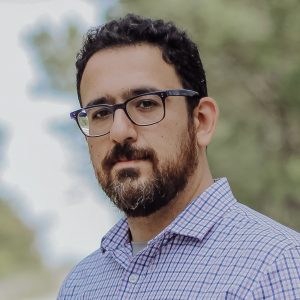
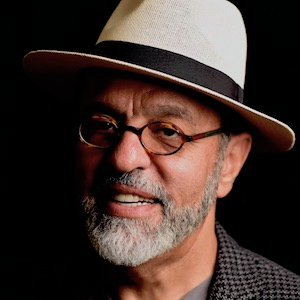
Adam Hollowell is an Adjunct Assistant Professor in the Program in Education at Duke University, where he also serves as Senior Research Associate at the Samuel DuBois Cook Center on Social Equity and Director of the Inequality Studies Minor. His teaching spans ethics, inequality studies, and history across Duke’s Kenan Institute for Ethics, Sanford School of Public Policy, and Department of History. Hollowell holds a Ph.D. from the University of Edinburgh (2009). His research focuses on inequality, higher education, public policy, and ethics, with notable work on pandemic impacts, telemedicine in education, and reproductive health access during crises. In Inequality Studies , Hollowell emphasizes understanding policies to drive social change, as highlighted in recent media coverage. His publications explore topics like student behavior shifts during the pandemic, telemedicine adoption in universities, and James Baldwin’s ethical challenges. He is a finalist for the Judith Deckers Prize (2024). Professionally, Hollowell leads projects such as Bass Connections on college contraception access and Story+ initiatives. His work bridges academia and public engagement, addressing systemic inequities through interdisciplinary approaches.
Ali Karjoo-Ravary is the Richard W. Bulliet Assistant Professor of Islamic History at Columbia University, specializing in the intellectual, social, and visual histories of premodern Islam through Arabic, Persian, and Turkic sources. His research intersects historical writing, cosmology, Sufism, and multilingual poetry in the Islamic East (Mashriq). Education: Ph.D., University of Pennsylvania (2018) M.A., University of Pennsylvania (2016) B.A., SUNY Stony Brook (2011) His current book project, Muhammad’s Song: Politics, Performance, and Cosmology in the Fourteenth Century , examines post-Mongol Islamic monarchy through Kadi Burhaneddin's life and rule. He also explores Sufi visual iconography, science fiction's relationship to religion, and architecture's role in evolving Islamic discourses. Scientific Awards and Fellowships: Bard Graduate Center Visiting Fellow (Fall 2020) Wolf Humanities Center Graduate Research Fellow (2016-2017)
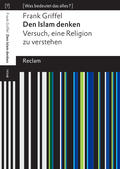
Frank Griffel is the Louis M. Rabinowitz Professor of Religious Studies at Yale University, where he has been teaching since 2000. His academic work is deeply rooted in Islamic intellectual history, focusing on theology, philosophy, and the interplay between reason and revelation. He holds a PhD from the Freie Universität Berlin and previously worked as a research fellow at the Orient Institute in Beirut. University: Yale University Department: Department of Religious Studies Academic Rank: Professor His research expertise lies in classical and post-classical Islamic philosophy, particularly the works of al-Ghazālī, Fakhr al-Dīn al-Rāzī, Avicenna, and Averroes. He has made significant contributions to understanding how philosophical discourse evolved in the Islamic world after the so-called classical period, challenging the notion of decline and highlighting the emergence of new genres such as ḥikma . His scholarship bridges theology and philosophy, examining how Muslim thinkers reconciled Aristotelian and Neoplatonic ideas with Islamic doctrine. Griffel’s most recent major work, The Formation of Post-Classical Philosophy in Islam (2021), redefines the field by demonstrating the continuity and innovation in 12th-century Islamic thought. His earlier book, Al-Ghazali’s Philosophical Theology (2009), is widely regarded as a seminal study. He has also published extensively on topics such as apostasy, virtue ethics, and the reception of philosophical texts, with articles spanning from 2011 to 2025. His work often appears in major academic handbooks and journals, and he has edited and translated key texts into German, Arabic, and Turkish. Islamic Philosophy Islamic Theology (Kalām) Post-Classical Islamic Thought Al-Ghazālī Studies Fakhr al-Dīn al-Rāzī Avicenna and Averroes Griffel has contributed to collaborative volumes such as Shari’a: Islamic Law in the Contemporary Context and Islam and Rationality , and his research engages with both historical and contemporary debates in Islamic thought. He has no listed scientific awards or students in the provided texts, but his influence is evident through citations and scholarly engagement. He maintains an active research profile, with recent publications addressing ambiguity, contradiction, and the popularization of philosophy in medieval Islam. He has held affiliations with the University of Oxford as a Faculty Member in the Faculty of Theology and Religion, indicating a strong international academic presence. His work continues to shape the understanding of Islamic intellectual history, particularly in the West.
Khaled El-Rouayheb is a Professor of Arabic and Islamic Intellectual History at Harvard University's Faculty of Arts and Sciences, affiliated with the Department of Near Eastern Languages and Civilizations. He is on leave for the 2024–2025 academic year. Research focuses on Islamic theology, philosophy, and Arabic logic Author of three influential monographs Co-editor of the Oxford Handbook of Islamic Philosophy Education: BA in Philosophy, University of Copenhagen MA in Middle Eastern History, American University of Beirut PhD in Oriental Studies, University of Cambridge His work examines intellectual and cultural transformations in the Arabic-Islamic world from the classical to early modern periods. Key contributions include analyses of logical systems and historical shifts in gender/sexuality discourses. Scientific Awards: Harvard College Professor (2022)
University of California, Los AngelesUnited States
M. Rahim Shayegan is a prominent scholar in Iranian and Near Eastern studies, specializing in Old and Middle Iranian philology, Achaemenid-Sasanian history, and Greco-Roman-Iranian cultural interactions. He holds a PhD from Harvard University and has conducted postdoctoral research at the University of Göttingen and Sorbonne. His work bridges philology, epigraphy, and historical analysis to explore ancient political ideologies, religious traditions, and cross-cultural exchanges. Education: PhD, Iranian Philology & Ancient History, Harvard University MA, Iranian Philology, Sorbonne University BA, Philosophy & Comparative Philology, University of Cologne Research Interests: Iranian epigraphy and royal inscriptions Political dynamics of pre-Islamic Iranian empires Greco-Roman and Iranian cultural dialogues Zoroastrianism and ancient Near Eastern religions His publications include seminal works like Arsacids and Sasanians: Political Ideology in Post-Hellenistic Persia (2011) and Cyrus the Great: Life and Lore (2019). He has held prestigious fellowships at the Guggenheim Foundation and is a member of the Austrian Academy of Sciences. Awards: Ehsan Yarshater Book Award (2012) Academia Europaea Membership (2019–) Courses Taught: Achaemenid Civilization Sasanian History Old Persian Cuneiform Zoroastrianism and Ancient Religions
Alexander Key is an Associate Professor of Comparative Literature at Stanford University, specializing in Classical Arabic literature and the intellectual history of Arabic and Persian-speaking worlds from the 7th century onwards. His scholarship focuses on the philosophy of language, literary theory, and cross-cultural translation. Ph.D. in Arabic and Islamic Studies from Harvard University (2012) Current research: Arabo-Persian linguistic intersections, poetics in translation, and pre-modern theories of syntax and affect His articles span diverse eras and topics, including: Medieval Arabic language philosophy (5th–11th century) Modern Arabic political poetry analysis (20th–21st century) Comparative methodologies bridging Islamic and Western traditions A key editorial role includes: Board Member of Stanford University Press Advisory roles at Habib University and Stanford’s Markaz Resource Center His work bridges academic publication with public discourse through: Contributions to Arcade Colloquy Interviews on poetics, religion, and contemporary politics Podcasts and literary salon discussions
Wael B. Hallaq is the Avalon Foundation Professor in the Humanities at Columbia University’s Department of Middle Eastern, South Asian, and African Studies. His work focuses on Islamic law, intellectual history, and the socio-political impacts of modernity. He critiques Orientalist paradigms and explores the interplay between moral theory and legal history in Islamic traditions. His research spans structural dynamics of legal change in pre-modern law, moral theory’s role in Islamic legal history, and the critique of modern state sovereignty. His influential books include *The Impossible State* (2013), which earned Columbia University Press’s Distinguished Book Award, and *Shari‘a: Theory, Practice, Transformations* (2009). Education: No explicit educational details provided in text. His writings bridge legal theory, history, and political thought, challenging Eurocentric frameworks in Islamic studies. His analyses of pre-modern legal systems and modernity’s moral dilemmas have been translated into multiple languages, including Arabic, Hebrew, and Persian. Awards: Columbia University Press Distinguished Book Award (2013–2015) No grants, labs, or advising details explicitly mentioned in the text.
Rachel Fell McDermott is Professor of Asian and Middle Eastern Cultures at Barnard College, Columbia University, specializing in South Asian religions, particularly the Hindu goddess traditions of Bengal in India and Bangladesh. Her work bridges religious studies, human rights, and comparative religion, with a strong focus on Kali, Durga Puja, and the literary legacy of Kazi Nazrul Islam. Education: A.B., Religious Studies, University of Pennsylvania, 1981 M.Div., Harvard Divinity School, 1984 A.M., Study of Religion, Harvard University, 1986 Ph.D., Study of Religion, Harvard University, 1993 Her research centers on the religious and cultural dynamics of Bengal, exploring themes such as goddess worship, ritual practices, religious poetry, and the intersection of religion with politics and identity. She is deeply engaged in comparative religion, examining how religious themes like suffering, sacrifice, and divine femininity manifest across traditions. Her scholarship also addresses diasporic religious experiences, digital religion, and interfaith dialogue, particularly between Hindu and Christian communities. The 15 most recent publications reflect a sustained scholarly engagement with goddess traditions, especially Kali and Durga, as well as broader themes in South Asian religion, including Tantric symbolism, festival culture, and the reception of Hindu deities in the West. Her work spans ethnographic, historical, and textual analysis, often highlighting the contested and evolving nature of religious canons. She frequently contributes to major academic anthologies and journals in religious studies, South Asian studies, and comparative theology. Scientific Awards: No specific awards listed in the provided text. As a senior professor and managing editor of major academic volumes, she has likely advised numerous graduate students and secured research funding, though specific names and grants are not mentioned. She teaches courses such as “Why Do Bad Things Happen to Good People?” that explore theodicy across religions. She is currently on leave for the 2024–2025 academic year, indicating ongoing active involvement in academic life. She is involved in significant editorial projects, including the third edition of The Sources of Indian Traditions , and is working on translations and a monograph on Kazi Nazrul Islam. Her scholarly presence includes invited lectures at institutions such as Princeton, the University of Connecticut, and the Bangla Academy in Dhaka, reflecting her international recognition in the field of South Asian religious studies.
Nicholas Boylston is an Assistant Professor of Near Eastern Languages and Civilizations at Harvard University's Faculty of Arts and Sciences (FAS). His research focuses on classical Persian literature and Persianate Islam, exploring themes of diversity and unity in Sufi, philosophical, and literary works. He holds a BA from Harvard College, MA from the University of Tehran, and PhD from Georgetown University (2017). Previously, he served as a College Fellow/Lecturer at Harvard (2018-21) and Assistant Professor at Seattle University (2021-23). His scholarship examines interactions between Twelver Shiʿism and Sufism in Quranic commentaries, as well as perspectivist thought in classical Persian literature. Current projects include a book on pluralistic modes of thought in Persian literature's formative phase. Education: B.A., Harvard College M.A., University of Tehran Ph.D., Georgetown University (2017) Publications emphasize Quranic exegesis, Sufi philosophy, and medieval Persian intellectual history. His work bridges theological debates, literary analysis, and historical contextualization.
Dr. Cyril Uy II is an Assistant Professor of Religion at James Madison University since 2021. He holds a Ph.D. from Brown University, an M.A. from Stanford University, an M.Phil. from the University of Cambridge, and a B.A. from Yale University. His research focuses on medieval Sufism, Islamic philosophy, and the intersections of knowledge, identity, and embodiment. He explores how Muslim thinkers navigated authority and exclusion in knowledge production, with a specialization in Mongol-era Sufi figures like Saʿd al-Dīn Ḥamūya. His work bridges historical texts with contemporary theories of identity and social dynamics. His award-winning dissertation led to his first book, Lost in a Sea of Letters (Brill, 2025), analyzing Ḥamūya’s deconstructive ethos and its implications for pluralism. His current project employs jazz improvisation as a framework to study Sufi intellectual and social practices. Dr. Uy teaches courses on mysticism, science-religion intersections, gender/sexuality, and music in religious experience, emphasizing student engagement with personal and academic perspectives. Before JMU, he was the inaugural Mellon Teaching Fellow in Global Islamic Studies at Connecticut College. His scholarly contributions include co-editing On God and the World (Oxford UP, 2019), a critical edition and translation of medieval Islamic texts. He actively bridges historical scholarship with contemporary interdisciplinary dialogue.
Professor Ahmet T. Karamustafa serves as Professor and Department Chair of History at the University of Maryland, College Park, and holds affiliations with the Roshan Institute for Persian Studies and the School of Languages, Literatures, and Cultures. He also serves as Senior Advisor to PersDig@UMD. His research focuses on medieval and early modern Islamic intellectual history, Sufism, and Ottoman Turkish religious texts. Key works include Sufism: The Formative Period (2007) and God’s Unruly Friends (1994), exploring ascetic movements and mystical literature. Current projects include The Flowering of Sufism and Vernacular Islam . His academic contributions span editorial roles in major publications like Cartography in the Traditional Islamic and South Asian Societies (1992). Research expertise bridges religious studies theory, Ottoman manuscript analysis, and medieval Anatolian religious dynamics. Administrative experience includes directing Washington University's Religious Studies Program and co-chairing the American Academy of Religion’s Study of Islam Section (2008–2011). Research interests emphasize comparative religious frameworks, Sufi textual traditions, and the interplay between Islamic intellectual history and regional cultural contexts. His work critically engages Western models of religion through Islamic conceptual frameworks like 'din,' offering new methodologies for studying premodern Muslim thought.
University of California , Santa Barbara (UCSB)United States
Adam Sabra is a Professor and King Abdul Aziz Ibn Saud Chair in Islamic Studies at the University of California, Santa Barbara (UCSB). He holds a Ph.D. from Princeton University (1998). His research focuses on pre-modern Middle Eastern history, particularly Egypt, with emphasis on medieval and early modern periods. Key areas include social/cultural history of Cairo, poverty/charity systems, legal history, and Islamic mysticism. Education: Ph.D. in History, Princeton University, 1998 Research Interests: Medieval Egyptian urban society and economy Sufi orders and spiritual lineages Legal and charitable institutions under Mamluk and Ottoman rule Families and social mobility in early modern Egypt Recent Scholarship Trends: Recent work examines aristocratic families in Ottoman Egypt (1500–1800) and integrates hagiography into social history analysis. His publications span topics like waqf systems, artisan-scholar networks, and gender dynamics in Sufi literature. Scientific Awards & Activities: Cleveland Bayard Dodge Distinguished Visiting Professorship at AUC (2014–15) Member, Institute for Advanced Study, Princeton (2012–13) National Endowment for the Humanities Fellow Advising & Grants: Advises graduate students Nicholas Liu and Ibrahim Mansour. His research has been supported by fellowships from NEH and the American Research Center in Egypt. Labs/Teams: Collaborates with scholars in Islamic studies through edited volumes and international research networks.
Thomas Banchoff is Director of the Berkley Center for Religion, Peace, and World Affairs and serves as Vice President for Global Engagement at Georgetown University, where he holds a professorship in both the Department of Government and the Walsh School of Foreign Service. His leadership combines academic scholarship with practical global engagement initiatives that address critical contemporary challenges. Georgetown University: Professor, Department of Government and Walsh School of Foreign Service Berkley Center: Director University Administration: Vice President for Global Engagement Banchoff earned his B.A. from Yale University (1986), M.A. from the University of Bonn (1988), and Ph.D. in Politics from Princeton University (1993). His scholarly development was enriched by prestigious fellowships including Harvard's James Bryant Conant Post-Doctoral Fellowship (1997-1998) and a Humboldt Fellowship at the University of Bonn (2000-2001). His research focuses on ethical and religious dimensions of global politics, with particular expertise in Catholic Social Teaching's application to contemporary challenges. Banchoff's scholarly trajectory evolved from European politics (evidenced by early works like The German Problem Transformed ) to contemporary analyses of religion's role in global governance. His current work emphasizes Pope Francis's "culture of encounter" concept across international relations, education, and interfaith dialogue. Recent scholarship increasingly addresses democratic erosion, AI ethics from religious perspectives, and Jesuit higher education's contribution to global citizenship. Analysis of his publication history reveals thematic progression toward practical applications of religious perspectives to global challenges. His recent work demonstrates engagement with urgent issues including democratic backsliding (as seen in his moderation of the 2025 IAJU Assembly panel on Nicaragua and Lebanon), AI ethics, and interfaith collaboration in conflict zones. DAAD Prize for Distinguished Scholarship in German studies (2003) Banchoff directs the IAJU Global Citizenship Fellows Program, which engages over 2,000 students across 60+ institutions in 20+ countries. His leadership extends to significant initiatives including Catholic Social Teaching and the Global Future of Development, Faith and the Global Agenda, and Religious Pluralism in World Affairs. Upcoming engagements include "Nostra Aetate at 60" (September 2025) and "Pope Francis: A Legacy of Human Fraternity" (August 2025), reflecting the continued relevance of his work at the intersection of religion, politics, and global challenges.
Dr. Ahmad Sadri is the Gorter Professor of Islamic World Studies and Professor of Sociology at Lake Forest College. His primary affiliations include the Sociology and Anthropology department. He holds a PhD from the New School for Social Research (1981) and has held significant academic positions including the James P. Gorter Chair (2007–2010). His research focuses on the sociology of intellectuals, religion in Iran, and Middle Eastern politics. Notable awards include the Bird Award for Intellectual Contributions (1999) and the William L. Dunn Teaching Award (1994). Sadri has authored influential books like Max Weber’s Sociology of Intellectuals (1992) and Saddam City (2004). His work bridges sociological theory with contemporary issues in Islamism, democratization, and intercivilizational dialogue. He has been a frequent media commentator on NPR, BBC, and academic conferences worldwide. His 2008 Senate testimony on Middle East policy exemplifies his engagement with public intellectualism. Current research emphasizes civilizational imagination and reform movements in Iran.
Virginia Polytechnic Institute and State UniversityUnited States
Rachel Marion Scott is a Professor and Chair of the Department of Religion and Culture at Virginia Polytechnic Institute and State University, within the College of Liberal Arts and Human Sciences. She is also affiliated with ASPECT (Alliance of Social, Political, Ethical, and Cultural Thought), reflecting her interdisciplinary engagement with political and ethical theory in Islamic contexts. Her research centers on Islamic political thought, modern Islamic law, constitutional development in Muslim-majority countries, and personal status law. She has made significant contributions to understanding the interplay between religion and the nation-state, particularly in Egypt. Her scholarly work explores how religious authority is negotiated in constitutional frameworks, the evolution of Islamic legal thought, and the role of institutions like al-Azhar and the Muslim Brotherhood in shaping political discourse. Professor Scott’s publications reveal a sustained focus on the dynamics of Islamic law in modern governance, with a particular emphasis on Egypt’s constitutional history and legal reforms. Her work bridges religious studies, political science, and legal theory, addressing themes such as secularism, religious pluralism, citizenship, and hermeneutics. The articles show a trajectory from broader studies of political Islam to more nuanced analyses of constitutionalism, gender, and religious authority. She has authored two major monographs: The Challenge of Political Islam: Non-Muslims and the Egyptian State (Stanford University Press, 2010) and Recasting Islamic Law: Religion and the Nation State in Egyptian Constitution Making (Cornell University Press, 2021), both of which are central to contemporary scholarship on Islam and governance. While no formal list of awards is provided in the text, her publications with leading academic presses indicate recognition and scholarly impact in her field. Rachel M. Scott advises graduate students and contributes to academic mentorship through her leadership roles. As department chair, she oversees curriculum development, faculty collaboration, and interdisciplinary initiatives. There is no explicit mention of external grants, but her research output suggests engagement with funded scholarly projects or institutional support. She is affiliated with research initiatives related to Islamic studies, political thought, and constitutional law, particularly through her work with ASPECT and the Department of Religion and Culture. These affiliations support collaborative scholarship on ethics, cultural thought, and the role of religion in public life.