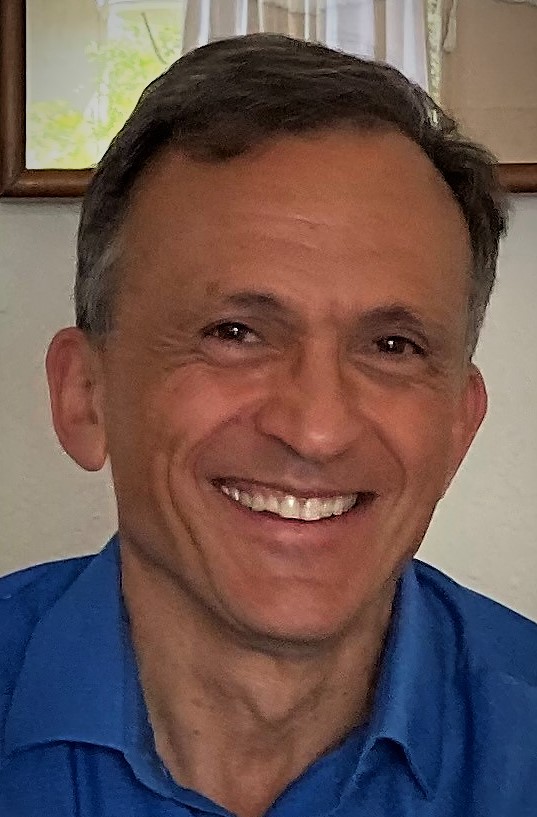
Mohsen Goudarzi is an Associate Professor of Islamic Studies at Harvard Divinity School (HDS), part of Harvard University. He joined the faculty in 2021 after teaching at the University of Minnesota. His academic background includes a PhD from Harvard University and an MA from Stanford University. His research focuses on the Qur’an and early Islamic history, employing literary, linguistic, comparative, and historical approaches. Key interests include the Qur’an’s role in Late Antique religious developments, Islamic exegetical traditions (tafsīr), and theological frameworks (kalām). His current projects explore the Qur’anic worldview’s interpretation and the significance of Meccan cultic rituals to early Islamic identity. He has received teaching excellence awards, including a certificate from the University of Minnesota’s Center for Educational Innovation and three teaching distinctions from Harvard’s Office of Undergraduate Education. Research outputs include groundbreaking articles on Qur’anic exegesis, cultic practices, and interreligious dynamics. Notable works analyze the Qur’an’s engagement with Abrahamic traditions, ritual practices in Mecca, and the textual history of early Islamic manuscripts. His collaborative work on the Ṣan‘ā’1 codex redefined understandings of early Qur’anic canonization. Teaching spans HDS and Harvard’s Faculty of Arts and Sciences (FAS), covering Islamic studies, Qur’anic studies, and religious history. He advises students in HDS programs and contributes to interdisciplinary initiatives at the intersection of theology, history, and textual criticism.
Hasan Kayalı is a Professor in the Department of History at the University of California, San Diego. He specializes in the history of the Middle East during the Islamic period, focusing on the late Ottoman Empire, nationalism, and transitions from empire to nation-states. His research bridges political, social, and intellectual histories of the region. Education : B.A. in Government, Harvard University Ph.D. in History and Middle Eastern Studies, Harvard University Research Interests : Dr. Kayalı examines Ottoman administration of Arab provinces, the impact of World War I on imperial structures, and the ideological contests between Ottomanism, Arabism, and Islamism. His work challenges traditional narratives of empire decline and emphasizes continuity in governance and identity formation. Key Publications : He authored Imperial Resilience (2021) and Arabs and Young Turks (1997), translated into multiple languages. He co-edited Empire to Nation (2006) and contributed to Archivum Ottomanicum . Labs/Teams : Engaged in collaborative projects on Ottoman archives and digital humanities initiatives to map historical networks in the Middle East.
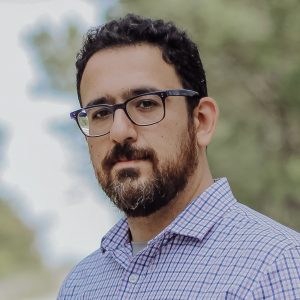
Ali Karjoo-Ravary is the Richard W. Bulliet Assistant Professor of Islamic History at Columbia University, specializing in the intellectual, social, and visual histories of premodern Islam through Arabic, Persian, and Turkic sources. His research intersects historical writing, cosmology, Sufism, and multilingual poetry in the Islamic East (Mashriq). Education: Ph.D., University of Pennsylvania (2018) M.A., University of Pennsylvania (2016) B.A., SUNY Stony Brook (2011) His current book project, Muhammad’s Song: Politics, Performance, and Cosmology in the Fourteenth Century , examines post-Mongol Islamic monarchy through Kadi Burhaneddin's life and rule. He also explores Sufi visual iconography, science fiction's relationship to religion, and architecture's role in evolving Islamic discourses. Scientific Awards and Fellowships: Bard Graduate Center Visiting Fellow (Fall 2020) Wolf Humanities Center Graduate Research Fellow (2016-2017)
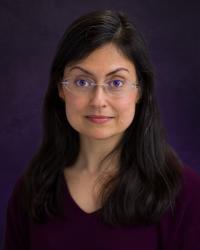
Purnima Dhavan is an Associate Professor of History at the University of Washington's College of Arts & Sciences, holding the Giovanni and Amne Costigan Endowed Professorship. She specializes in early modern South Asia (1500-1800), focusing on religious and cultural identity, Mughal institutions, and literary networks. Her research integrates interdisciplinary methods, with adjunct affiliations in Near Eastern Languages and the Jackson School's South Asia Center. Education: PhD in South Asian History from the University of Virginia (2003), MA (1998), and BA (1996) from the University of Michigan. She has taught at multiple institutions, including the College of St. Benedict/St. John’s University and Bowdoin College. Research Interests: Mughal literary culture, Sikh warrior traditions, gender in pre-colonial societies, and environmental history. Notable works include her book *When Sparrows Became Hawks* (2011) on Sikh militarization and a forthcoming project on literary associations in Mughal urban centers. Publications span peer-reviewed journals and edited volumes, emphasizing pre-colonial South Asia’s intellectual and socio-political dynamics. Awards include the Howard Keller Chair and NEH fellowships. Service: Extensive contributions to academic governance at UW, including roles in the Faculty Senate, departmental leadership, and national professional organizations like the American Historical Association and Association of Asian Studies. Languages: Native Hindi speaker, advanced Urdu/Persian/Punjabi, and proficient in Spanish.
Frank Griffel is the Louis M. Rabinowitz Professor of Religious Studies at Yale University, where he has been teaching since 2000. His academic work is deeply rooted in Islamic intellectual history, focusing on theology, philosophy, and the interplay between reason and revelation. He holds a PhD from the Freie Universität Berlin and previously worked as a research fellow at the Orient Institute in Beirut. University: Yale University Department: Department of Religious Studies Academic Rank: Professor His research expertise lies in classical and post-classical Islamic philosophy, particularly the works of al-Ghazālī, Fakhr al-Dīn al-Rāzī, Avicenna, and Averroes. He has made significant contributions to understanding how philosophical discourse evolved in the Islamic world after the so-called classical period, challenging the notion of decline and highlighting the emergence of new genres such as ḥikma . His scholarship bridges theology and philosophy, examining how Muslim thinkers reconciled Aristotelian and Neoplatonic ideas with Islamic doctrine. Griffel’s most recent major work, The Formation of Post-Classical Philosophy in Islam (2021), redefines the field by demonstrating the continuity and innovation in 12th-century Islamic thought. His earlier book, Al-Ghazali’s Philosophical Theology (2009), is widely regarded as a seminal study. He has also published extensively on topics such as apostasy, virtue ethics, and the reception of philosophical texts, with articles spanning from 2011 to 2025. His work often appears in major academic handbooks and journals, and he has edited and translated key texts into German, Arabic, and Turkish. Islamic Philosophy Islamic Theology (Kalām) Post-Classical Islamic Thought Al-Ghazālī Studies Fakhr al-Dīn al-Rāzī Avicenna and Averroes Griffel has contributed to collaborative volumes such as Shari’a: Islamic Law in the Contemporary Context and Islam and Rationality , and his research engages with both historical and contemporary debates in Islamic thought. He has no listed scientific awards or students in the provided texts, but his influence is evident through citations and scholarly engagement. He maintains an active research profile, with recent publications addressing ambiguity, contradiction, and the popularization of philosophy in medieval Islam. He has held affiliations with the University of Oxford as a Faculty Member in the Faculty of Theology and Religion, indicating a strong international academic presence. His work continues to shape the understanding of Islamic intellectual history, particularly in the West.
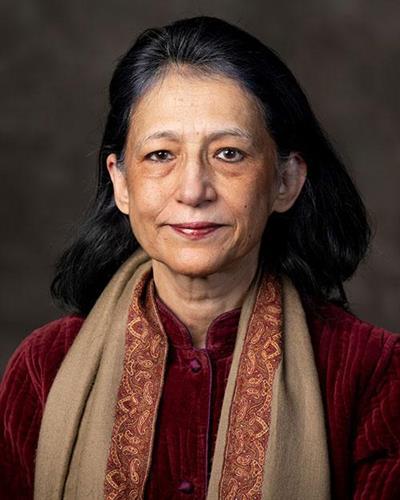
Ayesha Jalal is a distinguished Professor of History at Tufts University's School of Arts and Sciences and holds a joint appointment at The Fletcher School of Law and Diplomacy. She currently serves as the Mary Richardson Professor and directs the Center for South Asian and Indian Ocean Studies. With a career spanning over three decades, Professor Jalal has established herself as a leading scholar in South Asian history, particularly focusing on Pakistan studies, the partition of India, and Muslim political thought in the region. Professor Jalal's academic journey began with a double major in History and Political Science from Wellesley College in 1978. She then pursued doctoral studies at the University of Cambridge, earning her PhD in History in 1983. Her early career included prestigious fellowships at Trinity College, Cambridge (1980-84), the Centre of South Asian Studies (1984-87), the Woodrow Wilson Center for International Scholars (1985-86), and the Harvard Academy for International and Area Studies (1988-90). Professor Jalal's research primarily centers on South Asian history with special emphasis on Pakistan, the partition of India, and Muslim political thought. Her work explores the complex interplay between religious identity, nationalism, and state formation in the region. She has made significant contributions to understanding democratic development in Pakistan, sectarian dynamics in South Asia, and the historical connections between the Indian subcontinent and the wider Indian Ocean world. Her recent scholarship has focused on 'Oceanic Islam,' examining transregional Muslim networks and universalist aspirations that transcended colonial boundaries. Professor Jalal's extensive publication record demonstrates a consistent focus on South Asian political history, with particular attention to Pakistan's formation and development. Her recent works show a progression from studies of partition and state formation toward broader examinations of Muslim intellectual history and transregional connections. The 2020-2024 publications reveal a sophisticated engagement with themes of democratic erosion, sectarianism, and the historical roots of contemporary political challenges in South Asia, while also exploring more cultural and religious dimensions through works on Muslim enlightened thought and oceanic connections. Patrus Bukhari Award for the best English language book, The Pity of Partition , Academy of Letters, Government of Pakistan (2015) Britannica Book of the Year recognition (2015) MacArthur Fellowship (1998-2003) As an educator, Professor Jalal has mentored numerous graduate students through thesis supervision and directed research projects. Her teaching portfolio includes courses on Modern South Asia, Contemporary South Asia, Islam and the West, and specialized seminars on South Asian history. She has taught at several prestigious institutions including the University of Wisconsin-Madison, Columbia University, and Harvard University before joining Tufts in 1999. In her role as Director of the Center for South Asian and Indian Ocean Studies, she has fostered interdisciplinary research and provided guidance to emerging scholars in the field. Professor Jalal directs the Center for South Asian and Indian Ocean Studies at Tufts University, which serves as a hub for interdisciplinary research on South Asia and its connections to the wider Indian Ocean world. The center facilitates collaborative projects, hosts visiting scholars, and organizes events that bridge historical, political, and cultural perspectives on the region. Under her leadership, the center has become a prominent institution for South Asian studies, promoting dialogue between academic research and contemporary policy issues.
University of California, Los AngelesUnited States
Sanjay Subrahmanyam is Distinguished Professor of History and Irving & Jean Stone Endowed Chair in Social Sciences at UCLA's Department of History. A globally recognized historian of the early modern period (15th-18th centuries), he previously held prestigious positions at the Collège de France (2013-2021), University of Oxford (2002-2004), and Ecole des Hautes Etudes en Sciences Sociales in Paris (1995-2002). He founded UCLA's Center for India and South Asia (2005-2011) and maintains significant academic engagement in France through media appearances and lectures. His educational background includes: M.A. in Economics (First Rank with Gold Medal), Delhi School of Economics (1982) Ph.D. in Economic History, Delhi School of Economics (1987) Honorary D.Litt., University of Calcutta (2015) Doctorat honoris causa, Université catholique de Louvain (2017) Subrahmanyam's research revolutionized global historical methodology through his pioneering concept of 'connected histories,' which challenges Eurocentric periodization and emphasizes horizontal connections across regions. His work spans South Asian political culture, Indian Ocean trade networks, Iberian imperial systems, and Mughal court dynamics, consistently integrating multilingual archives and visual sources. He demonstrates exceptional mastery in synthesizing Portuguese, Spanish, Persian, Tamil, and Sanskrit materials to reconstruct non-Western perspectives on early modern globalization. His recent publications reveal intensified focus on transcultural encounters, maritime archaeology, and the material dimensions of empire. Works like Across the Green Sea (2024) and Mirrors of Empire (2026) showcase his shift toward analyzing ego-documents and visual culture to explore identity formation in frontier zones. The consistent thread remains his critique of civilizational boundaries and emphasis on fluid cultural exchanges across the Indian Ocean world. His scientific recognition includes: Infosys Humanities Prize (2012) Dan David Prize for History (2019) Prix International de l'Histoire (2020) Fellowship in American Academy of Arts and Sciences (2009) Corresponding Fellowship in British Academy (2016) Guggenheim Fellowship (2011-12) Subrahmanyam has mentored nine doctoral students to completion, maintaining active collaborations with Muzaffar Alam (University of Chicago), Velcheru Narayana Rao (University of Wisconsin), and David Shulman (Hebrew University). His editorial leadership includes co-editing The Cambridge World History (2015) and serving over a decade as Joint Managing Editor of the Indian Economic and Social History Review . He currently directs major international projects on Indo-Persian travel writing and Mughal intellectual networks. Though not leading a traditional laboratory, he coordinates the 'Connected Histories' research initiative across UCLA, Collège de France, and University of Chicago, fostering interdisciplinary teams examining early modern knowledge circulation. His public engagement includes regular contributions to French media (France 24, France Info) and curated exhibitions like the Codex Casanatense project.
Noah D. Gardiner serves as Associate Professor and Director of Undergraduate Studies in the Department of Religious Studies at the University of South Carolina's College of Arts and Sciences. His academic journey includes a Ph.D. in Near Eastern Studies from the University of Michigan (2014), followed by positions as Lecturer in Islamic Studies at Michigan and a postdoctoral fellowship at Annemarie Schimmel Kolleg, Rheinische Friedrich-Wilhelms Universität Bonn. Gardiner's scholarly focus centers on Islamic thought and culture with particular emphasis on Sufism, esotericism, occult sciences, and manuscript culture in the 12th-15th century Arabic-speaking Mediterranean. His research explores the 'science of letters and names' (ʿilm al-huruf wa-al-asmaʾ), religious cosmology, and apocalypticism, examining how mystical ideas move between religious margins and centers. His work reveals significant connections between Islamic occult traditions and other esoteric systems like Jewish Kabbalah. His extensive publication record includes the monograph Ibn Khaldūn versus the Occultists at Barqūq's Court (2020), co-editing the special issue Islamicate Occultism: New Perspectives (2017), and numerous articles in leading journals. His current research focuses on the 13th-century Sufi occultist Aḥmad al-Būnī and the broader occult renaissance in 14th-15th century Cairo. Gardiner actively contributes to the scholarly community through his role as co-organizer of the international online workshop 'Islamic Occult Studies on the Rise' and administrator of the scholarly resource site islamicoccult.org, which showcases emerging scholarship in Islamic esotericism. He teaches courses spanning foundational religion studies to specialized topics including Islam, Qur'an, Hadith, Islamic Theology, Sufism, and Religion and the Fantastic.
University of California, Los AngelesUnited States
Asma Sayeed is an Associate Professor and Program Director of Islamic Studies at UCLA's Near Eastern Languages and Cultures department, part of the UCLA College. She holds a PhD in Near Eastern Studies from Princeton University (2005) and previously served as an Assistant Professor at Lafayette College. Her research focuses on early Muslim social history, Muslim education, gender studies, and hadith transmission by women. She has authored Women and the Transmission of Religious Knowledge in Islam (2013) and contributed to numerous journals and encyclopedias. Sayeed received a Fulbright Fellowship (2010) for archival research on Muslim women’s education in Syria. She teaches courses such as 'Introduction to Islam' and graduate seminars on research methodologies. Her current work examines textual practices in Muslim education across historical contexts. Education: PhD, Near Eastern Studies, Princeton University (2005) MA, History, Binghamton University (1994) BA, Politics, Princeton University (1991) Certificate in Near Eastern Studies, Princeton University (1991) Research Interests: Her scholarship emphasizes women’s roles in religious knowledge transmission, legal and social history intersections, and medieval Muslim educational systems. She frequently addresses how gender shaped access to religious authority and spaces. Awards: Fulbright Fellowship (2010) Teaching and Professional Engagement: Sayeed’s courses cover Quranic studies, Islam in the West, and methodological frameworks in Islamic studies. She actively participates in academic conferences and initiatives, including keynote lectures on women’s intellectual engagement in classical Islam and digital humanities projects mapping women’s educational histories.
Khaled El-Rouayheb is a Professor of Arabic and Islamic Intellectual History at Harvard University's Faculty of Arts and Sciences, affiliated with the Department of Near Eastern Languages and Civilizations. He is on leave for the 2024–2025 academic year. Research focuses on Islamic theology, philosophy, and Arabic logic Author of three influential monographs Co-editor of the Oxford Handbook of Islamic Philosophy Education: BA in Philosophy, University of Copenhagen MA in Middle Eastern History, American University of Beirut PhD in Oriental Studies, University of Cambridge His work examines intellectual and cultural transformations in the Arabic-Islamic world from the classical to early modern periods. Key contributions include analyses of logical systems and historical shifts in gender/sexuality discourses. Scientific Awards: Harvard College Professor (2022)
University of Illinois Urbana-ChampaignUnited States
Asef Bayat is Professor of Sociology and the Catherine and Bruce Bastian Professor of Global and Transnational Studies at the Department of Sociology, University of Illinois, Urbana-Champaign. He has held previous academic positions at the American University in Cairo, Leiden University (where he held the Chair of Society and Culture of the Modern Middle East), and visiting appointments at UC Berkeley, Columbia University, Oxford, and Brown University. His research interests include: Political Sociology Collective Behavior and Social Movements Sociology of Religion Urban Life and Politics Islam and Modernity Contemporary Middle East Bayat's research focuses on the role of ordinary people and subaltern classes in social and political transformations, particularly in the context of the Arab Spring and Middle Eastern urban movements. His work bridges comparative and historical sociology with global and transnational perspectives, emphasizing everyday forms of resistance and the reconfiguration of political Islam. He has extensively explored the sociological dimensions of revolution, modernity, migration, and loss of home. His recent publications, including articles in International Journal of Urban and Regional Research and Journal of Democracy , reflect a sustained engagement with urban politics, revolutionary dynamics, and youth activism in the Global South. The recurring themes across his work include the agency of marginalized populations, the transformation of public space, and the evolving nature of political engagement in non-Western contexts. Bayat has received numerous honors and fellowships: Guggenheim Fellow Ford Foundation Fellow MacArthur Fellow Open Society Fellow Wissenschaftskolleg Fellow, Berlin He has been actively involved in academic leadership, having served as director of the International Institute for the Study of Islam in the Modern World (ISIM) and elected to the Board of the UN Research Institute for Social Development. He has taught key courses such as Global Social Movements, Global Religion and Politics, and Middle Eastern Societies. Though specific students are not listed, his role as a full professor and author of major works indicates extensive mentorship and academic advising. He is affiliated with multiple interdisciplinary centers, including the Center for African Studies, Center for South Asian and Middle Eastern Studies, European Union Center, and Center for Global Studies.
Alexander Key is an Associate Professor of Comparative Literature at Stanford University, specializing in Classical Arabic literature and the intellectual history of Arabic and Persian-speaking worlds from the 7th century onwards. His scholarship focuses on the philosophy of language, literary theory, and cross-cultural translation. Ph.D. in Arabic and Islamic Studies from Harvard University (2012) Current research: Arabo-Persian linguistic intersections, poetics in translation, and pre-modern theories of syntax and affect His articles span diverse eras and topics, including: Medieval Arabic language philosophy (5th–11th century) Modern Arabic political poetry analysis (20th–21st century) Comparative methodologies bridging Islamic and Western traditions A key editorial role includes: Board Member of Stanford University Press Advisory roles at Habib University and Stanford’s Markaz Resource Center His work bridges academic publication with public discourse through: Contributions to Arcade Colloquy Interviews on poetics, religion, and contemporary politics Podcasts and literary salon discussions
Wael B. Hallaq is the Avalon Foundation Professor in the Humanities at Columbia University’s Department of Middle Eastern, South Asian, and African Studies. His work focuses on Islamic law, intellectual history, and the socio-political impacts of modernity. He critiques Orientalist paradigms and explores the interplay between moral theory and legal history in Islamic traditions. His research spans structural dynamics of legal change in pre-modern law, moral theory’s role in Islamic legal history, and the critique of modern state sovereignty. His influential books include *The Impossible State* (2013), which earned Columbia University Press’s Distinguished Book Award, and *Shari‘a: Theory, Practice, Transformations* (2009). Education: No explicit educational details provided in text. His writings bridge legal theory, history, and political thought, challenging Eurocentric frameworks in Islamic studies. His analyses of pre-modern legal systems and modernity’s moral dilemmas have been translated into multiple languages, including Arabic, Hebrew, and Persian. Awards: Columbia University Press Distinguished Book Award (2013–2015) No grants, labs, or advising details explicitly mentioned in the text.
Gabriel Said Reynolds is the Jerome J. Crowley and Rosaleen G. Crowley Professor of Islamic Studies and Theology in the Department of Theology at the University of Notre Dame. He is a leading scholar specializing in Qur'ānic studies with particular expertise in Muslim-Christian relations and the historical context of Islamic scripture. Education Ph.D. in Islamic Studies, Yale University (2003) Professor Reynolds' research explores the intricate relationship between the Qur'ān and Biblical traditions, examining how Qur'ānic narratives reinterpret earlier religious stories within their 7th-century Arabian context. His work demonstrates exceptional literary and historical sensitivity to both Islamic and Christian scriptures, revealing how early Muslim communities engaged with preceding religious traditions while establishing their own theological framework. He approaches Qur'ānic studies with methodological rigor that respects both the academic study of religion and the theological significance of scripture for believers. His publication trajectory shows a consistent deepening of focus on the theological implications of Qur'ānic studies, particularly regarding the nature of God in Islamic scripture as evidenced by his acclaimed work 'Allah: God in the Qur'an.' Reynolds' scholarship bridges academic analysis with contemporary interfaith dialogue, making complex theological concepts accessible to diverse audiences while maintaining scholarly precision. Scientific Awards Field Prize at Yale University for doctoral dissertation on ʿAbd al-Jabbar's Islamic history of Christianity Professor Reynolds serves on the Vatican Dicastery of Inter-Religious Relations with Muslims, reflecting his significant contributions to Catholic-Muslim dialogue. He has directed major collaborative projects including 'The Qurʾān Seminar' (2012-13), which fostered international scholarly exchange. His YouTube channel 'Exploring the Qur'an and the Bible' has become an important platform for academic discussion of scripture, featuring conversations with leading scholars. He has conducted research and delivered lectures across the Middle East including Cairo, Jerusalem, Beirut, Damascus, and Tehran, giving him firsthand engagement with diverse Muslim scholarly traditions. Through his teaching at Notre Dame and public scholarship, Reynolds has created meaningful pathways for understanding between religious traditions while advancing the academic study of Islam with exceptional clarity and nuance.
Margaret Graves is the Adrienne Minassian Associate Professor of Islamic Art and Architecture at Brown University’s History of Art and Architecture department, serving as Director of Graduate Study. She holds a PhD, MSc, and MA from the University of Edinburgh. Her research focuses on Islamic art and material culture, particularly medieval and modern acts of making, forgery, and colonial-era craft reform. Notable works include Arts of Allusion (2018), winner of major prizes, and her forthcoming Invisible Hands on 19th/20th-century ceramics forgery. Research interests span medieval Islamic intellectual history, colonial antiquities markets, and collaborations with conservators. Teaching includes courses on cultural heritage, museum studies, and Islamic art historiography. Awards include the 2019 International Center of Medieval Studies Book Prize and the 2021 Karen Gould Prize. Current projects explore postcolonial craft legacies, international banking ties to antiquities markets, and occult sciences in medieval craftsmanship.