Laura Maria Lojo Rodriguez is a Professor in the Department of English and German Philology at the University of Santiago de Compostela , specializing in British literature and modernist/postmodernist fiction. She leads the Discourse and Identity research group (GI DI-1924), focusing on English language, literature, and culture through interdisciplinary frameworks. Her work intersects with the Humanities Research Institute (iHUS) . Her research spans: Gender and identity in Woolfian studies Migration narratives in contemporary short fiction Postcolonial themes in British-Irish literature Ecocritical and posthuman anxieties in Johnson's works Recent publications examine border politics, maternal discourses, and cross-cultural literary bonds. She has also contributed to translation studies, particularly Woolf's Spanish reception. Her academic output bridges literary theory with socio-political analysis.
Adam Drazin is a Tutor in the Department of Anthropology at University College London (UCL), specializing in design anthropology, material culture, and consumption. He works at the intersection of academia and public engagement, collaborating with NGOs, corporate clients, and research clusters such as the ‘Business of Fashion, Textiles and Technology’ at the London College of Fashion. His research explores domesticity, care ethics, and material practices in Romania, Ireland, and the UK. Research Focus: Design anthropology, material culture, domestic consumption, and transnational home-making practices. Geographic Scope: Romania, Ireland, UK, with attention to Romanian diaspora communities. Editorial Roles: Co-editor of Home Cultures , former editor of Journal of Material Culture . Projects: Studio of Material Life, ethnographic consultancy via UCL’s Ethnographic Insights Lab. His recent work emphasizes textile innovation, care ethics in domestic spaces, and critiques of material cultures within design. Publications include Design Anthropology in Context (2021) and The Social Life of Materials (2015). He mentors postgraduate researchers and contributes to public anthropology through consultancy.
Bettina Migge is a Full Professor in the School of Languages, Cultures and Linguistics at University College Dublin, where she has been a faculty member since 2004. She previously held academic positions at Goethe University Frankfurt and earned her PhD in Linguistics from The Ohio State University. She served as Head of School from 2016 to 2021 and has held leadership roles in research centers and committees, including the Royal Irish Academy and the Society for Pidgin and Creole Linguistics, of which she is President until 2023. She is Co-Editor of the Journal of Pidgin and Creole Languages and actively contributes to COST Action LITHME, focusing on language and technology. Her educational background includes studies at Universität Hamburg, Université de Cameroun, Freie Universität Berlin, and The Ohio State University, culminating in a PhD focused on African languages in creole genesis, with fieldwork in Suriname and Benin. She is fluent in Dutch, English, French, German, and Ndyuka/Pamaka. Bettina Migge's research centers on sociolinguistics, language contact, and creole languages, with a focus on multilingual contexts undergoing rapid social change such as urbanization and migration. Her work spans French Guiana, Suriname, and Ireland, examining structural and socio-pragmatic aspects of language use, linguistic landscaping, and computer-mediated communication. She has led significant projects like the trilingual DicoNenge(e) dictionary and has explored the role of AI in reshaping language practices. Her recent publications reflect a critical engagement with the impact of AI and machine learning on language, revealing colonial continuities in language technologies and questioning dataist ideologies. She investigates how language is materially produced in both colonial and digital contexts, emphasizing power, authenticity, and control. She has received research funding from the National Science Foundation (USA), IRCHSS, IRC, Ulysses grants, and French research units like SeDyL. Her collaborative projects include work on complementation in creoles, South Dublin English, and language practices in multilingual border zones. Bettina Migge supervises MA and PhD students in sociolinguistics, linguistic landscaping, and World Englishes. She is involved in numerous editorial and professional associations, including the Society for Caribbean Linguistics and The Global Council on Anthropological Linguistics. She has coordinated modules such as World Englishes, Sociolinguistics, and Research in Creole Languages. She leads and participates in public engagement activities, including workshops on AI in linguistics, multilingualism in Ireland, and dictionary launches. Her research team includes collaborators from Europe and beyond, and she is committed to participatory and ethnographically grounded approaches in language documentation and analysis.
Conor Ryan is a Professor in the Department of Computer Science & Information Systems at the University of Limerick. He is a Science Foundation Ireland-funded Investigator since 2002 and a member of multiple research centres including Lero – the Irish Software Research Centre and the Limerick Digital Cancer Research Centre. His research focuses on Genetic Programming, Grammatical Evolution, and their applications in domains like healthcare analytics, digital circuit design, and financial modeling. He has authored over 250 publications, with recent work emphasizing automated feature selection in medical diagnostics, neural architecture search, and blockchain ecosystems. Teaching includes courses on Foundations of Computer Science and Computer Games Programming. Research interests span evolutionary computation, machine learning, and interdisciplinary applications. Collaborations involve global institutions, reflecting his work's impact across computer science, engineering, and healthcare. His research has addressed challenges in breast cancer diagnosis via genetic algorithms, cryptocurrency volatility prediction using random forests, and automated generation of digital circuits. Ongoing projects explore interpretability in AI, energy-efficient computing, and sustainable transport systems through predictive analytics. Professional memberships include roles in the Centre for Research Training in Foundations of Data Science and the Data-Driven Computer Engineering Research Centre, underscoring his commitment to interdisciplinary innovation.
Rozenn Dahyot is a Professor of Computer Science at Maynooth University within the Faculty of Science & Engineering. She previously held roles as Assistant and Associate Professor in Statistics at Trinity College Dublin (2008-2021) and Lecturer in Computer Science (2005-2008). Her research interests bridge Digital Signal Processing, Computer Vision, Machine Learning, and Statistical Analysis. She organized the European Signal Processing Conference (EUSIPCO2021) in Dublin and served as President of the Irish Pattern Recognition and Classification Society (IPRCS) from 2014-2020. Her work spans topics like semantic scene understanding, CNN compression, and medical image segmentation. Key contributions include advancements in graph-based image analysis, reinforcement learning optimization, and AI-driven systems for disaster management. Dahyot is a member of IEEE, ACM, and EURASIP, contributing to both academic and industrial collaborations.
Dr. Lucy Hederman is an Associate Professor in Computer Science at Trinity College Dublin (TCD), affiliated with the O'Reilly Institute. Her research focuses on leveraging data and documents to support clinical decision-making, particularly in healthcare knowledge work. She has led interdisciplinary projects addressing data integration for rare diseases (e.g., ANCA-vasculitis, MND) and socio-technical challenges in adopting patient-generated health data (PGHD) into clinical practice. Dr. Hederman has secured over €xxxk in research funding and leads the Heterogeneity and Interoperability (H&I) challenge in the SFI-funded ADAPT 2 Centre. Her educational background includes advanced studies in computer science and healthcare informatics, though specific degree details are not explicitly stated in the text. She has supervised 4 PhDs, 2 research MScs, and co-supervised 6 PhDs, while currently mentoring 8 graduate students. Her career includes founding TCD spinouts PBOC and BIOLOGIT, which align with her research in health informatics and technology. Key research interests include: Interdisciplinary collaboration between clinicians, researchers, and technologists Data harmonization for multi-national clinical studies (e.g., FAIRVASC, Precision-ALS) Development of clinical decision support systems (CDSS) Design of mobile health (mHealth) tools for underserved populations Recent work emphasizes FAIR principles for healthcare data and socio-technical factors influencing PGHD adoption. She has contributed to over 70 peer-reviewed publications and actively participates in initiatives like the EU-funded TRANSFORM project and HRB Primary Care Research Centre. Dr. Hederman’s professional memberships include the Irish Computer Society, ACM, and Healthcare Informatics Society of Ireland. Her research has impacted healthcare practices in Ireland, with many MSc student projects influencing local health services.
Professor Markus Helfert is a leading academic in Digital Service Innovation and Digital Transformation at Maynooth University's School of Business . He serves as Director of the Innovation Value Institute , Hub for Data and Digital Research, and holds Science Foundation Ireland Principal Investigator roles at Lero – The Irish Software Research Centre and Adapt Research Centre. His research spans Service Innovation , Artificial Intelligence , Intelligent Transportation Systems , FinTech , and Enterprise Architecture , with active involvement in European Standardisation initiatives.
Dr. Sheila Castilho is an Assistant Professor at the School of Applied Language & Intercultural Studies, Dublin City University (DCU). She holds a PhD from DCU (2016) and a Master's from the University of Wolverhampton and University of Algarve. Her expertise lies in machine translation (MT), post-editing, and translation technology evaluation. She co-leads the New Trends in Translation Technology (NeTTT’22) conference and chairs DCU's Master in Translation Studies and Master in Translation Technology programs. Education: Licenciatura em Letras Inglês/Português (UNIOESTE University, Brazil) Master in Natural Language Processing (University of Wolverhampton & University of Algarve) PhD in Translation Technologies (Dublin City University) Research: Focuses on document-level MT evaluation, post-editing strategies, and user-centric MT assessment. Leads the DELA project and contributed to TraMOOC/iADAATPA initiatives. Published over 40 articles and co-edited 'Translation Quality Assessment: From Principles to Practice' (Springer, 2018). Grants & Projects: DCU PI for DELA (Document-level Evaluation) PRINCIPLE project (EU Low-resource MT) ELE (European Language Equality) initiative Labs/Teams: Active in ADAPT Centre (DCU) and collaborates with international NLP/MT communities (ACL, EMNLP, WMT).
John Breslin is a Personal Professor in Electronic Engineering at the College of Science and Engineering, University of Galway, serving as Director of the TechInnovate and AgInnovate programmes. Associated with two Taighde Éireann – Research Ireland Centres, he is a Principal Investigator at Insight Centre for Data Analytics (specializing in data analytics) and a Funded Investigator at VistaMilk (Agri-Technology), while also leading the EDIH Data2Sustain project. With an h-index of 50, over 12,000 citations, and 300+ peer-reviewed publications including seminal books on the Social Semantic Web, he ranks among Ireland's most influential researchers in digital technologies. Breslin's research fundamentally bridges Semantic Web technologies, AI-driven data analytics, and practical innovation. His co-creation of the SIOC framework—implemented across 65,000+ websites by entities like Yahoo and Boeing—demonstrates real-world impact in social data interoperability. Current work leverages blockchain and federated learning for sustainable Agri-Technology through VistaMilk, while his TechInnovate programmes translate academic research into commercial ventures across healthcare, smart manufacturing, and energy systems. Analysis of his 15 most recent publications reveals dominant themes in AI-enhanced security (35% of works), blockchain applications for sustainability (27%), and multimodal AI for healthcare (20%). His team pioneers privacy-preserving techniques for IoT and medical devices, neurosymbolic visual reasoning frameworks, and federated learning architectures addressing data heterogeneity—directly supporting his roles in national research infrastructures like Insight and VistaMilk. John has received several prestigious awards: IIA Net Visionary Award (twice) ITAG Outstanding Contribution to the ICT Sector Award Galway Chamber President’s Award Best Irish-Published Book Award (2020 for Old Ireland in Colour) Multiple Best Paper Awards He leads major research initiatives funded by Taighde Éireann – Research Ireland: Insight Centre for Data Analytics (as Principal Investigator) VistaMilk SFI Research Centre (as Funded Investigator) EDIH Data2Sustain (as Principal Investigator) His entrepreneurial programs TechInnovate and AgInnovate have mentored 200+ startups, securing €50M+ in follow-on funding. Breslin co-founded PorterShed (Galway City Innovation District) and serves on Scale Ireland's Steering Group, creating Ireland's most active regional innovation ecosystem outside Dublin. He maintains active industry partnerships with Vodafone, Boeing, and agricultural cooperatives through VistaMilk's testbed facilities.
Professor Philip Armstrong is a distinguished academic and poet at the University of Canterbury, where he has served in the English Department within the Faculty of Arts since February 1998. His work bridges scholarly research and creative practice, establishing him as a significant voice in contemporary literary studies and poetry. PhD in Critical and Cultural Theory, University of Wales (1992-1995) MA(Hons), University of Auckland (1990-1991) Armstrong's research centers on literary representations of the natural world, with particular expertise in human-animal studies, Shakespearean scholarship, and environmental humanities. His interdisciplinary approach connects literary theory with ecological concerns, examining how cultural narratives shape our relationship with non-human entities. His scholarly publications span from analyses of Shakespeare to contemporary explorations of human-animal relations, including his acclaimed book Sheep (2016) and the forthcoming Disturbing Nature in Narrative Literature (2025). As a creative writer, Armstrong has published two award-winning poetry collections: Sinking Lessons (2020), which won the Kathleen Grattan Award for Poetry, and Touch Screen (2025). His poetry often explores the intersection of human experience with natural and technological environments, demonstrating his consistent thematic concern with boundaries between human and non-human worlds. Kathleen Grattan Award for Poetry (2019) Landfall Essay Prize (2011) Caselberg Trust International Poetry Prize (runner-up) Armstrong actively supervises graduate students in both scholarly and creative writing projects, mentoring the next generation of literary scholars and poets. His teaching encompasses literary studies, with a focus on Shakespeare, and graduate-level creative writing. He has also contributed significantly to public discourse through essays, interviews, and literary criticism published in major journals and media outlets across New Zealand, Australia, the UK, and the USA. His creative and scholarly work frequently appears in prominent literary journals including Landfall , Sport , PN Review , and JAAM , reflecting his standing in the international literary community. Living in Lyttelton, New Zealand, Armstrong's work remains deeply engaged with both local and global literary traditions.
Johanna Naukkarinen is a Researcher at the School of Energy Systems at Lappeenranta University of Technology. Her work focuses on engineering education, gender dynamics in STEM, and lifelong learning competencies. Researcher, School of Energy Systems, Lappeenranta University of Technology Email: Johanna.Naukkarinen@lut.fi Her research explores: Gender disparities in engineering education and careers Pedagogical strategies for lifelong learning Mathematical skill development in first-year engineering students Technology education reform and sustainability integration Use of digital tools for competency enhancement Professional identity formation in early-career engineers Recent publications highlight trends in: Comparative studies across Belgium, Ireland, and Finland Co-creation methods in educational design Assessment of online learning environments Gendered perspectives on engineering recruitment Interdisciplinary approaches to sustainability education Workplace dynamics in technology sectors
Professor Tony McEnery is a Distinguished Professor of English Language and Linguistics at Lancaster University, where he has held various senior roles, including Dean of the Faculty of Arts and Social Sciences (2008–2014) and Head of the Department of Linguistics and English Language (2000–2005). His research focuses on corpus linguistics, applied linguistics, and sociolinguistics, with notable contributions to corpus-based analyses of historical medical discourse, media representation of Islam, and swearing in English. He has led major research projects, including the ESRC Centre for Corpus Approaches to Social Science (CASS) and the Trinity Lancaster Corpus. McEnery has secured over £10 million in research funding and holds visiting professorships at institutions worldwide, including Zhejiang University of Media and Communications and Shanghai International Studies University. He is a Fellow of the Academy of Social Sciences, Trinity College London, and the Royal Society for the Arts. Education: No explicit details provided, but his career trajectory implies advanced degrees in linguistics. Research Interests: Corpus linguistics applications in theoretical and applied linguistics, historical language analysis, and language as a socially situated phenomenon. McEnery’s work extends to interdisciplinary collaborations, including projects with the Environment Agency and the Home Office. His teaching includes summer schools in corpus linguistics and a Futurelearn MOOC, reaching tens of thousands globally. He advises on research funding for international bodies like the Irish Research Council and the Qatar National Research Foundation. Grants and Awards: Queen’s Anniversary Prize (2015), Changjiang Chair (2021), and multiple fellowships. Current grants include the Lancaster-Northern Arizona corpus and the Trinity Lancaster Corpus projects. Advising and Labs: Supervises postgraduate students in linguistics and collaborates with teams like the ESRC CASS Centre and UCREL (University Centre for Computer Corpus Research on Language).
Rebecca Nugent is the Stephen E. and Joyce Fienberg Professor of Statistics & Data Science and Department Head at Carnegie Mellon University. She holds a PhD in Statistics from the University of Washington (2006), an MS in Statistics from Stanford (2006), and a BA in Mathematics, Statistics, and Spanish from Rice University (2002). Her research spans clustering methodology , record linkage , educational data mining , public health , and semantic organization , with a focus on high-dimensional data and adaptive learning environments. She leads the Integrated Statistics Learning Environment (ISLE) and Corporate Capstone programs, emphasizing low-barrier data platforms for education and industry collaboration. Academic Roles : Department Head, Carnegie Mellon; Affiliated Faculty, Block Center for Technology and Society Research Grants : NSF (2017-2019), NIH (2018), Carnegie Mellon ProSEED/Simon Initiative (2020, 2018), Berkman Fund (2014) Her 15 most recent publications focus on data science pedagogy, clustering algorithms, record linkage applications in historical and medical data, educational data mining, and semantic organization studies. Awards include the ASA Waller Education Award (2015) and the William H. and Frances S. Ryan Award (2015) . She mentors a diverse group of PhD, Master's, and undergraduate students, with alumni pursuing careers in academia, industry, and sports analytics.
Tara MacLeod is an Associate Teaching Professor of Irish Language and Literature at the University of Notre Dame, serving as Director of Undergraduate Studies and Language Coordinator. A native Irish speaker from Ceantar na nOileán in the Connemara Gaeltacht, she teaches Irish-language courses and contemporary Gaeltacht culture studies while leading immersive travel programs to Ireland. Her educational background includes: Bachelor of Social Science in Social Administration and Library and Information Studies (University College Dublin, 1991) Masters in Social Work (University College Cork, 1997) Dioplóma sa Ghaeilge (National University of Ireland, Galway, 2001) Masters of Science in Education, Clinical Mental Health Counseling (Indiana University South Bend, 2023) Professor MacLeod specializes in innovative Irish language pedagogy, focusing on second language acquisition through cultural immersion and technology integration. Her work emphasizes developing students' linguistic skills alongside authentic understanding of Gaeltacht traditions, material culture, and contemporary Irish society, particularly through experiential learning in Connemara and the Aran Islands. Her teaching excellence has been recognized with dual Notre Dame Joyce Awards: Notre Dame Joyce Award for Excellence in Undergraduate Teaching (2011) Notre Dame Joyce Award for Excellence in Undergraduate Teaching (2017) She actively contributes to national academic service as External Examiner for Modern Irish at the Five Colleges Consortium, MLA Celtic Languages & Literature Discussion Group Committee member, External Assessor for the Government of Ireland Postgraduate Scholarship Scheme, and manuscript reviewer for Routledge and Taylor & Francis. Her professional engagements include keynote addresses at UCLA's Celtic Studies Colloquium and presentations on language pedagogy at CALICO and the American Conference for Irish Studies.
Ian Pitt is a Lecturer in Usability Engineering and Interactive Media at University College Cork (UCC). He leads the Interaction Design, E-Learning and Speech (IDEAS) Research Group, focusing on multimodal human-computer interaction, auditory interfaces, and accessibility solutions for visually impaired users. Pitt holds a D.Phil from the University of York, followed by research fellowships at Otto-von-Guericke University in Germany before joining UCC in 1997. His research interests include speech-based interfaces, e-learning systems, and accessibility technologies for blind users. Key projects include the EU-funded ENABLE Network (2011–2014) and prototype development for UniWink. He has secured significant grants, including €72,009 from IRCSET for voice analysis research and €19,478 from the EU for ICT-supported learning initiatives. Pitt has advised numerous PhD students, including Flaithri Neff (2011), Emma-Kate Crowley (2014), and current candidates Aine Kearns and Patrick Egan. His publications span journals like International Journal of Game-Based Learning and conferences such as ICCHP and ACM SIGACCESS. He has contributed to committees for conferences like CHI and the Irish HCI conference. Teaching modules include Usability Engineering, Human-Computer Interaction, and Digital Media Development. His work emphasizes inclusive design principles, with projects addressing navigation systems for blind students and adaptive e-learning frameworks. Recent research trends focus on ICT-delivered aphasia rehabilitation, emotional BCI interfaces, and multimodal learning systems. Collaborations include international partners through EU grants, reflecting his global impact in accessibility and educational technology.


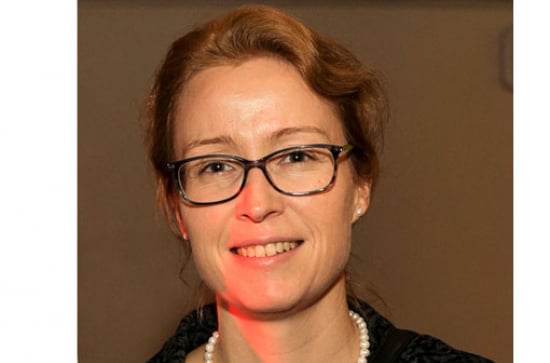
/prod01/channel_3/media/tcd/scss/headshots/Lucy-Hederman-BW-1.jpg)