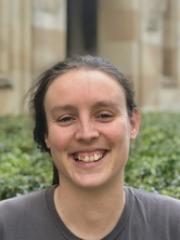
Christel Engelen is an Education/Research Officer at the Plant Breeding department of Wageningen University , actively contributing to plant genetics and breeding research. Focus areas: Potato genetics, meiosis mechanisms, and self-compatibility Collaborative projects: Bioimpuls (late blight resistance), FIXATION/RESTITUTION breeding frameworks Her work leverages amplicon sequencing and QTL analysis for trait discovery, while engaging in participatory breeding models and public science communication through media appearances. Key collaborations span genetic mapping, gamete development, and biotechnology applications in potato cultivation. Scientific Awards : No awards listed in the provided data.
Dr. Marieke Jeuken is a Research Associate in Plant Breeding at Wageningen University & Research, specializing in lettuce genetics and disease resistance mechanisms. With over 20 years of research experience, she focuses on utilizing wild relatives of cultivated lettuce for breeding improved varieties with enhanced resistance to pathogens, particularly downy mildew (Bremia lactucae). Her research interests include: Genetic analysis of disease resistance mechanisms in lettuce Genome assembly and comparative genomics of wild lettuce species Non-host resistance to downy mildew Introgression of resistance traits from wild relatives Development of molecular markers for breeding applications Plant-pathogen interactions at the molecular level Dr. Jeuken's recent publications demonstrate a strong focus on genomic approaches to understanding disease resistance. Her work on genome assemblies of wild lettuce species like Lactuca saligna and Lactuca virosa has revealed critical insights into resistance mechanisms against downy mildew. These studies bridge fundamental genetics with practical breeding applications, identifying specific genomic regions that could be utilized in developing more resilient lettuce varieties. As an active supervisor, she serves as Co-promotor for multiple PhD candidates working on cutting-edge lettuce breeding projects. Her collaborative research spans multiple projects focused on improving lettuce for conventional agriculture and emerging production systems like vertical farming.
Dr Rebecca Zwart is a Senior Lecturer and Honours Program Director at the School of Agriculture and Environmental Science , University of Southern Queensland (UniSQ), Toowoomba, Australia. With a PhD in Agricultural Sciences from the University of Queensland and over 20 years of research experience, she specializes in the genetic characterization of disease resistance in cereal and pulse crops against pathogens like root-lesion nematodes, fusarium head blight, and rusts. Her work bridges molecular genetics with practical crop improvement strategies. Education : BAppSc (Hons) and PhD in Agricultural Sciences from the University of Queensland International Experience : Visiting Scientist at CSIR-National Chemical Laboratory (India, 4 years); Research Scientist at Institute for Agricultural and Fisheries Research (Belgium, 3 years) Research Focus Elucidating genetic regions conferring resistance to root-lesion nematodes ( Pratylenchus thornei , P. neglectus ) in wheat, chickpea, and mung bean Developing molecular tools for marker-assisted selection in breeding programs Investigating biochemical defense mechanisms and metabolomic profiles in resistant crops Exploring tripartite interactions between arbuscular mycorrhizal fungi, rhizobia, and nematodes in legumes Recent Publications demonstrate expertise in genome-wide association studies, transcriptomics, and metabolomics applied to nematode resistance in pulse and cereal crops, with collaborations spanning Australia, India, Belgium, and Kenya. Scientific Awards 2008 Endeavour Research Fellowship Postgraduate Scholarship in Plant Breeding/Biotechnology from QLD Department of Primary Industries & Fisheries Teaching includes foundational and advanced courses in Biology, Cell and Molecular Biology, and Plant Breeding. She emphasizes practical laboratory and field-based learning, with testimonials highlighting her learner-friendly course design and industry-relevant content. Supervision spans Honours, Masters, and PhD students, focusing on root-lesion nematode resistance genetics in chickpea and mung bean through QTL mapping, GWAS, and phenotyping innovations.
Professor George Turner is a faculty member at Bangor University, holding the position of Professor of Zoology (Aquatic) within the School of Environmental and Natural Sciences. He is actively engaged in research, teaching, and supervision, with a primary focus on African cichlid fishes and tilapias, particularly in Lake Malawi and its satellite systems. His research interests center on speciation, behavior, systematics, and conservation genetics, with a special emphasis on the role of behavior in adaptive evolution. His work integrates fieldwork in Africa, aquarium-based behavioral and breeding studies, morphological analyses, and collaborative genomic, gene expression, and epigenetic research. The trends in his recent publications highlight a strong focus on the genomic and epigenetic mechanisms underlying cichlid adaptive radiation, including studies on introgression, structural variation, recombination landscapes, and the discovery of new species. His work bridges taxonomy, evolutionary biology, and conservation, addressing threats from hybridization and overfishing. Professor Turner has led several significant research projects, including those on the conservation genetics of native tilapia resources and the genomic basis of adaptive radiation. He is keen to supervise student projects at all levels and continues to contribute extensively to high-impact scientific literature.
Lynn J. Gillespie is a Researcher at the Canadian Museum of Nature and an Adjunct Professor in the Department of Biology at the University of Ottawa. Her work focuses on plant systematics, with a particular emphasis on the evolutionary relationships and taxonomy of angiosperms in the Arctic, Poaceae (grasses), and Euphorbiaceae (spurges). She co-leads the International Arctic Flora of Canada Project and contributes to the North American Flora Project. Ph.D. in Botany, University of California, Davis (1988) M.Sc. in Botany, University of California, Davis (1983) B.Sc. with distinction in Biology, Carleton University (1978) Gillespie’s research spans three key areas: Arctic plant biodiversity, Poaceae systematics, and Euphorbiaceae taxonomy. She integrates morphological studies with DNA sequencing to resolve species boundaries and evolutionary histories. Recent work includes phylogenomic analyses of grasses and DNA barcoding of Canadian Arctic flora. Her scientific contributions include leadership in Arctic flora projects and collaborations with international conservation bodies like the IUCN Arctic Plant Specialist Group. She has supervised numerous graduate and undergraduate students, with thesis projects on Poaceae, Euphorbiaceae, and Arctic plant evolution. Key publications highlight her expertise in molecular phylogenetics, hybridization studies, and global grass taxonomy. Gillespie’s work has significantly advanced understanding of plant relationships in extreme environments and taxonomic clarity for economically and ecologically important species.
Matti Leino is a Researcher at the Department of Archaeology and Ancient Culture , Stockholm University . His work bridges archaeobotany, plant genetics, and historical agriculture to study the development of cultivated plants across millennia. He has held this position since 2018 after previous roles at the Nordic Museum (2006-2018), where he focused on Swedish landraces. Education: PhD in Plant Breeding (2005, Swedish University of Agricultural Sciences) Methodologies: Specializes in DNA analysis of historical plant material, archaeobotany, and ethnobotany Key Projects: 2024-2026: Farmers' attitudes and use of seed exchange systems (Formas-funded) 2018-2020: Crop biodiversity during the 17th century agrarian crisis (Swedish Research Council) 2018-2020: Arctic peas project (NordGen collaboration) Research Themes: Genetic continuity in Fennoscandian crops Human-climate-plant interactions Historical seed trade networks Ancient DNA preservation in archaeological contexts Publications: Focus on barley evolution, potato onion genetics, and gooseberry diversity across multiple continents and time periods Teaching: Instructs archaeobotany components in undergraduate and master's laboratory archaeology courses
Daniel John Lawson is a Professor of Data Science at the School of Mathematics, University of Bristol , affiliated with the Bristol Population Health Science Institute and the MRC Integrative Epidemiology Unit . His research bridges mathematical techniques with applications in genetics, epidemiology, and network analysis. Education: MSc (Bristol), PhD (London) Research Interests include Bayesian modelling, statistical genetics, big data analysis, and dynamical systems. He focuses on population structure inference, local ancestry, and their implications in health and history. Recent Publications highlight geographic polarization in digital landscapes, ancient DNA analysis for population history, and statistical frameworks for network embeddings. These works reflect his interdisciplinary approach. Projects like OCSEAN (2020–2023) explore oceanic migration patterns. His datasets on ancestry anomalies and genetic variants are widely accessible.
Briana Gross is an Associate Professor at University of Minnesota Duluth , affiliated with the Swenson College of Science and Engineering . Her research investigates the interplay between deterministic forces like natural selection and stochastic processes such as genetic drift in shaping species origin and lineage evolution. She works across population genetics , genomics , and ecological genetics , focusing on wild, weedy, and domesticated plants including apples and African rice. Education: B.S., 2001, Willamette University Ph.D., 2007, Indiana University Her work integrates quantitative genetics and molecular tools to study repeated evolution, hybridization, and local adaptation. Recent publications explore domestication mechanisms, genomic diversity in crops, and ecological resilience. She advises graduate students in the Integrated Biosciences program and teaches BIOL 2201 Genetics and BIOL 2202 Genetics Lab . Hobbies include marathon training and harp studies.
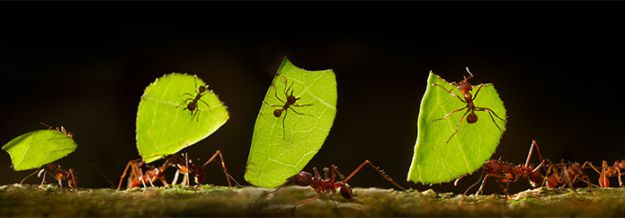
William Hughes is a Professor of Evolutionary Biology (Ecology and Evolution) at the University of Sussex, School of Life Sciences. He holds leadership roles including Subject Chair for the Evolution, Behaviour & Environment department (2017-2019) and Chair of Board of Study for Biology, Ecology & Zoology degrees (2014-2017). His research focuses on evolutionary biology, bee health, chemical ecology, and marine conservation, with particular emphasis on social insects, host-parasite dynamics, and symbiotic relationships. Educational background: PhD in Chemical and Behavioural Ecology (University of Southampton, 2000), MSc in Pest Management (Imperial College London), and BSc in Animal Biology (Bangor University). Research interests include the evolution of sociality, bee disease management, sustainable pest control via semiochemicals, and shark behavior. His work spans field observations, molecular ecology, and microbiological techniques. Notable contributions include studies on Wolbachia symbiosis in ants, bumblebee colony health, and white shark ecology. Recent publications highlight trends in shark population trends, bumblebee nutrition, and material science applications for pesticide delivery. Awards include the Philip Leverhulme Prize (2008) and Royal Entomological Society Fellowship (2013). Teaching includes modules on Palaeozoology, Conflict & Cooperation in Social Groups, and field courses in coral reef and African ecology. Supervised over 15 PhD/MSc students, many now in academic or conservation roles. Active in securing grants from Leverhulme Trust, NERC, and BBSRC, totaling millions in funding for projects on ant microbiomes, bumblebee health, and marine conservation. Led the Hughes Lab, collaborating internationally on projects ranging from social insect genetics to pollinator protection. Current studies explore antimicrobial resistance in social insects and the impact of stressors on pollinator performance.
Anthony Hall is a Professor of Plant Genomics and Head of Plant Genomics at the Earlham Institute, affiliated with the School of Biological Sciences at the University of East Anglia. He leads cutting-edge research in wheat genomics, focusing on improving nutritional quality, stress resilience, and sustainable crop production through the integration of wild relative introgressions and advanced genomic technologies. His research interests span plant genomics , crop improvement , wheat genetics , and nutrient biofortification . He investigates how introgressions from wild relatives such as Amblyopyrum muticum and Aegilops comosa can enhance grain micronutrient content and abiotic stress tolerance in hexaploid wheat. His work combines high-throughput sequencing, transcriptomics, and marker development to accelerate breeding for climate-resilient and nutritionally enhanced crops. The recent trend in his publications reflects a strong focus on structural and functional genomics of wheat introgression lines , reference bias in RNA-seq , and molecular marker development . His studies integrate field-based phenotyping with genomic analysis to validate the impact of exotic alleles on agronomic traits under real-world conditions. While no scientific awards are listed in the provided text, his work has been widely recognized through citations and media coverage, including mentions in 12 news outlets and discussions on social media platforms like X (formerly Twitter). Anthony Hall actively supervises or collaborates with a research team focused on plant genomics, though specific student names are not listed. His lab at the Earlham Institute leverages state-of-the-art sequencing and bioinformatics infrastructure to analyze complex polyploid genomes. The group collaborates extensively with international partners to address global food security challenges.
Matthew Chatfield is an Assistant Professor of Evolution and Eco-Health at the School of Biology and Ecology, University of Maine, within the College of Natural Sciences, Forestry and Agriculture. He is also affiliated with the Maine Agricultural and Forest Experiment Station, where his research contributes to conservation science in Maine. His work is supported under the McIntire-Stennis Project ME042301. PhD, University of Michigan, 2009 Chatfield is a conservation biologist and herpetologist whose research focuses on the population ecology of endangered reptiles and amphibians, particularly the wood turtle and species affected by the chytrid fungus. His work integrates field ecology, disease dynamics, and conservation strategies to address the global decline of herpetofauna. Key interests include eco-health, habitat degradation, emerging pathogens, and human impacts on wildlife. His recent publications highlight a strong focus on amphibian disease ecology, particularly Batrachochytrium dendrobatidis , its sublethal effects, transmission mechanisms, and potential treatments. Additional themes include road mortality, habitat fragmentation, and the impacts of environmental disasters such as oil spills. The research combines field observations, genetic analysis, and experimental methods, often in collaboration with government and non-profit partners. Although no specific awards are mentioned in the provided texts, Chatfield’s work is published in high-impact journals such as Proceedings of the National Academy of Sciences , Biological Conservation , and Diseases of Aquatic Organisms , indicating recognition in the scientific community. He divides his time equally between teaching conservation biology and conducting research. He mentors students through his lab, The Chatfield Lab, which emphasizes teaching and mentorship as essential to addressing the herpetofaunal conservation crisis. His lab runs two major initiatives: the Maine Wood Turtle Project and the Amphibian Health Project, both aimed at generating actionable data for conservation management. The lab collaborates with government agencies, non-profits, and local communities to ensure real-world impact.
Elliot Gardner serves as an Assistant Professor in the Department of Biology at Case Western Reserve University, specializing in plant systematics and evolutionary genomics. His research focuses on the Moraceae family (figs, breadfruit, mulberries) and related plant groups, utilizing phylogenomic approaches to resolve taxonomic uncertainties and evolutionary histories. Dr. Gardner's research interests center on plant phylogenomics, systematics, and biogeography, with particular expertise in the Moraceae family. His work integrates genomic data with morphological and ecological analyses to understand evolutionary patterns, speciation mechanisms, and historical biogeography. He investigates complex phenomena including polyploidy, hybridization, introgression, and coevolutionary relationships, especially within economically important genera like Artocarpus (breadfruit) and Ficus (figs). His recent publication trends (2022-2025) demonstrate consistent leadership in plant systematics, with emphasis on genomic approaches to resolve taxonomic controversies, document biodiversity, and understand evolutionary processes. Key themes include chromosome-level genome assembly, phylogenomic conflict resolution, nomenclatural revisions, and the integration of indigenous knowledge with molecular data. Scientific recognition includes: NSF Postdoctoral Fellowship in Biology (2017) for research on convergent evolution of biotic pollination Dr. Gardner's work bridges fundamental evolutionary biology with practical applications in crop improvement and biodiversity conservation. His research leverages both traditional herbarium-based approaches and cutting-edge genomic techniques, including target enrichment sequencing and phylogenomic analysis of challenging specimens. Current projects address the genetic diversity of underutilized crop wild relatives and the historical biogeography of tropical plant lineages.
Dr. Peter J. Hansen is a Distinguished Professor and L.E. 'Red' Larson Professor in the Animal Sciences Department at the University of Florida. He joined the faculty in 1984 as an assistant professor in the College of Veterinary Medicine and transitioned to the Dairy Science Department (now Animal Sciences) in 1986. His research focuses on understanding factors affecting pregnancy success in ruminants, particularly how maternal-derived molecules and nutrients influence embryo development. He has also explored applications of this knowledge to improve embryo transfer efficiency, especially under heat stress conditions. Education: Dr. Hansen holds degrees from the University of Illinois and University of Wisconsin, followed by postdoctoral training at the University of Florida's Department of Biochemistry and Molecular Biology. Collaborations include work at the University of Guelph during a sabbatical. Research Interests: His studies center on embryokines (e.g., WNT5A, DKK1), nutrient programming (e.g., choline), and stress responses in embryos. Key themes include molecular mechanisms of embryo competence, genetic basis for thermal tolerance, and translational strategies to enhance livestock fertility. Publications: Over 300+ articles highlight his expertise in bovine embryology, heat stress physiology, and assisted reproductive technologies. Recent work emphasizes CRISPR applications, biomarker discovery for pregnancy success, and metabolic programming effects. Awards: Recognized as a Distinguished Professor and holder of the L.E. 'Red' Larson Professorship. His contributions to reproductive biology and livestock science are widely acknowledged in the field. Labs & Teams: Directs the UF Bovine Embryo Laboratory and contributes to the Animal Molecular and Cellular Biology Program. His team develops cutting-edge techniques in embryo culture and genomic editing.
Raluca Mateescu is an Associate Professor of Quantitative Genetics & Genomics in the Department of Animal Sciences at the University of Florida. Previously, she served at Oklahoma State University for seven years. Her research focuses on leveraging advances in animal genomics to enhance livestock production efficiency and improve animal products' nutritional value for human health. Education: She holds a B.S. in Molecular Biology and Genetics from Bucharest University (Romania), and M.S. and Ph.D. in Animal Breeding and Genetics from Cornell University. Research Interests: Her work centers on beef cattle, sheep, and goat molecular genetics, particularly unraveling the genetic basis of complex traits like thermotolerance, meat quality, and resilience to environmental stressors. Recent efforts include genomic analyses of sweat gland characteristics, breed composition impacts on heat stress, and improving meat nutritional profiles. Laboratory: The Mateescu Lab emphasizes translating genetic discoveries into practical applications for the livestock industry, such as enhancing animal resilience and product quality. Advising & Collaborations: She mentors students like Kaitlyn Sarlo Davila, who won a 2020 Golden Helix Abstract Competition. Her lab collaborates on genomic tools for stakeholders, bridging academic research with industry needs.
Dr. Melanie Wilkinson is a Research Fellow at The University of Queensland's Queensland Alliance for Agriculture and Food Innovation (QAAFI), affiliated with the Faculty of Science and the ARC Centre of Excellence for Plant Success in Nature and Agriculture. Her work bridges plant genomics, evolutionary biology, and crop breeding with a focus on adaptive mechanisms in Australian flora and horticultural crops. Education: PhD in Biological Sciences, The University of Queensland (2019) Her research integrates genomic prediction, adaptive evolution, and crop improvement, with particular expertise in mango genetics and Australian wildflower speciation. Key projects examine chromosomal inversions in mango breeding traits, gravitropic adaptation mechanisms, and ensemble-based genomic prediction models for plant breeding. Her work frequently employs GWAS, transcriptome analysis, and hybrid zone studies to unravel genetic architectures of parallel evolution. Article analysis reveals a strong focus on plant adaptation mechanisms (70% of publications), with mango genomics and Senecio speciation as dominant model systems. Recent work (2023-2025) emphasizes genomic prediction methodologies and structural variant impacts on breeding traits, showing a clear shift toward translational agricultural applications while maintaining evolutionary biology foundations. Supervision: Principal Advisor: APSIM-WGP for soybean yield stability Associate Advisor: Machine learning for gene networks, Evolution of genetic networks Completed: Polygenic architecture of Senecio adaptation (2024) Dr. Wilkinson operates within QAAFI's genomic prediction research group and collaborates extensively with the ARC Centre of Excellence for Plant Success, focusing on translating evolutionary insights into crop improvement strategies through interdisciplinary teams spanning genomics, bioinformatics, and horticulture.




.jpg)