Lecturer Tessa Cramer works at Fontys University of Applied Sciences, specifically at the Fontys Academy for Creative Industries in Tilburg. Her academic focus lies in equipping individuals with the tools to understand and shape the future through futurist methodologies. Education: PhD in Futures Studies from Maastricht University (2020). Cramer's research explores the intersection of technological and social possibilities, emphasizing the importance of future literacy in education. Her work challenges the lack of forward-thinking curricula in schools and universities, advocating for interdisciplinary approaches to anticipate and influence future developments. Her dissertation, Becoming Futurists , established a framework for collective futurism. Her publications and media appearances, including interviews with FD and Jort Kelder, focus on practical futurism and its applications in creative industries.
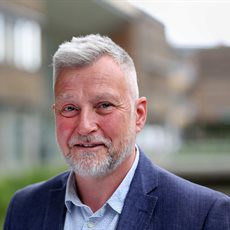
Terje Andreas Eikemo is a Professor at the Department of Sociology and Political Science , Norwegian University of Science and Technology (NTNU) , and Head of the CHAIN research center . His work focuses on the intersection of social inequality , public health , and global policy , emphasizing how socioeconomic factors like education , income , and welfare systems influence mortality , chronic diseases , and mental health . He combines theories from sociology , epidemiology , and medicine to address health disparities across diverse contexts, including pandemics , climate change , and migration . 2009: Prize for Young Researchers in the Humanities 2010: SINTEF Prize for Outstanding Research 2014: NTNU Star Program Eikemo has published extensively in top journals like The Lancet and BMJ Open , with research themes spanning social determinants of health , policy interventions , and global health equity . His work includes GBD studies , European Social Survey analyses , and refugee health assessments. He serves as Editor-in-Chief of the Scandinavian Journal of Public Health and collaborates with international bodies like WHO and UNESCO .
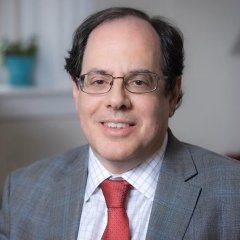
Alan Gerber serves as Acting Dean of the Faculty of Arts and Sciences Division of Social Science and Director of the Institution for Social and Policy Studies (ISPS) at Yale University. He holds the prestigious Sterling Professorship in Political Science with secondary appointments in Economics and Public Health, reflecting his interdisciplinary approach to governance and policy research. His academic home is the Department of Political Science within Yale's Faculty of Arts and Sciences. Gerber's research spans: Experimental analysis of voter turnout mechanisms Election integrity perceptions and threats Behavioral interventions in political mobilization Intersection of public health crises and electoral participation Political economy of policy feasibility His methodology emphasizes large-scale field experiments, often involving millions of voters across multiple states, to test theories of political behavior under real-world conditions. Analysis of his 2022-2025 publications reveals three dominant trends: (1) intensifying focus on electoral threats following the 2020 US election, particularly examining partisan disagreements about fraud and ballot security; (2) innovative experiments testing emotional and identity-based mobilization triggers, including anger and social identity priming; and (3) growing integration of public health perspectives, especially regarding pandemic-era voting behavior and vaccine uptake campaigns. His work consistently challenges assumptions about subtle psychological interventions in politics through rigorous replication studies. No scientific awards were specified in the source materials. Information regarding student advising, grant funding, or laboratory teams was not provided in the available text.
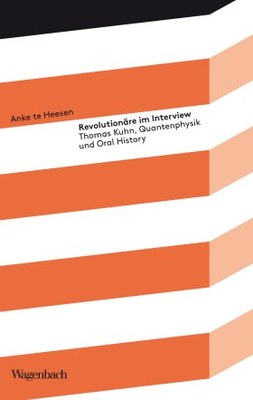
Professor Anke te Heesen is Chair of the History of Science with a focus on the history of education and the organization of knowledge in the 19th and 20th centuries at Humboldt-Universität zu Berlin. She has held this position since 2011 and is also the spokesperson (since 2024) of the DFG Center for Advanced Studies 'Applied Humanities – Politics and Genealogy,' alongside Professor Viktoria Tkaczyk. Previously, she served as Professor for Empirical Cultural Studies at the University of Tübingen (2008-2011) and founding director of the Museum of the University of Tübingen (2006-2008). Her academic career includes research positions at the Max Planck Institute for the History of Science in Berlin (1999-2006), the German Hygiene Museum Dresden (1998-1999), and the Research Center for the European Enlightenment (1996-1997). Professor te Heesen's research spans multiple interconnected fields including the history of humanities, natural history in the early modern period, museum and exhibition history, organization and notation methods of sciences, and the relationship between science and art. She has a particular interest in how knowledge is formed, organized, and presented through various material and institutional practices. Her work often examines the intersection of academic knowledge production with material culture, focusing on objects, collections, and exhibition practices as sites of knowledge formation. Her recent publications reveal a strong focus on the history of interviews as research methodology, the development of exhibition catalogs as scholarly monographs, and the material history of knowledge practices. The analysis of her 15 most recent articles shows consistent engagement with themes of materiality, the organization of knowledge, and the historical development of scholarly practices, particularly in the humanities. Her work frequently bridges historical analysis with contemporary scholarly concerns about knowledge production and dissemination. Spokesperson of the DFG Centre for Advanced Studies 'Applied Humanities: Genealogy and Politics' (since 2024) Senior Fellow, Collegium Helveticum, Zurich (WS 2023/24) Visiting Scholar, Max Planck Institute for History of Science (since 2021) Dibner Research Fellowship, Huntington Library (2020) Senior Research Fellowship, Lichtenberg Kolleg (2020) Professor te Heesen has held significant leadership roles including Ombudsperson of Humboldt University of Berlin (since April 2024) and Head of the Commission for Studies and Teaching at the Institute of History (since April 2024). She serves on multiple advisory boards including the Scientific Advisory Board of the project 'Serious Donations' at the Museum of Natural History in Berlin (since 2020), the DFG Review Board for History (2020-2024), and the Robert K. Merton Center for Science Studies at Humboldt University (since 2019). She is also a member of the editorial boards of several scholarly journals including Reports on the History of Science and History of Science and Humanities. Her work extends to museum practice and curation, with significant contributions to understanding how universities can leverage their collections to create meaningful educational experiences that connect historical context with contemporary research. She has initiated important publication series including 'Sonderdruck' (since 2016) and 'Minima Literatur- und Wissensgeschichte kleiner Formen' (since 2020).
Dawn Martin-Hill , Professor Emeritus in Indigenous Studies at McMaster University , is Canada’s first Indigenous cultural anthropologist and the founder of McMaster’s Indigenous Studies Program (1992). She also holds the role of Academic Co-Chair of the Indigenous Education Council and has served as Director of Indigenous Studies since 1998. A Mohawk scholar residing at Six Nations of the Grand River, she integrates Indigenous knowledge systems with Western science to address critical issues of water security, health, and sovereignty. Education & Training: PhD, Cultural Anthropology Research Interests: Dr. Martin-Hill’s work centres on traditional ecological knowledge (TEK) , community-driven water security , and Indigenous methodologies . Her flagship program Ohneganos co-creates bilingual tools—apps, VR, water sensors, Indigenous mapping, films, and podcasts—to empower First Nations in monitoring and managing water resources. She explores intersections of climate change, maternal health, mental health, and Indigenous governance . Research Impact: Spanning hydrology, medical anthropology, and digital health, her recent publications address urgent issues such as water insecurity’s impact on maternal mental health , climate-driven hydrological extremes , and digital mental-health tools for Indigenous youth . Collectively, her work advances decolonizing methodologies and supports United Nations Sustainable Development Goals. Scientific Awards & Honours: Inaugural Fulbright Indigenous Canada–U.S. Scholar Award Inaugural Chair, CIHR-IPH Secretariat on Traditional Medicine in Health Research Outstanding Teaching Award, Aboriginal Consortium 2022 University of Oklahoma International Water Prize Oklahoma Universities Water Technologies Award Princeton Book Award for forthcoming Ohneganos volume Funding & Training: Principal Investigator on four Global Water Futures grants that have supported over 30 graduate students and nine Indigenous Studies undergraduates , plus 45 secondary First Nations students receiving McMaster certificates. She has served as co-investigator on CIHR-IPH ARHNets Center funding 80+ First Nations, Métis, and Inuit graduate students . Leadership & Service: Member of the UNESCO Hydrology Committee for Canada , board member of CIHR Institute of Indigenous Peoples’ Health and CIHR Anti-Racism Committee , former Chair of the CIHR College of Reviewers. She spearheaded the McPherson Chair in Indigenous Studies and secured multiple Indigenous student scholarships and bursaries.
Professor Steven J. Murdoch is a leading figure in cybersecurity and privacy-enhancing technologies at the Department of Computer Science , University College London . His work bridges computer science and law, focusing on payment system security, electronic evidence reliability, and dispute resolution mechanisms. Head of Information Security Research Group at UCL (2022–present) Director at Open Rights Group (2022–present) Research spans payment security , privacy protocols , and legal implications of computer evidence . Key contributions include analyzing EMV protocol flaws, designing secure authentication mechanisms, and improving Tor's anonymity. Publications cover privacy-preserving federated learning , time-lock puzzles , and malware ecosystem analysis Awards include Fellowships from the Institution of Engineering & Technology and British Computer Society , and a Royal Society University Research Fellowship . Teaches COMP0055 Computer Security II and COMP0061 Privacy Enhancing Technologies at UCL
John G. Lynch, Jr. is University of Colorado Distinguished Professor at the Leeds School of Business, University of Colorado-Boulder. He also serves as Inaugural Director of the Initiative for Global Business Impact and is affiliated with the Center for Research on Consumer Financial Decision Making. Previously, from 2022-2024, he served as Executive Director of the Marketing Science Institute, a nonprofit think tank bridging industry and academia. He has held prestigious faculty positions at University of Florida (1979-1996) as Graduate Research Professor and at Duke University's Fuqua School of Business (1996-2009) as Roy J. Bostock Professor of Marketing. Lynch received his BA in economics, MA in psychology, and PhD in psychology from the University of Illinois at Urbana-Champaign. His academic journey spans over four decades with significant contributions to consumer behavior research. He is the founding Director of the Center for Research on Consumer Financial Decision Making and founding co-chair of the Boulder Summer Conference on Consumer Financial Decision Making. He served on the Academic Research Council of the US Consumer Financial Protection Bureau from 2017-2020. Lynch's research focuses on the cognitive psychology of consumer decision-making, particularly consumer financial decision-making since joining CU in 2009. His work spans consumer financial decision making, financial knowledge and well-being, planning for money and time, and research methodology validity. His publications reveal a strong emphasis on financial education effectiveness, couples' financial responsibility division, retirement savings behavior, and methodological rigor in marketing research. The recent publications show increasing focus on financial education, privacy regulation, statistical methodology, and the intersection of financial and physical health. Lynch has received numerous prestigious awards including the 2025 American Marketing Association-Irwin-McGraw Hill Award for Distinguished Marketing Educator of the Year (the highest honor in academic marketing), Paul D. Converse Award for Outstanding Contributions to Marketing Science, and the Society for Consumer Psychology's Distinguished Scientific Achievement Award. He is a Fellow of the American Marketing Association, Association for Consumer Research, and American Psychological Association/Society for Consumer Psychology - one of only six scholars worldwide to achieve this triple distinction. As an educator, Lynch has taught undergraduate Principles of Marketing, Marketing Research, and Senior Seminar in Marketing at CU. He has also taught MBA electives on market intelligence and PhD courses on marketing strategy and experimental design. He has supervised or co-supervised 100 PhD dissertations, with former students now on faculties of leading business schools worldwide. His teaching excellence has been recognized with multiple awards including Leeds MBA Elective Teaching Excellence Awards in 2011 and 2013.
Scott McCabe is a Professor of Marketing at Birmingham Business School, University of Birmingham. He earned his PhD from the University of Derby in 2001, focusing on visitor motivations in the Peak District National Park, and holds an MA in Leisure and Tourism Studies from the University of North London (1993) and an HND in Leisure Studies from the University of Salford (1991). Current co-editor in Chief of the Annals of Tourism Research Editorial board member of Tourism Management Elected fellow of the International Academy for the Study of Tourism (2019+) His research spans social tourism , responsible tourism , tourist emotions , and socio-linguistic methodology , with significant work on wellbeing outcomes from supported holidays for disadvantaged families. He has contributed to Annals of Tourism Research , Journal of Travel Research , and other top-tier journals. Recent publications address topics like qualitative research sampling , tourism theory , dark tourism motivations , and smart destination engagement . His work combines tourism policy critique , consumer behavior analysis , and methodological innovation . Scientific awards include fellowships and leadership roles in international tourism research committees. He has served as VP for the International Sociological Association's Tourism Research Committee and co-chairs the Academy of Marketing's Tourism Marketing SIG.
Leonardus Cornelis Nicolaas de Vreede is a Professor at Delft University of Technology in the Faculty of Electrical Engineering, Mathematics and Computer Science. With over 237 research publications and extensive conference activities, he is a leading researcher in RF and microwave engineering with specialization in power amplifiers, digital transmitters, and mm-wave circuits for wireless communications applications. Dr. de Vreede's research focuses on the intersection of circuit design and signal processing for next-generation wireless systems: Advanced Power Amplifier Architectures including Doherty and Out-phasing techniques Energy-Efficient Digital Transmitters with high linearity and power efficiency mm-Wave Circuit Design for 5G/6G applications Machine Learning Applications for Digital Predistortion CMOS RF Integrated Circuit Implementation Wideband Signal Processing Techniques His recent publications demonstrate a clear research trajectory toward integrating machine learning with traditional RF circuit design to solve the efficiency-linearity tradeoff in wireless transmitters. This work is particularly relevant for current and future wireless infrastructure requiring high spectral efficiency across wide bandwidths while maintaining energy efficiency. Dr. de Vreede has received significant recognition for his contributions to the field: EuMC Microwave Prize (2024) for groundbreaking work on wideband Doherty amplifiers Recognition for innovative characterization techniques for high-power RF transistors (2015) As an active researcher and educator, Dr. de Vreede has supervised 16 students and regularly participates in major international conferences including serving on program committees for the IEEE MTT-S International Microwave Symposium. His work bridges theoretical advances with practical implementations for wireless infrastructure applications, with numerous patents and industry collaborations evident from his research portfolio.
Nina Vollenbroker serves as Associate Professor of Architecture and Director of the Architectural Design PhD programme at University College London's Bartlett School of Architecture. A registered architect in the UK (ARB) and Germany (Architektenkammer NRW), she also acts as editor for Architectural Research Quarterly since 2020 and serves on the Society of Architectural Historians’ advisory committee on accessibility. Her educational background includes a PhD in Architectural History from UCL, along with multiple UCL degrees: Master of Architecture (2005), Certificate (2004), Master of Science (2002), Diploma (2001), and Bachelor of Architecture from Oxford Brookes University (1997). Vollenbroker's research centers on the intersection of deafness, disability, and architectural design, challenging normative spatial paradigms through historical and contemporary lenses. Her current Paul Mellon Centre-funded project "Hide and Speak" examines the first purpose-built deaf schools in 19th-century Britain, revealing how architecture actively shaped cultural understandings of deafness. She extends this work through "Deafening Architectural Modernism," which re-evaluates Adolf Loos's contributions through the lens of his hearing loss, demonstrating how sensory experience fundamentally informs spatial design. Her broader research encompasses migration studies, gendered domestic spaces, and critical examinations of architectural exclusion. Her recent publications span architectural history, disability studies, and material culture, with significant contributions to edited volumes on deafness in architecture (University of Illinois Press, 2025), mobile home-making (Brill, 2025), and the American West (Routledge, 2025). These works consistently demonstrate her methodological approach of centering marginalized perspectives within architectural discourse. Wilhelm Award from Pioneer America Society for outstanding research in material cultures studies Paul Mellon Centre Mid-Career Fellowship Royal Institute of British Architects Research Award British Academy Research Fund Award Vollenbroker supervises doctoral students in architectural design while securing major research funding from bodies including the Arts and Humanities Research Council, British Academy, and Royal Institute of British Architects. Her international collaborations include work with the Lebanese NGO Biladi on migration studies and knowledge-exchange programs funded by The Council for British Research in the Levant. She regularly convenes major conference sessions, including at the Society of Architectural Historians and Architectural Humanities Research Association conferences, and presents at institutions worldwide including Columbia University, Yale University, and Heidelberg University. Her research group actively engages with disability advocacy organizations and architectural practitioners to translate historical insights into contemporary inclusive design practices, particularly through her editorial work on special journal issues addressing disability and architecture.
Peg Rawes is Professor of Architecture and Philosophy at University College London's Bartlett School of Architecture , where she directs research and leads the MA Architectural History program. Her work bridges architectural theory with philosophy, focusing on relational architectural ecologies through three intersecting areas: human/nonhuman life practices, planetary poetics, and housing ecologies. Director of Research, UCL Bartlett School of Architecture (2023-present) REF2029 Lead for Bartlett School EDICPI for EU TACK project (2020) BAUHOW5 PI for European architecture schools partnership (2016-20) Research explores biophilic design , decolonial architecture , and feminist spatial practices across three streams: Architectural ecologies : Human/nonhuman relations in 'Bioprotopia' (2023), vulnerability visualization (2021) Planetary poetics : Climate emergency dialogues (2021), Irigarayan aesthetics (2020) Housing biopolitics : Care frameworks (2017), Spinozist ethical ratios (2015) Key funded collaborations include EU TACK's Communities of Tacit Knowledge (2020) and AHRC's Equal by Design (2016). She contributes to architectural peer review for journals and international research councils while maintaining global partnerships with institutions like Cornell , ETH Zurich , and University of Minnesota .
Barbara Penner is Professor of Architectural Humanities at University College London's Bartlett School of Architecture, where she serves as Co-Director of the MA Architectural History program and supervises PhD students. Her academic appointments include Senior Lecturer positions at UCL since 2000 and previous roles at University of East London, Middlesex University, and Chelsea College of Art. Her educational background comprises a PhD from Birkbeck College (2003), MSc from University College London (1996), and BA from McGill University (1994). Penner's research focuses on the social and cultural dimensions of everyday spaces, examining how domestic environments, urban infrastructure, and commercial architecture shape social identities. Her interdisciplinary approach integrates architectural history with anthropology, literary theory, and cultural studies, particularly exploring gender dynamics in spaces like bathrooms, kitchens, hotels, and housing. Her publications reveal consistent engagement with themes of gender, domesticity, and infrastructure across historical periods. Key works include Bathroom (2013), Newlyweds on Tour (2009), and co-edited volumes on public toilets and gender. Recent scholarship examines social scientific research in home design, urine diversion systems, and historical housing models. RIBA President’s Award for Outstanding University-Located Research (2014) Leverhulme Major Fellowship (2021-2023) Provost Teaching Award, UCL (2013) Council of Editors of Learned Journals Best New Journal Award (2009) Penner actively supervises doctoral research on topics including Billy Butlin’s holiday camps and Gulf female shoppers' impact on London retail. She has completed twelve PhD supervisions and examined nearly thirty theses internationally. Her professional activities include serving on the Architectural Association Publications Committee, as North American Editor for Architectural History, and as External Examiner at University College Dublin. She participates in the 'Insurgent Domesticities' research group at Columbia University and contributes to Places Journal as a contributing editor.
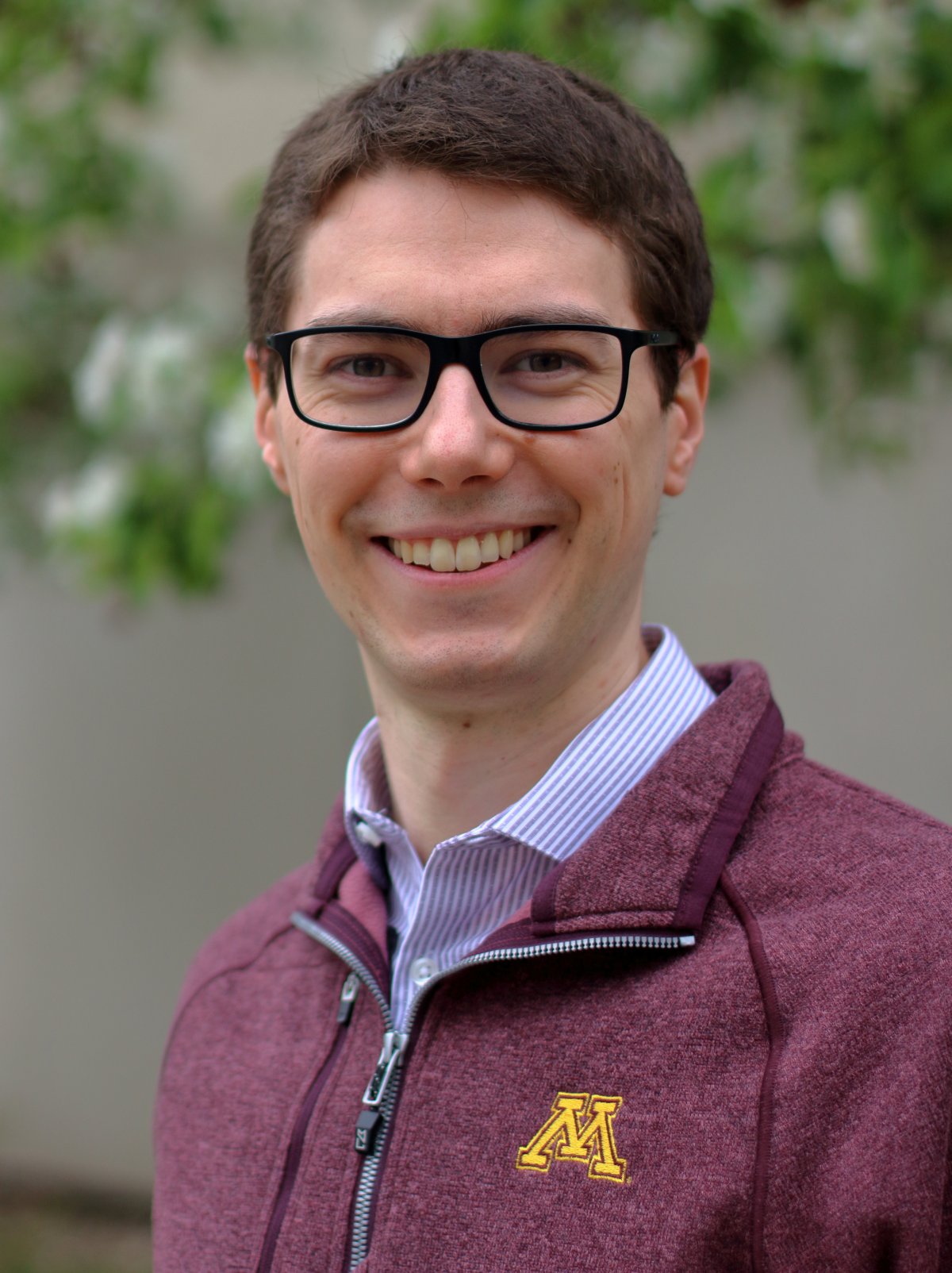
Ryan Caverly serves as an Associate Professor in the Department of Aerospace Engineering and Mechanics at the University of Minnesota, Twin Cities, holding the prestigious McKnight Land-Grant Professorship. His research bridges theoretical control frameworks with practical aerospace and robotics applications, focusing on dynamic modeling and system control. Education: BS in Honours Mechanical Engineering from McGill University MS in Aerospace Engineering from the University of Michigan PhD in Aerospace Engineering from the University of Michigan Professor Caverly's research centers on input-output stability, robust control of nonlinear systems, and computationally efficient modeling of flexible structures. His work spans aerospace vehicles, spacecraft, and robotic manipulators, emphasizing theoretical rigor alongside real-world implementation challenges in structural flexibility and control precision. Recent publications reveal strong emphasis on predictive control for orbital mechanics, hypersonic vehicle dynamics, and cable-driven systems. His work consistently integrates convex optimization, state estimation, and structural dynamics to solve complex problems in solar sail technology, UAV navigation, and hypersonic flow measurement. Scientific Awards: McKnight Land-Grant Professor Caverly leads multiple externally funded projects including NASA-sponsored research on solar sail momentum management, UAV state estimation with Honeywell, hypersonic bow shock measurements with the Air Force, and deployable space structure control. His grants portfolio demonstrates significant industry and government collaboration in aerospace innovation. He directs the Aerospace, Robotics, Dynamics, and Control (ARDC) Lab, which specializes in the intersection of dynamic modeling and control theory for flexible multi-body systems, with particular focus on cable-driven mechanisms and lightweight aerospace structures.
Paul C. Adams is a Professor in the Department of Geography and the Environment at the University of Texas at Austin's College of Liberal Arts, where he has served as Director of the Urban Studies Program since 2003. His interdisciplinary work bridges geography, media studies, and communication, with a focus on digital media's sociospatial implications. Adams earned his Bachelor of Environmental Design from the University of Colorado-Boulder (1984) followed by an M.S. (1990) and Ph.D. (1993) in geography from the University of Wisconsin-Madison. His academic journey reflects a deep commitment to understanding spatial dimensions of human experience. His research explores geographical communications , place imagery in media , and digital disentanglement , with recent work examining geopolitical discourse, climate change communication, and refugee spatial experiences. As founder of the Association of American Geographers' Media Geography Specialty Group (now "Media and Communication"), he pioneered frameworks for analyzing how media shapes place perception and political subjectivity. Analysis of his 2021-2025 publications reveals three dominant trajectories: (1) Digital media's intimate politics through entanglement/disentanglement lenses, (2) Geopolitical discourse analysis applied to climate change and US-China relations, and (3) Spatial dimensions of forced migration and cultural landscape transformation. These intersect with subfields including media geography, political ecology, and digital humanities. Key honors include: Fulbright Research Fellowship to the University of Bergen (2010) Fulbright Fellowship to McGill University/University of Montreal (2001) Ander Visiting Professorship at Karlstad University (2016-2017) Adams teaches foundational courses including GRG 305 (This Human World) and URB 315 (Urban Studies Research Methods), alongside specialized seminars in media geography and political geography. His research has secured major funding including the Research Council of Norway's ViSmedia project (2015-2020), for which he held an Associate Professor II appointment at the University of Bergen. He leads the Media Geography Specialty Group and maintains active collaborations with scholars across Poland, Sweden, and Norway, driving international research on digital place-making and geopolitical discourse through collective publications and interdisciplinary projects.
Thomas Le Goff is an Assistant Professor of Law & Technology at Télécom Paris – Institut Polytechnique de Paris, affiliated with the Interdisciplinary Institute of Innovation (i3) and the Digital, Organization and Society (DTOS) research team. His work bridges legal frameworks and technological advancements, focusing on AI regulation, environmental sustainability, data protection, and cybersecurity. Education: PhD in Private Law, Université Paris Cité Master’s in Law, Université Paris Cité LLM, University of Exeter (UK) Licence and Magistère, Université de Rennes 1 His research explores the intersection of AI and sustainability, emphasizing how legal principles can guide environmentally responsible technology. Key themes include the AI Act’s implications, data center energy demands, and regulatory strategies for balancing digital growth with net-zero targets. His work has been presented at international forums like BILETA and contributes to EU think tanks such as CERRE. Recent publications address AI’s environmental footprint, nuclear energy’s role in powering AI, and legal frameworks for sustainable digital infrastructure. Collaborations with institutions like the Center on Regulation in Europe (CERRE) highlight his focus on comparative analyses of global regulatory practices.