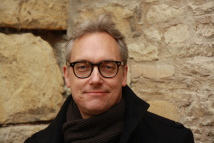
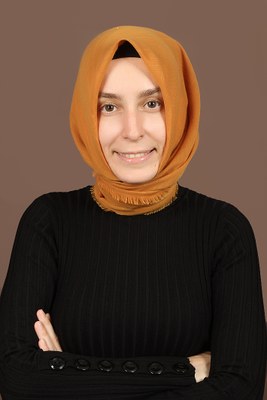
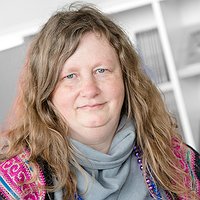
Professor Max Deeg is a leading scholar in Buddhist Studies at Cardiff University , holding a personal chair since 2009. With a career spanning institutions in Germany, Austria, and the UK, his research focuses on transcultural Buddhist history from India to East Asia, Chinese Buddhist travelogues , and interreligious encounters in medieval China. He has held visiting positions at universities in Japan, Nepal, the US, and Germany, and currently directs the Centre for the History of Religion in Asia (CHRA) . PhD from University of Würzburg (1990) Dr. phil. habil. in Religious Studies (1998) Full Professor at University of Vienna (2002-2006) His research explores Buddhist narratives as tools for constructing religious identity, foundation myths in trans-Himalayan contexts, and terminology evolution in Chinese Buddhist translations. Recent publications analyze Indian Buddhist monasticism through Chinese sources and religious concepts like xin (trust) across Buddhist, Manichaean, and Christian traditions. Awarded the KHK Visiting Research Fellowship (2016) and a DAAD Scholarship (1986-87) , Prof Deeg contributes to editorial boards of major journals. He supervises PhD students and teaches Buddhist Studies , Life of the Buddha , and Chinese Buddhist Texts .
Prof. Dr. Kianoosh Rezania is a Professor of West Asian Religious History and Director of the Käte Hamburger Kolleg Dynamics of Religious History at Ruhr University Bochum. His research focuses on Zoroastrianism, Iranian religions, and the history of religions, with a particular emphasis on ancient Iranian languages and interreligious dynamics. He holds a Ph.D. from Georg-August University Göttingen and has conducted extensive research on topics such as Zoroastrian cosmology, Sasanian-Zoroastrian interactions, and the transmission of religious texts. His work combines philological analysis with historical and cultural studies approaches. Rezania's academic career includes roles as a research associate at Göttingen University and his habilitation project on spatial concepts in early Zoroastrianism. He has directed major research initiatives like the Graduate School of Metaphor and Religion (GSMR) and the Käte Hamburger Kolleg. His publications span monographs, edited volumes, and peer-reviewed articles exploring themes such as religious economics, Middle Persian lexicography, and cross-cultural exchanges between the Safavid and Mughal empires. His current projects include the 'Zoroastrian Middle Persian: Digital Corpus and Dictionary' initiative and studies on Pahlavi literature's interreligious context. He collaborates internationally, leading interdisciplinary teams and contributing to digital humanities efforts in religious studies.
Mahmoud Abdallah is a Researcher at the Center for Islamic Theology , University of Tübingen, where he has worked since 2020. His career includes roles as Senior Scientist at the University of Innsbruck (2019–2020), Project Leader at ZITh (2016–2019), and Post-Doc researcher (2013–2018). He also held guest lectures at Marmara University (2017) and served as an Arabic Editor (2012–2013). Education : PhD in Comparative Linguistics (2012, Heinrich Heine University Düsseldorf), Master’s summa cum laude (2002, University of Minia), State Examination (1998, Al-Azhar University). Research Interests focus on Islamic Theology , Pastoral Care , Interreligious Dialogue , and Religious Institutions in Pluralistic Societies . He explores hermeneutics in Islamic counseling, Ḥisba in public order, and Umma dynamics in multicultural contexts. Recent Publications (2014–2022) analyze Qur’anic ambiguity , interfaith education , religious responses to crises (e.g., pandemic pastoral care), and Islamic social ethics . Key themes include Abrahamic unity , contextual theology , and religious hermeneutics . Scientific Awards : Master’s degree with summa cum laude distinction (University of Minia, 2002). Advising & Projects : Co-editor of Grundlagen muslimischer Seelsorge (2020) and Theologie des Zusammenlebens series (2017–2022). Led the 2016 project Scientific Education and Social Responsibility (Baden-Württemberg Ministry). Currently working on books about Prophetic Hermeneutics (2023) and Religious Transformations in Crisis (2022). Committee Memberships : Member of the German Islam Conference (since 2018), Scientific Advisory Boards at Zukunftsforum Islam e.V. (since 2017), and the DAVO (German Working Group on the Middle East, since 2009).
Professor Martin Heimgartner is an Adjunct Professor of Church History at the Martin Luther University Halle-Wittenberg's Faculty of Theology, where he has served as a private lecturer since 2007 and as adjunct professor since 2014. He also works as a research associate at the Theological Seminary of the University of Zurich since 2009. His academic career spans multiple institutions including the Universities of Zurich and Basel where he completed his doctoral and habilitation work. Heimgartner's research focuses on Syriac Christianity, particularly the works of the East Syrian Patriarch Timotheus I (780-823), Christian-Muslim relations in early Islam, philosophy and theology of Syrian Christians, John Chrysostom, Greek and Syrian florilegia literature, and 2nd century Christian apologists. His scholarly work demonstrates deep engagement with primary sources through critical editions and translations of Syriac texts. His publication record shows consistent scholarly output with emphasis on Timotheus I's writings, with multiple monographs published through prestigious series like Corpus Scriptorum Christianorum Orientalium (CSCO). His work bridges historical theology, textual criticism, and interreligious studies, particularly examining early Christian-Muslim dialogue. The articles reveal a progression from textual editions toward more thematic studies on theological concepts like Trinitarian doctrine in interreligious contexts. His scholarly contributions include numerous encyclopedia entries in major reference works such as Religion in Geschichte und Gegenwart (RGG) and Der Neue Pauly, covering figures from early Christianity. He has also collaborated on editorial projects including a volume on Apollinarius. Notably, Heimgartner maintains a dual scholarly identity, combining theological research with musicology. His musicological editions, particularly for Cecilia Bartoli's Malibran project, demonstrate expertise in historical musical works from the 19th century, showing his interdisciplinary approach to historical scholarship across different cultural domains.
Prof. Dr. Johanna Rahner serves as Professor of Dogmatics, History of Dogma and Ecumenical Theology at the Catholic Theological Faculty of the Eberhard Karls University of Tübingen since 2014. She also holds the position of Director of the Institute for Ecumenical and Interreligious Research at the same institution. Her research interests span a wide range of theological topics including: Biblical Hermeneutics for Systematic Theology (especially Christology), Ecumenical theology and its ecclesiological problem areas, the relationship between religion, culture, educational processes, politics and society, interaction of contemporary culture with worship and theology of the sacraments, theoretical foundations of dialogue between world religions in a globalized world, relationship between reason and faith, theology and philosophy, theology and natural sciences, patchwork religiosity and subjective religious pluralism, and religiosity of children and adolescents with special consideration of youth and cult literature and pop music. Prof. Rahner's publications demonstrate a consistent focus on contemporary challenges facing the Catholic Church, ecumenical dialogue, and the intersection of theology with modern culture. Her work frequently addresses the Second Vatican Council's implications for contemporary theology, the relationship between science and faith, and the practical application of theological concepts in interreligious contexts. She has made significant contributions to understanding eschatology, ecclesiology, and the practical application of theological concepts in interreligious contexts. Wissenschaftlicher Beirat des Kuratoriums zur Vorbereitung des Reformationsjubiläums 2017 Ökumenischer Arbeitskreis evangelischer und katholischer Theologen Editorial-Board der Ökumenischen Rundschau Wissenschaftlicher Beirat der Europäischen Melanchthonakademie, Bretten Societas oecumenica AG der deutschsprachigen katholischen Dogmatiker und Fundamentaltheologen Europäische Gesellschaft für Katholische Theologie. Deutsche Sektion e.V. AGENDA – Forum katholischer Theologinnen e.V. Prof. Rahner has been involved in several significant research projects including Moralische Urteilsfindung im säkularen Diskurs als Herausforderung für die christlichen Konfessionen, Intergenerationelle LehrerInnen-Ausbildung, Theorie und Praxis des interreligiösen Lernens, Kirche und Bildungsregime in Lateinamerika, Reformationsgedenken und Ökumene, and Grundfragen theologischer Anthropologie in Auseinandersetzung mit aktuellen naturwissenschaftlichen Modellen. She leads the Institute for Ecumenical and Interreligious Research, which serves as a hub for scholarly research on contemporary challenges in interfaith relations and ecumenical theology.
Prof. Dr. Michael Schramm serves as an Extraordinary Professor of Classical Philology at the University of Göttingen's Faculty of Humanities. His academic journey spans prestigious institutions including Heidelberg, Jena, Leipzig, and Bielefeld, with doctoral and habilitation degrees establishing his expertise in ancient philosophical traditions. Research interests center on Neoplatonism, Greek tragedy reception, and Late Antique political-religious dynamics, particularly focusing on Julian the Apostate's theological works and Euripides' influence in imperial philosophy. His publications demonstrate rigorous engagement with textual criticism, philosophical exegesis, and intercultural dialogue between pagan and early Christian thought. Current research includes DFG-funded projects on Julian's religious philosophy (2015-2019) and Euripidean tragedy's relationship to providence (2020-2021), alongside a Gerda Henkel Foundation research fellowship (2020-2021). His editorial leadership in volumes like Euripides-Rezeption in Kaiserzeit und Spätantike (2020) shapes contemporary scholarship in classical reception studies. Advisory roles include postdoctoral mentoring through DFG research groups, with institutional service comprising temporary professorships at Bamberg, Bonn, Tübingen, and Jena since 2012. His methodological approach integrates philological precision with philosophical analysis across monographs, critical editions, and interdisciplinary handbooks.
Prof. Dr. Nadja-Christina Schneider is Professor of South Asian Societies and Cultures at the Humboldt University of Berlin, where she is affiliated with the Institute of Asian and African Studies within the Faculty of Humanities, Social Sciences and Education. She previously served as Professor of Gender and Media Studies for the South Asian Region at HU Berlin from 2017 to 2024, and before that as Professor of Media and Society at the IAAW with a focus on Global South Asian Studies from 2009 to 2016. She also held an interim professorship in Visual and Media Anthropology at Heidelberg University during the winter term 2016/17. Her research focuses on media culture, gender, urban transformation and intersectional im/mobility in South Asia. She is particularly interested in media developments in South Asia, mediatization processes and social change, and debates on Islam, media and gender. Her interdisciplinary approach draws from South Asian Studies, Modern and Contemporary History, and Islamic Studies. Prof. Schneider's recent publications demonstrate a strong focus on transcultural media and communication, critical regionalism in architecture, and visual representations of social cohesion and identity politics in South Asia. Her work often explores how media forms shape and are shaped by social transformations, with particular attention to gender dynamics and religious identities. Her significant research projects include 'Beyond Social Cohesion - Global Repertoires of Living Together (RePLITO)' from October 2021 to December 2024, where she served as co-spokesperson and HU project leader. Prof. Schneider has supervised several doctoral projects including: Mobility and Witnessing: Independent Documentary Film Practices in the Kashmir Conflict (Max Kramer) Cinema, Cultures and Marker of Muslim Identity (Saima Haq) Mobility Differentiated: Navigating Religion, Activism and Everyday Life among LGBT Indonesians (Wikke Jansen) Unveiling Images. Regimes of Visibility in the Visual Politics of Contemporary Far Right Parties in Europe (Anna Kathrin Oswald) She has held prestigious research fellowships such as the Alexander von Humboldt research fellowship (Feodor Lynen Fellowship), a senior research fellowship at the Humanities Center for Advanced Studies 'Multiple Secularities' at Leipzig University, and a research fellowship at the Heidelberg Center for Transcultural Studies.
Prof. Dr. Mohammad Gharaibeh is a faculty member at the Berlin Institute for Islamic Theology , affiliated with Humboldt University of Berlin . His research focuses on Islamic theology, intellectual history, and premodern Muslim societies. Regional Expertise: Egypt, Syria, Saudi Arabia Research Emphasis: Wahhabiyya/Salafiyya, hadith studies, religion and politics in Saudi Arabia, interreligious dialogue, Arab historiography, and knowledge production in Muslim societies. His work explores narrative strategies in biographical dictionaries, scholarly networks, and the socio-political dimensions of Islamic theology. He is available for supervision of new PhD students and contributes to academic discourse on Mamluk-era historiography and textual criticism.
Wolfram Drews is a Professor of Medieval History specializing in early and high middle ages, with a focus on transcultural history at Westfälische Wilhelms-Universität Münster since March 2011. He is actively involved in the Cluster of Excellence as both a Principal Investigator and member of the Board of Directors. His research spans multiple fields including cultural history of politics, world and global history, and strategies of integration between Christian and Islamic societies in the medieval period. His academic background includes: Habilitation at the University of Cologne (2007) PhD from Freie Universität Berlin (2000) MA in History, Jewish Studies and Theology from Freie Universität Berlin (1998) MA (Diploma) in English and Spanish from Humboldt-Universität Berlin (1991) Drews' research primarily explores the complex interrelationships between Christian, Jewish, and Islamic societies during the medieval period, with particular emphasis on Spain. His work examines how political power was constructed and maintained across cultural boundaries, how religious identities were negotiated, and how knowledge systems interacted across the Mediterranean world. He has developed innovative approaches to transcultural history that move beyond traditional national and religious frameworks to examine the fluid interactions between different medieval societies. His scholarship reveals how medieval societies constantly redefined their boundaries through processes of entanglement, conflict, and coexistence. His recent publications demonstrate a consistent focus on religious interactions, political legitimacy, and cultural entanglements in medieval Spain and the broader Mediterranean world. Drews frequently examines how religious communities negotiated their identities and political positions within pluralistic societies, with particular attention to Jewish communities in Christian and Islamic contexts. His work shows increasing engagement with global and comparative frameworks for understanding medieval political and religious dynamics. Drews has received significant recognition for his scholarly contributions: Member of Academia Europaea (2018) Dumbarton Oaks Fellowship (2012) Friedrich-Meinecke-Preis (2001) DAAD Scholarship (1994) TEMPUS Scholarship (1991) As an academic leader, Drews serves as executive director of the Institute of Early Medieval Studies and editor of the journal "Frühmittelalterliche Studien." He has supervised doctoral students including Franziska Kleybolte (2022) and Nadeem Khan (2017), focusing on topics related to religious minorities and political structures in medieval Spain. His leadership extends to various research initiatives including the Excellence Cluster "Religion und Politik" and the research group "Xenokratie vor Ort." Drews leads significant research projects including "Discourses of Purity and Purification in Medieval Spain" and previously directed "Monarchical Rule and Religious Community-Building" until 2018. His work is situated within several theoretical frameworks examining differentiation, conflict, ambiguity, decision-making, and migration within medieval transcultural contexts.
Elif Emirahmetoglu is a researcher at the Humboldt University of Berlin , affiliated with the Berlin Institute for Islamic Theology (BIT) under the Department of Islamic Philosophy and Fundamentals of Faith . Her academic work bridges disciplines through cross-cultural theological analysis and interfaith dialogue. PhD candidate in Religious Studies and Intercultural Theology (University of Münster, since 2016) Research stays at University of Münster (2012–2016), Cardiff University (2012–2013), and Berkeley (2018) Her research interests focus on Islamic philosophy and mysticism , comparative studies between Islamic Sufism and Buddhism , and interreligious theology. Key projects include analyzing human self-transformation through religious practices and cross-tradition dialogues. Recent publications examine Islamic-Buddhist theological parallels , metaphysical frameworks in Ibn al-'Arabī and Shinran Shonin, and Buddhist-Islamic mystical hermeneutics. She has contributed reviews on topics ranging from Sufi ethics to mystical concepts in comparative theology. Avicenna-Studienwerk doctoral scholarship (2016–2019)
Elisabeth Gräb-Schmidt is a Senior Professor at the Eberhard Karls University of Tübingen, where she served as Professor of Systematic Theology and Director of the Institute for Ethics from 2010 to September 2024. She holds key roles in national ethics bodies, including the German Ethics Council (since 2018) and the Board of Trustees of the Max Planck Institute for Molecular Genetics (since 2024). Her academic career includes professorships at the University of Giessen (2002–2010) and directorship at the Institute for Philosophy of Religion in Frankfurt (2007–2009). She earned her doctorate (Dr. theol.) in 1992 after theological studies at Göttingen, Heidelberg, Berkeley, and Mainz (1975–1982), with ecclesiastical exams in 1982 and 1984. Her research bridges theology, ethics, and philosophy, focusing on: Foundations of ethics in science, technology, and bioethics Interdisciplinary dialogue between theology and natural sciences Religion theory and interreligious engagement Cultural hermeneutics and existential philosophy Her recent publications (2022–2024) address contemporary ethical challenges, including artificial intelligence in education, assisted suicide, religious pluralism, and feminist theology. Works exhibit strong interdisciplinary engagement with philosophy, political theory, and social ethics. Awards include the Schönthal-Preis (1982), DFG scholarships (1997–2000), and fellowships at the Max Weber Center (2013, 2016/17). She edits major theological journals ( Zeitschrift für Theologie und Kirche ; Zeitschrift für Evangelische Ethik ) and directs research networks like the European Science-Religion Dialogue (SR21) and the International Research Group on Democracy and Ethics.
Max Planck Institute for the Study of Religious and Ethnic DiversityGermany
Dr. Arndt-Walter Emmerich is a Lecturer in Sociology at the University of Hertfordshire and an active researcher in the fields of religious diversity, Muslim-Jewish relations, and urban ethnography. He is currently involved in the international research project ENCOUNTERS, which investigates Jewish-Muslim encounters in urban Europe. His academic journey includes postdoctoral fellowships at Heidelberg University’s Max-Weber-Institute of Sociology and the Max Planck Institute for the Study of Religious and Ethnic Diversity (MPI-MMG). He holds a DPhil and MPhil from the University of Oxford and a BA in Sociology from the University of Essex. Education: DPhil and MPhil (Oxford), BA (Essex) Current Affiliation: University of Hertfordshire (Lecturer in Sociology) Research Projects: ENCOUNTERS, Changing Structures of Islamic Authority, Dis/trusted Partners Former Positions: Postdoctoral Research Fellow (Heidelberg), Research Fellow (MPI-MMG), Postdoctoral Research Officer (Oxford) Emmerich's research focuses on the sociology of religion, particularly how Muslim and Jewish communities interact in urban Europe. He employs ethnographic methods to study symbolic boundary work, interfaith dialogue, and grassroots integration in neighborhoods like Frankfurt’s Bahnhofsviertel. His work challenges essentialist views of religious identity by showing how shared minority experiences, local solidarity, and business networks foster coexistence beyond formal interfaith structures. His publication record includes a monograph, Islamic Movements in India: Moderation and its Discontents (Routledge, 2020), and numerous peer-reviewed articles in journals such as Comparative Studies in Society and History , Politics and Religion , Social Compass , and Journal of Ethnic and Migration Studies . His research has been featured in international media including BBC, Al Jazeera, Frankfurter Allgemeine Zeitung, and Deutsche Welle. His recent articles explore topics such as Jewish-Muslim friendship networks, language use in mosques, Salafism in Germany, and the symbolic politics of urban renewal. Key Themes: Symbolic boundaries, intergenerational solidarity, minority alliances, urban conviviality, religious governance Methodology: Ethnography, discourse analysis, comparative case studies Geographic Focus: Germany, UK, India, urban Europe Emmerich also contributes to public discourse through blogs and podcasts, writing for platforms such as LSE Religion and Global Society, SozBlog, and Qantara.de. He is a guest researcher at the Max Planck Institute and affiliated with the Jewish-Muslim educational organization Maimonides in Mainz. His work bridges academic research and societal engagement, emphasizing the importance of long-term, grassroots relationships in fostering social cohesion in diverse urban environments. Scientific and Public Engagement: Regular contributor to public debates on religious diversity and integration Podcast appearances on Bayerischer Rundfunk and hr2 Kultur Media commentary in major outlets including Süddeutsche Zeitung and Times of India Active participant in interdisciplinary research networks across Europe Dr. Emmerich advises no formal students yet but is deeply involved in mentoring through collaborative research and public scholarship. His work continues to shape understanding of how religious communities negotiate identity, difference, and belonging in contemporary multicultural societies.
Prof. Dr. Alexandra Cuffel is a leading scholar in medieval and early modern interreligious encounters, currently serving as Professor of Jewish Religion in Past and Present Times at Ruhr University Bochum's Center for Religious Studies and Director of the Käte Hamburger Kolleg 'Dynamics in the History of Religions'. Her research spans Jewish, Christian, and Muslim relations in the medieval Mediterranean and beyond, with particular expertise in religious polemics, gender studies, and environmental crises in premodern societies. Ph.D. in Medieval History, New York University (2002) M.Phil. in Medieval History, University of Cambridge (1990) B.A. in Medieval Studies, Indiana University (1988) Her recent work examines cross-religious festivals, medical theories, and environmental attitudes in premodern Afro-Eurasia, culminating in the 2024 monograph Shared Saints and Festivals among Jews, Christians, and Muslims in the Medieval Mediterranean and the forthcoming Religious Encounter and Environmental Crises . She also co-authors studies on Jewish warrior traditions and the Ten Lost Tribes with Prof. Adam Knobler. Dr. Cuffel's publications demonstrate deep engagement with sensory religious practices, bodily fluids in polemics, and apocalyptic narratives. She has held prestigious fellowships from ACLS, Harvard Divinity School, and Hebrew University, and currently leads the 'JewsEast' and 'The Ten Lost Tribes' projects at Ruhr University. ACLS Fellowship (2007) Harvard Divinity School Fellowship (2006) Dorot Foundation Fellowship (1996) Her research continues to reshape understanding of religious entanglement through material culture, ritual practices, and environmental challenges in premodern contexts.
Professor Antje Roggenkamp serves as Professor of Practical Theology with a focus on Religious Education at the Protestant Theological Faculty of the University of Münster. She chairs the Seminar for Practical Theology and Religious Education, where she leads groundbreaking research on religious education, praxeology, and material culture in religious contexts. Her scholarly work bridges historical analysis with contemporary educational challenges in increasingly pluralistic societies. Professor Roggenkamp's educational foundation includes studies in Protestant theology, Romance studies, education, and psychology across multiple institutions including the University of Münster, the Sorbonne (Paris 4), and the Georg-August University of Göttingen. She completed her doctoral research on 'The Protestant André Gide and the Bible' (1987-1991) and her Habilitation on 'Religionspädagogik als Praktische Theologie. Zur Entstehung der Religionspädagogik in Kaiserreich und Weimarer Republik' (2000), establishing her expertise in the historical development of religious education as an academic discipline. Her research interests span multiple interconnected domains: material religion studies examining how physical objects and spaces shape religious understanding; praxeological approaches to practical theology investigating religious practices in everyday contexts; theologizing with children and young people focusing on religious concept development; transnational religious education comparing German and French approaches to secularism; and religious cooperative didactics addressing stereotypes and prejudices in interfaith learning. Her scholarship consistently connects theoretical frameworks with practical educational applications, particularly in contexts of religious diversity. Professor Roggenkamp's recent publications reveal a clear trajectory toward material religion studies, with increasing emphasis on how artifacts mediate religious experiences and learning processes. Her work demonstrates sophisticated integration of historical analysis with contemporary educational challenges, particularly through innovative approaches like 'Digitorials' for theological reflection. She examines positional awareness and power dynamics in interreligious contexts, addressing how educators can navigate complex identity formations in religious learning environments. Scientific Society for Theology ISREV (International Seminar on Religious Education and Values) European Academy of Religion Society for Scientific Religious Education Working Group for Empirical Religious Research Professor Roggenkamp currently leads several significant research initiatives including the DFG-funded network 'Gegenstände religiöser Bildung und Praxis – Funktion und Gebrauch von materiellen Objekten und Artefakten in exemplarischen Räumen' (2021-2026), which brings together scholars from multiple disciplines to explore how material culture contributes to religious education processes. She also directs 'Interreligiöses Lernen an der Evangelischen Gesamtschule Gelsenkirchen' (2021-2023) and the 'Ökumenisch-Interreligiöse Forscherwerkstatt' (since 2017), both focused on developing practical frameworks for religious education across faith traditions. Her upcoming participation in the European Academy of Religion conference in Vienna (July 2025) demonstrates her ongoing scholarly engagement across international contexts.
Sylvie Avakian is a Lecturer in Systematic Theology at the Faculty of Protestant Theology, University of Tübingen , since April 2019. She was ordained to the pastoral ministry in the Evangelical Church of Württemberg in 2021 and completed her habilitation at Tübingen University (2018-19) with the thesis Being Toward Death: Heidegger and the Orthodox Theology of the East . Her academic journey includes a Doctorate in Theology (2011) from Heidelberg University, a Master in Theology (2007), and a Bachelor in Theology and Christian Education (1998) from the Near East School of Theology (NEST), Beirut. Education: Doctorate (2011), University of Heidelberg Master (2007), Near East School of Theology Bachelor (1998), Near East School of Theology Her research focuses on Systematic Theology, Interreligious Dialogue, Eastern Orthodox Thought, Intercultural Theology, Secular Christianity, and Post-structuralism , with a particular interest in Christian-Muslim Dialogue and the Philosophy of Christian Education . Her recent publications explore themes like Heidegger’s existential philosophy in relation to Orthodox theology, divine hospitality , and theology of the Other in Middle Eastern contexts. She has taught courses ranging from Introduction to Systematic Theology to Eastern Orthodox Theology and Spirituality , reflecting her interdisciplinary approach. Key scientific recognitions include the Teach@Tübingen scholarship (2018-19) under Tübingen’s Excellence Strategy and the Bread for the World scholarship (2011) during her dissertation work. Her sermons and lectures (e.g., The Spirit of God: The Love That Burns Within Us , 2025) demonstrate her engagement with practical theology and spiritual reflection.