Dr. Liangliang Cheng is a Tenure Track Assistant Professor in Dynamics and Vibration at the University of Groningen. His research develops physically interpretable machine learning methods for structural health monitoring and non-destructive testing applications. Research innovations include: Novel computer vision techniques for vibration measurement Advanced signal processing for damage detection Machine learning frameworks for structural diagnostics
Peter Andriessen is a University Researcher at the Eindhoven University of Technology (TU/e), affiliated with the Department of Applied Physics and Science Education and the EAISI research institute. His work focuses on neonatal intensive care monitoring, integrative physiology, and long-term outcomes of preterm infants. He has co-supervised numerous master's and PhD projects since 2002 in collaboration with Máxima Medical Center and the Department of Clinical Physics. Key projects include the EPIDAF study (national follow-up of extremely preterm infants), the ALARM project (alarm management in NICUs), and the IMPULS II initiative. His research leverages machine learning and biomedical engineering to improve clinical predictions for conditions like late-onset sepsis and central apnea in preterm infants. Recent contributions include validating sepsis prediction models, developing explainable AI for apnea detection, and integrating ECG and fiber-optic motion sensing for NICU monitoring. These efforts aim to reduce clinical alarm fatigue and enhance patient outcomes through automated, non-invasive solutions. Collaborations span academic and industrial partners, including Philips Research via the Eindhoven MedTech Innovation Center (e/MTIC). His work bridges engineering and clinical practice to advance neonatal care technologies.
Prof. Dr. R Fleischer is an Endowed Professor in the Faculty of Science at Vrije Universiteit Amsterdam, specializing in (Astro)-Particles Physics. He holds a senior staff physicist position in Nikhef's Theory Group (NWO-I) since 2012. His research focuses on CP violation, lepton physics, quantum chromodynamics, and muon physics, contributing to UN Sustainable Development Goals through particle physics advancements. Research interests include precision measurements in quark mixing parameters, theoretical predictions for B-meson decays, and experimental methodologies. His work bridges particle physics with astrophysical phenomena, emphasizing symmetry violation studies and high-energy particle interactions. Recent publications highlight advancements in CP violation analysis, B-physics precision measurements, and theoretical frameworks for interpreting experimental data. Collaborative efforts involve international teams exploring particle physics frontiers and astrophysical applications. Supervised 5 PhD theses Key affiliations: Vrije Universiteit Amsterdam, Nikhef (Netherlands Institute for Subatomic Physics) Editorial roles in peer-reviewed journals
Prof. Frank van Harmelen is a Full Professor at Vrije Universiteit Amsterdam, holding positions in the Faculty of Science (Artificial Intelligence), Network Institute, and Knowledge Representation and Reasoning department. He also serves as an Adjunct Professor at Wuhan University of Science and Technology and Wuhan University Faculty of Information Sciences since 2014 and 2015, respectively. He earned his PhD in Artificial Intelligence from the University of Edinburgh (1985–1989), focusing on meta-level inference efficiency. His research spans Semantic Web, Knowledge Representation, Ontology Engineering, and neurosymbolic AI, with contributions to UN Sustainable Development Goals related to technological innovation. His recent work emphasizes knowledge graphs (e.g., KG4NH for nutrition/health, OfficeGraph for IoT), neurosymbolic integration, and applications in healthcare, sustainability, and education. He has led projects like the HumanE AI Network and contributed to datasets such as MetaLink and equivalence class analyses in LOD. Awards: Fellow of European AI Society (2007), Member of Royal Dutch Academy of Sciences (2017), Ten Year Impact Award (2012) Activities: Steering roles in international conferences, member of prestigious academies, and involvement in EU/US Agent Markup initiatives. Teaching: Courses on AI in Health and Introduction to AI. Grants/Projects: Principal Investigator for HumanE AI Network (2020–2024), contributed to IoT and smart grid solutions. His 292+ publications include foundational texts like the Semantic Web Primer and recent advancements in knowledge graph completion and guideline-informed reinforcement learning.
Dr. Niek Mouter is an Associate Professor of Infrastructure Policy Appraisal at TU Delft’s Transport & Logistics group, combining expertise in economics, philosophy, and political science. He focuses on improving infrastructure project appraisal through ethical considerations and stakeholder engagement, developing methods like Participatory Value Evaluation (PVE) and Willingness to Allocate Public Budget Experiments. His work bridges technical analysis and societal values, influencing policy decisions on transport, energy, and public health. Mouter holds an MSc in Economics and an LLM in Philosophy of Law. **Education**: MSc Economics, LLM Philosophy of Law. **Research Interests**: Ethical appraisal frameworks, citizen participation in policy, CBA reform, energy transition governance, and pandemic policy design. **Grants**: NWO Responsible Innovation projects (heating systems and PVE), EU Interreg (SHIFT), Austrian Climate Change Research Program (APPRAISE). **Labs/Teams**: Energy Transition Lab, Populytics (Scientific Director), CIVILIAN project (RIVM collaboration). **Articles Overview**: Recent work explores PVE applications in healthcare, transport equity, and pandemic policy trade-offs. His 2025 publications address transport conflict resolution and air travel accessibility. Earlier work includes studies on citizen preferences for health policies and energy community dynamics. Awards : 2016 CVS Prize for political decision-making analysis on MIRT infrastructure. Advising**: Supervises projects on sustainable energy, health disinvestment, and mobility systems. Co-develops policy tools for inclusive decision-making.
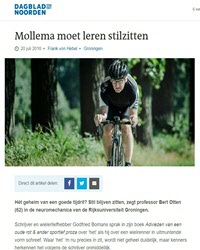
Professor Bert Otten is a distinguished academic specializing in Neuromechanics and Prosthetics at the University of Groningen's Faculty of Medical Sciences. Appointed in 2005 through the Stichting Orthopedische Instrumentmakerij (Orthopaedic Instrument Manufacture Foundation), he is affiliated with both the Interfaculty Centre for Movement Sciences and the Centre for Rehabilitation. His work bridges engineering principles with clinical applications to improve human movement and rehabilitation. Dr. Otten received his biology degree from Leiden University and earned his PhD in 1982 with a thesis titled "Vision and Jaw Mechanism in the Cichlid Fish Haplochromis elegans," which received both "cum laude" honors and the national "Kok" award for originality. He has served as a guest scientist at Harvard University during six summers, working in departments of functional morphology and bio-engineering. His research program focuses on the neural control of human movement, specifically examining the integration of biomechanical, perceptual, and cognitive processes. This work has direct applications in prosthetics development and rehabilitation strategies. Otten has secured two patents related to human body extensions and has published 139 scientific papers across biomechanics, movement control, and rehabilitation engineering. Analysis of his recent publications reveals a strong trend toward applying machine learning techniques to movement analysis, particularly in gait assessment, chronic pain management, and sports performance optimization. His work increasingly focuses on translating biomechanical insights into clinical applications, with significant contributions to understanding central sensitization in chronic low back pain and developing improved prosthetic technologies. "Kok" award for originality (for PhD thesis) Professor Otten has supervised 21 PhD students across diverse projects spanning from biomechanics of jaw systems to prosthetic limb control and motor development in children. His mentorship has produced researchers working in clinical rehabilitation, sports medicine, and biomedical engineering. He has received research funding supporting projects on prosthetic design, ACL injury prevention, and movement analysis technologies, though specific grant details aren't provided in the source text. His work is conducted through the Center for Human Movement Sciences in Groningen, where he collaborates with clinicians, engineers, and rehabilitation specialists. His laboratory work integrates motion capture technology, force plates, electromyography, and computational modeling to analyze human movement. Recent projects include developing a passive polycentric mechanism to improve mediolateral balance in prosthetic walking and validating wearable sensor systems for sports performance assessment.
Andrea Sangiacomo is an Associate Professor of Philosophy at the University of Groningen, specializing in Early Modern Philosophy, Spinoza studies, and Digital Humanities. He holds a joint PhD from the University of Macerata and the École Normale Supérieure de Lyon. His current roles include coordinating the Groningen Centre for Medieval and Early Modern Thought and serving as Editor-in-Chief of the Journal of Spinoza Studies . He has received prestigious grants such as the ERC Starting Grant and NWO Veni Grant. His research bridges historical philosophy with computational methods, exploring topics like causation, occasionalism, and Buddhist thought. Sangiacomo also teaches courses on Global Hermeneutics and Ancient Buddhist Philosophy. His work emphasizes interdisciplinary approaches, combining philosophical analysis with digital tools to study historical texts and networks. Education: PhD (2013) in Philosophy, University of Macerata and École Normale Supérieure de Lyon; Master (2009) and Bachelor (2007) in Philosophy, University of Genoa; Piano Degree (2007), Conservatory of Genoa. Research Interests: Early modern philosophy (Spinoza, Cartesian debates), computational history of ideas, Buddhist thought, and metaphysics. His recent publications include works on Spinoza’s conatus, Buddhist mettā, and the normalization of natural philosophy. Grants: He leads projects funded by the ERC and NWO, focusing on early modern science and digital humanities. His team develops computational methods for analyzing historical philosophical texts. Labs/Teams: Coordinates the Groningen Centre for Medieval and Early Modern Thought and collaborates on digital humanities projects.
Natal A.W. van Riel is a Full Professor of Biomedical Systems Biology at the Department of Biomedical Engineering, Eindhoven University of Technology and a part-time Professor of Computational Modelling at Amsterdam University Medical Centers . His research focuses on metabolic networks , scientific machine learning , human digital twins , and complex dynamical systems in cardiometabolic diseases like obesity and type 2 diabetes. Research Interests include bile acid metabolism in gut-metabolic health interactions (e.g., RESOLVE project ), nutrient digestion and metabolism modeling under NWO Complexity in Health and Nutrition , and metabolic digital twins for predictive, preventive, and personalized medicine. Key applications include diabetes self-management ( DiaGame project ) and post-bariatric surgery assessment ( Metabolic Health Index ). Recent Publications highlight universal differential equations for biological systems, spatiotemporal metabolic modeling, ensemble approaches for RNA-Seq-based metabolic models, and digital health interventions. Collaborations span engineers, clinicians, and social scientists. Scientific Awards include the AMC Principal Investigator (2016) COST Action BM1402 (2014) Koninklijke Onderscheiding (Order of Orange-Nassau, 2014) He contributes to academic governance through roles in examination committees , curriculum development , and research committees . His educational background includes an MSc in Electrical Engineering (1995) and a PhD in Biotechnology (2000).
Prof. Ruud Wetzels is a Professor of Data Science at Nyenrode Business University, affiliated with the Faculty Research Center for Accounting, Auditing & Control. He bridges academia and business by developing statistical methods for auditing and controlling, translating these into free software tools. His work focuses on Bayesian statistics, data analytics, and practical applications in auditing. He holds a PhD from the University of Amsterdam in Bayesian statistics and reinforcement learning. Beyond academia, he serves as a Director at PwC, specializing in data-driven strategies for businesses. His research emphasizes audit transparency, efficient sampling techniques, and integrating prior information into statistical analyses. Key contributions include Bayesian tools for audit sampling and methodologies to enhance audit efficiency through prior distributions. Education: PhD in Bayesian Statistics and Reinforcement Learning (University of Amsterdam). Research Interests: Statistical methods for auditing and control Bayesian hypothesis testing and inference Data analytics in business and auditing Development of open-source statistical tools Applications of machine learning in auditing Auditing Tools and Impact: Wetzels co-developed JASP for Audit, an open-source platform providing Bayesian tools for auditors. His work on prior distributions in Bayesian audits has advanced methodologies for integrating existing information into statistical analyses, improving audit efficiency and transparency. He has over 4,500 citations and has authored influential papers on Bayesian methods in auditing and psychology. Professional Roles: Combines academic research with industry expertise at PwC, focusing on data strategy, software implementation, and AI-driven business solutions. His dual role ensures practical relevance in academic research and theoretical rigor in professional practice.
Dr. Jelle Zuidema is Associate Professor in Natural Language Processing, Explainable AI and Cognitive Modelling at the Institute for Logic, Language and Computation (ILLC) of the University of Amsterdam, with primary affiliation in the Natural Language Processing research group and secondary affiliation in Language & Music Cognition. He directs the Cognition, Language and Computation lab (CLC-lab) within the Faculty of Science. His research bridges artificial intelligence, cognitive science and linguistics with focus on interpretable deep learning models for text and sound. He pioneered techniques including diagnostic classification (probing), attention rollout, TreeLSTM, and masked language modeling. His work addresses fundamental questions about hierarchical compositionality in language and how neural networks can represent linguistic structure. Analysis of his publication record reveals consistent innovation in neural network interpretability methods, with recent work focusing on bias detection in language models and attention flow quantification. His research trajectory shows evolution from foundational neural parsing work to current emphasis on explainable AI and cognitive plausibility of deep learning models. Dr. Zuidema actively supervises PhD and MSc students while teaching courses including Evolution of Language and Music, Foundations of Neural and Cognitive Modelling, and Interpretability & Explainability in AI. He coordinates the Cognitive Science track in the Brain & Cognitive Sciences master's program. He directs the CLC-lab which pursues both hypothesis-driven methods (diagnostic classifiers, representational similarity analysis) and data-driven methods (layer-wise relevance propagation, contextual decomposition) for neural network interpretation. The lab's InDeep project focuses on interpreting deep learning models for text and sound processing.
Matthijs van Leeuwen is an Associate Professor and Director of Education at the Leiden Institute of Advanced Computer Science (LIACS), Leiden University. He leads the Explanatory Data Analysis group and is affiliated with the university-wide SAILS AI research program. Academic rank: Associate Professor Institution: Leiden University Research group: Explanatory Data Analysis University affiliation: SAILS AI research program His research focuses on exploratory data mining with emphasis on explainability for domain experts. Key areas include pattern discovery, anomaly detection, and human-in-the-loop systems. He applies information-theoretic concepts like Minimum Description Length (MDL) and develops interactive methods for real-world applications in life sciences, social sciences, manufacturing, and healthcare. Recent publications demonstrate his work in explainable AI through diverse subgroup discovery, graph anomaly detection, and medical data analysis. Notable contributions include synthetic health record generation, wearable sensor data interpretation, and hemoglobin deferral prediction models. Scientific Awards : Senior Teaching Qualification (SKO) certificate (2022) As Director of Education for LIACS' Master's programs, he plays a leadership role in academic training while maintaining active research partnerships across multiple domains including manufacturing, aviation, and medical informatics.
Rutger J. Hassink serves as an Associate Professor in the medical field at Utrecht University, Netherlands, affiliated with the University Medical Center Utrecht (UMCU) through the Circulatory Health strategic program. His primary research focus centers on the Sudden Cardiac Arrest research group, specifically investigating idiopathic ventricular fibrillation (IVF) where structural heart disease is absent. Dr. Hassink's research program targets the discovery of underlying causes for unexplained sudden cardiac arrest, employing advanced methodologies including cardiac electrophysiology , ECG analysis , cardiac magnetic resonance imaging , and machine learning applications . His work investigates potential genetic, structural, and autonomic nervous system contributors to IVF, with the ultimate goal of developing improved risk stratification models and preventive interventions for sudden cardiac death. Current projects emphasize the integration of computational techniques with clinical phenotyping to uncover subtle pathological mechanisms. Analysis of his recent publications (2024-2025) reveals a strong trend toward leveraging cutting-edge technologies in cardiac diagnostics and risk prediction. Key research themes include the application of deep learning for ECG interpretation in arrhythmia localization, investigation of circadian rhythm impacts on cardiac repolarization and mortality, and utilization of advanced cardiac imaging to detect subclinical abnormalities in IVF patients. These studies collectively demonstrate a multidisciplinary approach bridging clinical cardiology, computational science, and translational research to address critical gaps in sudden cardiac death prevention. Dr. Hassink maintains active collaboration within Utrecht University's Circulatory Health program, working closely with multidisciplinary teams across cardiology, electrophysiology, and medical technology development. His research group participates in both national and international cardiovascular registries, contributing to large-scale clinical investigations into arrhythmia mechanisms and risk factors.
Roderick Venekamp, MD, is a Dutch Associate Professor at the Julius Center for Health Sciences and Primary Care (University Medical Center Utrecht) who combines his academic work with general practice (GP) clinical duties. As a principal investigator of the primary care infectious disease research group, he focuses on optimizing prevention, diagnosis, prognosis, and management of common infections in primary care settings. He also contributes to international collaborations through the evidENT team at University College London (UCL), strengthening ties between UMCU and UCL. Education: MD (2008) Master of Epidemiology (University Utrecht Graduate School of Life Sciences) Research Focus: His work spans clinical epidemiology, infectious disease dynamics, and evidence-based primary care, with recent research aims targeting international research infrastructure for rapid response to emerging infectious diseases. Recent Publications: His 2025 research includes diagnostic models for life-threatening events in respiratory patients, economic analyses of viral infections, and pandemic response strategies in primary care. Scientific Awards: 2013 SBOH Academisation Prize 2017 ZonMw/NWO Veni grant
Andrea Brunello serves as an Assistant Professor (tenure-track) at the Department of Humanities and Cultural Heritage (DIUM) of the University of Udine, while maintaining a dual affiliation with the Department of Mathematics, Computer Science and Physics (DMIF) where he participates in the Data Science and Automatic Verification Laboratory. He holds a prominent position on the board of directors for the AI4CH Initiative, reflecting his unique bridging of technical AI development and humanities scholarship. His educational foundation includes a Computer Science degree earned through an international program between the University of Udine and Austria's University of Klagenfurt, followed by a PhD in Computer Science, Mathematics, and Physics from Udine. His doctoral research included a significant international component at the University of Western Australia, where he specialized in temporal logic and formal methods. Dr. Brunello's research program demonstrates remarkable interdisciplinary reach: Technical AI Development: Specializing in machine/deep learning architectures with emphasis on model interpretability (XAI), neural network applications, and temporal data processing Domain Applications: Medical diagnostics, intelligent sensor systems, localization technologies, and digital humanities projects Data Infrastructure: Expertise spanning relational and NoSQL databases, data warehousing, and decision support systems Theoretical Contributions: Work on symbolic/subsymbolic AI integration and spatio-temporal data modeling His professional engagements extend beyond academia through substantial collaborations with industry partners including u-blox, SAL Silicon Austria Labs, GAP srlu, and beanTech. He regularly conducts specialized training for non-academic audiences on data integration, decision support systems, and explainable AI implementation. As an active PeerJ Editor & Reviewer with over 900 contribution points, he maintains strong connections with the international computer science research community. Dr. Brunello directs his efforts through the Data Science and Automatic Verification Laboratory at DMIF and the interdisciplinary AI4CH Initiative, creating pathways for meaningful technology transfer between humanities scholarship and advanced computational methods.
Eric Postma is a Professor of Artificial Intelligence at Tilburg University, affiliated with the Cognitive Science & AI department and the Jheronimus Academy of Data Science (a collaboration between Tilburg University and Eindhoven University of Technology). He has maintained continuous affiliation with Tilburg University since 2009. His academic journey includes a PhD in Neural Networks from Maastricht University (1994), where he served as Professor of Artificial Intelligence from 2003 until transitioning to Tilburg University. Professor Postma's research spans foundational and applied AI domains, with emphasis on Generative AI systems for visual object recognition , signal analysis , classification , and knowledge representation . His work bridges theoretical AI with practical data science applications across cognitive science frameworks. He has developed and instructed numerous Bachelor's and Master's courses in data science, AI, and cognitive science curricula, supervising extensive thesis work at all graduate levels including PhD dissertations focused on machine learning and AI systems. Currently leading the Deep Learning for Perception research group, his team explores cutting-edge neural network architectures for sensory data interpretation and representation learning.