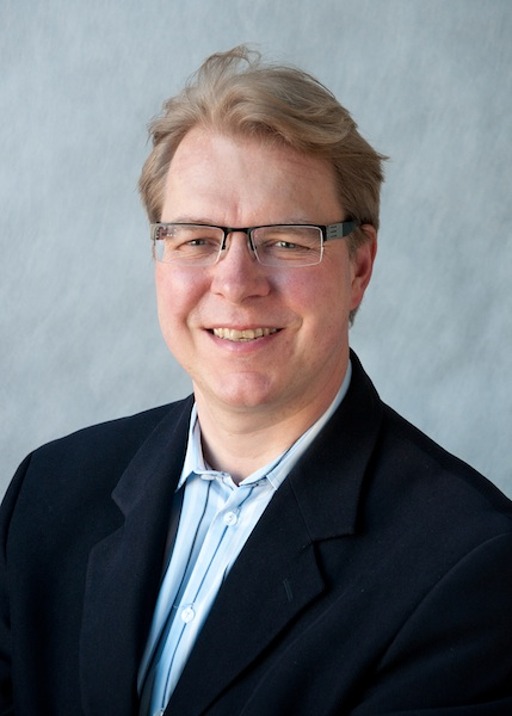
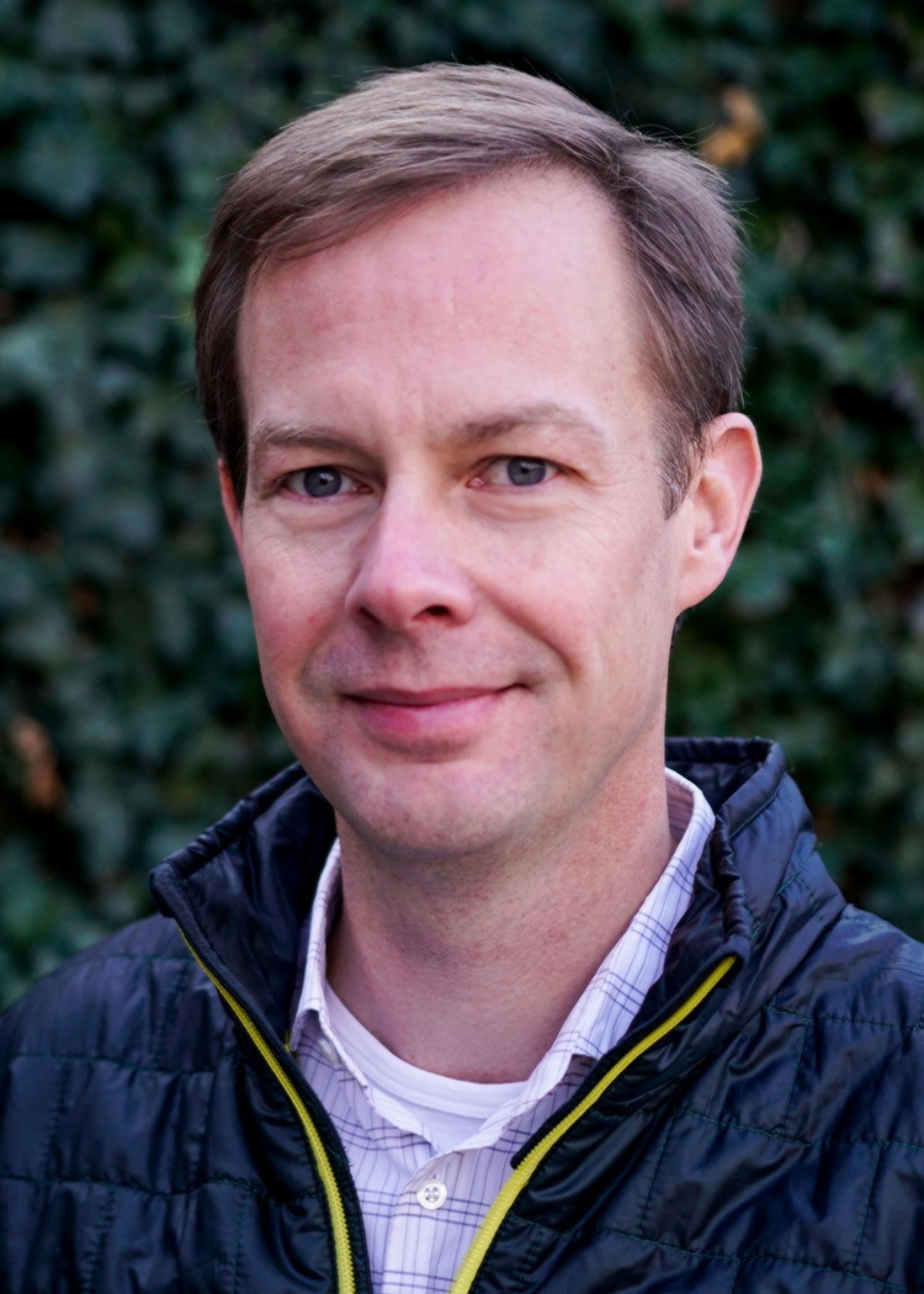
Professor Petri Vuorimaa is a faculty member at the Department of Computer Science, Aalto University. His research spans web technologies, digital television, and human-computer interaction. Research Interests: Web Engineering and Development Edge Computing and Serverless Architectures Smart Home Systems and Semantic Interoperability Blockchain Applications in E-commerce Publication Trends: Recent work focuses on serverless edge computing, resumability in web applications, disappearing frameworks, and blockchain-based reputation systems. Earlier research includes declarative languages, XML frameworks for digital TV, and mobile computing.
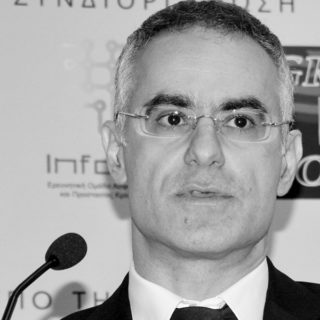
Prof. Christos Xenakis is a Professor at the Department of Digital Systems of the University of Piraeus, where he has been a faculty member since 2007. He is also the director of the Postgraduate Degree Programme on "Digital Systems Security" and a member of the Systems Security Laboratory at the University of Piraeus. Prof. Xenakis received his B.Sc. in Computer Science in 1993, M.Sc. in Telecommunication and Computer Networks in 1996, and Ph.D. in 2004, all from the Department of Informatics and Telecommunications at the University of Athens. His research interests focus on systems, networks and application security . He has participated in numerous European (ACTS, ESPRIT, IST, AAL, DGHOME, Marie Curie, Horizon2020) and National research programs, coordinating several Horizon2020 projects including CUREX, SealedGRID, INCOGNITO and SECONDO. He has also served as Principal Investigator for Horizon Europe projects like ENTRUST and ERATOSTHENES. Prof. Xenakis has authored over 90 publications in peer-reviewed journals and international conferences, focusing on cybersecurity topics such as blockchain security, smart contracts, self-sovereign identity, adversarial machine learning, smart grid security, cyber insurance, phishing detection, wireless security, and authentication protocols. He has served on editorial boards of several scientific journals including Computers & Security , Computer Communications , and IET Information Security . He is also a member of the steering committee of the European Cyber Security Challenge and leader of the Hellenic Cyber Security Team.
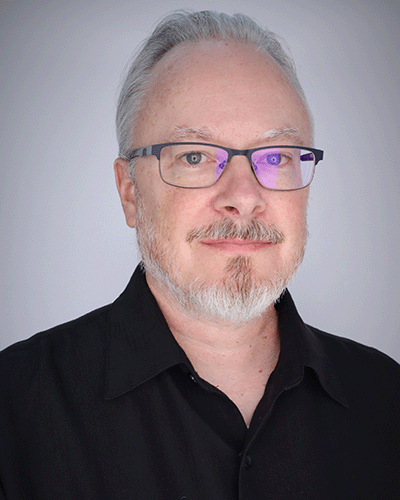
Tomasz Miksa is a researcher affiliated with TU Wien's Department of Research Data Management, focusing on machine-actionable data management plans (maDMPs), semantic web technologies, and data reproducibility. He collaborates extensively on projects involving automated assessment of data management workflows, FAIR data implementation, and privacy-preserving analysis platforms. Primary affiliation: TU Wien Department: Research Data Management Key projects: WellFort, FAIR Data Austria, openEO API His research integrates semantic technologies with data governance to enhance reproducibility in scientific workflows, particularly in domains like environmental monitoring and legal informatics. Recent publications emphasize ontological frameworks (DCSO), API harmonization, and auditable machine learning systems. Notable collaborative works include: Reproducibility standards for soil moisture data Knowledge graph applications in cyber-physical energy systems Dynamic data citation mechanisms He supervises students in theses related to maDMP integration, data citation frameworks, and institutional research data planning architectures.
Antoine Beugnard is a Professor in the Computer Science Department at IMT Atlantique. He received his PhD in Computer Science from the University of Rennes 1 (1993) and accreditation to supervise research in 2005. His career spans academia and industry, including roles at ENST-Bretagne, Telecom Bretagne (now IMT Atlantique), and Michael Jackson France. Education: PhD in Computer Science (University of Rennes 1, 1993), Accreditation to Supervise Research (2005) Affiliation: IMT Atlantique, Lab-STICC (UMR 6285), P4S team Beugnard's research focuses on software modeling, particularly digital twins, model federation (via Openflexo/FML), and late-binding semantics in heterogeneous object-oriented languages. He explores interoperability challenges in multi-language systems and advocates for unified semantics to improve component compatibility. Key trends in his publications include model-driven engineering, digital twin architectures, and formal modeling notations. His work bridges theoretical foundations with industrial applications, notably in telecom systems for Orange and multi-level modeling frameworks. Advising and grants highlight his mentorship of 10+ PhD candidates and leadership in projects like Openflexo. He actively contributes to academic discussions on modeling methodologies and software development processes.
Dr. Jeremy Sullivan is a Professor in the Department of Educational Psychology at the University of Texas at San Antonio (UTSA). He holds a Ph.D. in School Psychology from Texas A&M University and a B.S. in Psychology from Sam Houston State University. As a Licensed Psychologist, Licensed Specialist in School Psychology, and Nationally Certified School Psychologist, Dr. Sullivan bridges clinical expertise with academic leadership. His teaching focuses on educational measurement, cognitive assessment, and neuropsychology. Education: B.S. in Psychology, Sam Houston State University Education: Ph.D. in School Psychology, Texas A&M University Dr. Sullivan’s research centers on psychoeducational assessment, psychometrics, and supervision in school psychology. He explores training and professional issues, particularly addressing personnel shortages in school settings. His funded projects, supported by the U.S. Department of Education, emphasize increasing diversity in mental health professions and developing evidence-based practices. His 15 most recent publications span psychometrics, child psychology, and neurotoxicology. Articles analyze topics like the Autism Parenting Stress Index, intervention research trends, and the impact of neurotoxins on neurodevelopment. These works reflect his commitment to improving assessment tools and addressing ethical challenges in school psychology. Dr. Sullivan has served on editorial boards, including the Journal of Psychoeducational Assessment , and held leadership roles in the Texas Association of School Psychologists and National Association of School Psychologists. His work integrates clinical and academic perspectives, emphasizing collaboration between school counselors and psychologists.
Chen Feng is an Associate Professor in the Department of Electrical Engineering at the School of Engineering, University of British Columbia (UBC), Okanagan campus. He holds the Tier-2 Principal's Research Chair in Blockchain and serves as the Co-Cluster Lead for Blockchain@UBC. Dr. Feng joined UBC in July 2015 after completing postdoctoral fellowships at Boston University and EPFL. Dr. Feng received his B.Eng. degree from Shanghai Jiao Tong University in 2006, and his M.A.Sc. and Ph.D. degrees from the University of Toronto in 2009 and 2014, respectively. Dr. Feng's research focuses on the intersection of information theory, coding theory, and blockchain technology. His work spans several key areas including: Information and Coding Theory for wireless communications Blockchain and distributed ledger technologies Quantum communications and cryptography Cloud computing optimization and analysis Stochastic analysis of distributed systems His recent research output demonstrates a strong trajectory in blockchain consensus protocols, private information retrieval, and the application of information theory to distributed systems. Dr. Feng has been actively publishing in top-tier venues with a focus on improving the performance, security, and scalability of blockchain systems. Dr. Feng has received several prestigious awards including: Best Paper Award at IEEE MSN (2021) Tier-2 Principal's Research Chair Award (2020) Visiting Fellow Scholarship at the University of Melbourne (2019) Emerging Professor Award from UBC-Okanagan School of Engineering (2017) Teaching Excellence Award (2017/18) As a graduate student supervisor, Dr. Feng teaches a range of courses from undergraduate to graduate levels, with a particular emphasis on blockchain technologies, wireless communications, and advanced engineering topics. He serves as a Senior Research Consultant for Subspace Labs and a Scientific Consultant for Creative Destruction Lab, bridging academic research with industry applications. Dr. Feng leads the Blockchain@UBC initiative, which focuses on advancing blockchain research and applications across multiple domains including clean energy, distributed systems, and secure communications.
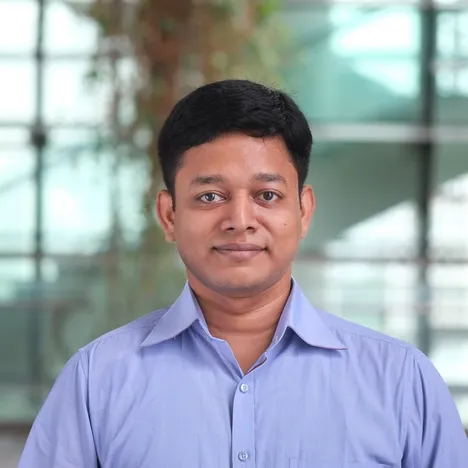
Saravanan Ramanathan serves as a Research Fellow at TUMCREATE Singapore, a research initiative established by the Technical University of Munich (TUM) in Singapore. Based in the Electrification Suite & Test Lab, he contributes to critical research in security and networking for next-generation technologies. His expertise spans: IoT Security : Developing frameworks for industrial and autonomous IoT systems Autonomous Systems Security : Addressing vulnerabilities in self-driving vehicles Time-Sensitive Networking (TSN) : Researching deterministic Ethernet for real-time industrial applications Wireless-TSN : Extending TSN capabilities to wireless domains Industrial IoT Interoperability : Enabling seamless communication across heterogeneous systems 6G Networks : Contributing to next-gen wireless via the 6G-Life hub Cybersecurity for Internet of Vehicles : Creating adaptive frameworks like nIoVe Dr. Ramanathan actively participates in high-impact projects including nIoVe (adaptive cybersecurity for Internet-of-Vehicles), Drives 5G, and ReMiX, focusing on data sovereignty and decentralized system security. His work directly supports TUMCREATE's mission to advance sustainable urban mobility solutions in Singapore and globally.
Scott Shriver is an Associate Professor of Marketing at the Leeds School of Business , University of Colorado Boulder . He holds a PhD in Marketing from Stanford University , with additional Master's degrees in Economics and Physics from Stanford, and an MBA from UCLA Anderson School of Management . His research spans online privacy , network effects , sustainability , empirical industrial organization , and applied econometrics . Education : PhD (Marketing, Stanford), MA (Economics, Stanford), MA (Physics, Stanford), MBA (UCLA) Shriver's publications appear in Management Science , Marketing Science , and Marketing Letters . His work on GDPR's economic impacts (2024) and ethanol market diffusion (2015) has earned John D.C. Little Awards (2015, 2020) and the Frank M. Bass Dissertation Award (2015). He teaches Customer Analytics across degree levels and Quantitative Marketing in the PhD program. Recent research trends include privacy regulation , multi-channel demand analysis , and user-generated content on digital platforms. Earlier works from his physics background include planetary studies (1994) but his modern focus remains on digital economics and sustainable business practices . Scientific Awards : John D.C. Little Award (2015, 2020) Frank M. Bass Award (2015) Swiss Academy of Marketing Science Award (2014) Shriver advises PhD students and contributes to curriculum development in analytics programs. His personal faculty website hosts working papers and publications. Office hours are held in Koelbel 429 .
Luca Mari is a Professor at LIUC University specializing in Industrial Engineering and Information Engineering, with research bridging engineering disciplines and Artificial Intelligence. His work critically examines generative AI's ethical, cultural, and educational implications through active scholarly output. His research centers on AI Ethics and Human-AI Interaction , exploring how chatbots reshape democratic processes, corporate strategy, and cognitive development. Recent publications analyze moral responsibility in AI systems ( "L'intelligenza artificiale e la questione morale" ) and engineering education transformation ( "Game Based Learning..." ), reflecting his dual focus on technical and societal dimensions. Analysis of his 2024-2025 publications reveals a dominant trend toward AI's societal impact, with 80% addressing generative AI's ethical dilemmas and cultural revolutions. His book "L'intelligenza artificiale di Platone" (2025) and metrology standards research ( "Establishment of good practices..." , 2024) demonstrate complementary interests in philosophical foundations and technical interoperability for machine-actionable data.
Dr Richard Collins is a Senior Lecturer in Water Engineering at the University of Sheffield , affiliated with the School of Mechanical, Aerospace and Civil Engineering. His research focuses on hydraulic transients , pipeline integrity , and smart water infrastructure . Graduated with an Aerospace Engineering degree (2005) and PhD in Materials and Mechanical Engineering (2009) Current research explores pressure transients , leak detection , and autonomous robotic systems for pipeline inspection Projects include fatigue analysis , biofilm mobilisation , and ultrasound-based pipe assessment His publications emphasize cast iron pipe fatigue , acoustic leak detection , and transient-induced contamination . Funded by RCUK and Datatecnics , his work bridges mechanical engineering and civil infrastructure challenges.
Thea Lindquist serves as Professor and Executive Director of the Center for Research Data & Digital Scholarship at the University of Colorado Boulder. Her leadership focuses on advancing digital research infrastructure and scholarly support services within academic environments. Her research centers on improving historical data discovery, sharing, and utilization through digital methodologies. She explores how academic libraries can effectively integrate digital research tools into campus-wide teaching and research workflows, bridging traditional scholarship with computational approaches. Key areas include data curation, digital preservation, and the evolving role of libraries in the research lifecycle. Lindquist actively promotes the adoption of digital scholarship tools across disciplines, emphasizing their transformative potential for humanities and social science research. Her work addresses critical challenges in data accessibility, interoperability, and long-term sustainability within academic ecosystems. As Executive Director of the Center for Research Data & Digital Scholarship, she oversees initiatives that provide faculty and students with technical expertise, computational resources, and collaborative spaces for innovative research projects. The center serves as a hub for interdisciplinary digital scholarship across the university.
Prof. Dr. Ingmar Glauche serves as Deputy Institute Director at the Institute for Medical Informatics and Biometrics within TU Dresden's Medical Faculty . He leads the Theoretical Stem Cell Biology research group and coordinates the institute's teaching activities. As an elected member of TU Dresden's extended senate, he contributes to institutional governance. Academic focus on hematopoietic stem cell biology Expertise in computational modeling Key roles in leukemia research and stem cell transplantation Research interests span clonal competition , stem cell aging , and proliferation-differentiation control , with applications in chronic/acute myeloid leukemia and inherited bone marrow failure . His work combines differential equation models and agent-based simulations to study clonal dynamics , spatial organization , and feedback mechanisms in stem cell systems. Recent publications analyze clonal dominance mechanisms (2025), pediatric CML therapy monitoring (2023), and stem cell aging (2022). Collaborations include DFG , BMBF , and Wilhelm Sander-Stiftung projects like TKI-Stop and MinimaL . Current students include Andrea Gottschalk and Thomas Zerjatke , while former advisees include Christoph Baldow and Helene Hoffmann . 2025: Blood - Myeloid bias mechanisms 2024: BMC Medical Education - Competence analysis 2024: Leukemia - Clonal hematopoiesis 2023: PLOS Digital Health - Data integration 2022: Nature Communications - Clonal reconstruction
Nicky Hekster is an Executive Professor at TIAS School for Business and Society, where he coordinates and teaches in the Business Analytics and Business Intelligence programs within the MScMBA curriculum. He also leads specialized lectures in Digital Innovations in Healthcare and Clinical Business Administration. Former Technical Leader for Healthcare & Life Sciences at IBM (35 years) Pan-European role at IBM Watson Health (2016–2021) Chairman of IHE Netherlands (2010–2014) Chair of Dutch Blockchain Coalition's Health and Care working group (2021–2023) Advisory Board member at TU/e Clinical Informatics and Fruitpunch AI for Health His research focuses on leveraging data science, artificial intelligence, and blockchain to address healthcare challenges. He advocates for privacy-enhancing technologies to enable secure data exchange while improving patient outcomes through digital transformation. He holds a PhD in pure mathematics from the University of Amsterdam (1986) and emphasizes the societal impact of data technology in healthcare systems. His work spans interoperability standards (FHIR), AI applications in radiology, and sustainable healthcare innovations. As a jury member for the Prix Galien – MedTech Awards, he evaluates cutting-edge healthcare technologies. His publications highlight advancements in AI-driven diabetes management, personalized care, and blockchain-based health data security.
Mirgita Frasheri is a Tenure Track Assistant Professor at the Department of Electrical and Computer Engineering, Aarhus University. Her research focuses on autonomous systems, multi-agent systems, and digital twins, particularly in the context of cyber-physical systems and robotics. Education: PhD in Computer Science from Mälardalen University (2020), specializing in Modelling and Control of Collaborative Adaptive Autonomous Agents. Mirgita's research explores the application of digital twins for enhancing cyber-physical systems, fault tolerance mechanisms in autonomous robotics, and federated digital twin platforms. Her work bridges theoretical advancements with industry-oriented solutions. Recent publications highlight trends in systematic reporting for digital twins, federated architectures, and autonomous agent integration in sensor networks. She is actively involved in collaborative projects, including agricultural robotics and CPS optimization. She participated in the 20th Overture Workshop and contributes to interdisciplinary research in digital twin services and mobile sensor networks.