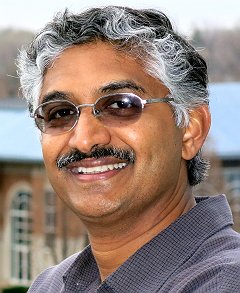
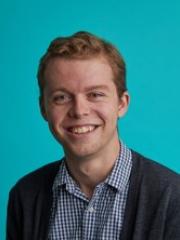
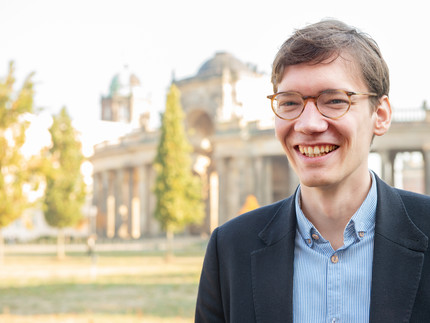
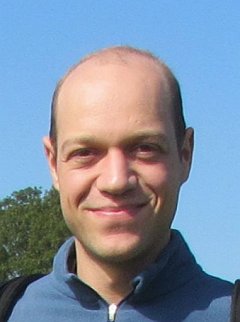
Vikram S. Adve is a Professor in the Department of Computer Science at the University of Illinois at Urbana-Champaign. He co-founded and co-leads the Center for Digital Agriculture and directs the USDA-funded AIFARMS Institute , focusing on AI applications in sustainable agriculture. His research bridges compilers, parallel systems, and AI to address challenges in edge computing and digital farming. Research interests span compiler technologies (LLVM, HPVM), parallel programming models , software reliability , and AI-driven agriculture . Key projects include: CropWizard : Generative AI for agricultural decision-making. HPVM/ApproxHPVM : Compiler IR for edge devices. Hydride/MISAAL : Automated retargetable compiler construction. Recent publications (2018-2025) emphasize compiler optimizations, approximate computing, binary analysis, and AI for systems. Trends show convergence of compiler techniques , heterogeneous computing , and AI applications in agriculture and edge devices. Adve actively recruits students for projects funded by USDA, Intel, Amazon, and Illinois DPI. He leads the HPVM compiler team and digital agriculture initiatives , integrating cross-disciplinary research across CS, engineering, and agronomy.
Brae Webb is an Associate Lecturer in the Faculty of Engineering, Architecture and Information Technology at The University of Queensland. His email is b.webb@uq.edu.au . His research focuses on formal methods, compiler optimizations, and software verification, with contributions to verification frameworks for compiler optimizations and formal semantics of programming language implementations. He has co-authored multiple publications at conferences such as FormaliSE, CPP, and ICFEM, and contributed to editions of the textbook Software Architecture . His work spans theoretical and applied aspects of software engineering, including the use of proof assistants like Isabelle/HOL for verifying term graph optimizations. Recent projects include analyzing GraalVM's intermediate representation and differential testing methodologies for compiler verification frameworks. Brae Webb's publications reflect a commitment to advancing formal verification techniques in compiler design and software systems. His textbook series on software architecture emphasizes practical design principles for scalable software systems.
Prof. Dr. rer. nat. Matthias S. Müller is a Universitätsprofessor and Director of the IT Center at RWTH Aachen University. His research focuses on High-Performance Computing (HPC), parallel programming models, correctness verification, energy-aware computing, and tools for distributed systems. He leads the High-Performance Computing group, contributing to advancements in HPC resource management, runtime systems, and sustainable computing practices. Key areas of expertise include MPI and OpenMP correctness checking, static and dynamic analysis techniques, performance optimization for heterogeneous architectures, and energy footprint modeling. Müller has extensively collaborated on projects like MUST (MPI correctness tool), OMPT tools, and frameworks for analyzing hybrid parallel applications. His work bridges theoretical computer science with practical implementation challenges in large-scale computing environments. Notable contributions include developing methods for data race detection in Remote Memory Access (RMA) programs, latency-aware power management models, and educational frameworks for HPC lab courses. His research often emphasizes tool development, runtime systems, and interdisciplinary applications of HPC across engineering domains. Müller's lab is part of RWTH Aachen's IT Center, which provides infrastructure and expertise for computational research. He actively publishes in top-tier conferences and journals, addressing challenges in parallel programming, energy efficiency, and distributed computing systems.
Haruo Shirane is the Shincho Professor of Japanese Literature and Chair of the Department of East Asian Languages and Cultures at Columbia University. He serves as Faculty Director of the Donald Keene Center and has been on leave for the Spring 2020 semester. His academic career spans decades of research in premodern and early modern Japanese literature, media studies, and cultural analysis. BA: Columbia College (1974) MA: University of Michigan (1977) PhD: Columbia University (1983) Shirane's research explores the intersections of Japanese literature , print culture , performance , and visual media . His work emphasizes interdisciplinary approaches, focusing on manuscript traditions, vocality, and cultural memory. Recent projects analyze the social periphery's role in shaping literary practices and the evolution of natural imagery across Japan's cultural history. His publications include pioneering studies on The Tale of Genji , medieval folklore, and anthologies of classical and early modern Japanese literature. Key themes involve genre hybridity , media transitions , and transnational reception . Notable edited volumes are Monsters, Animals, and Other Worlds (2018) and Cambridge History of Japanese Literature (2015). Scientific Awards Kadokawa Genyoshi Prize Ishida Hakyo Prize Ueno Satsuki Memorial Prize (2010) Fulbright Fellowship National Endowment for the Humanities (NEH) Grant Shirane has secured multiple grants from the Japan Foundation, Social Science Research Council (SSRC), and Hakuhodo Corporation. His pedagogical contributions include foundational texts on classical Japanese grammar and reading practices.
Martin Elsman is a full-time Professor in the Programming Languages and Theory of Computation section at the Department of Computer Science, University of Copenhagen (DIKU). He serves as head of the PLTC section and head of studies for the BSc education in Computer Science and Economics. Elsman is also an active maintainer of several software tools including the MLKit and SMLtoJs. Joined DIKU in 2012 after 4 years at SimCorp (2008-2012) and previous Associate Professorship at IT University of Copenhagen (2003-2008). Co-developer of Futhark, TAIL APL compiler, SMLtoJs, and SMLserver. Education: M.Sc. in Engineering, Technical University of Denmark Ph.D. in Computer Science, University of Copenhagen (DIKU), supervised by Mads Tofte. Research Interests: Elsman works on programming language design and implementation, with a focus on functional programming, module systems, domain-specific languages for financial contracts, region-based memory management, compilation techniques for parallelism, program optimization, and static type systems. His work spans both theoretical and applied domains, including blockchain-based financial contract execution, web technology, and GPU programming using functional languages. Publication Trends: His recent articles focus on functional programming, array programming, parallelism, and memory management. Topics include region inference, type systems for data-parallelism, program optimization techniques, and domain-specific compilation for financial and quantum computing. He frequently collaborates with Troels Henriksen and others on tools like Futhark and MLKit.
Billy Moses is an Assistant Professor in the Department of Computer Science at the University of Illinois Urbana-Champaign (UIUC), with affiliate roles in Electrical and Computer Engineering (courtesy) and the Coordinated Science Library. He holds a PhD and dual S.B. degrees in Electrical Engineering and Computer Science from MIT (2023, 2017), as well as an S.B. in Physics from MIT (2017). His research focuses on compilers, parallel computing, and compiler-driven optimization techniques for high-performance systems. Moses has pioneered work on the Tapir framework for fork-join parallelism, the MLIR compiler infrastructure, and Enzyme for automatic differentiation. Moses' research spans compiler design, GPU acceleration, and AI-driven compiler optimization. Notable contributions include the Polygeist compiler for C-to-MLIR transformation, the Autophase reinforcement learning system for HLS phase ordering, and the Enzyme framework for GPU kernel differentiation. His work emphasizes practical compiler solutions for parallelism, performance portability, and end-to-end code generation in domains like deep learning and scientific computing. Awards: 2024 SIGHPC Doctoral Dissertation Award Courses Taught: CS 598 APE (Advanced Performance Engineering) His recent projects include compiler-based approaches to GPU-to-CPU transpilation, performance portability in heterogeneous systems, and AI-driven compiler decision-making. Moses collaborates with industry and academic partners on advancing compiler technologies for exascale computing and machine learning acceleration.
Youcheng Sun is a researcher at The University of Manchester, affiliated with the Systems and Software Security group, Centre for Digital Trust and Society, Centre for Robotics and AI, and Autonomy and Verification Network. Previously, he held a Lecturer position at Queen's University Belfast and conducted postdoctoral research at the University of Oxford. He earned his PhD from Scuola Superiore Sant'Anna. His research focuses on AI Safety , Security , and Automated Reasoning , with contributions to trustworthy AI, formal verification, embedded systems, and robotics. His work has been funded by Google and the Ethereum Foundation. He has led projects such as SECT-AIR and AUTOSAC, and contributed to the EU H2020 SAFURE project on safety/security assurance in mixed-critical systems. His publications span top-tier venues like IEEE S&P, ICSE, NeurIPS, and IROS. Awards: Fellow of the Higher Education Academy (FHEA) Advising: Supervising PhD students in AI/Security domains (e.g., funded projects on LLMs in social recommendations) Labs/Teams: Member of interdisciplinary networks advancing robotics, AI ethics, and digital trust.
Prof. Dr. Johannes Ungelenk is Professor of General and Comparative Literature at the University of Potsdam's Faculty of Philosophy, a position he has held since April 2025. Previously, he served as Junior Professor for General and Comparative Literature at the same institution since April 2018, with his probation period determined in January 2021. His academic trajectory includes research positions at LMU Munich and doctoral studies focused on literature and weather phenomena in the works of Shakespeare, Goethe, and Zola. Ungelenk's scholarly profile is characterized by several interconnected research foci: Writing from the Between (TS Eliot, Virginia Woolf, Rainer Maria Rilke) Image/Text Interface studies Resistance theory, particularly from French theoretical perspectives Shakespeare studies with emphasis on weather and theatrical elements Philology and touch studies, examining haptic dimensions of literary experience His research demonstrates a consistent progression from weather phenomena in literature toward more nuanced investigations of sensory experience, particularly touch, and how these elements shape our understanding of literary texts. This evolution is clearly visible in his monograph Touching at a Distance. Shakespeare's Theater (2023) and his edited volume Berühren Denken (Thinking Touch, 2021), which explore the relationship between theatrical performance, literary representation, and bodily sensation. Ungelenk's scholarly output reveals a trajectory moving from textual analysis toward increasingly interdisciplinary approaches that bridge literature, philosophy, and sensory studies. His recent publications demonstrate growing engagement with intermedial perspectives and the philosophical dimensions of literary representation, particularly regarding touch and spatiality in literary texts. Doctoral scholarship from Evangelisches Studienwerk Villigst (2013-2015) As an active academic citizen, Ungelenk participates in multiple scholarly associations including the German Society for General and Comparative Literature, German Shakespeare Society, and DFG Network Touching. His collaborative projects, such as the Athens-Potsdam cooperation, reflect his commitment to international academic exchange and interdisciplinary dialogue. His public engagement, including contributions to the university magazine Portal discussing Shakespeare's relationship with weather phenomena, demonstrates his ability to translate complex literary concepts for broader audiences while maintaining scholarly rigor.
Professor Keiko Kusano is affiliated with Waseda University's Faculty of Letters, Arts and Sciences and School of Culture, Media and Society. Holding a PhD from Waseda University Graduate School, Division of Letters, she has dedicated her career (1994-present) to Russian literature, gender studies, and comparative cultural analysis. Waseda University Graduate School (PhD in Letters, 1996) Waseda University Graduate School (MA, 1992) Waseda University (BA, 1990) Her research focuses on Russian Modernism , feminist literary theory , and interdisciplinary cultural studies , particularly examining body narratives in Zinaida Gippius' works and the cultural impact of Ballets Russes . She has published extensively on gender and sexuality in Russian literature, with a special emphasis on narratives of bodily sensation . Recent publications analyze animality in Gippius' poetry , feminist comparisons with Monique Wittig , and corporeal metaphors in early 20th-century Russian texts . Fifteen-year trends show sustained investigation into symbolist aesthetics , intermediality , and gendered self-representation . Her 2023 work on 'Animality' marks the latest evolution in this trajectory. Japan Society of Russian Literature Academic Report Encouragement Award (1992) Contributing editor to Iwanami World Biographical Dictionary (20th-century Russian literature) As principal investigator, she has secured multiple Grants-in-Aid for Scientific Research focusing on Russian women writers and body/sexuality themes. Her teaching spans Graduation Research and World Literature Seminars , while NHK Radio 2 broadcasts have expanded her public intellectual contributions.
Arthur Charguéraud is a senior researcher (Directeur de Recherche) at Inria, based in Strasbourg within the Camus team, affiliated with the iCube laboratory at Université de Strasbourg. His research spans program verification, program optimization, and mechanized semantics of programming languages, with a strong focus on separation logic and interactive theorem proving using Coq. Affiliation: Inria, Camus team, iCube Laboratory, Université de Strasbourg Position: Senior Researcher (Directeur de Recherche) Research Focus: Formal verification, separation logic, source-to-source transformations, high-performance computing His research interests center on developing formal methods to ensure correctness and efficiency in software systems. He works extensively on separation logic to verify both time and space complexity of programs, especially in the presence of garbage collection. His work bridges theoretical foundations with practical tools, such as the CFML framework and the OptiTrust optimization framework, which enables trustworthy source-to-source transformations with formal guarantees. His publications reveal a consistent focus on interactive verification, formal semantics, and performance optimization. Key themes include granularity control in parallelism, mechanized semantics (e.g., for JavaScript), and verified compilation. He has made significant contributions to separation logic, including extensions for time and space credits, big-O reasoning, and higher-order representation predicates. Arthur Charguéraud has received notable recognition for his work, including: Distinguished Paper Award at CPP 2022 SIGPLAN Research Highlight at PPoPP 2019 He has advised several PhD students and postdoctoral researchers, including Guillaume Bertholon, Alexandre Moine, and Armaël Guéneau. He leads the ANR-funded OptiTrust project (2022–2027), which aims to build a framework for verified source-to-source optimizations. He has also been involved in other major projects such as ANR VOCAL, ANR AJACS, and ERC DeepSea. His work is supported by both national (ANR, Inria) and institutional (CEA, ENS) grants. He is actively involved in the programming languages research community, serving on the program committees of top conferences including POPL, ICFP, PLDI, CPP, and CoqPL, and has chaired several workshops. He is also engaged in education and outreach, co-authoring the book Separation Logic Foundations in the Software Foundations series and designing challenges for the Concours Castor Informatique to promote computer science among young students.
Liyi Li is an Assistant Professor in the Department of Computer Science at Iowa State University. He holds a Ph.D. from the University of Illinois at Urbana-Champaign, where his research focused on compiler verification and formal methods. After completing his postdoctoral work at the University of Maryland, he expanded his research to include quantum computing, software engineering, and compiler optimization. Education: B.S. in Computer Science, University of Illinois at Urbana-Champaign (2012) M.S. in Computer Science, University of Illinois at Urbana-Champaign (2014) Ph.D. in Computer Science, University of Illinois at Urbana-Champaign (2020) Research Interests: Liyi Li’s work bridges formal methods, programming languages, and quantum computing. Key areas include quantum program verification, compiler correctness, memory-safe dialects (e.g., Checked C), and distributed quantum systems. He emphasizes applying formal techniques to ensure software reliability and security. Awards: 2020 UMD Victor Basili Postdoctoral Fellowship 2019 UIUC Spring Outstanding Teaching Assistant Award 2012 UIUC University Honor (Bronze Tablet) Grants & Advising: Co-PI for NSF Grant NQVL:QSTD (2024–2025) focusing on quantum analog pathways PI for NSF Grant CCF-2422127 (2024–2027) on Just-in-Time Verification Advises over 13 students, including PhD candidates at Iowa State, University of Maryland, and William & Mary Collaborations: Liyi Li collaborates with institutions such as the University of Maryland and works with researchers like Mingwei Zhu and Xiaodi Wu on quantum verification and compiler optimization tools.
Dr. Pengyu Nie is an Assistant Professor at the University of Waterloo's Cheriton School of Computer Science. His research enhances developer productivity through machine learning techniques for software testing, code maintenance, and program analysis. Specific interests include execution-guided test completion, code-comment co-evolution, and multilingual programming systems. Current projects investigate LLM-based code editing in computational notebooks, multilingual code co-evolution, and test generation for exceptional behaviors. Research outputs include tools like pytest-inline for Python testing and Roosterize for Coq lemma suggestions. Awards include the Margarida Jacome Dissertation Award (2023) and ACM SIGSOFT Distinguished Paper Awards (2023, 2019). He leads the UW-SWaG research group and advises PhD/master's students on software engineering and ML projects.
Professor Marieke Huisman is a leading figure in software reliability at the University of Twente, where she chairs the Computer Science department within the Faculty EEMCS and leads the Formal Methods and Tools (FMT) Group. She serves as President and Steering Committee chair of the ETAPS association, Member of the board of IPN (ICT-Research Platform Netherlands), and Fellow of the Netherlands Academy of Engineering (NAE). Her research focuses on program verification, reliability of concurrent, parallel and distributed applications, software specification, and formal methods. She develops verification techniques through the VerCors verifier, with applications spanning concurrent data structures, GPGPU programming, and distributed systems. Her work bridges theoretical formal methods with industrial applications, particularly in safety-critical domains. Professor Huisman's recent publications demonstrate strong activity in deductive verification, with particular emphasis on verification of concurrent and parallel systems, memory models, and practical applications of formal methods. Her research shows consistent evolution from theoretical foundations toward practical industrial applications, with increasing focus on GPU programming verification and automated invariant generation. Netherlands Prize for ICT Research 2013 (50,000 euros) 2023 Athena Award for female researchers who stand out as role models She leads multiple significant research projects including NWO OC M Pallas, WWU Münster - UT collaboration Saves, NWO TTW OTP Cheops, NWO VICI Mercedes, and Interreg North Sea Storm_Safe. Her leadership extends to editorial roles including Associate Editor-in-Chief of the Software Track of Science in Computer Programming and executive board membership of VERSEN, the Dutch National Association for Software Engineering. Professor Huisman directs the FMT Group which develops the VerCors verification toolset for concurrent and parallel software. The group collaborates internationally with institutions including WWU Münster, TU Eindhoven, and NlNet Labs, focusing on making formal verification accessible and practical for real-world software development challenges.
Ravi Sethi serves as a Laureate Professor in the Department of Computer Science within the College of Engineering at the University of Arizona. His office is located in GS 842, and he can be contacted via email at rsethi@cs.arizona.edu or by phone at 520-621-0689. His primary research interests include: Software technologies Communications systems Compilers Programming languages Algorithms Professor Sethi is renowned for his foundational contributions to compiler design, particularly as co-author of the seminal textbook "Compilers: Principles, Techniques and Tools". His publication record spans over four decades with works translated into multiple languages, reflecting global influence in computer science education. Analysis of his recent articles reveals persistent focus on compiler construction, programming language semantics, and software engineering methodologies. Key trends include modern compiler optimizations, formal language theory, and enterprise communication systems, demonstrating sustained relevance in evolving technical landscapes. No scientific awards, student advising details, grant information, or laboratory affiliations were mentioned in the provided text.
Salah Sadou is a researcher affiliated with IRISA (Institut de Recherche en Informatique et Systèmes Aléatoires) and CNRS (Centre National de la Recherche Scientifique) at University of South Brittany, France. His research focuses on advancing program analysis techniques through innovative applications of machine learning. His primary research interests include: Abstract Interpretation methodologies Program analysis and verification Compiler optimization techniques Machine learning applications in static analysis Loop transformation heuristics Salah Sadou's recent work demonstrates a significant trend toward integrating deep learning approaches with traditional abstract interpretation frameworks. His research on loop unrolling heuristics represents an important contribution to improving the precision and efficiency of static program analysis tools, with potential applications across software verification and compiler optimization domains. As a member of IRISA, Salah Sadou contributes to one of France's leading computer science research institutes, which maintains strong connections with both academic and industrial partners in the software engineering community.