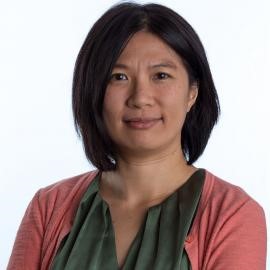
Gail Lewis is Visiting Professor of Women's, Gender, and Sexuality Studies at Yale University and Reader Emerita at Birkbeck College. Her scholarship examines black feminism, intersectionality, psychoanalysis, welfare state, and racialised-gendered experience through feminist and anti-racist frameworks. As a founder of Britain's Organisation of Women of African and Asian Descent and Brixton Black Women's Group, her academic work is informed by decades of activism. She explores themes of identity formation, power dynamics, and social justice through interdisciplinary approaches.
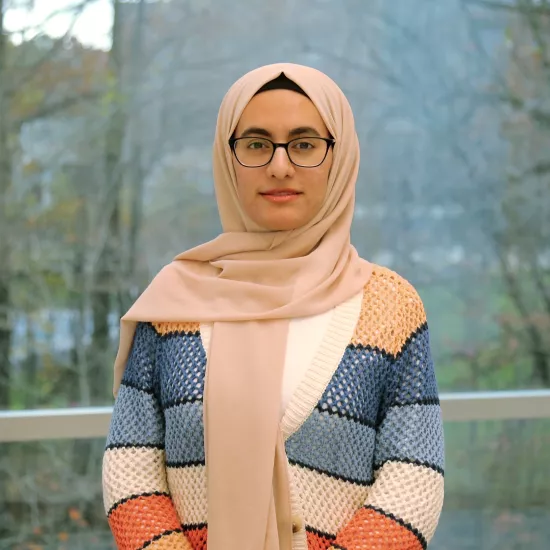
Samar Sabie is an Assistant Professor at the Institute of Communication, Culture, Information and Technology (ICCIT) at the University of Toronto, where she also serves as Program Director for the Technology, Coding, and Society (TCS) program. She holds a graduate appointment at the Daniels Faculty of Architecture, Design, and Landscape, reflecting her interdisciplinary work bridging technology, design, and social justice. She leads the Open Design Collaboratory, a research space focused on critical and community-centered design practices. Education: Doctor of Philosophy, Department of Information Science, Cornell University/Cornell Tech, 2022 Master of Science, Department of Computer Science, University of Toronto, 2017 Master of Architecture, John H. Daniels Faculty of Architecture, Landscape, and Design, University of Toronto, 2015 Honors Bachelor of Science (Architecture and Computer Science), University of Toronto, 2011 Her research investigates design as a socio-material practice that fosters community adaptive capacity toward sustainable change. Drawing from architecture, software engineering, ethnography, and philosophy, she explores participatory design , unmaking , and design for social justice . Her work critically engages with how communities resist, adapt, and reimagine technology in contexts of displacement, scarcity, and inequality. Her recent publications, appearing in top venues like CHI , CSCW , and DIS , reveal a strong thematic focus on unmaking as a design strategy for emancipation and agonism, mobility justice , e-waste practices , and cultural memory through design. These works collectively emphasize community agency, ethical ambiguity, and the political dimensions of design. Scientific Contributions: Director, Open Design Collaboratory Program Director, Technology, Coding, and Society (TCS) Graduate Faculty, Daniels Faculty of Architecture, Design, and Landscape Current Courses: CCT204 Design Thinking I, CCT477 Understanding Users Samar Sabie actively mentors students and collaborates on research focused on humanitarian technology, critical making, and design education. Her projects often involve community engagement, participatory methods, and interdisciplinary teams. She has collaborated with and advised early-career researchers such as Dina Sabie, Awais Hameed Khan, and Taneea Agrawal on topics ranging from IDP shelter dynamics to mobility justice advocacy. Her research is supported by her deep engagement with socio-technical challenges in marginalized contexts, and she continues to push the boundaries of how design can serve as a tool for equity, care, and resistance. Future work appears to be evolving toward deeper philosophical inquiries into destruction, care, and the limits of technology.
Ivan Franceschini is a Research Fellow at the Department of Asian and North African Studies, Ca' Foscari University of Venice, and a Postdoctoral Fellow at The Australian National University's Coral Bell School of Asia Pacific Affairs. His work focuses on Chinese labor movements, civil society, and political transformations. University: Ca' Foscari University of Venice Department: Department of Asian and North African Studies Email: ivan.franceschini@unive.it Franceschini's research spans labor activism, NGO strategies, and historical narratives in China. His publications in journals like The China Quarterly and Pacific Affairs analyze state-labor relations, digital activism, and garment industry exploitation. He co-edits the Made in China Journal , exploring labor and civil society dynamics. Key article trends include comparative labor studies across China and Cambodia, legal mobilization by workers, and historical reinterpretations such as the Taiping Rebellion. His 2019 work on collective bargaining and 2018 comparative analysis of garment workers highlight systemic labor challenges.
Ted Gerber is a Professor of Sociology at the University of Wisconsin-Madison, with active affiliations at the Center for Demography and Ecology, Center for Russian East Europe and Central Asia, Holtz Center for Science and Technology Studies, and University of Wisconsin Survey Center. Education: Ph.D. in Sociology, University of California, Berkeley, 1995 His research integrates Demography and Ecology, Education, Statistical Methods, and Social Stratification to analyze post-Soviet societies—particularly Russia—through quantitative lenses. Key investigations include housing regimes, migration patterns, social mobility, and collective memory of historical trauma like Stalinist repressions, examining how geopolitical contexts shape socioeconomic outcomes and public attitudes. Gerber's 2016-2021 publications reveal consistent focus on stratification dynamics in transitional economies, utilizing survey data from Russia, Ukraine, and Kyrgyzstan. Recurring themes include the interplay between migration and gender, propaganda effects on public opinion, and methodological innovations in measuring housing status and social mobility within hybrid political systems. Scientific Awards: No major scientific awards listed in provided information Teaching Soc 360 (Statistics), Soc 496 (Population in Russia), and advanced seminars on stratification/migration, Gerber's mentorship appears through co-authored publications with colleagues like Jane Zavisca and Qian He, though specific student advisees and grant details remain unmentioned in the text. His collaborative work across four UW-Madison research centers enables interdisciplinary exploration of demography, post-Soviet transitions, and science-policy interfaces, particularly regarding how historical legacies influence contemporary social structures in Eurasia.
Gerald Postema is the Cary C. Boshamer Distinguished Professor of Philosophy and Professor of Law at the University of North Carolina at Chapel Hill. He has held these positions since 2002 and 1982 respectively, with a distinguished academic career spanning several decades. BA from Calvin College (1970-74) MA and PhD from Cornell University (1973-74) Recognised Student and Tutor in Jurisprudence at Queen's College, Oxford (1975-80) Assistant Professor in Law at Johns Hopkins University (1980) Professor Postema's research focuses on legal philosophy, jurisprudence, and the philosophy of law, with particular expertise in utilitarianism and Bentham studies. His work explores the intersection of law, morality, and political philosophy, examining how legal systems evolve through custom and normative practices. He has made significant contributions to understanding the temporal dimensions of law, the role of sympathy in moral psychology, and the foundations of legal positivism. His scholarly output shows consistent engagement with both historical and contemporary legal theory, with recent work addressing custom as normative practice, legal positivism's early foundations, and the relationship between conflict and consensus in the rule of law. His publications span prestigious journals in philosophy, law, and interdisciplinary studies. George J. Johnson Prize for Distinguished Achievement in the Art and Humanities (2012) John Simon Guggenheim Foundation Fellowship (2005-06) Distinguished Teaching Award for Post-Baccalaureate Instruction (2005) Arthur L. Goodhart Distinguished Visiting Professor of Legal Science at Cambridge University (2013-14) Fellow, Rockefeller Foundation, Bellagio Center (2001) Professor Postema has held numerous visiting positions at prestigious institutions worldwide, including Cambridge University, Yale University, the University of Athens, and the European University Institute. His international recognition is evident through invitations to deliver distinguished lectures such as the Boutwood Lecture at Cambridge University (2014) and the Alf Ross Lectures in Copenhagen and Aarhus (1990). His scholarly influence extends through his editorial work on major publications including the Treatise of Legal Philosophy and General Jurisprudence.
Christopher Ernest Ouma is an Associate Professor of English at Duke University's Trinity College of Arts & Sciences. He specializes in African literature, postcolonial studies, and diaspora studies with a focus on literary analysis of Cold War dynamics and Pan-Africanism. Ouma holds a Ph.D. (2011) and M.A. (2007) from the University of Witwatersrand, South Africa. Research Interests : His work examines intersections of diasporic identity, transnational literary networks, and historical memory in African fiction. Key themes include postcolonial spatiality, anti-apartheid intellectual movements, and the role of small literary magazines in shaping cultural discourse. Publications Trends : Recent work explores contemporary Nigerian author Yewande Omotoso's diasporic narratives and reinterprets Chimamanda Ngozi Adichie's portrayals of Biafran history. Earlier scholarship analyzed Cold War-era African literary networks and the evolution of African novel form. Professional Network : Maintains academic ties with North Carolina State University and University of Cape Town through institutional collaborations. Teaches courses on literature, African studies, and critical reading methodologies. Grants & Labs : No specific grants or research labs mentioned in provided materials. Active in editorial roles for journals like Social Dynamics and Black Scholar .
Hsiao-Wen Liao is an **Assistant Professor of Psychology** in the **Adult Development and Aging program** at the **Georgia Institute of Technology**. She holds a Ph.D. in Developmental Psychology from the University of Florida (2017) and completed postdoctoral training at Stanford University’s Center on Longevity. Her research focuses on **autobiographical memory**, **episodic future thinking**, and **meaningful aging**, leveraging **VR and NLP methods** to explore how life experiences shape adult development. She investigates how memory processes interact with sociocultural contexts to foster resilience and continuity across the lifespan. **Research Interests**: Autobiographical memory functions, cognitive aging, intergenerational connectivity, and the role of technology (VR/NLP) in memory reconstruction. Current projects examine VR applications for recollection enhancement and NLP analysis of life narratives. **Awards & Grants**: ISSI Mini Research Grant (2024), College of Sciences Travel Grant (2025), APS Travel Assistance (2025), and ImmerseGT Hackathon Best Use of Omniverse Track (2023). **Lab Members**: Supervises graduate students (DaEun Kim, Sarah Kim, Liam Hart) and collaborates with interdisciplinary teams in HCI and machine learning. Undergraduate assistants focus on neuroscience and psychology interfaces. **Lab Activities**: Janus Lab emphasizes mixed-methods approaches, combining qualitative content analysis with experimental designs. Recent projects address aging well, resilience, and technology-mediated memory interventions.
Professor Caoimhe McAvinchey holds the position of Professor of Socially Engaged and Contemporary Performance at Queen Mary University of London (QMUL), within the School of English and Drama. She specializes in applied theatre and socially engaged performance, with a focus on prison systems, criminal justice, and intergenerational arts practices. Her academic journey includes a BA (Double Hons) in English and Drama from Manchester University, an MA in Performance Studies from New York University, and a PhD from QMUL. Her research explores the intersection of performance with marginalized communities, particularly women in prison and criminal justice contexts. Key projects include leading the AHRC-funded Women/Theatre/Justice (2019–2023), examining Clean Break theatre’s impact, and co-authoring Phakama: Making Participatory Theatre (2018). She has supervised numerous PhD students and served as an external examiner for UK drama programs. Teaching includes undergraduate modules like Performance and Community and postgraduate courses on cultural industries. Her public engagement spans exhibitions, seminars, and collaborative projects like Globe , exploring migration and belonging. She actively contributes to academic journals, conferences, and arts policy discussions, advocating for socially engaged performance’s role in societal change. Education: BA Double Hons in English and Drama (Manchester University) MA in Performance Studies (NYU Tisch School) PhD (QMUL) Research Themes: Applied theatre, prison performance, criminal justice advocacy, intergenerational arts, cultural policy evaluation. Grants: £303k AHRC grant (2019–2023) for Women/Theatre/Justice . Labs/Teams: Principal Investigator for Women/Theatre/Justice ; collaborator with Clean Break, People’s Palace Projects, and Magic Me.
Jörg Spenkuch is an Associate Professor of Managerial Economics & Decision Sciences at Kellogg School of Management, Northwestern University, where he has been since 2013. He holds a Ph.D. in Economics (2013) and M.A. (2009) from the University of Chicago, and dual B.A. degrees in Economics and Business Administration (2007) from the University of St. Gallen, Switzerland. Education: Ph.D., 2013, Economics, University of Chicago M.A., 2009, Economics, University of Chicago B.A., 2007, Economics, University of St. Gallen B.A., 2007, Business Administration, University of St. Gallen Professor Spenkuch's research bridges political economy and applied microeconomics , with a focus on ideological behavior, strategic decision-making, and social dynamics. His work examines topics like: Political Economy: Campaign finance, electoral accountability, and ideological sorting. Behavioral Economics: Satisficing behavior, memory-driven choices, and strategic voting. Public Policy: School desegregation effects, bureaucratic performance, and immigration-crime linkages. His recent publications analyze: Long-term ideological shifts from 1975 school desegregation (2025 working paper). Memory premiums in decision-making (2025 working paper). Complexity's role in chess strategy (2024 Review of Economic Studies ). Political accountability during natural disasters (2025 American Economic Journal ). Scientific Recognition: MinE Best Paper Award (European Economic Association) Chair's Core Teaching Award Deutschlands "Top 40 unter 40" (Capital magazine) FEEM Award (European Economic Association) Best Paper Award, RGS Doctoral Conference At Kellogg, he teaches Leadership and Crisis Management (PACT-440-5) and Business Analytics (DECS-435-0). His work has been published in top journals like Econometrica , American Economic Review , Quarterly Journal of Economics , and Review of Economic Studies , covering topics from partisan spatial sorting to expressive vs. strategic voting behavior.
Jayne Wallace is a Professor of Craft, Digital Creativity, and Wellbeing at Northumbria University's School of Design. She leads the CoCreate research community, focusing on design, technology, and participation in human contexts. Her work includes EPSRC-funded projects like Enabling Ongoingness and the EU Marie Curie OpenDoTT initiative. Wallace co-founded the Journal of Jewellery Research and the Research Through Design conference series, emphasizing craft ethos and IoT ethics. Her research spans digital creativity, wellbeing, and participatory design, addressing dementia care, citizenship, and technology's societal impact. Education: PhD in Design Studies (2007). Notable collaborations include work with Beamish Museum on pottery and wellbeing, and projects like Centring and Connected Craft. She actively organizes workshops on ethical internet practices and co-creation methods. Research interests emphasize craft's role in digital innovation, mental health, and intergenerational dialogue. Awards include Best Paper Awards (2020) and an Honourable Mention (2018). Grants include EPSRC, AHRC, and EU funding. Her lab, CoCreate, involves over 50 researchers exploring design's societal applications.
Dario MICCOLI is an Associate Professor at Ca' Foscari University of Venice, serving as Director's Delegate for Job Placement. He is affiliated with the Department of Asian and North African Studies, focusing on Jewish history, Mediterranean studies, and diaspora narratives. His research emphasizes cultural memory, colonial legacies, and transnational Jewish communities. His research interests include the history of Jewish communities in Egypt, Morocco, Rhodes, and Israel, with a particular focus on migration, literary representation, and digital preservation of cultural heritage. Key works explore Sephardic and Mizrahi identities, postcolonial Mediterranean dynamics, and the intersection of literature and nationalism. Recent publications highlight studies on Egyptian Jewish bourgeoisies, Rhodesian colonial experiences, and Mizrahi radicalism. His work frequently bridges historical analysis with contemporary cultural discourse, examining how marginalized communities narrate their histories. Miccoli has curated several volumes on ethnic museums and edited collections on Jewish cultural expression. His teaching and administrative roles reflect a commitment to interdisciplinary approaches to Middle Eastern and Mediterranean studies.
Jonathan Lee, Ph.D., is a Professor in the Asian American Studies Department at San Francisco State University. A Chinese-Vietnamese-and-Cambodian American scholar, he specializes in Asian American religious studies, folklore, and history. His family survived the Cambodian genocide and arrived in the U.S. in 1981. He earned his doctorate in Religious Studies from the University of California, Santa Barbara (2009), an M.A. from the Graduate Theological Union (2002), and three B.A./B.S. degrees from UC Riverside (1999). Ph.D. Religious Studies, UC Santa Barbara (2009) M.A. Religious Studies, Graduate Theological Union (2002) B.A. Religious Studies, UC Riverside (1999) B.A. Ethnic Studies, UC Riverside (1999) B.S. Sociology, UC Riverside (1999) His research interests include Asian American religious studies and history, Chinese/Sino-Southeast Asian American Studies, and Cambodian/Vietnamese American studies. He has published extensively on these topics, including 16 books and over 500 articles. His work explores Hakka identity, Mazu worship, and Southeast Asian diasporic communities. Lee serves as editor-in-chief of Chinese America: History & Perspectives and has collaborated on projects like Encyclopedia of Asian American Folklore and Folklife . He advocates for anti-racist pedagogy and consults for Silicon Valley corporations on equity and inclusion. Recent research trends show emphasis on transnational religious practices (2015-2021), Southeast Asian American diaspora studies (2010-2014), and Asian American identity formation through folklore (2012-2016).
Dr. Sara Kijewski is a Lecturer at ETH Zurich's Department of Humanities, Social and Political Sciences (D-GESS), specializing in the Ethics and Governance of Artificial Intelligence, Digital Health, and Health Policy. She joined ETH in 2022 after earning her PhD in Political Science from the University of Bern, with additional studies at the University of North Carolina, University of Oslo, and University of Zurich. Her research focuses on AI ethics frameworks, digital health governance, and the societal impacts of war through projects like the Health Ethics & Policy Lab's Health Data and AI course coordination and postdoctoral work on NRP 77 (Digital Health Innovation Governance). As Director of Operations for the ETH AI Ethics and Policy Network, she bridges academic and policy dimensions of emerging technologies. Key research interests include global AI governance, healthcare innovation ethics, and the long-term social consequences of conflict, reflected in publications analyzing post-war societies, public opinion on biotechnology, and international health policy challenges. Her academic background includes multilingual proficiency (Norwegian/Finnish native, German/English fluent), supporting cross-cultural research collaboration. Professional activities include undergraduate course coordination, internship supervision, and contributions to interdisciplinary initiatives like Precise4Q: Predictive Modelling in Stroke. Current academic roles combine teaching (e.g., Ethics Workshop: The Impact of Digital Life on Society in Autumn 2025) with research leadership in AI ethics and health policy domains.
Yoshiko Matsumoto is the Yamato Ichihashi Professor in Japanese History and Civilization and Professor of East Asian Languages and Cultures at Stanford University, with a courtesy appointment in Linguistics. She has been a faculty member at Stanford since 1992, progressing from Assistant Professor to her current distinguished position. Matsumoto also serves as coordinator of the Japanese Language Program and has held significant administrative roles including Chair of the Department of Asian Languages (2003-2005) and Interim Chair of the Department of East Asian Languages and Cultures (2016). Matsumoto earned her Ph.D. in Linguistics from the University of California, Berkeley (1989), following M.A. degrees in Linguistics from UC Berkeley and General and Applied Linguistics from the University of Tsukuba, an M.I.A. in American Studies from the University of Tsukuba, and a B.A. in English Language & Literature from Japan Women's University. Professor Matsumoto's research focuses on linguistic pragmatics from cross-linguistic perspectives, with particular expertise in Japanese language. Her work spans structural and sociocultural aspects of language in use, including noun-modifying clause constructions, honorifics, discourse markers, and the intersection of language with gender and aging. She has pioneered research on conversational narratives of older adults, examining how ordinary framing strategies help individuals navigate difficult experiences. Her current projects explore intergenerational communication through haiku, communicative abilities of people with dementia, and noun-modifying constructions across Eurasian languages. Matsumoto's scholarship consistently bridges theoretical linguistics with practical applications for understanding human communication in diverse social contexts. Matsumoto's recent publications reveal a growing focus on practical applications of linguistic research for social benefit, particularly in intergenerational communication and dementia care. Her work increasingly integrates arts-based approaches, especially haiku poetry, to bridge generational divides and enhance communication with elderly populations. The research shows a consistent trajectory from theoretical linguistic frameworks toward applied, human-centered language studies that address real-world challenges in aging societies, with particular attention to how ordinary language practices help individuals navigate life transitions and difficult experiences. Dean's Award for Distinguished Teaching, School of Humanities and Sciences, Stanford University (2000) Richard E. Guggenhime Faculty Scholar, Stanford University (2000-2003) Violet Andrews Whittier Fellow, Stanford Humanities Center (2019-2020) Faculty Research Fellow, Michelle R. Clayman Institute for Gender Research (2014-2015) Research Fellow, Japan Foundation (2002) Internal Fellow, Stanford Humanities Center (2005-2006) Presidential Fund for Innovation in the Humanities, Stanford University (2009-2011) Professor Matsumoto has mentored numerous students through her teaching in Japanese language and linguistics courses, including specialized offerings on language and aging, points in Japanese grammar, and haiku-based communication. Her research has been supported by prestigious grants from the National Endowment for the Humanities, the Japan Foundation, and Stanford's Presidential Fund for Innovation in the Humanities. She has served on multiple editorial boards including the Journal of Pragmatics since 1992, demonstrating long-standing leadership in her field. Matsumoto has also advised students through individual studies and thesis projects in East Asian Languages and Cultures. Matsumoto leads several collaborative research initiatives including the 'Sharing Conversations' project which examines intergenerational communication through haiku, and research on communicative abilities of people with dementia. Her work often involves interdisciplinary teams spanning linguistics, gerontology, and creative arts, with fieldwork conducted in both Japan and the United States. The 'Noun-Modifying Constructions in Languages of Eurasia' project represents a major international collaboration examining linguistic structures across cultural boundaries. She also directs the 'Language, Old Age and Gender in Japan' project supported by the Stanford University/Japan Foundation, and the 'Difficult Conversations Continue: Memories of the 3.11 Disaster and Bereavement Narratives' project focused on post-disaster communication.
Marie Claire Villeval is a Research Professor (Directeur de Recherche de Classe Exceptionnelle) at the CNRS and the University of Lyon, affiliated with the GATE research institute. She holds leadership roles including Head of the GATE-Lab experimental platform (2015–present) and President of the Economic Science Association (2021–2023). Her academic career spans over three decades, with positions at CNRS since 1982. Villeval specializes in experimental and behavioral economics, focusing on topics like dishonesty, social preferences, and labor market dynamics. Education: HDR (Habilitation) in Economics (1996), PhD (1983), and M.S. from University Paris X – Nanterre. Awards: Chevalier de la Légion d'Honneur (2017), Silver Medal of CNRS (2017), and membership in Academia Europaea (2015). Editorial Roles: Department Editor at Management Science, Co-Editor of Experimental Economics (2017–2021), and multiple journal roles. Research Interests: Experimental economics explores human behavior in controlled settings, with emphasis on dishonesty, social norms, and public policy implications. Recent work examines collective-risk dilemmas and AI ethics. Her 15 most recent articles (2020–2023) reflect interdisciplinary approaches, blending economics with psychology and neuroscience to address societal challenges like fraud deterrence and pandemic behavior adjustments. Key themes include cognitive effects of feedback, unethical memory suppression, and testosterone’s role in prosocial choices. Grants and advising are integral to her work, though specific details aren’t listed. She leads international collaborations, including visiting professorships at Shandong University (China), New York University (Abu Dhabi), and Queensland University of Technology (Australia). Her labs and teams focus on experimental methodologies to inform public policy and organizational design.