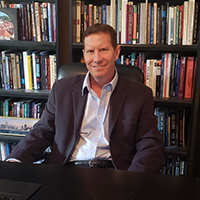
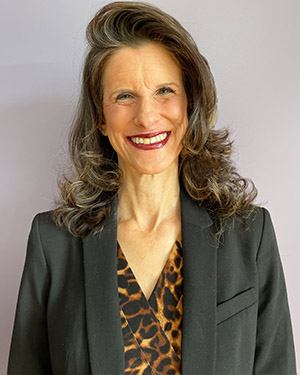
Danielle D. Gagne is a Professor of Psychology at Alfred University's College of Liberal Arts & Sciences, Department of Psychology & Communication. She holds a PhD in Psychology from the University of New Hampshire (2004), along with MA (2001), BA (1997), and AS (1997) degrees from Keene State College. Her work bridges cognitive psychology with aging studies, educational pedagogy, and interdisciplinary approaches using science fiction. She has received awards including the Ruth Berger Rubenstein Memorial Award for Excellence in Teaching (2006, 2008, 2013) and the Joseph Kruson Trust Fund Award (2011). Research focuses on adult cognition, aging processes, and innovative teaching methods. Notable projects include profiling successful first-year engineering students and exploring ageism in curricula. She has published extensively on memory processes in aging populations and pioneered service-learning projects in gerontology. Courses taught span cognitive processes, aging, death studies, and science fiction-themed psychology modules. Active in professional associations like APA Divisions 2 & 20, GSA, and AARP. Public outreach includes keynote addresses on memory optimization and intergenerational community programs.
Ian Khara Ellasante is an Assistant Professor in the Department of Gender and Sexuality Studies at Bates College, with cross-disciplinary affiliations in Africana Studies. Their research focuses on Indigenous and Black cultural identities within systems of settler colonialism, anti-Blackness, and patriarchy. Ellasante's work examines the reclamation of Two-Spirit traditions, Black/Indigenous feminisms, and queer resistance through both academic scholarship and poetry. Their research interests span: Indigenous sovereignty and decolonization Transgender and Two-Spirit identity reclamation Black and Indigenous feminist praxis LGBTQ2+ youth advocacy Community-engaged participatory research Reproductive justice frameworks Ellasante's publications demonstrate consistent engagement with themes of resistance, identity, and decolonization across academic articles and poetry. Their scholarly work primarily appears in journals of ethnic studies, gender studies, and social services, while their poetry explores cultural memory and identity transformation through mythological and ecological frameworks. Recent work increasingly centers on land-based relationships and trans/nonbinary narratives. As a community-engaged scholar, Ellasante has conducted participatory research addressing housing insecurity and educational access for LGBTQ+ and Two-Spirit youth for over a decade. They frequently present at academic conferences including the American Indian Studies Association and Association for Jotería Arts, Activism and Scholarship.
Dr Cris Edmonds-Wathen is a Senior Lecturer in Education at Charles Darwin University's Faculty of Arts and Society. She specializes in Mathematics Education with a focus on Indigenous languages and cultural contexts. Her research explores how non-Indo-European languages, particularly Australian Indigenous languages, express mathematical concepts and how these can be integrated into education systems. Education: PhD in Mathematics Education, RMIT University (2013) Graduate Diploma in Primary Education, Charles Darwin University (2005) Bachelor of Arts (First Class Honours), University of Western Sydney (1998) Bachelor of Arts (Linguistics & Mathematics), University of Melbourne (1995) Research Interests: Dr Edmonds-Wathen investigates mathematical expression in Indigenous languages, policies for language-in-education, and culturally responsive mathematics curricula. She has conducted fieldwork in Australia and Papua New Guinea, focusing on spatial cognition, bilingual education, and Indigenous knowledge systems. Her work contributes to the UN Sustainable Development Goal on Quality Education (SDG4). Awards: 2023 Award for Excellence and Impact in Education from the Australian Council of Deans of Education Grants & Programs: Principal Investigator for the MiIL Project (2021–2023), identifying mathematical expression in Indigenous languages Coordinates the Growing Our Own program, training Indigenous teachers in NT Recipient of ARC Centre of Excellence funding for language dynamics research Labs & Networks: Active in international networks including the Umeå Mathematics Education Research Centre (Sweden) and the Research Unit for Indigenous Language (Melbourne). Collaborates with Catholic Education NT and PNG elementary schools.
Avneet Hira is an Assistant Professor and Sabet Family Dean’s Faculty Fellow at Boston College’s Department of Engineering Education. Her research focuses on engineering epistemology, educational technologies, and humanistic design, particularly through Making and tinkering practices. She holds a Ph.D. in Engineering Education and MS in Aerospace Engineering from Purdue University, and a B.E. in Aeronautical Engineering from Punjab Engineering College. Her work emphasizes inclusive technology-rich spaces, partnering with youth, educators, and communities to foster purpose-driven engineering education. Recent projects include NSF-funded initiatives on youth-led engineering in climate resilience and sustainable urban gardens. She leads the Educational Makerspaces Lab and has co-authored over 30 peer-reviewed publications. Funded Projects: NSF CAREER Grant ($594k) for youth-centered engineering spaces (2023) NSF ITEST Grant ($1.3M) for community sustainable urban gardens (2023) Schiller Institute Grant for climate resilience in Kenya (2023) Boston College Grant on purpose-driven engineering (2022) Her research bridges engineering with social-emotional learning, intergenerational collaboration, and culturally relevant pedagogy. Current work explores design-driven engineering programs and assistive technology partnerships with special needs schools.
Dr. Pisitta Vongswasdi is a Professor and Chair of Leadership & Society at WHU Otto Beisheim School of Management in Düsseldorf, Germany. She holds a BA in Economics from Chulalongkorn University (Thailand), an MSc in Sociology from the University of Oxford (UK), and a PhD in Management from Rotterdam School of Management (Netherlands). Her research focuses on leadership development, diversity management, and mindfulness in organizational contexts. She has conducted research at institutions including INSEAD and the University of Virginia Darden School of Business. Education: Bachelor of Arts in Economics, Chulalongkorn University Master of Science in Sociology, University of Oxford PhD in Management, Rotterdam School of Management Her research explores how challenging experiences shape leadership skills, strategies to leverage diversity for team performance, and mindfulness’s impact on learning and well-being. She employs mixed-methods approaches, including experiments, surveys, and qualitative interviews. Notable work includes studies on female minority founders in startups, legacy-building in family businesses, and mindfulness interventions in leadership development. Her publications appear in top journals like Journal of Applied Psychology and Academy of Management Learning & Education . She collaborates with global institutions and has contributed to evidence-based leadership development frameworks. Her work emphasizes practical applications for fostering inclusive workplaces and improving organizational outcomes.
Professor Diedra Harris-Kelley serves as an Adjunct Professor in Africana Studies, specifically affiliated with the Harlem Semester program. Her work intersects cultural studies, feminist theory, and art history, with a focus on embodiment, intergenerational narratives, and visual culture. A notable publication, "My Life in Movement: Inheriting the Dancing Body," explores familial and cultural legacies through dance and visual art, featuring original artwork and images of her aunts Nanette Bearden and Sheila Rohan. This article was featured in HyperAllergic art magazine and published in the Scholar and Feminist Online journal's special issue, "To Make Visible Everywhere: Our Bold, Beautiful, Aging Bodies." Her research emphasizes the intersection of art, activism, and identity, though no formal awards, grants, or lab affiliations are explicitly detailed in the provided texts. No advising relationships or educational background are mentioned in the current data.
Dr. Joseph Pizza is an Associate Professor of English at Belmont Abbey College, where he directs the first-year writing program and oversees the creative writing magazine Agora . He holds a B.A. from Rider University, an M.A. from Ohio University, and an MSt and DPhil from the University of Oxford. His research focuses on modern and contemporary literature with particular emphasis on African American studies, writing pedagogy, and the intersection of jazz with poetic innovation. Known for advocating progressive campus initiatives, Pizza’s scholarship bridges historical analysis and contemporary cultural practice. His educational journey includes training at three prestigious institutions: Rider University (B.A.), Ohio University (M.A.), and Oxford University (MSt and DPhil). Research interests span transatlantic modernism, African American literary traditions, and the role of improvisation in both literary and pedagogical contexts. Pizza’s work often explores how jazz’s fluidity influences poetic form and cultural expression, as seen in studies of figures like Charles Olson and Diane di Prima. Recent publications include Dissonant Voices: Race, Jazz, and Innovative Poetics in Midcentury America (forthcoming 2023) and articles on T.S. Eliot’s engagement with minstrelsy and Jane Cortez’s Black Arts Movement poetry. His presentations have addressed topics like serial improvisation in writing classrooms and the legacy of Black Mountain College’s experimental ethos. Pizza actively collaborates with North Carolina’s artistic communities and teaches courses such as Transatlantic Modernism and Contemporary Poetry . His advocacy extends beyond academia to fostering an inclusive campus environment through curricular and community initiatives.
Kyle Bellucci Johanson is a contemporary artist and educator working at the intersection of performance architecture, critical theory, and social practice. He currently serves as faculty in the Critical Studies department of the MFA program at the New York Academy of Art, where he contributes to shaping emerging artists through critical pedagogy and conceptual frameworks. His educational background includes a BA in Art and Reconciliation Studies from Bethel University, studies in peace and conflict at the University of Ulster in Derry/Londonderry, Northern Ireland, and an MFA from California Institute of the Arts. He was also a founding fellow of At Land's Edge, an artist-led autonomous free school focused on intergenerational mentorship in community-run spaces across Los Angeles, and a 2022-23 participant in the Whitney Independent Study Program. Johanson's research interests center on visualizing and critiquing power structures through performance-architecture. His work explores how objects, language, and media can instigate imaginary futures while examining the intersections of labor, identity, and emancipation. Recent projects investigate radical hospitality, worker solidarity, and speculative community building, often through immersive installations that challenge conventional spatial and social arrangements. His practice blends conceptual rigor with participatory elements, creating spaces for critical discourse and collective imagination. His most recent exhibition series, KLUB WRKR (2024), represents a significant evolution in his exploration of worker solidarity, transforming Alexander Rodchenko's early 20th-century Workers' Club concept into a nomadic, cross-country art project that engages with contemporary labor conditions. This work exemplifies his broader thematic concerns with community assembly, spatial politics, and alternative economic models. Whitney Independent Study Program Participant (2022-23) Humanity in Action Landecker Fellow Johanson has curated and directed significant projects including table (2018-2022), a project space dedicated to situating artists' practices through exhibition, discursive meals, and publication. His collaborative approach extends to numerous group exhibitions and symposia, including the Quantum Unlearning Symposium with Charles Gaines and Kathryn Shaffer at the School of the Art Institute of Chicago (2018). His work often involves creating temporary communities and gathering spaces that challenge conventional institutional boundaries while fostering critical dialogue around social and political issues.
Kelly Sassi is a Professor at the Department of English , Northern Michigan University, with a Ph.D. in English and Education from the University of Michigan. She previously taught at North Dakota State University for 14 years, where she attained the rank of full professor and directed the Red River Valley Writing Project. Her work intertwines research, teaching, and service, focusing on social justice through collaborations with Indigenous communities, such as her writing assessment research at Sitting Bull College. M.A. in English Literature B.A. in English Literature Research Interests: Sassi specializes in Secondary English Education , Native American Literatures , and Writing Studies , emphasizing culturally responsive pedagogy and equity. Her publications span topics from Indigenous YA literature to virtual writing marathons and on-demand writing assessment frameworks. Grants: She has secured funding for projects addressing English education, writing assessment, and Native American pedagogies. Notable collaborations include culturally responsive professional development workshops at Standing Rock. Collaborations: Sassi engages in intergenerational, community-driven projects and has integrated Indigenous perspectives into writing instruction, leveraging friendships and mentorship as methodological tools.
Janine Bixler is a Professor of Education and Chair of the Division of Education at Mount Saint Mary College's School of Arts, Sciences, and Education. She teaches courses including ED 2120 Literacy Teaching and Learning for Diverse Childhood Learners, ED 2510 Language Arts Methods for Childhood Education, and ED 5690 Emergent Literacy. Doctor of Philosophy, Georgia State University Master of Science, SUNY Oswego Bachelor of Science, SUNY Oswego Her research focuses on: In-school/out-of-school literacy practices Intergenerational book talks Preservice teacher preparation Recent publications highlight her work with multimodal literacies and community literacy experiences for educators. She serves as faculty advisor for CIRCLE (Conversations to Inspire Reading Children’s Literature with Engagement).
Katherine McClelland is a Professor of Sociology at Franklin & Marshall College, specializing in race relations, education sociology, and social stratification. Her research focuses on racial dynamics on college campuses and social reproduction across life stages. She has received significant recognition including the Lindback Award for Teaching and multiple research fellowships. Her work explores how racial climates are constructed on predominantly white institutions, with particular attention to intergroup contact effects and cumulative disadvantage mechanisms. Over three decades, she has published extensively on race relations, career aspiration dynamics, and sociological methodologies. Research Grants: Spencer Foundation (1999-2001), National Academy of Education (1991-1992) Teaching Excellence: Lindback Award (1991) Collaborations: Supervised 3+ independent studies annually and mentored Hackman Fellows (1987-2009) Notable contributions include longitudinal studies tracking Windsor College's racial climate evolution and analyzing how educational systems perpetuate social inequalities. Her presentations span ASA/AERA conferences since 1990, addressing topics from symbolic racism to multicultural program impacts.
Kristopher Kimbler is an Associate Professor in the Department of Psychology at Florida Gulf Coast University (FGCU), part of the College of Arts & Sciences. His research focuses on social contexts related to functional ability, social cognition, and intergenerational relationships across adulthood. He actively involves students in research projects, emphasizing collaborative learning opportunities. Education: Ph.D. and M.A. in Life-Span Developmental Psychology from West Virginia University, and B.A. in Psychology from Marshall University. Teaching interests include courses such as Psychology of Adulthood and Aging, Senior Seminar in Psychology, Careers in Psychology, and Principles of Development. His research explores topics like aging-related attribution biases, everyday problem-solving, and the efficacy of gerontology-focused service learning programs. Publications span studies on IADL performance, memory errors, intergenerational interactions, and the mental health needs of older homeless populations. Recent work addresses pandemic behaviors and age-based biases in social evaluations. Collaborations emphasize student involvement in research design and execution, fostering hands-on learning experiences. No specific grants or labs are mentioned, though ongoing projects reflect interdisciplinary approaches to aging studies.
Brion Sever, Ph.D., is a Professor in the Department of Justice Studies at Florida Gulf Coast University (FGCU), part of the College of Arts & Sciences. His expertise spans criminology and criminal justice policy, with a focus on deterrence theory, correctional policy, and quantitative analysis. Sever holds a Ph.D. from Florida State University (1999) and has taught courses including Advanced Quantitative Research and Social Constructs of Crime. Education: Ph.D. Criminology, Florida State University, June 1999. M.S. Criminology, Florida State University, August 1995. B.S. Criminology, Florida State University, August 1991. A.A., St. Petersburg College, Clearwater, FL, December 1989. Research Interests: His work addresses race, gender, and socio-economic status in criminal justice, comparative criminal justice systems, and the measurement of crime. He has published extensively on topics like police force dynamics, data collection challenges in criminal courts, and the representation of minorities in policing. Publications Trends: Sever’s research explores intersections between law enforcement practices and societal demographics, often employing quantitative methods. His work underscores the need for evidence-based policing and critical analysis of criminal justice curricula. Advising & Grants: No student advisees or grant details are listed in the provided materials. Sever teaches courses reflecting his expertise in research methods and criminal justice theory.
Dr. Helen Marlo is a Professor and Dean of the School of Psychology at Notre Dame de Namur University (NDNU), serving as Chair of the Clinical Psychology Department since 2013. She holds dual credentials as a Licensed Clinical Psychologist (PSY 15318) and a Certified Jungian Analyst from the C.G. Jung Institute of San Francisco. With over 30 years of academic experience, Dr. Marlo has taught at institutions including the University of South Carolina and Palo Alto University, emphasizing clinical psychology, psychoanalysis, and community-based learning. **Education & Training:** PhD in Clinical-Community Psychology, University of South Carolina (1995) BA in Psychology (Summa cum laude), University of Missouri (1989) Certified Jungian Analyst, C.G. Jung Institute (2011) **Research Focus:** Dr. Marlo’s work centers on reproductive mental health (e.g., perinatal trauma, birth loss), synchronicity in therapy, and depth psychology . She integrates Jungian principles with trauma treatment, emphasizing spiritual and unconscious dimensions of healing. Her recent studies explore postpartum PTSD, pandemic-era caregiver challenges, and trauma-informed education for children with special needs. **Awards & Recognition:** George M. Keller Teaching Excellence Award (2018) NDNU’s 15-Year Service Award (2016) 2023 Community Hero Award (San Mateo Chamber of Commerce) **Clinical & Community Work:** Dr. Marlo maintains a private practice in San Mateo, specializing in adult and child psychotherapy. She co-founded Mentoring Mothers , a free support program for new mothers, and serves on boards like AbilityPath and the National League of Young Men. Her interdisciplinary service includes editorial roles at Jung Journal: Culture and Psyche and advocacy for art-based mental health interventions. **Grants & Mentorship:** Recipient of NDNU’s Faculty Development Grant (2011) and mentor to students in transpersonal psychology and social justice initiatives. She has supervised clinical trainees across universities and institutes since 1999. **Labs & Collaborations:** Active in NDNU’s Sr. Dorothy Stang Center for Social Justice, focusing on community-based learning. Collaborations include Stanford University School of Medicine and the C.G. Jung Institute of San Francisco.
Maree Hays is a Lecturer in Secondary English at Edith Cowan University's School of Education, specializing in teacher education and literacy development. She coordinates core curriculum units across undergraduate and postgraduate programs including Bachelor of Education Secondary, Master of Teaching Secondary, and Postgraduate Education courses. Her teaching spans units like LAN6601, LAN6602, EDU4120, and EDU6120, focusing on literacy integration and pedagogical strategies. Education: Doctor of Philosophy, Edith Cowan University (2023) Master of Education (Literacy Education), Edith Cowan University (2016) Graduate Diploma in Education, University of Western Australia (1997) Bachelor of Arts, University of Western Australia (1995) Research Interests: Maree’s work explores literacy in secondary education, preservice teacher preparation, and mentoring practices in healthcare and education. She investigates curriculum design for literacy integration, barriers to effective mentoring in nursing, and student transition strategies in higher education. Her research bridges theory and practice, emphasizing culturally responsive pedagogy and evidence-based teaching methods. Key Contributions: Received 2017 Vice Chancellor’s Citation for student learning innovation Co-developed the 3C Model (Cohesion, Coherence, Connectedness) for enabling course design Principal investigator on the WA Nurses Memorial Charitable Trust Grant (2018–2019) exploring intergenerational mentoring in healthcare Professional Roles: Coordinator of multiple secondary English units Member of ETAWA (English Teachers' Association WA) and TRBWA (Teachers Registration Board) Golden Key International Honour Society affiliate