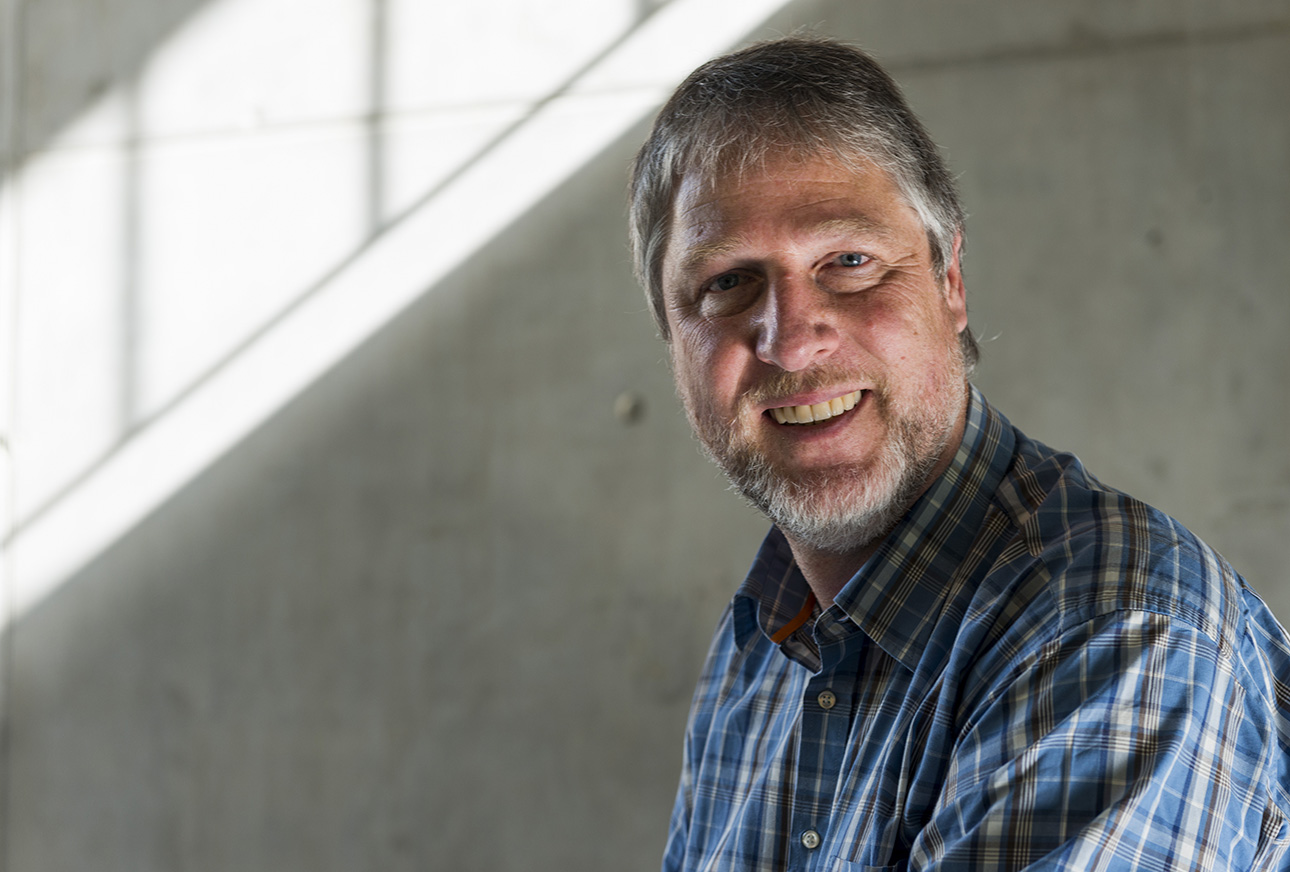
Professor Bernd Möbius is a leading academic in Phonetics and Phonology at the Department of Language Science and Technology, Saarland University. His research bridges phonetic theory with speech technology applications, focusing on text-to-speech systems, prosody modeling, and computational simulations of speech processes. Current research projects: DFG SFB 1102, C1: Information density and phonetic structure predictability DFG SFB 1102, C4: Slavic intercomprehension and surprisal theory (INCOMSLAV) Research Themes: Key areas include text-to-speech synthesis, speech prosody analysis, experimental methods in speech production/perception, information density in phonetics, and cross-linguistic studies of Slavic-Germanic languages. Scientific Contributions: Recent work explores Parkinson-induced dysarthria detection, breath noise acoustics, surprisal-driven speech behaviors, multilingual BERT models for idiomaticity, and perceptual consequences of acoustic adjustments.
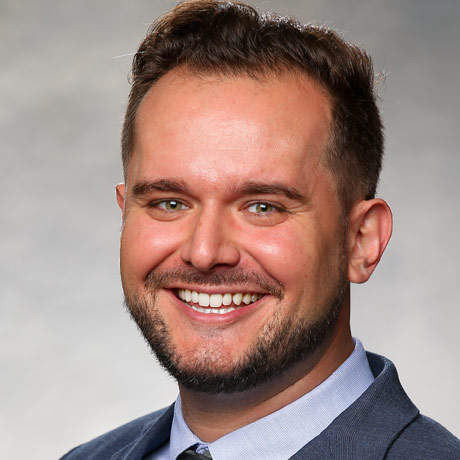
Dr. Jacek Kudera is a post-doctoral researcher in the Department of Phonetics at the University of Trier, coordinator of the LODinG project at the Trier Center for Digital Humanities, and adjunct faculty at WSB Merito University in Wrocław. His work bridges phonetics, Slavic linguistics, digital humanities, and forensic speech science. Education 2022 – PhD, Department of Language Science and Technology, Saarland University, Germany 2019 – MA (Linguistics), Department of Linguistics, Cognitive Science and Semiotics, Aarhus University, Denmark 2015 – Magister (Slavic Philology), Institute of Slavic Studies, University of Wrocław, Poland Research Interests His research focuses on phonetic and prosodic aspects of Slavic languages , cross-linguistic speech perception , forensic automatic speaker recognition , and human-robot interaction . He employs experimental methods such as eye-tracking, articulatory measurements (EMA), and large-scale digital corpora to investigate how speakers of closely related languages understand one another and how machines can replicate or support this process. Publication Trends Across more than 25 peer-reviewed articles (2014-2025), Kudera has consistently explored Slavic intercomprehension , speech technology evaluation , and digital humanities infrastructure . Recent work (2024-2025) targets voice cloning security , linked open data for linguistics , and mismatch conditions in forensic speaker recognition . Scientific Awards & Fellowships Visegrad Fellowship, University of Presov (2025) Erasmus+ Fellowships (Ostrava 2025, Zagreb 2014, Rijeka 2012-2013) NAWA Fellowship, Polish Academy of Sciences (2022) Nordlys Fellowship, University of Eastern Finland (2018-2019) CEEPUS & additional Central-European mobility grants (2014-2018) Projects & Funding Coordinator : “Mismatch conditions in machine speaker identification” (University of Trier Research Fund, 2024-2025) Coordinator : LODinG – Linked Open Data in the Humanities (Trier Center for Digital Humanities, ongoing) Coordinator : “Patterns: Linguistic Creativity and Variation” (Trier Center for Language and Communication, 2022-2024) Member : SFB 1102 “Information Density and Linguistic Encoding” (Saarland University, DFG, 2019-2022) Member : Digital Atlas of Dialects of Bosnia and Herzegovina (2017-2018) Member : CLARIN-PL & European Roadmap for Research Infrastructures (2014-2017) Labs & Teams He conducts research within the Phonetics Team at the University of Trier , collaborates closely with the Trier Center for Digital Humanities , and maintains affiliations with the Phonetics Group at Saarland University and the WSB Merito University in Wrocław.
Marcella Menegale is an Associate Professor in the Department of Comparative Linguistic and Cultural Studies at Ca' Foscari University of Venice. She is affiliated with the Research Institute for Digital and Cultural Heritage. Her teaching responsibilities include courses on instructional design for language education, theories of language education, and multilingualism, across various degree programs such as Master’s in Languages and Civilizations, and Language Sciences. Her research focuses on multilingual education frameworks (CLIL, intercomprehension), learner autonomy, digital tools in language learning, and well-being in educational contexts. She has contributed to EU-funded projects like DigLit (combating social inequalities via digital tools) and EVAL-IC (evaluating intercomprehension skills). She has also served as an expert evaluator for the European Commission’s Horizon 2020 and ANVUR’s research evaluations. Key research areas include CLIL methodology, learner autonomy development, and the integration of technology in language pedagogy. She collaborates with international teams on projects like Transition from Secondary School CLIL to University EMI (funded by the British Council). Her work bridges theory and practice, addressing challenges in second-language teaching and digital-age curricula.
Professor Tania Avgustinova is a Professor of Slavic and Computational Linguistics in the Department of Language Science and Technology at Saarland University. She serves as Principle Investigator for SFB 1102 - Project C4 (INCOMSLAV) and is Head of the Slavic Lab. Her academic career spans several decades with significant contributions to Slavic linguistics, computational approaches to language, and cross-linguistic studies. Her academic qualifications include: Habilitation venia legendi in General Linguistics (2003) PhD in Slavic and Computational Linguistics (1997) Diploma in Slavistics (1987) Professor Avgustinova's research focuses on the intersection of Slavic linguistics and computational methods. She specializes in microsyntax, intercomprehension among Slavic languages, language contact phenomena, and the processing of non-compositional expressions. Her work examines how speakers of one Slavic language can understand related languages without formal instruction, with particular attention to cognitive and linguistic factors. She has developed computational models to analyze linguistic distances and asymmetries between Slavic languages, contributing significantly to understanding receptive multilingualism. Her recent publications reveal a strong focus on experimental approaches to studying cross-linguistic comprehension using web-based platforms, eye-tracking, and speech processing techniques. There's a clear trend toward investigating microsyntactic units and non-compositional expressions across Slavic languages, with applications in language technology and education. Her work bridges theoretical linguistics with practical applications in natural language processing and language learning. Principle Investigator of SFB 1102 Project C4 (INCOMSLAV) Head of Slavic Lab at Saarland University Contributor to Russian National Corpus project Developer of INCOMSLAV platform for measuring linguistic distances As Principle Investigator of SFB 1102 Project C4 (INCOMSLAV), Professor Avgustinova leads research on mutual intelligibility and surprisal in Slavic intercomprehension. She has been instrumental in developing the INCOMSLAV platform for measuring linguistic distances and asymmetries in receptive multilingualism. Her leadership extends to international collaborations, including contributions to the Russian National Corpus project where she provides expertise on grammatical phenomena at the borderline between lexicon and syntax. Professor Avgustinova heads the Slavic Lab at Saarland University, which focuses on applied, experimental, and computational linguistics. The lab conducts research on Russian corpus grammar, word embedding models, sense frequencies, and microsyntax. Her work has established important connections between theoretical linguistics and practical language technology applications, particularly in the Slavic language context.
Filomena Capucho serves as an Assistant Professor in the Department of French within the Faculty of Arts and Humanities at the Catholic University of Portugal. She is also a Senior Researcher at CECC (Center for Communication and Culture Studies) at UCP, with extensive experience in linguistic research and academic leadership. Her academic journey includes coordinating PhD and MA programs in Linguistics and Language Teaching from 2000-2011. Her primary research interests focus on Discourse Analysis , Intercomprehension , and Intercultural Communication , with particular attention to multilingual interactions, healthcare communication for migrant populations, and plurilingual education frameworks. Her work bridges theoretical linguistics with practical applications in educational and healthcare settings. Analysis of her recent publications (2010-2018) reveals a strong emphasis on plurilingual communication strategies across diverse contexts, with significant contributions to understanding intercomprehension in multilingual environments and intercultural dynamics in healthcare settings. Her research demonstrates consistent exploration of how language functions in power relations and cross-cultural understanding. Capucho has coordinated multiple international research projects and supervised graduate programs, though specific grant details and student names aren't provided in the source material. Her academic service includes leadership roles in MA and PhD programs from 2000-2011. She teaches Communication in Organizations for the Master's Degree in Applied Management program and has developed curriculum for advanced training in Psychological Assessment, Volunteer Management, and Healthcare Unit Management.
Dr. Gabriella Perge is an Assistant Professor and Lecturer at the Institute of Germanic Studies and the Department of German Language Teaching and Vocational Didactics at Eötvös Loránd University (ELTE) in Budapest. Her academic focus lies in foreign language pedagogy, multilingualism, and German language education. She has contributed extensively to research on text analysis, reading comprehension, and multilingual teaching methodologies through publications and projects like the LEELU teacher education initiative. Academic Rank: Assistant Professor Affiliation: Institute of Germanic Studies, ELTE Department: German Language Teaching and Vocational Didactics Her research explores multilingualism in institutional language teaching, emphasizing intercomprehension , language mediation , and coherence in multilingual writing . She investigates how learners develop competence through text-based learning and experiential reading strategies. Recent work includes analyzing temporal language patterns and curriculum design for multilingual classrooms. Dr. Perge’s publications (2015–2025) center on reading pedagogy , language didactics , and teacher training . Themes include vocabulary development across languages, extensive reading programs, and the role of coherence in multilingual education. Her LEELU project highlights experiential learning and collaborative reflection in teacher education.
Ana Belén Cao Miguez is an Assistant Professor in the Department of Letters at the University of Beira Interior (UBI), Portugal. She is also a researcher at LabCom - Communication and Arts and serves as Director of the courses for Teaching Portuguese and Spanish in Basic and Secondary Education. Her academic roles include teaching courses such as Spanish Literature, Translation, and Pedagogical Internship. Her research focuses on language education, particularly Portuguese and Spanish intercomprehension, translation pedagogy, and the integration of digital tools in language teaching. She has contributed to projects like the 'RELIPES' initiative on Iberian linguistic relations and the 'Q. Theatre' project on Don Quixote adaptations. Her work emphasizes cross-linguistic methodologies and cultural mediation. Research Interests: Language pedagogy, Iberian literary studies, translation studies, educational technology. Key Contributions: Over 10 peer-reviewed articles and book chapters on language teaching strategies, historical literary figures, and digital tools in education. She has received multiple awards, including the 2002 Best Finalist Student Prize in Galicia and scholarships from EU programs. Her current projects explore innovative teaching approaches and digital resource integration in language education. LabCom affiliation highlights her role in interdisciplinary research at the intersection of communication, arts, and education.
Irene Zanini-Cordi is an Associate Professor in the Department of Modern Languages and Linguistics at Florida State University (FSU), housed within the College of Arts and Sciences. She specializes in Italian literature across multiple periods, with a focus on women’s writing, critical theory, and social network analysis. Her research spans Renaissance to contemporary Italian literature, emphasizing marginalized voices and gender dynamics. She holds a Laurea in Linguistics from Università Ca’ Foscari Venezia and a Ph.D. in Italian Studies from UC Berkeley. Her work explores themes such as literary salons, autobiography, and the strategies women used to achieve recognition in male-dominated environments. Notable publications include Donne sciolte (2008) and the co-authored Courting Celebrity (2023). Zanini-Cordi has held prestigious fellowships, including an NEH Fellowship and a residency at the American Academy in Rome. She actively contributes to academic governance at FSU, serving as Italian Studies Program coordinator, graduate advisor, and committee member. Her professional leadership includes roles in the MLA Executive Committee and the American Society for Eighteenth-Century Studies (ASECS). Her recent research focuses on Italian sociability and the role of women in literary salons from the French Revolution to Unification. She teaches courses such as Italian Women Writers , Modern Italian Culture , and advanced language courses.
Dr. Cedric Joseph Oliva is an Associate Professor of Communication and Language Studies at Bryant University, affiliated with the College of Arts and Sciences. He previously held roles as Visiting Assistant Professor at St. Lawrence University and Director of the Less Commonly Taught Languages Program. At California State University, Long Beach (CSULB), he served as Language Program and Teaching Associate Program Coordinator, overseeing six languages and training over 120 teaching associates. Dr. Oliva holds a Ph.D. from the University of Corsica (co-directed at CSULB), alongside multiple MA and BA degrees from institutions including the University of Corsica and Stendhal University. His research focuses on multilingual pedagogy, intercomprehension strategies for Romance languages, and leveraging bilingualism (Spanish/English) to enhance L3 learning. He has authored/co-authored textbooks such as Juntos: Italian/French for Speakers of English and Spanish and presented widely at conferences like ACTFL and the University of Puerto Rico. His teaching spans French, Italian, and linguistics, with expertise in advanced topics like Francophone studies and language for professionals. He emphasizes culturally responsive pedagogy and has developed curricula for diverse student populations, particularly Hispanic-serving institutions. Professional affiliations include the American Council for Teachers of Foreign Languages and the Modern Language Association.
Paola Leone is an Associate Professor in the Department of Humanities at the University of Salento, Italy. She specializes in Modern Language Teaching and Italian L2 (Second Language) education. Her expertise spans teaching methodologies, language technologies, and advanced learner instruction. She has taught in Master’s programs at the University of Calabria and University of Salento, focusing on linguistic mediation and intercultural communication in immigration/asylum contexts. Her research explores oral interaction strategies, multilingualism, telecollaboration, and motivation in informal language learning. Notable projects include the Teletandem network for intercultural exchange and the IOTT project on oral intercomprehension. Since 2022, she has contributed to the PRIN project analyzing English language learning through media. Prof. Leone has collaborated internationally, including visits to Brazil’s UNESP University. She represents the University of Salento in global initiatives like Scholars at Risk and the GEO center. Her work includes publications in national and international journals, experiments like 'Tommaso e l'anguria,' and media engagement via interviews and videos.
Prof. Silvia Maria Melo Pfeifer holds the Universitätsprofessor (W3) für Didaktik der romanischen Sprachen at the Faculty of Education, University of Hamburg , Germany. She also serves as a Research Fellow at CIDTFF, University of Aveiro, Portugal. Her work centers on multilingual education, heritage language pedagogy, intercomprehension, and linguistic landscapes , with extensive experience in international research collaborations. Key Projects : PEP (2023-2026), AGILE (2022-2025), BOLD (2022-2025), IDéAL (2022-2025), and CoMMiTTEd (2021-2023). Research Themes : Focus on plurilingual literacy, multilingual teacher training, digital language interaction, and critical approaches to heritage language education , analyzing how students negotiate identities in multilingual contexts. Her publications include edited volumes on multilingual teacher education (Springer, 2023) and peer-reviewed chapters on intercomprehension. She advocates for pedagogies that integrate students' entire linguistic repertoires , challenging monolingual norms in educational systems.
Jette Milberg Petersen is a Sociolinguistics Researcher affiliated with the Lairdil laboratory at the University of Toulouse III. Her work focuses on multilingualism, intercomprehension, and language practices within corporate social networks, examining how professionals navigate cross-linguistic communication in workplace contexts. Thesis: Linguistic choices in international corporate social networks, defended at the University of Paris 8 in 2014 Key projects: MIRIADI (intercomprehension research) Her research bridges sociolinguistics and digital humanities, analyzing multilingual communication trends in corporate environments. Peer-reviewed publications highlight challenges in receptive multilingualism and language policy. Active in interdisciplinary conferences across France (University of Nantes, Rennes 2, Toulouse III) and Netherlands (Leiden University)
Elena Carpi serves as Associate Professor of Spanish Language and Translation at the University of Pisa's Faculty of Economics within the Department of Foreign Languages and Literatures. Holding a PhD in Iberian Studies, she combines academic expertise with extensive professional experience as a literary translator and conference interpreter. Her research program centers on historical linguistics with specialized applications in tourism communication, economic discourse, IT terminology, and intercomprehension among Romance languages. She investigates lexical evolution in Spanish across philosophical, artistic, and commercial domains, particularly during the Enlightenment era, focusing on discourse patterns and translation challenges in specialized contexts. Analysis of her 2014-2019 publications reveals consistent exploration of 18th-century Spanish vocabulary development in economic, philosophical, and artistic texts. Her work demonstrates methodological emphasis on corpus linguistics, discourse analysis, and cross-linguistic comparison, with particular attention to translation dynamics between Spanish and Italian in specialized domains.
Professor Silvia Maria Melo Pfeifer is affiliated with the University of Hamburg , where she holds a professorship in Romance Languages Education at the Faculty of Education’s Department of Languages and Aesthetic Disciplines Education (EW4). She also maintains membership with the CIDTFF research center at the University of Aveiro, Portugal. Research Focus: Plurilingualism, intercultural communication, heritage language education, intercomprehension in Romance languages, and digital communication dynamics. Projects: Active in LiDS (Literacy in Diversity Settings), Galapro (Plurilingual Research Network), and DivER (Diversity in Education Research). Methodologies: Empirical studies on multilingual classrooms, critical analysis of language policies, and translanguaging frameworks. Recent Publications: Her work examines educational transitions in bilingual settings, linguistic landscape as pedagogical tool, and teacher training for intercomprehension. She explores the intersection of language, identity, and global citizenship through empirical research. Collaborations: Engages in European-wide initiatives like REPA (Reference Framework for Pluralistic Approaches), Miriadi, and Galanet, focusing on multilingual education and teacher development.
Dr. Lourdes Barquín Sanmartín is a Lecturer in Spanish at the Department of Languages and Cultures, School of Literature and Languages, University of Reading. She is actively involved in curriculum development and serves as module convenor for Spanish LA1PS1 and LA1PS2. She also represents the university in the CoARA working group on multilingualism and contributes to national discourse through her role as Social Media Officer for the Association of Hispanists of Great Britain and Ireland (AHGBI). PhD in Hispanic Studies – University of Edinburgh MA in Applied Linguistics in Teaching Spanish as a Foreign Language – Universidad Europea del Atlántico PGCE in Modern Foreign Languages – University of Chester BA (Hons) in Translation and Interpretation Studies – University of the Basque Country Her research focuses on second and third language acquisition , particularly the acquisition of mood and aspect in Spanish among native English speakers. She explores positive transfers between Romance languages and promotes intercomprehension and pluralistic approaches in language teaching. A growing area of interest is the application of Generative AI in developing accessible teaching materials for complex grammatical features. Her recent publications highlight a strong trend in integrating technology with innovative pedagogical frameworks. She examines AI’s role in language instruction, intercomprehension in multilingual classrooms, and the challenges of teaching Spanish as a third language in British education. Her work bridges theoretical linguistics with practical classroom applications. Scientific awards and recognitions include: Fellowship of the Higher Education Academy (FHEA) Associate Fellowship of the Higher Education (AFHEA) Nominated for Teaching and Learning Awards (University College Dublin) Nominated for Teacher of the Year (University of Edinburgh) British Spanish Society and BBVA Scholarship British Council Language Teacher Training Scholarship Multiple AHGBI and UCML awards Dr. Barquín Sanmartín has supervised postgraduate dissertations at the University of Birmingham and mentored students throughout her teaching roles at Edinburgh, King’s College London, and University College Dublin. She has secured research funding through the Principal’s Go Abroad Fund, SRUK/CERU Travel Grant, and AHGBI awards. Her professional affiliations include ASELE, ELEUK, and AHGBI, where she actively promotes Spanish language education in higher education. She is not currently associated with a specific lab or research team, but her work contributes to broader initiatives on multilingualism and AI in education, particularly through the CoARA working group and collaborations with Bilingualism Matters Research Centre.