Jacob Gissinger is an Assistant Professor in the Department of Chemical Engineering and Materials Science at Stevens Institute of Technology's Charles V. Schaefer, Jr. School of Engineering and Science. He leads the Gissinger Group, conducting computational research on polymer degradation, mechanical failure, and dynamic response of materials using molecular dynamics and machine learning. Education: PhD in Materials Science and Engineering from University of Colorado Boulder (2020) BS in Chemical and Biomolecular Engineering and Materials Science from University of Pennsylvania (2014) Research Focus: His work spans reactive dynamics in extreme environments, machine learning applications for material design, and collaborative development of high-performance polymer composites. Core research areas include molecular modeling of degradation processes and computational prediction of material behavior. Professional Experience: NASA Postdoctoral Fellow at Langley Research Center (2021-2023) Core developer of LAMMPS molecular dynamics software Developer of REACTER protocol for chemical reaction modeling Professional Affiliations: American Chemical Society, American Institute of Chemical Engineers, American Physical Society, Materials Research Society. Teaching: Currently instructs CHE 632 - Advanced Momentum Transfer.
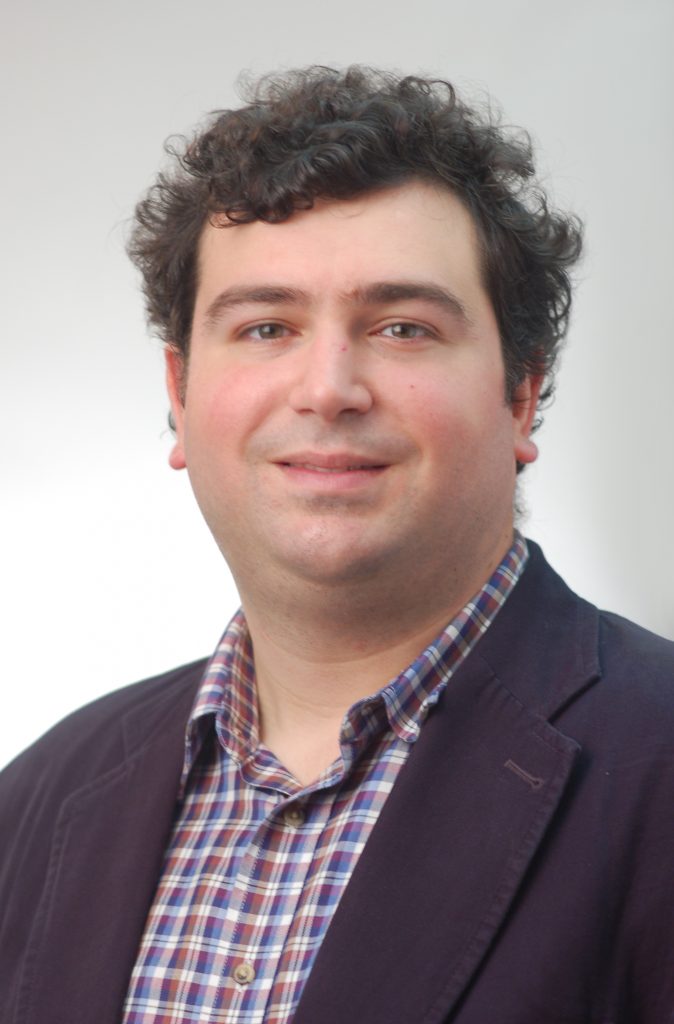
Dr. Alice Allen is a Project Leader at the Max Planck Institute of Polymer Research , specializing in machine learning methods for molecular simulations. She holds a PhD in Physics from the University of Cambridge and completed her undergraduate degree in Physics at Imperial College London. Allen previously worked as a research associate at the University of Cambridge and the University of Luxembourg, followed by a postdoctoral position at Los Alamos National Laboratory. Education: BSc in Physics (Imperial College London) PhD in Physics (University of Cambridge) Her research focuses on developing machine learning models for interatomic potentials , enabling accurate and efficient simulations of reactive processes, biological molecules, and material properties. She has published extensively on topics such as permutationally invariant polynomials, data-driven force fields, and meta-learning approaches for foundation models in interatomic potential development. Recent publications highlight her work on integrating experimental data into machine learning potentials, enhancing the transferability of empirical valence bonds, and creating meta-learning frameworks for foundational interatomic models. These studies span applications in molecular dynamics , thermodynamics , and multi-scale simulations . Research Themes: Machine Learning for Atomistic Simulations Reactive Process Modeling Transferable Force Fields Interpretable Models for Material Properties Collaborative Meta-Learning Frameworks Alice Allen leads the Gräter Groups at the institute, where her team advances predictive methodologies for chemical reactions and material science applications. No specific scientific awards or student advisees are mentioned in the provided text.
Stefano Curtarolo is the Edmund T. Pratt Jr. School Distinguished Professor of Mechanical Engineering and Materials Science at Duke University’s Pratt School of Engineering. He also holds professorships in the Department of Physics and Electrical and Computer Engineering, and serves as Director of the Center for Extreme Materials (2025–present). Education: M.S. in Physics, University of Padua (1995, 1998) M.S. in Physics, Pennsylvania State University (1999) Sc.D. in Physics, Massachusetts Institute of Technology (2003) Research Interests: Curtarolo’s work bridges Materials Science , Physics , and Artificial Intelligence , focusing on Autonomous Materials Design , High-Entropy Disordered Systems , and Materials for Extreme Environments . His methodologies integrate Quantum Mechanics , Machine Learning , and High-Throughput Computing . Recent Research Trends: His 2024–2025 publications highlight advancements in High-Entropy Ceramics , including Soliquidy (a geometric descriptor for disorder), Dual-Phase Ceramic Synthesis , and Machine Learning Interatomic Potentials . These works emphasize disorder engineering , plasticity enhancement , and AI-driven material discovery for Aerospace and Deep Space Exploration applications. Scientific Awards: European Academy of Sciences (2024) Clarivate Highly Cited Researcher (2021) Friedrich Wilhelm Bessel Research Award (2016) DOD MURI Awards (2013, 2015) NSF CAREER (2008) ONR Young Investigator (2008) PECASE (2007) Grants & Leadership: Current projects include DETER (2024–2027, Missouri S&T) and Transition States Algorithms (2024–2027, ONR). He co-leads NRT-HDR (2020–2026, NSF). Labs & Teams: Curtarolo directs the Center for Extreme Materials and leads the AFLOW consortium , a global materials design ecosystem. His lab combines machine learning , quantum simulations , and experimental validation for multiscale materials discovery .
Dr. Priya Vashishta is a Professor with joint appointments in Computer Science, Materials Science, and Physics at the University of Southern California. His research integrates computational methods across multiple scales to address fundamental challenges in materials science and nanotechnology. Research focuses on multiscale simulation frameworks combining quantum molecular dynamics, machine learning interatomic potentials, and high-performance computing. Key areas include: energy storage materials, 2D materials characterization, catalytic processes, and AI-driven materials discovery. Publication trends reveal consistent development of computational methodologies: machine learning potentials for materials simulation, neural network quantum dynamics, GPU-accelerated computing, and multiscale modeling techniques. Recent work emphasizes practical applications in energy storage, nanoscale electronics, and advanced manufacturing. Research group activities include development of open-source simulation packages (PND, Allegro) and leadership in the MAGICS computational materials center. Contributions span fundamental theoretical frameworks to applied materials engineering.
Dr. Peter Brommer is an Associate Professor in the School of Engineering at the University of Warwick. He holds a Dipl.-Phys. and Dr. rer. nat. (PhD) and is a Fellow of the Higher Education Academy (FHEA). His research focuses on computational materials science, particularly nano-confined phase change materials, molecular dynamics simulations, and the development of interatomic potential tools like potfit . He leads an EPSRC-funded project on modeling nano-confined materials and collaborates with the University of Cambridge. His work integrates ab initio methods with scalable simulations for oxides and complex metallic alloys. Dr. Brommer’s teaching includes modules on dynamics of vibrating systems, planar structures, and MSc project supervision. He is affiliated with the University of Warwick’s School of Engineering, with previous roles at the Institute for Theoretical Atomic and Molecular Physics (ITAP) in Stuttgart and the Université de Montréal’s Physics department. His office is located in D208, and he is reachable via p.brommer@warwick.ac.uk . Research highlights include advancements in kinetic Monte Carlo methods ( k-ART ), graphene functionalization studies, and scalable MD techniques for long-range interactions. His tools, such as the bs_sc2pc band structure tool for CASTEP, enhance defect analysis in materials. He actively contributes to OpenKIM’s interatomic model infrastructure. Dr. Brommer’s work bridges computational methods with experimental insights, aiming to improve material design for nanoelectronics and energy applications. His research has been published in journals like Phys. Rev. B , J. Chem. Phys. , and Modell. Simul. Mater. Sci. Eng. .
Stephen T. Lam is an Assistant Professor of Chemical Engineering at the University of Massachusetts Lowell, where he also serves as Director of the Nuclear Engineering Program and RHSA Mentor within the Francis College of Engineering. His research focuses on accelerating materials development for nuclear and clean energy applications through computational methods. His educational background includes a Ph.D. in Nuclear Science and Engineering (2020) and an MS in Nuclear Science and Engineering (2017) from the Massachusetts Institute of Technology, and a BS in Chemical Engineering (2013) from the University of British Columbia. Prior to his academic career, Lam worked in the petroleum and chemical processing industries and holds a Professional Engineer license in Canada. Ph.D.: Nuclear Science and Engineering (2020), Massachusetts Institute of Technology MS: Nuclear Science and Engineering (2017), Massachusetts Institute of Technology BS: Chemical Engineering (2013), University of British Columbia Lam's research integrates multi-scale simulation, experimental validation, and data analytics to address materials challenges in nuclear and clean energy systems. His work spans molten salt chemistry for advanced reactors, neural network interatomic potentials, and fusion energy materials. He leads the Lam Research Group, which combines predictive simulation, data analytics, and experiments to accelerate materials development. His recent publications demonstrate expertise in molten salt structure, neural network potentials, and fusion materials, with emphasis on fluoride and chloride salt systems for nuclear applications. The research shows strong interdisciplinary collaboration across computational chemistry, materials science, and nuclear engineering. Among his notable recognitions are the Early Career Research Award (2024) from the U.S. Department of Energy and the Distinguished Faculty Advancement Award (2024) from the U.S. Nuclear Regulatory. He has also received multiple early-career research awards from national laboratories and professional societies. Early Career Research Award (2024), U.S. Department of Energy Distinguished Faculty Advancement Award (2024), U.S. Nuclear Regulatory Best Presentation (2017), Tokyo Institute of Technology Natural Sciences and Engineering Research Council of Canada Postgraduate Scholarship (2017) Lam actively mentors graduate students and postdoctoral researchers, with current advisees working on AI-assisted materials design, molten salt chemistry, and fusion energy applications. He teaches courses in nuclear materials, nuclear science and engineering, transport phenomena, and fundamentals of electricity. The Lam Research Group maintains strong collaborations with national laboratories and industry partners, focusing on developing computational tools to improve understanding of material properties and accelerate materials discovery for next-generation energy technologies.
Chiheb Ben Mahmoud is a Junior Research Fellow and Swiss National Science Foundation Postdoctoral Fellow in the Department of Chemistry at the University of Oxford, working under Prof. Volker Deringer. He holds a PhD in Materials Science and Engineering from the Swiss Federal Institute of Technology (EPFL) and Master’s degrees from Ecole CentraleSupélec (France) and the University of Paris-Saclay (France). His research focuses on applying machine learning to model macroscopic properties of materials, with a particular emphasis on atomistic simulations and computational materials science. Key research interests include graph neural networks for interatomic potentials, solid-state NMR predictions, and addressing data challenges in atomistic machine learning. His work bridges machine learning methodologies with fundamental materials science problems, such as charge density wave modulation and hot-electron dynamics. He collaborates with experts like Dr. Andy Anker and Dr. Dmytro, advancing interdisciplinary approaches to materials modeling. No scientific awards are explicitly mentioned in the provided text. His advisory and grant activities are not detailed here, though his postdoctoral position suggests affiliation with the Swiss National Science Foundation. He contributes to Prof. Deringer’s research group, focusing on cutting-edge computational techniques for materials discovery and analysis.
Marco Fronzi is a researcher at the University of Sydney's Faculty of Science, focusing on advanced materials science and computational methods. His work spans thermoelectric materials, energy storage systems, and 2D crystal engineering. He has contributed to projects involving machine learning-driven material discovery, battery anode optimization, and photocatalytic applications. Fronzi leads the 2025 grant 'Conversion of CO into Methanol via an Innovative Photocatalytic and Electrocatalytic Process,' highlighting his expertise in sustainable energy technologies. Key research interests include van der Waals heterostructures, nanomaterials characterization, and predictive modeling for novel material design. His publications address challenges in thermoelectric efficiency, solar cell performance, and nanomaterial stability. While no awards are explicitly listed, his high-impact contributions to energy-related materials are notable. His research integrates experimental and computational approaches, with recent work exploring piezoelectric 2D crystals and lithium diffusion mechanisms in batteries. Collaboration with industry and international partners underscores his commitment to translating fundamental research into practical applications.
Fabio Priante is a Postdoctoral Researcher at the Department of Chemistry and Materials Science , Aalto University , specializing in Atomic Force Microscopy (AFM) , Molecular Dynamics (MD) , and Machine Learning . His research focuses on nanoscale surface interactions, particularly in lignocellulosics , chitin interfaces , and ice-water systems . Active in UN Sustainable Development Goals (SDGs) related to renewable materials and surface science. Key collaborations with RCF Academy Project , HACMAT , and LIBER Sammalkorpi II . Research Trends include: Structure determination of biomolecules on 2D nanomaterials (2025). AFM and MD simulations for hydration layer analysis (2024). Application of machine learning to AFM imaging (2024). Adsorption dynamics of lignocellulosic molecules (2023). Historical work on graphene and MoS2 exfoliation (2017-2021). His work appears in Small , ACS Nano , and Journal of Chemical Theory and Computation , with datasets hosted on Zenodo .
Olaf Wiest serves as the Grace-Rupley Professor of Chemistry & Biochemistry at the University of Notre Dame's College of Science, holding office in McCourtney Hall. With continuous academic service since 1996—from Assistant Professor (1996-2001) to Associate Professor (2001-2005), Professor (2005-2024), and current endowed chair position—he maintains active research and teaching responsibilities. His educational background includes a Dr. rer. nat. (1993) and Diplom (1991) from the University of Bonn, Germany, followed by postdoctoral work at UCLA (1993-1995). Key research interests span catalysis, computational chemistry, drug design for rare diseases (particularly Niemann-Pick Type C), epigenetic modulators targeting histone deacetylases, and machine learning applications in chemical reaction prediction. His interdisciplinary work bridges organic chemistry, biophysics, and artificial intelligence, frequently involving collaborations across synthetic chemistry, biology, physics, and medical research. Wiest's publication trends reveal a strong focus on computational-experimental integration, with recent work emphasizing AI-driven chemistry (2023-2025), including transfer learning for reaction prediction, large language models for molecular analysis, and machine learning potentials for catalytic reactions. His group maintains dual expertise in traditional organic synthesis (catalysis, enzyme mechanisms) and cutting-edge computational methods (Q2MM, virtual screening). Research Achievement Award, University of Notre Dame (2025) Fellow, American Association for the Advancement of Science (2012) John Kaneb Award for undergraduate teaching (2004) Camille Dreyfus Teacher-Scholar Award (2001) NSF CAREER Award (1997) NIH First Award (1997) His research group actively mentors graduate students in organic and biophysical chemistry projects, with significant grant support evidenced by NIH/NSF awards and industry collaborations. Current work includes developing computational tools for stereoselective catalysis (CatVS, Q2MM) and therapeutic strategies for rare diseases. The Wiest Lab operates at the intersection of experimental synthesis and computational modeling, utilizing advanced techniques like time-resolved crystallography and machine learning for reaction prediction.
Prof. Dr. Matthias Scheffler is the Director of the Theory Department at the Fritz-Haber-Institut der Max-Planck-Gesellschaft. His research focuses on predictive multiscale modeling in catalysis and energy conversion, integrating electronic structure theory, kinetic Monte Carlo simulations, and machine learning. He leads a diverse team (25+ nationalities) exploring processes in catalysts and energy devices. Research Interests: Computationally modeling materials properties, electrochemical interfaces, and energy conversion. Specializes in density-functional theory (DFT), ab initio methods, and data science for accelerating materials discovery. Current projects include understanding electron spillover effects in electrocatalysis and developing self-driving labs for catalysis research. Recent Highlights: Pioneered the Automatic Process Explorer (APE) for atomic dynamics analysis, revealed quantum mechanical electron spillover in water interfaces, and secured funding renewal for the e-conversion Cluster of Excellence. Collaborates with institutions like TU Berlin, FZ Jülich, and Brown University. Labs/Teams: Heads the Theory Department with subgroups like Light-Matter Interactions (Dr. Matthias Kick) and Machine Learning Interatomic Potentials (Dr. Hendrik Heenen). Hosts retreats and international collaborations, including EU-funded projects and Humboldt Professorships.
Can Ataca is an Associate Professor in the Department of Physics at the University of Maryland, Baltimore County (UMBC), affiliated with the College of Natural and Mathematical Sciences. He directs the STEAM Lab (Simulation, Theory and Engineering of Advanced Materials), focusing on computational investigations of materials for energy, device, and filtration applications using methods spanning density functional theory (DFT), quantum Monte Carlo (QMC), and molecular dynamics (MD). He holds a Ph.D. in Physics from Bilkent University's National Nanotechnology Research Center (Turkey), with double undergraduate degrees in Physics and Electrical Engineering. Prior to UMBC, Ataca was a postdoctoral associate at MIT's Department of Materials Science and Engineering and a Senior Research Scientist at Brown University's Department of Chemistry. Ataca's research targets low-dimensional materials, concrete, electrode materials, and molecular systems, emphasizing electronic, magnetic, and thermal properties under extreme conditions. His publications demonstrate extensive use of machine learning for materials property prediction, surface functionalization studies, and quantum mechanical simulations of 2D systems. His group develops computational methodologies bridging multiple length/time scales. No specific awards, students, or grants are detailed in the provided materials. The STEAM Lab collaborates with national laboratories including NASA and welcomes students/postdocs interested in computational condensed matter physics.
Thomas Willum Hansen is a Professor at the Technical University of Denmark (DTU), affiliated with the National Centre for Nano Fabrication and Characterization. His primary role involves advancing atomic-scale materials dynamics through aberration-corrected environmental TEM (ETEM). He oversees the ETEM facility and trains users in electron microscopy techniques. Hansen holds a PhD from DTU (2002–2006), followed by a Postdoc at the Fritz Haber Institute (2006–2008) and a Research Assistant position at Haldor Topsøe A/S (2001–2002). His research focuses on catalyst materials characterization, nanostructured materials, and microscopy innovations. Key areas include transmission electron microscopy (TEM), nanoparticle dynamics, and in-situ TEM studies. Recent work explores beam-induced heating effects, machine learning in microscopy, and solar degradation mechanisms in energy materials. Hansen supervises multiple PhD projects, including studies on quantum emitters in 2D materials, pyrolytic carbon for energy storage, and high-resolution TEM of catalytic surfaces. His contributions align with sustainable development goals through advanced material science.
Jianjun Hu is a Professor in the Department of Computer Science and Engineering at the Molinaroli College of Engineering and Computing , University of South Carolina. His research focuses on machine learning, deep learning, data mining, and evolutionary computation applied to bioinformatics, material informatics, and health informatics . Current projects include developing deep learning algorithms for intelligent audio processing , data-driven materials discovery , and medical image analysis . Education: Ph.D. in Computer Science (2004), Michigan State University Postdoc at University of Southern California (2005-2007) and Purdue University (2004-2005) Research Empowerment: Secured funding from NSF, NIH, Nvidia , and the South Carolina Department of Transportation Developed materials informatics platforms like Materialsatlas.org Created algorithms for protein-peptide binding prediction and crystal structure discovery Scientific Contributions: Editorial roles at PLOS ONE and Journal of Health & Medical Informatics Key conference reviewer for GECCO and BIBM Academic Mentorship: PhD advisors: Ananda Mondal, Jhih-Rong Lin, Emrah Atigan, Swain Mrutyunjaya MS thesis advisors: Guoyu Lu, Emrah Atilgan, Kevin Chien, Mythri Sunkara Laboratory: Machine Learning and Evolution Group (MLEG) at University of South Carolina Focus on deep learning for materials discovery , healthcare analytics , and evolutionary algorithms
Shuozhi Xu is an Assistant Professor in the School of Aerospace and Mechanical Engineering at the University of Oklahoma. He holds a Ph.D. in Mechanical Engineering from Georgia Institute of Technology (2016), with additional master's degrees in Computational Science and Engineering (Georgia Tech, 2015) and Solid Mechanics (China Academy of Engineering Physics, 2011). His research focuses on advancing multi-physics and data-driven methods for materials modeling, with applications in additive manufacturing and complex materials. He has held postdoctoral positions at UC Santa Barbara and Georgia Tech, and his work has been recognized through awards including the Elings Prize Fellowship and Sigma Xi Best Thesis Award. Education: Ph.D., Mechanical Engineering, Georgia Tech (2016) M.S., Computational Science and Engineering, Georgia Tech (2015) M.S., Solid Mechanics, China Academy of Engineering Physics (2011) B.S., Thermal Energy and Power Engineering, Beihang University (2008) His research interests span computational materials science, dislocation dynamics, and machine learning-driven materials design. Recent work includes studies on nanolaminates, refractory alloys, and generative AI for materials modeling. He has authored over 50 peer-reviewed articles and serves as a lecturer for courses in computational materials science and solid mechanics. His lab, the Computational Materials, Mechanics, and Manufacturing (CM³) Lab, emphasizes interdisciplinary approaches to materials innovation. Awards: Finalist, Rising Stars in Computational Materials Science (2022) TMS Light Metals Division Best Poster Award (2020) Elings Prize Fellowship (2017) Sigma Xi Best Thesis Award (2017) Dr. Xu advises multiple doctoral and master’s students and collaborates on grants funded by the University of Oklahoma and external agencies. His lab’s current projects include AI-driven design of materials for extreme environments and physics-based models for additive manufacturing processes.