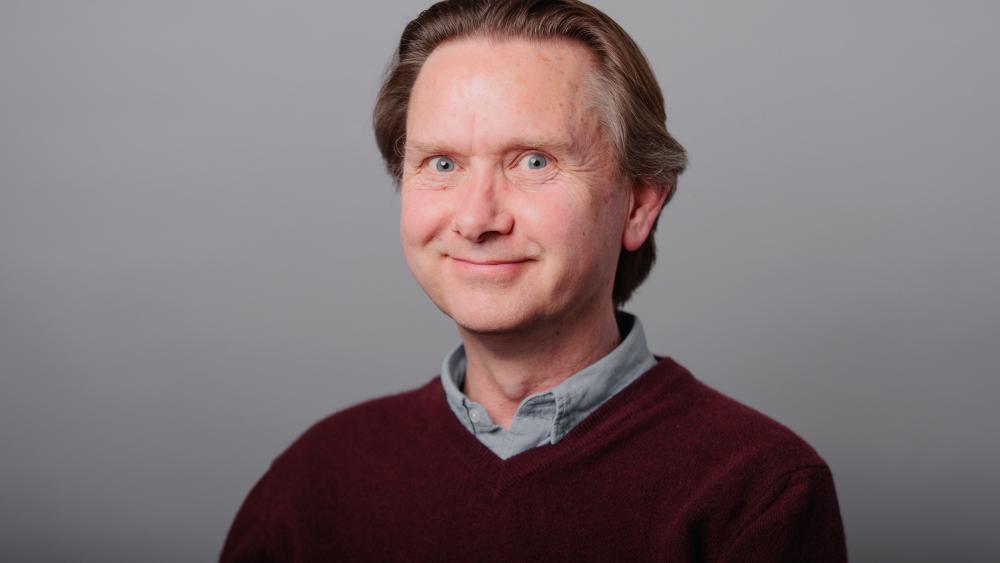
Professor Leigh K. Jenco holds the position of Professor of Political Theory at the Department of Government, London School of Economics and Political Science (on sabbatical during 2024/25). Her expertise spans Chinese Thought, Taiwan Studies, Political Philosophy, and Global Intellectual History. She previously taught at the National University of Singapore and has held visiting roles at Taiwan's Academia Sinica, National Taiwan University, and the University of Heidelberg. Education: B.A. from Bard College M.A. and Ph.D. from University of Chicago Her research explores late Ming neo-Confucian concepts of equality through literary theory and the 20th-century rediscovery of Chinese folksong compendia. She leads the £1.5M British Academy-funded 'Chinese Global Orders' project and was the principal investigator for the EU's 'East Asian Uses of the European Past' initiative. She served as associate editor of the American Political Science Review (2016–2020). Her publications include groundbreaking monographs like Changing Referents (Oxford UP, 2015) and Making the Political (Cambridge UP, 2010), which bridge political theory with Chinese intellectual history. Current projects focus on Ming dynasty poetics and cross-cultural knowledge transfer. Grants & Projects: Lead investigator for 'Chinese Global Orders' (£1.5M, British Academy) EU H2020 'East Asian Uses of the European Past' (€1.2M) She is fluent in Classical Chinese, Mandarin, and English, and her work emphasizes global comparative frameworks to challenge Eurocentric narratives. Her research often intersects historical texts with contemporary political debates, particularly around cultural borrowing and identity formation.
Brian A. Hatcher is the Packard Professor of Theology and a Professor in the Department of Religion at Tufts University's School of Arts and Sciences. His research focuses on modern and contemporary Hinduism, particularly in colonial and postcolonial South Asia, with a specialization in Bengal and Sanskrit learning. Education: PhD, Harvard University (1992) MA, Harvard University (1986) MDiv, Yale University (1984) BA, Carleton College (1980) Research Interests: Dr. Hatcher explores Hinduism's transformation during colonial periods, focusing on figures like Ishvarchandra Vidyasagar and movements such as the Swaminarayan Sampraday and Brahmo Samaj. His work challenges traditional reform narratives by analyzing religious polities and vernacular modernity. Recent projects include mapping the Dasnami Sampraday's historical influence in Bengal and completing an annotated translation of Vidyasagar's Bahu-bibaho ("Against High-Caste Polygamy"). Awards & Grants: Packard Professor of Theology American Academy of Religion Individual Research Grant (2020) Fulbright-Hays Faculty Research Abroad Fellowship (2006) American Philosophical Society Fellowship Teaching: Courses include 'Modern Hinduism,' 'Religion and Colonialism in South Asia,' and 'Hindu-Christian Studies.' Key Publications: Hinduism Before Reform (Harvard UP, 2020) Idioms of Improvement (Primus Books, 2020) "Daśanāmī samādhis in West Bengal" (Journal of Hindu Studies, 2021) His work bridges historical analysis, textual criticism, and colonial-era social dynamics.
W. Gerrod Parrott is a Professor in the Department of Psychology at Georgetown University's College. His research focuses on the nature of human emotion, including social foundations of emotions like guilt, shame, envy, and jealousy, emotional self-regulation, and historical/philosophical perspectives on emotion. He has authored four influential books and served as Editor of Cognition and Emotion (1995–1999) and President of the International Society for Research on Emotion (2008–2013). Currently, he is Editor-in-Chief of Emotion Review . Education : Ph.D. in Psychology from the University of Pennsylvania B.A. in Psychology from the University of Virginia Research Interests : Parrott explores how emotions function socially, culturally, and biologically. His work bridges psychology, sociology, and philosophy, emphasizing the role of emotion in moral judgment, interpersonal dynamics, and cultural expression. Recent studies include cross-cultural comparisons of shame, the impact of digital media on infant development, and the role of emotions in risk perception. Publications Trends : His recent articles highlight themes like moral emotions (guilt/shame), the evolution of emotion concepts across history, and the interplay between technology and emotional engagement. He critically examines cultural differences in emotional expression and their implications for psychology and policy. Editorial & Leadership Roles : Editor-in-Chief, Emotion Review Former Editor, Cognition and Emotion President, International Society for Research on Emotion Contributions to Field : Parrott’s work integrates empirical research with theoretical innovation, shaping debates on emotion’s role in cognition, morality, and culture. He advocates for interdisciplinary approaches to understanding emotion’s societal and individual impacts.
Søren Munch Kristiansen is an Associate Professor in the Department of Geoscience at Aarhus University, Faculty of Natural Sciences. His interdisciplinary research bridges geoscience and archaeology, focusing on the complex interactions between soil, water, and human societies across time. He is actively engaged in transdisciplinary projects involving geoarchaeology, groundwater, and public health. Research Interests: His work centers on how soil and groundwater have shaped human prehistory and continue to influence modern life. Key areas include safe drinking water from a lifelong perspective, geoarchaeological prospection, Viking Age settlements, and the application of geophysical and geochemical methods in archaeological contexts. He is particularly interested in novel, interdisciplinary methodologies. Recent Research Trends: His recent publications reveal a strong focus on integrating geophysical data (e.g., GPR, borehole databases) with archaeological interpretation, especially in 3D urban modeling and landscape change. Themes include Viking Age sites, interglacial deposits, and anthropogenic soil modifications. His work increasingly employs machine learning and large-scale data synthesis. Scientific Awards: No awards mentioned in the provided text. Advising and Grants: While specific students are not listed, he leads and participates in multiple funded research projects, indicating an active supervisory role. His grants span from 2016 to 2024, including projects like TITAN, SAGA, and 'Fingerprinting displaced molecular substances,' highlighting sustained funding and leadership in interdisciplinary geoscience-archaeology research. Labs and Teams: He is involved in collaborative networks such as the Soil Science & Archaeo-geophysics Alliance (SAGA), suggesting leadership in interdisciplinary research teams. His work often involves multi-proxy analyses and international collaborations, particularly in Scandinavian archaeological geophysics.
Przemysław Kordos is a Professor at the University of Warsaw , affiliated with the Faculty of Liberal Arts , where he serves as Coordinator for the Development of the Modern Greek Philology Program . He holds two PhDs in Humanities (2007, 2019) and was awarded the Loukis Papaphilippou Seat of Advancement in Modern Greek scholarship. Education: MA in Ethnology and Cultural Anthropology (University of Warsaw, 2001) MS in Sociology (University of Warsaw, 2002) PhD in Humanities (University of Warsaw, 2007) Second PhD in Humanities (University of Warsaw, 2019) His research interests span: Contemporary Modern Greek and Cypriot literature Polish-Greek cultural relations (philhellenism) Social and ethnographic issues in Greece and Cyprus Travel literature analysis Fantasy literature's cultural implications His scientific work reveals a focus on linguistic assimilation in foreign language learning (via fMRI studies), historical parallels between Polish and Greek independence movements, and critical analyses of Cypriot folk culture's politicization. Key scientific awards include: Loukis Papaphilippou Seat (University of Warsaw) Internships at EKPA and IKY (Greece) Scholarships at IMXA (Greece) and MUNI (Czech Republic) His academic contributions include cataloging 60+ Polish travel accounts to Greece, analyzing the shift from travel literature to tourism discourse, and examining the Hellene-Romios dichotomy's role in modern Greek identity construction.
Dr. Luke Fleming is an Associate Professor in the Department of Anthropology at the University of Montreal's Faculty of Arts and Sciences. His research focuses on comparative linguistic anthropology, particularly the typology of honorific systems, kinship-related linguistic avoidance practices, and sociolinguistic dynamics in indigenous and small-scale societies. He has authored over 20 peer-reviewed publications and led numerous research projects funded by the Social Sciences and Humanities Research Council of Canada (SSHRC) and international institutions. Teaching responsibilities include courses on sociolinguistics, linguistic anthropology, and language and culture. He supervises graduate students engaged in interdisciplinary research spanning from Sri Lanka to the Amazon basin. Current projects investigate honorific pronoun systems across Theravada Buddhist communities and Tamil language usage in South Asia. Lead researcher for SSHRC-funded projects studying honorific systems and small-scale sociolinguistics Published in Journal of Linguistic Anthropology , Language in Society , and Anthropological Linguistics Advisor to 9 graduate students since 2018 Research networks include collaborative projects with Patagonian language speakers and ongoing comparative studies linking Southeast Asian honorifics to African avoidance practices. His forthcoming book On Speaking Terms examines kinship-related linguistic avoidance worldwide. Active in program development for interdisciplinary anthropology degrees, contributing to 15 academic programs at undergraduate and graduate levels.
Erica Lehrer is an Associate Professor in the Departments of History and Sociology-Anthropology at Concordia University, where she also holds the Canada Research Chair in Museum & Heritage Studies. She is based in the Faculty of Arts and Science in Montreal and is a socio-cultural anthropologist and curator with a strong interdisciplinary profile. Her research centers on museum studies, heritage, memory, and Jewish cultural revival, particularly in post-Holocaust Poland. She explores how difficult knowledge—especially related to trauma, identity, and historical injustice—is curated and experienced in public spaces. Her work combines ethnographic fieldwork, curatorial practice, and critical theory. Lehrer's publications and exhibitions, such as Jewish Poland Revisited , Souvenir, Talisman, Toy , and Curating Difficult Knowledge , reflect a deep engagement with how heritage shapes identity and public understanding. Her recent projects often involve research-creation, blending academic scholarship with artistic and public-facing outputs. Her publications span themes including Jewish heritage tourism, curatorial innovation, material culture, and the emotional dimensions of museums. She has contributed significantly to debates on how museums frame human rights, memory, and social justice, as seen in her participation in conferences like ACHS 2016. Canada Research Chair in Museum & Heritage Studies Lehrer mentors emerging scholars and collaborates across disciplines, though specific advisees are not listed. She has been involved in major curatorial and research initiatives, including digital and physical exhibitions that explore urban heritage and collective memory. Her work at Concordia, particularly in relation to the Grey Nuns Motherhouse, demonstrates a commitment to community-engaged and place-based scholarship.
Dr Yannis Galanakis is an Associate Professor in Classics (Classical Art & Archaeology) at the University of Cambridge, affiliated with the Department of Archaeology and the Faculty of Classics . He serves as Director of Archives and is a Fellow and Director of Studies at Sidney Sussex College . His research spans Aegean art and archaeology, with a focus on mortuary practices, social complexity, and the socio-political dimensions of the past. Academic Appointments : Associate Professor (Classical Art & Archaeology), Director of Archives (Faculty of Classics) Research Clusters : Aegean archaeology, museum studies, material culture, cultural heritage Key contributions include studies on Mycenaean frescoes, Late Bronze Age Attica, and the ethical challenges in antiquities trade. His work bridges Minoan Crete and Mycenaean Greece, emphasizing interdisciplinary approaches. Recent publications address funerary architecture and the domestication of death in the Aegean Bronze Age. Notable affiliations include: Leverhululme Early Career Fellowship (hosting institution) Cambridge Heritage Research Centre McDonald Institute for Archaeological Research Dr Galanakis supervises PhD students and contributes to teaching, archival management, and academic governance.
Viviana A. Zelizer is the Lloyd Cotsen ‘50 Professor of Sociology at Princeton University, where she has taught since 1988. Her work bridges economic sociology and cultural analysis, focusing on the intersections of money, social relations, and moral values. She is renowned for studies on life insurance, childhood valuation, and the socio-cultural dimensions of money. Key contributions include The Social Meaning of Money (1994), Pricing the Priceless Child (1985), and The Purchase of Intimacy (2005). Current research explores cross-class economic transactions among Princeton undergraduates with Lauren Gaydosh. Her research interests span economic ethics, consumption practices, and the cultural shaping of economic behavior. Awards include the 2023 ASA Lifetime Achievement Award. Upcoming events include a Paris conference (Jan 23, 2025) honoring her work and a UT-Austin workshop on global money studies. She has authored/co-edited over 20 books, including Money Talks (2017) and a forthcoming French translation of Fixing the Monetary Value of Children (2024). Recent articles address money’s role in power dynamics, gender relations, and socio-economic crises. Her work challenges simplistic market vs. intimate divides, showing how economic practices sustain social bonds.
Hsueh-man Shen is the Director of Masters Studies and Ehrenkranz Associate Professor in World Art at New York University’s Institute of Fine Arts. She holds a D.Phil. from Oxford University in Archaeology, an M.A. in Art History from National Taiwan University, and an LL.B. in Law from the same institution. Her research focuses on medieval Chinese art and archaeology, particularly how cross-cultural exchanges shaped artistic practices through translation, replication, and hybridization. She has curated major exhibitions such as Gilded Splendor: Treasures of China’s Liao Empire (2006) and contributed to the Cave Temples of Dunhuang project (2016), emphasizing Silk Road cultural networks. Her current book project explores maritime activities’ impact on Buddhist art during the 10th–14th centuries. Shen’s work bridges art history, archaeology, and material culture studies, addressing topics like relic deposits, shipwrecks, and cross-cultural curatorial practices. She has held prestigious fellowships, including the Leiden University Hulsewé-Waznieski Professorship (2019) and a Wissenschaftskolleg zu Berlin residency (2008–2009). Education: D.Phil., Archaeology, University of Oxford M.A., Art History, National Taiwan University LL.B., Law, National Taiwan University Her research interests include Buddhist art’s transformation across dynasties, the role of replication in devotion, and maritime trade’s influence on cultural boundaries. She teaches courses such as Colors in the Visual Culture of Medieval China and Shipwrecks and the ‘Other’ Silk Road , integrating theoretical and material perspectives. Shen’s awards reflect her global academic contributions, including the EURIAS Senior Fellowship (2018–2019) and Progress 100 Visiting Professorship at Kyushu University (2017). Her publications span exhibition catalogues, monographs like Authentic Replicas: Buddhist Art in Medieval China (2019), and peer-reviewed articles analyzing Silk Road networks, Liao dynasty funerary practices, and cross-cultural material exchanges.
Dr Jan Woudstra is an Honorary Professor at the University of Sheffield's School of Architecture and Landscape. With a PhD in Landscape Architecture from University College London and a background in landscape design, horticulture, and conservation, he has taught landscape architecture and history since 1995 and part-time at the Architectural Association School of Architecture from 1988-2005. Education: PhD, MA (Conservation), Dip Hort (Kew) Research Focus: History and theory of modern movement landscape architecture, planting design, hard landscape detailing, and international design trends Supervision: Claudia Leticia Martínez Velarde, Lei Gao, Kairan Li, Sang Jung Yoon, Vivienne Rose Parrott, Jijun Zhao, Manoochehr Salahi Moghadam, Hossein Donyavi, Sally O’Halloran Contact: j.woudstra@sheffield.ac.uk | Arts Tower, Floor 12, Western Bank, Sheffield, S10 2TN His research emphasizes landscape conservation, sustainability, and social equitability, with case studies on designers like Christopher Tunnard, Peter Shepheard, and Robert Marnock. He explores the tension between memory and innovation in historic landscapes. Recent publications address Buddhist pilgrimage sites, Scandinavian design, and historical planting techniques. Collaborations with Peter Blundell Jones and others analyze the interplay between architecture and landscape.
Adam T. Smith is Distinguished Professor of Arts and Sciences in Anthropology at Cornell University, where he has been faculty since 2011. He is a leading scholar in Eurasian archaeology with a focus on the South Caucasus, particularly Armenia. Smith co-founded Project ArAGATS, a long-term archaeological program in Armenia, and co-directs the Aragats Foundation and Caucasus Heritage Watch, organizations dedicated to heritage preservation in the region. His educational background includes: Ph.D. (1996) in Anthropology from the University of Arizona M.A. (1993) in Anthropology from the University of Arizona M.Phil. (1991) in Social and Political Science from the University of Cambridge B.A. (1990) in Anthropology and Political Science from Brown University Smith's research centers on the role of material culture in political life, examining how objects, landscapes, and built environments shape political procedures and values. His work spans archaeological theory, political anthropology, and heritage studies, with a particular focus on the South Caucasus region. He investigates the long-term social and political dynamics from the Bronze Age to contemporary times, exploring themes of sovereignty, heritage preservation, and the political dimensions of material culture. His approach integrates theoretical frameworks with empirical fieldwork to understand political power through material evidence. His recent publications demonstrate a consistent focus on the archaeology of power and politics in Eurasia, with increasing attention to contemporary heritage issues. Smith's work bridges theoretical frameworks with empirical research, particularly through his long-term fieldwork in Armenia and the Caucasus region. His scholarship shows a progression from studies of ancient political systems to contemporary issues of cultural heritage and political violence, with a strong emphasis on ethical engagement with archaeological practice and heritage management. Smith has received numerous prestigious awards including: 2023-2025 Fellow, Milstein Program in Technology and Humanity, Cornell University 2023 Finalist, Falling Walls Science Breakthrough of the Year, Social Sciences and Humanities 2023 Certificate of Communal Partnership, St. James AME Zion Church, Ithaca NY 2010-2011 John Simon Guggenheim Memorial Foundation Fellow 2010-2011 Fellow, Cornell University Society for the Humanities 2006-2007 Fellow, Howard Foundation Smith has directed multiple field seasons and collaborative research projects in Armenia, involving both American and Armenian scholars. His work with Project ArAGATS has received continuous support over two decades, while Caucasus Heritage Watch represents a newer initiative addressing urgent heritage preservation needs through satellite monitoring. He has supervised numerous graduate students and secured significant research funding for his projects, demonstrating strong leadership in both academic and community-engaged research contexts. Smith leads several research initiatives including Project ArAGATS, the Aragats Foundation, and Caucasus Heritage Watch. His Landscapes and Objects Laboratory at Cornell serves as a hub for material culture studies, while his work with the St. James AME Zion Community Excavations demonstrates his commitment to community-engaged archaeology. These teams bring together interdisciplinary scholars to address complex questions about political power, material culture, and heritage preservation across time, with particular attention to how archaeological practice can engage with contemporary political issues and community needs.
Dr Crispin Branfoot is a Reader in the History of South Asian Art and Archaeology at SOAS University of London, affiliated with the School of Arts and the Department of History of Art and Archaeology. He holds a BA in Ancient History and Archaeology from Manchester University, and an MA and PhD in Art and Archaeology from SOAS. His research focuses on the arts of southern India from the 14th to 20th centuries, with emphasis on Hindu temple architecture, colonial-era renovations, and the intersection of photography, archaeology, and conservation. He has supervised four PhD students examining topics ranging from temple iconography to colonial paper-making practices. His work explores how sacred spaces like the Minakshi-Sundareshvara temple in Madurai were reconfigured through colonial and post-colonial interventions, while also analyzing pilgrimage routes, portraiture traditions, and the legacy of the Vijayanagara Empire. He has contributed to major publications such as India: A History in Objects (2022), and his research bridges material culture studies with postcolonial theory. He previously worked at De Montfort University and the British Museum, where he gained expertise in South Asian art curation and historical documentation.
Dr. Alexa Quinn is an Assistant Professor in the Department of Early, Elementary, and Reading Education at James Madison University's College of Education. Her research focuses on culturally responsive teaching, family-school interactions, and inclusive education practices. She holds a terminal degree in Education and is dedicated to preparing future educators to address the diverse needs of students, particularly in early childhood and elementary settings. Her work emphasizes the importance of teacher training programs that foster cultural competence and self-efficacy, alongside strategies for supporting students with disabilities. Dr. Quinn’s scholarship bridges theory and practice, advocating for policies that prioritize equitable educational access and family engagement. Her publications span topics such as inquiry-based learning, morning meeting practices in social studies, and the role of wordless picturebooks in multilingual families. While no formal awards are listed, her contributions to teacher education and policy-relevant research reflect her commitment to impactful educational solutions. Dr. Quinn advises no listed students and does not mention current grants or labs, though her research interests suggest involvement in collaborative projects focused on early childhood education equity and teacher development.
John Kelly is a Lecturer in the Sociology of Sport at the Moray House School of Education and Sport, University of Edinburgh. He is part of the Institute for Sport, Physical Education & Health Sciences (ISPEHS) and a joint convenor of the Edinburgh Critical Studies in Sport (ECSS) research group. His research focuses on intersections between sport, society, and power dynamics, including topics like militarism, sectarianism, ethnicity, and gender. He has advised governmental bodies in Europe and media organizations globally, and his work spans international journals and book publications. John holds a PhD in Sociology of Sport from Loughborough University (2003–2007), following MA (University of Brighton) and BA (University of Wales Institute, Cardiff) degrees. His teaching includes undergraduate and postgraduate courses on sport sociology, media, and research methods. He actively supervises PhD students exploring topics like sport and social integration, national identity, and body image in China. His research interests emphasize sociological theory, civil-military relations, and the role of sport in shaping identities. Current projects include studies on power in sport research, commemorations in sport, and Irish diaspora communities. John is also a joint editor of the Asia Pacific Journal of Sport and Social Science , reflecting his commitment to advancing critical academic discourse in sport studies.