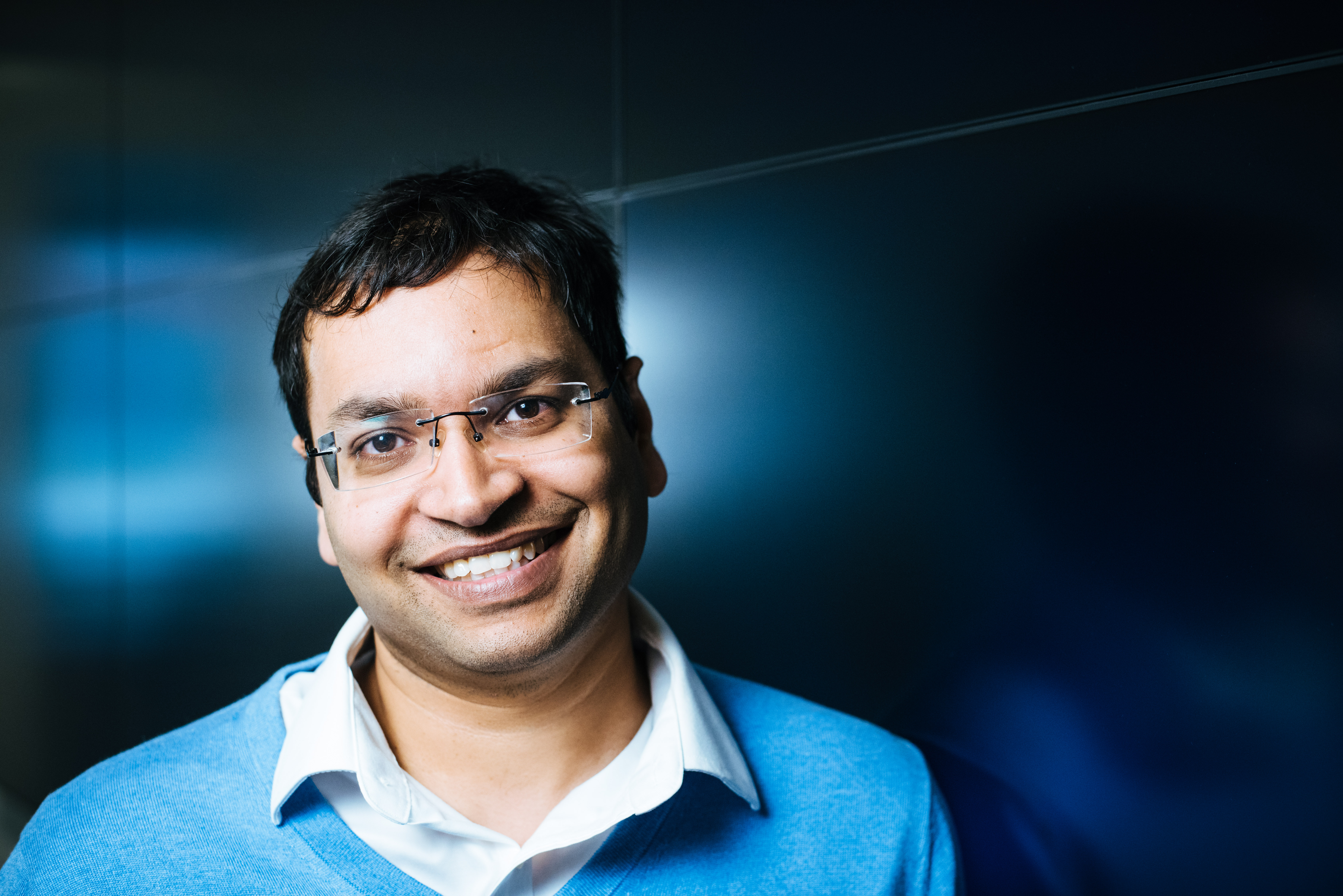
Peter Bühlmann is a Professor at ETH Zürich within the Seminar für Statistik , focusing on high-dimensional statistics, causal inference, and machine learning. His work bridges theoretical advancements with practical software implementations in R packages like pcalg , mboost , and glmmlasso , impacting fields such as genomics, proteomics, and intensive care analytics. Key Contributions : Causal structure learning, stability selection, anchor regression, and deconfounding. Software : Developed widely used R packages for statistical modeling and causal inference. Teaching : Courses on high-dimensional statistics at ETH Zürich and international institutions. Research Trends : Recent articles emphasize causal robustness, domain adaptation, and applications in medicine. His work addresses challenges in heterogeneous data, missing values, and covariate shifts using methods like spectral deconfounding and residual prediction tests. Scientific Recognition : Co-author of a paper designated as a New Hot Paper (Meinshausen and Bühlmann, 2006) by Essential Science Indicators, indicating significant impact in high-dimensional multiple testing.
Rakesh Kumar is a Professor and John Bardeen Faculty Scholar in the Electrical and Computer Engineering Department at the University of Illinois at Urbana-Champaign. His work focuses on computer architecture, system-level design automation, and low-power computing. PhD in Computer Engineering from University of California, San Diego BS in Electrical Engineering from IIT Kharagpur His research spans all layers of the computing stack, with key contributions to flexible computer systems , waferscale computing , error-resilient architectures , and approximate computing . He has pioneered work on voltage-reliability tradeoffs and peak power management techniques. Recent publications highlight trends in space microdatacenters , printed microprocessors , and neural graph accelerators . His work on plastic chips was recognized as one of the three biggest semiconductor headlines of 2022 by IEEE Spectrum. IEEE Fellow (2024) ISCA Influential Paper Award MICRO Test-of-Time Award ICCAD Ten Year Retrospective Most Influential Paper Award Best Paper Awards at CASES, SELSE, HPCA He has received teaching accolades including the Stanley H. Pierce Faculty Award and Ronald W. Pratt Outstanding Teaching Award . His research group explores hardware-software co-design for emerging applications in AI, IoT, and sustainable computing.
Hao Liu is an incoming Assistant Professor of Machine Learning at Carnegie Mellon University and currently works as a research scientist at Google DeepMind. Previously, he completed his Ph.D. in Computer Science at UC Berkeley under the supervision of Pieter Abbeel. He also spent two years part-time at Google as part of the Google Brain team. His educational background includes: Ph.D. in Computer Science from UC Berkeley Hao Liu's research focuses on solving intelligence through deep learning, neural networks, and innovative learning objectives. His work spans multiple areas including large language models, reinforcement learning, world models, and attention mechanisms for long context processing. He has made significant contributions to making transformer models more efficient and capable of handling extremely long sequences through techniques like Ring Attention and Blockwise Transformers. His recent publications demonstrate a strong focus on extending the capabilities of language and vision models, particularly in handling long sequences and multimodal data. Key themes include attention optimization, tokenization efficiency, and alignment techniques. His work bridges theoretical advances with practical implementations for real-world AI systems, with multiple papers at top conferences including NeurIPS, ICML, and ICLR, often receiving spotlight or oral presentations. Hao is actively involved in open-source AI research, having contributed to projects like Koala and OpenLLaMa, which aim to make advanced language models more accessible to the research community. His work on RingAttention has been implemented as a Python package available on GitHub, demonstrating his commitment to practical implementations and community sharing.
Muhannad S. Bakir is the Dan Fielder Professor in the School of Electrical and Computer Engineering at Georgia Institute of Technology and serves as the Director of the 3D Systems Packaging Research Center. His research focuses on heterogeneous integration of microsystems, including 2.5D and 3D ICs and packaging technologies, with significant contributions to advanced cooling systems, electrical and photonic interconnects, and biosensor integration with CMOS. Dr. Bakir's research interests span heterogeneous microsystem design and integration, advanced cooling and power delivery for emerging architectures, electrical and photonic interconnect technologies, biosensor technologies, and nanofabrication. His work addresses critical challenges in next-generation electronics, enabling polylithic integration that concatenates heterogeneous ICs of various functionalities while mimicking monolithic-like densities. His research particularly focuses on co-design of thermal technologies, power delivery networks, and signaling networks for silicon nanoelectronic systems. His recent publications demonstrate strong trends in fused-silica stitch-chip technology for heterogeneous integration, with particular emphasis on RF and mm-wave applications, power delivery for AI accelerators, and thermal management solutions. His work bridges electrical engineering, materials science, and thermal management to solve critical bottlenecks in computing performance and efficiency. 2013 Intel Early Career Faculty Honor Award 2012 DARPA Young Faculty Award 2011 IEEE CPMT Society Outstanding Young Engineer Award 2012 National Academy of Engineering Frontiers of Engineering Symposium Invited Participant 2015 IEEE CPMT Society Distinguished Lecturer 2014 Best Paper of the IEEE Transactions on Components Packaging and Manufacturing Technology More than 25 conference and student paper awards Twelve issued US Patents Dr. Bakir leads the Integrated 3D Systems Lab (I3DS) at Georgia Tech, which is actively researching advanced packaging, interconnects, electrical and thermal design, and system integration. His team has received significant recognition for their work, including multiple best paper awards from major conferences like ECTC, IITC, and CICC. The lab is currently seeking postdoctoral researchers and research faculty to advance next-generation electronics through collaborative research. His lab focuses on enabling the next phase of Moore's Law through polylithic integration, which concatenates heterogeneous ICs of various functionalities (digital, analog, photonic, and mm-wave) using advanced off-chip '2.5D' and '3D' heterogeneous interconnects and packaging. This work impacts applications in high-performance computing, machine learning, edge intelligence, autonomous vehicles, augmented/virtual reality, and healthcare.
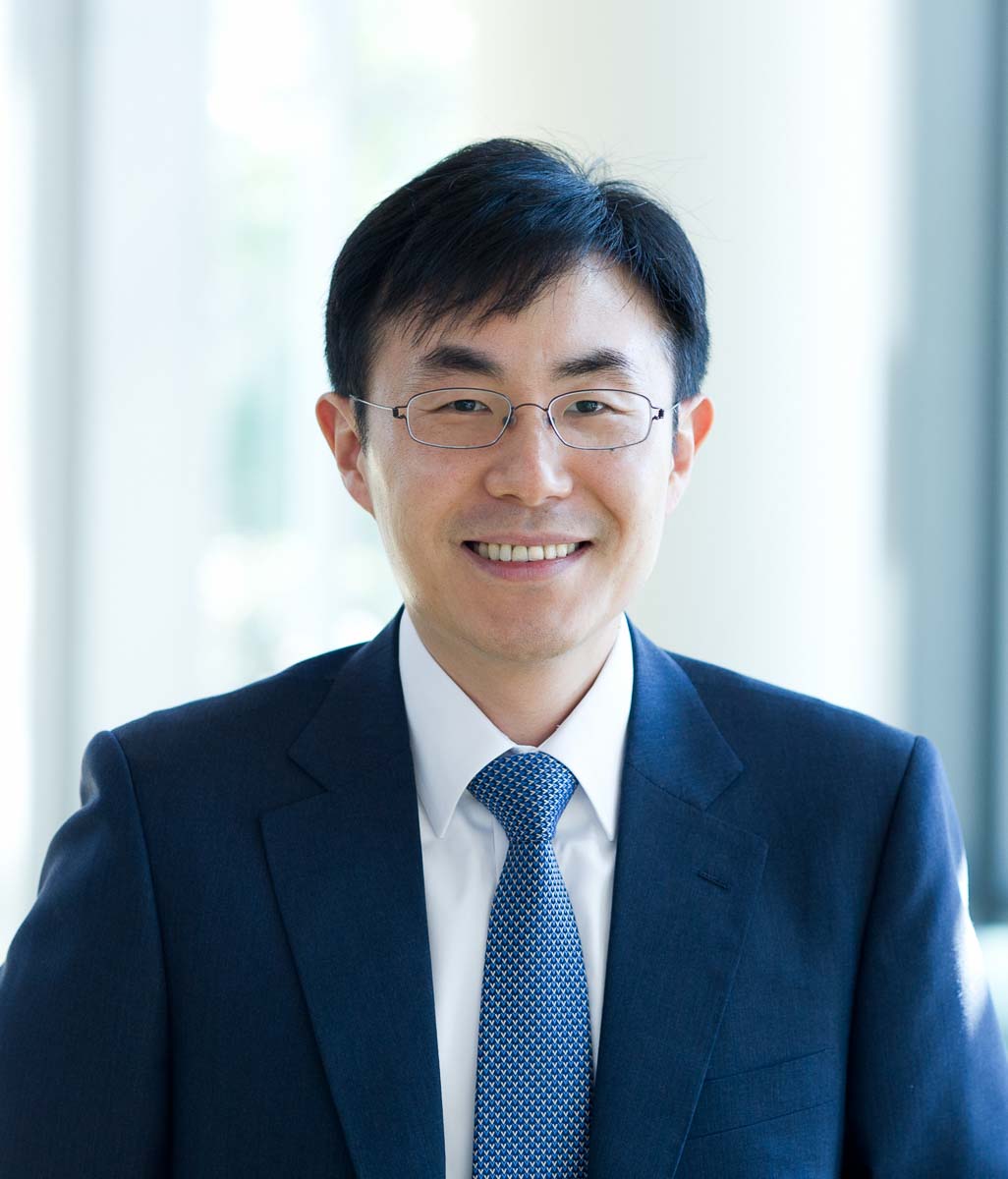
Zhonghai Lu is a Professor of Electronic Systems Design (specializing in Dependable and Autonomous Systems) at KTH Royal Institute of Technology, part of the Department of Electrical Engineering in the School of Electrical Engineering and Computer Science (EECS). He serves as Program Director for KTH's Embedded Systems master's program and Director of Studies at the Division of Electronics and Embedded Systems. His research focuses on Network-on-Chip (NoC), computer architecture, embedded systems, and Prognostics and Health Management (PHM) of power electronics. He leads a research group exploring in-network processing and embedded intelligence, transforming passive networks into active computational frameworks. Lu holds a BSc from Beijing Normal University (1989), MSc and PhD from KTH (2002, 2007), and an MBA in Innovation and Growth from the University of Turku (2012). He has authored over 240 scientific papers, including journal articles and peer-reviewed conferences, with notable recognitions such as Best Paper Awards at NOCS’2015 and EU HiPEAC, and a Featured Paper in IEEE Transactions on Computers (2020). He serves as Associate Editor for ACM Transactions on Architecture and Code Optimization (TACO) and has chaired major conferences like HiPEAC’2017 and NOCS’2018. His research group’s recent work includes integrating AI into hardware acceleration, fault-tolerant neural networks, and RUL estimation for power electronics using recurrent neural networks. Lu has secured grants from the Swedish Research Council and Intel Corporation and developed courses like IL2230 (Hardware Architectures for Deep Learning) and IL2233 (Embedded Intelligence), pioneering embedded AI education at KTH. Education: BSc (Beijing Normal University), MSc/PhD (KTH), MBA (University of Turku) Awards: Best Paper Awards (NOCS, EU HiPEAC), Swedish Research Council Grants, Intel Research Gifts Labs/Teams: Research Group on In-Network Processing and Embedded Intelligence
Matthew Kay is an Associate Professor in the Department of Communication Studies at Northwestern University's School of Communication, with a secondary appointment in Computer Science. He serves as Co-Director of Graduate Studies for the PhD in Technology and Social Behavior program. His research focuses on human-computer interaction and information visualization, specializing in uncertainty communication, usable statistics, and personal informatics. He employs mixed-method approaches including behavioral analysis, interactive system development, and visualization technique evaluation to address real-world data interpretation challenges. Analysis of his recent publications reveals dominant themes in visualization literacy development, uncertainty representation for decision-making, and health informatics applications. His work consistently bridges theoretical frameworks with practical implementations, particularly in educational assessment tools and election forecast visualizations. Professor Kay co-directs the Midwest Uncertainty Collective (MU collective), a research group advancing uncertainty communication methodologies. Previously faculty at the University of Michigan School of Information, he maintains active contributions to visualization tool development including the ggdist R package for uncertainty visualization.
John D. Murray is the Gregg L. Engles Associate Professor of Psychological and Brain Sciences at Dartmouth College and an Adjunct Associate Professor of Psychiatry at Yale School of Medicine. He holds a PhD in Physics from Yale University (2013) and a BS in Physics and Mathematics from Yale (2006). His research focuses on computational neuroscience and computational psychiatry, with secondary appointments in Physics and Neuroscience at Yale until 2023. His work integrates computational modeling, neuroimaging, and systems neuroscience to study decision-making processes, cortical organization, and psychiatric disorders. Collaborators include prominent researchers like Dr. John Krystal and Dr. Anticevic. Research interests include hierarchical brain organization, neuroimaging analysis techniques, and pharmacological effects on neural circuits. His lab (Murray Lab) develops computational tools like PsychRNN for cognitive task modeling. Notable contributions include linking transcriptomic data to neuroimaging patterns and modeling LSD’s effects on brain topography. He has been featured in YaleNews and Nature Communications for innovations in mapping mental illness variability and neural circuit dynamics. Grants and collaborations span translational neuroscience, addiction, and PTSD research through partnerships with Yale’s Center for Biomedical Data Science and VA National Center for PTSD. His interdisciplinary approach bridges physics, computer science, and clinical psychiatry to advance understanding of brain function and dysfunction.
Song Kim is an Associate Professor of Political Science at the Massachusetts Institute of Technology (MIT) and a Faculty Affiliate at the Institute for Data, Systems, and Society (IDSS). He holds a Ph.D. in Politics from Princeton University, where he was awarded the Harold W. Dodds Fellowship (2012-2013). His research focuses on International Political Economy, Formal and Quantitative Methodology, and Big Data analysis of international trade. He is particularly known for his work on firm-level political incentives in trade liberalization, which earned him the 2015 Mancur Olson Award and the 2018 Michael Wallerstein Award for best published article in political economy. Kim develops computational methods for analyzing trade data, including dimension reduction and visualization techniques. He maintains two key databases: LobbyView (tracking firm lobbying efforts) and TradeLab (for trade policy analysis). His research has been published in top journals such as the American Political Science Review, American Journal of Political Science, and International Organization. Educations : Ph.D. in Politics (Princeton University), B.A. not explicitly stated. His research interests include the dynamical evolution of lobbying networks, strategic links between political donations and lobbying, and the political origins of trade regulations. He also contributes methodological innovations, such as two-way fixed effects models and matching methods for causal inference with panel data. Awards : Mancur Olson Award (2015) Michael Wallerstein Award (2018) Harold W. Dodds Fellowship (2012-2013) Advising & Grants : No listed advisees. His work is supported by MIT’s IDSS and institutional funding. He collaborates on software tools like the 'wfe' and 'concordance' R packages, advancing computational social science. Labs/Teams : Associated with MIT’s Political Science Department and IDSS, focusing on interdisciplinary projects in trade, lobbying, and quantitative methods.
Kostas Bekris is a Professor in the Department of Computer Science at Rutgers University, specializing in Robotics and Artificial Intelligence. His research focuses on motion planning, autonomous manipulation, and robot control, with notable contributions to tensegrity robotics, perception-driven systems, and large-scale package handling. He leads a team conducting groundbreaking work in robotics, supported by grants from NSF, NASA, and industry collaborators like ExxonMobil. His group emphasizes interdisciplinary approaches, combining machine learning, topological methods, and differentiable physics modeling to advance robot capabilities in complex environments. Education details are not explicitly stated in the provided texts, but his academic career has included significant mentorship of PhD students and postdoctoral researchers. Key projects involve vision-driven manipulation pipelines, obstacle detection systems (PROBE), and resilient robot designs inspired by biological structures. He has been recognized for his work through prestigious awards including the NASA Early Career Grant and multiple NSF grants, as well as team achievements in robotics competitions like the Amazon Picking Challenge. Research interests span robotics subfields such as: Autonomous manipulation in cluttered environments Learning-based control for dynamic systems Topological data analysis for motion reasoning Tensegrity and soft robotics architectures Sim-to-real transfer in robotic tasks His team's work has produced open-source software tools and datasets, advancing benchmarks in manipulation and perception. Recent articles emphasize scalable solutions for industrial automation and robust navigation strategies in unstructured settings. Scientific achievements include: Development of PROBE for proprioceptive obstacle detection Advances in differentiable physics engines for tensegrity systems NSF-funded projects on robotic rearrangement and modular morphologies Advising contributions span over a decade, with current advisees focusing on topics like non-prehensile manipulation and large-scale storage optimization. Collaborations with industry (e.g., ExxonMobil) and academic partners (Yale University) reflect his commitment to applied robotics research. Labs and teams under his leadership include the Rutgers CS Robotics Group, contributing to projects like the ARIAC challenge platform and packing/industrial automation systems. Future work targets improved robot resilience in disaster scenarios and enhanced human-robot collaboration paradigms.
Antti Honkela is a Professor of Data Science at the University of Helsinki's Department of Computer Science, within the Faculty of Science. He also serves as the Coordinating Professor for the Privacy-preserving and Secure AI Research Programme at the Finnish Center for Artificial Intelligence (FCAI), and as Deputy Director of the Master's Programme in Data Science. His roles include membership in the Health and Social Data Permit Authority (Findata) and as an Action Editor for Transactions on Machine Learning Research. Honkela's research focuses on privacy-preserving machine learning, differential privacy, Bayesian methods, and their applications in computational biology and healthcare. He leads projects such as the European Lighthouse in Secure and Safe AI (ELSA) and the Data Literacy for Responsible Decision-making initiative. His work emphasizes developing robust frameworks for privacy-aware AI, including differentially private synthetic data and federated learning. Honkela has advised numerous PhD and Master's students, and his contributions span theoretical advancements and practical implementations, such as the D3p Python package for differentially private probabilistic programming. Key contributions include advancements in Bayesian inference from synthetic data, privacy accounting mechanisms, and computational methods for genomic epidemiology. His interdisciplinary approach bridges machine learning, statistics, and healthcare, addressing challenges in data privacy and secure AI deployment.
Henrik Boström is a Professor of Computer Science specializing in Data Science Systems at the Division of Software and Computer Systems, KTH Royal Institute of Technology. His research focuses on trustworthy machine learning , with emphasis on conformal prediction (for confidence-calibrated predictions) and explainable AI . He is the developer of Python packages crepes (conformal classifiers/regressors) and xrf (explainable random forests). His primary research domains include: Developing robust methods for uncertainty quantification in predictive models Creating interpretable machine learning frameworks Optimizing ensemble techniques for high-dimensional data Applying ML to healthcare informatics and industrial diagnostics Analysis of his recent publications reveals strong emphasis on: (1) advancing conformal prediction theory for trustworthy AI, (2) enhancing interpretability of complex models like random forests and GNNs, and (3) developing efficient algorithms for uncertainty-aware learning in domains including healthcare, graph data, and high-dimensional regression. He serves as examiner for multiple degree projects and teaches courses including Programming for Data Science (ID2214) and Research Methodology and Scientific Writing (II2202) . He leads development of open-source tools for conformal prediction and model interpretation.
Margaret E. Roberts is a Professor in the Department of Political Science at the University of California, San Diego. She co-directs the China Data Lab at the 21st Century China Center and serves as an affiliate at the UC Institute on Global Conflict and Cooperation. Her academic appointments reflect her interdisciplinary approach combining political science, statistics, and computational methods. University of California, San Diego, Department of Political Science (Current) Co-director, China Data Lab at the 21st Century China Center Affiliate, UC Institute on Global Conflict and Cooperation Roberts earned her PhD in Government from Harvard University (2014), MS in Statistics from Stanford University (2009), and BA in International Relations and Economics from Stanford University (2009). Her educational background bridges political science, statistics, and computational methods, forming the foundation for her interdisciplinary research approach. Professor Roberts' research focuses on the intersection of political methodology and the politics of information, with specific expertise in automated content analysis and the politics of censorship and propaganda in China. Her work employs innovative methods including social media analysis, online experiments, and large-scale text analysis to understand how censorship and propaganda influence information access and political beliefs. She has made significant contributions to text-as-data methodologies, developing tools like the Structural Topic Model (stm) R package that have become widely used in social science research. Roberts' research portfolio demonstrates consistent focus on authoritarian information control, particularly in China, while expanding into broader applications of text analysis in political science. Her publications span top journals in political science, computer science, and interdisciplinary fields, reflecting the cross-disciplinary nature of her work. Goldsmith Book Award Best Book Award in the Human Rights Section Best Book Award in Information Technology and Politics Section Best Book Award of the last decade in the Political Communication Section of the American Political Science Association Chancellor's Associates Endowed Chair at UCSD Foreign Affairs Best Books of 2018 Professor Roberts has secured significant research funding supporting her work on Chinese censorship, propaganda, and text analysis methodologies. Her research has practical applications for understanding digital authoritarianism, content moderation, and the development of computational tools for social science research. She has mentored numerous students and collaborators, contributing to the next generation of scholars working at the intersection of political science and computational methods. Roberts also leads the China Data Lab, which serves as a hub for research on Chinese politics and society using digital methods.
Morteza Fayazi is an Assistant Professor in the Department of Electrical and Computer Engineering at the University of Utah, with an adjunct position in the Kahlert School of Computing. His research focuses on Electronic Design Automation (EDA), applying machine learning to automate analog and mixed-signal circuit design, and developing high-performance computing systems. He holds a B.Sc. from Sharif University of Technology, and M.S.E./Ph.D. degrees from the University of Michigan. His research interests include AI-driven EDA, RF/circuit automation, and energy-efficient processors. Key achievements include the MEDAL lab’s work on terahertz radars, systolic-array processors (e.g., DAP and Versa), and open-source frameworks like FASCINET and Tablext. He has received awards such as the 2024 College of Engineering Dean’s ETR Fund and the 2017 Outstanding Undergraduate Thesis Award. Teaching responsibilities include multiple iterations of the Digital System Design course (ECE/CS 3700). His work spans over 15 peer-reviewed articles in IEEE Transactions, ACM, and top conferences like ICCAD and VLSI-SOC, emphasizing automation, efficiency, and AI integration in hardware design.
Abbas Milani is a tenured Professor of Mechanical Engineering at the University of British Columbia's Okanagan campus, where he holds the Tier 1 Principal's Research Chair in Sustainable & Smart Manufacturing and serves as Director of the Materials and Manufacturing Research Institute (MMRI). He also serves as Technical Director of the Composites Research Network (CRN), Lead of the Canadian-International Biocomposites Research Network, and leads multiple major initiatives including the UBC-Pacific Economic Development Canada-Advancing Circular Economy (ACE) program and the UBC-NRC IRAP National Circular Economy CtO Program. Dr. Milani's primary research focuses on advanced modeling, simulation, and multi-criteria design optimization of composite and biocomposite materials, structures, and manufacturing processes. His expertise spans Textile Composites/Biocomposites, Materials Constitutive Relations, Finite Element Modeling, Robust Inverse Methods, Material Selection for End-of-Life Design Strategies, Multiple Criteria Decision Making, and Industry 5.0 applications. His interdisciplinary research bridges mechanical engineering, sustainable materials science, and smart manufacturing technologies. Analysis of his recent publication record reveals a strong emphasis on sustainable materials development, with particular focus on biocomposites, life cycle assessment methodologies, and optimization of manufacturing processes. His work integrates computational modeling with experimental validation across diverse application areas including medical devices, sustainable packaging, and circular economy strategies. The publications demonstrate increasing integration of artificial intelligence and machine learning approaches with traditional engineering methods. 2015 UBC Okanagan Researcher of the Year Award Killam Faculty Research Award (2016) Inducted into Royal Society of Canada - College of New Scholars (2020) Gold Medal Service Contribution Award by Academics World Reviewer Contribution Award by ASM International Multiple teaching excellence awards from UBC Dr. Milani has successfully mentored over 100 students and postdoctoral fellows who have secured positions in both industry and academia. His research program has been supported by more than $15 million in funding from government and industrial organizations. He leads the NSERC CREATE in Immersive Technologies (CITech) program and co-leads the Advanced Materials and Fabrication Core Competency within the Survive and Thrive Applied Research (STAR) program, demonstrating his commitment to training the next generation of engineers and advancing applied research.
Eli Ben-Michael is an Assistant Professor jointly appointed in the Heinz College of Information Systems and Public Policy and the Department of Statistics & Data Science at Carnegie Mellon University. He is affiliated with the CMU-NIST AI Measurement Science & Engineering Cooperative Research Center (AIMSEC), contributing to cutting-edge research at the intersection of statistics, policy analysis, and artificial intelligence. His educational background includes a PhD in Statistics from U.C. Berkeley and undergraduate studies at Columbia University where he earned a dual degree in Computer Science and Statistics. Prior to his current position, he completed a postdoctoral fellowship at Harvard University's Institute for Quantitative Social Science and Department of Statistics. Ben-Michael's research focuses on developing innovative statistical and computational methods for causal inference and policy evaluation, with particular emphasis on integrating machine learning techniques to address complex problems in public policy and social science. His work bridges theoretical statistics with practical applications in healthcare, criminal justice, education, and social policy. Current research directions include safe policy learning, sensitivity analysis for clustered data, and methodological innovations for the synthetic control method. His publication record shows a strong trajectory in top-tier journals including Journal of the American Statistical Association, Journal of the Royal Statistical Society, and Proceedings of ICML. Recent work demonstrates increasing focus on policy-relevant applications including abortion legislation impacts, pre-trial risk assessment, and healthcare disparities, while maintaining methodological rigor in causal inference frameworks. Ben-Michael has developed open-source software tools including augsynth and multical R packages, which implement his methodological contributions for synthetic controls and multilevel calibration weighting. These packages have been adopted by researchers in multiple disciplines for causal inference applications.