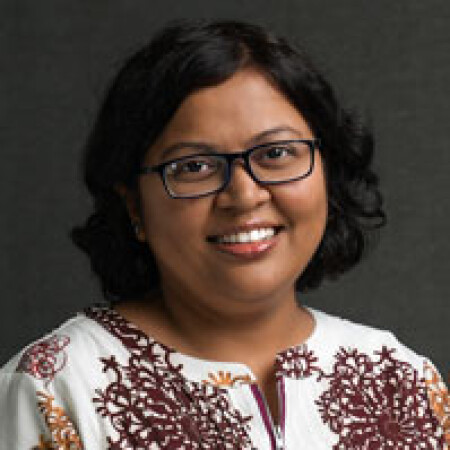
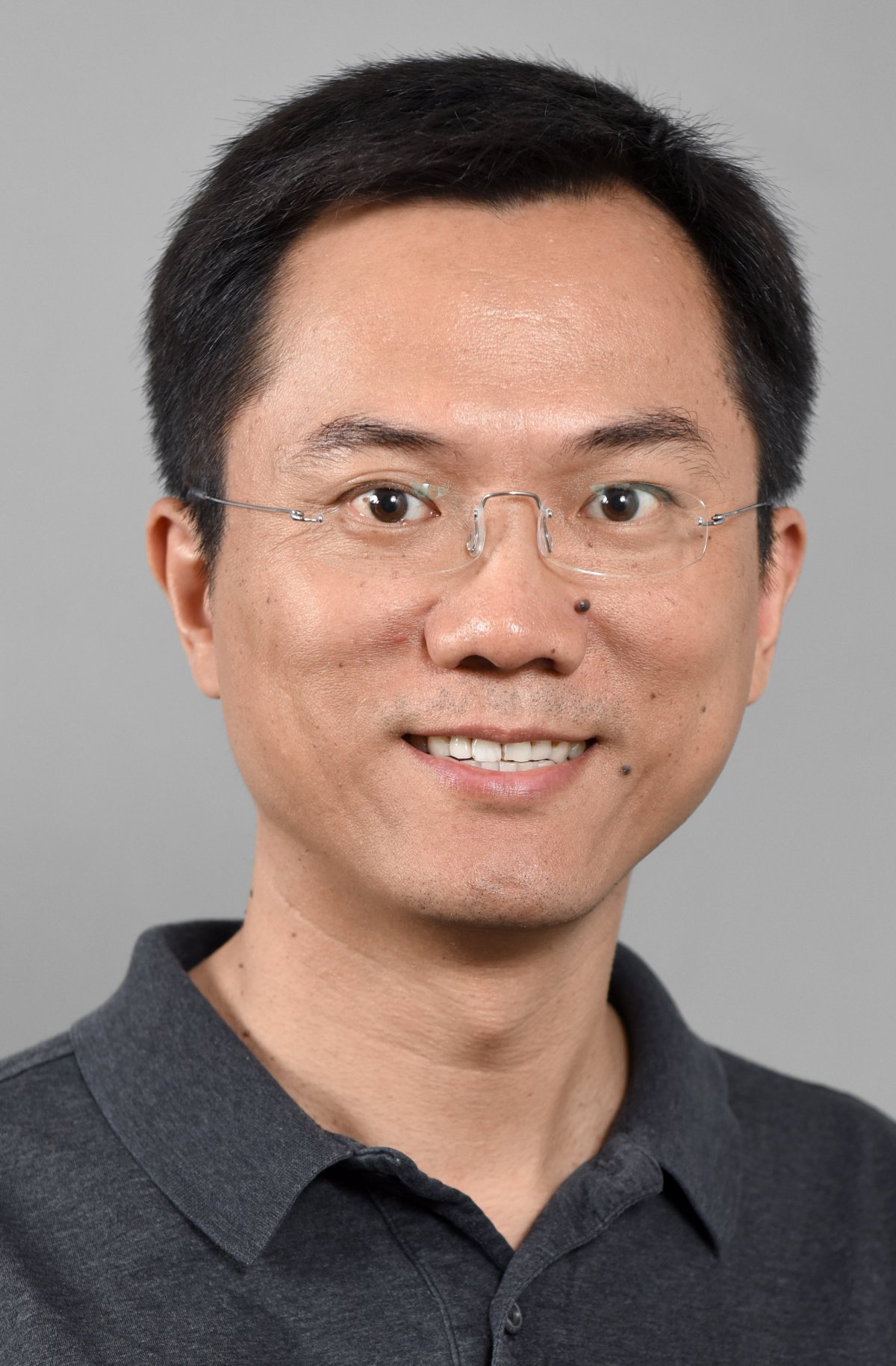
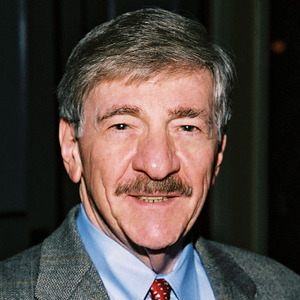
Professor Arokia Nathan is affiliated with the Department of Engineering at the University of Cambridge , where he holds the Chair in Photonic Systems and Displays. His work bridges semiconductor device engineering, flexible electronics, and intelligent systems. Specializes in Thin-Film Transistors (TFTs) for displays and sensors Key contributions to digital microfluidics and neuromorphic computing Focus on ultra-low-power and high-frequency CMOS circuits Advances in oxide semiconductor materials and hybrid electronics Recent publications highlight trends in neuromorphic perception , flexible battery technologies , and RF/wireless communication systems . His research also emphasizes bioinspired robotics , wearable electronics , and intelligent IoT devices .
Professor Agba Salman is a distinguished academic at the School of Chemical, Materials and Biological Engineering , University of Sheffield, holding the Chair in Particle Technology . He serves as Director of the Diamond Pilot Plant and Course Director for MSc Pharmaceutical Engineering. His research bridges fundamental particle science with industrial applications across food, pharmaceuticals, fertilizers, and catalysts. Salman's work focuses on granulation processes, powder restructuring, and continuous manufacturing. He has pioneered methodologies linking early-stage granulation science with equipment design through computational modeling and real-time monitoring systems. Collaborations with major companies like Nestlé, AstraZeneca, and GSK demonstrate his industrial impact. Key article trends reveal expertise in: High-shear granulation for food/pharma Roll compaction optimization Sustainable granulation practices PAT implementation in continuous processing Lipid/oil migration analysis Microstructure engineering Salman has received recognition through 10 International Granulation Workshops he hosted and 18 special journal issues edited. His group's work on industrial-scale continuous manufacturing (powder-to-tablet systems) addresses critical knowledge gaps while enhancing economic efficiency across multiple sectors.
Prof. Dr. Haris Gačanin is a faculty member at RWTH Aachen University, affiliated with the Institute for Distributed Signal Processing under the College of Electrical Engineering. His research focuses on integrating machine learning with wireless communication systems, particularly in industrial IoT, edge computing, and network optimization. Current academic rank: Professor Contact: harisg@dsp.rwth-aachen.de Research Interests: Wireless systems, machine learning, signal processing, and network optimization. Key contributions include: Adaptive resource allocation in IIoT and vehicular networks AI-driven channel estimation and feedback mechanisms Security-oriented emitter identification via metric learning Federated/transfer learning for edge environments Hardware-efficient deep learning models for mmWave and THz communications Methodological Focus: Combines reinforcement learning, attention mechanisms, and robust neural architectures with practical implementations on FPGA and vehicular systems.
Srikanth Rangarajan is an Assistant Professor at Binghamton University's School of Systems Science and Industrial Engineering. He holds a PhD and MS from the Indian Institute of Technology Madras (2017) and a BE from Anna University Chennai (2011). His research focuses on energy storage systems, thermal management of electronics, battery optimization, and digital twinning. He previously served as an Associate Research Professor in Mechanical Engineering at Binghamton under Bahgat Sammakia. Rangarajan authored the book Phase Change Material Heat Sinks: A multi-objective Perspective and holds a patent for a rotatable heat sink design. His teaching includes optimization techniques, thermal modeling, and neural networks. Recent work explores virus spread modeling via genetic algorithms, with a preprint under review in Journal of Healthcare Informatics . He has received multiple awards including an Institute Post-Doctoral Fellowship and Research Assistantships from the Indian government. His research bridges thermal engineering with advanced manufacturing and sustainability, addressing challenges in high-power electronics and data center cooling. Education: BE in Mechanical Engineering, Anna University (2011) MS in Thermal Engineering, IIT Madras (2017) PhD in Heat Transfer, IIT Madras (2017) Research Interests: Digital twin systems for battery optimization Thermal energy storage design Advanced electronics packaging Data center cooling innovations Phase change material composites His recent articles highlight cooling solutions for high-density electronics, battery recycling challenges, and predictive models for epidemiological patterns using computational methods. Ongoing work includes embedded cooling technologies for heterogeneous integrated circuits and sustainable thermal management strategies. Awards: Patent: Rotatable Heat Sink (Government of India) Institute Post-Doctoral Fellowship (IIT Madras, 2017) Research Associate, Divecha Centre (IISc, 2017) Half-Time Research Assistantship (MHRD, 2012-2013) Advising & Grants: While no formal advisees are listed, his prior roles indicate involvement in mentorship. His research has been supported by institutional grants including those from the Indian Ministry of Human Resource Development. Labs/Teams: Active in Binghamton's Systems Science and Industrial Engineering lab, collaborating on thermal management and additive manufacturing projects.
Ifana Mahbub is an Associate Professor at the Erik Jonsson School of Engineering and Computer Science , University of Texas at Dallas, specializing in Electrical & Computer Engineering . Her research focuses on energy-efficient integrated circuits, wireless power transfer systems for biomedical sensors, and advanced antenna designs for UAV and mm-wave applications. She leads the Integrated Biomedical, RF Circuits and Systems Lab . Education: Ph.D. in Electrical Engineering (2017), University of Tennessee, Knoxville B.S. in Electrical Engineering (2012), Bangladesh University of Engineering and Technology Research interests include: Ultrawideband/mm-wave phased-array antennas Far-field wireless power beaming V2V communication for UAVs Energy harvesting via reverse electrowetting Implantable/wearable sensor systems Recent work highlights advancements in high-efficiency rectennas, beamforming algorithms, and AI-driven metasurface design. Her systems address critical challenges in biomedical telemetry and aerial communication.
van Khang Huynh is a Full Professor in Mechatronics and Energy Systems at the Department of Engineering Sciences , University of Agder , Norway. He is also a member of the Norwegian Academy of Technical Sciences (NTVA) and has served as an Associate Editor for IEEE Transactions on Transportation Electrification . Education: D.Sc. in Electromechanics & Electric Drives, Aalto University, Finland (2012) M.Sc. in Power Electronics and Motor Drives, Pusan National University, South Korea (2008) B.Sc. in Electrical Power Engineering, Ho Chi Minh City University of Technology, Vietnam (2002) Research Focus: His research spans applied AI in condition-based maintenance , electrical machines , power electronics , design optimization , finite element analysis , and smart energy systems . He leads the Intelligent monitoring research group and is a member of the Energy systems , Intelligent mechatronics (iTron) , and Machine design groups. Projects & Funding: Enhancing Capacity in Condition-based Maintenance of Wind Energy (ECO-WIND) Performance and Health Monitoring of Hydroelectric Power Plants Analytics for Asset Integrity Management of Windfarms Industrial Internet methods for electrical energy conversion systems monitoring and diagnostics Operational Management in Interconnected Renewable Resources with ICT Compact Electric Winches PhD Supervision: He has successfully supervised 8 PhD dissertations and mentored 2 additional PhD projects , all in areas related to mechatronics, renewable energy, and intelligent systems. Labs & Teams: He leads the Intelligent monitoring research group and collaborates closely with the Energy systems , Intelligent mechatronics (iTron) , and Machine design groups at the University of Agder.
Elham Baladi is an Assistant Professor in the Department of Electrical Engineering at Polytechnique Montréal, where she conducts cutting-edge research in electromagnetics, antenna design, and microwave technologies. Her work focuses on metasurfaces, reconfigurable intelligent surfaces, and RF/microwave sensors with applications spanning satellite communications, medical diagnostics, and next-generation wireless systems. Dr. Baladi received her B.Sc. in Electrical Engineering with a focus on Communication Systems from the Iran University of Science and Technology in Tehran, Iran (2013), followed by a Ph.D. in Electrical Engineering specializing in Electromagnetics and Microwaves from the University of Alberta, Edmonton, Canada (2019). Prior to joining Polytechnique Montréal, she completed postdoctoral research at the University of Toronto's Reconfigurable Antenna Laboratory (2019-2021) and worked as an Antenna/Filter Design Engineer at Syntronic Research and Development Canada (2021-2022). Her research program explores metamaterials and metasurfaces for quantum applications, reconfigurable intelligent surfaces for communication systems, smart antennas for MIMO and satellite communications, and innovative RF/microwave sensors. Dr. Baladi's work bridges theoretical electromagnetics with practical engineering solutions, addressing challenges in wireless communications, sensing, and imaging technologies. She has published extensively in top-tier journals including IEEE Transactions on Antennas and Propagation, IEEE Transactions on Microwave Theory and Techniques, and Scientific Reports. Analysis of Dr. Baladi's recent publications reveals a strategic focus on metasurface applications across multiple domains, with increasing integration of AI techniques in electromagnetics. Her work spans antenna design for satellite communications, microwave sensors for material characterization, and innovative polarization control techniques. A notable trend is the practical implementation of theoretical concepts for real-world communication and sensing applications, with growing emphasis on healthcare applications like tumor detection. Dr. Baladi serves as a reviewer for multiple IEEE and OSA journals and is affiliated with the Advanced Research Centre in Microwaves and Space Electronics (POLY-GRAMES) and Astrolith. Her laboratory work focuses on experimental validation of theoretical concepts in metasurfaces and antenna design, with applications ranging from satellite communications to medical diagnostics. Her teaching portfolio includes Advanced Electromagnetics, Antennas and Propagation, and RF Filter Design.
Dr. Rebecca Smith is a Senior Lecturer in Psychology at the School of Human Sciences, University of Greenwich. Her academic career spans over 15 years, with a focus on social psychology. She specializes in teaching and research related to ostracism, rape myth acceptance, and homeless stigmatization, while also contributing to gender equality studies. Her work bridges theoretical and applied research in human behavior. PhD (Psychology), University of Dundee MA (Psychology), University of Dundee Research Interests: Dr. Smith’s work explores the psychological impacts of social exclusion, the cultural and cognitive underpinnings of rape myth acceptance, and societal biases toward marginalized populations like the homeless. She integrates these themes with broader social psychology frameworks. Article Trends: Her recent publications span social psychology (e.g., ostracism, homeless stigma) and interdisciplinary topics like IVF outcomes, galaxy dynamics, and West Nile virus surveillance. This reflects a diverse collaboration network across medical, astrophysical, and public health domains. Advising: Dr. Smith supervises PhD and EdD students in social psychology and gender equality, fostering research in human behavior and societal structures. She previously served as Deputy Head of Department (2015-16) and TMC Link Tutor (2009-13).
Professor Vishal Saxena is a faculty member in the Department of Electrical and Computer Engineering at the University of Delaware since 2019. Previously, he held positions at Boise State University (2010–2016) as Assistant and Associate Professor, and served as the Micron Endowed Professor of Microelectronics at the University of Idaho (2016–2019). His research focuses on analog electronic and photonic integrated circuits (ICs), particularly in sustaining IC design advancements post-Moore scaling through hybrid CMOS-photonic integration, neuromorphic computing, and energy-efficient embedded intelligence. Dr. Saxena earned his B.Tech. in Electrical Engineering from IIT Madras (2002), followed by M.S. and Ph.D. in Electrical and Computer Engineering from Boise State University (2007–2010). He has industry experience in semiconductor and telecommunication engineering. His work is supported by NSF, AFOSR, DARPA, NASA, and industry collaborators. Notable awards include the NSF CAREER (2015), AFOSR YIP (2016), and DARPA YFA (2019). His research interests span silicon photonic ICs for optical interconnects, RF photonic systems, neuromorphic circuits using emerging NVM devices, and high-speed analog-to-digital converters. He has pioneered compact modeling techniques for photonic components and developed energy-efficient architectures for spiking neural networks. Dr. Saxena’s publications reflect advancements in photonic integration, neuromorphic hardware, and mixed-signal IC design. He actively contributes to the IEEE community through editorial roles and conference steering committees, including MWSCAS and ISCAS.
Pedro Orvalho is a Research Associate in the Department of Computer Science at the University of Oxford, working with Professor Marta Kwiatkowska on the FUN2MODEL ERC project. His research bridges theoretical computer science with practical applications in software engineering and programming education. His educational background includes: PhD in Computer Science and Engineering (2025) from Instituto Superior Técnico, Universidade de Lisboa MSc in Information Systems and Computer Engineering (2019) from Instituto Superior Técnico BSc in Information Systems and Computer Engineering (2017) from Instituto Superior Técnico Orvalho's research spans Artificial Intelligence, Automated Reasoning, Formal Methods, and Program Repair, with significant contributions to programming education tools. His work integrates formal methods with machine learning techniques to develop novel approaches for program verification and repair, particularly focused on introductory programming assignments. His scientific achievements have been recognized with prestigious awards: Vencer o Adamastor (VoA) - 3rd Edition (2025) ELISE Mobility Grant (2024) COST Travel Grant (2022) Excellence in Teaching IST Awards (2021 and 2024) ACM SIGSOFT Distinguished Paper Award (ESEC/FSE 2021) FCT PhD Scholarship (2020-2024) With five years of teaching experience at Instituto Superior Técnico, Orvalho has developed educational tools like GitSEED and MENTOR that bridge his research with practical classroom applications. His research has been supported by multiple grants including the ERC FUN2MODEL project and FCT PhD Scholarship, demonstrating both academic and practical impact. He maintains active collaborations with researchers from Czech Technical University in Prague, Carnegie Mellon University, and industry partners like OutSystems, contributing to an international research network focused on software reliability and educational technology.
Yu [Kevin] Cao is the Louis John Schnell Professor in the Department of Electrical and Computer Engineering at the University of Minnesota. His research focuses on microelectronics co-design for energy-efficient computing, spanning integrated circuit design, semiconductor physics, and machine learning methodologies. He leads the Microelectronics Co-design Research Group and actively collaborates with institutions like Georgia Institute of Technology, Sandia National Laboratories, and Notre Dame. His research interests include AI hardware acceleration , in-memory computing , cryogenic CMOS design , and 3D integration of heterogeneous chiplets . Current initiatives explore reconfigurable on-package systems for AI, spiking neural networks on neuromorphic hardware, and low-temperature logic technologies. Recent publications and projects highlight advancements in AI accelerators , RRAM-based compute-in-memory , graph convolutional networks , and 3D integration . His group develops tools like MN-SIM 2.0 for memristor modeling and investigates novel materials for neuromorphic systems. Grants include collaborative NSF funding for chiplet-based AI systems, CoCoSys center funding from SRC, and DOE/Sandia projects on neuromorphic hardware. Future work emphasizes scalable co-design frameworks for intelligent systems and heterogeneous integration challenges.
Gintaras Reklaitis is the Burton and Kathryn Gedge Distinguished Professor of Chemical Engineering at Purdue University's Davidson School of Chemical Engineering. He joined Purdue in 1970 and holds a B.S. from Illinois Institute of Technology (1965) and M.S./Ph.D. from Stanford University (1969). His research focuses on applying computing and systems technology to optimize processing systems, particularly in pharmaceutical manufacturing and integrated energy systems. Key areas include batch process design, enterprise-wide planning, and robust scheduling under uncertainty. Professor Reklaitis has been recognized with prestigious awards, including National Academy of Engineering membership (2007) and the Professional Achievement Award from Illinois Institute of Technology (2006). He has co-advised multiple graduate students, including Megha Das, Zachary Hillman, Shrivatsa Korde, and Dalton Yu. His work appears in journals like Computers & Chemical Engineering and Journal of Pharmaceutical Sciences . Research highlights include developing frameworks for real-time quality assurance in pharmaceutical manufacturing, integrating data management systems, and advancing continuous manufacturing technologies. His contributions also span editorial roles, including Editor-in-chief of Computers & Chemical Engineering (1986–2008). Current projects emphasize digital design tools, techno-economic analysis, and sensor-driven process monitoring.
Ben Ward-Cherrier is a Senior Lecturer in Robotics at the University of Bristol's School of Engineering Mathematics and Technology. His research focuses on biomimetic tactile sensing, neuromorphic systems for robotics, and haptic interfaces. He develops artificial tactile systems inspired by biological sensory mechanisms for applications in prosthetics, robotic manipulation, and human-robot interaction. Key research areas include neuromorphic tactile sensors that mimic biological afferents, real-time texture and edge classification algorithms, incipient slip detection for stable grasping, and vibrotactile feedback systems. Recent work integrates spiking neural networks with tactile hardware for efficient sensory processing. Publications demonstrate advancement in tactile sensing capabilities, including braille recognition in noisy environments, psychophysics-inspired benchmarking, multi-modal texture/velocity classification, and industrial applications like composite defect detection. Research bridges computational neuroscience with practical robotic systems.
Joseph Renzulli is the University of Connecticut Board of Trustees Distinguished Professor of Educational Psychology at the Neag School of Education. He is a global leader in gifted education, recognized by the American Psychological Association as one of the 25 most influential psychologists. His pioneering work includes the Three-Ring Conception of Giftedness, Enrichment Triad Model, and curriculum compacting. He has secured over $50 million in grants and co-founded the Confratute Program and UConn Mentor Connection. Educational Background: BA, Rowan University M.Ed., Rutgers University Ed.D., University of Virginia Research Interests: His work focuses on creativity, talent development, and equitable access to gifted programs. He advocates for 'Enrichment-Based Differentiation' to engage all students, particularly marginalized populations. Recent initiatives include an AI-driven personalized learning platform and the Hartford Gifted and Talented Academy. Awards & Recognition: 2009 Harold W. McGraw, Jr. Prize in Education Consultant to the White House Task Force on Gifted Education Named among APA's Top 25 Psychologists Advising & Impact: Mentor Connection program connects >35,000 teachers worldwide Authored 500+ publications (many translated internationally) Developed assessment tools like the Scales for Rating Behavioral Characteristics of Superior Students Labs/Initiatives: Joseph S. Renzulli Gifted and Talented Academy (Hartford) Schoolwide Enrichment Model (SEM) global implementation Technology-based learning profiles matching student strengths to resources
Manuela Nocker serves as a Senior Lecturer in Organisation and Sustainability at Essex Business School (EBS), University of Essex, where she teaches Organisation Studies, Business Ethics, and Research Methodology. She has held significant leadership roles including Undergraduate Programme Director for Management Science and Entrepreneurship Group (2012-July 2019), module leader for capstone projects across all programs, and representative for the PRME programme on Principles of Responsible Management Education. As the institutional liaison for the UNAI Academic Impact scheme, she actively promotes sustainability and ethical principles in alignment with the UN Global Compact initiative. Dr. Nocker earned her PhD in Organisational Psychology from The London School of Economics and Political Science and completed her BSc in Work and Organisational Psychology at the University of Padua, Italy. Her academic journey includes previous roles as careers adviser, trainer, and management consultant before joining EBS in 2006. Her research focuses on critical approaches to project work, organizational ethnography, narrative and poetic approaches in organizational analysis, identity construction, ethics, social responsibility, sustainability, collaboration, learning, strategy-as-practice, and organizational innovation. Her work often examines organizational dynamics through qualitative, ethnographic methods with particular attention to professional identity, belonging, and ethical considerations in workplace settings. Analysis of her recent publications reveals a strong emphasis on healthcare governance (particularly NHS Foundation Trusts), emotional dynamics in organizational settings, and the intersection of technology with business models. Her work consistently demonstrates methodological innovation, particularly in ethnographic approaches, while maintaining a critical perspective on organizational phenomena. Recent publications increasingly address contemporary challenges including AI implementation, big data applications in HR, and sustainability in organizational contexts. British Council award winner for Knowledge Economy Partnership Programme UK-Pakistan (2014-17) Elected Senate member at University of Essex (Oct. 2011-15) Vice-President of Free University of Bozen-Bolzano (2014-February 2018) British Council award winner for Researcher Links Workshop (2013-2014) LSE annual research scholarship awards (1999-2003) Dr. Nocker has successfully supervised numerous doctoral students, with seven completed PhDs as first supervisor on diverse topics including entrepreneurial identity of Afghan migrants, NHS governance, gendered practices in Pakistani banking, organizational innovation in healthcare, and professional identity in higher education. Her research has been supported by significant grants including the British Council Knowledge Economy Partnership Programme UK-Pakistan and the British Council Researcher Links Workshop, demonstrating her commitment to international collaboration and knowledge exchange. As Editor of the Journal of Organizational Ethnography for a decade (2012-2022), she has significantly shaped scholarly discourse in organizational studies.