Mark Stremler is a Professor in the Department of Mechanical Engineering at Virginia Tech's College of Engineering, serving as the Engineering Mechanics Graduate Chair. His research focuses on fluid mechanics, with emphases on vortex dynamics, fluid-structure interaction, and biological fluid mechanics. He holds the Otto Moensted Visiting Professorship and has been recognized with awards including the Liviu Librescu Faculty Prize and Army Research Office Young Investigator award. His academic leadership roles include directing the Multi-Scale Transport in Environmental and Physiological Systems (MultiSTEPS) IGERT Program (2010-2017), serving as Graduate Chair of Engineering Mechanics (2019-present), and directing undergraduate studies in Engineering Science and Mechanics. He earned his Ph.D. from the University of Illinois at Urbana-Champaign and dual B.S. degrees in Mechanical Engineering and Mathematics from Rose-Hulman Institute of Technology. Research interests include reduced-order modeling of fluid flows, coherent vortical structures, and applications in biological systems such as mosquito drinking mechanics and coronary hemodynamics. His work bridges theoretical, computational, and experimental approaches to fluid dynamics challenges.
Wei-Chung Allen Lee, PhD, is an Associate Professor of Neurology and Neurobiology at Harvard Medical School. His research focuses on understanding how neural circuits enable behavior through functional connectomics, combining advanced imaging, machine learning, and computational modeling. The Lee Lab develops tools like X-ray holographic nanotomography and GridTape for high-resolution neural structure analysis. Key interests include circuit principles in Drosophila, cerebellar interneurons, and synaptic wiring in decision-making regions. His work explores structural-functional relationships in networks, conservation across species, and developmental constraints on neural architecture. Recent studies highlight connectomic reconstructions in Drosophila, cerebellar disinhibition mechanisms, and blood-brain barrier heterogeneity. Methodological innovations in microscopy and image restoration underscore his lab’s interdisciplinary approach. The Lee Lab is located at 220 Longwood Avenue, Boston, MA, and collaborates on large-scale neuroimaging pipelines like the Open Connectome Project.
Louisa Wu is an Associate Professor in the Department of Molecular & Cellular Biology at the University of Maryland. Her research focuses on host defense mechanisms against pathogens, particularly the innate immune response in Drosophila melanogaster. She investigates signal transduction pathways and cellular interactions critical for immune function. Dr. Wu earned her Ph.D. from the University of California, San Diego in 1995. Her work combines genetic, biochemical, and cellular approaches to understand how insects combat infections. Recent studies include analyzing phagocytosis assays in vivo and the role of autophagy in immune regulation. She has contributed to elucidating Toll pathway roles in antiviral defenses and identified key genes like Rab14 and ird1 in bacterial immunity. Dr. Wu is affiliated with the BISI-Molecular & Cellular Biology (MOCB) graduate program. Her research has been published in journals such as Cell Reports, Journal of Immunology, and Development. While no specific awards are listed, her contributions to Drosophila immunity research are widely recognized. Her lab explores topics like RNA splicing factors' roles in immune regulation and vesicle trafficking pathways. Collaborations with colleagues like Norbert Perrimon and Eric Baehrecke highlight interdisciplinary approaches to studying immune mechanisms.
Dr. Sophie Wilkinson is an Assistant Professor at the School of Resource & Environmental Management, Simon Fraser University (SFU) since 2023. Her interdisciplinary research focuses on wildfire ecology and ecosystem management, integrating field studies, experimental fires, GIS, and ecological modeling to enhance resilience against wildfires. She holds a PhD in Ecohydrology from McMaster University, with prior degrees from the University of Leeds. Her work emphasizes understanding wildfire severity patterns and ecological tipping points in Canadian boreal forests and peatlands. Collaborating with the Canadian Forestry Service and land managers, she translates research into practical solutions, including a new fuel moisture index for wildfire danger rating systems. Key research themes include peatland ecohydrology, climate change impacts, and fire management strategies. She teaches REM 471 (Forest Ecosystems and Management) and is developing a community science platform (iWetland) for wetland monitoring. Wilkinson’s studies highlight the interconnectedness of human activities, environmental health, and wildfire dynamics. Her publications span over 30 peer-reviewed articles since 2020, addressing topics like peat burn severity thresholds, seismic line impacts on boreal ecosystems, and turtle nesting habitat recovery post-fire. She actively engages with policymakers and communities to bridge academic findings and real-world applications.
Floria Mora-Kepfer Uy is an Assistant Professor in the Department of Biology at the University of Rochester, within the School of Arts & Sciences. Her research focuses on the evolution of social behavior, particularly in insects, using integrative approaches that combine field and lab experiments with molecular and neural techniques. She investigates how relatedness, social interactions, environmental factors, and parasitic relationships influence cooperation, group formation, and neurobiological adaptations. Key research interests include the evolution of sociality, neuroethology, host-parasite interactions, behavioral ecology, and conservation. Her work employs model systems such as wasps (e.g., Mischocyttarus mexicanus, Polistes spp.) and explores topics like brain plasticity, sensory system adaptation, and genomic responses to environmental pressures. Dr. Uy’s research group actively accepts PhD students and utilizes a variety of methodologies, including neurogenomic analyses and behavioral experiments. While no specific grants or awards are listed, her publications highlight contributions to understanding social behavior mechanisms in insects.
Professor Ezio Rosato is a Professor of Biology at the University of Leicester's School of Biological Sciences. His research focuses on molecular genetics of circadian rhythms, examining biological clocks across diverse organisms from insects to crustaceans. Research investigates genetic and molecular mechanisms underlying circadian timekeeping, seasonal adaptations, and light-responsive behaviors. Current projects explore cryptochrome-mediated magnetosensitivity, circadian neuronal plasticity, and environmental influences on biological timing. Recent publications analyze ultrastructural changes in clock neurons, genetic regulation of seasonal phenotypes, and evolutionary dynamics of circadian systems. His work employs molecular genetics, behavioral analysis, and comparative genomics across model organisms. Professor Rosato collaborates internationally on chronobiological research and contributes to teaching programs in genetics and molecular biology.
Josie Clowney is an Associate Professor in the Department of Molecular, Cellular, and Developmental Biology at the University of Michigan, where she has held faculty position since 2017. Her research investigates the genomic algorithms that construct neural circuits during development, using Drosophila as a model to study how chemosensory systems drive both instinctual behaviors and learning. She teaches Bio 172 and an upper-level seminar on cellular diversity and scientific writing, and mentors graduate students through MCDB, CMB, NGP, and BIOINF PhD programs. Her educational background includes: Ph.D. in Biomedical Sciences (2012) from the University of California, San Francisco B.S. in Cellular and Molecular Biology (2005) from the University of Michigan, where she conducted research with Cunming Duan Clowney's research centers on understanding how definitive neuronal parameters are encoded in genomic information and translated into cellular architectures. Her lab hypothesizes that developmental algorithms for learning circuits versus instinctual circuits differ fundamentally in their genomic requirements, with chemosensory circuits serving as key models. Using fruit flies for their tractable brain organization, her work bridges computational principles and biological implementation to uncover universal brain organization rules. Analysis of her 15 most recent publications (2016-2025) reveals consistent focus on Drosophila mushroom body development, neural sexual differentiation, and spatial constraints in circuit formation. Key themes include non-deterministic mechanisms diversifying cell surface expression, chromatin dynamics in circadian regulation, and how input density tunes sensory responses. Her work integrates genomics, neuroanatomy, and behavior to model how compact genomic information generates complex neural architectures. No scientific awards were mentioned in the provided text. Dr. Clowney advises graduate students through multiple PhD programs at the University of Michigan, though specific student names and grant details are not provided in the source material. Her teaching includes foundational undergraduate coursework and advanced seminars emphasizing scientific writing. The active publication record spanning 2016-2025 indicates sustained research funding supporting her lab's investigations into neural circuit development. The Clowney Lab, housed in the Biological Sciences Building (4218 BSB), employs Drosophila genetics and neuroanatomical techniques to dissect developmental algorithms of brain wiring. Current projects explore how spatial constraints structure learning circuits, mechanisms of neural sexual differentiation, and the genomic encoding of circuit diversity. The lab collaborates within Michigan's neuroscience community through the Program in Biology and participates in interdisciplinary initiatives studying brain evolution and function.
Min Shin is a Professor and Chair of the Computer Science Department at the University of North Carolina at Charlotte (UNC Charlotte), where he also serves as Assistant Dean for Research in the College of Computing and Informatics. He earned his Ph.D. in Computer Science & Engineering from the University of South Florida in 2001. His research focuses on Computer Vision, particularly multiple object tracking and automated visual inspection of nuclear power plants. He leads the Video and Image Analysis Lab, developing user-friendly tracking software funded by NSF, NIH, DARPA, and industry grants. Notable projects include the ABCTracker.org platform, which deploys algorithms refined over 10+ years of research. Dr. Shin’s work spans tracking applications in diverse domains such as ants, bees, cells, termites, robots, and vehicles. He has mentored Ph.D. and undergraduate students extensively, emphasizing computational methods in biology and engineering. His service includes roles as Associate Editor for IEEE Transactions on Systems, Man, and Cybernetics-B, and program committees for top conferences (ICCV, CVPR, ECCV). His grants and collaborations reflect interdisciplinary strengths in vision algorithms, usability, and real-world deployment.
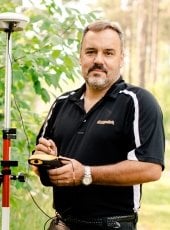
Mike Hyslop is a Teaching Professor at the Michigan Technological University , affiliated with the School of Forest Resources and Environmental Science . Contact him at mdhyslop@mtu.edu or via phone at 906-487-2308. His work focuses on spatial technologies, including Geographic Information Systems (GIS) and Global Positioning Systems (GPS), with applications in natural resource management, invasive species monitoring, and Great Lakes ecosystems. Education: MA in Geography (Michigan State University) Education: BS in Geography (Michigan State University) Hyslop's research emphasizes the utility of spatial tools in managing complex environmental data and solving resource use challenges. He investigates spatial trends of emerald ash borer populations in Michigan and has previously applied GIS to National Parks in the Great Lakes region, water supply protection, watershed analysis, wildlife habitat delineation, and modeling forest resources and invasive species. His projects also extend to analyzing demographics of Michigan Tech students and alumni through geospatial mapping. Notable trends in his publications include interdisciplinary applications of GIS in ecological studies, invasive species management, and environmental policy formulation. His teaching portfolio includes courses such as Intro to GIS (FW3540) , Map Design with GIS (FW4545) , and graduate-level seminars in GIS and GPS field techniques. Key collaborations include work with researchers at the Michigan Tech Ecosystem Science Center and the Ford Center , where he contributes to geospatial projects using aerial imagery and coordinate system resources.
Dan Cox serves as Dean of Natural Sciences in The College of Liberal Arts and Sciences and Professor in the School of Life Sciences at Arizona State University. He holds a B.S. in Biology from Wake Forest University and a Ph.D. in Cell Biology from Duke University, where he was an NIH pre-doctoral fellow. His postdoctoral training included a Jane Coffin Childs Fellowship and HHMI Research Associate position at UCSF. His educational trajectory includes: B.S. magna cum laude with honors in Biology, Wake Forest University (1992) Ph.D. in Cell Biology, Duke University Medical Center (1999) Postdoctoral training: Jane Coffin Childs Fellow & HHMI Research Associate, UCSF (2000-2004) Cox leads an internationally recognized neuroscience research program focused on neuronal diversity, circuit construction, and neural mechanisms of behavior—particularly pain perception and sensory neuropathies. His expertise spans neurobiology, cell biology, genetics, and computational modeling, with emphasis on multimodal sensory processing and brain plasticity. His lab has maintained continuous NIH funding for 20 years. His recent publications reveal dual research thrusts: fluid dynamics studies on drag reduction in pipe flows (examining vortex dynamics, Reynolds number effects, and wall oscillation techniques) and genetic engineering work including CRISPR-Cas9 delivery systems for immune system gene screening. This combination reflects interdisciplinary collaboration across engineering and biological domains. Key recognitions include: NIH pre-doctoral fellowship Jane Coffin Childs Fellowship for Medical Research HHMI Research Associate appointment Cox demonstrates exceptional commitment to mentoring across career stages and advancing student success through innovative pedagogies. His leadership extends to directing research centers, imaging facilities, and graduate programs—including roles as Director of the Center for Neuromics and Neuroscience Institute at Georgia State University. His NIH-funded research supports extensive interdisciplinary collaboration and training initiatives. Throughout his career, Cox has cultivated collaborative research environments through leadership in core facilities and interdisciplinary clusters, notably directing the 2CI Neurogenomics Fellowship and Brains & Behavior initiatives. His current deanship emphasizes cross-college research integration within ASU's liberal arts framework.
Dr. Katrin Vogt is a researcher at the University of Konstanz, specializing in neuroethology and sensory systems. Her work focuses on understanding recurrent neural circuits governing state-dependent behavior, particularly in olfactory systems of Drosophila larvae. She leads a subproject investigating hunger-dependent serotonergic modulation in the antennal lobe, collaborating with a doctoral student. Her research bridges vertebrate and invertebrate models to identify conserved network principles across species. Dr. Vogt is part of a DFG-funded interdisciplinary team examining recurrent circuits' roles in flexible behavioral responses to environmental changes. Her research interests include neural circuitry modulation, sensory integration, and behavioral plasticity. Key projects involve analyzing how sensory inputs are modulated by internal states like hunger, and how recurrent connections enable adaptive responses. She has contributed to studies on visual and olfactory memory formation, multisensory integration, and navigational strategies in Drosophila. Publications highlight work on dopamine signaling in taste punishment, social behavior in larvae, and cross-species odor coding principles. Her findings aim to uncover fundamental mechanisms underlying sensory-driven behavior and neural plasticity in both vertebrates and invertebrates.
Associate Professor Myfany Turpin is an Associate Dean of Indigenous Strategy and Services at the Sydney Conservatorium of Music, University of Sydney. Her research focuses on ethnomusicology, linguistics, and ethnobiology, with a particular emphasis on Central Australian Indigenous cultures. She collaborates extensively with Indigenous communities to document and revitalize endangered languages and performance traditions. Education & Research: PhD in Musicology (2005) Specialization in Kaytetye and Warlpiri language documentation Leader of ARC-funded projects investigating dingo lexicon and traveling songs Research Interests: Turpin explores intersections between language and music, including poetic meter in Aboriginal song-poetry and biocultural knowledge embedded in ceremonial practices. She develops innovative tools like the Kaytetyemoji app to support language revitalization. Grants & Collaborations: ARC Discovery Project (2025-2028): Dingo Lingo ARC Indigenous Discovery Project (2024-2029): Recirculating Travelling Songs Modularised Cultural Heritage Archives (2022-2024) Awards: Received Honorable Mention from International Council for Traditional Music (2021) for work on Warlpiri seed ceremonies. Labs & Teams: Co-director of Sydney Southeast Asia Centre and member of Charles Perkins Centre. Collaborates with Batchelor Institute and Australian Institute of Aboriginal and Torres Strait Islander Studies.
Dr. Hy Truong Son is an Assistant Professor in the Department of Computer Science at the University of Alabama at Birmingham (UAB), affiliated with the College of Arts and Sciences. He holds a Ph.D. in Computer Science from the University of Chicago and has prior experience as a Lecturer and Postdoctoral Fellow at the Halicioglu Data Science Institute, UC San Diego. His research focuses on AI-driven solutions for science and engineering, particularly deep learning applications in drug discovery, repurposing, and biomedical problem-solving through his HySonLab group. Dr. Son’s educational background includes a Ph.D. from the University of Chicago, emphasizing foundational training in computer science. His postdoctoral work at UC San Diego further solidified his expertise in data science and interdisciplinary AI applications. Research interests span AI for drug discovery, generative AI, multimodal learning, and healthcare technologies. His lab’s work integrates AI with molecular biology, medical imaging, and wearable sensor data to address challenges in precision medicine and environmental science. Notable projects include DrugPipe for drug repurposing and SilVar-Med for explainable medical imaging analysis. His recent publications highlight advancements in generative models, speech synthesis, protein design, and scalable graph neural networks. These works reflect a focus on bridging AI with real-world biomedical and engineering applications. While no awards are explicitly listed, his prolific publication record and active lab indicate significant contributions to the field. He advises students and engineers in his team, fostering collaborative research environments. Ongoing projects include wearable device datasets for mental health and multimodal biomedical knowledge graph development. Dr. Son’s HySonLab group emphasizes translational research, aiming to deploy AI solutions in clinical and scientific settings. Current efforts include optimizing molecular interactions via large language models and enhancing drug discovery pipelines through interdisciplinary computational methods.
Dr. Frank Friedrich is a Researcher at the University of Hamburg , affiliated with the Faculty of Mathematics, Computer Science and Natural Sciences and the Department of Biology . He leads the Electron Microscopy and Morphological Structural Analysis group at the Institute of Animal Cell and Systems Biology . Insect Morphology and Phylogenomics are central to his research Specializes in Synchrotron Radiation Microtomography (SR-μCT) for 3D anatomical reconstructions Collaborates on Holometabola Evolution and Phylogenetic Systematics His work spans Trichoptera (caddisflies) , Mecoptera (scorpionflies) , and Zoraptera , with a focus on head and thoracic anatomy . He has contributed to resolving insect phylogeny through innovative imaging techniques. Publications highlight his expertise in synchrotron radiation-based imaging and larval/adult morphological studies .
Simon Sponberg is the Dunn Family Associate Professor at Georgia Institute of Technology, holding joint appointments in the School of Physics and School of Biological Sciences within the College of Sciences. He directs the Agile Systems Lab and serves as Physics & Biological Sciences Director. His research bridges physics, biology, and engineering to understand the principles of animal locomotion. Dr. Sponberg received his Ph.D. in Integrative Biology from UC, Berkeley and completed postdoctoral research at the University of Washington. His academic journey began with undergraduate studies at Lewis & Clark College, where he first explored biomechanics research focusing on gecko adhesion. Dr. Sponberg's research centers on neuromechanics - an integrative science examining how physics and physiology enable animals to achieve remarkable stability and maneuverability. His work specifically investigates insect flight mechanics, particularly in hawkmoths (Manduca sexta), exploring how nervous systems interact with muscle mechanics to produce locomotion. Key research areas include: Mechanisms of Maneuverability: How animals maintain stable flight during perturbations Sensing in Complex Environments: Multisensory integration of vision and mechanosensation Multiscale Physics of Muscle: How muscle structure relates to function across scales Evolution of Flight: Comparative studies of different insect flight strategies His publication record reveals a strong focus on the intersection of biomechanics, neuroscience, and physics, with recent work emphasizing resonant mechanics in insect flight, precise neural control of movement, and multisensory integration for robust performance across varying environmental conditions. A notable trend is the integration of experimental biology with computational modeling and robotics to extract general principles of movement. Dr. Sponberg's scientific achievements have been recognized with numerous awards and fellowships: Hertz Fellow (since 2002) National Science Foundation Fellowships American Physical Society Awards Society of Integrative and Comparative Biology Awards Woods Hole Marine Biological Institute Fellowships University of California Fellowships International Association of Physics Students Awards As an advisor, Dr. Sponberg mentors a diverse team of graduate students and postdoctoral researchers through the Quantitative Biosciences Graduate Program, Neuroscience and Neurotechnology Graduate Program, and Bioengineering Graduate Program. His lab has received significant funding, including an NSF-funded Biological Integration Institute (the Integrative Movement Sciences Institute) and a FLAP MURI grant. His mentoring philosophy emphasizes interdisciplinary collaboration and hands-on research experience, with over 120 undergraduate students having participated in his lab through Georgia Tech's Vertically Integrated Projects program. The Agile Systems Lab, housed in the Howey Physics Building at Georgia Tech, brings together researchers from physics, biology, engineering, and neuroscience to study the fundamental principles of movement. The lab features state-of-the-art equipment for high-speed videography, electrophysiology, robotic flower tracking systems, and X-ray diffraction studies of living muscle. Current collaborative projects include the NSF-funded Integrative Movement Sciences Institute, which explores movement across scales from molecules to organisms, and the FLAP MURI grant investigating resonant mechanics in flapping flight.