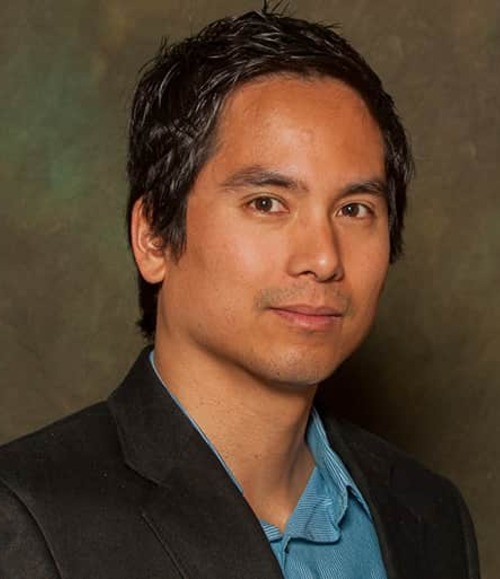
Dr. Mao Shan is a Senior Research Fellow at the Australian Centre for Robotics, part of The University of Sydney. He holds a PhD from The University of Sydney (2014) and has held research positions at Nanyang Technological University (2016-2017) and the Australian Centre for Robotics (2014-2016). His research focuses on autonomous systems, V2X communication, cooperative perception, and sensor fusion. Current students include Yaoqi HUANG, Henry LYU, Zhenxing MING, Nguyen TRAN, Tzu-yun TSENG, and Yupeng WANG. His work spans robotics, intelligent transportation systems, and control systems. Recent publications emphasize 3D object detection, cooperative perception frameworks, and autonomous navigation. He has contributed to the development of the University of Sydney Campus Dataset for robust autonomy testing and led cooperative perception projects funded by iMOVE CRC (2018). His research bridges theoretical advancements with practical applications in autonomous vehicles and multi-robot systems. Labs and affiliations include the Australian Centre for Robotics and the Intelligent Transport Systems Group. His interdisciplinary approach integrates probabilistic modeling, sensor fusion, and machine learning to address challenges in autonomous systems.
Dr Shu-Ling Lu is an Associate Professor at the University of Reading , serving as Director of the MSc Project Management Programme and a Member of Senate . Her research spans Innovation Management , Quality Control , and Net Zero Transitions in construction, alongside Heritage Building Integration and Gender Dynamics in built environment sectors. Her academic journey includes a PhD , MSc in Construction Engineering , and a Diploma in Architectural Engineering , all from institutions in Taiwan and the UK, complemented by a Postgraduate Certificate in Higher Education Practice from the University of Salford. Research Interests : Innovation in construction, quality management, heritage conservation, net-zero transitions, gender equity, and system dynamics applications. Article Trends : Focus on defects analysis , heritage integration , gender dynamics , system dynamics , and net-zero strategies across 15 recent publications. Scientific Awards : Fellow of the Chartered Institute of Building (FCIOB) Fellow of Higher Education Academy (FHEA) Full member, Association for Project Management (MAPM) BSI Committee Participation (Quality Management Standards) Supervision & Grants : Mentored 7 PhD students and led/co-led projects funded by Natural Environment Research Council (NERC) , EPSRC , and COST , with total grants exceeding £500,000.
Raegan Higgins is a Professor and Associate Vice Provost for Faculty Success at Texas Tech University's Department of Mathematics & Statistics. She earned her BS from Xavier University of Louisiana and MS/PhD from the University of Nebraska, focusing on time scales calculus. Her research spans oscillation criteria for dynamic equations, mathematical biology, and STEM education equity. She has led initiatives like the Bridges Across Texas LS-AMP program to support underrepresented students in mathematics. Higgins has received awards including the Gweneth Humphreys Award for Mentoring (2021) and was recognized as a Top 20 Under 40 by the Lubbock Chamber of Commerce (2019). She teaches advanced mathematics courses and has mentored numerous graduate students in areas like prostate cancer modeling and calculus curriculum reform. Her educational history includes a Bachelor of Science in Mathematics (Xavier University) and advanced degrees from the University of Nebraska, with an emphasis on time scales. Higgins actively engages in outreach through organizations like the Association for Women in Mathematics and the Infinite Possibilities Conference, promoting diversity in STEM. She has secured NSF grants totaling millions to support teacher training, minority participation, and undergraduate research experiences. Key research themes include time scales applications in biological models and improving mathematics teaching practices. Higgins' work bridges academia and community through programs like the South Plains Mathematics Fellows and the West Texas Middle School Math Partnership. Her articles address oscillation theory, STEM retention strategies, and interdisciplinary approaches to mathematics education.
Edwin Olson is an Associate Professor of Computer Science and Engineering at the University of Michigan, where he directs the APRIL Robotics Lab. He also serves as CEO of May Mobility Inc., a company focused on developing driverless shuttles. His research spans autonomy, perception, robotics, and learning, with notable contributions to technologies like AprilTags and the LCM middleware. Olson has led groundbreaking projects, including the 2010 MAGIC competition-winning robot team and the DARPA Urban Challenge. He has been recognized with awards such as Popular Science's 'Brilliant Ten' (2012), the DARPA Young Faculty Award (2013), and the College of Engineering Education Excellence Award (2015). His work emphasizes real-world applications of autonomous systems, including risk assessment, multi-policy decision making, and sensor fusion. Recent articles focus on autonomous agent behavior prediction, remote assistance systems, and infrastructure calibration. Olson's academic contributions are complemented by industry roles, including his tenure at Toyota Research Institute as Co-Director for Autonomous Driving Development. Education: PhD in Computer Science from MIT (2008) Key Projects: MAGIC 2010, DARPA Urban Challenge, Toyota Research Institute Labs: APRIL Robotics Lab Awards: DARPA Young Faculty Award, Brilliant Ten, Education Excellence Award
Andrew L. Feldman, MD , is a Professor of Laboratory Medicine and Pathology at Mayo Clinic, Rochester, Minnesota. He specializes in the molecular pathogenesis of T-cell lymphomas, focusing on genetic abnormalities, biomarkers, and individualized therapies. His work bridges next-generation sequencing (NGS) infrastructure and translational research to improve lymphoma diagnosis and subclassification. Primary Appointment: Consultant, Division of Hematopathology Joint Appointment: Consultant, Division of Experimental Pathology and Laboratory Medicine Education: MD, Brown University (1991) BA, Brown University (1986) Clinical Fellowship, Hematopathology, National Cancer Institute (2006) Research Interests: Dr. Feldman's research explores the genetic basis of T-cell lymphomas, which are often fatal. By characterizing mutations (e.g., DUSP22 , TP63 , STAT3 ) and applying bioinformatics, his team develops diagnostic tests to predict therapeutic responses. He also investigates how genetic heterogeneity impacts lymphoma classification and treatment strategies. Scientific Awards: Berard-Dorfman Founders Award, Society for Hematopathology (2015) Recipient Medal, Pedro Ruiz Gallo National University, Peru (2007) Artemis Fellowship, Nikolas Symposium XV, Athens (2005) NIH Fellows Award for Research Excellence (2003, 2000) First Prize, Resident Paper Competition (1999) Daland Award, New England Cancer Society (1999) Outstanding Junior Resident Teaching Award (1996) Joseph Collins Foundation Scholarship (1988) Advising and Grants: Dr. Feldman has directed the Mayo Clinic Biospecimens Core and led NCI-funded projects like the Lymphoma Specialized Program of Research Excellence (SPORE) and Molecular Classification of Anaplastic Large Cell Lymphoma . He has served on NCI Lymphoma Steering Committee and Mayo Clinic's NGS Infrastructure Subcommittee. Laboratory and Collaborations: His lab collaborates with the International Lymphoma Study Group , Mayo Clinic Comprehensive Cancer Center , and Association for Molecular Pathology . He co-developed clinical trials linking molecular profiling to therapeutic targets and contributed to the Lymphoma/Leukemia Molecular Profiling Project (LLMPP) Research Consortium.
Joan Iverson Nassauer is a Professor at the University of Michigan School for Environment and Sustainability (SEAS), specializing in Landscape Architecture. Her research bridges ecological design with cultural sustainability, focusing on human interactions with urban biodiversity and stormwater management at scales ranging from neighborhoods to continents. She has led Landscape and Urban Planning as Co-Editor-in-Chief from 2014-2021, elevating it to the top-ranked urban studies journal. Her work has earned recognition through Fellowships in the American Society of Landscape Architects and Council of Educators in Landscape Architecture, alongside Distinguished Scholar status from the International Association of Landscape Ecology. Her research emphasizes Transdisciplinary scenario-building for rural and urban landscapes Integrating community perceptions into ecological design Advancing policy through design innovation in agricultural and suburban environments Quantifying cultural sustainability through aesthetic and functional assessments Developing green infrastructure solutions for legacy cities and the Great Lakes region Key themes in her recent publications include stormwater management aesthetics, nature-based solutions for urban sustainability, and design methodologies for enhancing ecosystem services in human-dominated landscapes. Scientific awards include Fellow of the American Society of Landscape Architects (1992) Fellow of the Council of Educators in Landscape Architecture (2007) Distinguished Practitioner of Landscape Ecology (1998) IALE Distinguished Scholar (2007) 2023 Lifetime Achievement Award in Landscape Architecture Grants and collaborations highlight her NSF-funded projects on neighborhood greening, smart stormwater systems, and Detroit's green infrastructure initiatives. She leads the Landscape Ecology, Perception, and Design Lab , fostering partnerships between designers, ecologists, and local communities to advance sustainable landscape futures.
Andrew Warfield is an Adjunct Professor in the Department of Computer Science at the University of British Columbia (UBC) and a Senior Principal Engineer at Amazon. His research focuses on computer systems software, including virtualization, distributed storage, security, and high-availability systems. He previously held roles as Associate Professor at UBC, CTO at Coho Data, and Technical Director at Citrix Systems. His work has led to projects like Remus (high-availability replication), Tralfamadore (execution analysis), and secure hypervisor development with Xen. Warfield's education includes a PhD from the University of Cambridge's Computer Laboratory, where he researched I/O device virtualization under Steven Hand. He has held visiting roles at Intel Research Cambridge and internships at AT&T Research and Nortel Networks. Research Grants: Supported by Intel Research, NSERC, Network Appliance, and the Communications Security Establishment. Professional Activities: Technical Advisory Board Member at Teradici, and involvement in program committees for conferences like HotOS, EuroSys, and FAST. His research emphasizes practical systems, aiming to bridge the gap between theoretical computer science and real-world applications. Notable contributions include innovations in storage for virtualized environments, secure hypervisor architectures, and disaster-tolerant systems like SecondSite. Warfield is affiliated with UBC's Department of Computer Science and maintains active collaboration with industry partners. Though currently not actively recruiting students, his prior mentorship has influenced many in systems research.
Andrew Rowe is a Professor in Mechanical Engineering at the University of Victoria (UVic), with affiliations to the Institute for Integrated Energy Systems (IESVic) and the Advanced Mechanical Research Laboratory (AMRLab). He holds a BEng from the Royal Military College of Canada, MASc and PhD from UVic, and is a licensed Professional Engineer (P.Eng). His research focuses on thermodynamics, energy systems, cryogenics, and heat transfer, with particular expertise in caloric cycles, hydrogen systems, and energy systems analysis. His research emphasizes decarbonization strategies, including hydrogen integration into natural gas networks, grid flexibility under electrification scenarios, and the optimization of magnetocaloric materials for energy-efficient cooling. AMRLab, led by Rowe, develops technologies for energy conversion, storage, and system optimization, addressing challenges in low-temperature thermal systems and integrated energy networks. Recent work explores the systemic impacts of electrification in transportation and buildings, leveraging open-source tools like the NExus Solutions Tool (NEST) for multi-scale energy-water-land system modeling. His projects often address regional energy challenges, such as British Columbia’s transition to renewable energy and grid infrastructure resilience. Key contributions include studies on gas system decarbonization via hydrogen blending, thermal-hydraulic modeling of energy systems, and experimental validation of magnetocaloric materials. Rowe’s publications highlight interdisciplinary approaches to climate mitigation, emphasizing the interplay between technological innovation and systemic policy frameworks.
Bruno Takahashi is the Brandt Endowed Professor of Environmental Communication at Michigan State University, holding a joint appointment in the School of Journalism and AgBioResearch. He serves as Research Director of the Knight Center for Environmental Journalism and maintains affiliations with the Health and Risk Communication Center, the Environmental Science and Policy Program, and the Center for Latin American and Caribbean Studies at MSU. Born and raised in Lima, Peru, Dr. Takahashi earned his bachelor's degree in communication from Universidad de Lima, followed by M.S. and Ph.D. degrees in Environmental Science from SUNY ESF. Bachelor's in Communication, Universidad de Lima, Peru M.S. in Environmental Science, SUNY ESF Ph.D. in Environmental Science (specializing in environmental communication and participatory processes), SUNY ESF Dr. Takahashi's research program focuses on news coverage of environmental issues, environmental journalism practices in Latin America and U.S. Latino media, and identity in science communication. His work emphasizes counter-hegemonic environmental discourses in Latin American contexts, examining complex networks of actors, media, and communication processes embedded in post-colonial and social and environmental justice dynamics. He has conducted extensive field research in Peru, Bolivia, and Puerto Rico, with particular attention to environmental communication during disasters and in Indigenous communities. His recent scholarly output reveals a strong trend toward examining climate change communication through diverse cultural lenses, with significant attention to Latin American perspectives, immigrant experiences in the United States, and identity factors in science communication. His publications frequently address decolonial approaches to environmental communication and the need for more inclusive international scholarship that centers Global South perspectives. Scientific awards and recognitions include: 2024 AEJMC First Place in Latin American Communication Research 2021 Fellow of the Institute for Diverse Leadership, AEJMC 2019 Knudson Latin America Book Prize Multiple top paper awards from ICA and AEJMC conferences Dr. Takahashi actively mentors a diverse research team of Ph.D. students, post-doctoral associates, and MA students, with former students now holding positions at universities including University of Nevada, University of Minnesota, and Emory University. His research is supported by significant grants including a $2.8 million NSF grant for the SciComm Identities Project, funding from the Climate and Land Use Alliance, and multiple State Department and Embassy grants for environmental journalism training in Latin America. He has developed and led education abroad programs to Peru (2018, 2024) and the Netherlands/Belgium (2022), providing experiential learning opportunities for students in environmental communication. As Research Director of the Knight Center for Environmental Journalism, Dr. Takahashi leads initiatives supporting environmental journalists globally. His current projects include examining environmental discourses in the Peruvian Amazon related to oil spills affecting Indigenous communities, studying decolonial environmental journalism practices in Bolivia and Peru, and co-leading Working Group 5 on Public Engagement and Governance for The Lancet Countdown Latin America, which has generated significant media coverage in outlets like CNN and El País.
Priti Narayan is an Assistant Professor in the Department of Geography at the University of British Columbia (UBC), Faculty of Arts. Her research and teaching focus on urban processes and politics in India, with an emphasis on state-society relations, feminist methodologies, and public scholarship. Prior to joining UBC, she was a postdoctoral fellow at Princeton University’s Mellon Initiative in Architecture, Urbanism, and the Humanities. PhD in Geography, Rutgers University (2019) Narayan’s research explores how marginalized communities in Chennai, India, negotiate slum evictions through collective action. She collaborates with the Pennurimai Iyakkam (“Women’s Rights Movement”) to document working-class activists’ lived experiences and theorize their contributions to urban studies. Her work bridges academic and activist knowledge, advocating for interdisciplinary approaches to environmental justice and labor rights. Recent projects examine urban development in Tamil Nadu, labor codes, and occupational health for construction workers. Her academic publications span journals like Gender, Place & Culture , Urban Studies , and Environment and Planning D: Society and Space , often co-authored with local activists. She emphasizes ethnography, archival analysis, and collaborative methods. Scientific Awards : SSHRC Insight Development Grant (2023) UBC PRE Fund Award (2023) CIHR Operating Grant (Co-PI, 2021-23) Hampton New Faculty Research Grant Narayan supervises graduate students in Geography and Interdisciplinary Studies, including Varun Panickar and Paroma Wagle (postdoctoral). She currently does not accept new supervisees. Her courses at UBC include topics like urban environmental politics and climate change.
Stephan J. Goetz is a Professor in the Department of Agricultural Economics, Sociology and Education at the College of Agricultural Sciences, Pennsylvania State University. He is based at 207C Armsby Building, University Park, PA 16802, and can be reached at sjg16@psu.edu. His research spans agricultural economics, regional development, and rural policy, with a strong emphasis on human and social capital, innovation, and community well-being. His research interests focus on the role of markets and human capital in economic growth and poverty reduction. Key areas include regional food systems, self-employment, social network analysis, targeted regional development, agritourism, direct farm sales, and the digital divide. His work often integrates data science, spatial analysis, and policy evaluation to understand rural economic dynamics. The recent publications highlight a consistent trend in analyzing rural innovation, food system resilience, and socioeconomic impacts of technology and crises. His work combines empirical methods with optimization models, often using county-level U.S. data. Themes include food hub logistics, cloud computing in rural economies, pandemic-related food insecurity, and gender impacts in farming. While no specific awards are listed, his extensive publication record in high-impact journals reflects scholarly recognition. He has collaborated with researchers across disciplines, suggesting active grant-funded projects and likely student mentorship, though formal advisees are not named. He is involved in research on equitable communities and the built environment, and affiliated with initiatives related to health and environmental sustainability. His work with extension services indicates engagement with public outreach and community development programs.
Dr. Patrick J. McNamara is an Associate Professor in the Department of Civil, Construction and Environmental Engineering at Marquette University's College of Engineering. He directs the McNamara Research Group, which focuses on understanding how chemicals from consumer products impact public health and the environment once they pass through water treatment systems. His research bridges environmental engineering and microbiology to address critical water quality challenges facing modern infrastructure. Dr. McNamara's educational background includes: Ph.D., 2012, Civil Engineering, University of Minnesota, Twin Cities M.S., 2008, Environmental and Water Resources Engineering, University of Texas at Austin B.S., 2006, Civil Engineering (Minor - Spanish for the Business Professions), Marquette University His research program investigates how consumer product chemicals impact engineering treatment processes that rely on healthy bacteria to treat water. The McNamara Research Group develops non-traditional treatment processes to remove these chemicals from water and mitigate their environmental effects. His work spans antibiotic resistance in water systems, micropollutant removal technologies, pyrolysis of biosolids, PFAS contamination, and electrochemical treatment processes. Specific areas include the impact of corrosion inhibitors on antibiotic resistance, removal of chemicals via drinking water treatment, environmental antibiotic resistant bacteria, beneficial biosolids reuse, and pyrolysis applications. Dr. McNamara's publication record demonstrates a strong focus on emerging water quality challenges, particularly the intersection of chemical contaminants and antibiotic resistance. His recent work examines corrosion inhibitors' impact on antibiotic resistance in drinking water, PFAS mitigation through advanced treatment processes, and environmental drivers of antibiotic resistance in stormwater systems. His research combines fundamental microbiology with practical engineering solutions to address complex water quality issues. Dr. McNamara has received numerous honors and awards: 2022 OCOE Outstanding Researcher Award from Marquette University Marquette University's Campus 2020 KEEN Rising Star Faculty Scholar Award from Provost Office (2019) Central States Water Environment Association Bill Boyle Outstanding Educator Award (2018) Way Klingler Young Scholar Award (Marquette University, 2018) Excellence in Review Award – Environmental Science & Technology (2017) Dr. McNamara has secured significant research funding as Principal Investigator on multiple projects, including NSF grants focused on mitigating antibiotic resistance in drinking water and studying the environmental impacts of quaternary ammonium compounds. His current research portfolio includes projects on PFAS removal through novel electrocoagulation-peroxidation processes, designing green stormwater infrastructure to combat antibiotic resistance, and removing contaminants from greywater using electrocoagulation technology in collaboration with industry partners like Kohler Company. The McNamara Research Group at Marquette University maintains strong collaborations with researchers across multiple institutions and works closely with water utilities and industry partners to translate research findings into practical solutions for water treatment challenges. Their work addresses critical infrastructure needs while protecting environmental and public health through innovative engineering approaches.
Jennifer Robinson is Professor of Human Geography at University College London (UCL), with a distinguished career spanning institutions like the London School of Economics, The Open University, and University of Natal. Her work bridges global urban studies, postcolonial geography, and comparative urbanism, reshaping urban theory through critiques of modernity and neoliberalism. She co-directs the UCL Urban Laboratory and has led international conferences like At the Frontiers of the Urban (2019). Her research focuses on reorienting urban studies through postcolonial and global South perspectives, advocating for comparative methods to transcend Eurocentric frameworks. Key themes include urban governance, political geography, and large-scale development, particularly in African cities. Recent publications highlight trends in global urban theory, comparative urbanism, and the interplay of finance and urban development. She has received prestigious awards such as the RGS-IBG Murchison Award (2009) and an ERC Advanced Grant (2019), and has been widely cited in Geography and Urban Studies. RGS-IBG Murchison Award (2009) Fellow of the Society of South African Geographers (2016) ERC Advanced Grant (2019) Robinson has examined over 30 PhD theses internationally and held editorial leadership roles, including Editor-in-Chief of the Studies in Urban and Social Change book series. She directs comparative research programs funded by ESRC and contributes to scientific assessments like the UK Research Excellence Framework.
Melissa Roderick is the Herman Dunlap Smith Professor at the Crown Family School of Social Work, Policy, and Practice. She co-directs the Chicago Consortium on School Research and specializes in the critical transitions from high school to college and urban education reform. Her work combines qualitative and quantitative methods to address dropout prevention, grade retention, and summer program efficacy. Focus on student transitions Co-director, Chicago Consortium on School Research Expert in mixed-methods research Grants from J. P. Morgan Chase, Spencer, and Wallace Foundations Roderick's research explores college readiness , noncognitive factors , and urban school reform . Her work emphasizes data-driven interventions and policy analysis, particularly in Chicago Public Schools. Recent publications highlight college match indicators , academic momentum , and systemic barriers in college access. Her scholarly contributions include analyses of: Advanced Placement program efficacy Noncognitive skill development Postsecondary outcomes for IB students Long-term impacts of ninth-grade interventions Scientific recognition includes: Crown Family School teaching excellence award Chicago Sun-Times '100 Most Powerful Women' (2004) Roderick has received funding from multiple foundations, including the J. P. Morgan Chase Foundation, Spencer Foundation, and Wallace Foundation. She currently chairs the board of North Lawndale College Preparatory Charter High School and has led initiatives to restructure urban school systems through longitudinal data analysis and curriculum reform.
Marios Polycarpou is a Professor of Electrical and Computer Engineering and Director of the KIOS Research and Innovation Center of Excellence at the University of Cyprus. He holds honorary positions at Imperial College London and is a member of Academia Europaea. His expertise spans intelligent systems, adaptive control, machine learning, and critical infrastructure. Education: B.A. Computer Science (Rice University, 1987) B.Sc. Electrical Engineering (Rice University, 1987) M.S. Electrical Engineering (University of Southern California, 1989) Ph.D. Electrical Engineering (University of Southern California, 1992) Research Focus: Polycarpou’s work emphasizes fault diagnosis in cyber-physical systems, water distribution networks, and adaptive control. He pioneers digital twin technologies for infrastructure resilience and develops algorithms for real-time anomaly detection and system optimization. Article Trends: His recent publications address adaptive control strategies, cybersecurity in networked systems, and AI-driven solutions for water management. Key themes include distributed control, event-triggered mechanisms, and transformer-based anomaly localization. Awards: 2023 IEEE Frank Rosenblatt Technical Field Award 2016 IEEE Neural Networks Pioneer Award Fellow of IEEE and IFAC Grants & Leadership: He secured prestigious grants including ERC Advanced and Synergy Grants. He led KIOS CoE’s Horizon 2020 projects and served as IEEE Computational Intelligence Society President (2012–2013). Labs & Teams: Directs the KIOS CoE, a hub for AI in critical infrastructure. Collaborates on projects like ERC Water-Futures, focusing on long-term water system transitions and contamination mitigation.