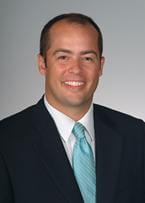
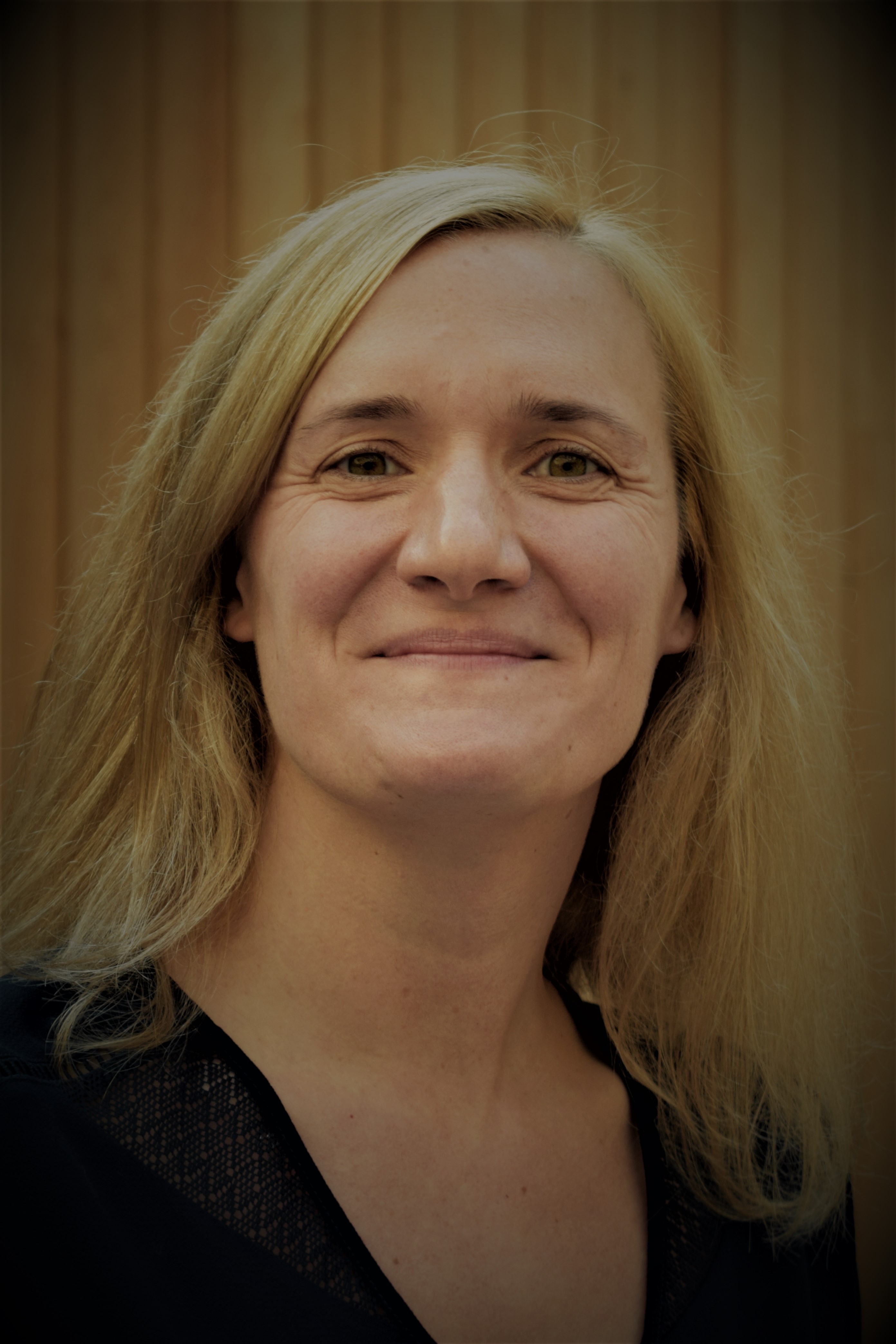
Andrew Goodwin, M.D., MSCR, is a Professor of Medicine and Section Chief of Critical Care at the Medical University of South Carolina (MUSC). His research focuses on clinical and translational studies to improve critical illness outcomes through electronic health record (EHR) innovations, clinical decision support systems (CDSS), and multicenter clinical trials. He leads MUSC’s ICU clinical trials program, collaborating with networks like PETAL, ACTIV, and STRIVE, and investigates EHR-driven adherence to ICU best practices and machine learning applications in clinical trials. Dr. Goodwin received his B.S. in Bioengineering from Syracuse University, M.D. from SUNY Stony Brook, and completed residency at Massachusetts General Hospital and fellowship in Harvard’s Combined Program. He joined MUSC faculty in 2011, where he directs research infrastructure through the CTSA program and trains early-career clinical trialists. Critical Care Clinical and Translational Research EHR-enabled Investigation Clinical Decision Support Systems Sepsis Respiratory Failure His recent publications span 2014–2024, addressing topics like EHR harmonization, CDSS for fluid prescribing, driving pressure in ARDS, and microRNA in sepsis. Awards include the Department of Medicine’s Research Faculty Mentor of the Year.
Prof. Dr.-Ing. Stephan Engelsmann is Professor of Structural Design and Structural Mechanics in the Department of Architecture at the State Academy of Fine Arts Stuttgart since 2002 and Deputy Chairman of the Architecture Study Commission. He also serves as President of the Baden-Württemberg Chamber of Engineers since 2014 and co-founded Engelsmann Peters GmbH Consulting Engineers in 2006. His career uniquely bridges academic excellence and professional engineering practice across multiple disciplines. His educational journey includes: Civil Engineering degree from Technical University of Munich (Dipl.-Ing., 1991) Research assistant at University of Stuttgart (1993-1998), earning Dr.-Ing. with dissertation on 'Integral concrete bridges' Architecture studies at University of Bath, UK (1998-1999), completing Master of Arts in Architectural Design with dissertation 'Rethinking the urban bridge as public space' Prof. Engelsmann's research focuses on the creative intersection of structural engineering and architectural design, where he emphasizes that 'constructive design is a controlled interaction between reason and emotion.' His work spans structural theory, innovative construction methods, and the integration of artistic expression with technical precision. He specializes in lightweight structures, bridge design, and the use of advanced materials including plastics, glass, and concrete, with particular emphasis on sustainable building practices and resource efficiency. His recent publications reveal a strong focus on innovative structural solutions for public infrastructure, particularly gridshell structures for shopping centers, elegant bridge designs, and sustainable construction methods. His work consistently explores the potential of unconventional materials and construction techniques, demonstrating how aesthetic considerations can be seamlessly integrated with structural efficiency in projects ranging from bus stations to cultural buildings. His numerous awards reflect excellence across engineering and architectural design disciplines: Multiple Hugo Häring Auszeichnungen (2020) for library and military facility projects Staatspreis Baukultur Baden-Württemberg (2020, 2016) German Design Gold Winner (2018) Preis des Deutschen Ingenieurbaus (2016) Iconic Design Award (2016) Red Dot Award (2015) Elias-Holl-Preis (1986) Throughout his career, Prof. Engelsmann has guided numerous student projects that bridge theory and practice, from the AKA seesaw (2011) to the UC°A Mobile climate adaptation project (2023). His teaching methodology emphasizes hands-on learning, with students developing and constructing innovative structures using materials ranging from traditional wood to advanced plastics. He has secured significant funding from organizations including the Baden-Württemberg Foundation to support research in sustainable construction and climate-adaptive architecture. Prof. Engelsmann leads the 'Class for Structural Design and Structural Engineering' at the State Academy of Fine Arts Stuttgart, where he and his team explore the boundaries between architecture and engineering. His consulting firm, Engelsmann Peters GmbH, works on sophisticated structural projects worldwide. Current research focuses include pneumatic structures for sun protection systems, experimental clay construction, and innovative approaches to urban climate adaptation through structural design, continuing his decades-long commitment to merging artistic expression with engineering precision.
Nele Mentens is a full professor at both KU Leuven and Leiden University, where she leads cutting-edge research in applied cryptography, hardware security, and secure embedded systems. At KU Leuven, she is affiliated with the Faculty of Engineering Technology and the Electrical Engineering Department (ESAT), leading the Emerging Technologies, Systems & Security (ES&S) research group at the Diepenbeek campus. Simultaneously, she holds a full professorship at Leiden University’s Leiden Institute of Advanced Computer Science (LIACS), focusing on applied cryptography and security. She has been instrumental in numerous national and international research initiatives, including Horizon Europe and NWO-funded projects. Full Professor, KU Leuven (since 2023) Full Professor, Leiden University (since 2020) Associate Professor, KU Leuven (2014–2023) Post-doctoral Researcher & Lecturer, KHLim / KU Leuven (2007–2014) Ph.D. in Engineering Science, KU Leuven (2007) M.Sc. in Electrical Engineering, KU Leuven (2003) Her research focuses on secure and efficient hardware design, particularly for cryptographic applications on FPGAs, reconfigurable architectures, IoT security, and neuromorphic computing. She explores physical attack resistance, side-channel analysis protection, and trusted computing architectures, with applications in healthcare, industrial monitoring, and endpoint AI. Her work bridges theoretical cryptography with practical hardware implementations, emphasizing energy efficiency and real-time performance. The 15 most recent publications reflect a strong trend toward secure, energy-efficient, and intelligent embedded systems. Topics include neuromorphic AI accelerators, trusted IoT architectures, dynamic reconfiguration for side-channel protection, and secure medical data processing. These works span disciplines such as computer architecture, cybersecurity, digital design, and embedded systems, with a focus on hardware-software co-design and real-world deployment. Nele Mentens has received recognition for her contributions, including: Best Paper Award, DATE'16 Best Paper Nomination, AsianHOST'17 Best Paper Award, CHES'19 She has supervised over 15 Ph.D. students and post-docs, both current and former, and has served as principal investigator in approximately 25 funded research projects. Her work has attracted significant grants from Horizon Europe, NWO, FWO, and national innovation programs. She actively contributes to the academic community through editorial roles in top journals and leadership in major conferences. Nele Mentens leads the ES&S research group at KU Leuven and collaborates closely with LIACS at Leiden University. Her team includes Ph.D. students, post-docs, and research experts working on projects like NimbleAI, NeuroSoC, and TrustedIoT. She has also established secure electronics labs through infrastructure grants and maintains strong international ties with institutions such as EPFL, Ruhr University Bochum, and ETH Zurich.
Dr. Sam S. Ramanujan is Professor of Computer Information Systems and Analytics at the University of Central Missouri , affiliated with the Harmon College of Business and Professional Studies . He teaches advanced object-oriented programming and software engineering courses, combining over two decades of academic expertise with substantial industry experience in complex system deployment. Doctor of Philosophy in Information Systems (University of Houston, 1995) MBA in CIS and Quantitative Analysis (University of Arkansas, 1989) PGDM in Information Systems (XLRI Institute of Management Studies, 1987) Bachelor of Arts (Hons) in Economics (University of Delhi, 1985) His research spans big data architecture , visual analytics , healthcare IT , and legal aspects of technology . He has published extensively on topics including software maintenance, e-commerce trust models, and cloud-based healthcare systems, with a focus on bridging technical and legal challenges in digital environments. Dr. Ramanujan's academic work shows a consistent focus on software engineering (1995–2017), healthcare IT (2004–2017), and legal-compliance frameworks (2000–2017). His publications demonstrate interdisciplinary expertise in merging technical systems with regulatory requirements . Best Paper Award , Journal of American Academy of Business, Cambridge (2006) He has contributed to pedagogical advancements in distributed computing curricula and collaborates with scholars like S. Kesh and S. Nerur. His industry experience informs real-world applications of his research in software maintenance and offshore operations.
Stuart Hamilton is a part-time Professor and Chair of the Department of Coastal Studies at East Carolina University (ECU) and the UNC Coastal Studies Institute. He holds a Ph.D. in Geography (GIS) from the University of Southern Mississippi (2012), an M.S. in Geography (GIS) from SUNY Buffalo (2003), and a B.S. in Geography and Applied Social Science from Canterbury University (1996). His research focuses on remote sensing and GIS analysis of nearshore environments, particularly mangrove forest change, hurricane impacts, and interactions between environmental degradation and socioeconomic outcomes.
Robin Carpentier is a Research Fellow at the School of Computing, Macquarie University . His work focuses on Data Privacy , Information Management , and Hardware Security , particularly in developing secure personal data management systems using Trusted Execution Environments (TEE) and SGX technology. Research Interests : Secure data processing with third-party code Privacy-preserving computation frameworks Hardware-based security for databases Dimensionality challenges in text privacy Resource-constrained privacy-preserving methods Recent Publications Trends : Robin's research over the past decade has explored data leakage mitigation, TEE-optimized database operations, and privacy-preserving mechanisms for large-scale data applications. His 2024 work extends these principles to secure AI/LLM interactions and advanced text privacy techniques.
Dr. Mohammad Monfared is a Senior Lecturer in the Department of Electronic and Electrical Engineering at Swansea University's School of Aerospace, Civil, Electrical and Mechanical Engineering within the Faculty of Science and Engineering. He joined Swansea University in 2022 after previously working at Ferdowsi University of Mashhad in Iran, where he received the Best Researcher Award in 2015. His academic journey began with a PhD in electrical engineering from Amirkabir University of Technology (Tehran Polytechnic) in 2010, which he completed with honors. Dr. Monfared's research focuses on the control and utilization of renewable energy generation systems and power electronics in the context of distributed generation, microgrids, and smart energy systems. His work is particularly relevant to Sustainable Development Goals 7 (Affordable and Clean Energy), 9 (Industry, Innovation and Infrastructure), 11 (Sustainable Cities and Communities), and 13 (Climate Action). He collaborates extensively with the Energy and Power Research Group (EPRG) at Swansea University, particularly with Dr. Meghdad Fazeli and Professor Mike Jennings, who holds a Royal Academy of Engineering Research Chair in 'Advanced Semiconductors for Electric Vehicles'. His research has practical applications and includes experimental verification in nearly all of his published works. Dr. Monfared's recent publications demonstrate a strong focus on power converter topologies, control strategies for renewable energy integration, and smart grid technologies. His work spans from high-boost impedance networks and DC-DC converters to grid-forming inverters and energy management systems. A notable trend in his research is the emphasis on practical implementation with experimental validation, bridging the gap between theoretical concepts and real-world applications in power electronics and renewable energy systems. Best Researcher Award from Ferdowsi University of Mashhad (2015) Department's Best Teacher Award at Swansea University (2023-24) Outstanding Reviewer Award for IEEE Transactions on Power Electronics (2023) IEEE Senior Member (2015) Dr. Monfared actively supervises PhD and MSc students, with current research projects focusing on gate-oxide reliability of wide bandgap power MOSFETs, single-phase PV-battery grid-forming inverters, and day-ahead PV generation forecasting. He collaborates with industry partners including National Grid, ABB, Siemens, and Vishay Intertechnologies on high-impact research projects. His future research direction involves establishing stronger industry collaborations to bridge the gap between academic innovation and real-world application, with a focus on advancing renewable energy technologies and power electronics for distributed generation and smart energy systems. Dr. Monfared also serves as an Associate Editor for both IEEE Transactions on Industrial Electronics and IEEE Transactions on Power Electronics, contributing to the scholarly community in his field.
Mathias Fischer is Professor for Computer Networks at the University of Hamburg since December 2021, affiliated with the MIN Department of Informatics. He previously served as an assistant professor at Universität Hamburg (2016-2021), University Münster (2015-16), and held postdoctoral positions at the International Computer Science Institute/UC Berkeley (2014-15) and the Center for Advanced Security Research Darmstadt/TU Darmstadt (2012-14). His educational background includes a PhD in Computer Science from TU Ilmenau (2012) and a diploma in Computer Science from the same institution (2008). He also served as Head of Data Literacy Education in IT Support at the University of Hamburg's ISA Center. Professor Fischer's research spans critical areas of modern network infrastructure, with particular emphasis on IT and network security , resilient distributed systems , and network monitoring . His work addresses fundamental challenges in cybersecurity including botnet monitoring, intrusion detection, and critical infrastructure protection. His research group actively investigates P2P networks and develops innovative approaches to network security that balance functionality with privacy preservation. Analysis of his recent publications reveals a strong focus on privacy-enhancing technologies, network security protocols, and resilient distributed systems. His research trajectory shows increasing attention to practical implementations of security solutions for edge computing environments, digital twin networks, and time-sensitive networking applications. The work demonstrates sophisticated integration of cryptographic techniques with network architecture design to address emerging security challenges in distributed systems. Among his notable recognitions are the Claussen-Simon Competition for Universities (2019), the University Prize of the Claussen-Simon Foundation (2019), and an Outstanding Paper Award at ACSAC (2018). Claussen-Simon Competition for Universities (2019) University Prize of the Claussen-Simon Foundation 2019 Outstanding Paper Award at ACSAC (2018) Professor Fischer leads multiple significant research projects including SOVEREIGN (Technologically sovereign security monitoring), RESISTANT (Resilient zero-trust platform for aircraft), and Dynamic situational awareness for rescue teams. His research group comprises numerous doctoral and master's students working on cutting-edge network security challenges. Current projects focus on developing resilient data and AI platforms for crisis situations, security monitoring for critical infrastructures, and innovative home network security solutions. The Computer Networks research group at the University of Hamburg, led by Professor Fischer, maintains active collaborations with industry and academic partners. The group operates specialized laboratories focused on network security testing, intrusion detection systems, and resilient network architectures. Current research directions include QUIC protocol security, federated learning security, and privacy-preserving network analytics, with strong emphasis on practical implementations that address real-world security challenges.
Patrick Christie is a Professor at the University of Washington's School of Marine and Environmental Affairs (SMEA) with a joint appointment in the Jackson School of International Studies. His research focuses at the intersection of environmental justice, sustainability science, and marine conservation, emphasizing Indigenous leadership in environmental recovery across the Salish Sea and Great Lakes regions. His research interests center on justice-centered environmental governance, with particular focus on Indigenous-led environmental recovery , petroleum infrastructure resistance movements , and tribal rights in marine resource management . Christie employs participatory action research and digital storytelling methods, working closely with communities like the Tulalip Tribes and Puyallup Chief Leschi Schools to develop collaborative approaches that integrate local, Indigenous, and scientific knowledge systems. His work challenges technocratic approaches to conservation by centering social justice and equity. Christie's recent publications reveal a strong trend toward transdisciplinary collaboration and decolonizing conservation practices , with increasing emphasis on Indigenous knowledge systems, social justice frameworks, and participatory governance models. His work spans marine protected areas, climate adaptation, and coastal community resilience, with significant focus on the Philippines, Indonesia, and North American Indigenous communities. Pew Fellowship in Marine Conservation Christie actively mentors students through SMEA capstone projects and co-teaches specialized courses like Environmental Justice and Political Ecology Field Course and Environmental Justice, Social Movements, and Collaboration in the Time of Climate Change . His research is supported by collaborations with organizations including Future Earth, Painel Mar (Brazil), and tribal governments. He has provided technical advice to the UN Food and Agricultural Organization, World Bank, and USAID. Christie leads projects using participatory research methods to engage tribal communities in environmental recovery efforts, including work with the Tulalip Tribes on coastal squeeze issues and with Winona LaDuke on sustainable agriculture alternatives to petroleum-based economies. He co-hosts workshops exploring human dimensions of environmental change and is developing learning networks to foster collaborative ocean governance.
Steven Ruggles is a Regents Professor in History at the University of Minnesota Twin Cities and serves as Director of the Minnesota Population Center , which includes the Institute for Social Research & Data Innovation and the Life Course Center. He specializes in Population censuses Microdata analysis IPUMS infrastructure Educational disparities Longitudinal demographic studies His research contributes to UN Sustainable Development Goals (SDGs) related to educational equity and population health. He has secured significant funding from: National Science Foundation NIH National Institute on Aging NIH National Institute of Child Health/Human Development Key collaborative projects include: Multigenerational Longitudinal Panel for Aging Research (2024-2029) Prospective Microdata for Aging (2023-2026) Current Population Survey Integration (2022-2026) Ruggles' recent publications focus on: Data privacy in decennial censuses Synthetic data limitations Multigenerational panel construction Contextual approaches to demographic research He actively collaborates with scholars such as: Steven Manson (Geography, UMN) Matthew Sobek (UMN) Kiran Muralidhar (Texas A&M)
Martin Nordin is an Associate Professor in the Department of Economics at Lund University's School of Economics and Management and serves as a Policy Officer at the AgriFood Economics Centre. His academic work focuses on labor market economics with additional expertise in health economics, agricultural economics, and environmental economics. Dr. Nordin's research at AgriFood has evaluated the effects of the Common Agricultural Policy and analyzed labor market issues within agriculture. His current research focuses on income differences between rural and urban areas and changes in incomes for ethnically segregated areas. His work contributes to several UN Sustainable Development Goals related to poverty reduction, environmental protection, and prosperity. His research spans multiple disciplines with a strong focus on labor market economics (62%), profit analysis (49%), higher education (48%), returns to education (42%), employment (39%), and mental health economics (39%). This diverse research portfolio demonstrates his ability to bridge economic theory with practical policy applications across multiple sectors. Dr. Nordin has been involved in significant research projects including 'Socioeconomic Segregation – The Impact of Neighborhoods, Schools and Policy Across the Life Course' funded by the Swedish Research Council (2023-2030), 'Constraints on the expansion of organic farming in Sweden' funded by FORMAS (2018-2022), and evaluation of Sweden's rural development program (2007-2013). His collaborative research network extends across Sweden and internationally, with recent external collaborations spanning multiple countries. This network supports his interdisciplinary approach to economic research that connects academic theory with real-world policy applications.
Renaud Pacalet is a Researcher at Institut Mines-Télécom – Télécom Paris , affiliated with the Communications and Electronics (Comelec) Department and the System on Chip (LabSoc) research team under the Information Processing and Communication Laboratory (LTCI). His work spans hardware security, embedded systems, and software-defined radio (SDR) architectures. Current Research: Hardware security, side-channel attacks (power, timing, fault injection), RISC-V security analysis using gem5, FPGA scheduling for cloud data centers, and model-driven design methodologies. Past Research: Hardware acceleration for ray tracing, SDR front-end processing, SoC security, and memory bus protection (SecBus project). Teaching: Courses on Digital Systems, Computer Architecture, and Hardware Security at EURECOM, including lab sessions on side-channel attacks and fault analysis. Email: renaud.pacalet@telecom-paris.fr Contact: Télécom ParisTech, Campus SophiaTech, 450 route des Chappes 06410 Biot, France
Yacine Atif is a Professor of Information Technology at the University of Skövde, affiliated with the School of Informatics and Department of Information Technology. He maintains an active research profile with numerous publications spanning from 2002 to the present, demonstrating sustained academic contribution in his field. His research interests focus on Internet of Things (IoT), Cybersecurity, Cyber-Physical Systems, Digital Transformation, Cloud Computing, and Educational Technologies. Professor Atif's work bridges theoretical research with practical applications, particularly in smart city technologies, critical infrastructure protection, and educational innovations. His research has evolved from early work in e-commerce trust (2002) to contemporary work on metaverse learning experiences (2023) and vehicle collision prediction (2025). Analysis of his recent publications (2018-2025) reveals a strong focus on cybersecurity applications for cyber-physical systems, particularly in critical infrastructure protection. His work demonstrates a progression from foundational IoT concepts toward sophisticated integration of machine learning and cognitive approaches in security analysis. The research portfolio shows consistent collaboration with both academic and industry partners across multiple countries. Professor Atif leads or contributes to significant research projects including the ongoing 'Intelligent Driver Support Systems and Safety Enhancement' (I2Connect) project (2023-2026) focused on developing next-generation Advanced Driver Assistance Systems for trucks, and previously led the 'Infrastructure Resilience – ELVIRA' project (2017-2020) which developed time-based infrastructure dependency analysis for power-grid risk assessment. His teaching responsibilities include multiple courses at both bachelor's and master's levels, with course credits ranging from 3 to 7.5 credits across various technology domains. His office is located in room PA420K at the University of Skövde, and he can be contacted at yacine.atif@his.se or by phone at 0500-448312.
Professor Anne Remke leads the safety-critical systems group at the Faculty of Mathematics and Computer Science at Westfälische Wilhelms-Universität Münster since October 2014. She is also affiliated with the Design and Analysis of Communication Systems group at the University of Twente, where she served as assistant professor from June 2010 and became associate professor in March 2016. Her research focuses on dependability and security in critical infrastructures, particularly electrical power systems and telecommunication networks. Her educational background includes a PhD (2008) and MSc (2004) in Computer Science from the University of Twente and RWTH Aachen respectively. Her doctoral research focused on 'Model Checking Structured Infinite Markov Chains,' for which she publicly defended her thesis in June 2008. Professor Remke's research interests center on cyber-physical systems, with particular focus on evaluation of charging strategies for local energy storage in smart homes and security of control networks (SCADA) in smart grids. Her work bridges theoretical model checking techniques with practical applications in critical infrastructure protection. She has made significant contributions to the analysis of hybrid Petri nets, stochastic models, and the development of tools for dependability evaluation. Her recent publications demonstrate a strong trend toward integrating machine learning with formal verification methods for cyber-physical systems. The research spans stochastic hybrid systems, reachability analysis, and security evaluation of smart grid infrastructures, showing consistent growth in both theoretical foundations and practical applications of dependability analysis. Veni award from Dutch Science foundation (NWO) for 'Counting on a reliable water supply' GI/ITG MMB prize for best diploma thesis in computer and communication systems Best Paper Award at Valuetools 2023 conference Best Repeatability and Artifact Evaluation Award at QEST21 Teaching award from Fachschaft FB10 (2019) Professor Remke has successfully secured multiple research grants including the DFG project 'RealyST: Reachability Analysis for Stochastic Hybrid Systems' in collaboration with RWTH Aachen. She has supervised numerous students including Katharina Sichma, Pauline Blohm, Joanna Delicaris, Verena Menzel, Mathis Niehage, Jonas Stübbe, and Lisa Willemsen. Her research group actively participates in international collaborations and standardization efforts in critical infrastructure security. The safety-critical systems group maintains several research tools including HYPEG (for simulation and analysis of hybrid Petri nets), TimeNET (a GUI for modeling hybrid Petri nets), and a Smart Neighbourhood Simulation Tool for community energy storage and trading. These tools support their research in modeling and evaluating complex critical infrastructures through both analytical methods and simulation techniques.
John S. Kaddis, Ph.D. is an Associate Professor in the Department of Diabetes & Cancer Discovery Science within the Arthur Riggs Diabetes & Metabolism Research Institute at City of Hope. With over 15 years of experience at City of Hope, Dr. Kaddis has developed scientific resources for team-based research initiatives focused on type 1 diabetes, creating data systems, analysis tools, and websites used by researchers worldwide. Dr. Kaddis earned his B.S. (Honors) in Biochemistry from California State University Los Angeles, where he completed undergraduate research supported by two National Science Foundation fellowships. He later earned his Ph.D. in Systems Biology and Disease from the University of Southern California. His academic journey includes positions as Assistant Professor since 2015 and Associate Professor since 2022 at City of Hope. Dr. Kaddis's research primarily focuses on the complex mechanisms of type 1 diabetes through systems biology and bioinformatics approaches. His work centers on understanding islet cell biology, beta cell dysfunction, and the immunological aspects of type 1 diabetes. His research has evolved from developing collaborative data resources to conducting cutting-edge investigations into genetic factors in diabetes pathogenesis. He has pioneered the creation of bioinformatics platforms that enable global collaboration in diabetes research. The trends in Dr. Kaddis's publications reveal a progression from foundational work on biobanking and data management toward increasingly sophisticated investigations of genetic and immunological mechanisms in type 1 diabetes. His recent work emphasizes translational applications, including potential therapeutic strategies and predictive models that span diverse ancestral backgrounds. His research bridges basic science with clinical applications through the Human Islet Research Network. Member, American Association for the Advancement of Science (2011-Present) Professional Member, American Diabetes Association (2010-Present) Member, Society of Clinical Research Associates (2003-2012) Lifetime Member, Tri-Beta Honor Society (2000-Present) Dr. Kaddis serves as principal investigator and co-investigator on multiple NIH and JDRF-funded projects, including the Human Islet Research Network Bioinformatics Center and the JDRF nPOD DataShare initiative. His work has established critical infrastructure for collaborative diabetes research, enabling researchers worldwide to access and analyze complex datasets. His laboratory has developed specialized data management systems that facilitate the sharing of islet cell research data across international boundaries while maintaining appropriate security and privacy protections. Dr. Kaddis's athletic pursuits in marathons and triathlons mirror his research approach—requiring stamina and perseverance to achieve long-term goals in diabetes research.