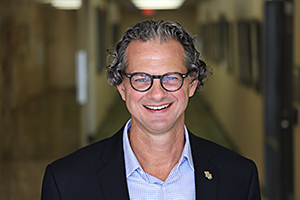
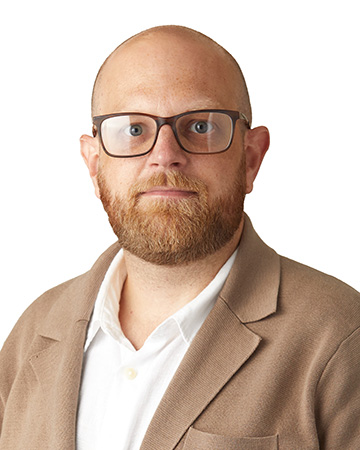
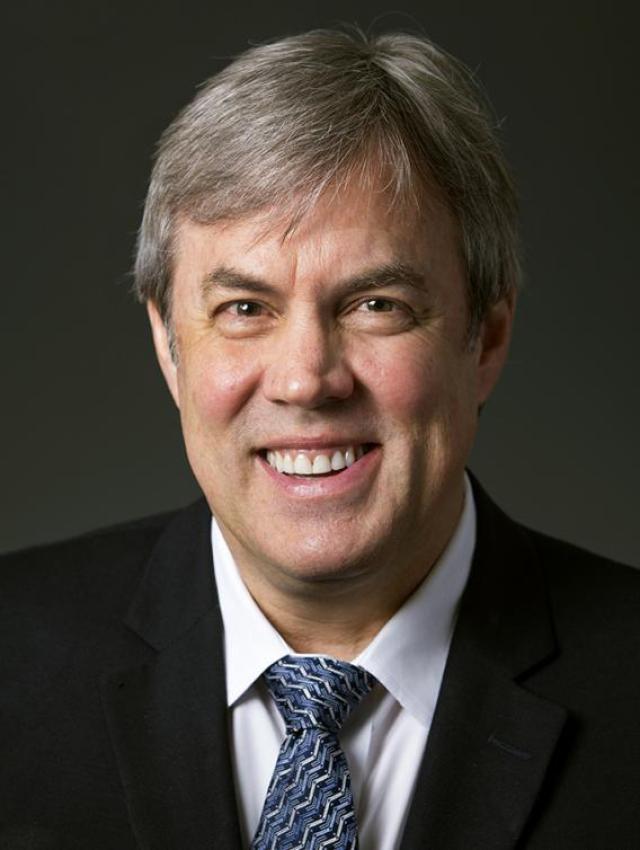
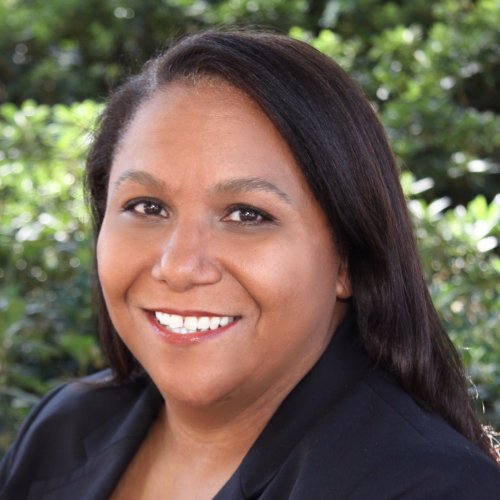
Russell Cropanzano is a Professor at the Leeds School of Business , University of Colorado, holding the Ted G. Anderson Professorship of Free Enterprise and Dean’s Faculty Fellow titles. His research focuses on organizational behavior , particularly workplace emotion, employee mental health, and perceptions of organizational justice with an emphasis on evolving employment relationships. PhD in Industrial-Organizational Psychology, Purdue University MA in Social-Organizational Psychology, Southern Methodist University He has received multiple scholarly awards, including best paper recognitions from journals like Consulting Psychology Journal and Journal of Management . A Fellow in multiple academic associations, he previously served as Editor of the Journal of Management . His career spans faculty roles at Colorado State University (1988-2002) and University of Arizona (2002-2012). 1998 Book Award - International Association of Conflict Management 2000 Outstanding Paper Award - Consulting Psychology Journal 2007 Best Paper Award - Academy of Management Perspectives 2010 Best Paper Award - Journal of Management
Shanique Brown serves as Assistant Professor of Management at the Zicklin School of Business, City University of New York (CUNY), where she investigates cognitive processes impacting organizational team dynamics and decision-making. Her research bridges industrial-organizational psychology with practical applications in extreme environments. Her academic foundation includes: Ph.D. in Industrial-Organizational Psychology from DePaul University M.A. in Industrial-Organizational Psychology from Southern Illinois University, Edwardsville B.Sc. in Psychology from the University of the West Indies Dr. Brown's research centers on decision-making mechanisms and team cognition within organizational contexts, with specialized focus on extreme environments like space missions. She examines how cognitive styles, working memory, and team composition influence performance in isolated, confined, and high-stakes settings. Her work integrates psychological theory with actionable frameworks for optimizing team effectiveness across virtual and physical workspaces. Analysis of her publication history reveals evolving expertise in team science, particularly regarding virtual team leadership, polycultural organizations, and NASA-relevant analog research. Recent work emphasizes selection-optimization-compensation models for team performance and psychosocial factors in extreme environments, demonstrating consistent contribution to organizational psychology literature. Her scientific recognition includes: Editorial Fellowship from Group Dynamics (2022) Wayne State University Faculty Accessibility Fellowship (2022) Teaching Innovation Development Excellence Award (2020) Faculty Teaching Award (2020) University Research Grant (2019) Robert A. Daugherty Memorial Award (2011) Dr. Brown actively collaborates on NASA-funded research through the Human Research Program, developing crew composition models for long-duration space missions. She serves on Baruch College's PhD Admissions and Interdisciplinary Business Major committees while maintaining leadership roles in the Society of Industrial-Organizational Psychology, including Task Force Chair and Conference Committee positions. Her grant work focuses on translating team dynamics research into operational frameworks for extreme environments. She leads interdisciplinary collaborations with NASA researchers and international scholars on projects including virtual escape room studies for team performance assessment and CREWS (Crew Recommender for Effective Work in Space) development, demonstrating commitment to solving real-world team challenges in high-consequence settings.
Anna S. Mattila is the Marriott Professor of Lodging Management and serves as Professor-in-Charge of the Graduate Program at the School of Hospitality Management, Pennsylvania State University. Her research spans social media, service recovery, servicescape, prosocial behaviors, cross-cultural studies, and wellness in hospitality contexts. Education : B.S. and Ph.D. from Cornell University, M.B.A. from University of Hartford Mattila's work examines how emotions, cultural norms, and technological innovations like AI influence consumer decisions in hospitality. Her studies cover topics from robotic service interactions to sustainable food marketing and moral psychology in tourism. She has published extensively in journals such as International Journal of Hospitality Management and Journal of Consumer Marketing . Her recent articles focus on AI integration in hospitality, consumer trust in virtual influencers, upcycled food adoption, and the psychological effects of servicescape design. Key themes include ethical consumption, digital transformation, and cross-cultural consumer behavior. Advising : Supervised Anqi Luo's dissertation on service recovery in 2022 Mattila's office is located in 224 Mateer Building, University Park, PA. She contributes to advancing hospitality research through methodological consulting and the Penn State Biomarker Core Laboratory.
Jon Singletary serves as Dean and holds the Diana R. Garland Endowed Chair of Child and Family Studies at Baylor University's Diana R. Garland School of Social Work. He joined Baylor in 2003 after earning his PhD in Social Work from Virginia Commonwealth University (VCU), alongside an MSW from VCU and MDiv from Baptist Theological Seminary. His career includes prior roles as Associate Dean (2010–2015) before becoming Dean in 2015. Before academia, Singletary worked as a pastor, community organizer, and social service administrator. His research focuses on strengthening congregational ministries, community development, and advocacy for vulnerable populations. Notable projects include launching the Texas Hunger Initiative and directing the Strengthening Congregational Community Ministries Project. He co-founded the Faith and Service Technical Education Network (FASTENnetwork.org) to bridge faith-based organizations and social service sectors. His publications explore spirituality's role in social work, faith-based program development, and community organizing strategies. Recent work examines career resilience among professionals in aging care and leadership development through Enneagram frameworks. Earlier research addressed child food security, orphan care in Kenya, and rural community capacity building. Singletary's leadership emphasizes integrating faith and practice, evidenced by his edited volumes on Christianity and social work, and his advocacy for competency-based education models. He holds leadership roles in national organizations like the North American Association of Christians in Social Work and has advised global initiatives in Africa.
Pamela J. Hinds is the Rodney H. Adams Professor and Fortinet Founders Chair in Stanford University's School of Engineering, holding a joint appointment in the Department of Management Science and Engineering. She co-directs the Center on Work, Technology, and Organization and serves on the Director's Council for the Hasso Plattner Institute of Design. Her research focuses on technology's impact on teams, collaboration, and innovation in global and cross-cultural contexts. She earned her Ph.D. in Organizational Science and Management from Carnegie Mellon University (1997). Research Interests: Dr. Hinds explores cross-boundary work teams, particularly those spanning national borders, examining cultural dynamics, language barriers, and site visits' role in knowledge sharing. She investigates human-robot interaction in workplaces and emerging technologies' effects on work practices, including AI, 3D printing, and open innovation systems. Her work bridges organizational behavior, human-computer interaction, and global work dynamics. Awards & Recognition: Lasting Impact Award (2018) Senior Editor of Organization Science Co-editor of Distributed Work (MIT Press) Advising & Leadership: As department chair, Hinds shapes educational and research agendas. Her grants include NSF-funded studies on digital technologies in agriculture and crowd-based innovation. She advises initiatives at the intersection of technology, work design, and global collaboration. Labs & Teams: Co-leads the Center on Work, Technology, and Organization, fostering interdisciplinary research on modern work environments. Engages in Stanford's Design School (d.school) to integrate human-centered design principles into workplace innovation.
Andreas Eklund is an Assistant Professor in the Marketing Department at the University of Wisconsin-La Crosse (UWL). He holds a Ph.D. in Marketing from Linnaeus University (Sweden), specializing in consumer psychology, and a Master’s degree from Lund University (Sweden). His research focuses on sensory marketing, branding, and service-dominant logic, exploring how sensory cues influence consumer behavior and brand experiences. He has taught courses on branding, consumer behavior, and marketing strategy at universities in Sweden, Norway, and the U.S. Education: Ph.D. in Marketing (Consumer Psychology), Linnaeus University, Sweden M.Sc. in Marketing, Lund University, Sweden Research Interests: Sensory marketing and its intersection with branding Multi-sensory consumer experiences in automotive and retail environments Experiential marketing and value proposition design Congruency theories in brand-consumer relationships Teaching: Recent courses include MKT351 (Principles of Marketing), MKT362 (Consumer Behavior), and MBA755 (Advanced Marketing) Focuses on experiential learning and real-world marketing applications Professional Background: Prior career as a chef informs his sensory marketing research Experience in Scandinavian universities before joining UWL Personal Interests: Outdoor activities (disc golf, ice skating) Swedish salt licorice enthusiast Manchester United football fan
Kevin Lane Keller is the E.B. Osborn Professor of Marketing and Senior Associate Dean for Marketing and Communications at the Tuck School of Business, Dartmouth College. He holds a PhD in Marketing from Duke University (1986), an MSIA from Carnegie Mellon University (1980), and an AB in Math and Economics from Cornell University (1978). Prior academic appointments: Stanford University (marketing group head), UC Berkeley, UNC Chapel Hill, Duke University, and Australian Graduate School of Management. Industry experience: Marketing Consultant for Bank of America. Research Focus: Keller specializes in leveraging consumer psychology to enhance branding and marketing strategies. His work spans brand equity, brand architecture, integrated marketing communications, global branding, and digital brand management , with over 120 publications in top journals like the Journal of Marketing, Journal of Consumer Research, and Marketing Science. Recent research explores brand performance in hyper-competitive digital environments and the future of branding. Scientific Awards: 2019 Blair Award for Marketing Accountability (with Roger Sinclair) Ranked #105 Worldwide and #60 in the U.S. by Research.com (2023) Consulting & Public Engagement: Keller has advised Fortune 500 companies including Accenture, Disney, Ford, and Samsung. He co-authored the Marketing Management textbook (16th ed.) with Philip Kotler and Strategic Brand Management (5th ed.) with Vanitha Swaminathan, both foundational texts in their fields. His keynote speeches and workshops have influenced senior management at firms like Google, Microsoft, and Coca-Cola.
Mark Lee is an Adjunct Professor in the People Analytics department at NYU’s Tandon School of Engineering, specializing in Technology Management and Innovation. He holds a Ph.D. in Engineering Psychology from Georgia Institute of Technology (1996). Currently, he serves as Head of Research, Analytics, and Business Development at UL ComplianceWire, focusing on pharmaceutical and medical device manufacturing training. His research leverages large datasets to improve healthcare safety through regulatory compliance and best practices. Courses taught include Human Factors Engineering, Workplace Design, and Predictive Analytics. Education: Ph.D. in Engineering Psychology, Georgia Tech (1996) Key Roles: Adjunct Professor, Head of Research at UL ComplianceWire Research Focus: Human Factors, Training Systems Design, Healthcare Compliance His work spans auditory display systems for aviation (e.g., 3D audio cockpit interfaces) and ergonomic design for industrial products. Recent projects emphasize data-driven solutions for regulatory challenges in life sciences. Publications highlight studies on visual search strategies, age-related cognitive performance, and application of signal detection theory in decision-making. He actively collaborates with industry and government entities, exemplified by the FDA-UL Cooperative Research Agreement.
Deniz Ones is a Professor in the Department of Psychology at the University of Minnesota's College of Liberal Arts (Twin Cities campus). Her research focuses on organizational psychology, particularly counterproductive work behaviors, employment integrity testing, and personnel selection. Specialties: personality assessment, meta-analysis, employee retention, and organizational decision-making She teaches courses including: Psy 4993 - Directed Study in I/O Psychology Psy 5701 - Organizational Staffing Psy 8701 - Seminar in Industrial and Organizational Psychology Psy 8993 - Directed Study in I/O Psychology She holds the Lowell W. Hellervik/Personnel Decisions, Inc. Professorship in Organizational and Counseling Psychology.
Susan J. Simkins is a Professor of Psychology at The Pennsylvania State University, where she serves as Lead of the CTSI-Team Science Core and is based in Moore Building at University Park. Her contact details include email sxm40@psu.edu and phone (814) 863-7387. Education Ph.D., Ohio State University, 1996 Research Interests Dr. Simkins' research centers on effective teamwork and performance through three interconnected streams: team composition/diversity (examining demographic, cognitive, and personality-based diversity within contingency frameworks), team cognition/mental models (focusing on shared understanding of tasks and teamwork dynamics), and temporal integration in teams (investigating time-based diversity, temporal leadership, and pacing styles). Her work emphasizes individual differences, cognitive processes, and temporal dynamics as critical determinants of team effectiveness in organizational contexts. Publication Trends Her 2013-2017 publications reveal a strong focus on temporal dimensions of teamwork, including polychronicity diversity, temporal conflict in specialized teams (e.g., culinary environments), and time-sensitive mental models. Key methodological approaches involve multilevel analysis and contingency frameworks, with applications spanning leadership theory, decision-making diversity, and climate interactions. Work appears consistently in top organizational psychology journals like Journal of Applied Psychology and Organizational Behavior and Human Decision Processes. Scientific Awards No scientific awards were documented in the provided text. Advising and Grants While the text confirms her faculty role and research leadership, specific details about graduate student advising, grant funding, or sponsored projects were not included in the source material. Labs and Teams Dr. Simkins leads the CTSI-Team Science Core, an initiative dedicated to advancing methodologies for studying team-based research structures and improving collaborative effectiveness in scientific and organizational settings.
Terrence Chapman is a Professor of Government at the University of Texas at Austin, affiliated with the Robert S. Strauss Center for International Security and Law, Center for European Studies, and Clements Center on History Strategy, and Statecraft. His research focuses on international organizations, conflict resolution, and political economy frameworks. Key research areas include: International institutional legitimacy Global regulatory regimes Public opinion in international affairs Conflict management mechanisms Formal modeling of diplomatic interactions Recent scholarly trends reveal expertise in climate governance negotiations, digital surveillance politics, and regulatory effectiveness. His work spans theoretical modeling and empirical analysis of international collaboration dynamics. Scientific recognition includes: 2011-2012 APSA Conflict Processes Section Book Award Teaching portfolio covers: Science Fiction and Politics International Organization and Law Research Methods in International Politics Previously served as associate/senior editor for International Studies Quarterly .
Craig Carter is the John G. and Barbara A. Bebbling Professor of Supply Chain Management at Arizona State University’s Department of Supply Chain Management. He holds the Harold E. Fearon Fellow of Purchasing Management title. His research focuses on sustainable supply chain management, ethical buyer-supplier relationships, environmental supply chain practices, and diversity sourcing. He has advised on over 100 Fortune 1000 firms globally and served as an editor for multiple journals, including the Journal of Supply Chain Management and Decision Sciences Journal. Education: Ph.D. in Business from Arizona State University (1996), B.S. in Business from the University of Maryland (1990). His industry experience includes roles at Ryder Systems and the U.S. Department of Transportation. Research emphasizes unintended consequences of sustainability initiatives, behavioral decision-making in supply chains, and supply chain leakage of greenhouse gas emissions. His work bridges theoretical frameworks (e.g., configurational approaches) with practical applications, such as mitigating supply risk and enhancing collaboration. Recent publications explore topics like honesty contagion in negotiations and informal exchanges impacting sourcing collaboration. He has been recognized for editorial contributions and has been actively involved in shaping supply chain management’s academic trajectory through thought leadership. Courses taught include Strategic Procurement, Global Supply Operations, and seminars on supply chain theory. His work often integrates empirical research with real-world case studies, emphasizing actionable insights for practitioners.
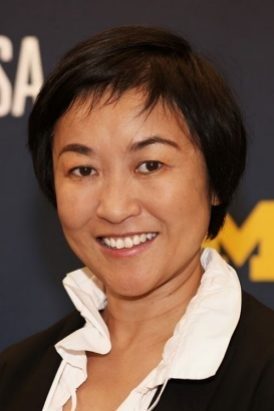
Fiona Lee is the Arthur F. Thurnau Professor of Psychology at the University of Michigan, with affiliations in Organizational Studies and the Advisory Committee. She holds a Ph.D. from Harvard University. Her research focuses on three core areas: Identity Integration (how individuals navigate multiple identities), Power Dynamics (effects of power on behavior), and Cultural Differences (impact of cultural contexts on organizations and individuals). She teaches courses on Organizational Psychology and Research Methods in Personality/Social Contexts. Lee’s work bridges social psychology and organizational behavior, emphasizing multicultural experiences and adaptation. Her recent studies explore refugee well-being, racial discrimination coping strategies, and the role of family in resettlement processes. Notably, she investigates how cultural identity integration influences creativity, decision-making, and social tolerance. Her publications span cross-cultural communication, biculturalism, and institutional barriers faced by minorities. Lee’s research often combines qualitative and quantitative methods to address real-world challenges in workplace dynamics and global mobility.
Hazel Rose Markus is the Davis-Brack Professor in the Behavioral Sciences at Stanford University's Department of Psychology within the School of Humanities and Sciences. With a distinguished career spanning decades, she has made significant contributions to cultural psychology and the understanding of how social contexts shape self and behavior. Her work bridges academic research and practical application through her role as Faculty Director of Stanford SPARQ. Markus received her B.A. from California State University at San Diego and her Ph.D. from the University of Michigan in Psychology. Her educational background laid the foundation for her groundbreaking work in cultural psychology. Her research focuses on the role of self in regulating behavior and how the social world shapes the self. She investigates people as culturally-shaped shapers of their cultures, examining how nation or region of origin, gender, social class, race, ethnicity, religion, and occupation shape thought, feeling, and action. Her work spans multiple domains including education, healthcare, workplace environments, and social policy. Analysis of her recent publications reveals a consistent focus on cultural frameworks, particularly examining independence-interdependence cultural models. Her research increasingly addresses social inequality, educational disparities, and systemic bias through empirical studies and intervention development. She has pioneered the Culture Cycle Framework for understanding and changing cultural patterns that perpetuate inequality. Member of the National Academy of Sciences Member of the British Academy Fellow of the American Academy of Arts and Sciences American Psychological Association's Distinguished Scientific Contribution Award Donald T. Campbell Award from SPSP APS William James Award for lifetime achievement Markus actively mentors doctoral students and postdoctoral scholars, with current advisees including Leslie Remache, Enna Chen, Ayo Dada, and Efrain Garcia Sanchez. She teaches courses including Graduate Seminar in Social Psychology Research, Intergroup Communication Facilitation, and Mind, Culture, and Society. As Faculty Director of Stanford SPARQ, she leads initiatives that partner with industry leaders to tackle disparities and inspire culture change in criminal justice, economic mobility, education, and health. Her laboratory work focuses on cultural psychology, examining how cultural contexts shape cognition, emotion, and behavior across diverse populations. Through SPARQ, she connects academic research with real-world applications to address societal challenges.
Max H. Bazerman is the Jesse Isidor Straus Professor of Business Administration at Harvard Business School. His work bridges behavioral economics, decision making, and ethics, with a focus on organizational behavior and negotiation strategies. He has authored influential books such as Complicit , Decision Leadership , and The Power of Experiments , emphasizing ethical frameworks and practical decision-making tools. His research explores bounded awareness, ethical blind spots, and how individuals and organizations make suboptimal choices. Recent articles highlight applications of experiments in data-driven decision making, moral psychology in resource allocation, and strategies to mitigate complicity in unethical behavior. Bazerman has received numerous accolades, including an honorary doctorate from the University of London, the Aspen Institute's Life Achievement Award, and recognition as one of Ethisphere's 100 Most Influential in Business Ethics. He has collaborated with global institutions and advised leaders across 30 countries.