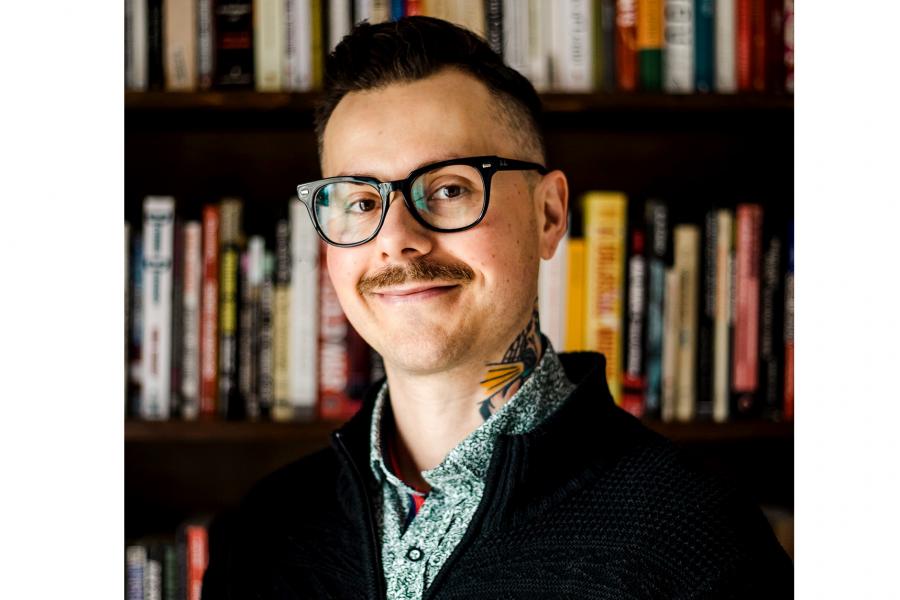
Adam King is an Assistant Professor in the Labour Studies Program at the Faculty of Arts, University of Manitoba. His research focuses on labor regulation, employment standards enforcement, Indigenous labor dynamics, deindustrialization impacts, and labor market policy. He co-investigates a SSHRC Partnership Grant project on migrant labor in settler-colonial contexts. Education: PhD in Sociology (York University, 2019) MA in History (University of Toronto, 2011) BA in Sociology/History (Trent University, 2010) His research examines the political economy of labor regulation, including enforcement mechanisms in federally regulated sectors and contested Indigenous labor relations. He analyzes deindustrialization's social consequences and contributes to debates on job guarantee proposals and right-wing populism's influence on labor movements. Recent publications explore topics like Indigenous labor law frameworks, precarious creative workers' unionization, and gendered identities in deindustrializing communities. He actively engages with media outlets such as CBC, The Globe and Mail, and The Maple's 'Class Struggle' newsletter.
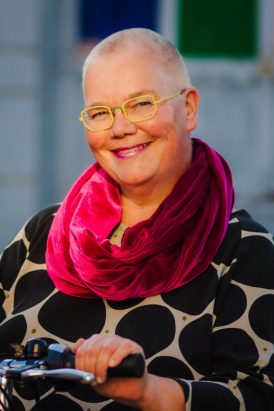
Angelika Sjöstedt serves as Professor and Chair of Gender Studies within the Department of Humanities and Social Sciences at Mid Sweden University. Her academic leadership spans teaching across Bachelor's, Master's, and PhD programs in Gender Studies and Sociology, while actively contributing to institutional discourse through roles such as delivering the 2024 academic celebration lecture. She maintains significant engagement with contemporary academic freedom debates, notably co-organizing the 2024 seminar series addressing responsible internationalization amid the Gaza conflict. Her research profile reveals deep expertise in intersectional analysis of gender, settler colonialism, and labor precarity, particularly examining how chronic crises manifest in peripheralized regions. Recent work demonstrates acute responsiveness to geopolitical emergencies, with 2024 publications directly confronting academic complicity in genocide. Her methodological approach bridges ethnographic rigor with activist scholarship, evident in long-term collaborations like the Båskoes Sámi research network and Forum for Gender Research. Sjöstedt's scholarly trajectory shows consistent thematic development from early work on flexible knowledge-work subjectivity (2012) through nuanced examinations of rural resilience (2017-2020) to current urgent interventions in academic freedom. Her publications reveal distinctive geographic focus on Norrland's inland regions while maintaining transnational theoretical relevance, particularly regarding mining resistance movements and crisis management frameworks. The 2021-2024 output demonstrates accelerated engagement with acute political emergencies, signaling scholarly adaptation to escalating global crises. Professional networks constitute a critical dimension of her work, with sustained involvement in the Forum for Gender Research since at least 2015 and leadership in the Båskoes network advancing Indigenous research methodologies. Her editorial work on critical anthologies like Aktivism: En antologi om arbete för social och politisk förändring (2022) demonstrates commitment to bridging academic and activist knowledge production.
Petra Kuppers is a Professor at the University of Michigan, specializing in disability culture, performance art, and ecocriticism. She holds a PhD from Falmouth College of Art/Plymouth University (1999) and is affiliated with multiple departments, including English, Drama, and Gender Studies. Her work bridges academic research with community-based performance, emphasizing socially just futures through art. Key roles include Artistic Director of The Olimpias, co-founder of Turtle Disco, and a Just Tech Fellow (2024–2026) for 'Planting Disabled Futures,' a VR project blending disability culture and environmental ethics. She teaches graduate courses on disability studies and creative writing, advising students through a monthly 'Research Coven.' Kuppers has authored influential books like *Disability and Contemporary Performance* (2003) and *Eco Soma* (2022), recognized with awards such as the Guggenheim Fellowship and ATHE Book Prize. Her poetry collections, including *Gut Botany* (2020) and *Diver Beneath the Street* (2024), explore intersections of disability, ecology, and true crime. Her research spans crip ecologies, archival activism, and somatic methods, with recent projects including *Crip/Mad Archive Dances* and participatory events like 'Crip Drifts.' She emphasizes accessibility in performance, digital art, and public engagement, often collaborating with Indigenous communities and global disability collectives.
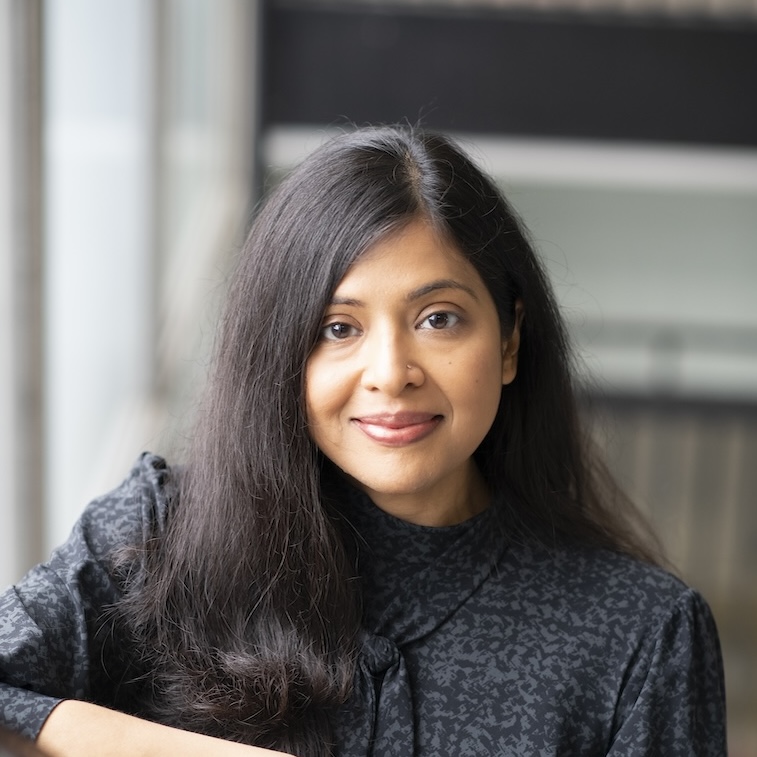
Sarah Turnbull is an Associate Professor at the University of Waterloo, affiliated with the Balsillie School for International Affairs. Her work intersects criminology, sociolegal studies, and critical border/migration studies, focusing on immigration detention, deportation, punishment, and social justice through postcolonial, antiracist, and feminist lenses. Education: PhD and MA in Criminology and Socio-Legal Studies from the University of Toronto; BA from Simon Fraser University. Her current research includes: (1) a SSHRC-funded study on the National Immigration Detention Framework in Canada using Foucauldian genealogical methods; (2) the Prison Transparency Project , a comparative analysis of carceral transparency in Canada, Spain, and Argentina; and (3) a transatlantic study on pandemic impacts in prisons. She employs ethnographic and qualitative methods in her research. Selected Grants: 2023–2030: Co-Investigator, Prison Transparency Project (SSHRC Partnership Grant). 2022–2025: Principal Investigator, Reforming Detention (SSHRC Insight Grant). 2022–2023: Co-Principal Investigator, COVID-19 Justice as Penal Justice (Strathclyde-Waterloo Transatlantic Award). Turnbull’s publications and collaborations emphasize systemic inequalities, carceral mobilities, and ethical research practices. She co-founded the Prison Transparency Project and has contributed to dialogues on art as resistance in detention settings.
Kent A. Ono is a Distinguished Professor in the Department of Communication at the University of Utah, where he has held faculty appointments since 2012. Previously, he served as Department Chair (2012-2017) and has held leadership positions including Director of Asian American Studies at UIUC (2002-2007) and Director of Cultural Studies at UC Davis (1999-2002). He earned his PhD in Rhetorical Studies from the University of Iowa (1992), MA from Miami University (1988), and BA from DePauw University (1987). Professor Ono's research examines critical media analysis through frameworks of race, gender, sexuality, and nation. His work spans rhetorical theory, intercultural communication, and cultural studies, with emphasis on: Representations of Asian Americans in media Immigration discourse and border rhetoric Postcolonial media criticism Critical race methodologies Transnational cultural flows His recent publications demonstrate sustained focus on immigration rhetoric, racial representation in media, and critical intercultural communication. Thematic analysis reveals consistent engagement with power structures, identity negotiation, and resistance narratives across 30+ years of scholarship, with emerging work on K-pop globalization and digital culture. Awards & Honors: Presidential Citation, National Communication Association (2024) Fellow, International Communication Association (2021) Douglas W. Ehninger Distinguished Rhetorical Scholar (2018) Distinguished Scholar Awards from NCA (2015, 2022), WSCA (2020) Teachers on Teaching Award, NCA (2015) He has held editorial leadership positions including Editor of Communication and Critical/Cultural Studies and co-editor of NYU Press's Critical Cultural Communication series. As NCA President (2020), he advanced equity initiatives and disciplinary transformation. Ono founded the Asian American Cultural Politics Research Cluster at UC Davis and secured grants including 'Portraits of Courage: Photographs by Shane Sato' (2019). He teaches graduate seminars in Rhetorical Studies and International Communication.
Dr. Jennifer Katz serves as an Associate Professor in the Department of Educational and Counselling Psychology, and Special Education (ECPS) at the University of British Columbia's Faculty of Education. She joined UBC in July 2016 after previously holding an Associate Professor position in Inclusive Education at the University of Manitoba. Renowned for creating the Three Block Model of Universal Design for Learning (UDL), her framework is now implemented across Canadian school divisions to advance inclusive educational practices. Dr. Katz's research centers on inclusive education K-12 , social and emotional learning (SEL) , and mental health promotion in schools . Her work integrates the Three Block Model of UDL to address diverse student needs while emphasizing indigenous perspectives through extensive collaboration with First Nation elders and communities in Manitoba, Alberta, and Quebec. This intersectional approach reimagines inclusive education through reconciliation frameworks and culturally responsive practices. Analysis of her recent publications reveals consistent focus on mental health literacy programs for students with developmental disabilities, UDL's impact on academic achievement and teacher efficacy, and the integration of Indigenous knowledge systems. Her research bridges theory and practice through classroom-based interventions, cluster-randomized trials, and transformative learning frameworks that prioritize student well-being and social inclusion. Scientific Awards: No scientific awards were documented in the provided sources. Advising and Grants: While specific graduate students and research grants aren't detailed in the text, Dr. Katz's extensive publication record and community partnerships indicate active research leadership. Her work with school divisions across Canada suggests significant program implementation funding, though grant specifics remain unreported. Labs and Teams: Dr. Katz maintains critical partnerships with First Nation communities, embedding Indigenous knowledge into educational frameworks. Her Three Block Model implementation involves multi-school division collaborations nationwide, creating practitioner-researcher networks focused on inclusive classroom transformation.
Dr. Deborah J. Johnson is a researcher in the Department of Human Development and Family Studies at Michigan State University, affiliated with the College of Social Sciences. She holds a Ph.D. from Northwestern University, an M.A. from Cornell University, and a B.A. from the University of Chicago. Her work focuses on racial-ethnic socialization, cultural adjustment of immigrant/refugee groups, and resilience among marginalized populations, with particular attention to South Sudanese refugees, Indigenous Australians, and Roma youth. She explores how cultural identity intersects with global contexts, gender, and education to shape developmental outcomes. Key research areas include: Racial-identity development in African American and Latina college women Cultural adaptation of Sudanese refugees and its tridimensional aspects of identity alignment Positive youth development in Indigenous Australian communities through virtual reality initiatives Policy impacts on oppressed ethnic groups' identity reformation Her work has been published in over 50 peer-reviewed articles and books, including Identity Re/Formation among Immigrant Youth and Families (upcoming) and Children and Prejudice (2018). She leads interdisciplinary projects at the intersection of education, mental health, and public policy, emphasizing equity and culturally responsive practices. Dr. Johnson collaborates with institutions like the Child Development Laboratory and Couple & Family Therapy Clinic to translate research into community-focused interventions. Her global projects span North America, Australia, and Eastern Europe, addressing systemic barriers faced by vulnerable populations.
Malini Guha is an Associate Professor of Film Studies at Carleton University , cross-appointed to the Institute for Studies in Art and Culture and affiliated with Migration and Diaspora Studies . She holds the Ruth and Mark Phillips Professorship (2025-2027), focusing on geographical thinking across disciplines. Education: B.A. (University of Toronto), M.A. (York University), PhD (University of Warwick) Research Interests : Guha's work spans cinema and the city , diasporic/postcolonial cinema , public projection art , and ciné-geography . Recent projects include SSHRC-funded research on traction, flight, and becoming in moving images. Selected Publications : Author of From Empire to the World: Migrant London and Paris in the Cinema (2015) and co-editor of London as Screen Gateway (2023). Her articles appear in Feminist Media Histories , Routledge Companion to Media and the City , and Canadian Journal of Film Studies . Scientific Awards : Ruth and Mark Phillips Professorship (2025-2027) FASS Mid-Career Research Grant (2021) SSHRC Insight Development Grant (2023-2025) Collaborative Work : Co-organized Carleton’s Racialized and Indigenous Faculty Alliance (2022-2024), co-taught interdisciplinary course on Race and Representation in the Arts (2023), and collaborates with artist Neven Lochhead on projects like Something Happened (2024).
Golshan Golriz is an Assistant Professor of Sociology at Queen’s University, Canada. She holds a BA in Women and Gender Studies from York University, an MA from the Women and Gender Studies Institute at the University of Toronto, and a PhD in Sociology from McGill University. Her work focuses on structural inequalities affecting Queer and Trans Black Indigenous and People of Colour (QTBIPOC), combining feminist and social scientific methods with intersectional frameworks. Current research includes LGBTQ religious activism, identity-centric social movements, and cancel culture’s relationship with structural inequality. Education: BA: York University (Women and Gender Studies + Sexualities Studies certificate) MA: University of Toronto (Women and Gender Studies Institute) PhD: McGill University (Sociology) Research Interests: Structural inequalities & QTBIPOC communities Queer/Trans Muslim marginalization Racism, capitalism, and Middle Eastern sexuality representations Social movements and comparative historical methods Current Projects: Co-edited volume on LGBTQ religious activism Comparative study of identity-centric movements Critical analysis of cancel culture mechanisms Lab/Team: Research emphasizes interdisciplinary collaboration, integrating qualitative methods with activism-focused research.
Durba Mitra is the Richard B. Wolf Associate Professor in the Department of Studies of Women, Gender, and Sexuality at Harvard University's Faculty of Arts and Sciences. She is a leading scholar at the intersection of feminist and queer studies, global intellectual history, and the history of sexuality in the colonial and postcolonial world, particularly South Asia. Education: PhD, Emory University Research Interests: Her work critically examines how sexuality, gender, and racial difference have shaped modern social thought. She is especially known for her intellectual history of deviant female sexuality in colonial India and its foundational role in social sciences. Her research spans feminist theory, queer studies, histories of science and epistemology, and transnational feminist networks in the Global South. Recent Publications Trends: Her recent articles reflect a deep engagement with Third World feminism, feminist rage, decolonial knowledge production, and the politics of sexuality. She frequently publishes in top journals such as Signs , GLQ , and South Atlantic Quarterly , often in collaborative or roundtable formats, highlighting her role in shaping feminist intellectual discourse. Scientific Awards: Bernard S. Cohn Book Prize Walter Channing Cabot Fellow Award (Harvard) Roslyn Abramson Award for Teaching Excellence Star Family Prize for Faculty Advising Multiple 'Favorite Professor' honors from Harvard undergraduates Fulbright-Nehru and Mellon fellowships Advising and Grants: Mitra has received numerous research grants from Harvard, the Weatherhead Center, and external foundations. She has been recognized for excellence in faculty advising and undergraduate teaching. She has served as Acting Faculty Director of the Schlesinger Library and is active on editorial boards, indicating strong institutional and scholarly leadership. Labs and Teams: She is a faculty associate of the Weatherhead Center for International Affairs, a member of the Asia Center Council, and part of the Mittal South Asia Institute at Harvard. She curated the multimedia exhibit 'Solidarity! Transnational Feminisms Then and Now,' demonstrating her commitment to public scholarship and collaborative knowledge creation.
Sarah Sharma is a Professor of Media Theory at the University of Toronto’s Faculty of Information and Director of the Institute of Communication, Culture, Information and Technology (ICCIT). Her work interrogates intersections of technology, temporality, and labor through a feminist lens. She has held leadership roles in the McLuhan Centre (2017–2022) and is recognized for advancing critical media theory. Research focuses include: • Temporality’s role in cultural politics • Feminist reimaginings of McLuhan’s media theory • Digital platforms’ socio-political impacts • Labour dynamics in gig economies (e.g., TaskRabbit). Her upcoming book Insufferable Tools: Big Tech and the Broken Machine critiques tech industry failures. Key achievements: • 2024 Desmond Morton Research Excellence Award • 2014 NCA Critical Cultural Book of the Year for In the Meantime: Temporality and Cultural Politics . Her edited volume Re-Understanding Media (2022) exemplifies feminist extensions of media theory. Recent engagements include keynote addresses at the Canadian Communication Association (June 2025) and University of Michigan’s Digital Ideas Workshop (June 2025). She critiques ‘accelerationist’ narratives about technology and advocates for rethinking media through marginalized perspectives.
Ruba Salih is a Full Professor of Anthropology at the Department of the Arts, University of Bologna. She holds a Laurea in Political Science from the University of Bologna (1994) and a PhD in Social Anthropology from the University of Sussex (2000), supported by a Marie Curie grant. Previously, she served as Full Professor at SOAS, University of London (2010–2022), and as Senior Lecturer at the University of Exeter (2007–2010). Her work focuses on transnational migration, diasporas, colonialism, Palestinian refugee politics, gender, and trauma studies. Research highlights: aesthetics of waiting among Palestinian refugees, decolonial environmental justice, and intersectional solidarity movements Leadership roles: Board Member of the Arab Council for the Social Sciences (2015–2019), Executive Board member of Insaniyyat (Palestinian Anthropologists Association) Publications include Gender in Transnationalism and Musulmane Rivelate (winner of Premio Pozzale 2011). Recent work explores the Anthropocene through colonial ecological destruction in Palestine.
Dr. Farzana Aman Tanima is a Senior Lecturer at the University of Sydney Business School’s Accounting, Governance, and Regulation department. She previously held roles at the University of Wollongong (2017–2023). Her research focuses on critical and dialogic accounting, social justice, and challenging neoliberal frameworks through participatory approaches. Born in Bangladesh, she earned her PhD in 2015 from Victoria University of Wellington, New Zealand, with a thesis on dialogic accounting practices for marginalized women. Education: PhD in Accounting, Victoria University of Wellington, 2015 Undergraduate Honours Degree, Victoria University of Wellington Research Interests: Dr. Tanima’s work centers on dialogic accounting to democratize accounting practices, with focus on NGOs, microfinance, Indigenous education, and race. She employs participatory action research and autoethnography to address systemic inequalities. Key areas include: Accounting’s role in empowerment and development Decolonizing accounting education through Jindaola Critical race theory and counter-accounting Awards: 2024 Mary Parker Follet Award (AAAJ Journal) 2020 VC OCTAL Teaching Award 2015 AFAANZ Best PhD Award Teaching & Mentorship: She leads pedagogical initiatives embedding Indigenous perspectives into curricula and fosters dialogic learning. Supervised two completed PhDs, with co-authored publications. Active in mentoring early-career researchers through invited talks and workshops. Labs/Teams: Part of the Alternative Accounting Research Network and editorial boards for CPA Journal and Financial Accountability & Management . Co-leads special issues on critical dialogics and publicness in accounting.
Professor Holly Thorpe is a Professor of Sociology in Te Huataki Waiora / School of Health at the University of Waikato, specializing in Sport and Human Movement. She serves as Associate Dean Research in the Division of Health PVC Office and is an internationally recognized sociologist of sport, physical culture and gender whose work has earned prestigious fellowships and awards including Fulbright, Leverhulme, and Royal Society honors. Her educational background includes a PhD from the University of Waikato and Papa Reo Level 1 certification from Te Wananga o Aotearoa, reflecting both academic excellence and cultural engagement with Māori language and knowledge systems. Professor Thorpe's research centers on equity and inclusion in sporting cultures, with particular attention to women's health and wellbeing, sport and gender, and the impact of social media on athletic experiences. She employs critical and feminist theoretical frameworks with expertise in qualitative methods to examine how sport, physical activity, and health intersect in rapidly changing social landscapes. Her work spans gender studies, feminist methodologies, sports science, sociology of health, and digital media studies within sporting contexts, with a strong commitment to community-engaged research. Her extensive publication record reveals consistent thematic focus on contemporary issues including menstruation in sport, digital technologies and athlete experiences, pandemic impacts on wellbeing, and the gendered dimensions of mega-sport events. Her work frequently employs intersectional analysis and collaborates across disciplines to address complex questions about embodiment, identity, and social change in sporting cultures, particularly as they relate to women and marginalized communities. Professor Thorpe's significant scholarly recognition includes: Royal Society Early Career Research Excellence Award for Social Sciences (2018) Fellow of the North American Society for the Sociology of Sport (2018) Royal Society James Cook Fellowship for a two-year project focused on women's wellbeing through and beyond pandemic (2021) She actively supervises students and has secured substantial research funding including the Te Punaha Matatini CORE Research Institute project 'Youth Wellbeing in Uncertain Times: The Voices of Rangatahi from Flood-Effected Tairāwhiti Gisborne' (2023-2025). Professor Thorpe collaborates extensively with international and national sports organizations including the International Olympic Committee, High Performance New Zealand, Sport New Zealand, Skateistan, and Voice in Sport to ensure her research has real-world impact on policy and practice. She serves as Series co-editor for 'New Femininities in Digital, Physical and Sporting Cultures' and maintains active media engagement through The Conversation and other outlets. Professor Thorpe leads several significant research initiatives including 'Reimagining Fields of Play' (2023) and co-organized the 'Gender, Health and Wellbeing Symposium' (2022), demonstrating her commitment to creating spaces for critical dialogue about sport, gender, and health while advancing culturally responsive methodologies that center Indigenous and diverse perspectives.
Martha Stiegman is an Associate Professor at the Faculty of Environmental and Urban Change, York University. Her research integrates Indigenous knowledge, food sovereignty, and arts-based methodologies to address issues of social, environmental, and disability justice. She is actively engaged in community-based research and public scholarship in Toronto and Mi’kma’ki (Nova Scotia). Her educational background includes a PhD from Concordia University’s Special Individualized Program and a BA in English Literature & Political Science from McGill University. This interdisciplinary foundation supports her work at the intersection of activism, research, and art. Stiegman’s research focuses on three interconnected domains: Indigenous/settler treaty relations, food sovereignty and justice movements, and participatory video and arts-based research. She emphasizes decolonizing methodologies and community-led knowledge production. Her work explores how arts-based approaches can deepen dialogues across communities and strengthen collective action for justice. Her recent publications and multimedia projects demonstrate a strong trend toward interdisciplinary, community-engaged scholarship that bridges Indigenous epistemologies, environmental justice, and disability justice. She frequently uses film, digital storytelling, and public art to mobilize knowledge and challenge colonial narratives. Co-creator of A Treaty Guide for Torontonians (2022) Lead on the Polishing the Chain project exploring Toronto’s treaty relationships Editor of the forthcoming Anti Colonial Food Systems (Routledge) Active collaborator with Indigenous scholars and artists including Dr. Sherry Pictou, Ange Loft, and Elder Kerry Prosper Stiegman has been involved in significant research grants such as the Atlantic Aboriginal Health Research Program. While specific advisees are not listed, her collaborative projects suggest active mentorship and supervision. She does not appear to lead a formal lab but works within research collectives and community partnerships.