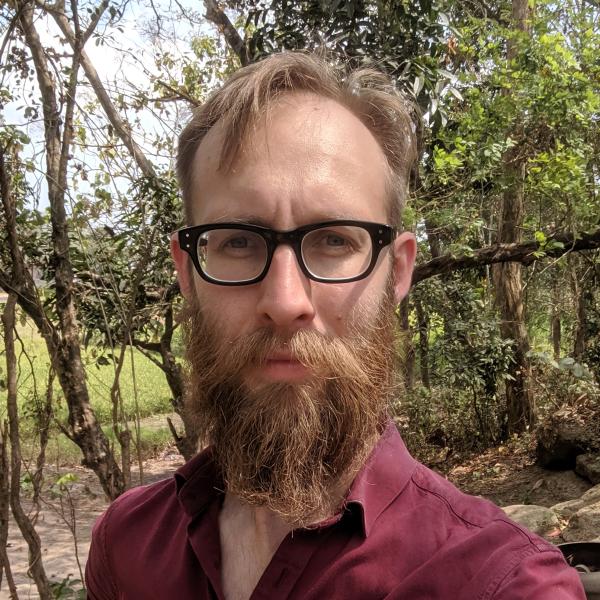
Beth Piatote is an Associate Professor of English and Comparative Literature at the University of California, Berkeley. She holds a PhD in Modern Thought and Literature from Stanford University and is an enrolled member of the Confederated Tribes of the Colville Reservation (Nez Perce). Her work bridges scholarly and creative realms, focusing on Indigenous literature, law, language revitalization, and cultural studies. Education: PhD in Modern Thought and Literature (Stanford University). Research interests include Native American legal systems, Nez Perce language preservation, global Indigenous literatures, and creative writing. She co-founded and chairs Berkeley’s Designated Emphasis in Indigenous Language Revitalization and directs the Arts Research Center, where she leads the Indigenous Poetics Lab. Her publications include Domestic Subjects: Gender, Citizenship, and Law in Native American Literature (2013) and the short story collection The Beadworkers (2019), which received multiple literary recognitions. Her plays Antíkoni and Tricksters, Unite! explore Indigenous narratives through performance. Awards include MLA honorable mentions, PEN/Bingham Prize longlistings, and a 2020 Playwrights Retreat win. Current projects involve a scholarly monograph on sensory representations of Indigenous law and creative works in poetry and essays.
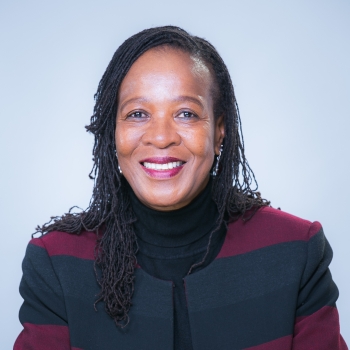
Teboho Moja is a Clinical Professor of Higher Education at New York University's Steinhardt School, holding concurrent roles as an Extraordinary Professor at the University of the Western Cape and a Visiting Research Fellow at the University of Pretoria. She has served as an Executive Director under President Mandela's administration, leading the National Commission on Higher Education, which shaped South Africa's post-apartheid reforms. Her research focuses on higher education policy, equity in education systems, and international development in Africa. She has been honored with the Martin Luther King Jr. Faculty Award and the National Research Foundation Lifetime Achiever Award, among others. Education: She holds an Honorary Doctorate in Education from the University of Pretoria (2020). Her academic contributions include over 50 peer-reviewed publications and keynote addresses at global conferences. She has advised governments and international bodies such as UNESCO and the Councils of Universities in South Africa. Research Interests: Dr. Moja's work emphasizes equitable access to education, international partnerships in higher education, and the role of philanthropy in African universities. She explores how global institutions influence policy reforms, particularly in transitional justice contexts and post-colonial education systems. Her recent publications analyze the relevance of university rankings in Africa and collaborative models between U.S. foundations and African institutions. Awards: Martin Luther King, Jr. Faculty Award (2019) National Research Foundation Lifetime Achiever Award (2019) Women in International Education Award (2019) Graduate Students Star Award (2019) Honorary Doctorate in Education (University of Pretoria, 2020) Advising and Grants: She has led national policy commissions, advised education ministers, and contributed to international bodies. Her work bridges academia and policy, with a focus on systemic reforms and inclusive education models. She has designed field-based courses on South Africa's educational reforms and global perspectives in Indian higher education. Professional Networks: She has held visiting professorships at the Universities of Oslo, Tampere, and Hong Kong. She chairs multiple international advisory boards and collaborates with global scholars on projects addressing equity and development in education.
University of California, Los AngelesUnited States
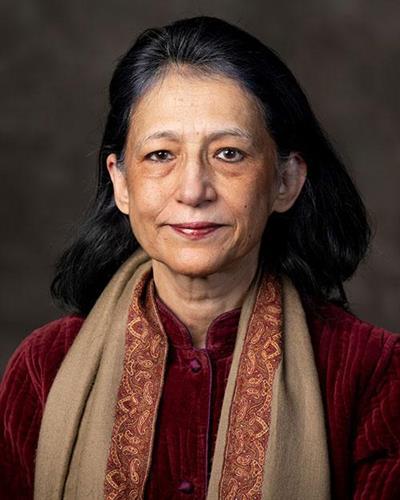
Anna Morcom is Professor and Mohindar Brar Sambhi Chair of Indian Music in the Department of Ethnomusicology at UCLA's Herb Alpert School of Music. She previously held a professorship at Royal Holloway, University of London, and earned her Ph.D. from SOAS (School of Oriental and African Studies) in 2002, where she also completed her undergraduate studies in Ethnomusicology and Hindi (1993-1996). Her research spans music and dance in India and Tibet, employing ethnographic and oral historical methods to examine the intersections of musical culture with politics, nationalism, identity, gender, inequality, economic development, and media. Morcom's scholarship is notable for its interdisciplinary approach that bridges traditional and popular musics with contemporary theoretical frameworks. Her work demonstrates significant trends toward examining music within economic frameworks, particularly through her founding of SEM's Special Interest Group on Economic Ethnomusicology. Recent publications increasingly focus on cultural economies, performance labor, and the relationship between artistic practice and economic systems in South Asia. Society of Ethnomusicology's Allan Merriam prize (2014) Marcia Herndon prize of SEM's Gender and Sexualities section (2014) Morcom's research has been supported by multiple grants from the Leverhulme Trust and the British Academy. She has been interviewed by prominent media outlets including BBC Radio 4's Thinking Allowed, The Hindu, Tehelka, and Scroll regarding her influential work on Indian dance cultures. As founder of SEM's Special Interest Group on Economic Ethnomusicology, she has shaped scholarly discourse on the economic dimensions of musical practice. Her current projects include the monograph on Hindustani music and co-editing two significant volumes: Creative Economies of Culture in South Asia: Craftspeople Performers (Routledge) and the Oxford Handbook of Economic Ethnomusicology (OUP).
Engseng Ho is a Professor of Cultural Anthropology and former Professor of History at Duke University's Trinity College of Arts & Sciences since 2008. His work focuses on Arab/Muslim diasporas across the Indian Ocean, global transregional dynamics, and historical interactions between empires and local societies. Education: PhD (2000), MA (1990) in Anthropology from University of Chicago; BA (1986) from Stanford University. Research interests include mobility studies, transregional legal frameworks, and the intersection of Islam with imperial and postcolonial contexts. Notable projects involve Inter-Asia collaborations and studies on China-Africa relations, oil economies, and Malay sovereignty. Recent grants include funding from the National Science Foundation for research on refugees, Azerbaijan's oil-driven geopolitics, and a global religion dissertation fellowship program. Teaching spans courses on imperialism, mobility, global culture, and anthropological theory. His expertise spans Africa, India, Indonesia, and Yemen.
Kären Wigen is the Frances and Charles Field Professor in History at Stanford University, specializing in Japanese history and the history of cartography. She holds a Ph.D. in Geography from the University of California, Berkeley (1990). Her research spans: Historical geography of East Asia Early modern Japanese regional economies Geographies of the imagination Transnational maritime histories Critical cartography and spatial analysis Her publications include eight major works from 1992-2025 analyzing spatial transformations in Japan and global metageography, with recent projects focusing on temporal dimensions in cartographic representation. She co-edited Seascapes (2007) and Cartographic Japan (2016), and serves as Director of Stanford’s Mellon Fellowship of Scholars in the Humanities since 2022.
Donald R. Davis, Jr. is Professor and Chair of the Department of Asian Studies at the University of Texas at Austin's College of Liberal Arts. With a PhD from the same institution, he has established himself as a leading scholar in Hindu law and Dharmaśāstra studies. His work bridges religious studies, legal history, and South Asian studies, making significant contributions to our understanding of law and religion in medieval India. Davis earned his PhD from the University of Texas at Austin, where he has built his academic career. His scholarly journey has been deeply rooted in the study of Sanskrit legal traditions and their intersection with religious practice. Professor Davis's primary research concerns the interaction of law and religion in medieval India. He examines both historical evidence for law and legal practice through inscriptions and regional language documents, as well as the Dharmaśāstra tradition as a system of religious law and jurisprudence. His work situates Sanskrit normative texts within historical contexts while exploring their conceptual frameworks. He maintains the Resource Library for Dharmaśāstra Studies and has published extensively on Hindu law, including books such as The Spirit of Hindu Law (2010) and The Dharma of Business (2017). Davis's recent publications demonstrate a continued focus on the intersection of law, religion, and ethics in Hindu tradition. His work explores caste, conservatism, marital ethics, and the historical development of legal thought in India. He frequently draws comparative connections between Hindu legal traditions and other religious legal systems, contributing to broader conversations in legal anthropology and comparative religious law. Professor Davis actively supervises graduate students interested in Dharmaśāstra traditions and their relevance to law, religion, history, politics, and economics in India. He encourages students with broader interests in comparative religious law (Jewish law, Islamic law, Roman law, etc.) and works with those studying various aspects of Hinduism and classical religions in India, particularly in normative and "mainstream" areas such as Vedānta, Pūrva-Mīmāṃsā, Epics, and Purāṇas.
Ayesha Jalal is a distinguished Professor of History at Tufts University's School of Arts and Sciences and holds a joint appointment at The Fletcher School of Law and Diplomacy. She currently serves as the Mary Richardson Professor and directs the Center for South Asian and Indian Ocean Studies. With a career spanning over three decades, Professor Jalal has established herself as a leading scholar in South Asian history, particularly focusing on Pakistan studies, the partition of India, and Muslim political thought in the region. Professor Jalal's academic journey began with a double major in History and Political Science from Wellesley College in 1978. She then pursued doctoral studies at the University of Cambridge, earning her PhD in History in 1983. Her early career included prestigious fellowships at Trinity College, Cambridge (1980-84), the Centre of South Asian Studies (1984-87), the Woodrow Wilson Center for International Scholars (1985-86), and the Harvard Academy for International and Area Studies (1988-90). Professor Jalal's research primarily centers on South Asian history with special emphasis on Pakistan, the partition of India, and Muslim political thought. Her work explores the complex interplay between religious identity, nationalism, and state formation in the region. She has made significant contributions to understanding democratic development in Pakistan, sectarian dynamics in South Asia, and the historical connections between the Indian subcontinent and the wider Indian Ocean world. Her recent scholarship has focused on 'Oceanic Islam,' examining transregional Muslim networks and universalist aspirations that transcended colonial boundaries. Professor Jalal's extensive publication record demonstrates a consistent focus on South Asian political history, with particular attention to Pakistan's formation and development. Her recent works show a progression from studies of partition and state formation toward broader examinations of Muslim intellectual history and transregional connections. The 2020-2024 publications reveal a sophisticated engagement with themes of democratic erosion, sectarianism, and the historical roots of contemporary political challenges in South Asia, while also exploring more cultural and religious dimensions through works on Muslim enlightened thought and oceanic connections. Patrus Bukhari Award for the best English language book, The Pity of Partition , Academy of Letters, Government of Pakistan (2015) Britannica Book of the Year recognition (2015) MacArthur Fellowship (1998-2003) As an educator, Professor Jalal has mentored numerous graduate students through thesis supervision and directed research projects. Her teaching portfolio includes courses on Modern South Asia, Contemporary South Asia, Islam and the West, and specialized seminars on South Asian history. She has taught at several prestigious institutions including the University of Wisconsin-Madison, Columbia University, and Harvard University before joining Tufts in 1999. In her role as Director of the Center for South Asian and Indian Ocean Studies, she has fostered interdisciplinary research and provided guidance to emerging scholars in the field. Professor Jalal directs the Center for South Asian and Indian Ocean Studies at Tufts University, which serves as a hub for interdisciplinary research on South Asia and its connections to the wider Indian Ocean world. The center facilitates collaborative projects, hosts visiting scholars, and organizes events that bridge historical, political, and cultural perspectives on the region. Under her leadership, the center has become a prominent institution for South Asian studies, promoting dialogue between academic research and contemporary policy issues.
University of California, Los AngelesUnited States
Sanjay Subrahmanyam is Distinguished Professor of History and Irving & Jean Stone Endowed Chair in Social Sciences at UCLA's Department of History. A globally recognized historian of the early modern period (15th-18th centuries), he previously held prestigious positions at the Collège de France (2013-2021), University of Oxford (2002-2004), and Ecole des Hautes Etudes en Sciences Sociales in Paris (1995-2002). He founded UCLA's Center for India and South Asia (2005-2011) and maintains significant academic engagement in France through media appearances and lectures. His educational background includes: M.A. in Economics (First Rank with Gold Medal), Delhi School of Economics (1982) Ph.D. in Economic History, Delhi School of Economics (1987) Honorary D.Litt., University of Calcutta (2015) Doctorat honoris causa, Université catholique de Louvain (2017) Subrahmanyam's research revolutionized global historical methodology through his pioneering concept of 'connected histories,' which challenges Eurocentric periodization and emphasizes horizontal connections across regions. His work spans South Asian political culture, Indian Ocean trade networks, Iberian imperial systems, and Mughal court dynamics, consistently integrating multilingual archives and visual sources. He demonstrates exceptional mastery in synthesizing Portuguese, Spanish, Persian, Tamil, and Sanskrit materials to reconstruct non-Western perspectives on early modern globalization. His recent publications reveal intensified focus on transcultural encounters, maritime archaeology, and the material dimensions of empire. Works like Across the Green Sea (2024) and Mirrors of Empire (2026) showcase his shift toward analyzing ego-documents and visual culture to explore identity formation in frontier zones. The consistent thread remains his critique of civilizational boundaries and emphasis on fluid cultural exchanges across the Indian Ocean world. His scientific recognition includes: Infosys Humanities Prize (2012) Dan David Prize for History (2019) Prix International de l'Histoire (2020) Fellowship in American Academy of Arts and Sciences (2009) Corresponding Fellowship in British Academy (2016) Guggenheim Fellowship (2011-12) Subrahmanyam has mentored nine doctoral students to completion, maintaining active collaborations with Muzaffar Alam (University of Chicago), Velcheru Narayana Rao (University of Wisconsin), and David Shulman (Hebrew University). His editorial leadership includes co-editing The Cambridge World History (2015) and serving over a decade as Joint Managing Editor of the Indian Economic and Social History Review . He currently directs major international projects on Indo-Persian travel writing and Mughal intellectual networks. Though not leading a traditional laboratory, he coordinates the 'Connected Histories' research initiative across UCLA, Collège de France, and University of Chicago, fostering interdisciplinary teams examining early modern knowledge circulation. His public engagement includes regular contributions to French media (France 24, France Info) and curated exhibitions like the Codex Casanatense project.
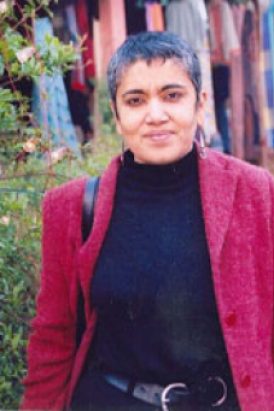
Anupama Rao is Professor of History and MESAAS (Institute for Comparative Literature and Society) at Columbia University, with affiliations in Women's, Gender and Sexuality Studies and Human Rights. She is based at Barnard College, where she holds office hours and engages in interdisciplinary teaching and research. Her educational background includes a B.A. with honors from the University of Chicago and a Ph.D. from the Interdepartmental Program in Anthropology and History at the University of Michigan. Rao’s research spans South Asian history and anthropology , gender and sexuality studies , caste and race , social theory , comparative urbanism , and colonial genealogies of human rights . She is known for her groundbreaking work on anti-caste thought, particularly the political philosophy of B. R. Ambedkar, and for theorizing caste subalternity in modern India. Her scholarship critically examines the intersections of caste, gender, urban space, and political subjectivity. Her recent and ongoing publications reflect a deep engagement with global racisms, Cold War humanism, and justice futures. Key themes across her articles include Dalit aesthetics, subaltern urbanism, affirmative action, and the transnational dimensions of caste. Her work shows a consistent trend toward interdisciplinary, postcolonial, and decolonial frameworks that challenge Western-centric epistemologies. Fellow-in-Residence, National Humanities Center (2008–2009) Fellow, Center for Advanced Study in the Behavioral Sciences, Stanford (2010–2011) Fellow, REWORK, Humboldt University, Berlin (2014–2015) Global Humanities Institute Awardee, CHCI (2023) Rao has served as Senior Editor of Comparative Studies in South Asia, Africa, and the Middle East (2012–2021), President of the Society for the Advancement of the History of South Asia (SAHSA), and member of the South Asia Council of the Association for Asian Studies. She is Principal Investigator for the Mellon-funded Global Humanities Institute project Global Racisms, Cold War Humanism, and Just Futures (2022–2024) and co-directs Geographies of Injustice at Columbia’s Center for the Study of Social Difference. She has secured major research grants from the ACLS, NEH, SSRC, and Mellon Foundation. She advises and mentors graduate students, though specific names are not listed in the text. Rao directs the Institute for Comparative Literature and Society and convenes the Ambedkar Initiative, fostering interdisciplinary research and public engagement on caste, race, and justice. She leads and participates in multiple research collectives, including the Geographies of Injustice project and the Asian Spatialities initiative. She is deeply involved in institutional leadership through her roles at the Institute for Comparative Literature and Society and the Ambedkar Initiative, both of which serve as hubs for critical humanities research.
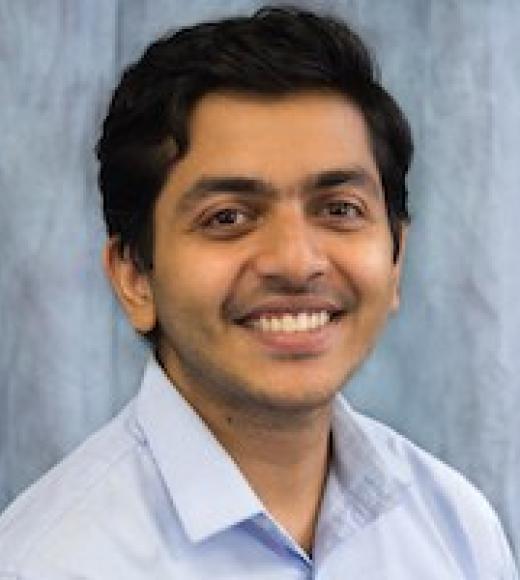
Anujit Chakraborty is an Associate Professor in the Department of Economics at the University of California, Davis . His research bridges Economic Theory , Behavioral Economics , and Experimental Economics , focusing on decision-making under risk and time constraints, procrastination, and present-biased behavior. Education : Ph.D. in Economics (University of British Columbia, 2017), M.S. in Quantitative Economics (Indian Statistical Institute, 2011), B.E. in Electronics Engineering (Jadavpur University, 2009) His work explores procrastination , present bias , prosocial behavior , and interpersonal uncertainty , often using experimental methods to analyze anomalies in economic preferences. Recent publications investigate democracy measurement , news source diversity , and peer-grading systems . Dr. Chakraborty teaches Intermediate Economics (ECN 100B) and Behavioral Economics at both undergraduate and Ph.D. levels.
Mrinalini Sinha is the Alice Freeman Palmer Professor of History and Professor of English Language and Literature at the University of Michigan. Her research focuses on Colonial India, the British Empire, World History, and South Asian Studies with particular attention to Colonialism, Imperialism, Global Studies, and Women's Studies. She is affiliated with the Center for South Asian Studies and the International Institute. Dr. Sinha holds a Master's degree from Jawaharlal Nehru University, New Delhi, and a PhD from the State University of New York at Stony Brook. Her work bridges historiography, gender studies, and postcolonial theory, examining themes such as nationalism, colonial governance, and feminist movements in South Asia. Recent publications explore oral histories in Pakistan, gendered nationalism, and contested colonial reforms like the Ilbert Bill controversy. Her academic contributions include seminal works on colonial masculinity, the intersection of feminism and nationalism, and critiques of imperial social formations. She actively engages with global debates on empire, race, and the legacies of colonialism through her teaching and research.
Anirban Acharya, Ph.D., is a Professor of Political Science at Le Moyne College. His research focuses on political power's impact on markets, neoliberalism, and South Asia. He holds degrees from Jadavpur University (B.A., M.A. Economics), Indira Gandhi Institute of Development Research (M.Phil. Development Studies), and Syracuse University (M.A., Ph.D. Political Science). His areas of specialization include International Political Economy, International Relations, and US Foreign Policy. He has received several awards such as the 2018 Le Moyne College Faculty Spotlight and the 2017 Ignatian Mission Award. His media engagements include panel discussions on PBS-WCNY and interviews on topics like Afghanistan's political landscape. Acharya has published works like Right to Sell: Markets, Capitalism, and Urban Space in India (2022) and contributed to edited volumes analyzing South Asian politics. His research has been supported by grants from Syracuse University’s Maxwell School and others. Beyond academia, he is an avid cook, chess player, violinist, and spice enthusiast.
Dr. Miemie Winn Byrd is an Adjunct Professor at the Daniel K. Inouye Asia-Pacific Center for Security Studies (DKI APCSS), where she researches, teaches, and publishes on security dynamics in Myanmar/Burma & Southeast Asia, economics & security linkages, and organizational development. A retired US Army Lieutenant Colonel with 28 years of distinguished service, she brings extensive experience from military, private sector, and nonprofit organizations to her academic work. Dr. Byrd earned her educational credentials from prestigious institutions: Bachelor of Arts in Economics and Accounting from Claremont McKenna College Master of Business Administration with emphasis in Asia-Pacific Economics and Business from University of Hawaii Doctorate in Education Leadership from the University of Southern California Her research focuses on the complex interplay between security, economics, and social development in Southeast Asia, with particular expertise in Myanmar's political and security landscape. Dr. Byrd examines how civil-military operations, women's roles, and educational approaches impact socioeconomic development and security outcomes in the region. She investigates the strategic implications of Myanmar's internal conflicts for broader Indo-Pacific security dynamics, and analyzes how private sector engagement can contribute to poverty alleviation and stability. Dr. Byrd serves on multiple advisory boards that extend her influence in policy and research: Board of Governors of the Keck Center for International and Strategic Studies at Claremont McKenna College Regional Advisory Committee for Knowledge for Democracy Myanmar Initiative of the Asia Regional Office, International Development Research Centre The Oxford-Thanakha International based in Chiang Mai, Thailand Myanmar Policy Institute based in Washington, D.C. Her military career included significant roles such as Deputy Economic Advisor and Civil-Military Operations Plans Officer at U.S. Pacific Command, where she supported Operations Enduring Freedom. She served as a linguist and cultural advisor for U.S. delegations at the Association of Southeast Asian Nations Regional Forum and during POW/MIA recovery negotiations in Myanmar. Her civilian career spans 16 years in auditing, accounting, and financial management with multinational corporations.
Alexander Key is an Associate Professor of Comparative Literature at Stanford University, specializing in Classical Arabic literature and the intellectual history of Arabic and Persian-speaking worlds from the 7th century onwards. His scholarship focuses on the philosophy of language, literary theory, and cross-cultural translation. Ph.D. in Arabic and Islamic Studies from Harvard University (2012) Current research: Arabo-Persian linguistic intersections, poetics in translation, and pre-modern theories of syntax and affect His articles span diverse eras and topics, including: Medieval Arabic language philosophy (5th–11th century) Modern Arabic political poetry analysis (20th–21st century) Comparative methodologies bridging Islamic and Western traditions A key editorial role includes: Board Member of Stanford University Press Advisory roles at Habib University and Stanford’s Markaz Resource Center His work bridges academic publication with public discourse through: Contributions to Arcade Colloquy Interviews on poetics, religion, and contemporary politics Podcasts and literary salon discussions
Andrew Ollett is an Associate Professor and Director of Graduate Studies in the Department of South Asian Languages and Civilizations at the University of Chicago , where he has taught since 2019. His research focuses on the literary and intellectual traditions of South and Southeast Asia, particularly through works in Sanskrit, Prakrit, Apabhramsha, and Kannada from the first millennium CE. Co-founder and editor of NESAR (New Explorations in South Asia Research) Director of NEH-funded edition/translation of the Kavirājamārga (earliest Kannada literary manual) Expert in Prakrit and Kannada literary traditions His work explores the 'question of language'—examining how language choice shaped cultural production and change in premodern India. Current projects include a monograph on context-sensitivity in Indian language theories and a study of manuscript technology's impact on early South Asian knowledge communities. He has authored The Mirror of Ornaments (Naples: Unior Press, 2025) and Language of the Snakes (UC Press, 2017), and co-authored Lilavai (Harvard, 2021). Recent publications include interdisciplinary studies on: Sanskrit-Prakrit campū genre reevaluation Pragmatics in Mīmāṁsā interpretive concepts Manuscript literacy's influence on literary forms Historical linguistics of Middle Indic syllable reduction Philosophy of language in Śālikanātha and Kumārila Bhaṭṭa Awarded the NEH 'Scholarly Editions and Translations' grant , he teaches classical South Asian literature courses covering Sanskrit, Prakrit, and Tamil traditions. He maintains digital resources including a Prakrit Digital Texts Project and Mīmāṁsādigdarśinī digital text repository, and actively contributes to open-access scholarship.