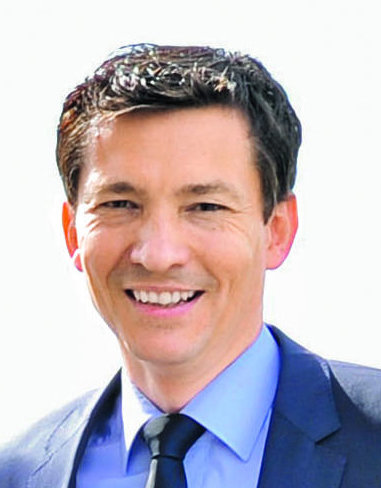
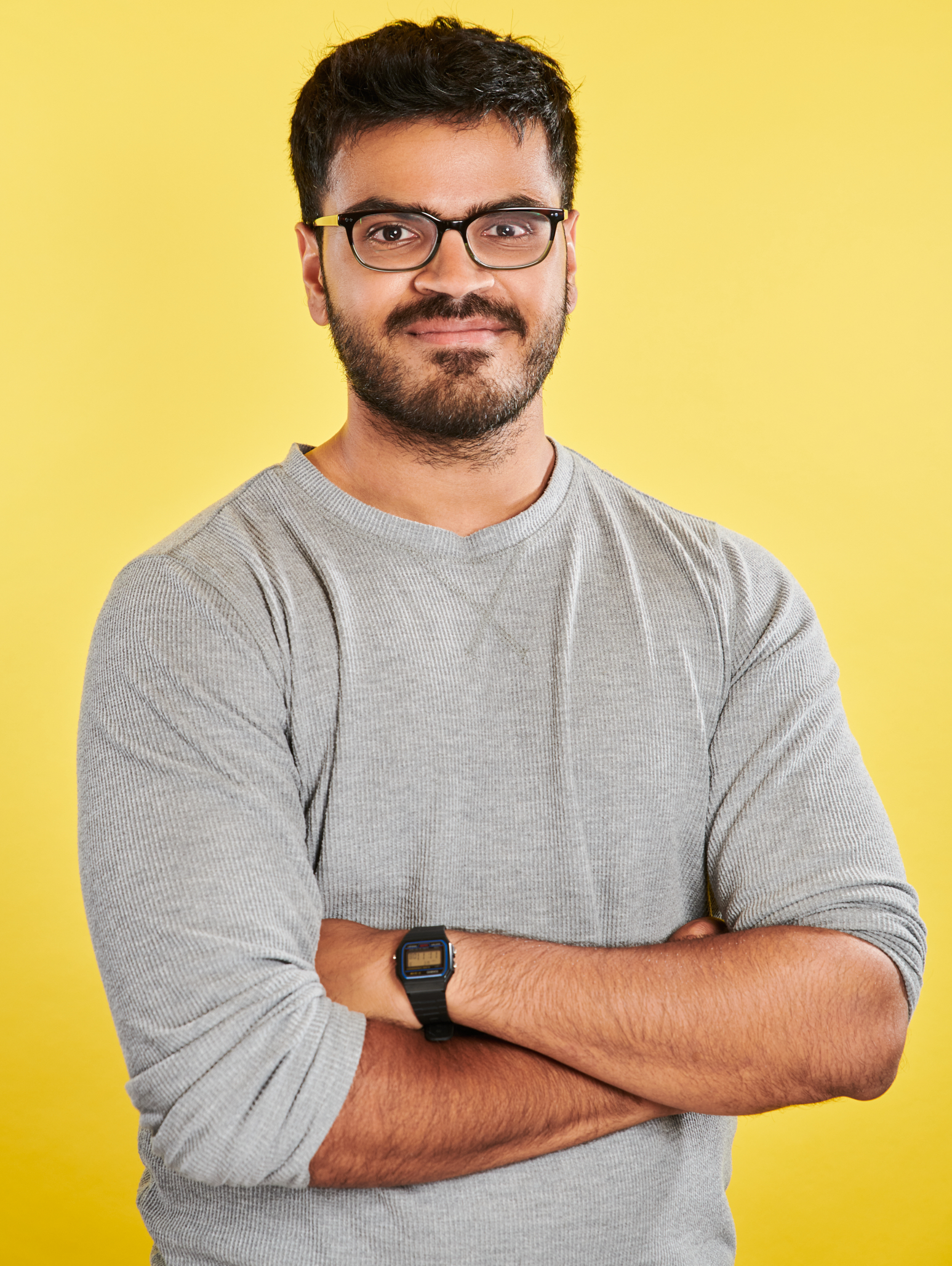
Dr. Michael Sinclair is a Lecturer in Urban Analytics at the University of Glasgow , affiliated with the Division of Urban Studies and Social Policy and the Urban Big Data Centre . He convenes the MSc in Urban Analytics and co-leads the Socio-Environmental Action research cluster . His research focuses on leveraging novel data sources (e.g., mobile apps, social media) to address societal and environmental challenges, particularly human-nature interactions and greenspace valuation. Sinclair leads projects funded by the UK Government’s Department for Culture, Media and Sport and the Economic and Social Research Council (ESRC). His work emphasizes ethical use and representativeness of big data, with applications in urban policy, ecosystem services, and environmental sustainability. Sinclair has secured grants totaling over £1M, including projects on greenspace accessibility and urban data dashboards. He supervises students on GIS and urban analytics topics and contributes to policy-relevant datasets like Tamoco Open Spaces . Notable achievements include developing methodologies for valuing nature-based recreation and advancing spatial interaction models for urban green spaces. His research bridges Human Geography and Environmental Science, with publications in journals like Ecosystem Services and Global Environmental Change .
Harald C. Gall is a Professor of Software Engineering and Dean of the Faculty of Business, Economics, and Informatics at the University of Zurich (UZH). He leads the Software Evolution and Architecture Lab, focusing on software evolution analysis, mining software repositories, and cloud-based software engineering. His research emphasizes improving software development productivity through data-driven insights. He has held visiting positions at Microsoft Research and the University of Washington. Education: PhD (Dr. techn.) and Master's (Dipl.-Ing.) in Informatics from TU Vienna Research Interests: Software evolution, mining software archives, cloud-based tools, developer productivity, and empirical software engineering. Notable contributions include the Evolizer , ChangeDistiller , and SOFAS systems. Key Contributions: Established the Mining Software Repositories (MSR) research area, program chair for ICSE 2011 and ESEC/FSE 2005, associate editor of leading journals like Empirical Software Engineering and IEEE Software. Awards: Most Influential Paper Award, Test of Time Award, and multiple Best Paper Awards. Recognized for contributions to SE research methodologies and tool development. Professional Activities: ACM SIGSOFT awards chair, board member of Informatics Europe, and executive committee member of CHOOSE (Swiss SIG for OO Systems). Labs/Teams: Director of the Software Evolution and Architecture Lab at UZH, leading projects like SURF-MobileAppsData (SNSF-funded) and DevCloud (Hasler Foundation).
Magnus Boman is a Professor of AI and Health at the Department of Medicine, Solna, Karolinska Institutet (KI), where he leads the AI@KI initiative to support researchers in AI integration. He is affiliated with the Chronic Inflammatory Disease Epidemiology research group under Johan Askling. His research focuses on AI applications in precision medicine, multimodal prediction, ethical norms in AI systems, energy-efficient computing, and quantum sensor data interpretation. Research Interests: Artificial Intelligence in healthcare and precision medicine Multimodal data analysis for disease prediction and treatment Machine learning for clinical decision support systems Ethical and societal implications of AI Grants: Swedish Research Council: Improving breast cancer histology image classification (2024-2026) Scalable Federated Learning (2022-2025) Ai in sustainable cities (VINNOVA, 2019) Advising & Students: Supervised over 50 PhD and Master's students across KI, KTH, and Stockholm University, focusing on AI applications in healthcare, machine learning, and computational epidemiology. Notable projects include predictive modeling for mental health outcomes and variant filtering in genetic data. Labs & Teams: Leads AI@KI, fostering AI adoption in medical research. Collaborates with the Johan Askling group on epidemiology and chronic disease studies.
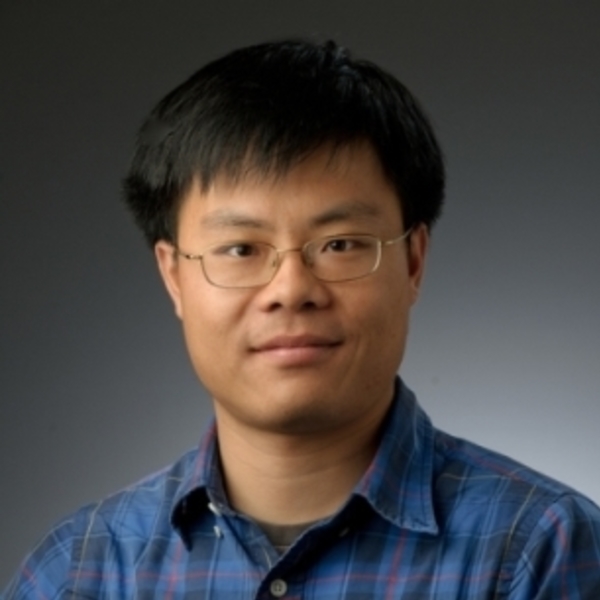
Jun Li is a Full Professor in the Department of Applied and Computational Mathematics and Statistics at the University of Notre Dame's College of Science. He specializes in developing statistical and computational methods for big data, with a focus on interdisciplinary applications in bioinformatics, machine learning, and data mining. His career includes tenure as an Assistant Professor (2012–2017) and promotion to Associate Professor (2017) before becoming Full Professor (2020). Dr. Li holds a Ph.D. in Statistics from Stanford University (2012), supervised by Robert Tibshirani, and earlier degrees from Tsinghua University: a B.E. in Automation (2004) and an M.S. in Pattern Recognition and Intelligent Systems (2007). Research Interests : Dr. Li’s work centers on advancing computational frameworks for handling large-scale datasets, integrating statistical rigor with algorithmic innovation. Recent themes include AI-driven code improvement, ethical LLM applications in HCI, and GUI automation. His methodologies emphasize human-AI collaboration and transparency in algorithmic systems. Publications : His 2025 work explores LLM vulnerabilities in GUI agents, AI-assisted education tools like GLITTER, and ethical challenges in HCI research. Earlier studies (2024–2023) address topics such as natural language database queries, privacy-preserving app promotion analysis, and multimodal task learning. Lab/Teams : Affiliated with Notre Dame’s computational statistics research groups, focusing on interdisciplinary projects bridging statistics, computer science, and applied mathematics. His work often involves collaborations with industry and academic partners to translate theoretical advancements into practical applications.
Lars-Olof Johansson is a Senior Lecturer at Halmstad University's School of Information Technology, specializing in Informatics. His research focuses on digital service innovation from a learning perspective, emphasizing collaboration between diverse stakeholders and knowledge exchange in innovation processes. He is actively involved in the LeaDS research program (Learning in a Digitalized Society) and teaches in the bachelor's program 'Digital Business Development' and the master's program 'Digital Learning'. His work bridges educational methodologies and technological innovation, particularly in fostering environments where interdisciplinary learning drives successful digital service creation. Notably recognized as an 'Excellent Teacher in Informatics,' he integrates practical experience with academic rigor, contributing to both scholarly discourse and pedagogical advancements. Key projects include SESMA (2019-2021), exploring sustainable mobility solutions, and ongoing collaborations in boundary practices for ICT innovation. His publications span topics like knowledgeability in digital service innovation, ethics in autonomous systems, and collaborative learning frameworks. His awards highlight his pedagogical impact, while his research addresses systemic challenges in innovation through interdisciplinary approaches.
Jan van den Ende is a Full Professor of Management of Technology and Innovation at the Rotterdam School of Management (RSM), Erasmus University. He is also Professor of Horticulture Innovation and a Visiting Professor at LUISS Università Guido Carli in Rome, Italy, reflecting his broad academic engagement across disciplines and institutions. His research centers on the development of new products and services, with a focus on idea management , control of NPD projects , design management , and sustainable innovation . His work is deeply interdisciplinary, spanning innovation management, organizational studies, and strategic management, as reflected in his publications in top journals such as Research Policy , Harvard Business Review , and IEEE Transactions on Engineering Management . The trends in his recent publications highlight a sustained focus on innovation processes in complex environments, including project-based organizations, multinational enterprises, and high-tech industries like video games. His research increasingly explores socio-organizational dynamics such as status, resource scarcity, and entrepreneurial incubation. He has held long-standing editorial roles in leading journals including: Research Policy (Editor since 2003) IEEE Transactions on Engineering Management (Editor since 2007) Journal of Management Studies (Editor since 2009) Service Business (Editor since 2012) He teaches in MBA and Executive Education programs for global firms such as ASML, FrieslandCampina, IFF, and MAN, bridging academic research with industry practice. He has supervised 25 academic works, indicating a strong commitment to mentoring the next generation of scholars. His work contributes to UN Sustainable Development Goals, particularly those related to sustainable economic growth and innovation. He earned his PhD from Delft University of Technology.
Ana Serrano is an Associate Professor at Universidad de Zaragoza, Spain, where she is affiliated with the Graphics & Imaging Lab in the EINA (Edificio Ada Byron) school. She earned her PhD at the same institution under the supervision of Prof. Diego Gutierrez and Prof. Belen Masia, and completed a postdoctoral fellowship at the Max-Planck-Institute for Informatics under Prof. Karol Myszkowski. Her research focuses on visual computing , particularly in computational imaging , material appearance perception and editing , and virtual reality . She is especially interested in developing perceptually-driven methods that leverage knowledge of the human perceptual system to enhance user experiences and assist content creation in immersive environments. Her recent publications (2023–2025) span top-tier venues such as SIGGRAPH, CVPR, IEEE TVCG, and Eurographics. These works explore topics like saliency prediction in 3D and 360° video, crossmodal perception in VR, gloss modeling, radiance fields, and perceptual evaluation of immersive content. The research demonstrates a strong integration of machine learning, human perception, and computer graphics to solve real-world problems in visual computing. She has received several prestigious awards, including: Eurographics 2023 Young Researcher Award VGTC VR 2024 Significant New Researcher Award Eurographics 2020 PhD Award Adobe Research Fellowship (honorable mention, 2017) NVIDIA Graduate Fellowship (2018) Ana Serrano actively supervises PhD and Master’s students and has taught courses such as Virtual Reality, Computational Imaging, and Deep Learning applications. She serves as an Associate Editor for Computer Graphics Forum , ACM Transactions on Applied Perception , and Computers and Graphics , and has held leadership roles in major conferences including Eurographics (Tutorials co-chair, 2023), ACM SAP (Program co-chair, 2022), and CEIG (Program co-chair, 2022). Her professional service includes extensive program committee and reviewer roles for SIGGRAPH, IEEE VR, ISMAR, and others. She leads a vibrant research group focused on human perception in virtual environments, with current projects on computational models of attention and perception, integrated with physiological signals. Her lab, the Graphics & Imaging Lab, fosters interdisciplinary collaboration and innovation in visual computing.
Slava Jankin is a Professor of Data Science and Government at the University of Birmingham’s School of Government, where he also serves as Deputy Director of the Institute for Data and AI and Founding Director of the Centre for Artificial Intelligence in Government. He is concurrently a Fellow and Founding Director of the Data Science Lab at the Hertie School in Berlin. Previously, he held a Professorship at the University of Essex and has worked at University College London (UCL) and the London School of Economics (LSE). His research bridges computational methods, governance, and climate policy, with a focus on AI applications in public institutions, climate-health surveillance, and misinformation resilience. Jankin earned a PhD in Political Science from Trinity College Dublin (2009), a Postgraduate Diploma in Statistics (2006), and a BSc from Belarus State Economic University (2002). **Education**: • PhD in Political Science, Trinity College Dublin (2009) • Postgraduate Diploma in Statistics, Trinity College Dublin (2006) • BSc Econ with Distinction, Belarus State Economic University (2002) **Research Interests**: Jankin’s work integrates AI and computational methods with governance challenges, including climate policy, health surveillance, and institutional effectiveness. He leads initiatives like the Lancet Countdown’s climate-health monitoring and the CATALYSE project on climate impacts. His research also explores digital twins for governance systems and the role of cultural diversity in societal resilience against misinformation. **Grants & Collaborations**: He advises the UN and EU on AI and data science, co-leads the Lancet Countdown, and collaborates with institutions like the Alan Turing Institute. His applied work includes developing AI tools for public service optimization and policy simulations. **Labs & Teams**: Directs the Centre for AI in Government (University of Birmingham) and the Hertie School’s Data Science Lab, fostering interdisciplinary teams to advance computational methods in public policy.
Dr. Kenneth Chelst is a Professor in the Department of Industrial and Systems Engineering at Wayne State University , where he directs the Engineering Management Program. His work bridges operations research with engineering management and K-12 mathematics education . A Rabbinic Ordination holder from Yeshiva University, he combines analytical rigor with pedagogical innovation. Educational Background: Ph.D., M.S. in Operations Research from MIT B.A. in Mathematics and Physics from Yeshiva College His research focuses on structured decision-making , OR applications in emergency services , and math curriculum development . The NSF-funded Project MINDSET ($3.3 million) and Project MEDeATe highlight his efforts to integrate OR into high school education. His From Percentage to Algebra middle school book and Ford-funded workshops have impacted hundreds of teachers. Scientific Awards: INFORMS President's Award (2011) for K-12 OR outreach Edelman Prize Laureate (2000) for Ford's OR application Multiple teaching awards from Ford Motor Company Dr. Chelst consults with Urban Science Applications Inc. and previously led the INFORMS Roundtable. His courses include Decision and Risk Analysis and Leadership Projects in Engineering Management , emphasizing corporate partnerships and immediate ROI.
Michelle Doas is an Associate Professor of Nursing at Chatham University 's College of Health Sciences , where she has been actively contributing since 2007. Her expertise spans clinical nursing, education, and interdisciplinary research applications. Ed,D., MSN, BSN, RN Research Interests Dr. Doas focuses on critical thinking development in nursing education , adult literacy in healthcare , and reminiscence therapy . Her work bridges clinical practice with pedagogical innovation, exploring how techniques from service industries (e.g., Disney's hospitality model) can enhance patient satisfaction and communication in healthcare settings. Article Trends Her publications and presentations demonstrate a consistent emphasis on improving clinical outcomes through structured interventions like mind mapping for education, relaxation therapy for post-operative care, and concept mapping for knowledge organization. Key themes include patient safety , workplace culture , and interdisciplinary applications in nursing. Scientific Awards She is a member of the prestigious Sigma Theta Tau International Honor Society , recognizing her contributions to nursing scholarship. Additional Contributions Dr. Doas has served on the Business Faculty Search Committee (2008) and presented on diverse topics such as food handling safety in environmental science contexts and nursing career advocacy at high school outreach events.
Michael E. Heyes is Associate Professor of Religion and Chair of the Department at Lycoming College, where he teaches courses on religion, literature, and the history of Christianity. He received his Ph.D. in Religious Studies from Rice University (2015) and an M.A. in Comparative Religion from the University of Washington (2008). Previously, he held a visiting instructorship at the University of South Florida – Tampa. Education: Ph.D., Religious Studies, Rice University, 2015 M.A., Comparative Religion, University of Washington, 2008 Heyes' research interests span both medieval and modern religious phenomena. His work explores religion and literature , monstrosity and demonology , saints’ lives , gender and race in religious narratives , and American civil religion . He has published extensively on how religious identities are constructed through narratives of the monstrous, from medieval hagiography to contemporary film and conspiracy theories like QAnon. His teaching includes introductory religion, theory-driven courses, religion in fiction and film, and western esotericism. His scholarly output includes two monographs— Demons in the USA (2024) and Margaret's Monsters (2020)—and an edited volume, Holy Monsters, Sacred Grotesques (2018). His articles analyze themes such as demonic corporeality, the racialization of monsters in film, and the gendered dynamics of sainthood. The publications reveal a strong interdisciplinary trend, blending religious studies with literary analysis, cultural criticism, and film theory, particularly focusing on how media shapes spiritual imagination. Scientific Awards: No awards listed in the provided text. Heyes is actively involved in academic service, including co-editing The Journal of Gods and Monsters and organizing special issues on displacement and monstrosity. He has also issued calls for book chapters, such as on Lovecraftian horror in Japan, indicating ongoing research leadership. There is no mention of advising students or receiving grants in the provided material. He maintains a scholarly presence on Academia.edu and has presented at various academic forums. Labs and Research Teams: Co-editor, The Journal of Gods and Monsters Organizer of academic panels and symposia on religion and monstrosity
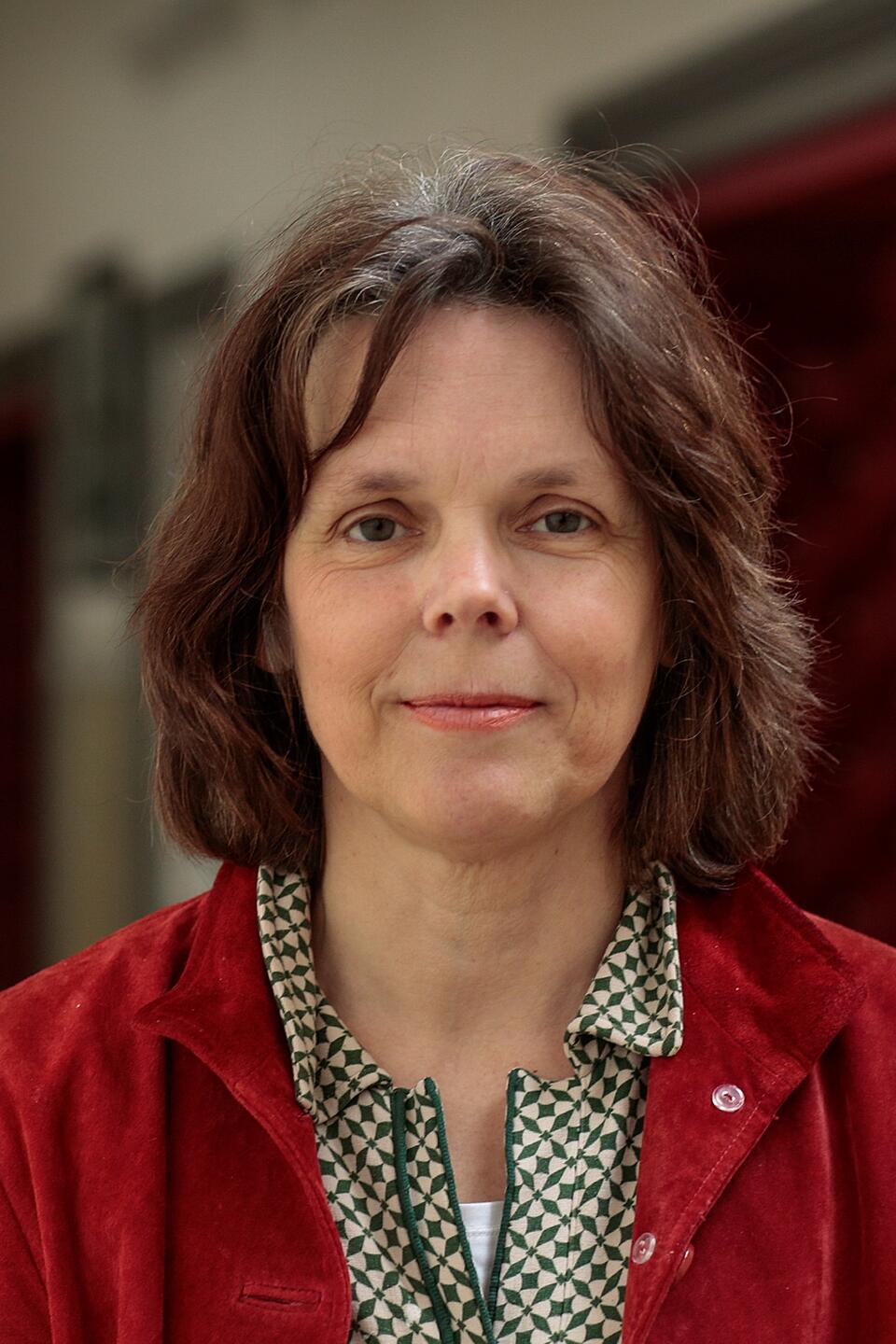
Dr. Elisabeth (Lies) Wesseling is an Associate Professor in the Department of Literature and Art at the Faculty of Arts and Social Sciences, Maastricht University. She serves as Director of the Centre for Gender and Diversity and leads the international research network PLACIM (Platform for a Cultural History of Children's Media). Her interdisciplinary work bridges literature, cultural history, and the humanities' engagement with science and identity. Her educational background includes MA degrees in English Language and Literature and Comparative Literature (both cum laude) and a PhD in Comparative Literature, all from Utrecht University. Dr. Wesseling’s research focuses on the cultural construction of childhood, particularly through narrative forms in fiction, life writing, and film. She investigates how global adoption narratives forge kinship across cultural boundaries, drawing on postcolonial theory, literary anthropology, and life writing studies. Her work critically examines implicit cultural assumptions about parenthood, orphanhood, and identity, aiming to enrich ethical discourse on transnational adoption. Her recent publications (2020–2023) reflect a strong trajectory in children’s literature, narrative theory, and cultural critique, with a particular emphasis on mermaid myths, adoption memoirs, and postcolonial family formations. These works span edited volumes and journals, demonstrating sustained scholarly engagement. She is actively involved in academic service as congress convenor of the 21st Biennual IRSCL Conference and board member of the International Research Society for Children's Literature. She also belongs to several learned societies including the International Society for Cultural History and the Society for Literature, Science, and Art. Dr. Wesseling has supervised multiple PhD candidates and coordinates research programs funded by the Dutch Science Foundation (NWO). Her teaching spans BA, MA, and MPhil levels, focusing on arts and culture, postcolonialism, and problem-based learning. She has led major educational innovation projects such as ForUM and TAC, enhancing pedagogical practices across institutions. She leads the externally funded research program Emergent Cultural Literacy: Assimilating Children's Literature and directs the Centre for Gender and Diversity, fostering interdisciplinary collaboration on gender, identity, and cultural inclusion within the faculty.
Neil Shah is a Lead Research Scientist at Snap Inc., leading initiatives in user modeling, personalization, and trust and safety across Snapchat. His research focuses on advancing machine learning algorithms for large-scale structured data, including graph and sequential representations, with applications to recommendation systems and social platform security. PhD in Computer Science, Carnegie Mellon University (2017), advised by Christos Faloutsos B.S. in Computer Science, North Carolina State University Current research interests span: Graph Neural Networks (GNNs) for real-time inference and scalable training Cross-domain recommendation systems and generative modeling Test-time augmentation and hyperbolic geometry in representation learning Explainability methods for GNNs and fairness-aware outlier detection Recent publications highlight productionized GNN frameworks (GiGL), multimodal graph benchmarks, and novel approaches to link prediction and collaborative filtering. His work has appeared at top venues like KDD, ICLR, NeurIPS, and WWW. Scientific recognition includes: Outstanding Service Award at WSDM 2022 Best Paper Honorable Mention at CHI 2019
Dr. Angela M. Locks is a Professor and Department Chair in Educational Leadership at California State University, Long Beach (CSULB), within the College of Education. She also serves as the Executive Director of the Center for Evaluation & Educational Effectiveness. Her career spans nearly three decades in higher education, with 16 years at CSULB, where she has held leadership roles in diversity, equity, and inclusion, including Executive Director for Diversity, Equity, and Inclusion in Academic Affairs (2020–2024), and founding roles in undergraduate research programs. Education: Ph.D. in Higher Education (Diversity & Governance), University of Michigan, Ann Arbor M.A. in Education, University of Michigan, Ann Arbor B.A. in Psychology, University of Michigan, Ann Arbor Her research centers on diversity, equity, and inclusion in higher education , with a focus on college access, retention, campus climate, and the experiences of racially and ethnically underrepresented students. She examines how institutional policies and practices affect student outcomes, particularly through intergroup dialogue, high-impact practices, and diversity programming. Her work emphasizes the holistic development of students and the role of equity-mindedness in educational leadership. The recent publications and edited volumes highlight a sustained focus on debunking deficit narratives (e.g., 'grit'), supporting Students of Color, and understanding the structural barriers faced by Latina/o, African American, and first-generation students. Her research bridges theory and practice, often involving longitudinal and qualitative studies that inform institutional strategies for inclusion and retention. Scientific Awards: 2021 Wang Family Excellence Award Outstanding Faculty Service Nominee, CSULB 2014 Outstanding Faculty Mentor for Student Engagement in Research, CSULB Academic Affairs 2014 Most Valuable Professor, College of Education, CSULB Alumni Association Dr. Locks has supervised 18 doctoral dissertations and 23 master’s theses, demonstrating a strong commitment to mentoring the next generation of scholars. She led the Mellon Mays Undergraduate Fellowship Program (2017–2024) and founded the Undergraduate Research Opportunity Program, securing external funding and institutional support for student research. Her leadership extends to national initiatives, including serving as principal investigator for the Truth, Racial, Healing, and Transformation (TRHT) Campus Center with AAC&U. She is actively involved in research centers and programs at CSULB, including the Center for Evaluation & Educational Effectiveness and the Office of Undergraduate Research Services. Her work continues to shape institutional practices around diversity, equity, and student success through research, policy engagement, and community collaboration.
Hens Runhaar is Professor of Policy and Governance for Sustainable Food Systems at Utrecht University's Copernicus Institute of Sustainable Development. He holds positions as Chair of the Examination Committee for Sustainable Development and is a member of the Core Team of Future Food Utrecht. Additionally, he serves on the Editorial Board of Earth System Governance Journal and as Associate Editor of Frontiers in Sustainable Food Systems journal. His research focuses on sustainable food systems, policy and governance for biodiversity conservation, and nature-inclusive agriculture. Runhaar's research interests center on understanding the connectivity issues in Western food systems that lead to sustainability challenges including biodiversity loss, climate change, and food-related diseases. He investigates the decoupling of food production from environmental conditions, disconnects between feed production and livestock farming, and the separation between food production and consumption areas. His work emphasizes biodiversity as a key indicator of sustainable food systems, with special interest in scaling up agroecology, regenerative agriculture, and nature-inclusive agriculture. He delivered his inaugural lecture on January 17, 2025, titled 'Governing towards sustainable food systems: new connections for more diversity'. His recent publications demonstrate a strong focus on biodiversity policy integration, nature-based solutions, and transformative food system changes. Runhaar has been instrumental in special issues on biodiversity governance and environmental policy integration. His research projects include COMBINED (2025-2031), REWIRE, DivGrass, and work on the Water Framework Directive after 2027. Editorial Board Member of Earth System Governance Journal Associate editor of Frontiers in Sustainable Food Systems journal Member of the Scientific Advisory Committee of Dutch Bird Protection Association Senior Research Fellow of Earth System Governance research network Fellow of Wageningen School of Social Sciences Runhaar actively supervises numerous PhD students and postdoctoral researchers, with a focus on sustainable food systems, biodiversity conservation, and nature-inclusive agriculture. He has contributed significantly to societal debates through media appearances in NRC, De Volkskrant, and EenVandaag, addressing topics like nitrogen policy, nature restoration, and the role of farmers in sustainability transitions. Beyond academia, he volunteers with the Badger Working Group Utrecht and 't Gooi Foundation, monitoring badgers since 2012 and contributing to nature conservation efforts.