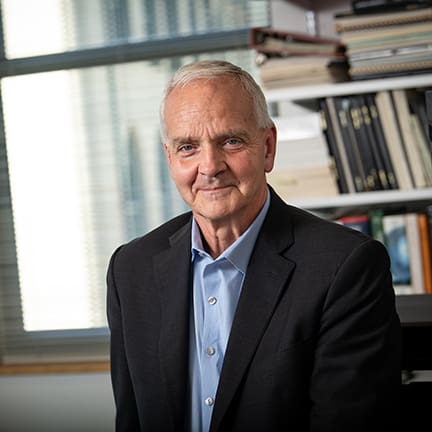
Martial Hebert serves as the Dean of the School of Computer Science at Carnegie Mellon University, a position he assumed in August 2019. He is the sixth dean to lead the school since its inception in 1988 and holds the title of University Professor of Robotics. Professor Hebert is an active participant in global AI discussions, with an upcoming speaking engagement at the AI and Planet session on May 30, 2024, where he will address "Generative AI and regulation: From local implementations to global standards." Professor Hebert is a leading researcher in the fields of computer vision and robotics. His work has contributed significantly to advancing these disciplines, which are critical components of modern artificial intelligence and autonomous systems. His expertise spans theoretical foundations and practical applications of vision systems and robotic technologies, positioning him as a key figure at the intersection of academic research and real-world AI implementation. As Dean of one of the world's most renowned computer science schools, Hebert oversees a diverse academic community dedicated to innovation and excellence in computing education and research. Under his leadership, the School of Computer Science continues to maintain its position at the forefront of technological advancement and academic achievement in the computing field, while also engaging with critical issues around AI governance and regulation.
Miguel Ángel Bernal Merino serves as a Part-Time Lecturer in the Department of Modern Philology, Translation and Interpretation at the University of Las Palmas de Gran Canaria. Concurrently, he acts as convener of the MA in Translation at the University of Roehampton in London, managing its Specialised Translation, Audiovisual Translation, and Intercultural Communication pathways since 2005. His academic profile bridges theoretical research and industry application in localization disciplines. PhD in The Localisation of Video Games, Imperial College London MSc in The Localisation of Multimedia Interactive Entertainment Software, Imperial College London Certificate in Software Localisation, University of Limerick CELTA, University of Cambridge MPhil in Lip-Synched Dubbing, Universidad de Alicante MA in Hispanic Literature, University of Rhode Island BA in English & Spanish Linguistics, Universidad de Alicante Bernal Merino's research pioneers the expansion of Translation Studies into interactive media domains. His work on video game localization examines interactivity, cultural adaptation, glocalisation, and playability, while his audiovisual translation research investigates creativity in lip-synched dubbing, subtitling, and audiodescription. He extends these frameworks into gaming-based language learning through haptic environments and multisensory reinforcement, exploring physiological aspects of multilingual cognition and polysemiotic neural networks. This multidisciplinary approach fundamentally challenges traditional boundaries in translation theory. His publication trajectory reveals evolving industry-academia integration, shifting from foundational game localization frameworks (2008-2015) toward user-centered research and educational applications (2018-2024). Recent work emphasizes measurable business impacts through quality localization, regional market adaptations, and crowd-sourced methodologies, demonstrating consistent influence on professional standards across gaming and translation sectors. Fellow of the Higher Education Academy Bernal Merino supervises doctoral research on mobile game localization, transmedia fan experiences, and historical game content translation while developing industry-academia pipelines through projects like AHRC's Media Across Borders. His funded initiatives—including Maximising ROI through Quality Game Localisation and Video Games for Language Learning—bridge theoretical innovation with commercial implementation, focusing on glocalisation strategies, interactivity metrics, and playability optimization. These collaborations connect European universities, gaming studios, and localization service providers. As chair of the IGDA Localization SIG and member of GIR Discourse, Communication and Society, he directs international forums for game localization discourse. His work with Routes into Languages promotes audiovisual media in language education, while REF-readiness collaborations enhance research excellence across European institutions through his professional network spanning industry conferences like GDC Summit and Game Global.
Carlos Alvarez Martinez is a faculty member at the Universitat Politècnica de Catalunya (UPC), affiliated with the Department of Computer Architecture at the Barcelona School of Informatics (FIB). He is a key member of the Programming Models (PM) research group and collaborates closely with the Barcelona Supercomputing Center (BSC). His research focuses on high-performance computing, FPGA acceleration, task-based programming models like OmpSs, and hardware-software co-design for heterogeneous systems. His research interests center on advancing parallel computing through innovative programming models and hardware acceleration. He investigates efficient task scheduling, resource management in multicore and FPGA-based systems, and runtime support for dataflow models. His work enables high-performance execution of complex applications in domains such as scientific computing and cyber-physical systems. He actively contributes to European initiatives like TEXTAROSSA and AXIOM, aiming to develop next-generation exascale supercomputing technologies. The trend in his recent publications shows a strong focus on leveraging FPGAs for HPC, optimizing SpMV operations, improving task scheduling with hardware support, and developing frameworks for multi-FPGA clusters. His work consistently bridges theoretical models with practical implementations, emphasizing performance, scalability, and energy efficiency in heterogeneous computing environments. Scientific Awards: Premi UPC al Compromís Social 2019 Premi Disseny per al Reciclatge 2013 Alvarez Martinez has advised or collaborated with several doctoral students, including Jaume Bosch, Xubin Tan, and Fahimeh Yazdanpanah. He has been involved in numerous competitive R&D projects, often related to high-performance computing and parallel programming models. His work includes significant contributions to educational innovation, particularly in active learning methodologies and formative assessment using interactive systems. He leads and participates in research labs and teams focused on programming models and computer architecture, notably the PM group at UPC/BSC. These teams develop runtime systems, compilers, and hardware accelerators to push the boundaries of parallel computing efficiency and programmability.
Guillermo Toral is an Assistant Professor of Political Science at IE University and a Faculty Affiliate at MIT GOV/LAB. He holds a PhD from MIT (2020), an MPhil from the University of Oxford (2011), and a Licenciatura from Universidad Complutense de Madrid (2009). His research focuses on comparative politics, political economy, and governance, with a regional emphasis on Latin America and Southern Europe. He examines relationships among state actors, anti-corruption policies, and their impact on public service delivery and human development. His academic experience includes tenure-track roles at IE University (2022–present) and Vanderbilt University (2020–2022). He previously worked at the World Bank (2011–2014) on education policy and human development programs. His research has been published in top journals like the American Journal of Political Science and Journal of Politics , earning awards such as the AJPS Best Article Award and APSA Health Politics Best Paper Award. Key research areas include bureaucratic accountability, political budget cycles, and the political uses of public employment. His book project explores how lame-duck governments disrupt bureaucracy and service delivery. Teaching evaluations highlight his expertise in comparative politics and political economy at both undergraduate and graduate levels. Awards: Harold D. Lasswell Award, AJPS Best Article Award, APSA Health Politics Best Paper. Grants: Ramón y Cajal fellowship (IE University). Labs/Teams: MIT GOV/LAB Affiliate.
Jacob D. Leshno is an Associate Professor of Economics and Robert H. Topel Faculty Scholar at the University of Chicago Booth School of Business. His research employs game theory, applied mathematics, and microeconomic theory to study allocation mechanisms and marketplace design, with applications spanning school choice systems, patient assignments to nursing homes, and decentralized cryptocurrency protocols. Professor Leshno's academic background includes: PhD in Economics from Harvard University, completed under Nobel laureate Alvin Roth M.Sc. in Pure Mathematics from Tel Aviv University B.Sc. in Pure Mathematics from Tel Aviv University His research program centers on market design theory with two primary strands. The first focuses on matching markets, where he developed tractable cutoff characterizations that clarify market structures for college admissions and medical residency matching (NRMP). His work demonstrates how price discovery mechanisms can streamline inefficient processes like college applications and subsidized housing allocation. The second strand examines cryptocurrencies and blockchain technology, investigating how open-source computer code functions as market rules in decentralized systems. This research explores both the economic security of permissionless consensus and fundamental limitations of proof-of-work protocols. Professor Leshno's publications reveal a cohesive research trajectory applying economic theory to increasingly complex market structures. His work consistently bridges theoretical rigor with practical implementation, evolving from traditional matching markets to the frontier of decentralized digital systems. Publications in top journals like American Economic Review and Journal of Political Economy demonstrate both analytical depth and real-world relevance across education, healthcare, and financial technology sectors. Professor Leshno has received significant recognition for his contributions: ACM SIGecom Test of Time Award for foundational work in matching markets INFORMS Frederick W. Lanchester Prize for outstanding contributions to operations research Prior to Chicago Booth, Professor Leshno served as Assistant Professor at Columbia Business School and completed a postdoctoral fellowship at Microsoft Research New England, following industry experience at Yahoo! and IBM. He teaches MBA courses in Competitive Strategy and Market Design, and developed a PhD seminar bridging computer science theory with economic principles for distributed systems. His research continues to influence both academic theory and practical implementations of market mechanisms across multiple sectors. Professor Leshno maintains active collaborations with leading researchers including Itai Ashlagi, Irene Lo, and Gur Huberman, advancing the theoretical foundations of market design while addressing contemporary challenges in digital marketplaces and allocation systems.
Angel Saz Carranza is a Professor and Associate Professor at the Department of Strategy and General Management in the Esade Business School, Ramon Llull University. His research focuses on global governance, intergovernmental organizations, regulatory networks, and public-private partnerships. He contributes to the UN Sustainable Development Goals through his work on institutional frameworks and policy design. He leads research projects funded by the EU and Spanish Ministry of Science, including 'EU-VALUES' (2023-2026) and 'LegitGov' (2022-2025). His work explores accountability mechanisms in EU regulatory networks and governance structures of intergovernmental organizations under the UN system. Key research outputs analyze board design in intergovernmental organizations, network tasks in regulatory frameworks, and determinants of public-private partnership policies. His projects often involve semantic big data analysis and configurational approaches. He is part of the Grup de Recerca en Lideratge i Innovación en la Gestión Pública (GLIGP), a research group focusing on public management innovation. Current and past projects address global governance legitimacy, strategic foresight for Spain's foreign policy, and regulatory network governance.
Anna Villarroya Planas is a Professor at the Universitat de Barcelona, serving as Director of the Research Center for Information, Communication and Culture. She holds a law degree and economics degree from the Universitat de Barcelona, and a PhD in Public Sector Economics from the same institution. Affiliated with both the Faculty of Information and Audiovisual Media and the Department of Economics, she has been teaching courses related to cultural economics and cultural policies since 1993. Her research focuses on digital culture and content, with special emphasis on open access to science and economic studies on culture, particularly examining gender perspectives in cultural sectors. She serves as President of the European Association of Cultural Researchers and coordinates the Interuniversity Doctoral Program in Gender Studies: Cultures, Societies and Policies. Analysis of her recent publications (2022-2024) reveals a strong focus on gender equality in cultural sectors, particularly examining gender discrimination in the performing arts, LGBTQ perspectives in information studies, and cultural policies with gender perspectives. Her work spans multiple disciplines including cultural economics, gender studies, library science, and policy analysis, demonstrating interdisciplinary approaches to understanding cultural production, consumption, and policy implementation. She has participated in numerous research projects funded by public entities including the World Bank, Council of Europe, ERICarts, Organization of Ibero-American States, Spanish Ministry of Culture, Catalan Department of Culture, and Barcelona Provincial Council, as well as private foundations like "la Caixa" Banking Foundation, Carulla Foundation, and Alternativas Foundation. Since 2006, she has authored the report on cultural policy in Spain included in the Compendium of Cultural Policies and Trends, and since 2017 has been a member of the Council of the Association of the Compendium of Cultural Policies and Trends. Her leadership extends to directing research projects focused on gender perspectives in information and media studies, including the GEMPIMS (Gender Perspective Mentoring Program in Information & Media Studies) initiative at the University of Barcelona.
Susana Paton Alvarez is an Associate Professor at the Department of Electronic Technology within the College of Engineering at the Universidad Carlos III de Madrid. She is affiliated with the Microelectronic Design and Applications (DMA) research group and the University Institute on Gender Studies . Her contact information includes email addresses susana.paton@uc3m.es and spaton@ing.uc3m.es , and her office is located at 1.2.C06 - Agustin De Betancourt in Leganés. Her research focuses on analog and mixed-signal circuit design , with a particular emphasis on capacitance-to-digital converters , voltage-controlled oscillators (VCO) , and biomedical sensors . Recent work includes advancements in time-encoded sensors for physiological monitoring and noise analysis in multi-bit SigmaDelta modulators. She also explores applications in flexible electronics and edge computing for biosignal acquisition. Notable publications include contributions to IEEE Sensors Letters , IEEE Transactions on Circuits and Systems II , and IEEE Sensors Journal , reflecting her expertise in microelectronic design and biomedical engineering. Her research often bridges theoretical circuit analysis with practical implementations in nanometer CMOS technologies. Dr. Paton Alvarez actively participates in collaborative projects and conferences, such as Modularos and Short Range Wireless Front-Ends initiatives. While no scientific awards are explicitly listed, her publications highlight sustained contributions to the field of analog and biomedical circuit design. Her academic roles include teaching Computer Science and Electronics subjects. She is involved in the University Institute on Gender Studies , indicating an interest in interdisciplinary research or outreach in gender-related academic issues.
Francisco Javier Murillo Torrecilla is a Professor of Research Methods and Evaluation in Education at the Autonomous University of Madrid (UAM). He serves as Director of multiple educational journals ( REICE , Revista Iberoamericana de Evaluación Educativa , Revista Internacional de Educación para la Justicia Social ) and leads research groups like 'Educational Change for Social Justice' (GICE) and the Ibero-American Research Network on School Change and Effectiveness (RINACE). His work focuses on Education for Social Justice , School Segregation , and Educational Leadership . He holds degrees in Mathematics and Education Sciences, and a PhD in Education Sciences from Universidad Complutense de Madrid. With 5 research sexenios and over 200 publications, his citations exceed 25,000 (h-index: 84) in Google Scholar. He has led 25 competitive research projects, including the 'Network of Excellence' RILME (EDU2017-90606-REDT). Coordinated UNESCO's Latin American Laboratory for Educational Quality Evaluation (LLECE) Former Director of Spain's Centre for Educational Research and Documentation (CIDE) Director of UAM's UNESCO Chair in Education for Social Justice and Institute DEMOSPAZ His research projects on social justice in education include five consecutive Spanish State Program grants (2010-2021) and books like La investigación sobre eficacia escolar (2005). He has consulted for UNESCO, OECD, and governments in Latin America.
Yuan Zhong is an Associate Professor of Operations Management at the University of Chicago Booth School of Business . He previously held positions as an Assistant Professor at Columbia University’s Department of Industrial Engineering and Operations Research and was a Postdoctoral Scholar at UC Berkeley’s Computer Science Department. Education: PhD in Operations Research, MIT (2012) MA in Mathematics, Caltech (2008) BA in Mathematics, University of Cambridge (2006) His research focuses on applied probability and stochastic system design , with applications in cloud computing , supply chain management , and e-commerce logistics . Recent work explores multi-period production systems and dynamic resource allocation in data centers and healthcare operations . Recent publications analyze cloud value chains , sparse graph design for delivery networks, and process flexibility in manufacturing. He has contributed to journals like Operations Research , Annals of Applied Probability , and Stochastic Systems . Scientific Awards: 2012 Kenneth C. Sevcik Outstanding Student Paper Award Best Student Paper Award at ACM Sigmetrics (2012) He teaches courses in business process fundamentals and queueing theory , with a future schedule including Operations Management: Business Process Fundamentals (2025–2026). No explicit student advising list was provided.
Alejandro F. Villaverde is a Ramón y Cajal research fellow in the Department of Systems & Control Engineering at the School of Industrial Engineering, University of Vigo, Spain. He also serves as a Research fellow at CITMAga since 2022. Previously, he worked as a postdoctoral researcher at IIM-CSIC from 2016-2020. His research focuses on the modeling of dynamical systems with particular emphasis on biological applications. Villaverde earned his PhD in Systems and Control Engineering from University of Vigo between 2005 and 2009. His academic career has centered at Spanish institutions with a strong interdisciplinary approach bridging engineering, mathematics, and biology. His primary research interests include systems biology, control theory, and mathematical modeling, with specialized expertise in structural identifiability, observability analysis, and computational tools for dynamic modeling of biological systems. Villaverde's work addresses fundamental challenges in building reliable mathematical models of complex biological processes, with applications spanning immunology to microbial communities. His theoretical contributions have practical implications for improving model reliability and predictive power in biological research. Villaverde has published extensively in top journals including PLOS Computational Biology, Bioinformatics, and IEEE/ACM Transactions on Computational Biology. His recent publications (2023-2025) reveal a consistent research trajectory focused on developing theoretical frameworks for biological model analysis, creating practical software tools, and applying these methods to cutting-edge problems. His work shows particular strength in identifying and addressing fundamental limitations in modeling approaches, especially regarding parameter identifiability and model observability constraints. Among the top 2% Scientists Worldwide 2024 (Stanford University list) Recognition as one of the EEI's top valued instructors at University of Vigo's School of Industrial Engineering Villaverde leads multiple significant research projects including DYNAMO-bio (funded by Ministry of Science, Innovation and Universities), SICOMORO (focusing on symmetries in biological communities), and PREDYCTBIO. His group actively develops open-source software tools such as STRIKE-GOLDD for structural identifiability and observability analysis. The laboratory, part of the BICO research group, includes several researchers and students working on various aspects of dynamic modeling in biology, with recent additions including Mahmoud Shams Falavarjani, Adriana González Vázquez, and multiple interns working on specialized projects.
Alan Briones Delgado is a researcher at the La Salle School of Engineering , Universitat Ramon Llull , with a focus on Internet of Things , Cybersecurity , and Transport Protocols . His work spans projects funded by the European Commission and national grants, including EXCEL4HOUSING4.0 , WeB-Nimbus , and NG-SOC , addressing challenges in cloud computing education, ecological monitoring, and security operations. His research integrates Artificial Intelligence and Wireless Sensor Networks for sustainable solutions. Key research areas include Quality of Service in heterogeneous networks, Environmental Conservation via IoT, and Teaching and Learning strategies for Big Data. Projects like EcoSentinel and BTL-COP highlight his commitment to Environmental Monitoring and Community Policing applications. His collaborations extend to institutions in the UK , Albania , and Western Balkans . Contact: alan.briones@salle.url.edu
Marta Casanellas is a full professor in the Department of Mathematics at the Polytechnic University of Catalonia (UPC) and a researcher at the Centre de Recerca Matemàtica. She teaches at the Faculty of Mathematics and Statistics, ETSEIB, and FIB. She earned her PhD in mathematics from the University of Barcelona under RM Miró-Roig, focusing on algebraic geometry and liaison theory. After completing a postdoc at UC Berkeley with a Fulbright Scholarship, she shifted her research to applications of algebraic geometry in computational biology, particularly phylogenetics. Her educational background includes a PhD from the University of Barcelona (2002), followed by a postdoctoral fellowship at UC Berkeley (2002-2003) supported by a Fulbright Scholarship. She obtained a prestigious Ramón y Cajal contract at UPC in 2003, which marked her transition to interdisciplinary research at the intersection of mathematics and biology. Casanellas' research focuses on applying algebraic and geometric techniques to phylogenetics, with particular emphasis on evolutionary models, phylogenetic invariants, and computational methods for genomic data analysis. Her work bridges pure mathematics (particularly algebraic geometry) with biological applications, developing mathematical frameworks to reconstruct evolutionary histories and understand genomic relationships. She has published extensively in both mathematics journals like Advances in Mathematics and biology journals like Molecular Biology and Evolution. Her recent publications demonstrate a consistent focus on developing algebraic methods for phylogenetic analysis, with increasing attention to heterogeneous evolutionary processes across lineages, time-reversible models, and computational implementations of theoretical results. The trend shows progression from theoretical foundations in algebraic geometry toward increasingly sophisticated and applicable computational methods for biological data. Fulbright Scholarship for postdoctoral research at UC Berkeley Ramón y Cajal contract (2003) Casanellas has supervised PhD students including A. Kedzierska (co-supervised with R. Guigó of the CRG). She has served as principal investigator for three competitive Spanish government projects involving fifteen researchers each. She has held significant academic leadership roles including Deputy Director of Research of the Department of Mathematics at UPC (2015-2018), head of studies for the Degree in Data Science and Engineering at UPC (2018-2022), and currently coordinates UPC's PhD in Bioinformatics program and Bachelor's Degree in Bioinformatics. She leads the BIO-GEOMAP research group focused on applying mathematical techniques to biological problems.
Wouter Lueks is a faculty member at the CISPA Helmholtz Center for Information Security in Saarbrücken, Germany. His research focuses on designing secure, practical, and privacy-friendly systems using applied cryptography, anonymous communication, and systems engineering. He leads a lab and actively mentors PhD and PostDoc researchers. Education: PhD in Computer Science (Radboud University, Netherlands), advised by Jaap-Henk Hoepman and Bart Jacobs. Postdoctoral Researcher at EPFL, Switzerland (SPRING Lab). Research Interests: Privacy-preserving systems for humanitarian aid and public health. Cryptography in decentralized networks and anonymous communication. Secure protocols for identity management and voting systems. Key Publications: Recent work includes privacy-preserving digital wallets for aid distribution (IEEE S&P 2025), biometric deduplication systems (IEEE S&P 2024), and decentralized proximity tracing protocols (Commun. ACM 2022). His research emphasizes practical applications of zero-knowledge proofs and attribute-based credentials. Awards: Distinguished Paper Award at IEEE S&P 2023. Runner-up Casper Bowden PET Award 2021 and CNIL-Inria Privacy Award 2021. Advising & Grants: Supervises PhD/PostDoc researchers and collaborates on projects funded by EU and industry grants. Active in open-source contributions, including the zksk library and Lightnion anonymous communication tool. Labs/Teams: Principal investigator at CISPA, collaborates with the SPRING Lab (EPFL) and leads interdisciplinary teams in privacy-enhancing technologies.
Xavier Bonal is a Professor of Sociology at Universitat Autònoma de Barcelona (UAB) and Special Professor of Education and International Development at the University of Amsterdam (UvA). He directs the Globalisation, Education and Social Policies (GEPS) research group at UAB and coordinates the GLOBED Erasmus Mundus Master on Education Policies for Global Development. His work focuses on comparative social policy, welfare state dynamics, education equity, and globalization's impact on education systems. Bonal has coordinated major projects such as ECASS (European Cities Against School Segregation) and contributed to UNESCO, UNICEF, and the European Commission. His research emphasizes school segregation mechanisms, educational markets, and policy responses to inequality. Over 200 scholarly outputs include books on education policy and globalisation, with a focus on spatial disparities and policy implementation. His recent publications analyze post-pandemic educational inequities, digital divides, and the role of private actors in education. Bonal’s work bridges academic research with policy advocacy, addressing systemic challenges in education systems globally.