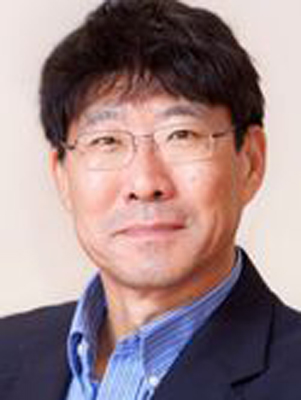
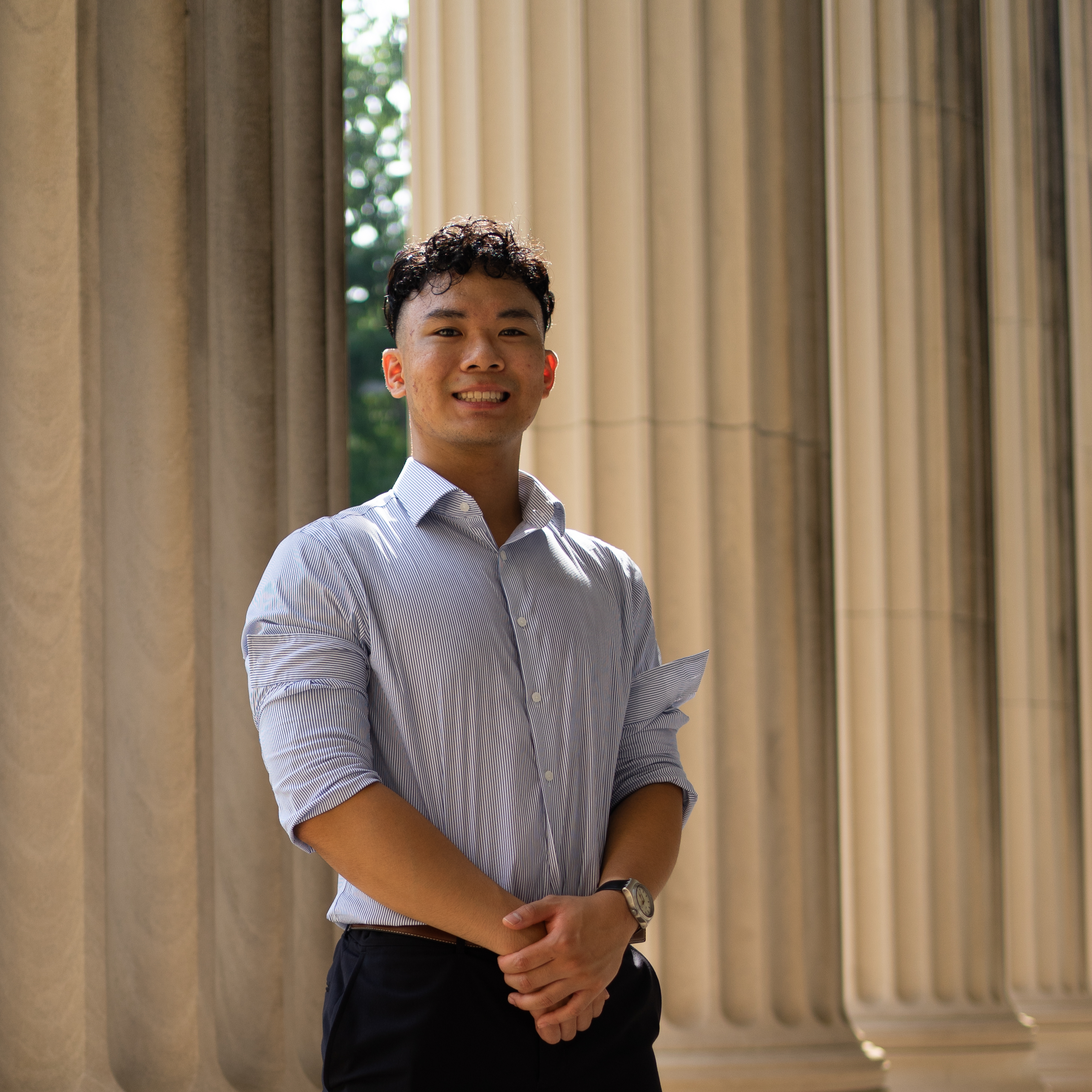
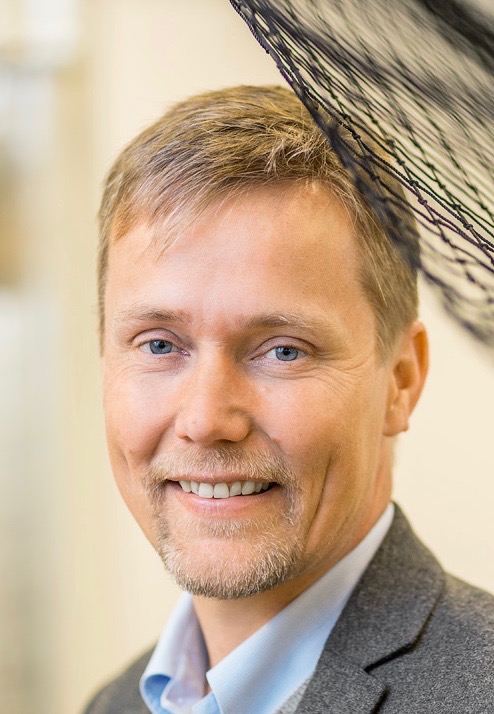
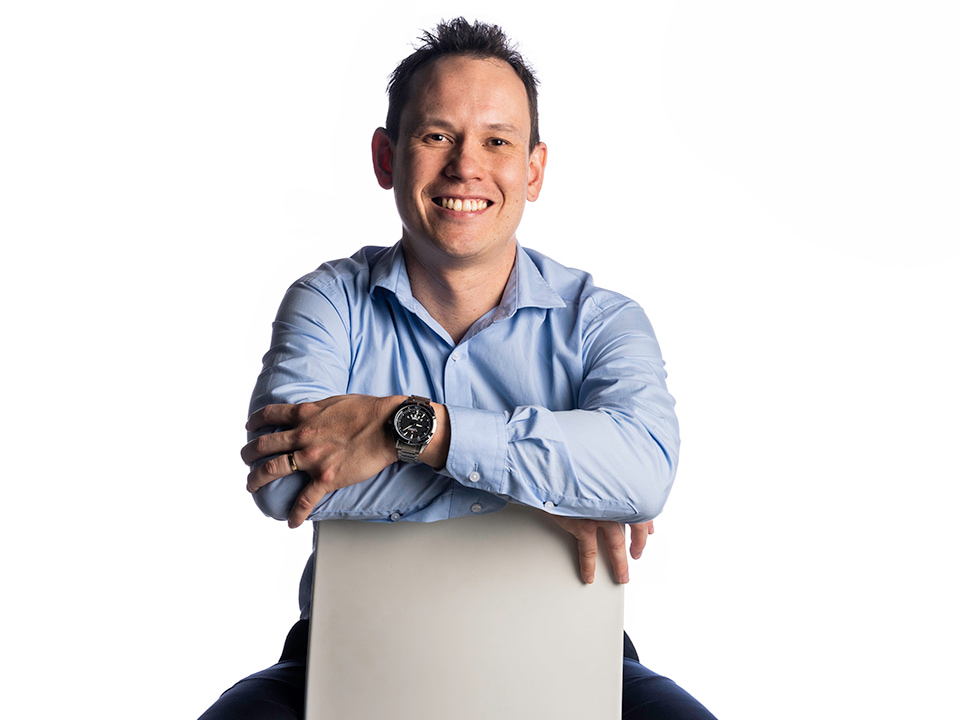
Craig Jin is an Associate Professor at the University of Sydney, leading the CARlab (Computing and Audio Research Laboratory) and Spatial Audio Research initiatives within the School of Electrical and Computer Engineering. He holds a BS from Stanford University, an MS from Caltech, and a PhD from the University of Sydney. His work focuses on immersive audio technologies, biomedical signal processing, and assistive technologies for sensory augmentation. Research interests include spatial audio reproduction, binaural processing, acoustic sensing for accessibility, and machine learning applications in signal processing. Key contributions span HRTF interpolation, noise reduction algorithms, and acoustic touch systems for the visually impaired. Recent projects include real-time MRI analysis of vocal tract dynamics and sparse recovery techniques for sound field reconstruction. His publications span over 150 peer-reviewed articles in journals like IEEE Transactions on Audio, Speech, and Language Processing, and conferences such as ICASSP. He advises four current PhD/Master’s students on projects like predictive gesture tracking, voice disorder classification, and magnetic resonance imaging techniques.
Edouard Oyallon is a CNRS Researcher at Sorbonne University's MLIA team within the Institute of Intelligent Systems and Robotics (ISIR). His research focuses on machine learning foundations, particularly the symmetries of deep neural networks, and large-scale distributed/decentralized training algorithms. He has contributed to frameworks like Kymatio for wavelet scattering transforms and collaborates on projects such as SHARP (Frugal Learning) and ADONIS (ANR-funded). He advises multiple PhD and postdoctoral researchers and teaches advanced deep learning courses at Institut Polytechnique de Paris (IPP). Grants include the ADONIS project (ANR/Sorbonne) and participation in VHS and CoCa4AI initiatives. His work spans theoretical and applied aspects, with recent emphasis on optimizing LLM training at exascale. He maintains active roles in academic service, including organizing workshops on federated learning and graph machine learning.
Tamás Budavári is an Associate Professor in the Department of Applied Mathematics and Statistics at Johns Hopkins University (JHU), with joint appointments in Physics and Astronomy and a secondary appointment in Computer Science. He is affiliated with the Whiting School of Engineering and the Institute for Data-Intensive Engineering and Science (IDIES). His research focuses on computational and statistical methods for big data in astronomy and interdisciplinary applications such as urban blight analysis. Education: PhD in Astrophysics (2001), Eötvös Loránd University, Budapest Master’s in Theoretical Physics (1997), Eötvös Loránd University Research Interests: Budavári develops algorithms for handling large astronomical datasets, including Bayesian inference, streaming algorithms, and GPU-accelerated processing. His work includes SkyQuery (an online astronomy data tool), photometric redshift estimation, and cross-matching catalogs. He also applies computational methods to urban planning, such as optimizing strategies to address vacant housing in Baltimore City. Publications & Tools: Budavári’s recent work spans topics like deep learning for astronomical image restoration, combinatorial optimization for urban policy, and probabilistic catalog matching. His tools, such as CUDAHM and NWAY, enable scalable analysis of multi-epoch survey data and N-way catalog cross-identification. Awards & Grants: Recipient of the Gordon and Betty Moore Fellowship and SAMSI Research Fellowship Funded by NSF, STScI, NIH, and others Leadership & Outreach: He serves on the Steering Committee of the 21st Centuries Cities Initiative and is a founding editor of the Journal of Astronomy and Computing. His interdisciplinary work bridges astrophysics, data science, and urban systems.
Raquel Urtasun is a Full Professor in the Department of Computer Science at the University of Toronto and a co-founder of the Vector Institute for AI. She is also the Founder and CEO of Waabi, an autonomous vehicle company. Previously, she was Chief Scientist and Head of R&D at Uber ATG (2017–2021) and held faculty positions at the Toyota Technological Institute at Chicago (TTIC) and as a visiting professor at ETH Zurich. Her research spans machine learning, computer vision, robotics, and AI with a strong focus on autonomous driving and 3D perception. Education: Bachelor's degree, Universidad Pública de Navarra, 2000 Ph.D., Computer Science, École Polytechnique Fédérale de Lausanne (EPFL), 2006 Postdoctoral studies, MIT and UC Berkeley Raquel Urtasun's research focuses on developing AI systems for self-driving cars, emphasizing efficient perception using minimal sensors. Her work includes 3D scene understanding, stereo vision, optical flow, semantic segmentation, and object detection. She has developed the KITTI benchmark suite, widely used in autonomous driving research. Her lab is an NVIDIA NVAIL lab, reflecting its leadership in AI innovation. Her recent publications show a consistent trend in deep learning for visual perception, particularly in stereo matching, optical flow, 3D object detection, and semantic segmentation. These works integrate deep neural networks with structured models like CRFs and MRFs, pushing the boundaries of accuracy and efficiency in scene understanding for autonomous systems. Scientific Awards: NSERC E.W.R. Steacie Fellowship NVIDIA Pioneers of AI Award Google Faculty Research Awards (multiple) Amazon Faculty Research Award Connaught New Researcher Award Fallona Family Research Award Best Paper Runner Up at CVPR 2013 and 2017 UPNA Alumni Award Chatelaine 2018 Woman of the Year Adweek 2018 Toronto's Top Influencers Urtasun has advised numerous PhD and Master’s students, many of whom now hold faculty or research scientist positions at institutions like UIUC, NYU, UBC, MIT, and companies including Google, Amazon, NVIDIA, and Apple. She has secured significant research grants from NSERC, Google, Amazon, and NVIDIA. Her leadership extends to organizing workshops and serving as Area Chair and Program Chair at top conferences like CVPR, ICML, and NeurIPS. Labs and Teams: She leads a research group at the University of Toronto focused on AI for autonomous systems. Her team has been recognized as an NVIDIA NVAIL lab, and she continues to mentor students and postdocs working on cutting-edge problems in robotics and machine learning, both at UofT and through her company Waabi.
Rozenn Dahyot is a Professor of Computer Science at Maynooth University within the Faculty of Science & Engineering. She previously held roles as Assistant and Associate Professor in Statistics at Trinity College Dublin (2008-2021) and Lecturer in Computer Science (2005-2008). Her research interests bridge Digital Signal Processing, Computer Vision, Machine Learning, and Statistical Analysis. She organized the European Signal Processing Conference (EUSIPCO2021) in Dublin and served as President of the Irish Pattern Recognition and Classification Society (IPRCS) from 2014-2020. Her work spans topics like semantic scene understanding, CNN compression, and medical image segmentation. Key contributions include advancements in graph-based image analysis, reinforcement learning optimization, and AI-driven systems for disaster management. Dahyot is a member of IEEE, ACM, and EURASIP, contributing to both academic and industrial collaborations.
Dr. Arnab Bhattacharya is a Professor in the Department of Computer Science and Engineering at the Indian Institute of Technology (IIT) Kanpur since December 2020. He previously served as Associate Professor (2014–2020) and Assistant Professor (2007–2014) at IIT Kanpur. Education: PhD in Computer Science (2007), University of California, Santa Barbara MS in Computer Science (2007), University of California, Santa Barbara Bachelor of Computer Science and Engineering (2001), Jadavpur University Research Focus spans Databases , Data Mining , Information Retrieval , and Artificial Intelligence . His work emphasizes graph analytics , skyline queries , probabilistic data , and knowledge graph management . Article Trends reveal expertise in graph neural networks , trajectory-aware systems , statistical significance in databases , and legal/medical data mining . His methodologies often integrate chi-square statistics , approximate indexing , and provenance tracking . Scientific Awards: IBM Faculty Research Award Yahoo! Faculty Research and Engagement Program Award Best Paper at COMAD 2011 Best Student Paper at COMAD 2010 Top-Five Student Paper at ICDM 2005 ICDM Student Travel Award sponsored by IBM Contact: Office RM 409, Department of Computer Science and Engineering, IIT Kanpur Email: arnabb@iitk.ac.in | Phone: +91-512-259-7650
Javad Dargahi is a Professor of Mechanical, Industrial and Aerospace Engineering at Concordia University, Montreal. His research focuses on haptic sensors, robotic systems for minimally invasive surgery, and smart sensor fabrication using micromachining and piezoelectric polymers. He leads projects in teletaction, embedded force sensing for soft robots, and medical device innovation. Research interests include tactile sensor design for robots and endoscopes, nonlinear impedance matching in surgical robotics, and deep learning-driven force estimation for catheters. His work bridges mechanical engineering with biomedical applications, emphasizing safety and precision in interventional surgeries. Recent publications explore multitask neural architectures for intracardiac catheters, real-time force control algorithms, and biomimetic soft robotics. His lab develops miniature optical sensors and stiffness-adaptive systems for surgical tools, with applications in cardiac ablation and vascular navigation.
Jonathan Shihao Ji is an Associate Professor in the School of Computing at the University of Connecticut (UConn), leading the Intelligent Systems Lab. He holds a Ph.D. in Electrical and Computer Engineering from Duke University and previously served as an Associate Professor at Georgia State University and Director of the DoD Center of Excellence (CiARE). His research focuses on deep learning applications in computer vision, NLP, robotics, and high-performance computing, with over 50 publications in top venues like CVPR, NeurIPS, and IEEE journals. He has secured grants from NSF, NIH, DoD, and industry partners including VMware and Nvidia. His work emphasizes efficient algorithms for large-scale data processing, parameter-efficient model fine-tuning (e.g., VB-LoRA), and 3D perception benchmarks for UAVs (UAV3D). Notable contributions include sparse network optimization (Dep-L0), energy-based models (M-EBM), and robust defenses against adversarial attacks (Defense-VAE). He is a Senior Member of IEEE and has developed open-source tools like Parallel Word2Vec and WordRank. Recent projects include accelerating Llama2 models on FPGAs (LlamaF) and improving text-to-image synthesis via contrastive learning. His research spans theoretical advancements and practical applications, with industry collaborations in healthcare, robotics, and embedded systems.
Wenping Wang is a Professor in the Department of Computer Science & Engineering at Texas A&M University, part of the College of Engineering. His research focuses on computer graphics, computer vision, geometric modeling, and visualization. He holds Fellowships from ACM and IEEE, and has received notable awards including the 2021 AsiaGraphics Outstanding Technical Contributions Award and the 2017 John Gregory Memorial Award. Wang's educational background includes a Ph.D. from the University of Alberta and M.Eng. and B.Sc. degrees from Shandong University. His work spans advancements in neural implicit surfaces, 3D reconstruction, and medical imaging applications such as orthodontic treatment prediction. He has authored numerous influential papers in top-tier conferences like SIGGRAPH and journals like ACM Transactions on Graphics. His research interests emphasize bridging geometric modeling with machine learning, particularly in neural rendering, surface parameterization, and medical visualization. Recent projects include developing frameworks for automatic tooth alignment and high-fidelity 3D geometry generation. Wang's contributions have significantly impacted both theoretical foundations and practical applications in computer graphics.
Ruonan Han is a Professor of Electrical Engineering and Computer Science at MIT and serves as Associate Director of the Microsystems Technology Laboratories (MTL) and Director of the MIT-MTL Center for Integrated Circuits and Systems . His research focuses on ultra-high-frequency microelectronic circuits , particularly addressing the 'terahertz gap' in sensing, metrology, security, and communication. He leads the Terahertz Integrated Electronics Group at MIT's MTL, established in 2014. Education: B.S. in Microelectronics, Fudan University (2007) M.S. in Electrical Engineering, University of Florida (2009) Ph.D. in Electrical and Computer Engineering, Cornell University (2014) Research Interests: Terahertz (THz) integrated circuits and systems High-frequency CMOS technologies Quantum sensing and magnetometry RF systems for imaging, radar, and molecular sensing Energy-efficient communication systems His work bridges electronic circuits , electromagnetics , and quantum physics , with applications in defense, healthcare, and environmental monitoring. Awards & Recognition: 2023 IEEE SSCS New Frontier Award 2020 NSF CAREER Award 2019 Intel Outstanding Researcher Award 3× IEEE RFIC Best Student Paper Awards (2012, 2017, 2021) Advising & Leadership: Ph.D. advisor to over 10 students (many recipients of MIT MTL Dissertation Awards) Co-advises with Prof. Anantha Chandrakasan and Prof. Tomás Palacios Editorial roles at IEEE Transactions on Quantum Engineering and VLSI Systems Technical committee member for ISSCC, RFIC, and IMS Labs & Teams: Terahertz Integrated Electronics Group at MIT MTL: Focuses on chip-scale THz systems, quantum devices, and next-generation RF circuits Collaborations with industry (e.g., Apple, MediaTek) and academic groups (e.g., D. Englund's lab at MIT)
Dongwoo Kim is a researcher affiliated with Hanyang University, ERICA Campus (Department of Electronics and Communication Engineering) and has previously collaborated with institutions like POSTECH , Chungnam National University , and Microsoft . His work spans interdisciplinary domains in Computer Science and Engineering . Hanyang University, ERICA Campus - Department of Electronics and Communication Engineering POSTECH - Power Analog Electronics & Semiconductor Devices Lab Microsoft Chungnam National University Kim's research focuses on formal verification of automotive control software, deep learning applications in environmental monitoring, 3D modeling for indoor positioning, and machine learning for signal processing. His recent publications highlight advancements in graph neural networks (GNNs), including analyzing oversmoothing and gradient dynamics, as well as developing geometric vision-language models with domain-agnostic encoders. His 15 most recent articles (2023-2025) address topics like: Optimizing hybrid electric vehicle engine performance 3D modeling for indoor localization GNN training stability UAV-based environmental monitoring Algorithm difficulty prediction for programming problems Millimeter-wave antenna design Kim collaborates with researchers in software engineering , signal processing , and environmental science domains. His work intersects formal methods , applied machine learning , and embedded systems research.
Dr. Ian Wilson is a researcher at Newcastle University with a focus on medical genetics, nephrology, and genomic analysis. His work spans genetic determinants of kidney diseases, mitochondrial disorders, and biomarker development. Notable contributions include studies on uromodulin genetics in African populations, copy-number variations in rare diseases, and kidney ciliopathies. He has collaborated extensively on projects involving genome sequencing, mitochondrial replacement therapy, and muscular dystrophy biomarkers. Wilson's research integrates computational tools like machine learning for predictive modeling in urolithiasis and employs advanced imaging techniques for disease progression monitoring. Key areas: Genetic epidemiology, renal genomics, mitochondrial DNA analysis Focus on translational applications: Biomarker development for kidney stones and muscular dystrophies Interdisciplinary collaborations in ophthalmology and orthopedics His publications reflect a commitment to advancing diagnostic accuracy and understanding complex genetic disorders through multi-omics approaches.
Karl Henrik Johansson is a Professor at the School of Electrical Engineering and Computer Science, KTH Royal Institute of Technology in Stockholm, Sweden, where he also serves as the Founding Director of Digital Futures. He is a Fellow of both IEEE and the Royal Swedish Academy of Engineering Sciences, and has held leadership positions including Immediate Past President of the European Control Association and IEEE Control Systems Society Vice President Diversity, Outreach & Development. Dr. Johansson earned his MSc in Electrical Engineering and PhD in Automatic Control from Lund University. His academic journey includes visiting positions at prestigious institutions such as UC Berkeley, Caltech, and NTU. His research focuses on networked control systems and cyber-physical systems with applications in transportation, energy, and automation networks. His work investigates fundamental challenges in connecting physical world systems through communication networks, exploring how wireless communication and sensor technology can enhance system robustness, reliability, energy efficiency, and safety. Current research directions include security of cyber-physical systems, distributed optimization, multi-agent systems, and applications to intelligent transportation and energy networks. Analysis of his recent publications reveals a strong focus on distributed optimization algorithms, secure networked control, multi-agent systems, and applications to transportation and energy networks. His work increasingly integrates machine learning techniques with traditional control theory, addressing challenges in privacy-preserving distributed computation, resilient state estimation, and resource allocation in complex networked systems. IEEE Control Systems Society Hendrik W. Bode Lecture Prize (2024) Swedish Research Council Distinguished Professor (2018-2027) Wallenberg Scholar (2009-2026) IFAC Young Author Prize IEEE CSS Distinguished Lecturer (2017-2019) IFAC Outstanding Service Award IEEE Fellow Dr. Johansson has supervised over 100 postdocs and PhD students, with many now holding prominent positions at institutions worldwide. His research has been supported by significant grants including the Swedish Research Council Distinguished Professor Grant (2018-2027), multiple Wallenberg Foundation grants, and numerous EU and national research projects. He has directed major research centers including ACCESS Linnaeus Centre (2009-2016) and Strategic Research Area ICT TNG (2013-2020). His research group operates within the Digital Futures initiative and maintains strong connections with industry partners through projects like the Integrated Transport Research Lab (supported by Scania and Ericsson) and Smart Mobility Lab. The group actively collaborates with international institutions and participates in major EU-funded projects addressing challenges in cyber-physical systems, transportation, and energy networks.
Azad J Naeemi is a Professor holding the Dean's Professorship in the School of Electrical and Computer Engineering at the Georgia Institute of Technology. He serves as Editor-in-Chief of the IEEE Journal on Exploratory Computational Devices and Circuits and Associate Director for Computation of the NSF-supported National Nanotechnology Coordinated Infrastructure (NNCI). His educational background includes a B.S. in Electrical Engineering from Sharif University (1994) and M.S./Ph.D. in Electrical and Computer Engineering from Georgia Tech (2001/2003). Prior to academia, he worked as a design engineer in Tehran (1994-1999) and as a research engineer at Georgia Tech's Microelectronics Research Center (2004-2008). Professor Naeemi's research spans nanotechnology with focus on emerging nanoelectronic devices, spintronics, ferroelectric devices, and design technology co-optimization for CMOS/beyond-CMOS technologies. His work bridges materials, devices, circuits, and systems, particularly investigating integrated circuits based on nanoscale devices and interconnects. Educational research includes experiential learning environments for engineering education. Recent publications (2024-2025) demonstrate strong emphasis on spin-orbit torque MRAM, ternary content addressable memories, ferroelectric/antiferroelectric devices, and plasmonic circuits. Key trends include energy-efficient hardware accelerators, neuromorphic computing applications, and compact modeling for advanced technology nodes. His scientific honors include: IEEE Solid-State Circuits Society James Meindl Innovators Award (2022) IEEE Electron Devices Society Paul Rappaport Award (2008) NSF CAREER Award (2013) SRC Inventor Recognition Award (2010) Multiple Georgia Tech teaching awards Professor Naeemi leads research supported by NSF (including NNCI infrastructure) and SRC. His editorial role with IEEE JXCDC positions him at the forefront of exploratory computational devices. He previously served as General Co-Chair for the IEEE International Interconnect Technology Conference (2013). His work connects with Georgia Tech's Microelectronics Research Center and national nanotechnology initiatives through the NNCI network, focusing on computational infrastructure for nanoscale device characterization and design.
Professor Michael Milford is a robotics and computer vision expert at Queensland University of Technology (QUT), serving as Joint Director of QUT's Centre for Robotics. His research bridges robotics, neuroscience, and computer vision, focusing on biologically inspired navigation systems for autonomous vehicles and drones. He has pioneered projects like SeqSLAM and RatSLAM, emphasizing the synergy between biological intelligence and robotic systems. Research Interests: Milford explores navigation algorithms inspired by animal behavior, energy-efficient neural networks, and autonomous systems. His work aims to create robots capable of operating in dynamic environments through interdisciplinary collaboration with institutions like MIT, Harvard, and NASA's Jet Propulsion Laboratory. Awards & Recognition: Awarded the 2019 Batterham Medal and a $2.7M Australian Laureate Fellowship for his project on GPS-independent positioning systems. His work has produced highly cited papers in robotics and computer vision, including breakthroughs in visual SLAM and place recognition under varying conditions. Teaching & Collaboration: Milford mentors students in robotics and AI, launching initiatives like the STEM Storybook to inspire youth. He collaborates globally, emphasizing cross-disciplinary research to bridge gaps between fundamental and applied sciences. Labs & Projects: Leads QUT's Centre for Robotics, advancing technologies for autonomous systems. His projects explore neuromorphic computing, SLAM systems, and bio-inspired navigation, with applications in defense, transport, and environmental monitoring.