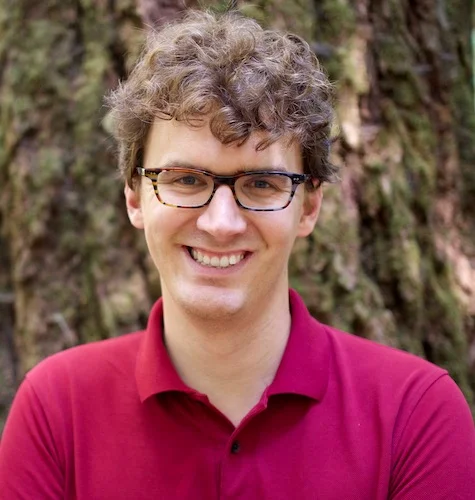
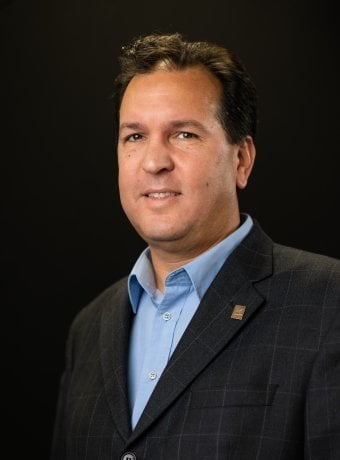
Carl Vondrick is a Professor in the Department of Computer Science at Columbia University. His research focuses on creating robust and versatile perception systems that leverage video and interaction with the natural world, with applications in 3D reconstruction, visual question answering, and robot manipulation. Former research scientist at Google Visiting researcher at Cruise Education: PhD (2017) from MIT, advised by Antonio Torralba BS (2011) from UC Irvine, advised by Deva Ramanan His research explores multimodal approaches for cross-task and cross-modal transfer, scene dynamics, audiovisual perception, interpretable models, and spatial awareness systems. The lab emphasizes zero-shot generalization and neuro-symbolic methods while addressing safety and robustness in AI systems. Key publication trends include: 2025: Video generation for robotics 2024: Differentiable rendering and cross-modal reasoning 2023: Robust perception and 3D modeling Scientific Awards: 2024 PAMI Young Researcher Award 2021 NSF CAREER Award Teaching Roles: Teaching Computer Vision II (2021-2025), Computer Vision I (2018-2019), and Representation Learning (2020-2022). Advising: Advises 8 current PhD students and has mentored 5 graduated students now at institutions like MBZUAI and UMD. The lab recruits 1-2 PhD students annually through Columbia’s PhD program. Grants and Collaborations: Funded by NSF, DARPA, Toyota Research Institute, Amazon Research, and Google.
Chris Atkeson is a Professor at the Robotics Institute of Carnegie Mellon University. His research focuses on achieving human-level competence in machines through humanoid robotics and human-aware environments. He explores machine learning techniques such as reinforcement learning, nonparametric methods, and memory-based learning to develop robots capable of complex tasks like manipulation, locomotion, and perception. His work emphasizes bridging the gap between simulation and real-world applications (sim2real transfer), with contributions to tactile sensing (e.g., FingerVision), dynamic walking control, and human-robot collaboration. Notable projects include participation in the DARPA Robotics Challenge with Team WPI-CMU, where his team developed reliable humanoid behavior for disaster response scenarios. Atkeson’s research spans robotics, computer vision, and control systems, with a focus on enabling robots to perceive, learn, and act in unstructured environments. His recent work includes advancements in 3D scene capture, soft robotics, and energy-based planning for compositional tasks.
Gregory D. Hager is the Mandell Bellmore Professor of Computer Science at Johns Hopkins University, with joint appointments in Electrical and Computer Engineering, Mechanical Engineering, and the Department of Surgery at the School of Medicine. He serves as the head of the NSF's Computer and Information Science and Engineering Directorate (as of 2024) and is the founding director of the Johns Hopkins Malone Center for Engineering in Healthcare. Previously, he chaired the Department of Computer Science from 2010-2015 and served as deputy director of the NSF Engineering Research Center for Computer-Integrated Surgical Systems and Technology. Hager's research focuses on collaborative and vision-based robotics, time-series analysis of image data, and medical applications of image analysis and robotics. His work spans surgical robotics, human-machine collaboration, and computer vision with applications in healthcare. As director of the Computational Interaction and Robotics Lab (CIRL), he investigates dynamic spatial interaction at the intersection of imaging, robotics, and human-computer interaction. His research has led to real-world applications in surgical training, medical imaging, diagnostics, and computer-enhanced interventional medicine. Hager's publications demonstrate consistent advancement in surgical data science, with recent work focusing on 3D reconstruction from endoscopic video, surgical skill assessment using AI, and robotic assistance in neurosurgery. His research trajectory shows increasing integration of deep learning with surgical robotics, particularly in real-time guidance systems and objective skill assessment metrics. IEEE Fellow MICCAI Fellow ACM Fellow AIMBE Fellow AAAS Fellow MICCAI Best Paper Award (2006) Fulbright Junior Faculty Award (1988) Morris Ruben Outstanding Dissertation Award (1988) Hager has advised numerous PhD students who have become leaders in computer vision and medical robotics. His lab has secured significant research funding, including NSF Engineering Research Center support. He co-founded two successful startups: Clear Guide Medical (ultrasound-guided procedures) and Ready Robotics (industrial robot usability). As chair of the Computing Community Consortium and member of the International Federation of Robotics Research board, he has shaped national research agendas in computing and robotics. Hager leads the Computational Interaction and Robotics Lab (CIRL), which is associated with the NSF Engineering Research Center for Computer-Integrated Surgical Systems and Technology (ERC-CISST) and the Laboratory for Computational Sensing and Robotics (LCSR). His team collaborates extensively with clinicians at Johns Hopkins Hospital to translate robotics research into clinical practice.
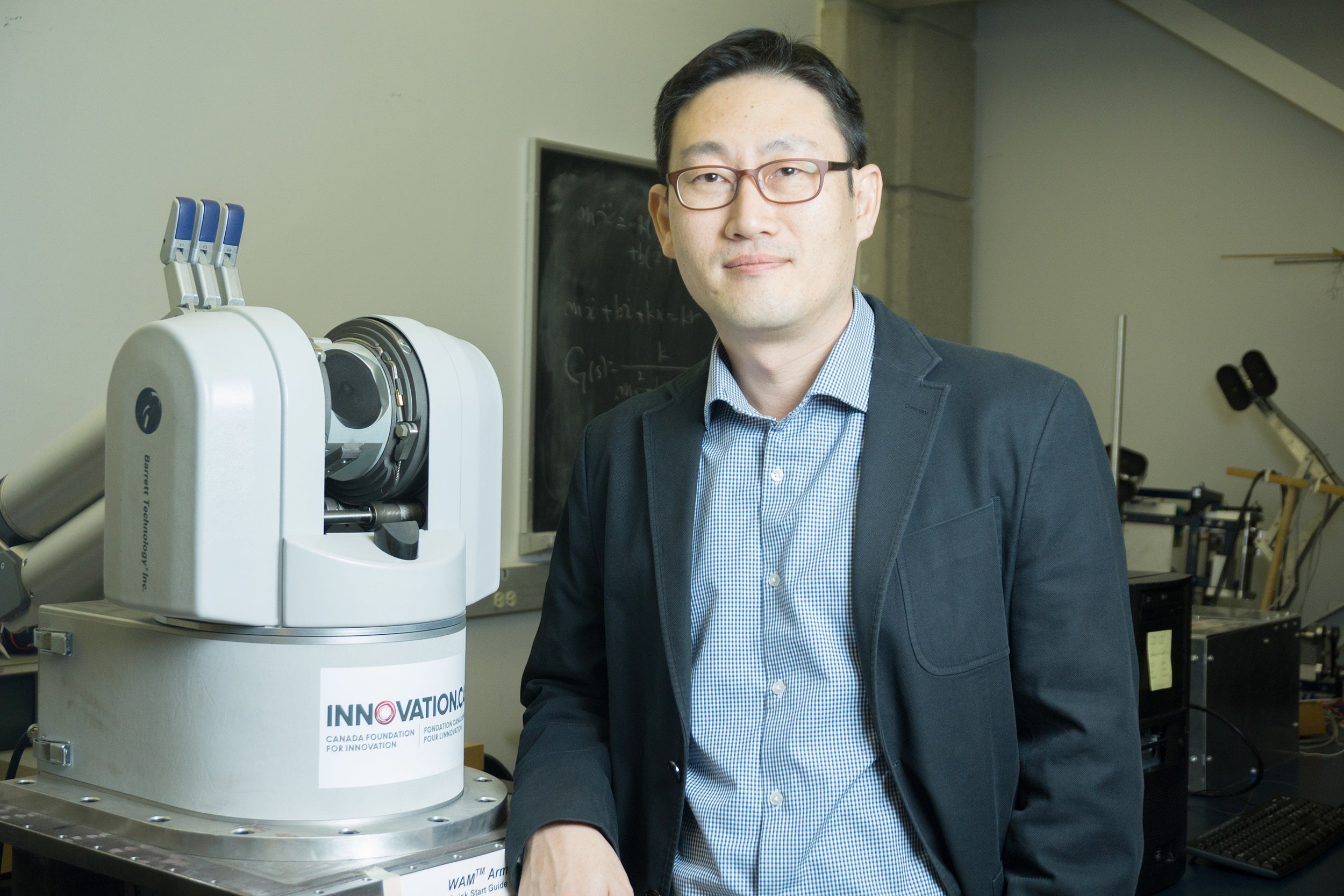
Soo Jeon is a Professor in the Department of Mechanical and Mechatronics Engineering at the University of Waterloo, part of the Faculty of Engineering. He holds a PhD from the University of California at Berkeley (2007) and prior degrees from Seoul National University. His research focuses on mechatronics, dynamic systems, and control, with applications in robotics, autonomous systems, and precision motion control. He has held roles as Assistant Professor (2009–2015), Associate Professor (2015–2024), and Full Professor (2024–present). Professor Jeon’s expertise includes intelligent sensing and control for mechatronic systems, nonlinear dynamics, and autonomous systems. He has received notable awards such as the 2022 Engineer of the Year Award (AKCSE/KOFST), 2015 NSERC Discovery Accelerator Supplement, and 2010 ASME Rudolf Kalman Best Paper Award. He serves as an Associate Editor for several journals, including the ASME Journal of Dynamic Systems and IEEE Transactions on Automation Science and Engineering. His research interests span robotics, control systems, and automation, with recent work on autonomous navigation, tactile exploration, and model predictive control. He supervises graduate students in MASc and PhD programs and teaches courses like ME 649 (Control of Machines and Processes) and ME 360 (Introduction to Control Systems). Jeon holds patents in areas like low-power magnetic locks and remote plasma source seasoning. His lab, the Waterloo Mechanical Systems & Control Laboratory (WMSCL), focuses on advanced mechatronics and robotics projects, including collaborations with international institutions such as the Korea Institute of Machinery & Materials (KIMM).
Chao Liu is a Research Scientist at CNRS (French National Center for Scientific Research) since 2008, affiliated with the DEXTER team and the Department of Robotics, LIRMM at University of Montpellier, France. He earned his Ph.D. in Electrical & Electronic Engineering from Nanyang Technological University, Singapore (2006). Current research focuses on surgical robotics , haptics , teleoperation , and nonlinear control theory with applications in computer vision. His work addresses challenges in robotic-assisted telesurgery, including: Stable and transparent human-robot interaction through wave variable compensators and passivity filters Physiological motion compensation using spatio-temporal LSTM and dual Kalman filters EMG-based motion recognition for surgical skill assessment 3D soft-tissue reconstruction with stereo-endoscopes and deep learning Dr. Liu leads European and French projects like: TS2RT (CNRS-funded): Safer teleoperation with motion compensation ROBACUS (ANR-funded): Needle positioning with MPC control HaTUMoCo (CNRS-funded): Haptic teleoperation with uncertainty handling ARAKNES (EU-funded): Microrobotic systems for endoluminal surgery Scientific honors include Senior Member of IEEE and Member of Sigma Xi . He supervises Ph.D. and Master's students working on topics such as concentric tube robot optimization, haptic teleoperation, and EMG-based force estimation. Dr. Liu serves on IEEE Technical Committees for Telerobotics and Haptics , and as Technical Editor of IEEE/ASME Transactions on Mechatronics.
Robert Laganière is a Professor at the School of Electrical Engineering and Computer Science at the University of Ottawa, where he has been actively contributing to the fields of computer vision and image analysis. He is a member of the VIVA research laboratory and holds a Ph.D. and M.Sc. from INRS-Telecommunications in Montreal, as well as a bachelor's degree in Electrical Engineering from École Polytechnique de Montréal. Bachelor's in Electrical Engineering: École Polytechnique de Montréal (1987) Master's Degree: INRS-Telecommunications (1990) Doctorate: INRS-Telecommunications (1996) Professor Laganière's research focuses on computer vision, with particular expertise in image and video analysis, visual surveillance, embedded vision systems, and deep learning applications. His work spans fundamental research in feature detection and matching to practical applications in autonomous driving, human recognition, and real-time object tracking. He has made significant contributions to the development of algorithms for pedestrian detection, age and gender recognition, and 3D object localization. His publication trends reveal a consistent focus on practical computer vision applications with a strong emphasis on real-time performance and embedded implementation. Over the past decade, his research has evolved from foundational work in feature matching and homography estimation toward more complex applications in action recognition, human-computer interaction, and intelligent surveillance systems. His work consistently bridges theoretical computer vision with practical engineering constraints, particularly for mobile and embedded platforms. Best Paper Award, IEEE International Conference on Computer and Robot Vision (CRV 2014) Best Paper Award, CVPR Embedded Vision Workshop, Providence, RI, June 2012 Best Real-time Tracker, IEEE International Conference on Computer Vision (ICCV) Workshop on Visual Object Tracking (VOT2015) Professor Laganière has supervised numerous graduate students through the years, with a particular focus on practical applications of computer vision in surveillance, human recognition, and embedded systems. His research has been supported through industry partnerships with companies including CogniVue Corp, NXP, iWatchLife.com, Solink Corp, CBSA Canada, Ross Video, Thales, Habitat Seven, and YouI Labs. He has successfully translated his research into commercial applications through his founding of Visual Cortek (acquired by iWatchLife in 2009) and Tempo Analytics (founded in 2016). As a member of the VIVA research laboratory, Professor Laganière collaborates with colleagues on advanced computer vision projects, particularly those involving intelligent video analytics for security and commerce applications. His work on NAVIRE (Virtual Navigation in Remote Environments) demonstrates his commitment to developing practical solutions for real-world navigation challenges using image-based representations of real environments.
Benoit Rosa is currently a CNRS Researcher within the Robotics, Data science, and Healthcare technologies Team at the ICube Laboratory, University of Strasbourg. Previously, he was a Research Fellow at the Pediatric Cardiac Bioengineering Lab, Boston Children's Hospital, Harvard Medical School (2015-2016), and a postdoctoral fellow in the Robot Assisted Surgery group at the Mechanical Engineering department of KU Leuven, Belgium (2013-2015). He received his Ph.D. in 2013 from Pierre & Marie Curie University (now Sorbonne University) under the supervision of Pr. Guillaume Morel and Pr. Jerome Szewczyk. His PhD was awarded the best PhD thesis award by the CNRS research group on robotics for 2013. Prior to his PhD, he obtained an Engineering Degree (equivalent to a Master's) from Ecole Centrale Paris. Rosa's research focuses on surgical robotics and image-guided control, with particular expertise in the design and control of miniature, distally-actuated and flexible systems for minimally invasive surgery. His work spans from mechatronic design of minimally invasive surgical devices to advanced control algorithms for surgical robots. Key areas include continuum robotics, visual servo control, surgical tool segmentation, and OCT-guided interventions. His research has significant applications in cardiac surgery, endomicroscopy, and various minimally invasive procedures, with a strong emphasis on translating theoretical robotics into practical clinical solutions. His recent publications demonstrate a growing trend toward applying deep learning techniques to enhance surgical robotics, with focus on autonomous systems that improve precision and reduce surgeon cognitive load while addressing challenges in medical imaging and surgical navigation. Scientific Awards: Best PhD thesis award by the CNRS research group on robotics (2013) Rosa has led multiple significant research projects including Image-based tracking of continuum robots (ongoing), Robot-assisted endomicroscopy (2010-2013), Beating heart intracardiac cardioscopy-guided interventions (2015-2019), and Intuitive control of active catheters (2014-2015). His work has resulted in numerous patents and collaborations with leading medical institutions worldwide, securing research funding for advancing surgical robotics technology. He actively participates in the academic community through invited talks and workshops, and maintains strong collaborations with institutions including Harvard Medical School, KU Leuven, and various French research entities, bridging theoretical robotics with practical clinical applications across multiple medical specialties.
Philippe Souères is a Researcher at LAAS-CNRS (Laboratory for Analysis and Architecture of Systems) within the University of Toulouse. He leads the Gepetto team, focusing on advanced robotics, humanoid motion generation, and the integration of human biomechanics into robotic systems. His work bridges robotics, neuroscience, and biomechanics, emphasizing optimal control, sensor-based systems, and human-robot interaction. Research interests include robot control (optimal control, nonlinear systems), neurosciences (human motor control, sensorimotor integration), and biomechanics (organization of human movement). Notable contributions include models for humanoid locomotion, human-like motion generation using inverse dynamics, and studies on task-dependent balance in humans and robots. Souères has authored/co-authored over 50 publications, including award-winning work on human movement modeling for robotics. He has supervised numerous PhD students and contributed to projects like the EAR initiative (Robot Audition) and the development of the Pyrène humanoid robot. His research also extends to aerial robotics, ducted fan vehicles, and interdisciplinary collaborations with neuroscientists and biomechanics experts. Awards include the Best Conference Paper Award (2010) for integrating human movement invariants into humanoid robotics. Souères is actively involved in academic outreach, appearing in media discussions on robotics ethics and technological innovation.
Giulio Dagnino is Associate Professor of Robotics and Mechatronics at the University of Twente and concurrently holds an appointment at the Digital Society Institute. His research integrates medical robotics, real-time perception and haptics to create MR-compatible platforms for endovascular surgery, earning an h-index of 17 and 971+ citations. Education & Career: PhD (details not specified in source) leading to faculty appointment at University of Twente. Promoted to Associate Professor with cross-appointments in Robotics & Mechatronics and Digital Society Institute. Research Interests: Prof. Dagnino’s core interest is medical robotic systems that can operate safely inside an MRI scanner. His work spans haptic guidance, real-time computer vision, soft robotic actuation, synthetic data generation and surgical simulation. By combining ferrofluid actuation, electromagnetic tracking and deep-learning-based scene understanding, he aims to reduce ionizing radiation exposure, enhance navigation accuracy and shorten procedure times for minimally invasive endovascular interventions. Publications Trend: Across 44 outputs (2010-2025) the portfolio reveals a clear evolution from early vision-based microsurgery and fracture-robot systems (2010-2016) toward holistic endovascular platforms integrating MR guidance, haptics and autonomy. Recent 2024-25 papers cluster around (i) synthetic data & scene understanding for surgical AI, (ii) MR-safe robot design and tracking, and (iii) translational studies bringing CathBot and related platforms closer to clinical use. Scientific Awards: Best Design Award – Hamlyn Symposium 2019 (with team) Best Innovation Award – ICRA 2018 Best Paper Award – CURAC 2019 IEEE ICRA Best Paper Award in Medical Robotics – 2016 Grants & Projects: Although explicit grant numbers are not listed, the continuous outputs, patents, multi-institutional collaborations (UK, Germany, Estonia, Canada) and press releases imply sustained funding from EU, Dutch and UK research councils as well as industrial partnerships. Labs & Teams: He leads activities within the Robotics and Mechatronics group at University of Twente, collaborates closely with the Digital Society Institute, and maintains international partnerships visible in co-authored papers with Imperial College London, University of Leeds, and several European hospitals.
Andreas Kugi is the Scientific Director at the AIT Austrian Institute of Technology and a full professor of Complex Dynamical Systems at TU Wien (Vienna University of Technology) in the Faculty of Electrical Engineering and Information Technology, Institute of Automation and Control. He has held significant academic and leadership roles across Europe, including professorships at Saarland University and offers from TU Dresden and KIT. His research focuses on the modeling, control, and optimization of complex dynamical systems , with strong applications in mechatronics, robotics, and industrial automation . He has led major research centers such as the Christian Doppler Laboratory for Model-Based Process Control in the Steel Industry and the Center for Vision, Automation & Control at AIT. His work bridges theoretical control design and real-world industrial implementation. The recent publications reflect a consistent focus on nonlinear, hybrid, and distributed parameter systems , with applications in robotics, manufacturing, energy, and process industries. His research integrates advanced control theory with practical engineering challenges, emphasizing real-time optimization, robustness, and system efficiency. Scientific Awards: Mechatronic Systems Outstanding Investigator Award (IFAC, 2022) Goldene Stefan-Ehrenmedaille (OVE, 2023) 16 best paper awards Andreas Kugi has supervised over 50 completed PhD dissertations and has been deeply involved in research leadership, including serving as Editor-in-Chief of Control Engineering Practice (2010–2017) and Vice President of the OVE Austrian Electrotechnical Association (2017–2023). He has secured and led numerous research grants, particularly through industrial collaborations in automation and process control. He leads and contributes to major research initiatives, including the Center for Vision, Automation & Control at AIT and the Christian Doppler Laboratory , fostering interdisciplinary teams focused on industrial digitalization and smart systems.
Laxmidhar Behera is a Professor in the Department of Electrical Engineering at the Indian Institute of Technology Kanpur, specializing in Intelligent Systems and Control. With over two decades of academic experience at IIT Kanpur and international research experience at institutions including Fraunhofer Institute of Autonomous Intelligent Systems in Germany, ETH Zurich, and University of Ulster, he has established himself as a leading researcher in cognitive robotics and intelligent control systems. Dr. Behera's research spans multiple cutting-edge domains including Cognitive Robotics, Nano-robotics, Vision based Control, Soft Computing, Information Retrieval in music and language, Semantic Information Processing, Physics of Complex Systems, Cyber Physical Systems, Formation Control of UAVs, Brain-Computer Interface (BCI), and Sanskrit Computational Linguistics. His interdisciplinary approach bridges traditional control theory with modern computational intelligence techniques, creating innovative solutions for complex real-world problems. His extensive publication record in top-tier journals like IEEE Transactions demonstrates his leadership in areas such as brain-computer interfaces, visual servoing, multi-robot systems, and music information retrieval. Notably, his work on quantum neural networks for EEG filtering and multisatellite formation control has received significant attention in the research community. UKIERI Standard Research Award 2008 Best Paper at International Conf. on Intelligent Sensors and Information Processing (ICISIP-2004) Best Paper at WoSco,02, Int. Conf. High-Performance Computing (HiPC, 2002) AICTE career award for young teacher (1997) Senior Member IEEE Multiple IEEE top accessed articles (2009-2010) As an Associate Editor for Autosoft Journal and Technical Committee Member for Intelligent Control at IEEE Control System Society, Dr. Behera actively contributes to the academic community. His laboratory in the Western Lab - 212A of the Department of Electrical Engineering serves as a hub for research in intelligent systems, where he mentors students and collaborates with researchers worldwide on cutting-edge projects in robotics, control systems, and computational intelligence.
Michael M. Zavlanos is the Yoh Family Professor in the Thomas Lord Department of Mechanical Engineering and Materials Science at Duke University's Pratt School of Engineering. He also holds secondary appointments in the Department of Computer Science and the Department of Electrical and Computer Engineering. Currently serving as the Director of the Healthcare Systems Optimization program with Duke AI Health and as an Amazon Scholar with Amazon Robotics, his academic career spans control theory, optimization, and artificial intelligence with applications across multiple domains. Dr. Zavlanos received his educational foundation from prestigious institutions: Diploma in Mechanical Engineering from the National Technical University of Athens (NTUA), Greece (2002) M.S.E. in Electrical and Systems Engineering from the University of Pennsylvania (2005) Ph.D. in Electrical and Systems Engineering from the University of Pennsylvania (2008) His research program spans multiple interconnected domains, with a strong foundation in control theory, optimization, and learning methodologies . This theoretical work directly enables applications in robotics and autonomous systems , where his team develops algorithms for multi-robot coordination, motion planning under complex constraints, and network connectivity maintenance. A significant portion of his work addresses networked and distributed control systems , focusing on how multiple agents can coordinate effectively with limited communication. More recently, he has expanded his research into cyber-physical systems with healthcare applications, leveraging his expertise to optimize healthcare delivery systems through the Duke AI Health initiative. Dr. Zavlanos' work demonstrates a consistent trajectory from theoretical foundations to real-world applications. His early work established fundamental principles for maintaining connectivity in mobile robot networks, which evolved into more sophisticated approaches for temporal task planning and risk-averse decision making in uncertain environments. The most recent phase of his research integrates machine learning with traditional control theory to address complex healthcare system optimization problems. His significant contributions to the field have been recognized through prestigious awards: Office of Naval Research Young Investigator Program (YIP) Award (2014) National Science Foundation Faculty Early Career Development (CAREER) Award (2012) National Science Foundation Faculty Early Career Development (CAREER) Award (2011) Duke University Distinguished Faculty Rank (2019) Duke University Distinguished Professor designation (2018) As an educator, Dr. Zavlanos has taught courses including ME 627: Linear System Theory, ME 592: Research Independent Study, ECE 391/291: Projects in Electrical and Computer Engineering, and CEE 627: Linear System Theory. His research program has been supported by multiple grants from the National Science Foundation and the Office of Naval Research, enabling him to mentor numerous graduate students and postdoctoral researchers in the development of cutting-edge control and optimization algorithms. Dr. Zavlanos leads research efforts at the intersection of control theory, optimization, and artificial intelligence, with particular focus on translating theoretical advances into practical applications. His recent work with Duke AI Health represents a strategic expansion of his research portfolio into healthcare systems optimization, where he applies his expertise in algorithmic decision making to improve patient scheduling, resource allocation, and operational efficiency in medical settings. Through his Amazon Scholar role, he also contributes to advancing robotics technologies for real-world applications.
Claire Dune is an Assistant Professor at the University of Toulon, affiliated with the COSMER Laboratory (Mechanical and Robotic Systems Design Laboratory). Her research focuses on robotics, computer vision, and underwater systems, with applications in environmental monitoring and human-robot interaction. She teaches computer science, numerical methods, image processing, and visual servoing. Institution: University of Toulon Laboratory: COSMER (Mechanical and Robotic Systems Design Laboratory) Academic Rank: Assistant Professor Email: claire.dune@univ-tln.fr Her research centers on perception for robot control, particularly in underwater robotics and computer vision. Key interests include visual servoing, SLAM, gesture recognition for diver-robot interaction, and autonomous capabilities in real-world marine environments. She applies deep learning and sensor fusion techniques to enhance underwater visual perception and navigation. The recent publications demonstrate a strong trend in underwater robotics, with focus areas including tether dynamics (catenary modeling), ROV localization using umbilicals and IMUs, long-term visual localization in deep-sea environments, and color restoration in underwater imagery. Her work bridges theory and real-world application, contributing datasets like 'Eiffel Tower' for benchmarking and advancing multi-agent SLAM systems. Claire Dune has contributed to leading journals such as IEEE Robotics and Automation Letters, Ocean Engineering, and The International Journal of Robotics Research. Her editorial and survey work highlights her leadership in the domain of deformable object manipulation. Retrieval of benthic habitat abundance and bathymetry from hyperspectral data (DESIS) in shallow waters ROV localization using ballasted umbilical equipped with IMUs MAM3SLAM: Towards underwater robust multi-agent visual SLAM Eiffel Tower: A Deep-Sea Underwater Dataset for Long-Term Visual Localization Challenges and Outlook in Robotic Manipulation of Deformable Objects Claire Dune actively collaborates with researchers such as Vincent Hugel, Juliette Drupt, and Andrew Comport. She has supervised or co-supervised numerous research projects and publications, particularly in underwater robotics and assistive technologies. Her work involves experimental robotics and system integration, often validated in real marine environments. She leads research in the COSMER laboratory focused on underwater robotics, including projects on tethered ROVs, diver-robot communication via gesture recognition, and environmental monitoring using visual and hyperspectral data. Her team develops practical solutions for marine science and offshore operations, emphasizing robustness and autonomy.
Nathir Rawashdeh is an Assistant Professor in the Department of Applied Computing at Michigan Technological University , with an affiliated appointment in Electrical and Computer Engineering . He is a Senior Member of the IEEE and a member of the Institute of Computing and Cybersystems (ICC) and Great Lakes Research Center . Education: Ph.D., Electrical Engineering, University of Kentucky, 2007 MS, Electrical and Computer Engineering, University of Massachusetts, Amherst, 2003 BS, Electrical Engineering, University of Kentucky, 2000 Dr. Rawashdeh's research focuses on unmanned vehicle perception , image analysis , control systems , and mechatronics , with applications in autonomous driving, winter weather adaptation, and industrial automation. His work includes sensor fusion, deep learning, and AI-enhanced manufacturing solutions. Recent publications highlight advancements in winter weather autonomous driving , UV disinfection robotics , and AI-driven industrial inspection systems . His research spans mechatronics curriculum development, industry 4.0 integration, and cross-cultural educational initiatives. Scientific Awards: Senior Member of the IEEE Dr. Rawashdeh has secured over $2 million in funding from organizations including the NSF , Ford Motor Co. , NIST , and the European Commission . His grants support projects like GPU clusters for research, winter weather autonomous driving standards, and UV sterilization robotics. He leads the Mobile Robotics Lab at Michigan Tech, focusing on collaboration and innovation in autonomous systems and mechatronics research.
Pascal Morin serves as a University Professor at Sorbonne University within the Faculty of Science and Engineering. He is an active member of the ASIMOV research team at the Intelligent and Robotic Systems Institute (ISIR), located at 4 Place Jussieu in Paris. His office H17 serves as the base for his research activities in advanced robotics and control systems. Professor Morin's research focuses on cutting-edge robotics applications, particularly in unmanned aerial vehicle navigation and control systems. His work spans nonlinear control theory, visual servoing techniques, and micro air vehicle development. Key interests include homography estimation for image stabilization, thermal anemometry for airflow sensing, and obstacle avoidance algorithms for precision robotics. His publications demonstrate consistent innovation in combining theoretical control frameworks with practical robotic implementations. Analysis of his 15 most recent publications reveals strong thematic continuity in UAV navigation systems, with increasing integration of deep learning techniques since 2020. His work consistently addresses GPS-denied environments and sensor fusion challenges, with notable contributions to thermal-based odometry and visual-inertial navigation systems. The research trajectory shows progression from theoretical control frameworks toward increasingly complex real-world applications including power line inspection and microscopy manipulation. Professor Morin actively collaborates with major aerospace institutions including ONERA and DLR, as evidenced by his participation in the EuRoC challenge. His editorial work on MAV navigation special collections demonstrates leadership in the micro air vehicle research community. While specific grant details aren't provided in the source material, his sustained publication output across multiple high-impact journals indicates successful funding acquisition. As a core member of the ASIMOV team at ISIR, Professor Morin contributes to Sorbonne University's leadership in robotics research. The team maintains strong industry connections through publications in Aerospace Lab and collaborations with organizations like AIAA. Current research directions appear focused on thermal sensor integration for MAVs and nonlinear control solutions for challenging operational environments.