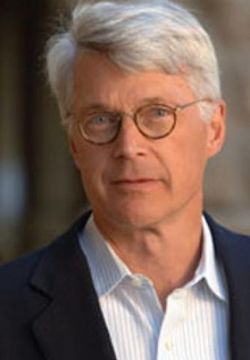
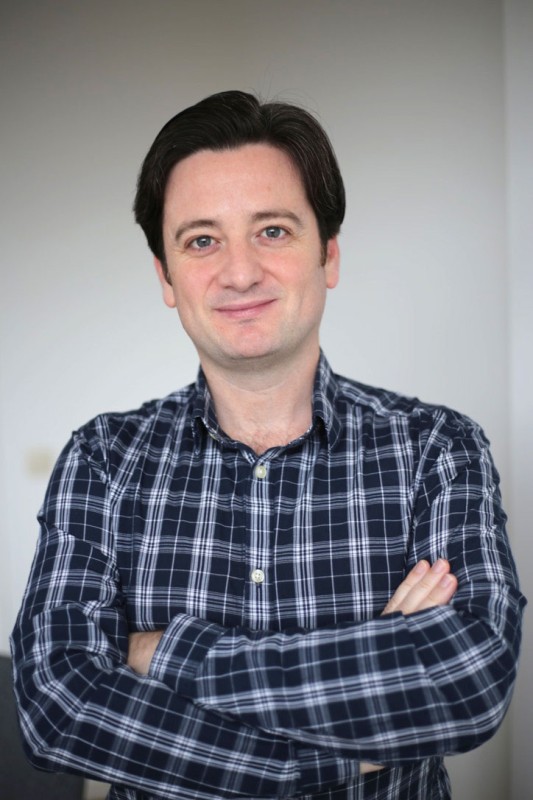
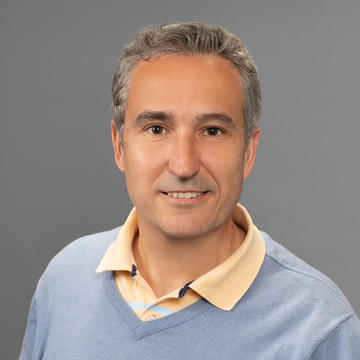
Yuri Bobbert is a Professor of Information System Science at Antwerp Management School (AMS), part of the University of Antwerp. He holds dual PhDs from Radboud University and the University of Antwerp, focusing on IT performance measurement. His career includes roles as Global Group CSO of NN Group and UWV (Government), leading cybersecurity integrations during mergers like NN Group and Delta Lloyds. As CEO of B-ABLE (IT consultancy), he developed cybersecurity frameworks. Currently, he advises on NIS2 compliance and Zero Trust strategies. His research spans cybersecurity ROI, regulatory frameworks (e.g., NIS2), and leadership in digital security. Education PhD in Information Systems (Radboud University) PhD in Cybersecurity (University of Antwerp) Research Interests Cybersecurity governance and compliance ROSI (Return on Security Investment) CISO leadership and board communication Zero Trust architecture Risk quantification in digital ecosystems Publications & Books Authored books: Strategic Approaches to Digital Platform Security Assurance , Cybersecurity in 60 Minutes , and Digital Security Leadership Over 100 peer-reviewed publications on cybersecurity performance and governance Grants & Awards Recipient of NIS2 implementation research grants Contributor to EU cybersecurity policy discussions Labs & Teams Leads AMS cybersecurity education programs and collaborates with ON2IT on global cybersecurity strategies.
David Noyce is a Professor and Executive Director of the Traffic Operations and Safety (TOPS) Laboratory at the University of Wisconsin-Madison's Department of Civil & Environmental Engineering. He also serves as Associate Director of the Safety Research Using Simulation (SaferSIM) Center, a University Transportation Center. His work focuses on transportation safety, traffic operations, and automated/connected vehicle systems. Key roles include leading over $35M in research since 2003 through the TOPS Lab and advancing technologies like V2V/V2I communication, winter maintenance strategies, and work zone safety. Education: PhD (Texas A&M, 1999), MS (Civil Engineering, UW-Madison, 1995), MBA (UW-Whitewater, 1994), BS (UW-Madison, 1984). Research interests span traffic control devices, driver behavior analysis, crash reconstruction, and multi-modal transportation systems. He pioneered the national implementation of flashing yellow arrow signals and developed the Wisconsin Connected and Automated Transportation Consortium. Current projects include C-V2X localization frameworks, automated vehicle safety testing, and winter maintenance efficiency. Recognized with 20+ awards, including ITE and ASCE Fellowships and the Dr. Arthur F. Hawnn Professorship. His labs offer full-scale driving simulators and field-testing capabilities for real-world validation of innovations.
Scott D. Sagan is the Caroline S.G. Munro Professor of Political Science at Stanford University and a Senior Fellow at the Freeman Spogli Institute for International Studies. He serves as Co-Director of the Center for International Security and Cooperation (CISAC) and holds the position of Bass University Fellow in Undergraduate Education. Sagan also co-chairs the American Academy of Arts and Sciences' Committee on International Security Studies, demonstrating his significant influence in the field of international security. Sagan received his Ph.D. in Political Science from Harvard University in 1983 and his B.A. in Government from Oberlin College in 1977. Prior to joining Stanford, he taught at Harvard University and served as special assistant to the director of the Organization of the Joint Chiefs of Staff in the Pentagon, providing him with valuable practical experience in defense policy. Professor Sagan's research primarily focuses on nuclear weapons policy, international security, arms control, and nonproliferation. His work examines the organizational, political, and ethical dimensions of nuclear strategy, with particular attention to the risks of nuclear accidents, the effectiveness of nonproliferation policies, and public attitudes toward nuclear weapons use. He has pioneered important theoretical frameworks regarding the organizational causes of nuclear accidents and the normative constraints on nuclear weapons use. Sagan's publications reveal a consistent focus on nuclear deterrence theory, the organizational aspects of nuclear command and control, and the ethical dimensions of nuclear weapons policy. His work bridges theoretical analysis with practical policy implications, often challenging conventional wisdom about nuclear strategy and proliferation. Recent publications show increasing attention to public opinion on nuclear weapons use, the evolving nature of nuclear deterrence in the contemporary security environment, and the relationship between international law and nuclear strategy. Thérèse Delpech Memorial Award (2022) Susan Strange Award, International Studies Association (2017) William and Katherine Estes Award, National Academy of Sciences (2015) International Security Studies Section Distinguished Scholar Award (2013) Stanford's Dean's Award for Distinguished Teaching (1998-99) Stanford's Hoagland Prize for Undergraduate Teaching (1996) International Studies Association's Innovative Teaching Award (2008) Monterey Institute for International Studies' Nonproliferation Education Award (2009) Sagan has been instrumental in shaping the research agenda at CISAC, mentoring numerous students and junior scholars in the field of international security. His work has been supported by various research grants from foundations and government agencies focused on nuclear security issues. At Stanford, he has led numerous research initiatives examining nuclear weapons policy, arms control, and nonproliferation challenges. As Co-Director of CISAC, Sagan oversees one of the world's leading research centers on international security, nuclear policy, and arms control. The center brings together scholars, practitioners, and students to address pressing security challenges through interdisciplinary research, policy-relevant analysis, and educational programs. Under his leadership, CISAC has maintained its position as a premier institution for security studies research and policy engagement.
David M. Dodson is a Lecturer in Management at Stanford University’s Graduate School of Business (GSB), where he teaches courses on managing growing enterprises and entrepreneurial acquisition. His career spans over 30 years in business management, including founding three search funds and serving as CEO of a technology manufacturer and Executive Chairman of a telecommunications firm. He co-founded Sanku (formerly Project Healthy Children), a nonprofit addressing micronutrient deficiencies in Africa through fortified grains, recognized for its life-saving impact. Dodson holds an MBA from Stanford GSB (1987) and a BA in Economics from Stanford University (1983). His research focuses on entrepreneurial acquisition strategies and managing small-to-medium enterprises. Notable awards include the MSx Teaching Excellence Award (2023, 2021) and recognition as a top lecturer by Stanford GSB students. Beyond academia, he invests in over 40 businesses and serves on 21 corporate boards. In 2020, he founded StudentVotes.org to empower student voting during the pandemic. His media contributions include columns for The Boston Globe and frequent TV commentary on CNBC and Fox Business.
A. Michael Knemeyer is a Professor of Logistics at The Ohio State University's Max M. Fisher College of Business, where he contributes to research and teaching in supply chain management. His work focuses on supply chain relationships, risk and resilience, vendor relations, and sustainability integration. Educational Background: PhD from the University of Maryland, BSBA from John Carroll University Research Areas: Supply chain relationships, international logistics, sustainability, vendor relations, risk management Key Awards: 2013 IJPDLM Outstanding Paper Award, 2013 Bernard J. La Londe Best Paper Award Knemeyer's publications in journals like Harvard Business Review and Journal of Business Logistics explore critical themes in logistics outsourcing relationships, supply chain integration, and sustainable practices. His work often examines cross-cultural dynamics and institutional factors affecting supply chain performance. Selected Courses: Strategic Supply Chain Management, Contemporary Issues in Supply Chain Management, Logistics and Supply Chain Decision Making
Federica Tomao is an Associate Professor at the Department of Maternal, Child and Urological Sciences within Sapienza University of Rome. She actively teaches and supervises courses in Medicine and Surgery , Nursing , and Midwifery programs across multiple institutions. Current faculty member with academic rank Teaching roles in 6th, 3rd, and 2nd year courses Specialized in gynecologic oncology Research Focus : Her work spans ovarian cancer, breast cancer, and endometrial cancer, emphasizing chemotherapy optimization, precision medicine, and radiomics. Notably, she contributes to understanding PARP inhibitors, immune checkpoint therapies, and fertility preservation techniques in cancer survivors. Recent Publications highlight advancements in sarcopenia analysis, BRCA testing, and radiogenomic nomograms. These studies demonstrate her commitment to bridging imaging and molecular data for improved cancer management. Email : federica.tomao@uniroma1.it
University of Applied Sciences and Arts LucerneSwitzerland
Prof. Dr. Frank Ulbrich is a Lecturer and Programme Director for the BSc Business Administration at the Lucerne School of Business (HSLU). He holds a PhD in Business Administration from the Stockholm School of Economics. His academic career spans roles at universities in Sweden, the UK, Canada, and Switzerland, alongside IT & Management consulting experience. Research focuses on management education, project management, information management, and organizational change. He has published extensively in areas like shared services, digital transformation, and curriculum development. Notable awards include multiple Emerald Literati Awards and a Fellowship from the Higher Education Academy. Education: PhD in Business Administration (Stockholm School of Economics) Affiliations: Institute of Business and Regional Economics at HSLU Teaching Subjects: Academic Methods, Higher Education Management, Project Management, Digital Transformation Recent presentations include discussions on bridging academia-industry gaps, curriculum integration of SDGs, and data-driven learning strategies. His work emphasizes aligning education with labor market needs and advancing evidence-based teaching practices.
Professor Peter Boxall is a Chair in Human Resource Management at the University of Auckland Business School, Department of Management & International Business. He holds a PhD from Monash University and an MCom from the University of Auckland. His research focuses on strategic human resource management and work-related well-being, with notable contributions to understanding high-involvement work systems and HR analytics. He has held visiting professorships at Leeds, Tilburg, and Toulouse, among others. His roles include Associate Dean (Research and PBRF) and leadership in editorial boards for journals like Human Resource Management Journal . Notable awards include the 2023 Distinguished Fellow of HRNZ and multiple Emerald Awards. He teaches courses such as MGMT 304 HR Policy and Practice and supervises PhD students in HRM. His work emphasizes bridging HR practices with organizational and societal outcomes. Education: PhD (Monash), MCom (Auckland), Distinguished Fellow HRNZ Visiting Roles: Leeds, Tilburg, Toulouse, Bath Editorial Roles: Asia Pacific Journal of Human Resources, Human Resource Management Journal His research addresses strategic HRM’s role in organizational success and its impact on employee well-being. Recent studies explore HR analytics, lean production effects, and Industrie 4.0 implications. Awards highlight his scholarly contributions and industry impact. Administrative leadership includes overseeing research initiatives and PBRF evaluations at the Business School. Awards: 2023 Distinguished Fellow, 2020 Emerald Literati Award Teaching: MGMT 223, MGMT 304, GLMI 705
Professor Hendrik Vollmer is a faculty member in the Accounting Group at Warwick Business School , University of Warwick, since 2020. He previously served as Head of the Accounting Division at the University of Leicester (2015–2020) and worked at Bielefeld University in Germany for 16 years. His research bridges accounting, sociology, and environmental studies, focusing on accounting as a social practice and its role in addressing ecological challenges. Senior Fellow of the Higher Education Academy Associate Editor of European Accounting Review Member of editorial boards for Zeitschrift für Soziologie, Accounting, Organizations and Society, and Social and Environmental Accountability Journal Active in sustainability accounting research and education Contributor to interdisciplinary accounting literature Recent publications explore accounting's role in climate change mitigation, public value creation, and the spatialization of worth. His teaching modules include Accounting for Sustainability, People, Planet and Financial Accounting: Theory and Context .
Dr. Sezgin Ayabakan is an Associate Professor in the Department of Management Information Systems at the Fox School of Business and Management, Temple University . He holds a PhD in Management Science from the University of Texas at Dallas, with a focus on Management Information Systems (MIS), an MS in Industrial and Systems Engineering from the University of Florida, and a BS in Industrial Engineering from Bilkent University in Turkey. His research focuses on healthcare analytics , particularly exploring how health information technology (HIT) impacts healthcare costs, quality, and utilization. Key research interests include data analytics applications in healthcare and social media, the business value of information systems, and open-source production strategies. He has examined topics such as telehealth efficacy, electronic health record (EHR) adoption challenges, hospital readmission reduction programs, and the interplay between healthcare IT and clinician well-being. Dr. Ayabakan teaches undergraduate and graduate courses in information systems, including MIS 2101: Digital Systems and SBM 3586: Diamond Peer Teachers - Internship II . His work has been published in top-tier journals like MIS Quarterly and Health Services Research and Management Epidemiology , with recent studies addressing telehealth utilization, EHR strategy impacts, and the role of organizational routines in clinician satisfaction. While no formal awards are listed, his contributions to healthcare IT research demonstrate significant academic impact. His advisory and grant activities are not detailed in the provided text, but his research often intersects with practical healthcare system challenges, suggesting potential collaborations with healthcare institutions and policy organizations.
Christopher Turbill is an Associate Professor in Animal Science at Western Sydney University's School of Science, where he maintains an active research program focused on animal physiological ecology. He is affiliated with the Hawkesbury Institute for the Environment and serves as a Principal Investigator on multiple research projects while accepting HDR candidates for supervision. PhD from University of New England (2006) Thesis: Thermoregulatory Ecology of Tree-roosting Bats Supervised by Prof. Fritz Geiser Postdoctoral fellowships from Austrian Science Fund and Australian Research Council (DECRA) Former ecologist with NSW Government Professor Turbill's research integrates thermal and metabolic physiology with behavioral ecology to understand animal-environment interactions. His work has revealed significant ecological consequences of controlled body temperature variation in mammals and birds, linking these processes with metabolic energy expenditure, activity patterns, and life-history strategies. He specializes in bat biology and investigates conflicts between human environmental change and animal conservation requirements. His research keywords include ecophysiology, thermoregulation, energy expenditure, life-history ecology, body temperature, torpor, hibernation, and wildlife conservation. Analysis of Turbill's recent publications reveals a strong focus on thermal biology and conservation physiology, particularly regarding bats and birds. His work examines how animals manage energy through torpor, respond to climate change through thermal regulation, and adapt to anthropogenic disturbances. The research spans field studies of flying-foxes, microbats, and passerine birds across Australian ecosystems, with increasing emphasis on conservation applications related to white-nose syndrome, fire impacts, and wind energy development. Turbill leads significant research projects including the Ecology of the eastern horseshoe bat and its sensitivity to fire impacts (2024-2027), Vulnerability of Australian bats to white-nose syndrome (2021-2026), and Torpor use and burrowing behaviour in an arid zone passerine (2024). His work attracts funding from diverse sources including the Australian Research Council, Department of Planning and Environment, and various conservation organizations. Professor Turbill directs the BatsLab research group, which maintains a virtual hub for bat research at Western Sydney University. His team employs advanced methodologies including thermal imaging, GPS tracking, and physiological monitoring to study animal responses to environmental challenges. Current work focuses on developing conservation interventions for heat-stressed flying-foxes and assessing vulnerabilities of Australian bat species to emerging diseases.
Prof. Dr. Gonzalo Guillén Gosálbez is a Full Professor at the Department of Chemistry and Applied Biosciences , ETH Zürich. He holds a PhD in Process Systems Engineering (UPC, 2005) and has held academic positions at Imperial College London (Reader), University of Manchester (Senior Lecturer), and Universitat Rovira i Virgili (Assistant/Associate Professor). His research focuses on Sustainable Chemical Processes , integrating life cycle assessment, optimization techniques, and planetary boundary analysis to evaluate and design low-carbon technologies. Current position: Full Professor, ETH Zürich (2019–present) Prior roles: Imperial College London (2016–2019), University of Manchester (2014–2016), URV Spain (2008–2014) Education: PhD (UPC, 2005), MEng/BEng (University of Murcia) His research explores CO2 valorization , green methanol synthesis , circular marine fuels , and planetary boundary compliance in energy and chemical systems. Recent work emphasizes machine learning for process modeling, single-atom catalysis , and decentralized ammonia production . Scientific contributions include 15+ peer-reviewed articles (2023–2025) in journals like Nature Chemical Engineering , ACS Sustainable Chemistry & Engineering , and Energy & Environmental Science . Key themes: Optimization of hybrid fossil/renewable carbon systems Environmental impacts of energy transitions Catalyst design for sustainable chemistry Life cycle assessment of emerging technologies Awarded UPC Top Doctoral Student Award and Top National Student Award , he combines process systems engineering with sustainability metrics to address global challenges in chemical and energy systems.
University of North Carolina at Chapel HillUnited States
Dr. Stan Ahalt serves as the inaugural Dean of the UNC School of Data Science and Society (SDSS) and holds a professorship in the Department of Computer Science at UNC-Chapel Hill. He previously directed the Renaissance Computing Institute (RENCI) and currently acts as its executive advisor. Additionally, he is the associate director of informatics and data science at NC TraCS, the translational research institute at UNC. His academic journey includes a 22-year tenure as professor of electrical and computer engineering at Ohio State University and leadership roles at the Ohio Supercomputer Center. Ahalt’s research focuses on applying data science to societal challenges such as healthcare, climate, and judicial reform. Key initiatives include the National Consortium for Data Science and the iRODS project, which advanced enterprise data management systems. Ahalt has secured over $34.5M in grants to lead high-impact projects like the NHLBI BioData Catalyst (unifying biomedical data), the NCATS Translator (accelerating clinical discovery), and the NIH HEAL Initiative (ensuring FAIR data standards). He mentors students across doctoral and master’s programs, teaching data science fundamentals in courses like COMP 116: Introduction to Scientific Programming. His work emphasizes interdisciplinary collaboration, evidenced by roles in RENCI, NC TraCS, and the SDSS. Ahalt’s contributions span cyberinfrastructure development, educational innovation, and translational research, positioning UNC as a national leader in data science.
Johan Gustav Bellika is a Professor at the Department of Clinical Medicine, UiT The Arctic University of Norway, based in Tromsø. His work bridges clinical medicine with health informatics, focusing on practical applications that improve healthcare delivery and patient outcomes. Current Position: Professor, Department of Clinical Medicine Institution: UiT The Arctic University of Norway Location: Tromsø, Norway Contact: johan.gustav.bellika@uit.no Professor Bellika's research spans several critical areas in modern healthcare. His primary focus is on health informatics with particular emphasis on medical data privacy, electronic health records, and the application of artificial intelligence in clinical settings. He has made significant contributions to understanding chronic pain management through technology, primary care research networks, and patient-centered care models. His work often involves large population studies such as the Tromsø Study, examining how digital health tools impact healthcare utilization and patient outcomes. His research demonstrates a consistent thread connecting technological innovation with practical clinical applications. Bellika has been instrumental in developing privacy-preserving architectures for healthcare data analysis, which enable researchers to gain insights from sensitive health information without compromising patient privacy. His work on federated learning frameworks represents cutting-edge approaches to analyzing medical data while maintaining strict privacy controls. Health Informatics and Medical Data Privacy Chronic Pain Management through Technology Primary Care Research Networks (PraksisNett) Electronic Health Records and Clinical Decision Support Patient-Centered Digital Health Solutions Federated Learning Applications in Healthcare Professor Bellika's publication record shows a strong trend toward interdisciplinary research that combines clinical medicine, computer science, and public health. His recent work increasingly focuses on the intersection of artificial intelligence and healthcare, particularly how machine learning can be applied to chronic conditions while maintaining rigorous privacy standards. The geographical scope of his research extends across Norway with particular emphasis on Northern Norwegian populations, providing valuable insights into healthcare delivery in Arctic and remote regions. His collaborative approach is evident through numerous co-authored publications with researchers across multiple institutions and disciplines. While specific awards aren't detailed in the available information, his extensive publication record in reputable journals suggests recognition within his field. Professor Bellika has been actively involved in several major research initiatives including the Tromsø Study and PraksisNett, Norway's nationwide practice-based research network. His work on privacy-preserving architectures for healthcare data has significant implications for how medical research can be conducted while respecting patient confidentiality. He appears to be particularly focused on translating research findings into practical tools for clinicians, as evidenced by his work on audit and feedback systems for antibiotic prescribing.
Pol Antràs serves as the Robert G. Ory Professor of Economics at Harvard University, where he has been a faculty member since 2003. He holds significant research affiliations as a Research Associate at the National Bureau of Economic Research (NBER), where he directed the International Trade and Organization Working Group, and as a Research Affiliate at the Centre for Economic Policy Research (CEPR). He also contributes to the Barcelona School of Economics as a member of its Scientific Council. His academic foundation includes a BA and MSc in Economics from Universitat Pompeu Fabra in Barcelona and a PhD in Economics from MIT (2003). Antràs specializes in international economics and applied theory, with recent research focusing on global value chains, the interplay between globalization and interest rates, market power in global markets, and international relations. His work examines how firms organize cross-border production, the implications for trade policy, and the structural transformations in international trade following events like pandemics. He bridges rigorous theoretical modeling with empirical analysis to address contemporary economic challenges. His publication record reveals a sustained focus on the evolution of global trade architecture, particularly the rise of production networks and their vulnerability to disruptions. Recent work explores unconventional intersections such as monetary policy's impact on trade flows and the political economy of ideology-driven foreign influence. His major scientific distinctions include: Alfred P. Sloan Research Fellowship (2007) Fundación Banco Herrero Prize (2009) Fellow of the Econometric Society (2015) Member of the American Academy of Arts and Sciences (2024) As Editor of the Quarterly Journal of Economics (2015-2020) and contributor to multiple editorial boards, Antràs shapes scholarly discourse in economics. His research is institutionally supported through NBER and CEPR affiliations, though specific grant details aren't publicly itemized. He maintains an active role in mentoring graduate students at Harvard. He drives collaborative research through leadership in the NBER's International Trade and Organization Working Group and CEPR's research networks, fostering international scholarly exchange on trade and globalization.