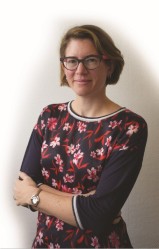
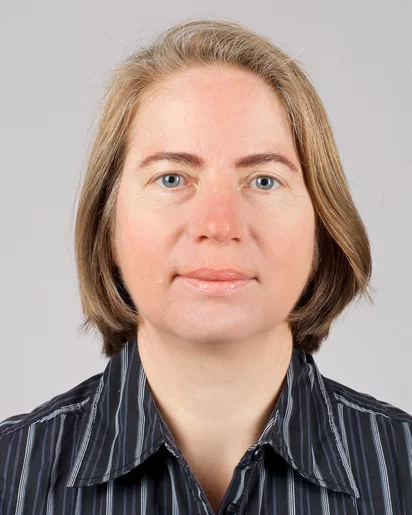
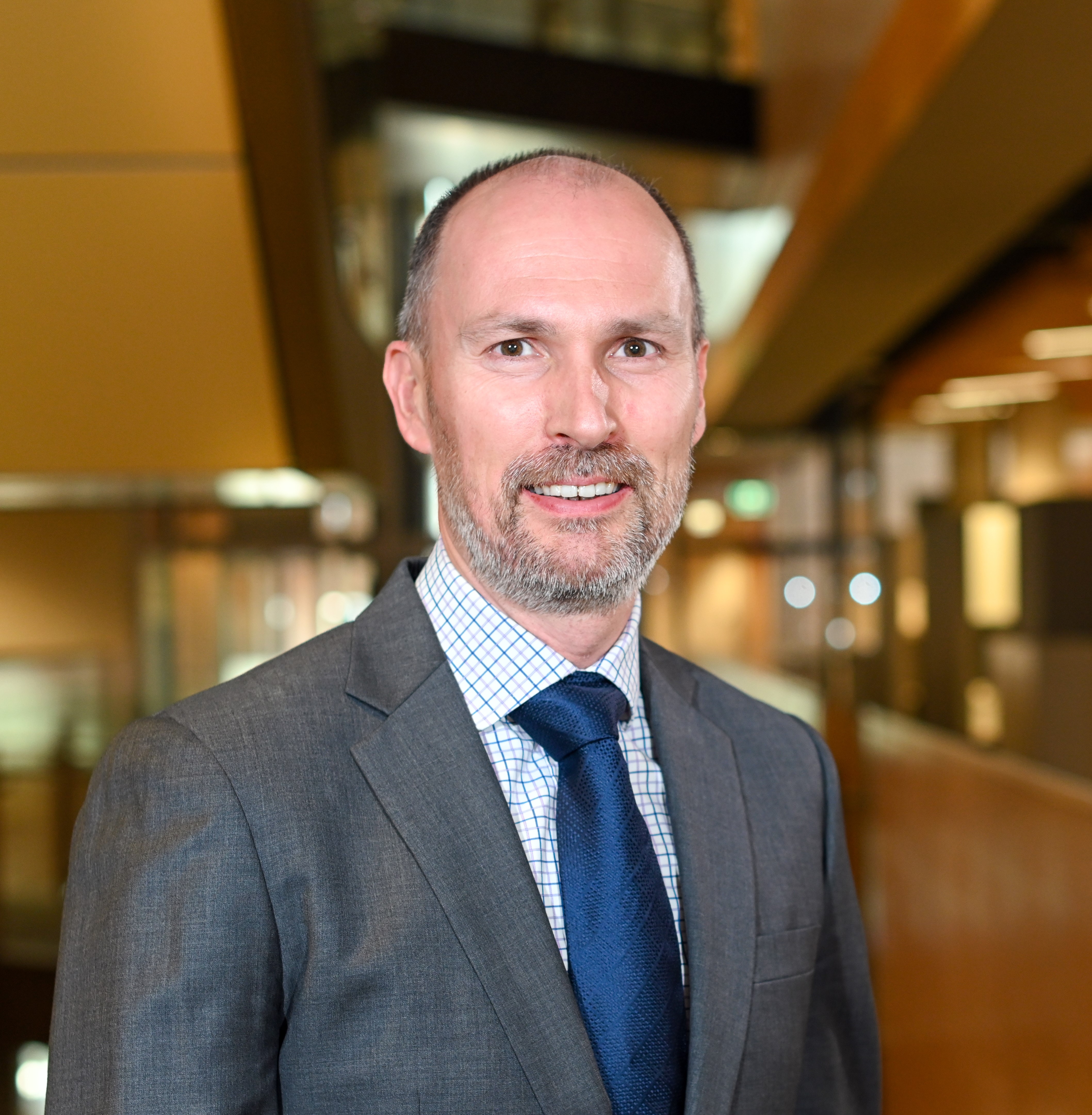
Rachael Arnold is a Researcher at the National Renewable Energy Laboratory (NREL), specializing in materials science for photovoltaic applications. Her work focuses on degradation mechanisms in solar modules and advanced materials for renewable energy systems. Key research areas include Photovoltaic module durability Polymer material stability Corrosion and environmental aging Perovskite solar cell degradation Recent publications analyze fluoropolymer alternatives, antireflective coating failures, and passivation layer breakdowns under extreme conditions. Collaborations span industry and academic partners, with technical expertise in accelerated stress testing and materials diagnostics.
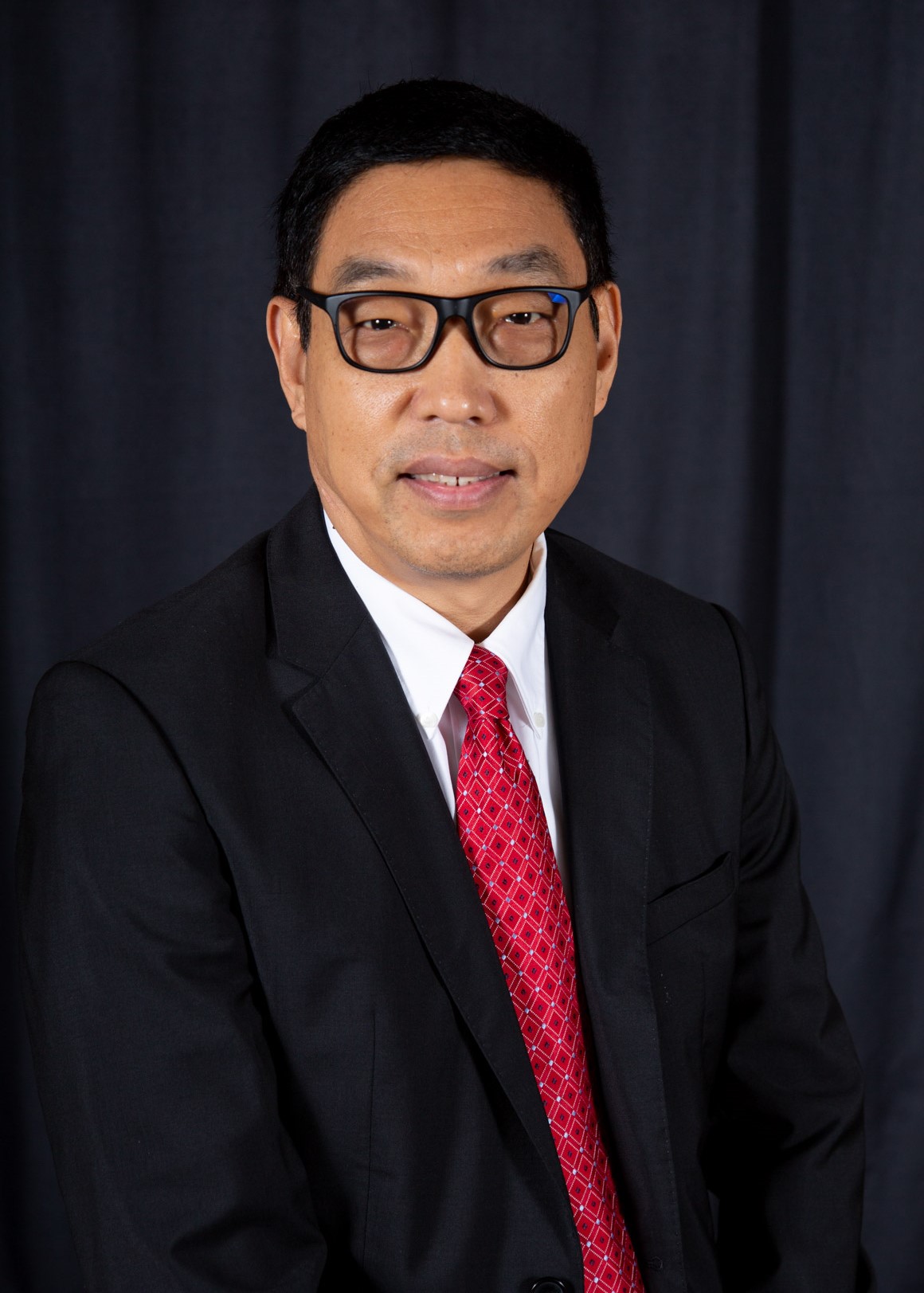
Dr. Xuejun Fan is a Regents' Professor and Mary Ann and Lawrence E. Faust Endowed Professor in the Department of Mechanical Engineering at Lamar University. His career spans academia and industry, with expertise in microelectronics packaging reliability, material characterization, and thermal management. He earned his Ph.D. in Solid Mechanics from Tsinghua University (1989) and held roles at Taiyuan University of Technology, University of Tokyo, and Intel Corporation before joining Lamar University in 2007, where he was promoted to full professor in 2013. Education: Ph.D. (Solid Mechanics, Tsinghua University), M.S. & B.S. (Applied Mechanics, Tianjin University) Dr. Fan's research focuses on multi-physics modeling of electronic packaging, moisture-induced reliability in IC devices, electromigration analysis in interconnects, and thermal management for LEDs and power electronics. His work includes nanoscale material characterization and warpage-free packaging design . Publications highlight applications in heterogeneous integration and corrosion-resistant nanomaterials . His 15 most recent articles emphasize chiplet packaging , electromigration modeling , and AI-driven reliability optimization . Key trends include thermal-mechanical stress analysis in SiC modules and moisture diffusion in nanocopper pastes. Scientific Awards: IEEE Fellow, EuroSimE Achievement Award, Top 2% Scientist (2024), Distinguished Faculty Research Fellow Dr. Fan mentors graduate students in finite element analysis , electromigration , and material testing using equipment like DMA/TMA/TGA analyzers and Labsphere Illumia Pro . He serves as Associate Editor for IEEE Transactions and Microelectronics Reliability, and contributes to industry standards via IEEE EPS.
George Flowers is a Professor of Mechanical Engineering and Dean of the Graduate School at Auburn University. He holds a Ph.D. and M.S. from Georgia Institute of Technology and a B.S. from Auburn University. His research focuses on dynamics of rotating machinery, vibration analysis of electronic systems, and acoustic metamaterials. Recent work explores tin whisker growth mechanisms, impedance optimization in electronic packaging, and vibration-induced degradation in connectors. His contributions to the Defense Electronics Consortium aim to advance lead-free electronics in defense applications. Publications span signal integrity, passive intermodulation, and structural acoustics. He leads Auburn’s Mechanical Engineering department and oversees graduate education initiatives. Education: Ph.D. Mechanical Engineering, Georgia Tech M.S. Mechanical Engineering, Georgia Tech B.S. Mechanical Engineering, Auburn University Research Highlights: Dr. Flowers investigates reliability in electronic systems, including connector degradation mechanisms and high-frequency signal integrity. His acoustic metamaterials research develops noise-reducing meta-structures. He collaborates on industry-driven projects, such as the $7M Defense Electronics Consortium, addressing high-performance electronics challenges. Grants & Awards: Leads major interdisciplinary grants, including the 2022 Defense Electronics Consortium funded initiative. Recognized for contributions to RF connector reliability and vibration mitigation strategies. Administration: As Dean of the Graduate School, oversees ~5,000 graduate students and faculty research programs. Previously chaired the Mechanical Engineering department at Auburn.
Ellen Bergseth is an Associate Professor at the Department of Machine Design (KTH ITM) within the Digital Futures Faculty at KTH Royal Institute of Technology. She specializes in tribology, systems engineering, and railway systems. Her work focuses on optimizing drivetrain efficiency in the automotive and railway industries, mitigating wear-related environmental impacts, and advancing sustainable transport solutions. She is Deputy Director of the KTH Railway Group and Programme Director for the Railway Master's Programme. Education & Research: Ellen holds a PhD in Tribological Design from KTH (2012). Her research integrates real-world engineering challenges, including tribological testing, mechanical interfacial modeling, and wear monitoring. She has conducted visiting research at Scania CV AB (2016–2019) as a part-time guest researcher, gaining insights into automotive systems engineering. Key Projects: She leads projects such as the nPETS initiative (focusing on nanoparticle emissions) and Rail Systems Engineering in Sweden. She is also involved in the ECO2 Vehicle Design Centre and the KTH Railway Group. Awards: She received the Jacob Wallenberg Grant (2018) for material science research. Her work bridges academia and industry, with a focus on early-stage product development decision-making and sustainable lifecycle design. Teaching: She teaches courses in Mechanical Engineering, Vehicle Engineering, and Systems Engineering, emphasizing practical applications like CAD 3D modeling and sustainable development methodologies.
Lars-Gunnar Johansson is a Full Professor in the Department of Chemistry and Chemical Engineering at Chalmers University of Technology. His research focuses on high-temperature corrosion, materials degradation, and the development of corrosion-resistant alloys. He investigates oxidation, nitridation, and chloride-induced corrosion mechanisms in advanced materials, with applications in energy systems and industrial environments. Key research areas include the behavior of alumina-forming alloys, Mo(Si,Al)₂ composites, and FeCrAl-based materials under extreme conditions. His work employs advanced characterization techniques like neutron reflectivity and in-situ environmental SEM. He also explores protective coatings and surface engineering solutions to mitigate corrosion in biomass-fired boilers, solid oxide fuel cells, and other high-temperature applications. Publications highlight his contributions to understanding corrosion mechanisms, alloy optimization, and the interplay of environmental factors (e.g., H₂O, KCl, SO₂) on material durability. His research bridges fundamental science with industrial applications, aiming to improve material lifetimes in harsh environments.
Morten Stendahl Jellesen is an Associate Professor in the Department of Civil and Mechanical Engineering at the Technical University of Denmark (DTU). His research focuses on corrosion engineering, materials science, and electronics reliability, with particular emphasis on environmental degradation of metals and surface engineering solutions. He leads and contributes to interdisciplinary projects addressing corrosion in drinking water systems, biomedical implants, and electronics manufacturing. Key affiliations include DTU's Materials and Surface Engineering division, where he explores topics such as flow-induced corrosion mechanisms, protective coatings for printed circuit boards (PCBs), and corrosion prevention strategies in aggressive environments. His work aligns with UN Sustainable Development Goals related to clean water and responsible consumption. Recent publications investigate corrosion behavior of copper alloys, stainless steel in drinking water applications, and biomedical implant failure mechanisms. He supervises multiple PhD students in areas like surface engineering of titanium alloys for medical use and humidity effects on electronics. Morten collaborates internationally on projects such as evaluating contamination levels on electronics and developing predictive models for corrosion failure risks. His research integrates electrochemical analysis, material characterization, and real-world application testing to advance corrosion-resistant technologies.
Anish Rao Lakkaraju is a Postdoctoral Researcher in the Department of Civil and Mechanical Engineering at the Technical University of Denmark (DTU), specializing in Materials and Surface Engineering. His research focuses on the reliability of electronic components, particularly examining failure mechanisms related to environmental factors. Dr. Lakkaraju's research interests span Corrosion Science, Materials Engineering, and Printed Circuit Board Reliability, with specific expertise in humidity effects on electronics, surface science phenomena, and dendritic growth mechanisms. His work addresses critical challenges in electronic packaging reliability under various environmental stressors. His recent publication record demonstrates expertise in PCB reliability, with a focus on water film formation, solder flux interactions, and dendritic growth mechanisms. The research shows a consistent trajectory toward developing predictive models for humidity-induced failures in electronic assemblies, with increasing emphasis on practical design strategies for improved reliability. As a recently completed PhD graduate (2024), he has established himself as an emerging researcher in electronic materials reliability, with publications in high-impact journals including Corrosion Science and IEEE Transactions on Components, Packaging and Manufacturing Technology. Dr. Lakkaraju has presented his research at international conferences, demonstrating active engagement with the scientific community. His work is conducted within DTU's research ecosystem focusing on materials science and engineering applications for electronic systems.
Aubrey Jackson is a researcher at the National Renewable Energy Laboratory (NREL) within the field of Materials Science, focusing on photovoltaic systems and renewable energy technologies. Their work primarily investigates material degradation and durability in solar energy applications. Key Research Themes: Photovoltaic material stability under extreme environmental conditions Accelerated stress testing methodologies for solar cables Failure analysis of polymer components in solar systems Recent publications emphasize humidity-induced corrosion, antireflective coating degradation, and cable jacket performance. Collaborations include experts like David Miller, Peter Hacke, and colleagues across energy research domains.
Hannelore Derluyn is a CNRS Research Fellow at the Laboratory of Complex Fluids and their Reservoirs (LFCR) within the University of Pau and Pays de l'Adour. Her research focuses on geomechanics of porous media, particularly salt crystallization-induced damage mechanisms in rocks. She received her doctorate from ETH Zurich (2012) and Master's from KU Leuven (2006), with previous positions at Ghent University and ETH Zurich. Research Focus Derluyn's work bridges experimental and computational approaches to understand crystallization damage in porous materials. Using advanced techniques like X-ray tomography, she studies how environmental factors (temperature, humidity, salt concentration) trigger rock degradation. Her research has applications in heritage conservation, CO₂ storage, and geothermal energy. The ERC-funded PRD-Trigger project aims to establish predictive models for salt-induced damage at the pore-network level. Awards and Recognition ERC Starting Grant (2019) for pioneering work on precipitation-triggered rock dynamics ETH Zurich Medal (2013) for outstanding doctoral thesis FWO Research Grant and Fellowship (2013-2016) from Research Foundation Flanders Best Reviewer Award from Materials and Structures (2015) Research Infrastructure At LFCR, Derluyn utilizes synchrotron X-ray microtomography and neutron radiography for in-situ observation of crystallization processes. Her work involves collaborations with European institutes including EMPA Dübendorf and KU Leuven, focusing on multi-scale analysis of geomaterial behavior under environmental stress.
Romain GRANGEAT serves as a Teacher-researcher at CESI's Le Paquebot Campus in Saint Nazaire, France, where he contributes to the Engineering and Digital Tools research team. His dual role bridges academic instruction for engineering students with experimental research focused on material durability and advanced sensing methodologies. His academic foundation includes: Doctorate from Nantes University investigating 'Durability of bonded assemblies in humid environments – Instrumentation by fiber optic sensors' Engineering Diploma from INSA Rennes specializing in 'Materials Science and Engineering' Dr. GRANGEAT's research program centers on material degradation mechanisms in organic systems, particularly epoxy-based adhesives. He pioneers fiber optic sensing techniques to quantify water diffusion dynamics at microscopic scales within bonded assemblies. His work integrates physicochemical characterization with mechanical analysis to address real-world challenges in structural adhesion across aerospace, automotive, and marine sectors, emphasizing the critical role of interphase properties in long-term performance. Analysis of his 2019-2023 publications reveals a cohesive research trajectory focused on moisture-induced degradation in epoxy/metal interfaces. His group consistently develops and refines Fresnel reflection-based sensing methodologies to map local water content fields with unprecedented spatial resolution. This work establishes fundamental relationships between environmental exposure, interphase evolution, and mechanical failure, providing industry with predictive models for bonded assembly lifetime under humid conditions. Scientific awards and honors: None documented in available source materials. Dr. GRANGEAT actively mentors doctoral candidates, currently co-supervising E. Pinto's thesis at CEFET/RJ (Rio de Janeiro) since September 2023. The research investigates 'The influence of hygroscopic aging on the creep of bonded joints,' addressing critical knowledge gaps in time-dependent adhesive behavior. While specific grant funding isn't detailed in available materials, his research demonstrates strong industry alignment through its focus on practical durability solutions for structural bonding applications. He operates within CESI's Engineering and Digital Tools research ecosystem, which combines experimental mechanics laboratories with digital instrumentation development to advance sustainable material solutions for engineering applications.
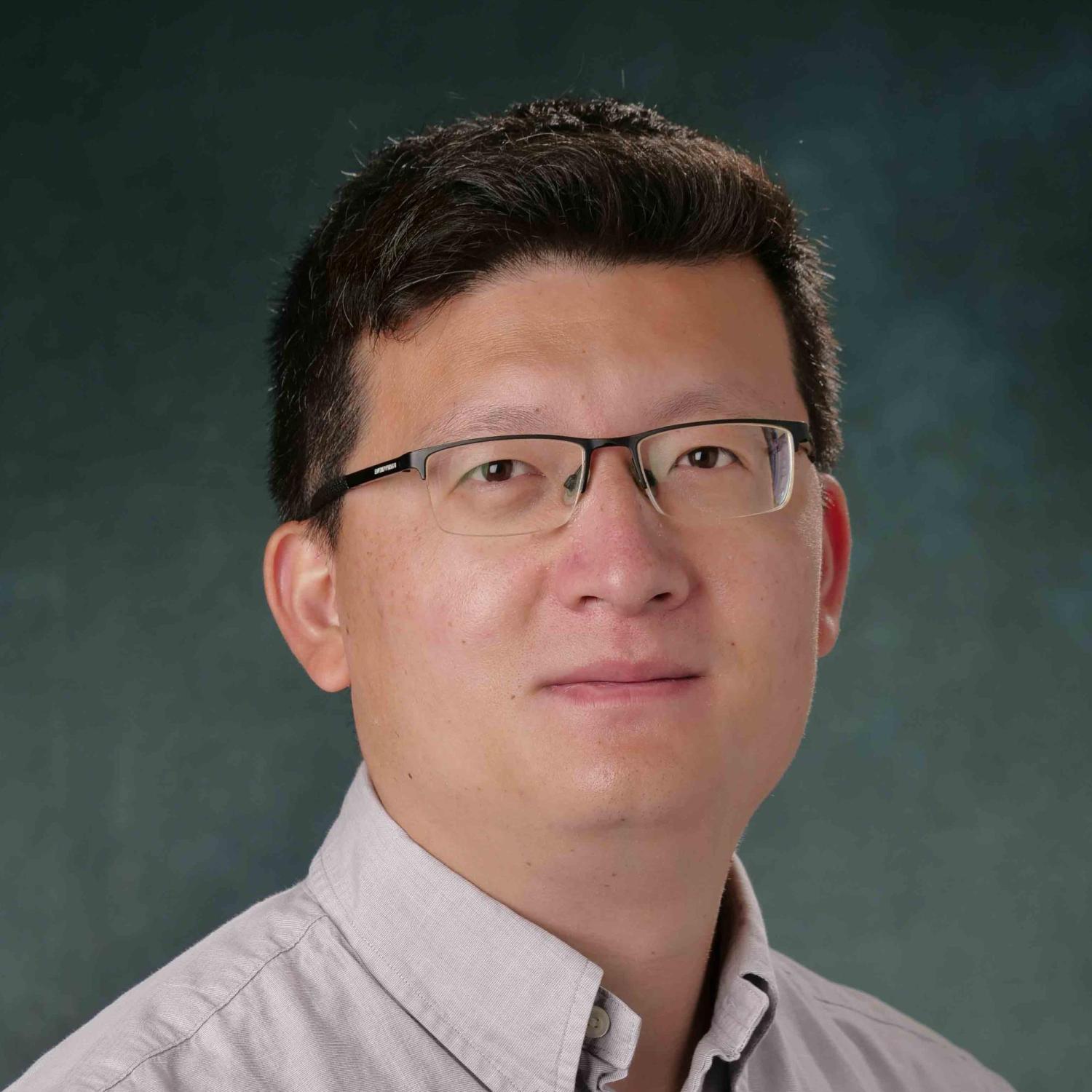
Yida Zhang is an Associate Professor of Geotechnical Engineering & Geomechanics at the University of Colorado Boulder, affiliated with the Department of Civil, Environmental, and Architectural Engineering. They hold a PhD from Northwestern University (2016), an MS from Louisiana State University (2012), and a BS from Zhejiang University (2010). Their research focuses on constitutive modeling of geomaterials interacting with environmental factors, micromechanics of granular materials, unsaturated soil behaviors, and numerical modeling in geotechnical engineering and energy geotechnics. Educations: PhD in Civil Engineering, Northwestern University, 2016 MS in Civil Engineering, Louisiana State University, 2012 BS in Civil Engineering, Zhejiang University, 2010 Research interests include the interplay between environmental factors (adsorption, dissolution, temperature) and geomaterial behavior, granular micromechanics, and numerical simulations. Their work bridges continuum mechanics, physics, and thermodynamics to understand multi-scale processes in porous and granular media. Notable articles explore topics like jamming phase diagrams, environmental cracking of solids, and suffusion in granular soils. Awards include the NSF CAREER Award (2023) and CU Boulder's Early Career Research Award (2022). Grants and advising: Yida Zhang has secured significant research funding and leads projects on energy geotechnics and environmental effects on geomaterials. They are a member of ASCE’s Engineering Mechanics Institute and Unsaturated Soils committees. Labs/Teams: Their research group actively collaborates on projects involving coupled THMC processes and advanced numerical modeling techniques.
Dr. Camelia Nicoleta Borca is a beamline scientist at the PHOENIX beamline of the Paul Scherrer Institute's Center for Photon Science and Laboratory for Femtochemistry. She obtained her B.Sc. in Physics (1994) from the University of Bucharest and her Ph.D. (2001) from the University of Nebraska – Lincoln. Research Focus: Atomistic mechanisms in energy/environmental materials, synchrotron-based trace element detection, X-ray emission spectroscopy, and microfluidic device development. Key Techniques: Soft X-ray surface-sensitive methods, micro-focused tender X-rays, direct laser writing, photolithography. Her recent publications highlight expertise in synchrotron X-ray microanalysis of environmental stability in uranium oxides, crystallization dynamics of amorphous calcium carbonate, alkali-silica reaction products, and battery material degradation mechanisms. She has pioneered microfluidic systems for in-situ X-ray absorption studies and detector innovations. Scientific Awards: American Vacuum Society Graduate Research Award (2000) Material Research Society Graduate Student Award (2001) University of Nebraska Graduate Research Assistant Award (2001) Technical Leadership: Beamline commissioning, user support, and data acquisition/processing at Swiss Light Source since 2006.
Professor Bram Hoex is a leading academic at the School of Photovoltaic and Renewable Energy Engineering (SPREE) at the University of New South Wales (UNSW Sydney) . With a PhD in Applied Physics from Eindhoven University of Technology, he is renowned for his pioneering work on aluminium oxide passivation and atomic layer deposition in solar cell manufacturing. His research group focuses on nanoscale thin films for renewable energy devices, solar cell reliability , and gigascale solar farm modeling . MSc and PhD in Applied Physics, Eindhoven University of Technology SolarWorld 'Junior Einstein' and Leverhulme 'Technology Transfer' awardee Deputy Head of School (Research) and Director, International Strategy at SPREE His research spans high-efficiency silicon solar cells , next-generation tandem technologies , and advanced metrology for material growth and device performance. The group also investigates low-cost catalysts for hydrogen fuel cells and solar farm yield modeling . Recent publications focus on TOPCon solar cell degradation , UV stability , machine learning applications in materials science, and solder flux-induced corrosion mechanisms. His team has secured over A$80 million in competitive funding , including multiple ARENA and ARC grants. 2016 IEEE PVSC Young Professional Award 2018 Solar 40 under 40 (Renewable Energy World) Australian Institute of Company Directors graduate (2020) UNSW Scientia Fellowship recipient Award and grant details demonstrate sustained research excellence in industrial photovoltaics and renewable energy innovation . The group maintains both state-of-the-art research labs and industry-linked facilities at UNSW's Solar Industrial Research Facility (SIRF).
Matthieu Vandamme is a Professor and tenured research scientist at École des Ponts ParisTech, specializing in poromechanics and the mechanical behavior of porous materials in civil engineering. His academic roles include lecturer in charge for courses on porous materials and molecular simulations. He holds a Ph.D. from MIT (2008), an M.Eng. from École Polytechnique and École des Ponts ParisTech, and a M.Sc. in Mechanics of Materials. He received the 2016 EMI Leonardo da Vinci Award for his contributions to civil engineering materials. His research focuses on poromechanics, cement-based materials, and geomaterials, particularly the interplay between in-pore processes (adsorption, capillarity) and mechanical behavior. He leads studies on creep properties, drying-induced cracking, and multi-scale modeling of materials like concrete and coal. He serves as Associate Editor for Cement and Concrete Research and has held visiting roles at Cambridge University and Northwestern University. Administrative roles include membership in École des Ponts' board, steering committees for porous solids research, and leadership in the ASCE’s Poromechanics Committee. Vandamme collaborates with industry through the LafargeHolcim Chair and engages in education via courses on construction materials and energy applications. His work bridges microstructural analysis with macroscopic material performance, addressing challenges in sustainable construction and energy storage.
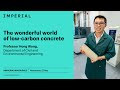
Professor Hong Wong is a Professor of Concrete Materials in the Department of Civil and Environmental Engineering at Imperial College London’s Faculty of Engineering. His research focuses on the microstructure, durability, and sustainability of cementitious materials, aiming to develop low-carbon and high-performance concrete solutions. He leads the EPSRC-funded EUREKA project on low-carbon cements from UK clays and co-founded Seratech (zero-carbon cement) and Permia (high-strength permeable concrete). Education: BEng (First Class Honours) and MSc (Research) from University of Malaya; PhD (W.C. Unwin Prize) from Imperial College London. Professional roles include Undergraduate Year 2 Coordinator, Course Director of the Advanced Materials for Sustainable Materials MSc, and Laboratory Director of the Centre for Infrastructure Materials. He teaches modules on cementitious materials and structural mechanics. Research interests span low-carbon cements, microstructure analysis, petrography, and durability assessment. Notable projects include magnesium silicate-based cements, waste clay utilization, and self-healing concrete. He has contributed to standards like BS 1881-211:2016 and serves on committees for Innovandi, Nanocem, and the Applied Petrography Group. Scientific awards include the 2017 CivSoc Student Choice Award for Best Lecturer. Grants include major EPSRC funding. His work bridges academia and industry via Imperial Consultants and patents (e.g., high-strength porous cement materials). He explores circular construction through recycling of waste materials like wind turbine blades and end-of-life bricks. Labs/teams: Centre for Infrastructure Materials, APG inter-laboratory trials, RILEM committees (TC 262-SCI, TC 286-GDP). Collaborates globally on initiatives like the Global Cement and Concrete Research Network (Innovandi).