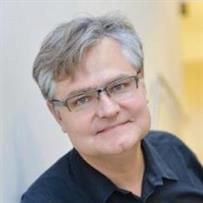
Michael J. Black is a Professor and Director at the Max Planck Institute for Intelligent Systems in Tübingen, Germany, where he leads the Perceiving Systems department and serves as Managing Director . He is also an Honorarprofessor at the University of Tübingen 's Faculty of Science . His career spans roles at Brown University (2000-2010), Xerox PARC, and academic-industry collaborations with Amazon and Meshcapade.
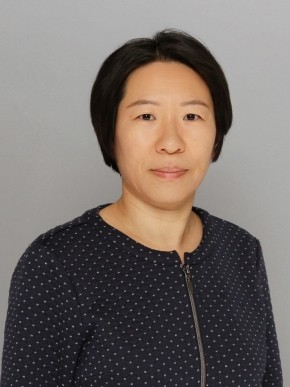
Nancy Pollard is a Professor at Carnegie Mellon University, affiliated with both the Robotics Institute and the Computer Science Department. Her research focuses on understanding physical interaction with the environment through robotics and computer graphics, particularly in areas like dexterous manipulation, human motion analysis, and soft robotics. She explores how human examples can inform robot control policies and create natural-looking animations. Her work bridges robotics and graphics to solve challenges such as optimizing motion for humanoid robots and improving the realism of animated hands. Key projects include developing fast physically plausible motion techniques, studying hand motion complexity, and creating intuitive tools for modeling hand-object interactions. She also investigates the physical correctness thresholds in graphics and the design of affordable soft robotic hands for real-world applications like agriculture. Recent publications highlight advancements in motion retargeting for anthropomorphic manipulations, co-optimization of soft robotic hand design and control, and frameworks for sensor placement in soft hands. Her research emphasizes human-inspired approaches to robotics and the application of biomechanical insights to improve robotic dexterity. Pollard advises students such as Arjun Lakshmipathy and collaborates on projects involving both academic and industrial applications. Her work has been supported by grants focused on robotics design and simulation-based manipulation capture.
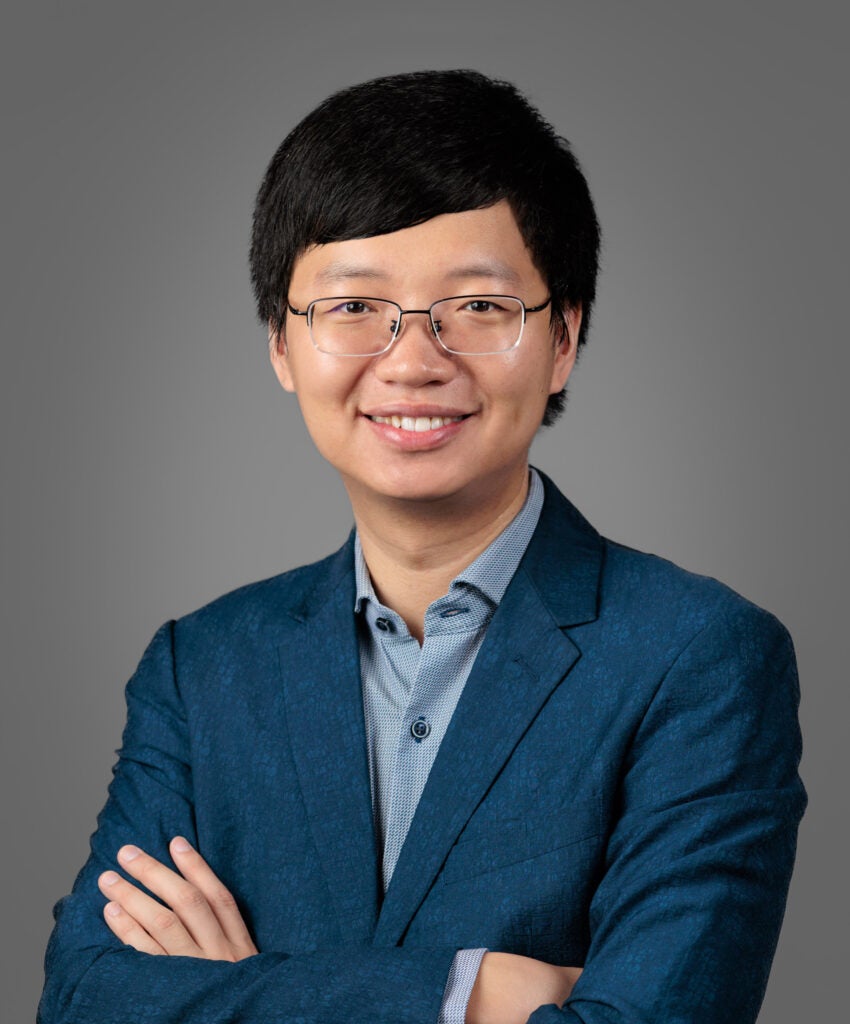
Yan Gu is an Associate Professor of Mechanical Engineering at Purdue University, located in West Lafayette, Indiana. He is affiliated with the School of Mechanical Engineering within the College of Engineering. His research focuses on legged locomotion, humanoid and quadrupedal robots, wearable robotics, hybrid dynamical systems, control systems, state estimation, and dynamics. He leads the TRACE Lab and has been recognized with prestigious awards including the NSF CAREER Award (2021) and multiple teaching accolades. Gu holds a Ph.D. from Purdue University (2017) and a B.S. from Zhejiang University, China (2011). His work emphasizes robust control strategies for legged robots in dynamic environments, including adaptive ankle torque control, time-varying foot-placement algorithms, and state estimation techniques for non-inertial surfaces. His recent publications explore multimodal datasets in animal-robot interaction and the stabilization of quadrupedal locomotion on accelerating platforms. His research has been supported through grants such as the NSF CAREER Award, and his contributions span both theoretical advancements in hybrid control systems and practical applications in wearable robotics and exoskeleton design. Gu’s TRACE Lab serves as a hub for innovative robotics research, addressing challenges in robot-environment interaction and dynamic stability.
Piotr Winkielman is a Professor of Psychology at the University of California, San Diego (since 2007), with affiliations at Warwick Business School (UK) and the Warsaw School of Social Sciences and Humanities (Poland). His research focuses on the interplay of emotion, cognition, embodiment, and consciousness in social cognition, employing methods from social/cognitive psychology and neuroscience. Key interests include unconscious emotion processing, facial mimicry, decision-making under emotional influence, and the neural basis of social perception. Education: PhD in Social Psychology (1997), University of Michigan MSc in Psychology (1991), University of Bielefeld, Germany BSc in Psychology (1988), University of Warsaw, Poland Research Interests: Winkielman explores how fleeting affective reactions influence behavior without conscious awareness, studying facial feedback mechanisms, emotional contagion, and the role of physiological signals in decision-making. His work bridges theories like Affect-As-Information and Facial Feedback, while challenging assumptions about the necessity of conscious processes in emotion. Grants & Funding: Supported by NSF Grant BCS-0350687 for studies on unconscious emotion and physiological feedback. Collaborations include projects on mimicry, stress effects, and cross-modal perception. Labs & Teams: Leads research at UCSD on embodied cognition and social neuroscience, with studies involving EEG, EMG, and behavioral experiments. International collaborations span UK, Poland, and Germany.
Dr. Changsheng Wu is a Professor at the National University of Singapore (NUS), leading the Lab for Intelligent Sensing, Harvesting and Actuation (LISHA). He holds a Bachelor's from NUS and a PhD from Georgia Tech, with postdoctoral research at Northwestern University. His work focuses on wireless wearables, bioelectronics, energy harvesting, and advanced manufacturing for sustainable solutions. Education: Bachelor in Engineering Science (First Class Honours), NUS PhD in Materials Science and Engineering, Georgia Institute of Technology Postdoctoral Research, Querrey Simpson Institute for Bioelectronics, Northwestern University Research Interests: Wireless bioelectronics for clinical health monitoring Energy harvesting via nanogenerators Soft skin-electronics interfaces using metastructures Programmable materials for adaptive systems Advanced manufacturing techniques for wearable devices Key Achievements: Over 50 publications and 5 patents Recipient of TechConnect 2018 Innovation Award and 56th R&D 100 Award Developed wireless implantable sensors for tissue monitoring and bioresorbable medical devices Teaching: MLE5220: Finite Element Method in Materials MLE5238: Bioelectronics Laboratory: His LISHA lab pioneers innovations in self-powered systems, wearable health monitoring, and biohybrid robots. Current projects include metamaterial-based sensors and sustainable energy conversion materials.
Satoshi Funabashi is an Assistant Professor in the Department of Intermedia Art and Science at Waseda University's School of Fundamental Science and Engineering, Japan. He is affiliated with the Graduate Program for Embodiment Informatics under Waseda University's Program for Leading Graduate Schools and contributes to multiple graduate schools including the Graduate School of Creative Science and Engineering. Education: Doctor of Engineering (Waseda University, 2017-2021) Research Focus: Robotics, tactile sensing, deep learning, and embodiment informatics Academic Appointments: Assistant Professor (non-tenure-track) His research centers on symbiotic robotics and tactile-driven manipulation, with recent publications exploring graph convolutional networks, vision-touch fusion, and morphology-specific deep learning for robotic hands. He has secured multiple competitive research grants including JSPS KAKENHI and JST ACT-I programs. Scientific Awards: Grant-in-Aid for Scientific Research (B) (KAKENHI), JSPS (2024-2027) Grant-in-Aid for Early-Career Scientists, JSPS (2022-2024) JST ACT-I Research Fellow (2020-2022, 2018-2020) JSPS Research Fellowship DC1 (2017-2020) He collaborates with the Intelligent Dynamics and Representation Lab (Prof. Tetsuya Ogata) and the Intelligent Machine Lab (Prof. Shigeki Sugano) at Waseda University. He has interned at MIT's CSAIL (2018-2019) and conducted research at UC Davis (2015). His work has been cited over 500 times with an h-index of 14 according to Google Scholar.
Alan Fern is a Professor of Computer Science and Robotics in the School of Electrical Engineering and Computer Science at Oregon State University. He leads research in artificial intelligence, focusing on reinforcement learning, planning, and robotics applications like humanoid robotics and agricultural AI. His work includes co-directing the Dynamic Robotics Lab and leading the AgAID National AI Institute for agricultural solutions. Fern holds a Ph.D. from Purdue University and has contributed to over 100 publications. His recognitions include the NSF CAREER Award and multiple best paper awards. Education: B.S., Electrical Engineering, University of Maine (1997) M.S. & Ph.D., Computer Engineering, Purdue University (2000 & 2004) Research Interests: His research spans machine learning, planning, and robotics. Key areas include: AI for humanoid robotics (e.g., bipedal locomotion on Cassie) Reinforcement learning algorithms and applications Agricultural AI for specialty crops Explainable AI and anomaly detection Awards: 2017 College of Engineering Research Collaboration Award 2013 AAAI Outstanding Paper Award 2006 NSF CAREER Award Advising & Labs: Supervised over 50 students. Key collaborations include the Dynamic Robotics Lab (with Jonathan Hurst) and AgAID. His teams address challenges like robot navigation, policy learning, and AI ethics. Labs/Teams: Dynamic Robotics Lab, AgAID National AI Institute, and contributions to computational sustainability initiatives.
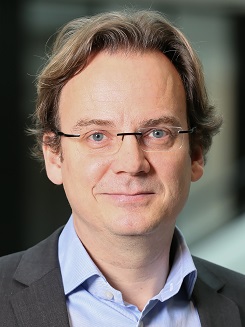
Jonas Beskow is a Professor and Head of Division at the Division of Speech, Music and Hearing at KTH Royal Institute of Technology. His research focuses on multimodal interaction, speech synthesis, robotics, and human-robot interaction. He leads the Learning style variation in nonverbal behaviour for social robots and agents project as part of Digital Futures, a cross-disciplinary research center. His work involves developing social robots like the Furhat head and advancing technologies for gesture synthesis, audio-driven motion, and adaptive intelligent systems. He holds roles as Co-PI for the Advanced Adaptive Intelligent Systems (AAIS) and Adaptive Intelligent Homes (AIH) projects. His research spans robotics, computer graphics, and clinical applications such as dementia detection through multimodal patient behavior analysis. Beskow also contributes to educational initiatives, supervising courses in computer science and engineering, including degree projects in machine learning and systems engineering. Publications highlight innovations in gesture generation, speech-driven animation, and socially-aware robotics. Collaborations with institutions like Stockholm University and RISE Research Institutes drive interdisciplinary solutions. His work bridges artificial intelligence, human-computer interaction, and assistive technologies, emphasizing ethical and societal impacts of emerging digital systems.
Sílvia Moros Espanol serves as a Senior Lecturer in the Department of Computer Science within the School of Physics, Engineering & Computer Science at the University of Hertfordshire, where she actively contributes to the Robotics Research Group. Her interdisciplinary work bridges engineering, psychology, and education to develop socially assistive robotic systems. Her academic credentials include: Industrial Engineering degree from Universitat Politècnica de Catalunya (UPC) PAIR Master in Automated Production and Robotics from Fundació CIM - UPC Robotics and Automation Master from Universidad Carlos III, Madrid Psychology degree from Universitat Oberta de Catalunya (UOC) Dr. Moros Espanol specializes in socially impactful robotics, with primary focus on Human-Robot Interaction (HRI) for children with autism and ethical considerations in vulnerable populations. Her research examines how robotic behaviors influence social engagement in educational contexts, emphasizing both technical design and psychological implications. She investigates critical questions about robot embodiment, error handling in educational tools, and ethical frameworks for assistive technologies. Analysis of her 2024-2025 publications reveals consistent exploration of child-robot dynamics, with significant emphasis on ethical hazard analysis (X-HAZOP), comparative studies of robot forms (e.g., robot dogs), and children's ability to interpret robotic social cues. Her work demonstrates strong interdisciplinary collaboration across psychology, engineering, and AI ethics. She maintains active research partnerships within the University of Hertfordshire's Robotics Research Group, collaborating extensively with scholars like Paul Holthaus and Gabor Lakatos on projects examining trust, social cues, and educational applications of robotics. While specific grant details aren't provided, her sustained publication output indicates robust ongoing research activity.
Aino Ahtinen is a University Lecturer in Computing Sciences at Tampere University's Faculty of Information Technology and Communication Sciences. Her work focuses on human-robot interaction, particularly in educational and healthcare contexts. She has extensive experience designing socially assistive robots, wellness technologies, and participatory design frameworks for diverse populations including older adults, children, and professionals. Her research emphasizes co-learning models involving social robots, accessibility in senior-robot interactions, and the integration of robotics into primary education and workplace well-being. Notable projects include the ROBOTOUR co-learning initiative for seniors and ROBOCAMP programs for youth. She has pioneered studies on robot literacy metrics and ethical design considerations in social robotics. Dr. Ahtinen has contributed to over 60 peer-reviewed publications since 2003, with recent work focusing on robot-assisted physical activity, privacy-aware robotic systems, and cross-generational technology education. Her research bridges human-computer interaction, gerontechnology, and educational technology, consistently prioritizing user-centered design principles.
Kangkang Yin is an Associate Professor in the School of Computing Science at Simon Fraser University (SFU). His research focuses on computer animation, computer graphics, humanoid robotics, machine learning, and multimedia analysis. He teaches courses such as Computer Animation and Scientific Computing, and holds a PhD from the University of British Columbia (2007), MSc from Zhejiang University (2000), and BSc from Zhejiang University (1997). His work bridges robotics and animation through projects like physics-based character controllers, motion diffusion models, and robotic manipulation. Key contributions include the SIMBICON biped locomotion framework and research into emotion-driven dance animation. Recent efforts emphasize reinforcement learning applications in motion synthesis and robust visual navigation for unmanned ground vehicles. Yin's publications span over two decades, addressing challenges in motion control, physics-based simulation, and machine learning applications. His lab contributes to both academic advancements and practical robotics solutions. Current research trends show strong emphasis on combining generative AI with traditional animation techniques, as seen in recent work on auto-regressive motion models (AAMDM) and physics-augmented reinforcement learning (PARC).
Auke Jan Ijspeert is a full professor at the École Polytechnique Fédérale de Lausanne (EPFL), where he serves as head of the Biorobotics Laboratory (BioRob). He holds a primary affiliation with the Institute of Bioengineering and a secondary affiliation with the Institute of Mechanical Engineering. His academic leadership and research excellence have established him as a leading figure in bio-inspired robotics and computational neuroscience. B.Sc./M.Sc. in Physics, École Polytechnique Fédérale de Lausanne (EPFL), 1995 Ph.D. in Artificial Intelligence, University of Edinburgh, 1999 Postdoctoral research at IDSIA/EPFL and University of Southern California (USC) SNF Assistant Professor at EPFL, 2002 Promoted to Associate Professor, October 2009 Promoted to Full Professor, April 2016 His research lies at the intersection of robotics, computational neuroscience, nonlinear dynamical systems, and applied machine learning. He investigates animal locomotion and movement control using numerical simulations and robotic platforms, aiming to understand biological principles and apply them to novel robot designs and controllers. His work has led to groundbreaking robots like the salamander-inspired Pleurobot and amphibious robotic systems. He also explores applications in assistive technologies such as exoskeletons and smart furniture for people with limited mobility. The recent publications reflect a strong trend in bio-inspired robotics, neuromechanical modeling, and the use of robots to understand biological locomotion. Key themes include spinal cord modeling for gait control, amphibious and aquatic locomotion, central pattern generators, and the evolutionary transition from swimming to walking. His work integrates neuroscience, biomechanics, and robotics to create physical models that serve both engineering and scientific discovery purposes. Scientific Awards and Honors: IEEE Fellow (2020) Best Paper Prize, CLAWAR 2019 Best Conference Paper Award, SAB 2018 Best Paper Award, IEEE RO-MAN 2014 Best Paper Award, IEEE Humanoids 2007 Overall Best Paper Award, IEEE ICRA 2002 Young Professorship Award, Swiss National Science Foundation Marie Curie Scholarship, European Commission Auke Ijspeert has been actively involved in academic service, serving as an associate editor for IEEE Transactions on Robotics (2009–2013) and Soft Robotics (2018–2021), and as an associate editor for IEEE Transactions on Medical Robotics and Bionics and the International Journal of Humanoid Robotics. He has secured major funding from the Swiss National Science Foundation, Human Frontier Science Program, European Commission (FP7, H2020), Human Brain Project, and other international agencies. He has organized seven major international conferences and served on over 50 program committees. His laboratory, BioRob, is a hub for interdisciplinary research, training students and researchers in biorobotics, and fostering collaboration across neuroscience, robotics, and biomechanics.
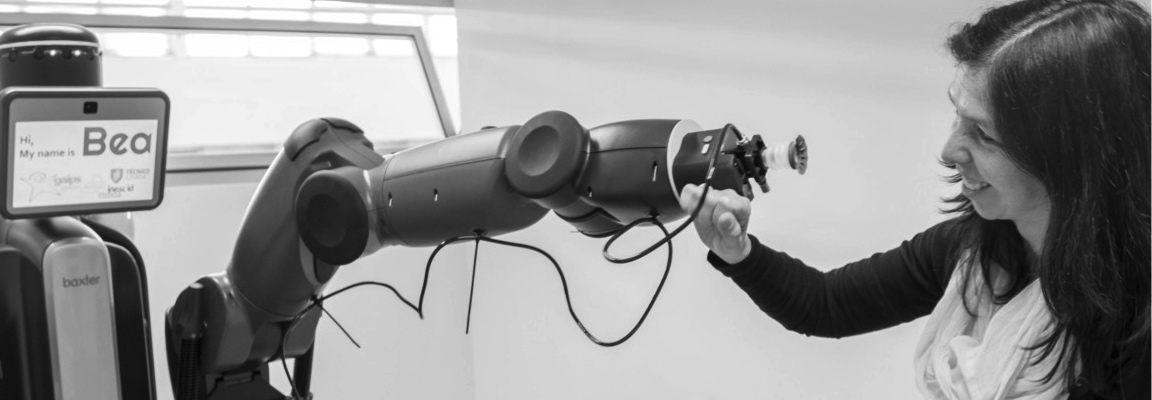
Ana Paiva is a Full Professor in the Department of Computer Science and Engineering at the University of Lisbon's Instituto Superior Técnico (IST), and coordinator of the GAIPS research group at INESC-ID, now focused on AI for People and Society. She holds a Katherine Hampson Bessell Fellowship at Harvard University's Radcliffe Institute for Advanced Study. Her work centers on creating socially intelligent AI and robots through agent-based approaches, emphasizing emotional and cultural competencies. Key research areas include Social Robotics, Affective Computing, and Pro-social Computing. She leads projects like the EU-funded ANIMATAS ITN network and Portugal's AMIGOS/AGENTS initiatives. Notable contributions include the FAtiMA Toolkit for developing emotional AI agents and pioneering work in hybrid human-machine societies. She has received awards such as the EurAI Fellowship (2019) and the Blue Sky Ideas Award at AAAI’18. Her research explores how machines can foster prosocial behaviors like altruism and cooperation, with applications in education, therapy, and ethical AI design. Her advising includes PhD students like Fernando Santos (Victor Lesser Award winner) and Elmira Yadollahi (ACM award recipient). Current projects focus on inclusive robotics for mixed-ability classrooms and ethical frameworks for human-robot collaboration.
Núria Pelechano Gómez is a Professor at the Universitat Politècnica de Catalunya (BarcelonaTech) , affiliated with the Faculty of Informatics of Barcelona (FIB) and the Department of Computer Science (CS) . Her work focuses on Virtual Reality , Crowd Simulation , and Character Animation , with a particular emphasis on immersive environments and user interaction. Education: Master's Degree in Innovation and Research in Computer Science (2012) Degree in Computer Engineering (2010) Master's Degree in Computing (2006) Her research explores the integration of Virtual Reality with Artificial Intelligence to enhance user experiences through dynamic crowd modeling, realistic animations, and adaptive navigation techniques. Recent projects highlight her expertise in Motion Matching , Immersive Simulation , and Physics-Based Animation . Key trends in her publications include: Advancements in Virtual Environments and 3D Modeling . Applications of Machine Learning in Navigation Interfaces . Development of Realistic Crowd Behavior and Social Interaction Systems in VR. Focus on User-Centric Design and Embodiment Techniques . Núria has supervised numerous students on topics ranging from Emergency Scenario Modeling to MR Application Development for immersive systems, contributing to the evolution of Immersive Simulation and Game Development methodologies.
Dr. Hannah Star Rogers is a Visiting Professor at Columbia University, specializing in the intersection of Art and Science. She holds a Ph.D. in Science and Technology Studies from Cornell University and an MFA in Poetry from Columbia University. Her research explores bioart, alternative media, and the historical role of artists in scientific communication, particularly through her work on Berenice Abbott's scientific photography. She has taught at Columbia, Strathclyde University, and the University of Virginia. Education: Ph.D., Cornell University (STS); MFA, Columbia University (Poetry) Affiliations: Columbia University, Emerge: Artists and Scientists Redesign the Future (Director of Research) Research Interests: Rogers investigates how art and science co-construct knowledge systems, focusing on: Curatorial practices in scientific exhibitions Ethical dimensions of bioart and biotechnology Historical intersections between photography and science pedagogy Publications & Exhibitions: Her monograph Art, Science, and the Politics of Knowledge (MIT Press, 2022) examines knowledge production across disciplines. She co-curated the award-winning Making Science Visible exhibit on Berenice Abbott, blending art with scientific communication. Recent articles span Leonardo , Configurations , and SciArt Magazine , addressing topics from nuclear ethics to AI design fiction. Awards: Akademie Schloss Solitude Fellowship (Germany) National Park Service Writing Residencies British Society for the History of Science Exhibit Prize Grants & Leadership: Directed Emerge’s 2016 initiative and served as Guest Bioart Curator (2017). Her projects often involve collaborative science-art teams, emphasizing public engagement with complex scientific issues. Labs/Initiatives: Active in curating interdisciplinary art-science collaborations, including exhibitions on genetic futures and cyborg theory. Leads workshops merging creative writing with scientific inquiry.