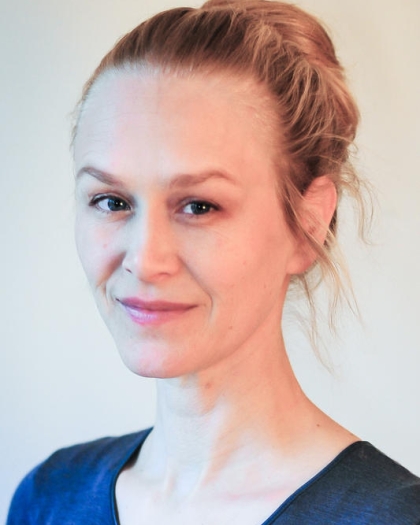
Carola Freiin von Villiez is Professor of Philosophy at the Department of Philosophy, University of Bergen. Her work bridges Kantian ethics, Adam Smith's moral philosophy, and contemporary debates on international justice. Education : Habilitationsschrift (2006) and PhD (2001) from University of Bremen Research : Focuses on national sovereignty , self-determination , democratic peace , and transcultural ethics , with major projects funded by the University of Bergen and DAAD/NFR. Key research trends from her 15 most recent publications (2004-2024) include Kantian legal philosophy , Smithian sentimentalism , Rawlsian internationalism , and transcultural moral frameworks . Academic leadership includes co-editing Zwischen Rechten und Pflichten (2021) with Jean-Christophe Merle and supervising doctoral research on moral sentimentalism (2019).
Roger Flage is a Professor of Risk Management at the University of Stavanger, affiliated with the Faculty of Science and Technology and the Department of Security, Economics and Planning. His research focuses on foundational and applied aspects of risk analysis, uncertainty quantification, and decision-making under uncertainty, with applications in critical infrastructure, environmental systems, and offshore energy. Roger Flage's research interests lie at the intersection of risk science, safety engineering, and decision theory. He investigates how uncertainty—especially epistemic uncertainty and assumptions—affects risk assessments, and advocates for more transparent and robust frameworks. His work spans theoretical advances, such as the treatment of 'black swan' events and the concept of 'real risk', as well as practical applications in offshore safety, power systems, and geohazards. He emphasizes the integration of data-driven methods, AI, and digital twins while critically assessing their limitations and associated security risks. His recent publications show a strong trend toward integrating dynamic, data-rich, and interdisciplinary approaches to risk analysis. Themes include the role of time in risk, AI applications, infrastructure interdependencies, and environmental risk in the oil and gas sector. He frequently publishes in top-tier journals like Risk Analysis , Reliability Engineering & System Safety , and Safety Science , often in collaboration with leading scholars such as Terje Aven and Seth Guikema. No scientific awards are mentioned in the provided text. Roger Flage has supervised or collaborated with several researchers, though no formal list of advisees is provided. His work is supported through academic collaborations and institutional affiliations rather than explicit grant mentions. He is actively involved in advancing risk science methodology, particularly in the treatment of assumptions and uncertainty, and contributes to both theoretical foundations and real-world applications in safety-critical domains. He is associated with research groups and collaborative networks at the University of Stavanger, particularly within the Department of Security, Economics and Planning. His work often involves interdisciplinary teams focusing on risk in complex engineered systems, including energy, transportation, and environmental systems.
Synne Sæther Mæhle is a Professor at the Faculty of Law , University of Bergen. She specializes in legal theory and methodology, with a focus on interdisciplinary research involving law, health data, and environmental protection. Email: synne.mahle@uib.no Research Interests: Her work explores legal methodology, welfare law, and the intersection of law with emerging technologies like big data. She has published extensively on property rights, environmental law, and the evolution of legal thinking. Publication Trends: Recent outputs (2017–2023) emphasize legal education reform (e.g., Juridisk metode i et nøtteskall ), biolaw, and environmental law. Collaborations with Ragna Aarli dominate her textbook contributions. Labs & Teams: Active in the Research Group for Legal Theory and Research Group in Welfare Law , fostering interdisciplinary discourse.
Christian Unkelbach is Professor of Social Psychology at the Department of Psychology, Faculty of Humanities, University of Cologne, where he leads the Unkelbach Group. His research spans multiple domains of social and cognitive psychology with significant contributions to understanding evaluative processes. His primary research interests include Social Cognition, Evaluative Judgments, Information Ecologies, Stereotypes and Prejudice, Evaluative Learning, Fluency Effects, and Sport Psychology. Unkelbach's work examines how humans process evaluative information in social contexts, with particular focus on the truth-by-repetition effect , evaluative conditioning , and cognitive ecological frameworks that explain why certain information patterns dominate social cognition. His research demonstrates how repetition increases belief in information , how attributes become associated through mere pairings , and why positive information is processed more efficiently than negative information. Analysis of his recent publications reveals a consistent trajectory examining the relativity of social cognition , truth effects across contexts , and metacognitive awareness of cognitive biases . His work increasingly integrates cross-linguistic perspectives and examines real-world applications in media consumption and social judgment. Honorary Doctorate from UCLouvain (2025) ISCON Best Paper Award 2020 Speaker of DFG Research Unit FOR2150 'Relativity in Social Cognition' (2017-2021) Emmy Noether Research Grant (DFG, 2009-2013) Feodor Lynen Research Scholarship (Alexander von Humboldt Foundation) Fulbright Scholarship Unkelbach has advised numerous doctoral researchers including Andreas Miculka, Anne Irena Weitzel, Felix Speckmann, Lea Sperlich, and Tabea Zorn. His research group has secured multiple C-SEB grants for projects examining social cognition phenomena. The Unkelbach Group maintains active collaborations with international researchers across Europe and North America, with recent work funded through the DFG Research Unit on Relativity in Social Cognition. The Unkelbach Group laboratory at Richard-Strauss-Str. 2 in Cologne comprises postdoctoral researchers, doctoral candidates, and student assistants working on experimental paradigms examining evaluative learning, truth effects, and social judgment processes. Current projects investigate cross-linguistic truth effects, metacognitive monitoring of repetition effects, and ecological validity in social cognition frameworks.
Magne Jørgensen serves as a Research Professor in the Department of IT Management at Simula Metropolitan, a research center operated by Simula Research Laboratory in collaboration with Oslo Metropolitan University. His work bridges academic research and practical public sector IT implementation, focusing on evidence-based solutions for digitalization challenges. His research centers on critical gaps in software project management, particularly examining human judgment biases in estimation, benefits realization frameworks for agile public sector projects, and the statistical properties of software productivity distributions. He investigates how front-end project phases impact success in Norwegian government IT initiatives and develops methods for more accurate cost-benefit analysis in digital transformation. Analysis of his 15 most recent publications reveals three dominant research trajectories: (1) Agile adaptation challenges in public sector contexts, (2) Empirical studies of productivity variation and estimation bias, and (3) Benefits management frameworks connecting technical delivery to organizational outcomes. His work consistently employs mixed-method approaches combining systematic literature reviews with Norwegian case studies. Jørgensen actively contributes to the EDOS research center at SimulaMet, collaborating with public sector agencies like NAV and the Ministry of Finance. His frequent presentations at governmental seminars (e.g., for Statsministerens kontor and Finansdepartementet) demonstrate direct policy impact, while his Norwegian-language publications target local practitioners through outlets like Magma and Stat & Styring.
Ivar André Fahsing is a Researcher at the Norwegian Centre for Human Rights, University of Oslo. His work focuses on criminal psychology, investigative interviewing, police decision-making, and forensic methodologies. His research emphasizes improving investigative practices through evidence-based approaches and addressing cognitive biases in law enforcement. His publications span topics such as suspect interviewing ethics, homicide investigation strategies, and cross-cultural analyses of investigative practices. Fahsing’s work is published in journals like Journal of Criminal Psychology , Police Practice & Research , and Frontiers in Psychology . Key themes in his articles include refining interrogation techniques, enhancing decision-making in criminal investigations, and fostering expert detective development. He collaborates internationally, with contributions to textbooks on forensic psychology and policing in Europe.
Christian Franklin is a Professor at the Faculty of Law, University of Bergen , specializing in EU/EEA law with a focus on internal market law , free movement of persons , and public international law . He teaches courses such as JUS221 The Rule of Law , JUS134 Legal History and Comparative Law , and JUS399 Master's Thesis (EU & EEA Law) . His research explores the principles of consistent interpretation , legal obligations , and social security challenges under EU/EEA frameworks. He leads CENTENOL (2023–2028), a center on the Europeanization of Norwegian Law, and coordinates the EEA Social Security Project (2021–2025). Recent publications (2022–2025) analyze EEA social security law , NAV cases , and unemployment benefits , emphasizing legal accountability , judicial transparency , and policy implications . He collaborates with institutions like the EFTA Court , University of Oslo , and Stockholm University . Projects include Competition and Market Law Challenges in Public Sector Modernization (2011–2014) and his PhD thesis on Consistency in EC External Relations Law (2004–2010). He contributes to legal commentaries and reports, including a 2019 study on NAV’s EEA obligations .
Magnus Esmark is a Postdoctoral Fellow at the University of Oslo's Faculty of Law (2023-2027) and holds a concurrent 20% position as Associate Professor at Inland University College. He is also a Global Research Fellow at iCourts - Centre of Excellence for International Courts at the University of Copenhagen's Faculty of Law. His work bridges legal sociology, legal history, and legal dogmatics with a focus on EU/EEA law reception in national contexts. His educational background includes a cand.jur. (law degree) from the University of Copenhagen (2019) and a PhD in law from the same institution (2022). His doctoral thesis examined how Danish lawyers' understanding of EU law has been shaped by national power struggles between legal professionals rather than EU integration narratives, developing post-Bourdieuian sociology of law in a national context. Esmark's research adopts a conflict-oriented perspective where lawyers' struggles over social status and authority in determining applicable law form the foundation for understanding legal development. His current project explores the conceptual history of the scope of action in Norwegian EEA law. He has organized conferences on EU law history through the Beyond European Legal Integration project and is editing a thematic issue of European Law Open (2025). His publication record reveals consistent focus on the intersection of European law with national legal traditions, particularly examining how domestic legal communities interpret and contest EU/EEA law. His work demonstrates strong methodological diversity, combining historical-sociological analysis with computational approaches to legal research. Teaches JUS3220 Legal History, JUS4122 Sociology of Law, and HUMR5191 Human Rights Methodology Supervises master's theses in legal history, sociology of law, and EU/EEA law Active in UiO research groups: Law, Society and Historical Change; Sociology of Law; Research Group for International Law Affiliated with EURNOR project (The European Dimension of Norwegian Law) Esmark participates in collaborative research extending across Nordic and European institutions, with recent work examining Nordic legal traditions in relation to European law and developing bottom-up perspectives on European legal integration. His scholarship demonstrates the value of examining European law through national historical and sociological lenses rather than solely through EU-centered narratives.
Norwegian University of Science and TechnologyNorway
Mirela Fus-Holmedal is an Associate Professor at the Department of Philosophy and Religious Studies, Faculty of Humanities, Norwegian University of Science and Technology (NTNU). Her academic work bridges philosophy of language and philosophical methodology, with secondary engagements in philosophy of mind, social philosophy, critical race theory, feminist theory, social psychology, and metaphysics. PhD (2016-2021) from University of Oslo and University of St Andrews MA in Philosophy from Central European University (2012-2013) Double MA and BA in Philosophy and Croatian Language & Literature from University of Rijeka Her research focuses on conceptual engineering and ethics, particularly analyzing the ethical/political dimensions of language through generics, pragmatic communication, metaethics, pejoratives, direct reference, and singular thought. Recent work investigates political manipulation, discrimination, and biases in human/AI communication contexts like dogwhistles, racial figleaves, and plausible deniability. As a visiting fellow, she conducted research at Comenius University, University of Ljubljana, University of Vienna, New Bulgarian University, Charles University in Prague, University of Graz, and University of St. Andrews. Her 2024 publications introduce 'philosophical engineering' as a method for resolving terminological disputes with engineering principles. Her work extends to editorial collaboration with the European Journal of Analytic Philosophy and educational outreach through the Culture of Critical Thinking initiative. She has developed a methodological framework integrating philosophical engineering with social justice concerns.
Svein Anders Noer Lie serves as Associate Professor in the Department of Philosophy and First Semester Studies at UiT The Arctic University of Norway, where he actively contributes to philosophical discourse at the intersection of environmental studies, ethics, and ontology. As a member of the Center for Arctic Humanities research group, his work addresses fundamental questions about humanity's relationship with nature within the unique context of the Arctic region. His research program centers on: The philosophical concept of naturalness and its applications across environmental philosophy, restoration ecology, and the Anthropocene Dispositional approaches to ethics and ontology, examining how potentialities rather than actualities shape ethical reasoning Critical examinations of sustainability frameworks and development paradigms Medical ethics, particularly regarding causation and evidence-based practice The philosophical implications of technological interventions in natural systems Dr. Lie's scholarship demonstrates remarkable continuity in exploring the human-nature relationship while evolving to address contemporary challenges. His early work established foundations in dispositional ontology, which later informed his environmental philosophy contributions. Recent publications reveal increasing engagement with post-sustainability frameworks, the ethical dimensions of genetic engineering, and the philosophical challenges posed by the Anthropocene. This trajectory shows how theoretical philosophical work can provide crucial insights for practical environmental decision-making. His collaborative work with scholars like Rani Lill Anjum, Stephen Mumford, and Fern Elisabeth Wickson demonstrates interdisciplinary reach, bridging philosophy with medical practice, environmental science, and policy considerations. Dr. Lie frequently engages with public discourse through media appearances and popular publications, translating complex philosophical concepts for broader audiences while maintaining academic rigor in his scholarly work.
Leonora Onarheim Bergsjø is an Associate Professor at the Department of Health and Nursing Sciences, University of Agder, with a primary affiliation at the Faculty of Teacher Education and Languages. Her work bridges digital ethics, artificial intelligence, and societal implications through interdisciplinary research and teaching. PhD from University of Oslo Chair of NORDE Norwegian Council for Digital Ethics Supervises PhD/Master's students across institutions (HiØ, UiA, UiO, INN) Research spans digital ethics , AI governance , and responsible digitalization , focusing on algorithmic accountability, digital judgment, and ethical risk assessment. Her 2025-2024 publications emphasize metaverse ethics, AI risk frameworks, and societal impacts of generative AI. She chairs NORDE and provides expert input to Norwegian authorities including the Ministry of Education, Norwegian Institute of Public Health, and Prime Minister's Office on digital ethics policy. Scientific Awards : Chair of NORDE Norwegian Council for Digital Ethics Active in public engagement through lectures, podcasts, and media appearances, addressing topics like AI literacy, digital security, and ethical challenges in education and healthcare.
Norwegian University of Science and TechnologyNorway
Gunhild Setten is a Professor of Social Geography at NTNU's Department of Geography and Social Anthropology, serving as Deputy Head of Department for research (Jan-Aug 2025). Her work focuses on human-nature relationships, moral geographies, and socio-natural landscapes. She has conducted fieldwork in Norway, Australia, Sweden, and the UK, including research stays at the University of Melbourne, Gothenburg University, and the James Hutton Institute. Her research explores outdoor recreation ethics, agricultural policies, heritage management, and species politics through qualitative methods. Key themes include: moral judgments in landscape management, contested environmental values, and the interplay between local knowledge and scientific frameworks in disaster risk reduction. Her recent work analyzes migrant integration in Norwegian outdoor spaces and the role of ecosystems in climate adaptation. She co-edited Landscape, Law and Justice - 20 years (2024) and contributed to Nature, temporality and environmental management (2017). Her articles critically examine topics like biodiversity offsetting in Uganda, community resilience in flood-prone areas, and the socio-cultural dimensions of invasive species. She has engaged in interdisciplinary projects on ecosystem services and participatory governance, emphasizing practical applications of geographical theories.
Sigrid Eskeland Schütz serves as Dean and Professor at the Faculty of Law, University of Bergen (UiB), where she has maintained a continuous academic career with the exception of a brief period as a Deputy Judge in Stord. She has held significant administrative roles including two terms on the Faculty Board and participation in the central Equality Committee. Her expertise is widely recognized through membership on expert committees such as the Environmental Toxins Committee, NOU 2010:9, and the Nuclear Power Committee, as well as her position as deputy chair of the Appeals Board for Environmental Information. Professor Schütz's research focuses on environmental law, spatial planning, and related procedural requirements, with particular emphasis on offshore wind development and marine spatial planning. Her scholarly work bridges theoretical legal analysis with practical environmental governance challenges, examining how legal frameworks can effectively balance competing interests in marine spaces. She has led numerous interdisciplinary and international research projects related to sustainability, climate change, land use, and offshore renewable energy development. Her extensive publication record from 2005-2025 demonstrates consistent engagement with evolving environmental regulatory challenges, particularly in marine contexts. Recent work shows increasing focus on climate litigation, offshore wind permitting processes, and the Førdefjorden case, reflecting her commitment to addressing contemporary environmental legal issues through rigorous scholarship that informs practical policy implementation. As an educator, Professor Schütz teaches in both PhD and master's programs at UIB, supervises graduate students, and contributes to various continuing education initiatives. Her commitment to knowledge dissemination extends beyond academia through active communication with authorities, students, businesses, and administration on topics related to her research expertise.
Christer Johansson is a Professor in the Department of Linguistic, Literary and Aesthetic Studies at the University of Bergen, Norway. His research spans psycholinguistics, cognitive linguistics, discourse analysis, computational linguistics, and neuroaesthetics. He is actively involved in interdisciplinary projects combining language, cognition, and visual perception. University: University of Bergen School: Faculty of Humanities Department: Department of Linguistic, Literary and Aesthetic Studies Email: christer.johansson@uib.no Phone: +47 55582262 His educational and professional background reflects deep engagement with both theoretical and experimental approaches to language and cognition. While specific degrees are not listed, his long-standing academic position and research output suggest a strong foundation in linguistics and cognitive science. His research interests include psycholinguistics, anaphora resolution, corpus linguistics, language processing, and neuroaesthetics, particularly the cognitive perception of faces in medieval and religious art. He investigates how linguistic structures are processed and how visual and linguistic cognition interact. The 15 most recent publications show a clear trend toward interdisciplinary research, combining linguistic analysis with cognitive experiments and aesthetic theory. Early work focused on computational models of analogy and anaphora, while recent work explores metadiscourse, facial perception, and neuroaesthetic principles in historical contexts. Key themes include language processing, written composition, and the cognitive underpinnings of aesthetic experience. No scientific awards are mentioned in the provided texts. Christer Johansson has advised doctoral students, including Vibeke Rønneberg, whose thesis examined written composition and dyslexia. His research has been supported by the Research Council of Norway (Project 213534). He has organized academic workshops (e.g., WAR I and WAR II) and developed software tools for anaphora resolution and memory-based learning. He is a core member of the Humlab research group at the University of Bergen, which focuses on empirical aesthetics, digital humanities, and cognitive approaches to language and art. His collaborative work with Per Olav Folgerø and others explores topics such as facial perception in medieval iconography and the cognitive effects of language use.
Dr. Silje Aambø Langvatn is an Associate Professor in Political Philosophy at the Centre for the Study of the Sciences and the Humanities (SVT), University of Bergen, Norway. She is affiliated with the Faculty of Humanities and actively contributes to research groups focused on theory of science, practical philosophy, and the rule of law. Her academic work bridges political philosophy, law, and governance, with a strong emphasis on legitimacy, public reason, and democratic accountability. Her research interests include: Political legitimacy and institutional context sensitivity Public reason in courts and democratic governance Proportionality assessments in law and policy Accountability of experts and technocratic decision-making Normative foundations of international courts Academic freedom and science ethics Langvatn’s recent publications reflect a sustained focus on conceptual frameworks for legitimacy and public justification, particularly in relation to John Rawls’ political liberalism. Her work critically examines how legitimacy is contested across institutions and how proportionality functions as a normative tool in legal and political contexts. She also explores the ethical challenges of expert involvement in governance, especially during crises like the pandemic. She has received recognition through fellowships at Yale Law School and Harvard, and has contributed to major interdisciplinary projects such as PluriCourts. Langvatn teaches theory of science and ethics for PhD candidates and organizes academic workshops on legitimacy and proportionality. Her scientific contributions include: Co-organizing the 2023 workshop on Proportionality Assessments with PluriCourts Organizing the 2024 Leiden workshop on New Perspectives on Legitimacy Contributing to the book Public Reason and Courts (2020) Presenting at international conferences including ECPR and MANCEPT Langvatn collaborates extensively with scholars such as Cathrine Holst on topics like descriptive representation in international courts and expert accountability. She has no listed PhD or Master’s students in the provided texts. She is involved in interdisciplinary teams including the Research Group for Practical Philosophy and the Forskergruppe for rettsstat, and has participated in EU-funded projects like Value Isobars. Future work appears to focus on legitimacy imaginaries, academic freedom, and refining frameworks for public reason in global institutions.