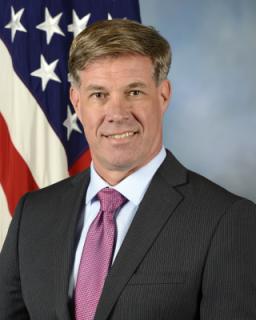
Joseph Felter is a Research Fellow at the Hoover Institution (Stanford University) and the William J. Perry Fellow at the Center for International Security and Cooperation. His career bridges academia, military service, and policy advising, with expertise in counterinsurgency, national security, and US-China relations. He coauthored the influential book Small Wars, Big Data: The Information Revolution and Modern Conflict (2018) and developed the Hacking for Defense curriculum to connect military needs with Silicon Valley innovation. Military Background: Former US Army Special Forces officer with combat deployments in Panama, Iraq, and Afghanistan. Served as commander of the COMISAF Counterinsurgency Advisory and Assistance Team. Academic Roles: Assistant Professor at West Point’s Department of Social Sciences, Adjunct Associate Professor at Columbia University’s School for International and Public Affairs, and current codirector of Stanford’s Empirical Studies of Conflict Project. Research Focus: Politically motivated violence, economic development in conflict zones, and defense innovation. His work appears in top journals like American Economic Review and Journal of Conflict Resolution . Policy Engagement: Key advisor on US defense strategy (2017–2019) and founder of BMNT, a Silicon Valley defense technology incubator. Currently serves on Spirit of America’s board. Scientific Awards: Recognized as a William J. Perry Fellow and US Army War College Fellow. His empirical conflict research informs both academic and policy debates.
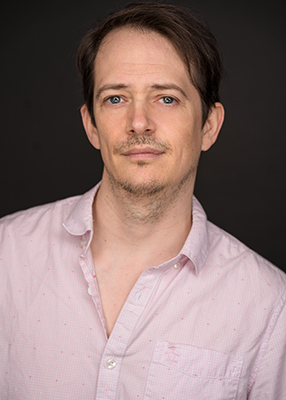
Daria Davitti is a Senior Lecturer and Associate Professor in Public International Law at Lund University's Department of Law. Her research focuses on intersections of international economic law and human rights, particularly in contexts of migration, climate breakdown, and privatized public goods. She leads major projects like the ERC-funded 'Refugee Finance: Histories, Frameworks, Practices' and the Formas-funded 'Screening for Sustainability'. Awards include the 2021 Juridiska Föreningens pedagogiska pris and the title of Docent in Public International Law. She advises on EU migration policies and environmental law compliance, and collaborates with institutions like GLAN and the International Code of Conduct Association for private security service providers. Her work examines refugee finance mechanisms, sustainable investment frameworks, and legal accountability in transnational corporate activities. Key areas include refugee entrepreneurship, EU Taxonomy sustainability criteria, and human rights due diligence in international investment. She has published extensively on topics ranging from refugee bonds to litigation finance in investment arbitration.
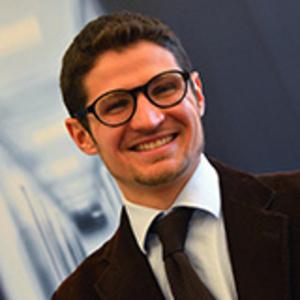
Mariana Gkliati is an Assistant Professor of International and EU Law at Radboud University, Nijmegen. She holds a Graduate Diploma in Law (Magna Cum Laude) from the National and Kapodistrian University of Athens and a Legal Research Master (Summa Cum Laude) from Utrecht University. Her PhD from Leiden University focused on Frontex accountability, supervised by Professors Rodrigues and Besselink, and was supported by the Meijers Research Institute. Education: PhD in Immigration Law, Leiden University (2016-2020) Legal Research Master, Utrecht University (Summa Cum Laude) Graduate Diploma in Law, National and Kapodistrian University of Athens (Magna Cum Laude) Her research interests center on migration, refugee law, and human rights, particularly the accountability of the European Border and Coast Guard Agency (Frontex). She leads the externally funded project 'European Border and Coast Guard Agency: Systemic Accountability in Practice,' involving an 8-member team. Her work emphasizes evidence-based policy-making and anti-smuggling policies. Professional Activities: Research Affiliate, Refugee Law Initiative (RLI), University of London Teaches on the RLI MA in Refugee Protection and Forced Migration Studies Former visiting Research Fellow at the School of Advanced Study (2016) and Amsterdam Centre for Migration and Refugee Law (2019-2020) Awards: Magna Cum Laude, Graduate Diploma in Law Summa Cum Laude, Legal Research Master Her grants and projects include systemic accountability research on Frontex. She advises NGOs, law firms, and the European Parliament, and contributes to expert reports on migration and borders. Labs/Teams: Leads an 8-member research team for her funded project on Frontex accountability.
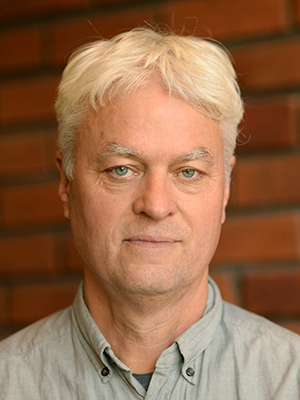
Heather Congdon Fors is a Senior Lecturer at the Department of Economics, University of Gothenburg. She holds a Ph.D. in Economics from the University of Gothenburg (2006), an M.A. in Economics from the University of Waterloo (1999), and a B.A. (Honours) in Economics from the University of Manitoba (1997). Her research focuses on development economics, education, child labor, and political economy. She has led the research project 'Child labor and school attendance in India' (2014–2018) and serves as a reviewer for journals such as the European Journal of Political Economy and Economic Inquiry. Her teaching expertise includes macroeconomics, statistics, institutional economics, and international economics. She has completed pedagogical training programs including HPE201 to HPE103. Her work explores topics such as the impact of globalization on education, land certification on schooling in Ethiopia, and the persistence of harmful cultural norms like female genital cutting in Africa. She has published extensively in peer-reviewed journals and authored reports on child labor policies, institutional change in post-colonial states, and gender biases in education. Fors has contributed to interdisciplinary projects, including analyses of bureaucrats' use of cost-benefit analysis in environmental policy and the long-term impacts of colonial missions on cultural practices. Her research bridges theoretical frameworks with empirical studies, addressing global challenges such as sustainable development goals and educational inequalities. She is based at Vasagatan 1, Gothenburg, and can be reached at heather.fors@economics.gu.se.
Laverne Jacobs, PhD, is a Full Professor at the University of Windsor's Faculty of Law where she holds the Research Chair in Disability Equality & Administrative Justice. She serves as the founder and Director of the Law, Disability & Social Change Project, a research and public policy center dedicated to fostering inclusive communities. Notably, Professor Jacobs was elected to the United Nations Committee on the Rights of Persons with Disabilities in 2022, becoming the first Canadian to serve on this UN Human Rights Treaty Body. She also serves as Co-Director of the Disability Rights Working Group at Berkeley Law's Center for Comparative Equality & Anti-Discrimination Law and previously held the position of Associate Dean (Research & Graduate Studies) for the Faculty of Law from 2018-2021. B.A. (Honours), McGill University, 1994 LL.B., McGill University, 1999 B.C.L., McGill University, 1999 Ph.D., Osgoode Hall Law School, York University, 2009 Professor Jacobs' research sits at the intersection of disability equality law and administrative law and justice, characterized by an interest in the everyday work of the administrative justice system and the lived experiences of people who use it, particularly persons with disabilities. Her work spans disability rights, administrative justice, human rights law, socio-legal theory, and empirical research methodologies. She has made significant contributions to understanding accessibility legislation, transportation inequality, post-secondary education access for students with disabilities, and the implementation of disability equality principles in administrative decision-making. Her scholarship bridges theoretical legal frameworks with practical applications, emphasizing citizen participation in policy development and the importance of inclusive design in legal systems. Analysis of Professor Jacobs' recent publications reveals a consistent focus on how administrative law can better serve persons with disabilities through inclusive design and accessible processes. Her work demonstrates growing attention to intersectional issues, particularly how women with disabilities experience administrative systems, and increasingly examines the implementation challenges of accessibility legislation across Canadian jurisdictions. She frequently employs empirical research methods to ground her legal analysis in real-world experiences of marginalized communities. Scientific Awards and Honors: Canadian Bar Association Touchstone Award (2021) Canadian Association of Law Teachers (CALT) Academic Excellence Award (2022) Hummingbird Award from the Disabled Women's Network of Canada (DaWN), 2022 Election to the United Nations Committee on the Rights of Persons with Disabilities (2022) Professor Jacobs has held significant leadership roles including service on the Board of Directors of the Income Security Advocacy Centre and the Canadian Institute for the Administration of Justice. Through her role as Director of the Law, Disability & Social Change Project, she has secured research funding to support policy-relevant scholarship on disability rights and administrative justice. Her work has influenced accessibility legislation development across Canada, particularly through her annotated version of the Accessible Canada Act. She provides expert consultation to government bodies and international organizations on disability rights implementation. The Law, Disability & Social Change Project serves as Professor Jacobs' primary research hub, bringing together interdisciplinary scholars, disability advocates, and policy makers to develop practical solutions for creating more inclusive legal and administrative systems. The project has produced numerous research reports, policy briefs, and public resources that translate academic research into actionable recommendations for improving accessibility and disability equality in Canadian society.
Elisabeth Jean Wood is a Professor of Political Science at Yale University and holds a concurrent professorship at the Santa Fe Institute. Her research focuses on political violence, particularly sexual violence during war, civil war dynamics, and social movements. She is renowned for her work on insurgent transitions in South Africa and El Salvador, as well as her analysis of variation in wartime sexual violence. Wood has authored influential books including Forging Democracy from Below (2000) and Insurgent Collective Action and Civil War in El Salvador (2003). Her recent work examines the Myanmar military's sexual violence against the Rohingya, emphasizing ideological motivations and institutional frameworks. Wood teaches courses on comparative politics, political violence, and qualitative research methods at Yale. She serves on editorial boards for Politics and Society , American Political Science Review , and the Contentious Politics series. Her research emphasizes ethical fieldwork practices and transparency in qualitative studies, addressing challenges in conflict zones. Her work bridges theoretical contributions with policy implications for understanding and preventing conflict-related atrocities.
Daniel E. Ho holds multiple prestigious positions at Stanford University: William Benjamin Scott and Luna M. Scott Professor of Law Professor of Political Science Professor of Computer Science (by courtesy) Senior Fellow, Stanford Institute for Economic Policy Research Senior Fellow, Stanford Institute for Human-Centered Artificial Intelligence Faculty Fellow, Center for Advanced Study in the Behavioral Sciences He serves on the National Artificial Intelligence Advisory Commission (NAIAC), as Senior Advisor on Responsible AI at the U.S. Department of Labor, and as a Public Member of the Administrative Conference of the United States (ACUS). Ho earned his J.D. from Yale Law School and Ph.D. from Harvard University, completing a clerkship with Judge Stephen F. Williams on the U.S. Court of Appeals for the District of Columbia Circuit. His research bridges artificial intelligence, law, and public policy with emphasis on: Regulatory governance frameworks for AI systems Fairness and bias mitigation in algorithmic decision-making Environmental enforcement using satellite imagery and computer vision Methods for estimating racial disparities without direct demographic data Legal AI reliability and statutory research systems Analysis of his 2025 publications reveals a consistent focus on practical AI governance tools addressing real-world regulatory challenges. Key themes include developing benchmarks for legal applications, mitigating hallucination in legal AI tools, and creating systems for statutory research. His work demonstrates strong integration of technical AI methods with policy implementation, particularly in environmental enforcement and fairness assessment. As Director of the Regulation, Evaluation, and Governance Lab (RegLab), Ho leads interdisciplinary research partnerships with government agencies. While specific grant details aren't provided, RegLab's operational model indicates substantial research funding for policy-relevant AI projects. No student advisees are mentioned in available materials. Ho's leadership extends to national advisory roles where he shapes federal AI policy through evidence-based recommendations, particularly regarding environmental protection and civil rights enforcement mechanisms.
Peter Seele is a Full Professor at the Faculty of Communication, Culture and Society at Università della Svizzera italiana (USI). He is affiliated with the Center for Climate Finance and Sustainability (CCFS), Ethics and Communication Law Center (ECLC), and the Luxury Observatory Lugano (LOLugano). His research focuses on Corporate Social Responsibility (CSR), Business Ethics, Digital Ethics, Greenwashing, and Machinewashing. Dr. Seele holds dual PhDs in Economics (University of Witten/Herdecke, Germany) and Philosophy (University of Düsseldorf, Germany). He previously served as an Assistant Professor at the University of Basel and conducted post-doctoral research at the Institute for Advanced Studies in the Humanities (KWI) in Essen. His educational background includes studies at the University of Oldenburg and Delhi School of Economics, followed by two years as a business consultant in Frankfurt. His research explores ethical challenges in digitalization, sustainability, and technology. Notable themes include AI ethics governance, ethicswashing in corporate communication, and the interplay between blockchain and business ethics. Recent work addresses greenwashing trends, the ethical implications of algorithmic systems, and sustainable practices in luxury industries. Publications highlight critical analyses of digital ethics frameworks, sustainability backlashes, and the societal impact of emerging technologies. His interdisciplinary approach bridges philosophy, business studies, and environmental science, with a focus on practical solutions for ethical dilemmas in modern organizations. Peter Seele collaborates across academic and industrial sectors, emphasizing real-world applications of ethical theories. He advises on CSR strategies, digital transparency, and regulatory frameworks for sustainable business practices.
Sahana Udupa is a Professor of Media Anthropology at Ludwig-Maximilians-Universität München (LMU Munich), Germany, and a Fellow at the Harvard Berkman Klein Center. She leads the Center for Digital Dignity, an international network addressing online political expression challenges. Her research focuses on extreme speech, disinformation, and platform governance, with notable work including a UN-commissioned paper on countering online hate and an award-winning 2024 article on AI and extreme speech. She holds ERC grants, including a consolidator grant for a cross-national study on small social media platforms (2024–2029). She chairs an LMU Center for Advanced Studies research group on encrypted messaging and extreme speech, co-editing a forthcoming book on WhatsApp (NYU Press). Awards include the Francqui Chair and ICA’s Outstanding Article Award. Affiliations: Harvard Berkman Klein Center, LMU Munich, ERC-funded projects Grants: €2M ERC consolidator grant, multiple international fellowships Her advisory roles include MediaWell (SSRC) and editorial boards of leading journals. Current projects include a symposium on encrypted messaging and a UN policy report on extreme speech.
William Brown is an Associate Professor of Film in the Department of Theatre & Film within the Faculty of Arts at the University of British Columbia. He earned his D.Phil. from the University of Oxford and joined UBC in January 2022 after teaching positions at the University of Roehampton, University of St Andrews, University of Oxford, and New York University Abu Dhabi. At UBC, he serves as Graduate Advisor for Cinema and Media Studies. His research spans multiple intersecting fields including film-philosophy, digital media, posthumanism, and critical race theory. Brown approaches cinema through both theoretical scholarship and practical filmmaking, creating works that blend fiction, documentary, and video essays. His academic contributions include numerous books that have shaped contemporary film theory, particularly exploring the relationship between cinema and philosophical concepts in the digital age. Brown's publications reveal a consistent trajectory toward understanding cinema's relationship with ecological thought, nonhuman perspectives, and decolonial approaches. His recent work focuses on navigating from the 'White Anthropocene' to the 'Black Chthulucene,' examining how cinema can represent and intervene in ecological crises while challenging dominant Western perspectives. Nominated for Best Monograph by British Association of Film and Television Studies Society (2018) Book Reviews Editor for Studies in European Cinema and Film-Philosophy Conference Report Editor for Cinema: Journal of Philosophy and the Moving Image Brown has supervised five PhD dissertations to completion, four of which successfully combined practice and theory. His teaching encompasses both film production and film history/theory. As an active filmmaker, he has created approximately 15 no-budget feature films that have received recognition from prestigious critics and festivals including Sight & Sound Films of the Year and American Online Film Awards. He is a frequent keynote speaker at international conferences and has presented at venues including the British Film Institute's Philosophical Screens series.
Federico Fabbrini is a Professor at the School of Law and Government of Dublin City University (DCU) . He serves as founding director of the DCU Brexit Institute and the Dublin European Law Institute, and leads multiple EU-funded research initiatives, including BRIDGE, REBUILD, and EXPRESS2. Education : B.A. from University of Trento (2006), J.D. from University of Bologna (2008), Ph.D. from European University Institute (2012) Former judicial clerk at Italian Constitutional Court (2010-2011), qualified attorney in Italy (2011) Prior roles: Associate Professor at University of Copenhagen (Denmark), Assistant Professor at Tilburg Law School (Netherlands) with tenure His research interests span EU law and policy , with focus on fundamental rights , economic governance , defense integration , and post-Covid-19 reforms , often employing comparative analysis with the United States . He has authored four monographs on Oxford University Press, addressing topics like EU fiscal capacity post-Covid-19 and Brexit's constitutional implications. Recent peer-reviewed publications explore EU fiscal responses to the Ukraine war, defense union dynamics, and recovery facility legal technologies. His work intersects constitutional law , international economics , and crisis governance . Scientific Awards : Young European Leader 2022 Knight (Cavaliere) for high scientific merits by President of Italy (2021) DCU President's Research Award (2021) Charlemagne Prize fellowship (2019-20) Advising and Grants : Supervises doctoral students (e.g., Havva Yesil, Elettra Bargellini) and secures EU funding for projects like REGROUP and EXPRESS2. He provides evidence to European Parliament committees and national governments, while authoring reports for the Irish Ministry of Finance and Eurogroup Presidency .
Dag Henrik Tuastad is a Professor of Middle East Studies at the Department of Culture Studies and Oriental Languages (IKOS) at the University of Oslo. His research focuses on kinship dynamics in Palestinian politics, rebel governance (notably Hamas rule in Gaza 2007–2023), political representation crises, and the intersection of sports and politics in the Middle East. Current projects include senior research at Football and Religion in the Middle East (FORM) , funded by the Norwegian Research Council (2021–2026) Former project leader for Rebel Governance in the Middle East (2017–2021) PhD in Social Anthropology (2008) on kinship in Palestinian politics His recent publications analyze Hamas’s symbolic authority, football’s role in Jordanian-Palestinian identity formation, and the erosion of legal frameworks in the West Bank. He critiques media bias (e.g., in Qatar World Cup coverage) and explores how football culture reflects broader political tensions. Teaching: Courses on Middle East history, cultural anthropology, and conflict resolution Regional Focus: Palestine, Jordan, Gaza, and the Levant
Professor Khaled Hussainey is a Professor of Accounting at Bangor Business School, appointed in April 2024. He previously held academic roles at Portsmouth, Plymouth, Stirling, Manchester, and Ain Shams Universities. With over 25 years of teaching experience, his research focuses on corporate narrative reporting, XBRL, and sustainability. He has published over 200 peer-reviewed articles and secured grants from ESRC, Qatar National Research Foundation, and others. His qualifications include a Ph.D. in Accounting & Finance from the University of Manchester (2004), an M.Sc. from the University of Birmingham (2000), and a B.Com. from Ain Shams University (1994). He has supervised 56 PhD and 7 DBA theses. Research interests include corporate governance, earnings management, Islamic accounting, and big data. He serves as Co-Editor of the Journal of Financial Reporting and Accounting and Editor of the International Journal of Emerging Markets . His work has been recognized in Stanford University's Top 2% Researchers list (2023). Grants include £60,000 from ESRC (2005), $120,000 from Qatar NFR (2014), and £48,412 from the British Council (2019). He has held visiting professorships at King Khalid University, Tunis University, and others. He actively participates in international conferences and serves as an external assessor for promotions and research funds globally. His recent articles address sustainability reporting, FinTech disclosure, and climate governance. He emphasizes interdisciplinary research linking accounting practices with technological and environmental trends.
John Ferguson is a Professor in Accounting at the School of Management, University of St Andrews. He serves as Co-Director of the Centre for Social and Environmental Accountability Research (CSEAR) and the Centre for the Study of Philanthropy & Public Good. His work significantly contributes to the United Nations Sustainable Development Goals, particularly in areas related to responsible consumption and production, and peace, justice and strong institutions. His academic qualifications include BA (Hons), BA, MAcc, Ph.D, CertTHE, and professional designations FHEA, FRSA, CMBE. Professor Ferguson's research focuses on accountability and corporate governance, with particular emphasis on the social and organizational impact of different governance models and corporate accountability for human rights. His work explores how businesses can be held accountable for human rights violations and how governance structures influence corporate behavior. He has made significant contributions to understanding the implementation of the United Nations Guiding Principles on Business and Human Rights (UNGPs) in Scotland through his work with the Scottish Government on the National Baseline Assessment. His research demonstrates strong trends in business ethics, corporate social responsibility, and the intersection of human rights with corporate governance, with recent publications exploring forward-looking responsibility frameworks, translation of human rights principles into corporate contexts, and national action plan implementation. Winner of the British Accounting Association Accounting Education Special Interest Group Annual Prize (2008) for the paper 'Accounting Textbooks: Exploring A Cultural and Political Artifact' Professor Ferguson has supervised multiple postgraduate students and currently serves on the editorial boards of Accounting, Auditing and Accountability Journal and Human Relations. He previously served as Editor of the Social and Environmental Accountability Journal (SEAJ) from 2011-2015. He has led significant research projects including 'The In-Betweeners: Examining the role and impact of 'experts' in business and human rights' funded by The Royal Society of Edinburgh (2023). He is active in several research networks and advisory groups, including the International Corporate Accountability Roundtable (ICAR), and has organized numerous academic conferences and workshops on business and human rights implementation.
Remko Van Hoek serves as Professor of Practice in the Department of Supply Chain Management at the Sam M. Walton College of Business, University of Arkansas. He teaches Sourcing and Procurement courses across undergraduate, master's, and doctoral programs. Prior to joining the University of Arkansas, Dr. Van Hoek held academic positions in Europe and served as a visiting professor at Cranfield School of Management, complemented by extensive industry experience as a supply chain and procurement executive at global corporations including Nike, PwC, and The Walt Disney Company. He currently serves on the Council of Supply Chain Management Professionals (CSCMP) Board of Directors and acts as executive director of the CSCMP Supply Chain Hall of Fame hosted by the Walton College. Dr. Van Hoek's research centers on digital transformation in procurement and supply chain management, with particular focus on blockchain implementation, artificial intelligence applications, and sustainable sourcing practices. His work investigates how emerging technologies reshape procurement processes, supplier relationship management, and risk mitigation strategies. He explores innovative approaches to supplier diversity programs, ethical sourcing frameworks, and the strategic evolution of procurement from cost reduction to value creation. His research consistently bridges academic theory with industry practice through case studies from major corporations, developing actionable frameworks for practitioners facing digital disruption and sustainability challenges. Analysis of his 15 most recent publications (2023-2025) reveals dominant themes in AI-driven supply chain risk prevention, blockchain implementation for transparency, and sustainable supplier engagement. His work demonstrates consistent industry collaboration, drawing from case studies at Walmart, Moet Hennessy, and Bayer to address post-pandemic resilience challenges. A significant portion examines procurement's strategic evolution beyond transactional functions, with recurring emphasis on ethical considerations in digital transformation and the practical implementation barriers for emerging technologies in global supply networks. As a Professor of Practice, Dr. Van Hoek integrates executive-level industry experience into curriculum development and student mentorship. His industry-engaged teaching model includes guest lecturer programs connecting students with supply chain practitioners, as evidenced by his co-authored work on integrating industry insights into supply chain education. While specific grant funding details are not publicly documented, his leadership in the CSCMP Supply Chain Hall of Fame demonstrates commitment to professional development and industry-academia knowledge transfer. Dr. Van Hoek directs the CSCMP Supply Chain Hall of Fame initiative, which documents transformative contributions to supply chain management through interviews with industry pioneers and historical case studies. This platform serves as both an educational resource for Walton College students and a professional development tool for supply chain practitioners globally. The Hall of Fame preserves critical industry knowledge while highlighting contemporary innovations in supply chain strategy and technology implementation.