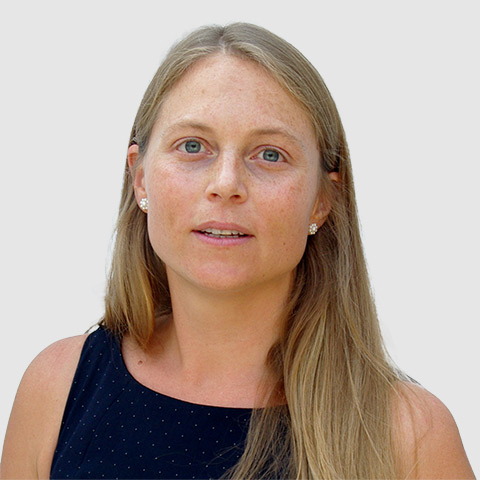
Mirella Lapata is a Professor of Computer Science at the University of Edinburgh , affiliated with the School of Informatics and the EdinburghNLP group. Her research focuses on developing AI systems that reason, generalize, and handle long contexts, with specific interests in compositional generalization, cross-lingual transfer, and verifiable generation. She leads projects funded by UKRI and ERC , including the UKRI AI Centre for Doctoral Training in Responsible NLP and Turing AI Fellowship for human-like reasoning in models. Research Emphasis : Coarse-to-fine decoding in semantic parsing, parameter-efficient LLMs, collaborative writing frameworks, and multimodal summarization. Advising : Supervises current PhD students and has mentored 23 PhD graduates since 2007, including notable alumni like Li Dong and Siva Reddy. Labs & Teams : Co-leads the Generative AI Laboratory (GAIL) and contributes to the Edinburgh Laboratory for Integrated Artificial Intelligence (ELIAI). Her recent work addresses hallucinations in generative models, cross-lingual semantic parsing, and structured reasoning in text-to-SQL tasks. She has co-authored 15+ publications in 2024 alone, spanning journals like TACL , NeurIPS , and ACL .
Christian Messier is a Professor at the University of Quebec in Outaouais (UQO) in the Department of Natural Sciences and at the University of Quebec in Montreal (UQAM) in the Department of Biological Sciences. He serves as Scientific Director of the Institute of Temperate Forest Sciences (ISFORT) and holds two prestigious research chairs: the Canada Research Chair on Tree Resilience to Global Changes and the NSERC/Hydro-Québec Chair on Tree Growth Control. His academic career spans over three decades since completing his Ph.D. in forest sciences from the University of British Columbia in 1991. Dr. Messier's research focuses on two primary areas: the complex functioning of managed natural forest systems to develop management approaches that promote resilience in the face of global changes, and the study of trees and urban forests to reconcile the needs of minimizing negative impacts of trees on human infrastructure while maximizing ecosystem services. His work integrates field studies, simulation modeling, and network theory to address pressing challenges in forest ecology and management. His recent publications demonstrate a strong emphasis on urban forest resilience, functional diversity in forest ecosystems, and nature-based solutions for climate adaptation. The research shows a clear trajectory toward more applied, solution-oriented approaches that bridge fundamental ecological understanding with practical forest management applications across diverse spatial scales from individual trees to entire landscapes. Francqui Foundation Chair (Belgium) - 2020 Member of The Royal Society of Canada - 2019 Personality of the Year 'Radio-Canada/Le Droit' - 2017 Humboldt Research Award - 2016 Prix Acfas – Michel-Jurdant - 2010 Canadian Forestry Scientific Achievement Award - 2006 Dr. Messier has supervised over 40 graduate students throughout his career and currently leads multiple major research projects including the Canada Research Chair on Forest Resilience, the NSERC/Hydro-Québec Chair on Tree Growth Control, and the SylvCIT project for urban forest immunization against global change. His research has been supported by significant grants from NSERC, Canada Research Chairs program, Hydro-Québec, and other major funding agencies. He directs the Messier lab with research assistants Kim Bannon and Fanny Maure, and collaborates with numerous researchers across Canada and internationally. His team studies diverse aspects of forest ecology including soil dynamics, functional composition of tree communities, nature-based solutions for climate adaptation, and ecophysiology of maple water flow. The lab maintains strong connections with the International Diversity Experiment Network with Trees (IDENT) and other major forest research initiatives.
Dr. Lothar Lemnitzer serves as a Researcher at the Berlin-Brandenburg Academy of Sciences and Humanities, affiliated with the Center for Digital Lexicography of the German Language in Berlin. His office is located at Jägerstrasse 22/23, Space 18, with contact details including phone +49 (0)30 20370 538 and email lemnitzer@bbaw.de. His research spans critical areas in linguistic technology: Lexicography Digital Humanities German Language Processing Computational Linguistics Natural Language Processing Language Technology Dr. Lemnitzer's work focuses on developing digital infrastructure for German language resources, contributing to modern lexicographic methodologies through computational approaches. His publications reflect ongoing advancements in creating structured lexical databases for academic and public use. No scientific awards are documented in the available profile information. While the text references publications and a curriculum vitae, specific details regarding student supervision, grant funding, or collaborative projects remain unlisted. The Center for Digital Lexicography operates as a dedicated unit within the academy, driving innovation in digital dictionary creation and language resource management for the German-speaking academic community.
Panagiota Antonopoulou is a Professor at the University of Peloponnese , affiliated with the Faculty of Human Movement Sciences and Quality of Life and the Department of Sports Organization & Management . Her work bridges media studies , political communication , and sports management , with a focus on place branding and digital media impacts . Education: Doctoral degree in Sociology from Panteion University (dissertation: The role of television in national elections , Grade: Excellent) Research interests include: Sports, media, and political communication interactions Place branding through ultra-distance events like Spartathlon Crisis management in sports organizations Sustainable tourism and urban identity (e.g., Piraeus, Sparta) Strategic HRM in sports events and facilities Recent publications highlight: Algorithmic journalism in sports reporting (2018) Media's role in shaping perceptions of sports violence (2012–2017) Place branding strategies for regional development (2017) Evolution of Greek sports press and radio (2008–2012) She teaches courses such as: "Sports Journalism and Media" (2015–present) "Tourism Politics and Strategy" (2015–present) "Communication and Writing Skills" (2010–present)
Timo Koivurova is a Research Professor at the Arctic Centre, University of Lapland. He holds visiting and adjunct professor roles at Kobe University (Japan), Riga Graduate School of Law, University of Eastern Finland, and University of Turku. His research focuses on Arctic law, international environmental law, and geopolitical dynamics in the Arctic region. He has authored over 465 publications and led 43 research projects, including major initiatives like the ICEBERG project on Arctic Ocean governance and the Co-CREATE project on solar radiation management. Key research interests include legal frameworks for indigenous peoples, climate change regulations, Arctic geopolitics, and China’s Arctic engagement. He has received awards such as the 2015 Honorable Mention for environmental policy analysis and the 2008 Nordenskiöld Stipend for Arctic legal research. Over 100 media contributions discussing Arctic policy and geopolitics. Active in 552 professional activities, including editorial roles and conference presentations. Principal Investigator for EU-funded projects like Arctic PASSION and MARCS. His work bridges legal scholarship with policy practice, addressing contemporary challenges like Arctic Council functionality post-2022 Ukraine invasion and sustainable development goals in the region.
Ooi Beng Chin is a Professor at the School of Computing , National University of Singapore (NUS). He holds concurrent roles as an adjunct Chang Jiang Professor at Zhejiang University, Visiting Distinguished Professor at Tsinghua University, and Director of NUS AI Innovation and Commercialization Centre in Suzhou, China. He earned his B.Sc. (1st Class Honours, 1985) and Ph.D. (1989) from Monash University, Australia. His research spans database systems, blockchain, machine learning, and large-scale analytics , focusing on system architectures, security, and cross-domain applications. Notable contributions include initiating the Apache SINGA distributed deep learning platform and developing Blockbench, the first blockchain benchmarking system. He also co-founded MZH Technologies (2018) for healthcare analytics. Key publications highlight his work in blockchain-database integration, AI for healthcare/finance, and 5G-enabled data systems. Awards include the ACM SIGMOD EF Codd Innovation Award (2020), Singapore President's Science Award (2011), and fellowships from SNAS, IEEE, ACM , and SAEng (2023). He leads the Singapore Blockchain Innovation Programme (SBIP) and contributes to industry collaborations with healthcare institutions and financial organizations. Fellow, Singapore National Academy of Science (SNAS) Fellow, IEEE Fellow, ACM Singapore President's Science Award, 2011 IEEE Kanai Award, 2012 NUS Outstanding Researcher Award, 2013 ACM SIGMOD EF Codd Innovation Award, 2020 Foreign Member, Chinese Academy of Sciences, 2023
Peter Wardrip is an Assistant Professor of STEAM Education at the University of Wisconsin-Madison School of Education. His research focuses on bridging informal and formal learning environments, professional learning communities, formative assessment strategies, and making/tinkering pedagogy. He holds a PhD in Learning Sciences and Policy from the University of Pittsburgh, an MS in Human Ecology, and a BS in Latin Education from UW-Madison. Education Background: PhD in Learning Sciences and Policy (University of Pittsburgh, 2014) MS in Human Ecology (Centre for Human Ecology, 2004) BS in Latin Education (University of Wisconsin-Madison, 1997) Research Interests: Peter's work emphasizes collaborative learning frameworks, educator professional development, and innovative assessment methods in makerspaces. He has developed national frameworks for museum and library makerspaces, and co-designed observation tools for maker educators. His research often explores how educators use data to inform instruction and how informal learning spaces can enhance traditional education systems. Recent Article Trends: Recent publications focus on pandemic-era educational adaptations, assessment challenges in makerspaces, and role evolution of librarians/museum educators. He has contributed to foundational texts on maker pedagogy including Handbook of Research on Educational Communications and Technology and Makeology . Awards: INSPIRE Fellow (2018-2019), Research+Practice Collaboratory Fellow (2016), DML Design Research Committee Member (2014-2015) Grants & Advising: Peter has led projects funded by the Institute of Museum and Library Services, co-authored a national framework for museum makerspaces, and advised on digital badge systems in educational settings. He actively collaborates with institutions like the Children’s Museum of Pittsburgh and Carnegie Mellon’s Learning Media Design Center. Labs/Teams: Involved with the University of Pittsburgh’s UPCLOSE research group and the MIT Teaching Systems Laboratory through his INSPIRE fellowship. His work bridges university, museum, and K-12 partnerships to create scalable educational tools and frameworks.
Helen Sullivan is the Dean of the ANU College of Asia and the Pacific and a leading scholar in public policy and political sociology. She holds a PhD from the University of Birmingham and has held senior academic and leadership roles globally, including founding the Melbourne School of Government and directing the Crawford School of Public Policy at ANU. Her research focuses on governance collaboration, state-society relationships, and urban policy, with notable contributions to understanding public participation and policy reform. Education: BA (Modern History & Political Science, University of Birmingham), MA (Women’s Studies, University of York), PhD (Public Policy, University of Birmingham). Research Interests: State-society dynamics, governance collaboration, urban governance, citizen participation, policy innovation, and leadership in complex systems. Her work bridges academia and practice, emphasizing policy impact and translational research through initiatives like MSoGLabs. Key Contributions: Co-designed the University of Birmingham’s Policy Commission Program, led the Commission on Local Public Service Reform, and established the Melbourne School of Government. She has authored/co-authored nine books and over 100 peer-reviewed articles, with her 2022 book Collaboration and Public Policy shortlisted for the WJM Mackenzie Prize. Her work has received international awards, including the Kooiman Award (2008) and the Public Management Research Association Best Paper (2014). Leadership & Engagement: Elected to the Australian Academy of Social Sciences (2024), served on editorial boards of journals like Public Administration and Local Government Studies , and advised governments globally. She chairs the Sir Roland Wilson Foundation Board and has consulted for public, private, and civil society sectors. Grants & Projects: Secured £6M+ in funding from UK and Australian research councils, including projects on radicalisation, infrastructure risks, and social licensing in energy industries. Current projects include managing social risks of major infrastructure and analyzing Australia’s energy sources. Labs & Initiatives: Founded MSoGLabs at Melbourne School of Government to translate research into policy impact. Collaborates internationally on urban governance and austerity’s effects through projects like New Developments in Urban Governance .
Rachit Dubey is an Assistant Professor in the Department of Communication at UCLA, affiliated with the College of Letters & Science. He holds a PhD in Computer Science from Princeton University, an M.S. in Education from UC Berkeley, and a BEng in Computer Science from Nanyang Technological University. His research bridges computational modeling, behavioral experiments, and policy design to address climate change challenges, focusing on human motivation and policy impact. Key research areas include using AI-generated visualizations to enhance climate communication, understanding cognitive underpinnings of climate inaction, and designing interventions to reduce polarization. His work has been featured in Nature Human Behavior , Nature Sustainability , and PNAS . Notable contributions include demonstrating that binary climate data visuals significantly amplify perceived urgency compared to gradual trends, and developing computational models of grief using reinforcement learning. He received the 2024 SfNC Dissertation Award for his doctoral work. Dr. Dubey collaborates closely with policymakers to bridge research and practice, and is recruiting PhD students in cognitive science, climate policy, and machine learning. His lab, the Computational Cognitive Policy Lab, emphasizes quantitative rigor and interdisciplinary collaboration.
Kevin Leyton-Brown is a Professor of Computer Science at the University of British Columbia (UBC), holding a Canada CIFAR AI Chair at the Alberta Machine Intelligence Institute (Amii). He is also an Associate Member of the Vancouver School of Economics and a Fellow of the Royal Society of Canada, ACM, and AAAI. His research focuses on AI, machine learning, computational economics, and game theory, with notable contributions to algorithmic market design, heuristic algorithms, and large language models. He co-authored influential textbooks on multiagent systems and game theory, and his work has been recognized with prestigious awards including the INFORMS Franz Edelman Award and the Killam Teaching Prize. Education: PhD (Computer Science), Stanford University; MSc (Computer Science), Stanford University; BSc (Computer Science), McMaster University. Research Interests: Artificial Intelligence, Machine Learning, Game Theory, Computational Economics, Algorithmic Game Theory, Market Design, and Large Language Models. He has developed impactful tools like SATzilla, AutoWEKA, and Mechanical TA, and contributed to high-stakes projects such as spectrum auction design and Ugandan agricultural market platforms. Awards & Recognition: Royal Society of Canada Fellow (2023), ACM SIG-KDD Research Track Test of Time Award (2023), INFORMS Franz Edelman Award (2018), ACM Fellow (2020), AAAI Fellow (2018), Killam Teaching Prize (UBC), and numerous paper awards from top conferences like AAAI, ICML, and ACM-EC. Leadership & Affiliations: Director of UBC’s CAIDA and AIM-SI research clusters, former Chair of ACM SIG-Ecom, and advisor to companies like AI21 Labs and Auctionomics. He has held visiting roles at institutions including MIT, Harvard, and the Simons Institute.
Brian Magerko is Professor of Digital Media in the School of Literature, Media, and Communication at Georgia Institute of Technology , where he also serves as Director of Graduate Studies for the Digital Media program and holds an adjunct appointment in the School of Interactive Computing . He directs the Expressive Machinery Lab and has led over $20 million in federally funded research at the intersection of cognition, computation, and creativity. Education Ph.D. Computer Science and Engineering, University of Michigan (2006) M.S. Computer Science and Engineering, University of Michigan (2001) B.S. Cognitive Science (minor Computer Science & Jazz Performance), Carnegie Mellon University (1999) Research Interests Dr. Magerko’s scholarship integrates cognitive science , AI , and computational media to investigate three core themes: (1) social and creative collaboration between humans and AI; (2) design of interactive narrative, music, and arts-based computational experiences; and (3) inclusive STEAM education that leverages personal expression—most notably through the widely-adopted EarSketch platform, which engages learners in computer science via music remixing and coding. Publication Trends Recent publications (2022-2025) reveal a surge in work on generative and co-creative AI systems , AI literacy frameworks , and accessible computing education . Studies span dance improvisation agents (LuminAI), inclusive design for blind and visually-impaired learners, and large-scale evaluations of creativity and learning outcomes in EarSketch classrooms across the United States. Awards & Honors Methods Paper Recognition, ACM CSCW 2022 Best Paper Award, ACM Creativity & Cognition 2021 & 2017 Ivan Allen College Researcher of the Year 2018 NCWIT Engagement Excellence Award 2017 Multiple Best Student Paper Awards (AIED 2021, ICCCI 2021) CETL Thank-a-Teacher Award 2008 Grants & Advising Dr. Magerko has served as PI or Co-PI on numerous NSF, NEA, and private foundation grants totaling more than $20 million. His projects fund interdisciplinary teams of graduate and undergraduate students, post-docs, and external collaborators, producing open-source software, museum installations, and K-12 curricula. Labs & Teams As head of the Expressive Machinery Lab , he mentors researchers creating AI partners for dance, drawing, music, and storytelling. The lab’s artifacts have been exhibited at the Smithsonian, ArtScience Museum Singapore, MoogFest, and other international venues.
Dr. Pieter van Oel is an Associate Professor in the Water Resources Management group at Wageningen University & Research, focusing on sociohydrology and addressing water crises in South America and Africa. His expertise spans civil/hydraulic engineering, environmental management, hydrology, irrigation systems, and drought diagnosis. He teaches courses like Design in Land and Water Management and supervises PhD students such as Louise Cavalcante and Daniel Wiegant. His research emphasizes societal dimensions of water challenges, including drought impacts, agent-based modeling, and serious gaming for community engagement. Projects include analyzing drought policies in Brazil, improving water governance in Kenya, and evaluating groundwater vulnerability in Ethiopia. He collaborates on initiatives like the Diagnosing Drought project and Socio-hydrological Simulation tool development. Key contributions include critiques of drought monitoring systems' alignment with local realities and frameworks for sustainable agroforestry management. His work bridges science and policy, advocating for interdisciplinary solutions to water scarcity and climate resilience.
Dr. Tiffany Fairey is a Senior Research Fellow and visual sociologist at King's College London's Department of War Studies, where she specializes in participatory research and visual peacebuilding. With over two decades of experience, she previously co-founded the award-winning charity PhotoVoice and holds affiliations with the Visual Embodied Methodologies Network and Everyday Peace Indicators. Her research focuses on arts-based peacebuilding, conflict transformation, and ethical dimensions of visual methodologies. Current projects include the Leverhulme-funded Imaging Peace study examining photography's role in peacebuilding across multiple countries, and ESRC-funded work on intersectional gendered violence. Fairey's publications consistently explore participatory visual methods and peace photography, with recent work emphasizing community-centered approaches to reconciliation and strategic narrative development in post-conflict settings. Her 2025 monograph Imaging Peace represents a culmination of her multi-country empirical research. Her contributions have been recognized with prestigious awards including the Royal Photographic Society's Hood Medal and the SSPP Impact Prize. She actively consults on photovoice methodology and serves on advisory boards for organizations including the Post-Conflict Research Centre and Inclusive Rigour Co-Lab.
John Rowan is a Professor of Physical Geography and Director of the UNESCO Centre for Water Law, Policy & Science at the University of Dundee. His roles include advancing sustainable development, particularly SDG6 (water and sanitation), and leading interdisciplinary initiatives. Previously, he served as Vice Principal for Research and inaugural Dean of the School of Social Sciences. His research focuses on environmental change, climate impacts on water resources, and policy-driven solutions, with global collaborations in Bangladesh, India, and Kenya. He has held advisory roles in Scottish Government’s Centres of Expertise and chairs UNESCO’s UK International Hydrological Committee. Research Interests: Environmental change, climate-water-food nexus, river basin management, sediment dynamics, and policy integration. His work bridges academic and applied domains, emphasizing governance and sustainable practices. Key projects include enhancing water security under climate uncertainty, developing risk frameworks for drinking water, and addressing the water-food-energy nexus. Publications: Over 111 articles, focusing on climate adaptation, water resource vulnerabilities, and ecohydrological modeling. Recent highlights include studies on the Karakoram Anomaly’s hydrological tipping points and frameworks for climate-resilient water safety plans. Awards: Gold Engage Watermark Award (2020), United Nations Risk Award (2019). Projects span international collaborations and policy advisory roles. He has supervised 12 students and led over 33 research projects, including the Hydro Nation Scholars Programme. Labs/Teams: UNESCO Centre for Water Law, Policy & Science; Centre for Environmental Change and Human Resilience (CECHR), collaborating with the James Hutton Institute. Active in global forums like the UNFCCC Climate Assembly and World Water Forum.
Dr. Isabel D. W. Rechberg is an Associate Professor of Management at the Anderson College of Business and Computing, Regis University. She holds a Ph.D. in Management from the University of Kent, UK, a Postgraduate Certificate in Higher Education, and advanced degrees in Labor Law and Business Management from institutions in Australia and Belgium. Her research focuses on Knowledge Management, Organizational Learning, Emotional Intelligence, and Employee Engagement, emphasizing individual-centric approaches. She has published extensively in journals like the Journal of Knowledge Management and European Management Review, and co-authored chapters in Palgrave and Kogan Page publications. Recognized with awards including the 2021 Easter Academy of Management Best Conceptual Paper, her work bridges theory and practice, addressing ethical dimensions and human elements in organizational dynamics. Education: Ph.D. in Management, University of Kent, UK (2014) Postgraduate Certificate in Higher Education, University of Kent (2011) M.A. in Labor Law and Relations, University of Sydney (2008) B.A. in Business and Human Resources Management, Vesalius College (2006) Research Interests: Dr. Rechberg’s scholarship explores how mindfulness, emotional intelligence, and ethical frameworks enhance workplace relationships and organizational learning. Her work critiques traditional knowledge management paradigms, advocating for individual agency and fairness in knowledge ownership. Recent studies include the role of self-determination theory in knowledge sharing and cross-cultural challenges in global initiatives like the Belt and Road. Teaching & Service: She teaches graduate and undergraduate courses in Management, Leadership, and Organizational Behavior. At Regis, she serves on the Academic Council and previously held roles at CUNY, including College Council membership and curriculum development. Her industry experience includes coaching accreditation and roles in recruitment and human resources. Awards: 2021 Easter Academy of Management Best Conceptual Paper Award 2021 PSC-CUNY Grant 2020 Top-Downloaded Paper Recognition in Knowledge and Process Management 2011 British Academy of Management Best Full Paper Award Advising & Grants: Supervised honor students on topics like ethical leadership, gender inequality in HR systems, and corporate social responsibility. Secured grants including the 2021 PSC-CUNY award. Active in peer review for leading management journals and conferences.