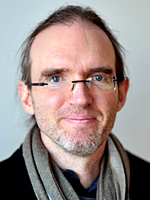
Dag Henrik Tuastad is a Professor of Middle East Studies at the Department of Culture Studies and Oriental Languages (IKOS) at the University of Oslo. His research focuses on kinship dynamics in Palestinian politics, rebel governance (notably Hamas rule in Gaza 2007–2023), political representation crises, and the intersection of sports and politics in the Middle East. Current projects include senior research at Football and Religion in the Middle East (FORM) , funded by the Norwegian Research Council (2021–2026) Former project leader for Rebel Governance in the Middle East (2017–2021) PhD in Social Anthropology (2008) on kinship in Palestinian politics His recent publications analyze Hamas’s symbolic authority, football’s role in Jordanian-Palestinian identity formation, and the erosion of legal frameworks in the West Bank. He critiques media bias (e.g., in Qatar World Cup coverage) and explores how football culture reflects broader political tensions. Teaching: Courses on Middle East history, cultural anthropology, and conflict resolution Regional Focus: Palestine, Jordan, Gaza, and the Levant
Katrine Eldegard is a Professor at the Norwegian University of Life Sciences (NMBU), Faculty of Environmental Sciences and Natural Resource Management (MINA), Department of Ecology and Natural Resource Management (INA). She leads BatLab Norway and contributes extensively to national and international conservation science policy. Institution: Norwegian University of Life Sciences School: Faculty of Environmental Sciences and Natural Resource Management Department: Department of Ecology and Natural Resource Management Position: Professor Her research centers on understanding how human activities and land use affect natural ecosystems and species across taxa and spatial scales. She specializes in the behavioral, population, and community-level responses of mammals, birds, and insects to anthropogenic pressures such as energy infrastructure, transport networks, and forestry. A major focus is on bat ecology and conservation, pollination dynamics, and biodiversity monitoring in boreal and agricultural landscapes. Her recent publications reveal strong trends in climate change impacts on bat morphology and distribution, pollinator-plant interactions under environmental change, and the ecological consequences of infrastructure development. These works integrate field ecology with advanced modeling and policy-relevant assessments. She has played leading roles in key scientific committees: Chair, Mammal Committee, Norwegian Red List for Species (2021) Chair, Mammal Committee, Norwegian Alien Species List (2023) Member, Norwegian Scientific Committee for Food and Environment (VKM), CITES Expert Panel Norway’s representative, UNEP/Eurobats Advisory Committee Eldegard has supervised numerous research projects and collaborated with government agencies and private partners on applied ecology. She teaches courses including NATF200 Vern og forvaltning av norsk natur and the upcoming NATF300 Conservation Science. Her work is supported by extensive fieldwork, interdisciplinary collaboration, and integration of ecological theory with practical conservation. She leads BatLab Norway, a research group dedicated to advancing knowledge on bat ecology, behavior, and conservation through innovative methods including telemetry, acoustic monitoring, and landscape analysis.
Mona Baker is an Affiliate Professor at the Centre for Sustainable Healthcare Education (SHE) , University of Oslo, and a renowned scholar in translation studies. Her work bridges political, cultural, and social dimensions of translation, with a focus on conflict, activism, and corpus-based methodologies. She holds a BA in English and Comparative Literature from the American University in Cairo (1976), an MA in Special Applications of Linguistics from the University of Birmingham (1987), and a Higher Doctorate from UMIST (1999). Baker has also held prestigious roles, including founding the Baker Centre for Translation and Intercultural Studies at Jiao Tong University and Beijing Foreign Studies University. Her research interests span translation and conflict , activist translation , corpus-based studies , and the role of translation in social movements . Key projects include the Genealogies of Knowledge initiative, which examines conceptual evolution through translation, and studies on subtitling during the Egyptian Revolution. Baker's recent publications highlight the intersection of technology and activist translation , including analyses of evidence-based medicine narratives and solidarity in global protest movements. She has received notable scientific awards, such as the Kuwait Foundation for the Advancement of Sciences Award (2015) and the Abdullah Bin Abdulaziz International Award (2011). Her academic leadership includes advisory roles at institutions like the Qatar Foundation and Shanghai International Studies University , as well as participation in critical research groups such as the Antibiotic Resistance and Complexity in Health Education network. Baker continues to influence debates on global health, citizen media, and the ethics of translation through her work and mentorship.
Roger Flage is a Professor of Risk Management at the University of Stavanger, affiliated with the Faculty of Science and Technology and the Department of Security, Economics and Planning. His research focuses on foundational and applied aspects of risk analysis, uncertainty quantification, and decision-making under uncertainty, with applications in critical infrastructure, environmental systems, and offshore energy. Roger Flage's research interests lie at the intersection of risk science, safety engineering, and decision theory. He investigates how uncertainty—especially epistemic uncertainty and assumptions—affects risk assessments, and advocates for more transparent and robust frameworks. His work spans theoretical advances, such as the treatment of 'black swan' events and the concept of 'real risk', as well as practical applications in offshore safety, power systems, and geohazards. He emphasizes the integration of data-driven methods, AI, and digital twins while critically assessing their limitations and associated security risks. His recent publications show a strong trend toward integrating dynamic, data-rich, and interdisciplinary approaches to risk analysis. Themes include the role of time in risk, AI applications, infrastructure interdependencies, and environmental risk in the oil and gas sector. He frequently publishes in top-tier journals like Risk Analysis , Reliability Engineering & System Safety , and Safety Science , often in collaboration with leading scholars such as Terje Aven and Seth Guikema. No scientific awards are mentioned in the provided text. Roger Flage has supervised or collaborated with several researchers, though no formal list of advisees is provided. His work is supported through academic collaborations and institutional affiliations rather than explicit grant mentions. He is actively involved in advancing risk science methodology, particularly in the treatment of assumptions and uncertainty, and contributes to both theoretical foundations and real-world applications in safety-critical domains. He is associated with research groups and collaborative networks at the University of Stavanger, particularly within the Department of Security, Economics and Planning. His work often involves interdisciplinary teams focusing on risk in complex engineered systems, including energy, transportation, and environmental systems.
Synne Sæther Mæhle is a Professor at the Faculty of Law , University of Bergen. She specializes in legal theory and methodology, with a focus on interdisciplinary research involving law, health data, and environmental protection. Email: synne.mahle@uib.no Research Interests: Her work explores legal methodology, welfare law, and the intersection of law with emerging technologies like big data. She has published extensively on property rights, environmental law, and the evolution of legal thinking. Publication Trends: Recent outputs (2017–2023) emphasize legal education reform (e.g., Juridisk metode i et nøtteskall ), biolaw, and environmental law. Collaborations with Ragna Aarli dominate her textbook contributions. Labs & Teams: Active in the Research Group for Legal Theory and Research Group in Welfare Law , fostering interdisciplinary discourse.
Unn Røyneland is a Professor of Scandinavian Linguistics and Multilingualism at the University of Oslo 's Faculty of Humanities . She is affiliated with the Center for Multilingualism in Society Across the Lifespan (MultiLing) and has been a key figure in Norwegian language policy and standardization efforts, including the Nynorsk 2011 orthographic revision . Current Research Focus: Multilingual and multilectal practices on social media Dialect acquisition among migrants Dialect levelling and language attitudes Language and embodiment Multiethnolectal speech styles Language policy and planning Ongoing Projects: Multilectal Literacy in Education (2020-2025) (RCN-funded, Co-PI) Multilectal Practices on Social Media (2020) (with Øystein A. Vangsnes) Urban Talk and Text (MultiLing Core-group project, 2021) AquaAurora (2021, UiT The Arctic University of Norway) Her scholarly work spans 15+ years of research output, with recent publications analyzing: Language activism and social justice (2024) Multilingualism across the lifespan (2022) Migration-induced dialect acquisition (2020) Youth multilingual practices in digital spaces (2018) Nynorsk standardization processes (2016) Multiethnolectal speech patterns (2008-2010) As Co-Chief Editor of the LME Linguistic Minorities in Europe Online series at De Gruyter, she continues shaping academic discourse in multilingualism studies.
Tatiana Aleksandrovna Iakovleva is a Professor of Entrepreneurship Studies at the University of Stavanger (UiS), affiliated with the UiS School of Business and the Department of Innovation, Management and Marketing. She is actively engaged in research on responsible innovation, digital health, user involvement, and entrepreneurship. Her research interests include responsible innovation, digital health, user engagement in innovation, living labs, open innovation, stakeholder involvement, healthcare innovation, social innovation, and regional development. She explores how innovation can be conducted ethically and inclusively, particularly in public and healthcare sectors. Her recent publications (2020–2025) reveal a strong focus on responsible innovation in digital health, user empowerment, and collaborative innovation spaces such as living labs. Themes include stakeholder inclusion, boundary innovation spaces, patient engagement, and the role of universities in regional development. Her work spans interdisciplinary fields, combining insights from management, public health, innovation studies, and social sciences. She has collaborated extensively with researchers such as Elin Merethe Oftedal, John Bessant, Raj Kumar Thapa, and others, contributing to high-impact journals and international conferences like ISPIM and Routledge handbooks. She advises students and researchers in entrepreneurship and innovation, though specific names are not listed in the provided text. She is involved in projects related to digital health innovation, responsible research, and university-industry collaboration. She is associated with the Norwegian Smart Care Lab and participates in participatory research involving service users and professionals in mental health care. Her work emphasizes inclusive and responsible approaches to innovation, particularly in public service contexts.
Jan Bill is Professor of Viking Age Archaeology at the University of Oslo's Department of Archaeology and curator of the Viking Ship Collection at the Museum of Cultural History since 2007. His academic trajectory includes leadership roles at the Viking Ship Museum in Roskilde (2003-2007) and the Centre for Maritime Archaeology at Denmark's National Museum (1997-2003), where he progressed from PhD researcher to deputy director. His research centers on Viking Age and medieval archaeology, specializing in seafaring, burial practices, and scientific methodologies. Key investigations focus on Norwegian ship burials (Oseberg, Gokstad) to decode power representation through funerary rituals, and seafaring's role in societal complexity. His interdisciplinary approach integrates archaeology with genetics, geochemistry, and digital humanities. Recent publications reveal dominant trends in Viking Age genomics, ship burial reinterpretation, and geoarchaeological analysis of settlements. Major themes include population migrations, ancient pathogens, trade networks, and landscape reconstruction, often through large-scale collaborations like the Population Genomics of the Vikings project. Scientific recognition includes: Aage Rothenborgs Endowment (2017) for contributions to early medieval Scandinavian maritime culture Bill currently supervises two PhD candidates and leads significant grants including the Gokstad revitalised research project, Saving Oseberg Project, and Gjellestad excavation. His grant portfolio emphasizes interdisciplinary Viking Age studies combining archaeology with DNA analysis and geophysical surveying. He directs the Centre for Viking-Age Studies (ViS) and contributes to INTER-Action research group. Critical institutional work involves developing the new Museum of the Viking Age and steering major conservation initiatives like the ADED project for archaeological digital documentation.
Dr. Danesh Tarapore is an Associate Professor at the University of Southampton specializing in robotics and AI. He focuses on human-robot interaction, swarm intelligence, and autonomous systems. His current research involves developing resilient robotic teams and optimizing learning algorithms for constrained environments. He supervises 6 PhD students in the iPhD MINDS and Computer Science programs. Dr. Tarapore's work bridges theoretical advancements with practical applications in autonomous navigation, multimodal dataset creation, and quality-diversity optimization. His publications span conferences like HRI and journals in robotics and AI. He collaborates with institutions like the University Hospital Southampton and the Boldrewood Innovation Campus. Research Interests: Human-robot collaboration, swarm systems, machine learning, and adaptive control Key Contributions: HRI-SENSE dataset, evolutionary subset selection algorithms, forest navigation frameworks Grants and Funding: Active projects in multi-agent systems and resilient robotics Dr. Tarapore maintains active roles in the robotics community through conference participation and interdisciplinary collaborations.
Trine Grønhaug Halvorsen is a Professor at the University of Oslo's Department of Pharmacy, within the Faculty of Mathematics and Natural Sciences. Her research focuses on developing innovative analytical methods for protein analysis in complex biological samples using mass spectrometry. She specializes in sample preparation techniques, smart sampling strategies, and biomarker quantification. Education: PhD in Drug Analysis (2003), Cand.pharm. (1998) Awards: Publication Award (2001) for pioneering liquid-phase microextraction work Research interests include molecularly imprinted polymers, antibody-based capture methods, and electromembrane extraction. Her work emphasizes improving analytical sensitivity and speed for low-abundance proteins in clinical and biomedical contexts. Recent articles highlight advancements in smart samplers, dried blood spot analysis, and LC-MS-based protein quantification. These studies address challenges in biomarker detection and clinical diagnostics. Labs/Teams: Pharmaceutical Analytical Chemistry Group, SmartProteinAnalysis@UiO Teaching: Courses in bioanalytical chemistry, drug analysis, and sample preparation
Inland Norway University of Applied SciencesNorway
Martin Mayer serves as Associate Professor at the University of Inland Norway within the Faculty of Applied Ecology, Agricultural Sciences and Biotechnology and the Department of Forestry and Outback Studies. Based at the Evenstad study location, his research focuses on large mammal ecology in human-dominated landscapes across Scandinavia and Europe. His primary research interests center on Wildlife Ecology and Large Mammal Conservation , with particular emphasis on human-wildlife conflict resolution, road ecology, and carnivore management. Mayer investigates how species like moose, deer, and beavers adapt to anthropogenic landscapes through habitat selection, movement patterns, and population dynamics. His work integrates cutting-edge methodologies including GPS telemetry, drone surveillance, and citizen science data to address conservation challenges in agricultural and urban settings. Analysis of Mayer's recent publications reveals strong trends in using roadkill data for population monitoring, examining spatial constraints on wildlife movement, and developing mitigation strategies for human-wildlife conflicts. His research increasingly incorporates cross-border European perspectives on wildlife management while maintaining a strong foundation in Scandinavian field ecology. Mayer actively contributes to the LARGE research group (ecology of large animals), which conducts field studies on ungulate behavior, predator-prey dynamics, and landscape-scale conservation planning in Norway's boreal ecosystems.
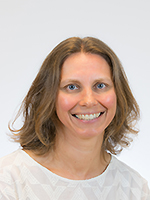
Hans Jonas Fossum Moen is an Associate Professor with a 20% appointment at the Department of Technology Systems, University of Oslo (UiO), and holds a 100% position as a researcher at the Norwegian Defence Research Establishment (FFI). His primary affiliation is with the Section for Autonomous Systems and Sensor Technologies. He is based at the Kjeller campus, with a visiting address at Gunnar Randers Road 19 and a postal address at Postboks 70. His research focuses on advancing autonomous systems and sensor technologies, particularly in the domains of swarm robotics, multi-agent coordination, and optimization algorithms. Key areas include UAV navigation, distributed localization in IoT networks, radar detection enhancement, and adaptive control systems for multi-functional swarms. He emphasizes the integration of biological principles into robotic systems, as evidenced by his participation in the ICRA 2018 Workshop on Swarms. His publications consistently highlight contributions to swarm intelligence, with a focus on improving data quality and efficiency in robotics applications. He has collaborated extensively with colleagues such as Kyrre Glette, Oleg Yakimenko, and Jan Dyre Bjerknes, exploring topics ranging from task allocation in multi-agent systems to evolutionary algorithms for filter optimization. His work bridges theoretical computer science with practical engineering challenges in autonomous systems. No scientific awards have been explicitly mentioned in the provided texts. Moen’s advising and grants narrative indicates no listed advisees or active grant projects, though his 20% UiO position suggests potential involvement in academic supervision. His primary research activities are embedded within FFI and the Autonomous Systems section at UiO, contributing to interdisciplinary efforts in sensor technologies and robotic systems.
Johan Schimanski is a Professor of Comparative Literature at the University of Oslo, affiliated with the Faculty of Humanities and the Department of Literature, Area Studies and European Languages. He holds a Ph.D. from the University of Oslo (1997) and has held academic positions at institutions including the University of Tromsø and the University of Eastern Finland as a visiting professor. His research focuses on borders in literature, postcolonialism, Arctic discourses, and migration narratives, with notable contributions to border aesthetics and cultural encounters. Education: Magister in Comparative Literature (University of Oslo, 1990), Ph.D. (1997). Key professional milestones include leadership roles such as Head of Research at ILOS (2017–2020) and co-leadership of the TRAUM project on author museums (2016–2019). He has authored or edited over 20 books and numerous articles, exploring themes like migration literature, Arctic studies, and the political aesthetics of borders. Research interests span borders and national identity, postcolonialism, science fiction, and literary museums. He co-leads initiatives like the Temporalities and Subjectivities workshop series (2019–2021) and serves on editorial boards for journals such as Journal of Borderlands Studies . His work bridges literary analysis with interdisciplinary approaches to contemporary global issues, emphasizing the role of aesthetics in understanding border dynamics.
Norwegian University of Science And TechnologyNorway
Daniel Beat Müller serves as Professor at the Industrial Ecology Programme within the Department of Energy and Process Engineering at the Norwegian University of Science and Technology (NTNU), Trondheim. His office is located at Realfagbygget Gløshaugen (E4-120) with contact details daniel.mueller@ntnu.no and +4791897755. His research centers on analyzing human needs in relation to material/energy flows and environmental impacts, with two primary focus areas: (i) urban evolution and associated material flows for managing building/infrastructure stocks, and (ii) national/global metal cycles to identify supply constraint reduction strategies. His methodology integrates design, modeling, and decision-making through transdisciplinary stakeholder engagement. Müller teaches Material Flow Analysis and Systems Analysis of the Built Environment for Industrial Ecology and Civil Engineering Master's students. His research outputs demonstrate strong trends in circular cities, critical mineral management, and urban metabolism, with recent publications emphasizing building information modeling, electric vehicle battery systems, and phosphorus cycling. His work consistently addresses resource criticality within energy transition contexts. As (ad interim) chair of the International Society of Industrial Ecology’s MFA-ConAccount section, he contributes to methodological standardization. He previously served on the U.S. National Research Council’s Committee on Defense Stockpiles and remains active in Switzerland's National Research Programme 65 "New Urban Quality". Müller supervises numerous Master's and doctoral students, with thesis topics spanning lithium-ion battery recycling, building stock dynamics, and urban resource flows. His projects frequently involve industry collaboration for practical implementation of material stewardship strategies.
Kristine Jørgensen is a Professor at the Department of Information and Media Studies, University of Bergen. She is affiliated with the Center for Digital Narrative and the Research Group for Emerging Media. Her primary email address is kristine.jorgensen@uib.no. Research Focus: Game Studies, Player Experience, Transgressive Content, Game Audio, Interface Design Projects: Understanding Masculinity and Gaming (2023-2028), Center for Digital Narrative (2023-2033) Key Publications: The Paradox of Transgression in Games (2020), Gameworld Interfaces (2013), Transgression in Games and Play (2018, co-edited with Faltin Karlsen) Her research explores user-oriented perspectives in games, including player interactions with transgressive content, audio design, and hybrid gamer masculinity. She has led multiple projects such as Games and Transgressive Aesthetics (2015-2019) and contributed to 78 publications since 2003. Her recent work examines cultural heritage integration in games and VR embodiment mechanics. Key collaborations include studies on Norwegian game industry evolution and Nordic funding policies. Her 2025 VR embodiment study with de Villiers Bosman et al. demonstrates ongoing research into sensory design impacts. The Center for Digital Narrative (2023-2033) reflects her leadership in long-term digital narrative research.




/hjmoen/j.png)