Paul O'Toole is a Professor of Microbial Genomics and Principal Investigator at the APC Microbiome Ireland, University College Cork. His research focuses on the gut microbiome's role in health, aging, and disease, particularly in the context of diet and probiotics. He leads projects like the ELDERMET study on elderly nutrition and the NU-AGE project exploring Mediterranean diets' anti-aging effects. He holds a BA (Mod.) from Trinity College Dublin and a PhD from Lund University, with postdoctoral training in Canada and New Zealand. Key grants include studies on dairy-derived microbiota, probiotic strain improvement, and microbiome analysis in aging populations. He has published extensively on Lactobacillus genomics, gut-brain interactions, and microbiome-driven health outcomes. His work bridges fundamental microbiology with clinical applications, emphasizing translational research. Scientific highlights include discovering microbiome links to cognitive decline, demonstrating dietary modulation of gut microbes to combat obesity, and identifying keystone species in healthy aging. He advocates for sustainability in conservation and food systems, reflecting his interdisciplinary approach to global health challenges.
Bettina Migge is a Full Professor in the School of Languages, Cultures and Linguistics at University College Dublin, where she has been a faculty member since 2004. She previously held academic positions at Goethe University Frankfurt and earned her PhD in Linguistics from The Ohio State University. She served as Head of School from 2016 to 2021 and has held leadership roles in research centers and committees, including the Royal Irish Academy and the Society for Pidgin and Creole Linguistics, of which she is President until 2023. She is Co-Editor of the Journal of Pidgin and Creole Languages and actively contributes to COST Action LITHME, focusing on language and technology. Her educational background includes studies at Universität Hamburg, Université de Cameroun, Freie Universität Berlin, and The Ohio State University, culminating in a PhD focused on African languages in creole genesis, with fieldwork in Suriname and Benin. She is fluent in Dutch, English, French, German, and Ndyuka/Pamaka. Bettina Migge's research centers on sociolinguistics, language contact, and creole languages, with a focus on multilingual contexts undergoing rapid social change such as urbanization and migration. Her work spans French Guiana, Suriname, and Ireland, examining structural and socio-pragmatic aspects of language use, linguistic landscaping, and computer-mediated communication. She has led significant projects like the trilingual DicoNenge(e) dictionary and has explored the role of AI in reshaping language practices. Her recent publications reflect a critical engagement with the impact of AI and machine learning on language, revealing colonial continuities in language technologies and questioning dataist ideologies. She investigates how language is materially produced in both colonial and digital contexts, emphasizing power, authenticity, and control. She has received research funding from the National Science Foundation (USA), IRCHSS, IRC, Ulysses grants, and French research units like SeDyL. Her collaborative projects include work on complementation in creoles, South Dublin English, and language practices in multilingual border zones. Bettina Migge supervises MA and PhD students in sociolinguistics, linguistic landscaping, and World Englishes. She is involved in numerous editorial and professional associations, including the Society for Caribbean Linguistics and The Global Council on Anthropological Linguistics. She has coordinated modules such as World Englishes, Sociolinguistics, and Research in Creole Languages. She leads and participates in public engagement activities, including workshops on AI in linguistics, multilingualism in Ireland, and dictionary launches. Her research team includes collaborators from Europe and beyond, and she is committed to participatory and ethnographically grounded approaches in language documentation and analysis.
Dr. Andrew Hines is a Researcher at the School of Computer Science, University College Dublin, specializing in machine learning applications for signal processing in speech, audio, and video domains. His work focuses on Quality of Experience (QoE) modeling, speech quality assessment, and immersive media analysis. He has held leadership roles in European COST Actions like Qualinet and CryptoAction, and previously worked in industry as a Director of Engineering. University: University College Dublin Role: Director of Research, Innovation and Impact Key Collaborations: IEEE (Senior Member), Audio Engineering Society (Ireland) Research interests center on machine learning for QoE optimization, audio-visual integration, and healthcare applications like heart sound classification and stroke rehabilitation. His recent publications explore self-supervised learning, neural speech codecs, and contextual factors in speech/audio quality assessment. Scientific contributions include awards like IEEE Senior Membership, and his work spans both academic research and industrial engineering in finance and aviation sectors. He leads the QxLab research team at UCD and develops open-source platforms such as WARP-Q and AQP for quality metrics.
Dr. Shirley Coyle is an Assistant Professor in the School of Electronic Engineering at Dublin City University (DCU) and Programme Chair for the BSc Global Challenges. She holds a BEng in Electronic Engineering from DCU (2000) and a PhD in Biomedical Engineering from NUI Maynooth (2005). Her career includes roles as a Telecoms Engineer at Siemens, Research Fellow at the National Centre for Sensor Research, and Team Leader of Wearable Sensors in the INSIGHT Centre for Data Analytics. She also studied part-time at the Grafton Academy for Fashion Design and later founded a consultancy in wearable technologies. Her research focuses on smart garments, wearable sensors, and sustainable textiles, with applications in healthcare, sports performance, and S.T.E.A.M. integration. Key interests include developing wearable chemical sensors, energy-autonomous sensing systems, and IoT-enabled rehabilitation devices. She has pioneered work on wearable sensors for monitoring chronic diseases, athlete training, and home rehabilitation using VR. Dr. Coyle’s work spans interdisciplinary collaboration, combining biomedical engineering with textile design. Her contributions include innovations in electrospun textiles, self-powered sensors, and sensor integration with microfluidics. She has held leadership roles in DCU’s Governing Authority and promotes STEM education through design-focused initiatives.
Rosemary Monahan is a Professor in the Department of Computer Science at Maynooth University and an affiliate of the Hamilton Institute. She holds BSc and MSc degrees from University College Dublin and a PhD from Dublin City University. As Maynooth University's institutional lead for ADAPT (SFI Research Centre for AI-Driven Digital Content Technology), she focuses on advancing software dependability through formal methods and AI integration. Her research interests include safety-critical systems, dependable software, formal verification, and computational thinking education. She co-founded the VerifyThis competition series and leads projects such as MAIVV (Modular AI Verification and Visualisation) funded by SFI, and VALU3S (Verification and Validation of Automated Systems) funded by Horizon 2020. She has secured over €2.5M in EU funding for the Erasmus Mundus programs in dependable software systems. Monahan’s educational contributions include pioneering computational thinking resources (CoCoA and InSPECT projects) and teaching modules on software verification and rigorous software processes. She supervises PhD students in data science and advanced networks and collaborates with institutions like INRIA, Microsoft Research, and Amazon Web Services. Her professional roles include editorships in journals like Science of Computer Programming and leadership in conferences like iFM and FMICS. She actively promotes gender equality in computing through initiatives like INGENIC and TechMate toolkits.
Jennifer Edmond is Associate Professor of Digital Humanities and co-director of the Trinity Center for Digital Humanities at Trinity College Dublin, where she also directs the MPhil in Digital Humanities and Culture. She holds a PhD in Germanic Languages and Literatures from Yale University and specializes in applying advanced methods and infrastructures for arts and humanities research. Her research focuses on Digital Humanities, Research Infrastructures, Open Science, Cultural Heritage, and Knowledge Technologies. She has developed significant expertise in European research policy, having coordinated the €6.5m CENDARI FP7 project and participated in numerous EU initiatives including PARTHENOS, Europeana Cloud, and the Computational Literary Studies Infrastructure (CLS Infra). Dr. Edmond maintains an active publication record exploring digital scholarly editing, privacy in literary texts, open science practices, and cultural heritage narratives. Her recent work demonstrates a strong focus on the intersection of technology and democracy, digital ethics, and innovative methodologies for humanities research. Awards and Honors: Named one of Ireland's five 'Champions of EU Research' (2012) She served as President of DARIAH-EU's Board of Directors (2018-2022) and represented the organization on the European Commission's Open Science Policy Platform. Dr. Edmond has contributed to strategic developments at national and institutional levels, while actively promoting public outreach through various media formats and art installations.
Ralf Bierig joined Maynooth University's Computer Science Department in 2017, teaching topics including information retrieval, software testing, interaction design, and virtual reality. He is the programme director of the Higher Diploma in Human-Computer Interaction (HCI) and User Experience (UX). He earned his BSc (2002) from University of Furtwangen and PhD (2008) from Robert Gordon University. Research Interests His work spans information retrieval, interactive information retrieval, personalisation, information search behavior, usability (UX), and virtual reality (VR). Recent publications focus on multimodal concept indexing, hybrid IR approaches, and contextual adaptation in search systems. Publication Trends His research combines statistical semantics, graph modeling, and multimodal data analysis across academic collaborations in Austria, Germany, and international venues like ECIR and SIGIR.
David Lillis is an Associate Professor in the School of Computer Science at University College Dublin (UCD). His research focuses on Natural Language Processing (NLP), Artificial Intelligence (AI), and their applications in legal and forensic contexts. He leads projects like CeADAR (Ireland’s Applied AI Center) and the Transpire project, collaborating with organizations such as Corlytics and the Department of Enterprise, Trade and Employment. He holds adjunct roles as a Guest Professor at Beijing University of Technology’s Data Mining and Security Lab and has been a Fulbright Scholar at the University of New Haven’s Cyber Forensics Research and Education Group. Education: B.A. (Hons) in Law and Accounting, University of Limerick Higher Diploma in Computer Science, UCD M.Sc., Ph.D. in Computer Science, UCD Professional Certificate in University Teaching & Learning, UCD Research Interests: Legal AI, digital forensics, machine learning, multi-agent systems, and information retrieval. Recent work includes NLP for regulatory analysis, crop yield prediction via neural networks, and AR-driven decision support systems. Grants & Projects: Principal Investigator: Transpire (AI Platform for Regulation) SFI Funded Investigator: CONSUS (Crop Optimization) PI: CeADAR Technology Centre Teaching roles include Deputy Programme Director for Software Engineering at Beijing-Dublin International College (BDIC) since 2014. Labs & Groups: UCD Forensics and Security Research Group, ML-Labs (SFI Centre for ML Training), and the Data Mining and Security Lab (BJUT).
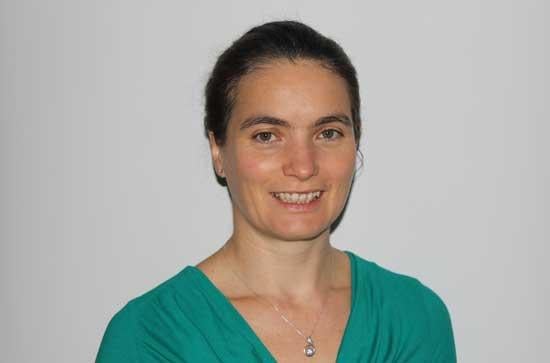
Dr. Lucy Hederman is an Associate Professor in Computer Science at Trinity College Dublin (TCD), affiliated with the O'Reilly Institute. Her research focuses on leveraging data and documents to support clinical decision-making, particularly in healthcare knowledge work. She has led interdisciplinary projects addressing data integration for rare diseases (e.g., ANCA-vasculitis, MND) and socio-technical challenges in adopting patient-generated health data (PGHD) into clinical practice. Dr. Hederman has secured over €xxxk in research funding and leads the Heterogeneity and Interoperability (H&I) challenge in the SFI-funded ADAPT 2 Centre. Her educational background includes advanced studies in computer science and healthcare informatics, though specific degree details are not explicitly stated in the text. She has supervised 4 PhDs, 2 research MScs, and co-supervised 6 PhDs, while currently mentoring 8 graduate students. Her career includes founding TCD spinouts PBOC and BIOLOGIT, which align with her research in health informatics and technology. Key research interests include: Interdisciplinary collaboration between clinicians, researchers, and technologists Data harmonization for multi-national clinical studies (e.g., FAIRVASC, Precision-ALS) Development of clinical decision support systems (CDSS) Design of mobile health (mHealth) tools for underserved populations Recent work emphasizes FAIR principles for healthcare data and socio-technical factors influencing PGHD adoption. She has contributed to over 70 peer-reviewed publications and actively participates in initiatives like the EU-funded TRANSFORM project and HRB Primary Care Research Centre. Dr. Hederman’s professional memberships include the Irish Computer Society, ACM, and Healthcare Informatics Society of Ireland. Her research has impacted healthcare practices in Ireland, with many MSc student projects influencing local health services.
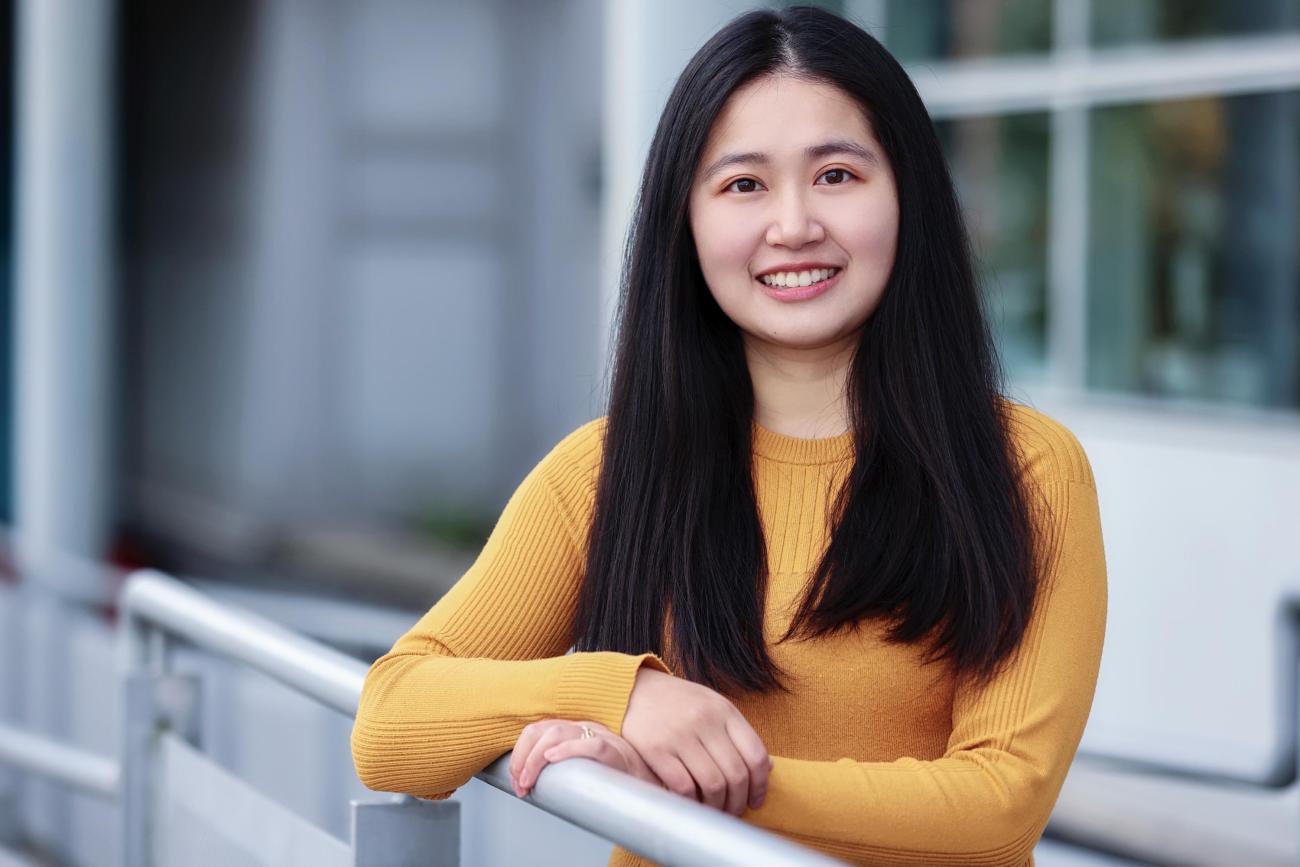
Dr. Dongyun Nie is an Assistant Professor at Dublin City University's School of Computing. She holds a PhD in Computer Science with a specialization in Customer Relationship Management. Her core research explores customer lifetime value, forecasting, data mining, and record linkage. Her recent publications demonstrate interdisciplinary work spanning health informatics, sports analytics, and environmental data engineering. Research predominantly focuses on machine learning applications for real-world data challenges including eye-tracking systems, lifelog analytics, and public health data infrastructure. Teaching responsibilities include modules on Machine Learning (CA4109), Enterprise Systems Configuration (CA2049), and Web Design (CA106), integrating research expertise into computing education.
Professor Markus Helfert is a leading academic in Digital Service Innovation and Digital Transformation at Maynooth University's School of Business . He serves as Director of the Innovation Value Institute , Hub for Data and Digital Research, and holds Science Foundation Ireland Principal Investigator roles at Lero – The Irish Software Research Centre and Adapt Research Centre. His research spans Service Innovation , Artificial Intelligence , Intelligent Transportation Systems , FinTech , and Enterprise Architecture , with active involvement in European Standardisation initiatives.
Dr. Vivek Nallur is an Assistant Professor in the School of Computer Science at University College Dublin. His research focuses on Machine Ethics, Multi-Agent Systems, emergence in socio-technical systems, and decentralized adaptation mechanisms. He holds a PhD from the University of Birmingham and advanced certifications in university teaching from UCD. Education: BBS, Delhi University Post-Graduate Diploma in Advanced Software Technology, National Centre for Software Technology MS, Carnegie Mellon University PhD, University of Birmingham Prof Cert University Teaching & Learning, University College Dublin Research Interests: Machine Ethics explores ethical decision-making in autonomous systems, while Multi-Agent Systems (MAS) are his primary tool for studying self-adaptation and emergence. He serves on key committees like IEEE P7008 (Ethically Driven Nudging) and the AAAI 2021 Spring Symposium on AI Ethics. His work bridges computer science with philosophy, law, and social sciences. Advising & Grants: Supervises three PhD students focusing on ethical AI, elder-care robotics, and AI governance. Leads the Machine Ethics Research Group and participates in the ML-Labs SFI grant (2019–2027). Professional Roles: Senior Member of IEEE, organizer for AAAI ethics symposia, and contributor to OpenAAL's ELSI panel. Teaches modules on Machine Learning, Operating Systems, and Web Development.
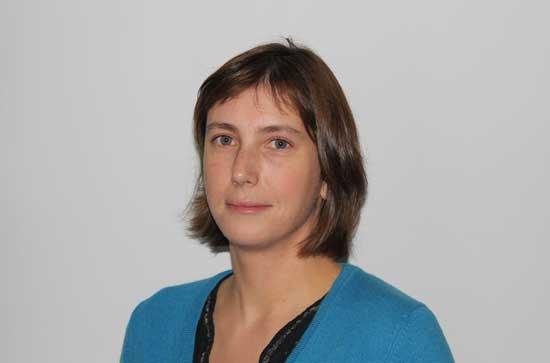
Katarina Domijan is an Associate Professor in Statistics at the Department of Mathematics and Statistics, Maynooth University, Ireland. She holds a PhD in Statistics from Trinity College Dublin (2008) and has been affiliated with Maynooth University since 2008, transitioning from Lecturer/Assistant Professor to her current role in 2024. Her academic career includes editorial roles as Associate Editor for The R Journal (2021–present) and the Journal of Computational and Graphical Statistics (2015–2024). Research Interests focus on Bayesian methods for high-dimensional data, particularly in classification problems. She specializes in feature selection and model visualization, with applications spanning agricultural data analysis (e.g., hyperspectral imaging for lactose prediction), medical diagnostics (e.g., sepsis and cancer detection), and space physics (e.g., Saturn Kilometric Radiation classification). Her work bridges theoretical statistics with real-world challenges, including socio-economic studies and forensic science. Key Research Areas Bayesian statistical inference Machine learning for large feature spaces Statistical computing and model interpretability Data visualization and chemometrics Scientific Contributions include leading projects like VistaMilk Phase II (2024–2030, €152,300) and Measuring Carbon Sequestration (2024–2028, €174,788.90). Her 15 most recent publications highlight advancements in ensemble modeling, spatial statistics, and medical diagnostics. Scientific Awards Associate Editor, The R Journal (2021–present) Associate Editor, Journal of Computational and Graphical Statistics (2015–2024) Student Supervision includes PhD and MSc graduates such as Dr. Bruna Wundervald (2024) and Dr. Mark O’Connell (2017). She also collaborates with researchers across disciplines, including Dr. Nadim Akasheh in food hypersensitivity studies.
John Byabazaire is a Research Fellow at the School of Computer Science, University College Dublin (UCD). He holds a PhD in Computer Science from UCD (2024), following a BSc (Gulu University, 2013) and MSc (Waterford Institute of Technology, 2018). His research focuses on IoT systems for data collection, remote sensing, AI-driven end-to-end system management, and fog analytics. He has held academic roles including Assistant Lecturer at Gulu University (2018–2019) and teaching roles at UCD since 2019, including Occasional Lecturer and Senior Teaching Assistant. His research spans smart agriculture, data quality in IoT, and education technology. Notable contributions include frameworks for yield mapping in precision agriculture, trust-based data validation in IoT, and machine learning approaches for livestock health monitoring. He has secured grants like the National ICT Initiatives Support Program (Uganda Government, 2019–2020). Teaching includes courses on cloud computing, web development, and distributed systems. His articles emphasize IoT data quality, agricultural analytics, and educational technology innovation. He actively promotes technology adoption in African education and agriculture sectors through collaborative projects.
Liadh Kelly is an Assistant Professor in the Department of Computer Science at Maynooth University's Faculty of Science & Engineering. She supervises PhD students in applied artificial intelligence, focusing on intelligent search, ubiquitous computing, and multimodal information access. She is affiliated with the ADAPT SFI Research Centre, SFI Centre for Research Training in Foundations of Data Science, and Human Health Institute. BSc in Computer Science MSc (Research) in Computer Science PhD in Computer Science Her research explores context-sensitive retrieval and evaluation methodology in AI-driven systems. Key areas include ubiquitous computing for personal data analysis, deep learning classification for mental wellness indicators, and multimodal lifelogging integration. Recent publications focus on urban mental wellbeing classification , contextual cue analysis , and AI-driven health search systems . Articles address smart city applications , consumer health search , and cross-lingual medical retrieval . Professional roles include Doctoral Consortium Chair at ECIR 2023 and Programme Committee member for SIGIR and ICWSM conferences. She leads grants for 4-year PhD studentships with stipend and fee coverage.

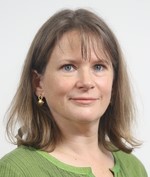

/prod01/channel_3/media/tcd/scss/headshots/Lucy-Hederman-BW-1.jpg)