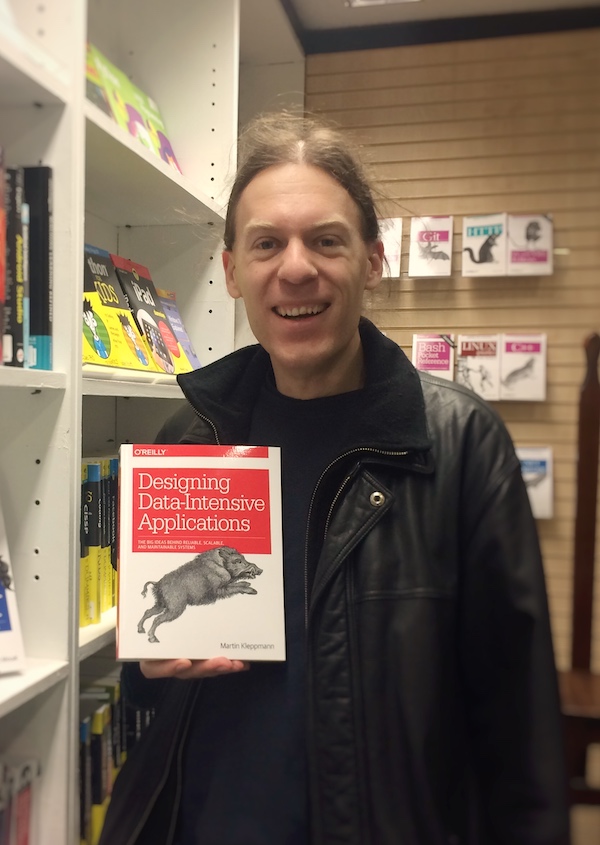
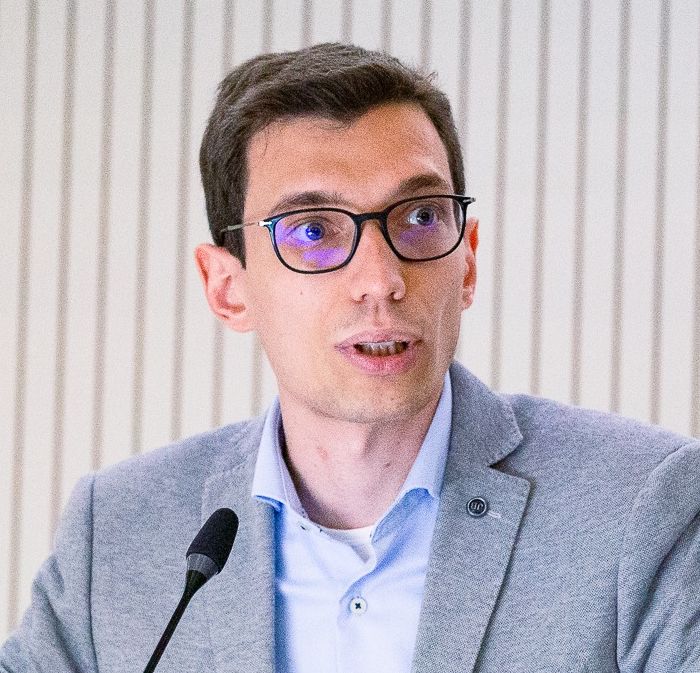
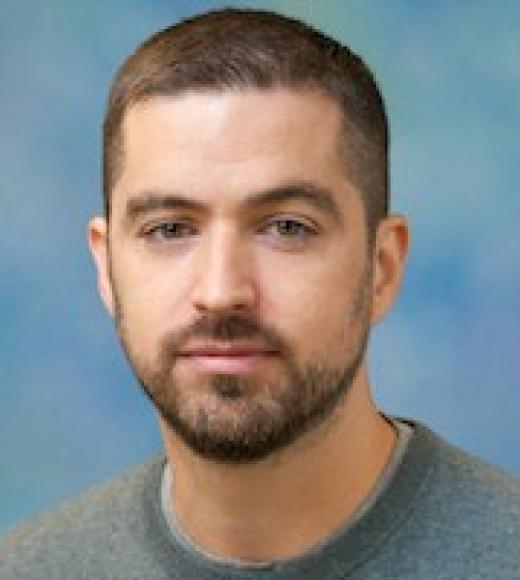
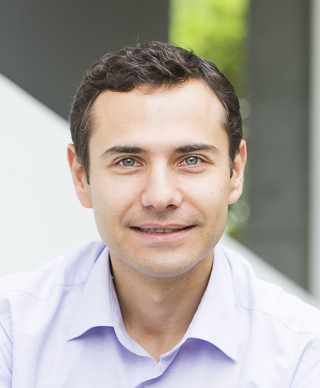
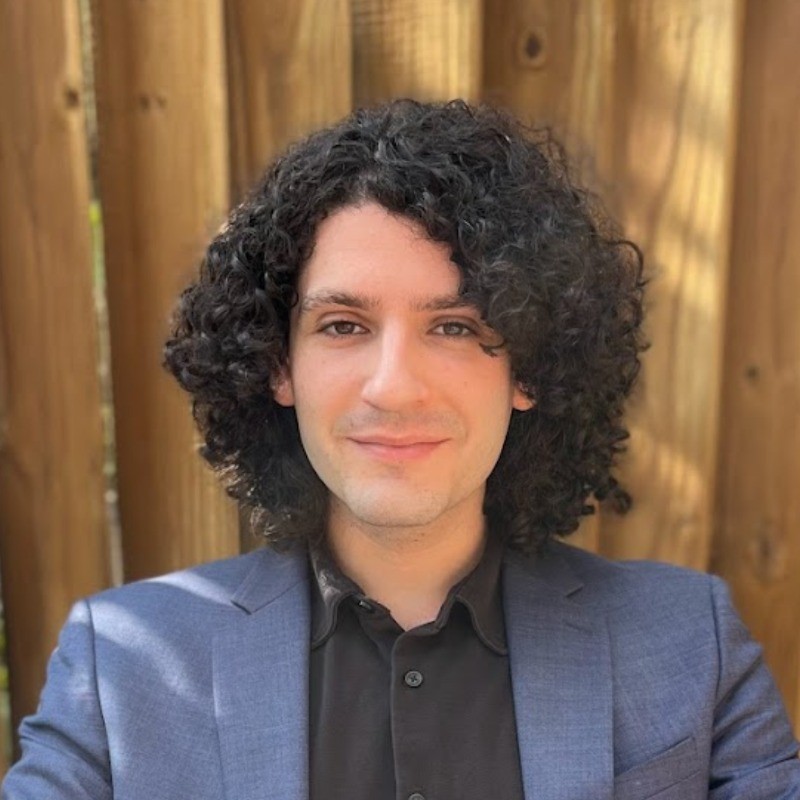
Dr. Martin Kleppmann is an Associate Professor at the University of Cambridge, specializing in local-first software and security protocols . He leads research in distributed systems, focusing on decentralized architectures, collaborative editing tools, and cryptographic methods. As a key contributor to the Automerge open-source project, he bridges academic innovation with real-world applications. Formerly a research fellow at TU Munich (2022–2023) and Cambridge (2015–2022), he has also worked as a software engineer and startup founder, including LinkedIn (acquired 2012). Research Interests span Distributed Systems Security , Conflict-Free Replicated Data Types (CRDTs) , Collaborative Software , and Cryptography . His work addresses challenges in decentralized social networks, privacy-preserving protocols, and efficient data synchronization. Recent projects include Kintsugi (end-to-end encrypted key recovery) and Pudding (private user discovery for anonymity networks). Publications emphasize Collaborative text editing (2025: Eg-walker, 2023: The Art of the Fugue) CRDTs for JSON and trees (2021, 2017) Privacy in decentralized systems (2024: Pudding, 2025: Emission Impossible) Scientific Awards include Gilles Muller Best Artifact Award (EuroSys 2025) Distinguished Paper & Artifact Awards (OOPSLA 2017) Best Presentation Awards (Security Protocols Workshop 2018, PaPoC 2025)
Leid Zejnilovic is an Assistant Professor at Nova School of Business and Economics (Nova SBE), where he co-founded the Data Science Knowledge Center and serves as Academic Director, and co-founded the Open and User Innovation Knowledge Center as Scientific Deputy Director. He also co-founded the Patient Innovation platform, enabling patients and caregivers to share self-made healthcare solutions. With a double PhD from Carnegie Mellon University and Católica-Lisbon School of Business and Economics, his career spans over 20 years of international consulting, academic entrepreneurship, and teaching at institutions like Imperial College Business School and Ludwig Boltzmann Institute. PhD in Strategy, Entrepreneurship and Technological Change (Carnegie Mellon University / Catholic University of Portugal, 2014) Master in Engineering and Public Policy (Carnegie Mellon University, 2012) Master in Information Technology (Dzemal Bijedic University, 2007) Bachelor in Telecommunications (University of Sarajevo, 2002) His research focuses on Technology and Innovation Management, Human-Computer Interaction, and data-driven solutions across healthcare, tourism, and education. He has published extensively in journals like California Management Review , PLoS ONE , and Marine Policy , with recent work analyzing big data in tourism, machine learning for oral health, and pandemic impacts on fisheries. As an Associate Editor for Data & Policy Journal , his contributions bridge academic research and real-world applications. Co-founding the Data Science for Social Good Foundation and leading over 100 talks in industry and academia, Zejnilovic's career emphasizes translating innovation into social and economic impact through platforms, policy, and education.
Lane A. Hemaspaandra (formerly Hemachandra) is a Professor at the Department of Computer Science, University of Rochester, New York. His academic career spans over three decades, with research focusing on computational complexity theory (especially structural complexity) and computational social choice theory . He holds a Ph.D. in Computer Science from Cornell University (1987) and has been recognized with prestigious awards such as the Friedrich Wilhelm Bessel Research Award from the Alexander von Humboldt Foundation and NSF Presidential Young Investigator (1989–1995). Education: B.S. in Computer Science and Mathematics & Physics, Yale University (1981) M.S. in Computer Science, Stanford University (1982) M.S. in Computer Science, Cornell University (1984) Ph.D. in Computer Science, Cornell University (1987) Hemaspaandra's research bridges theoretical computer science with political science and economics , particularly analyzing the computational complexity of election systems. His work includes foundational studies on Carroll/Dodgson voting , control complexity , and manipulative attacks in single-peaked societies. He has pioneered the use of complexity as a shield against election manipulation and control. The 15 most recent articles (2021–2024) span topics like backbone opacity , electoral control dichotomies , iterative constant-setting for complexity , and online bribery in sequential elections . These works often intersect with parameterized complexity , multi-agent systems , and game-theoretic models . Scientific Awards: AAAI Senior Member (2020–...) ACM Distinguished Scientist (2007–...) Alexander von Humboldt Foundation Renewed Research Stay (2018–2019) SIGACT Distinguished Service Prize (2013) Edward Peck Curtis Award for Undergraduate Teaching (2012) Hertz Foundation Fellowship (1982–1987) He has advised 15 Ph.D. students and postdocs, including prominent researchers like Prof. Piotr Faliszewski (AGH University) and Dr. Curtis Menton (Google). His NSF-funded projects explore complexity-theoretic approaches to election systems, and he has collaborated with institutions in Germany, Japan, and Poland.
Sebastian Risi is a Professor at the IT University of Copenhagen , where he directs the Creative AI Lab and co-directs the Robotics, Evolution and Art Lab (REAL) . His work bridges computational evolution, deep learning, and collective intelligence for applications in robotics, art, and video game design. His research focuses on self-organizing AI systems that grow or assemble through local interactions, inspired by biological development. Key areas include neuroevolution , neural cellular automata , and generative modeling , with applications in adaptive robotics, game content creation, and damage-resilient AI. Recent publications highlight trends in self-assembling neural architectures (NDPs) and 3D functional machine generation (Minecraft experiments). Awards include ERC Consolidator Grant (2022), Best Paper at FDG’21 , and Google Faculty Award (2019). Scientific Awards : ERC Consolidator Grant (GROW-AI), Best Paper FDG’21, Runner-Up IEEE Games’20, GECCO 2017 Competition Winner, Sapere Aude Grant, Amazon/Google Faculty Awards He advises on projects like GROW-AI (EU-funded), AI-TESTER (game testing), and C2SIM (military systems). Media coverage includes Science , Wired , and Popular Science .
Benjamin Eysenbach is an Assistant Professor in the Department of Computer Science at Princeton University's School of Engineering and Applied Science since 2023. His research focuses on developing principled reinforcement learning (RL) algorithms that improve simplicity, scalability, and robustness in state-of-the-art systems, particularly through probabilistic inference techniques. Ph.D., Machine Learning, Carnegie Mellon University (2023) B.S., Mathematics, Massachusetts Institute of Technology Research interests center on reinforcement learning with emphasis on long-horizon reasoning, exploration strategies, and robustness. He explores intersections with probabilistic inference and self-supervised learning to enhance RL capabilities. Recent publications highlight trends in contrastive learning for goal-conditioned RL, temporal distance modeling , and hierarchical control . Key themes include reward-free learning, scalable architectures, and uncertainty quantification in decision-making systems. 2025: Junior Faculty Award for Excellence in Research and Teaching, Princeton School of Engineering and Applied Science Eysenbach's work bridges theoretical foundations with practical implementations in AI training frameworks, emphasizing performance optimization and safety mechanisms.
Dr. Todd D. Murphey is a Professor of Mechanical Engineering at Northwestern University's Robert R. McCormick School of Engineering and Applied Science. He serves as Director of Transformative Research and Director of the Master of Science in Robotics Program at Northwestern, leading initiatives in computational dynamics, control systems, and robotics. His work bridges engineering, neuroscience, and biomedical applications, with a focus on developing systems that interact effectively with humans and their environments. Dr. Murphey received his Ph.D. in Control and Dynamical Systems from the California Institute of Technology in 2002, with a thesis titled "Control of Multiple Model Systems." Prior to that, he earned a B.S. in Mathematics, summa cum laude, from the University of Arizona in 1997. Dr. Murphey's research centers on computational methods in dynamics and control, with applications spanning neuroscience, health science, robotics, and automation. His work in the Interactive & Emergent Autonomy Lab focuses on computational models of embedded control, biomechanical simulation, dynamic exploration, and hybrid control. The group develops mathematical approaches that lead to orders of magnitude improvement in computational efficiency for real-time implementation. Key application areas include assistive exoskeleton control, stabilization of energy networks, bio-inspired active sensing, entertainment robots, robotic exploration, and software-enabled stroke rehabilitation. Analysis of Dr. Murphey's recent publications reveals a strong emphasis on human-swarm interaction, algorithmic matter, and control of cyber-physical systems in uncertain environments. His work increasingly integrates information theory with physical systems, exploring how both autonomous and biological systems interact with environments to learn and improve behaviors. Recent trends show growing applications in rehabilitation technology, with particular focus on human-machine interaction in biomedical devices and embodied intelligence. Dr. Murphey has received numerous honors and awards for his contributions to robotics and engineering: Named Director of Transformative Research at Northwestern University (2025) Appointed IEEE Robotics and Automation Society Vice President of Publication Activities (2022) Co-recipient of Best Paper Award for IEEE Transactions on Robotics (2020) Appointed to Air Force Scientific Advisory Board (2019) Recipient of ABB Best Student Paper Award for CPL-SLAM research (2019) Cole-Higgins Award from Northwestern Engineering (2015) Dr. Murphey has supervised numerous graduate students including Taosha Fan, Giorgos Mamakoukas, and Ian Abraham, with research spanning robotic exploration using electrosense and mechanical contact, human-in-the-loop control, and shared control for rehabilitation devices. His lab has secured significant funding from the National Science Foundation, DARPA, and industry partners including Siemens and Ekso Bionics, supporting research in algorithmic matter, emergent behavior, and human-swarm collaboration. The Interactive & Emergent Autonomy Lab, led by Dr. Murphey, investigates how both autonomous systems and biological systems interact with their environments to learn and improve behaviors. Current projects include active learning and data-driven control, active perception in human-swarm collaboration, algorithmic matter and emergent computation, control for nonlinear and hybrid systems, cyber physical systems in uncertain environments, harmonious navigation in human crowds, information maximizing clinical diagnostics, reactive learning in underwater exploration, robot-assisted rehabilitation, and software-enabled biomedical devices. The lab collaborates with researchers across Northwestern and institutions including Georgia Tech, MIT, and industry partners.
Adrian Weller is a Director of Research in Machine Learning at the University of Cambridge and Head of Safe and Ethical AI at The Alan Turing Institute, where he also serves as a Turing Fellow. He additionally directs the Trust and Society programme at the Leverhulme Centre for the Future of Intelligence. His career includes senior roles in finance and advisory positions for governmental AI ethics bodies. His research integrates technical and societal dimensions of artificial intelligence, with major foci including: Foundational ML : Statistical methods, high-dimensional inference, causality, and Monte Carlo techniques Trustworthy AI : Fairness, privacy, bias mitigation, and algorithmic transparency Applied Domains : Computer vision, reinforcement learning, and bio-applications of ML Socio-technical Systems : Policy frameworks, human perceptions of algorithms, and ethical deployment Notable recognition includes an MBE (2022) for pioneering contributions to digital innovation. His work actively informs UK and EU AI policy discussions.
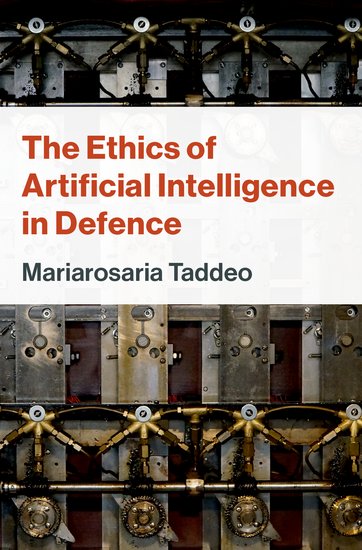
Mariarosaria Taddeo is Professor of Digital Ethics and Defence Technologies at the Oxford Internet Institute (University of Oxford) , where she also serves as DPhil Programme Director for Information, Communication and the Social Sciences. She is a Senior Research Fellow at the Alan Turing Institute and holds advisory roles at institutions including the Ministry of Defence (UK) Ethics Advisory Panel , the BRAID Programme , and the Leonardo Foundation . Education PhD (Doctor Europeus) in Philosophy from University of Padua Mariarosaria Taddeo’s research spans Digital Ethics, Philosophy of Technology, Cybersecurity Ethics, and AI Governance , with a focus on national defence applications. Her work addresses trust in AI , cyber conflict regulation , and ethical frameworks for autonomous weapons . She has published extensively in journals like Nature , Science , and Minds and Machines , including studies on data philanthropy , digital well-being , and quantum technology ethics . Scientific Awards 2010 Simon Award for Outstanding Research in Computing and Philosophy 2016 World Technology Award for Ethics 2018 InspiringFifty: Top 50 Italian women in technology ORBIT listings (2018, 2020) of top 100 women in AI Ethics 2020 Women’s Forum for Economy and Society: Outstanding Rising Talents ComputerWeekly Top 100 Influential Women in UK Technology (2020, 2023) Her projects include the UK MOD-funded AI Ethics Principles initiative, the NATO Cooperative Cyber Defence Centre of Excellence ethical guidance project, and contributions to the PETRAS IoT Research Hub . She advocates for ethical AI implementation in defence and digital governance, influencing EU policy through the CEPS Task Force on AI and Cybersecurity .
Lorenzo Baraldi is an Associate Professor at the University of Modena and Reggio Emilia, where he leads research in deep learning, vision-language integration, and multimodal AI systems. He serves as an ELLIS Scholar and Coordinator of the Modena ELLIS Unit, and has held the position of deputy director at the Interdepartmental Center on Digital Humanities since 2021. Previously, he worked at Facebook AI Research laboratory in Paris in 2017, developing video-matching algorithms for content moderation. His research spans multiple areas including Vision-and-Language integration, Multimodal Retrieval, Image and Video Captioning, Visual-Semantic alignment, Large-Scale model development, High Performance Computing, and Embodied AI. With over 120 publications in international journals and conferences, his work demonstrates consistent contributions to advancing multimodal AI capabilities. He has served as an Associate Editor for Computer Vision and Image Understanding and Pattern Recognition, and as Area Chair for major conferences including ICCV, WACV 2026, and ACM Multimedia 2025. His recent publication record shows significant impact in the field, with multiple papers accepted to top-tier conferences in 2024-2025 including CVPR, ICCV, BMVC, ICLR, ECCV, and NeurIPS. Notably, his paper "Hyperbolic Safety-Aware Vision-Language Models" was selected as a highlight paper at CVPR 2025. His research often involves collaboration with Rita Cucchiara and other researchers at his institution. ELLIS Scholar and Coordinator of the Modena ELLIS Unit Associate Editor for Computer Vision and Image Understanding Area Chair for ICCV and major multimedia conferences Highlight paper at CVPR 2025 Professor Baraldi teaches courses in Computer Vision and Cognitive Systems, Scalable AI, and Computer Architecture for the Artificial Intelligence Engineering and Computer Engineering programs. His teaching spans both undergraduate and graduate levels, with a focus on providing students with both theoretical foundations and practical implementation skills. He has developed educational materials including Deep Learning tutorials for classroom instruction.
Professor Steven J. Murdoch is a leading figure in cybersecurity and privacy-enhancing technologies at the Department of Computer Science , University College London . His work bridges computer science and law, focusing on payment system security, electronic evidence reliability, and dispute resolution mechanisms. Head of Information Security Research Group at UCL (2022–present) Director at Open Rights Group (2022–present) Research spans payment security , privacy protocols , and legal implications of computer evidence . Key contributions include analyzing EMV protocol flaws, designing secure authentication mechanisms, and improving Tor's anonymity. Publications cover privacy-preserving federated learning , time-lock puzzles , and malware ecosystem analysis Awards include Fellowships from the Institution of Engineering & Technology and British Computer Society , and a Royal Society University Research Fellowship . Teaches COMP0055 Computer Security II and COMP0061 Privacy Enhancing Technologies at UCL
Steven Loheide is a Professor in the Department of Civil & Environmental Engineering at the University of Wisconsin-Madison. His work bridges hydrogeology, ecohydrology, and environmental engineering with a focus on groundwater-dependent ecosystems. PhD (2006), Stanford University MS (2001), Indiana University BS (1999), University of Northern Iowa Loheide's research examines hydroecology , vegetative water use , and stream-aquifer interactions , particularly in the context of climate change , urban greening , and managed aquifer recharge . His recent publications highlight interdisciplinary approaches combining remote sensing , hydrologic modeling , and ecosystem services analysis . Key trends in his 15 most recent publications (2023-2025) span: groundwater-forest interactions during drought, urban ecohydrology impacts on energy balance, MAR design for multi-benefit ecosystems, and tree sway monitoring as ecohydrologic stress indicators. 2022 - Distinguished Professorship of Water Resources Engineering 2021 - Harvey Spangler Award for Innovative Teaching 2018 - Vilas Faculty Mid-Career Investigator Award 2014 - Fulbright Scholar (Argentina) 2010 - NSF CAREER Award Loheide teaches courses in groundwater hydraulics , ecohydrology , and hydroscience , advising graduate students through master's research , pre-dissertation , and thesis projects.
Santiago Barreda is an Associate Professor in the Department of Linguistics at the University of California, Davis, specializing in speech perception and phonetic analysis. His research examines how acoustic properties of speech convey speaker characteristics including age, gender, and physical attributes. Education: Ph.D. in Linguistics (Phonetics), University of Alberta, 2013 M.A. in Hispanic Studies (Language and Linguistics), University of Western Ontario, 2008 B.A. in Linguistics and Spanish Language and Literature, University of Western Ontario, 2006 Research Focus: Dr. Barreda employs behavioral experiments and statistical modeling to investigate perceptual mechanisms in speech recognition. His work bridges theoretical phonetics with practical applications, particularly in vowel normalization techniques and formant tracking algorithms. Key questions address how listeners extract speaker identity from acoustic cues and interpret social characteristics through vocal signals. Publication Trends: Recent publications (2020-2025) reveal three dominant themes: computational phonetic tools (FastTrack, phonTools), perception of social/physical speaker characteristics from children's voices, and interdisciplinary public health research on speech-related aerosol transmission. His work demonstrates strong methodological consistency in combining acoustic analysis with perceptual validation. Scientific Awards: No scientific awards were mentioned in the source material. Advising and Grants: The provided documentation does not specify graduate student advising roles or external grant funding. Technical Contributions: Dr. Barreda develops open-source phonetic analysis software including FastTrack (Praat-based formant tracking) and the phonTools R package, which have become standard resources in acoustic phonetic research.
Professor Valentyn Panchenko is a leading academic in Economics at the UNSW Business School, specializing in advanced econometric methodologies and financial modeling. Holding a PhD from the University of Amsterdam and an MPhil from the Tinbergen Institute, his research bridges theoretical econometrics with real-world financial applications, emphasizing big data analysis, network structures, and dependence modeling in economic systems. His expertise spans financial econometrics, time series analysis, non-parametric statistics, and agent-based economic simulations. He focuses on Granger causality, model evaluation, structural economic modeling, and bounded rationality with heterogeneous agents. His work has secured significant grants including ARC Discovery Projects and DECRA fellowships, enabling cutting-edge research on market dynamics and economic interactions. Professor Panchenko's publications appear in top-tier journals like the Journal of Econometric Theory, AEJ: Micro, Journal of Economic Dynamics & Control, and Journal of Banking & Finance. His methodological contributions include novel approaches to copula-based forecasting, nonlinear causality testing, and evolutionary learning models in strategic economic environments. While specific student advising details aren't provided, his research leadership demonstrates sustained impact across econometric theory, financial markets, and experimental economics.
Jason Smith is a Postdoctoral Scholar at Northwestern University , affiliated with the Interactive Audio Lab . He earned his PhD in Music Technology from the Georgia Institute of Technology . Research Focus Human-AI collaboration in creative domains Interactive music systems AI-driven accessibility solutions Creative autonomy and neural audio generation Recommender systems for music libraries Publication Trends His work spans 2019–2025, emphasizing AI applications in music education, accessibility (especially for blind/visually impaired users), and immersive environments like AI holodecks. Key methodologies include co-design, hybrid recommendation algorithms, and automated creativity assessment. Lab Affiliation He contributes to the Interactive Audio Lab, exploring intersections of sound, code, and AI.
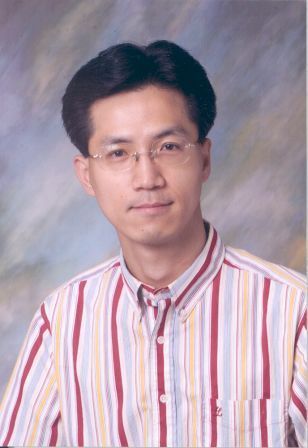
Inseok Hwang is the Paul Stanley Professor of Aeronautics and Astronautics at Purdue University's School of Aeronautics and Astronautics. He earned his Ph.D. from Stanford University, specializing in multiple-vehicle control systems. His research focuses on hybrid systems, air traffic control, unmanned systems, and cybersecurity of cyber-physical systems. He leads the Flight Dynamics and Control/Hybrid Systems Laboratory and has received numerous awards, including the NSF CAREER Award and AIAA Associate Fellow designation. His work spans theoretical advancements in control theory and practical applications in aerospace systems. He has over 150 peer-reviewed publications and actively collaborates with industry and government agencies like NASA and the FAA. Education: B.S. (Seoul National University, 1992), M.S. (KAIST, 1994), Ph.D. (Stanford, 2004). Professional memberships include AIAA and IEEE. Research Interests: Hybrid systems analysis, air traffic surveillance and control, fault detection and isolation, spacecraft control, and cybersecurity for autonomous systems. His lab develops algorithms for safe and efficient operation of networked systems, including UAS traffic management and resilient control protocols against cyberattacks. Awards: NSF CAREER (2008), AIAA Associate Fellow (2012), University Faculty Scholar (2017), C.T. Sun Award (2019), multiple Seed for Success Awards (2020–2024), and Paul Stanley Professorship (2024). Grants and Collaborations: Active projects funded by NSF, NASA, FAA, and industry partners. Focus areas include resilient navigation, anomaly detection in air traffic systems, and cyberattack mitigation for autonomous vehicles.