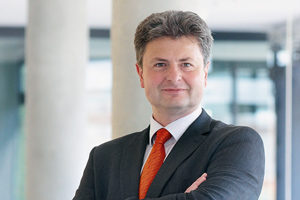
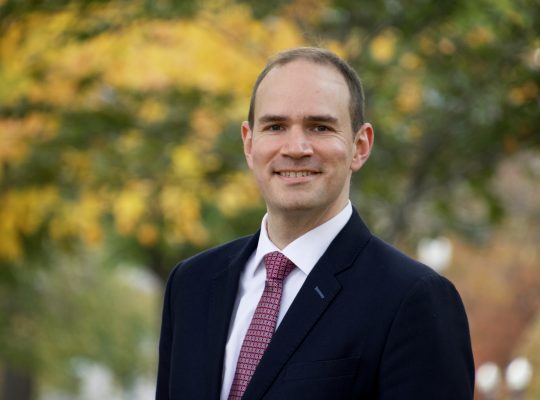
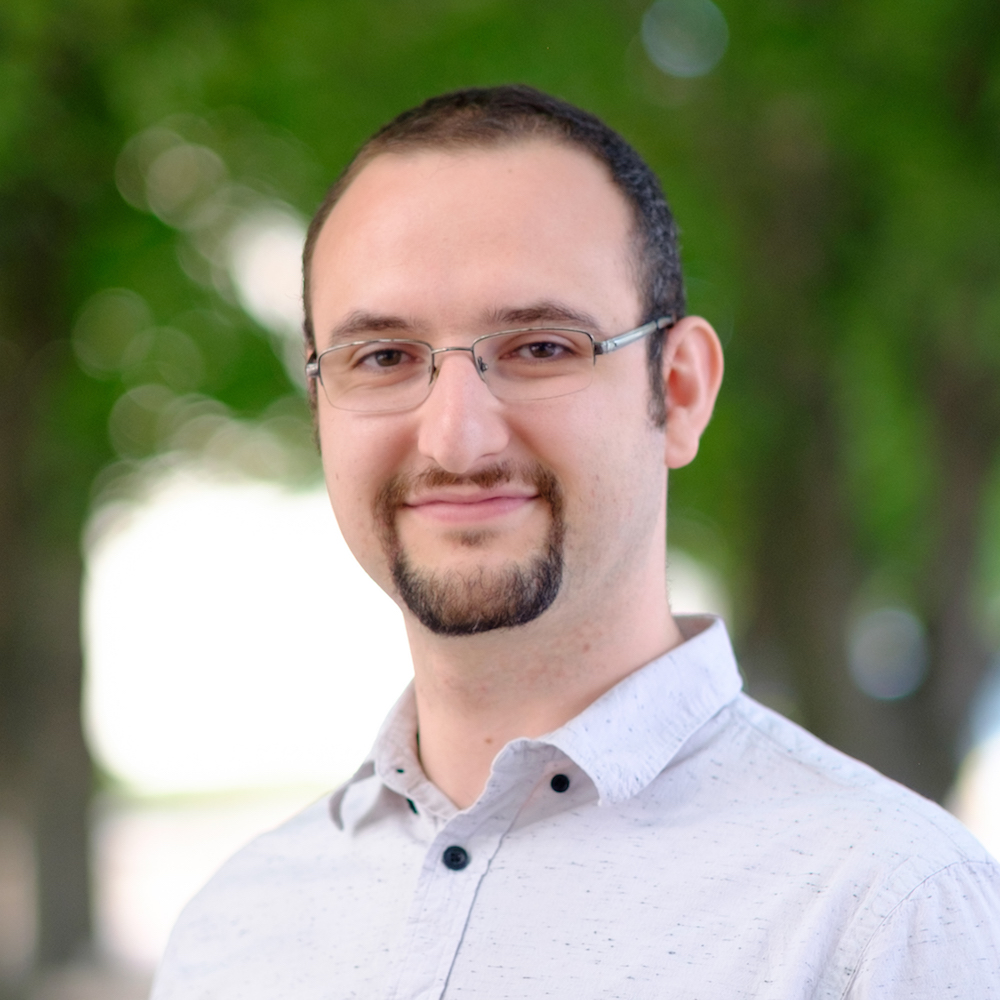
Aafke Fraaije is a postdoctoral researcher at the Section Ethics & Philosophy of Technology , Faculty of Technology, Policy and Management , Delft University of Technology. Her work bridges art, ethics, and technology through interdisciplinary approaches to citizen engagement and responsible innovation. Institution: Delft University of Technology School: Faculty of Technology, Policy and Management Department: Section Ethics & Philosophy of Technology Academic Rank: Research Fellow Research Interests : Ethics of human-nature-technology relationships Art-based methods for public engagement with technology Participatory futuring in smart city development Inclusive approaches to technology governance Communication frameworks in clinical and engineering contexts Critical analysis of responsible research and innovation (RRI) Recent Research Trends : Her publications focus on using artistic practices (dance, theatre) to explore ethical implications of smart city technologies, developing frameworks for responsible innovation, and analyzing communication dynamics in high-stakes environments like surgery and robotics. Key themes include citizen participation in technological development, interdisciplinary methodologies, and ethical accountability across sectors.
Prof. Dr.-Ing. Christoph Stiller is a full professor at the Karlsruher Institut für Technologie (KIT) and serves as the director of the Institute of Measurement and Control Technology (Institut für Mess- und Regelungstechnik, MRT). His work focuses on autonomous driving, sensor fusion, probabilistic estimation, HD mapping, motion planning, and intelligent transportation systems. Education: Details on his academic degrees are not provided in the text, but he holds the title of Dr.-Ing. indicating a doctoral degree in engineering. Research Interests: Prof. Stiller's research spans a wide array of topics critical to the development of autonomous vehicles. His work includes: Sensor Fusion: Integrating data from LiDAR, cameras, and radar to create robust perception systems. HD Mapping & Localization: Developing high-definition maps and precise localization techniques for urban and highway environments. Motion Planning & Decision Making: Creating algorithms for safe and efficient trajectory planning under uncertainty. Machine Learning & AI: Applying deep learning and reinforcement learning to perception, prediction, and control tasks. Publication Trends: His recent publications (2023–2025) emphasize robust traffic light detection, image stitching for panoramic views, motion prediction using redundancy reduction, and safety-enhanced model predictive control. The work increasingly integrates learning-based methods with classical control and estimation theory. Scientific Awards: No specific awards are listed in the provided text. Teaching & Supervision: Prof. Stiller teaches foundational and advanced courses in measurement and control systems, probabilistic estimation, and autonomous driving. He holds regular office hours during both summer and winter semesters and is actively involved in advising students and researchers. Labs & Teams: He leads the Institute of Measurement and Control Technology (MRT) at KIT, which is engaged in cutting-edge research in autonomous systems. The institute collaborates with industry and academia on large-scale projects such as UNICARagil and various European initiatives.
Guy Dove is a Professor in the School of Arts & Sciences Humanities at the University of Louisville. His research bridges philosophy, cognitive science, neuroscience, linguistics, and artificial intelligence, focusing on the philosophy of psychology and abstract concept formation. PhD in Philosophy from the University of Chicago His work explores how language shapes cognition, advocating for a multimodal and flexible framework to understand abstract concepts. Recent publications address the implications of large language models for human cognition and the role of linguistic scaffolding in semantic memory. Key journals include Philosophical Transactions of the Royal Society B , Cognitive Neuropsychology , and Topics in Cognitive Science . He co-authored the book Consciousness and Physicalism: A Defense of a Research Program . Prior to his current role, Dove worked in the Developmental Neuropsychology and Electrophysiology Lab (2002-2003) and taught in the Department of Psychological and Brain Sciences (2004-2008).
Prof. Dr. Michael Amberg is a full-time Professor of Business Informatics, specializing in IT Management, at Friedrich-Alexander University Erlangen-Nuremberg (FAU) . He has held this chair since 2001 and serves as director of the Dr. Theo and Friedl Schöller Research Center for Business and Society since 2010. Formerly, he occupied a professorship at RWTH Aachen University (1999–2001) and served as Vice Dean and Dean of FAU's Faculty of Law and Economics (2007–2012). Education: Computer Science at RWTH Aachen and FAU Erlangen-Nuremberg (1989) Research Focus: Systems development, IT management, and digitalization trends including AI, Industry 4.0, and smart services Leadership Roles: Spokesperson for the Department of Business and Social Sciences, Dean of Faculty (2007–2012), Research Center Director (since 2010) Key Collaborations: Interdisciplinary work with FAU's digitalization and innovation research cluster His recent publications address Explainable AI (XAI) integration into software development (2023) and human-centric work design in SMEs during Industry 4.0 transformations (2018). Current research emphasizes empirical methodologies for IT governance in digital ecosystems.
Dr. Meng Fang is a researcher specializing in Artificial Intelligence with a focus on Reinforcement Learning, Large Language Models, and their applications in medical QA, game theory, and causal inference. Their work combines technical innovation with practical problem-solving in safety-critical and domain-specific contexts. Key research areas: Social bias in AI, data augmentation, embodied agents, and model-based reinforcement learning Teaching: Coordinated module COMP532 - Machine Learning and BioInspired Optimisation (2024-25). Recent publications address challenges in offline RL robustness, vision-based safe reinforcement learning, and strategic game generalization.
National Research Institute for Mathematics and Computer ScienceNetherlands
Barbara J. Grosz serves as Higgins Research Professor of Natural Sciences in Harvard University's School of Engineering and Applied Sciences, renowned for foundational contributions to Artificial Intelligence through pioneering work in dialogue processing and multi-agent collaboration theories applied to human-computer interaction, healthcare coordination, and science education. Her research spans Artificial Intelligence, Natural Language Processing, Multi-agent Systems, and Computational Ethics, with recent focus on improving computer system design for healthcare and education. She co-founded Harvard's Embedded Ethics program, which integrates ethical reasoning into core computer science curricula, reflecting her commitment to responsible AI development. Professor Grosz has earned exceptional recognition including: ACM/AAAI Allen Newell Award (2009) IJCAI Award for Research Excellence (2015) ACL Lifetime Achievement Award (2017) Election to the National Academy of Engineering Membership in the American Philosophical Society Her leadership extends to establishing interdisciplinary research institutions and advancing women in science, demonstrating sustained impact across academia and societal applications of AI.
Agnes Horvat is an Associate Professor of Communication (with a courtesy appointment in Computer Science) at Northwestern University. She directs the Technology and Social Behavior (TSB) joint doctoral program between the McCormick School of Engineering and the School of Communication, and leads the Lab on Innovation, Networks, and Knowledge (LINK). Her research focuses on human-centered computing, network science, and AI's impact on information production/sharing in digital platforms. She has received NSF CAREER, CRII, and collaborative awards as PI. Her work examines algorithmic bias in online spaces, AI-assisted creativity (e.g., LLMs in biomedical writing and music), and collective intelligence dynamics. Media coverage includes Nature , Washington Post , and Le Monde . Her advisees have won prestigious fellowships like the Northwestern Presidential Fellowship and best paper awards at top conferences. Research interests include: (1) algorithmic bias in social media and crowdfunding, (2) AI-driven creativity expansion, (3) network structures of scientific attention, and (4) opinion dynamics in online discussions. Current projects explore LLMs' role in scientific writing and music composition, while past work analyzed gender disparities in scholarly self-promotion and retraction paper attention patterns. Grants: NSF CAREER Award (202?), NSF CRII (202?), Collaborative Grant (202?) Labs/Teams: LINK Lab (focusing on innovation networks), TSB Program (interdisciplinary engineering/communication PhD)
Eleanor O'Rourke is an Associate Professor at Northwestern University with joint appointments in the Department of Computer Science and the Learning Sciences, part of the McCormick School of Engineering. She co-directs the Delta Lab, focusing on interdisciplinary research in Human-Computer Interaction, Artificial Intelligence, and Learning Sciences. Her work examines how learning environments can foster motivation and effective practices in computer science education, supported by grants from NSF and Google. Educated at the University of Washington (PhD, MS in Computer Science & Engineering) and Colby College (BS in Computer Science and Spanish), her research employs mixed methods, including design-based research and grounded theory, to study student motivation, affective responses during programming, and AI-driven interventions. Notable contributions include tools like Ply and Isopleth , which support novice web developers, and studies on student self-assessment biases and growth mindset incentives. Her work has been recognized with multiple Best Paper Awards at ACM conferences, including ICER 2024 and SIGCSE 2022. She teaches courses such as Transformative AI and the Learning Sciences and Design of Learning Environments , and advises a diverse cohort of PhD students and undergraduates. The Delta Lab’s collaborative approach emphasizes innovation in educational technology and human-centered design.
Dr Jonathan Cook is a Research Fellow at Jesus College, University of Oxford, affiliated with the Medical Sciences division. He holds a primary medical qualification from Queen’s University (Canada, 2021) and a PhD investigating viral immune evasion mechanisms under Prof Jeffrey Lee. His work was supported by the Vanier Canada Graduate Scholarship and recognized with the Stuart Alan Hoffman Memorial Prize. As an incoming Banting Fellow at the Jenner Institute, he focuses on vaccine design for infectious diseases. His research interests include malaria eradication, emerging pathogens, and structure-based vaccine strategies. **Education**: - PhD (Investigation of viral entry glycoproteins), University of Toronto, supervised by Prof Jeffrey Lee - Primary Medical Qualification, Queen’s University, Canada **Research Interests**: - Malaria Eradication : Developing vaccines targeting Plasmodium species. - Emerging Infectious Diseases : Designing rapid-response strategies for pathogens like SARS-CoV-2. - Structure-Based Vaccine Design : Leveraging protein structural data to enhance immunogenicity. **Awards**: - Vanier Canada Graduate Scholarships Programme (2017–2020) - Stuart Alan Hoffman Memorial Prize (2021) - Banting Fellowship (incoming) **Grants/Advising**: Works on Jenner Institute-funded projects. No listed advisees yet. **Labs/Teams**: Collaborates with Prof Lee's lab at the Jenner Institute and the University of Toronto's Medical Microbiology program.
Ming Lin is a Distinguished University Professor at the University of Maryland, College Park, holding joint appointments in Computer Science (Department of Computer Science), the Institute for Advanced Computer Studies (UMIACS), Electrical and Computer Engineering (ECE), and the Maryland Robotics Center. She holds the Dr. Barry Mersky and Capital One E-Nnovate Endowed Professorships. Her research focuses on physically-based modeling, virtual environments, haptics, robotics, and AI applications in healthcare and urban computing. Education: Ph.D., M.S., and B.S. in Electrical Engineering & Computer Sciences from UC Berkeley. She previously spent 20 years at UNC Chapel Hill before joining UMD in 2018. Research interests include collision detection algorithms (e.g., Lin-Canny algorithm), real-time physics simulation, virtual/augmented reality systems, and medical imaging applications. Her work has led to over 2 million downloads of her group's software tools and licenses with 60+ companies. Notable contributions include the Oculus Rift-related VR technologies and Amazon's virtual try-on system. Awards: IEEE Fellow (2012), ACM Fellow (2011), NAI Fellow (2022), and Washington Academy of Sciences Distinguished Career Award (2020). Active in professional service, she serves on the CRA Board and chairs the Committee on Widening Participation in Computing Research. Advising: Supervises 12+ PhD/Master's students. Her lab (GAMMA Group) focuses on AI-driven robotics, autonomous systems, and physically-based simulations. Key projects include traffic simulation frameworks, medical VR applications, and 3D garment modeling.
Andrea Tapia is an Associate Professor of Information Sciences and Technology at Pennsylvania State University. She holds a Ph.D. in Sociology from the University of New Mexico (2000). Her research focuses on the intersection of social theory, ICT, and crisis response, with a particular emphasis on leveraging social media for disaster resilience and humanitarian action. She has secured over $3.7 million in external funding, supervised 16 graduate committees (including 10 PhDs and 6 master’s theses), and authored over 40 journal articles, 60 conference papers, and 12 book chapters. Tapia is an elected leader in the American Sociological Association and the International Association for Information Systems for Crisis Response and Management. Her work directly influences UN policy, international relief organizations, and U.S. governmental initiatives. She has pioneered platforms like Aurorasaurus and contributed to frameworks for social media integration in emergency dispatch systems. Her research spans crisis informatics, crowdsourced early warning systems, and inter-organizational collaboration in humanitarian contexts. Notable achievements include developing methodologies for trust detection in social media data and analyzing disaster response coordination networks. Tapia has presented at 73 conferences, including 31 invited talks, and her scholarship emphasizes actionable insights for policymakers and practitioners. Tapia teaches 12 courses across undergraduate, Honors, and graduate levels, reflecting her commitment to education. Her current focus includes refining frameworks for social media data adoption in public safety answering points and advancing resilience analytics for cyber-physical-social systems. She leads interdisciplinary teams addressing challenges in disaster response, digital volunteering, and technology-mediated collaboration.
Melissa C. Smith is a Professor of Electrical and Computer Engineering and Associate Dean for Graduate Studies at Clemson University. She holds a Ph.D. from the University of Tennessee and degrees from Florida State University. Her research focuses on machine learning, reconfigurable computing, and high-performance systems, with applications in embedded systems and interdisciplinary scientific advancements. Before joining Clemson in 2006, she was a research associate at Oak Ridge National Laboratory (ORNL), contributing to projects like the Spallation Neutron Source and PHENIX experiments. Education: Ph.D., Electrical and Computer Engineering, University of Tennessee M.S., Electrical Engineering, Florida State University B.S., Electrical Engineering, Florida State University Research Interests: Machine Learning and AI High-Performance and Reconfigurable Computing System Performance Modeling Embedded Systems Articles Summary: Her recent work spans machine learning applications, GPU/FPGA architectures, speech enhancement, and medical systems. Key themes include optimizing heterogeneous computing for real-time and scientific workloads, and advancing interdisciplinary solutions through architecture-application co-design. Lab & Collaborations: Leads the Future Computing Technologies Lab and collaborates with ORNL and national labs on projects like GEMmaker and HPC-enabled medical systems.
State University of New York at BuffaloUnited States
Dr. Siwei Lyu is a SUNY Distinguished Professor and SUNY Empire Innovation Professor in the Department of Computer Science and Engineering at the University at Buffalo. He serves as Co-Director of the Center for Information Integrity (CII) and Director of the UB Media Forensic Lab (UB MDFL). His research focuses on digital media forensics, computer vision, and machine learning, with significant contributions to counter-deepfake technologies. Education includes a PhD in Computer Science from Dartmouth College (2005), MS from Peking University (2000), and BS in Information Science from Peking University (1997). He has held academic positions at the University at Albany and New York University. His work spans media forensics, adversarial machine learning, and AI security. Notable achievements include developing the Celeb-DF dataset, leading NSF-funded projects, and testifying before U.S. and NYS legislative bodies on disinformation threats. Over $11.3M in grants have supported his research on AI-generated media detection, including a $5M NSF Convergence Accelerator grant. Key awards include IEEE and IAPR Fellowships, Google Faculty Award, and SUNY Chancellor's Research Award. He has authored 230+ papers, 4 patents, and serves on editorial boards of top journals and conferences (e.g., CVPR, ICCV).
Onur Varol is an Assistant Professor at Sabanci University's Computer Science Department and leads the VIRAL Lab, which focuses on computational social science, network science, and machine learning. He has affiliations with the Center of Excellence for Data Analytics. His research spans social bot detection, misinformation analysis, and online behavior modeling.
Dr. Anitha Chinnaswamy is a Senior Lecturer in Cyber Security Management at Aston Business School, Aston University, where she serves as Deputy Director of the Cyber Security Innovation (CSI) Research Centre. She leads the MSc Cyber Security Management program and directs multiple research initiatives focusing on cyber security risk management, cryptocurrency regulation, AI applications in cybersecurity, and gender diversity in the field. Her educational background includes a PhD in Computing, an MSc in Informatics, and a PG Cert in Higher Education, all from Coventry University. As a CRISC certified professional and APMG Certified Cyber Security Instructor, she brings both academic rigor and industry relevance to her work. Dr. Chinnaswamy's research spans critical cybersecurity areas including cyber security risk management, cryptocurrency and illicit money flows, cloud-based artificial intelligence applications, and addressing the gender gap in cybersecurity. Her work bridges technical cybersecurity solutions with organizational behavior, risk management, and awareness strategies, creating holistic approaches to security challenges. She has developed award-winning curricula that empower future leaders in the rapidly evolving cybersecurity landscape. Her publications reveal a strong focus on applying AI to cybersecurity challenges, particularly in banking and financial crime detection, while also addressing regulatory frameworks for cryptocurrencies and the social dimensions of cybersecurity through work on gender diversity and inclusion. Tech for Good Award, Midlands Women in Tech Awards, 2023 Academic Award, Midlands Women in Tech Awards, 2024 Finalist - Cyber University of the Year, National Cyber Awards, 2024 As Programme Director for the MSc Cyber Security Management, Dr. Chinnaswamy has secured substantial research funding from Horizon Europe, Innovate UK, DSIT, and WMCA. Her current projects include CyVAWG: Cyber Violence Against Women and Girls (£75,000), CyberKali 2024 (£42,000), and a KTP with BlueScreen IT (£202,024). She actively collaborates with LEAs, regional cybercrime units, corporate partners, government agencies, and academic institutions across multiple projects. Dr. Chinnaswamy leads the Cyber Security Innovation Centre research team and serves as Chapter Leader for ISACA Central UK. As a founding member of the Ethnic Minorities in Cyber (EMiC) Network supported by DSIT, she champions diversity and inclusion in cybersecurity, while also serving as a STEM Ambassador in the West Midlands to inspire the next generation of cybersecurity professionals.