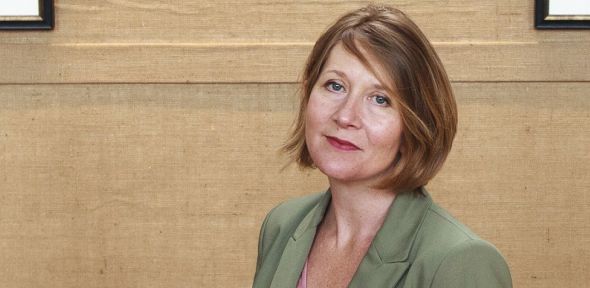
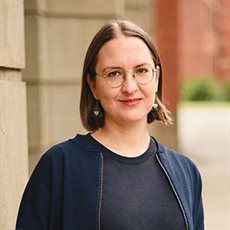
Professor Emma Widdis is a leading scholar at the Faculty of Modern and Medieval Languages and Linguistics at the University of Cambridge, specializing in the intersection of Soviet cinema, ideology, and cultural geography. Her work explores the reeducation of sensory perception through film, early Soviet urban spaces, and the construction of subjectivity via cinematic techniques. Teaches 20th-century Russian/Soviet literature, cinema, and film theory Focuses on sensory engagement, political avant-garde, and urban spatial representation Supervisor for MPhil and PhD students in Slavonic Studies Her recent book Socialist Senses (2017) examines how cinema shaped Soviet perceptions of reality. Her publications span topics like silence in sound film, set design materiality, and costume symbolism in early Soviet cinema. While no formal scientific awards are listed, her research has been supported through institutional grants and collaborations with centers like CRASSH and Cambridge Language Sciences.
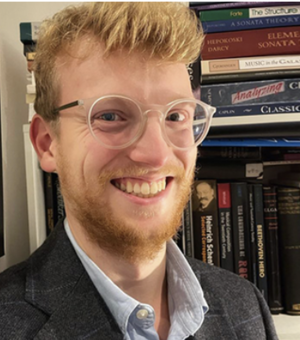
Jan Herbst is a Professor of Music at the University of Huddersfield and Director of the Centre for Research in Music and its Technologies. His academic journey includes multiple doctorates (PhD, Dr. habil.) from Leuphana University Lüneburg and research expertise in popular music studies, music production, and systematic musicology. He leads AHRC-funded projects such as 'Heaviness in Metal Music Production' and 'Songwriting Camps in the 21st Century.' His work bridges practical music production and theoretical research, with over 80 publications including books like The Cambridge Companion to Metal Music and Heaviness in Metal Music Production . Herbst’s research focuses on metal music aesthetics, record production techniques, and the cultural dimensions of music technology. He has held roles at German and Swiss universities, including teaching guitar performance and music production. His editorial roles include the Cambridge Companions series and journals like Metal Music Studies . Current projects explore blockchain in music, gear acquisition syndrome, and extreme metal vocal techniques. His academic affiliations include the IASPM UK & I executive committee and editorial boards for major musicology publications. Herbst actively engages with industry through collaborations with producers and performers, maintaining a balance between academic rigor and practical music creation.
Oliver Chandler is a Senior Lecturer in Music at the University of Oxford and holds multiple lecturing roles at Hertford College, Keble College, St Hugh's College, and Queen's College. He also serves as an academic professor at the Royal College of Music. His research focuses on music analysis, particularly in British music, chromaticism, and tonal theory, with notable works on Edward Elgar, Reginald Smith Brindle, and guitar repertoire. Chandler has been awarded the 2024 Adele Katz Early Career Researcher Award for his contributions to music theory. His research interests span music theory, including (neo-)Riemannian theory, Schenkerian analysis, and guitar studies. He co-authored Return to Riemann: Tonal Function and Chromatic Music (2024) and edited Born by the Thames: Stephen Dodgson, a Centenary Celebration (2024). His work often bridges historical and analytical approaches, exploring topics like Elgar’s chamber music and the interplay of tonality and serialism. Awards: Adele Katz Early Career Researcher Award (2024) Editorial Roles: Member of Soundboard Scholar editorial board and Cambridge Cohort for Guitar Research Grants & Collaboration: Collaborations on projects including analyses of Elgar’s works and studies on British modernist composers. Chandler’s publications span journals such as Music & Letters and Music Analysis , with a focus on analytical methodologies and British musical heritage. His research underscores the enduring relevance of tonal frameworks in understanding 20th-century music.
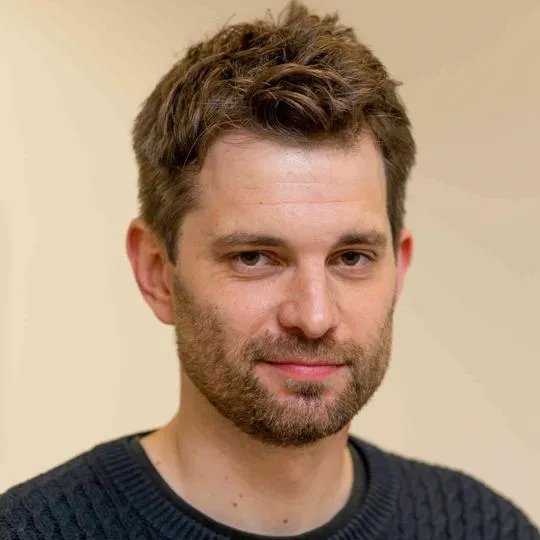
Ben Marsden is a Senior Lecturer in History of Science and Technology at the University of Aberdeen's School of Divinity, History, Philosophy and Art History, where he previously served as Head of the Department of History (2018-2023). His administrative roles include Deputy Head of School (2009-2011) and Director of the Centre for the History and Philosophy of Science, Technology and Medicine (2010-2011, 2012-present). Education includes: BA (MA) Hons in Mathematics, University of Cambridge (1987) Certificate of Advanced Study in Mathematics (MMath), University of Cambridge (1988) PhD in History, Philosophy and Social Relations of Science, University of Kent (1992) His research explores the cultural history of science and technology in 18th-19th century Britain, particularly engineering history, science-music relationships, and technological culture. He specializes in historical epistemology of engineering, urban knowledge production, and interdisciplinary studies bridging science with cultural practices. Current projects include a comprehensive biography of engineer W.J.M. Rankine. Publications demonstrate consistent focus on historical epistemology of engineering, Victorian scientific institutions, and technology's cultural impacts. Recent works examine mechanics philosophy, telecommunications history, and urban knowledge systems, showing methodological emphasis on material culture and institutional analysis. Awards and fellowships: British Academy Postdoctoral Fellow (1993-1995) Royal Society-British Academy Fellow in History of Science (1995-2000) Dibner Institute Senior Fellow at MIT/Harvard (2005-2006) He currently accepts PhD students in History and has led AHRC-funded projects on steamship cultural history. Collaborations include ongoing work with National Museum of Scotland. As editor of Notes & Records of the Royal Society (2015-2018), he shaped significant historical scholarship dissemination.
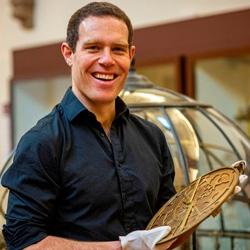
Seb Falk is a College Fellow and Research Fellow at Girton College, University of Cambridge, and a Senior Admissions Tutor. He holds academic roles including Praelector and Director of Studies for the Cambridge Foundation Year. His research focuses on medieval mathematical sciences, particularly astronomy, navigation, and the history of scientific instruments and texts. Falk earned a BA in History and Spanish from Oxford University, followed by an MPhil and PhD in History and Philosophy of Science from Cambridge. His research explores the interplay between religion, literature, and science in the Middle Ages, challenging the 'Dark Ages' narrative. Key projects include studies on late medieval astronomical tables and instruments, and a global comparative analysis of natural sciences around the year 1000. Falk has published widely, including the acclaimed book The Light Ages (2020), which was shortlisted for the Hughes Prize and awarded the Osterbrock Prize in 2025. His articles span topics like medieval astronomical practices, manuscript studies, and the cultural history of science. Falk is also a sought-after media contributor, appearing on BBC programs and podcasts, and has engaged in public outreach through lectures and museum collaborations.
Dr. Philip Kirby is a Senior Lecturer in the History of Education at King’s College London’s School of Education, Communication & Society. He joined in 2020 after roles at the University of Oxford, the Sutton Trust, and the University of Exeter. His research focuses on the historical and social dimensions of specific learning difficulties like dyslexia and dyspraxia, alongside children’s culture and education policy. His notable work includes Dyslexia: A History (2022, co-authored with Prof. Margaret J. Snowling) and entries in encyclopedias like Palgrave Encyclopedia of Disability . He also explores geopolitical themes in media, including film scores and video games. Recent projects include Delphi studies on dyslexia assessment and policy reform. His research spans education policy, private tuition dynamics, and the intersection of popular culture with disability ethics. He actively contributes to interdisciplinary initiatives like the Centre for Public Policy Research, addressing social justice in education and policy.
David De Roure is Professor of e-Research at the University of Oxford and Academic Director of both the Digital Scholarship initiative and the Laboratory for AI Security Research. He is also an Honorary Research Professor at the Royal Northern College of Music (RNCM), where he serves as Technical Director of the Centre for Practice & Research in Science & Music (PRiSM). His work bridges computer science, digital humanities, cybersecurity, and music through his distinctive interdisciplinary approach. De Roure received his PhD in 1990 supervised by David W Barron and Peter Henderson, with research in Lisp and distributed systems. Prior to joining Oxford in 2010, he was Professor of Computer Science at the University of Southampton and Director of the Centre for Pervasive Computing in the Environment. His career spans multiple institutions and research domains, reflecting his commitment to interdisciplinary work. De Roure's research focuses on new methods of digital scholarship, innovation in knowledge infrastructure, cybersecurity, and computational approaches to music. His work uniquely combines humanities (digital musicology), social sciences (social machines and web science), engineering (Internet of Things), and computer science (distributed systems, AI). A key theme is empowering human creativity through technology rather than replacing humans with AI. He emphasizes co-creation between humans and machines, particularly in music composition where he explores how algorithms can generate fragments for human assembly. His recent publications reveal a strong focus on AI security in IoT systems, digital scholarship methods, and the intersection of music with computational approaches. There's a clear trajectory from foundational work in social machines and web science toward current applications in cybersecurity and music-AI co-creation. His publications consistently bridge technical domains with humanistic inquiry, demonstrating his commitment to interdisciplinary scholarship that addresses real-world challenges. Fellow of the British Computer Society (FBCS) Fellow of the Institute of Mathematics and its Applications (FIMA) Fellow of the Royal Society of Arts (FRSA) Chartered IT Professional (CITP) Turing Fellow at The Alan Turing Institute (2018-2024) De Roure has co-founded three major interdisciplinary initiatives: PETRAS National Centre of Excellence for IoT Systems Cybersecurity (the world's largest socio-technical research center focused on IoT security), the Software Sustainability Institute (dedicated to improving research software), and PRiSM at RNCM. He was Director of the Oxford e-Research Centre from 2012-17 and has led numerous research projects including SOCIAM (The Theory and Practice of Social Machines), FAST (Fusing Audio and Semantic Technologies), and Transforming Musicology. The Laboratory for AI Security Research, which he directs, took its first PhD students in 2024. At Oxford, De Roure chairs the Digital Research Cluster at Wolfson College and oversees the Laboratory for AI Security Research. The PRiSM team at RNCM has produced numerous musical works and performances, including six premieres in New York in 2024. He has been involved in designing gesture recognition software used in many performances and has collaborated on public engagement projects including the Science Together project which released a Hip Hop album. His current work includes exploring Chladni Plates for new musical instrument design and developing algorithmically enhanced instruments.
Professor Stephen Broad is a musicologist and educator serving as Director of Research and Knowledge Exchange at the Royal Conservatoire of Scotland. He holds a DPhil from the University of Oxford and has extensive experience in historical musicology, music education, and policy development. His research focuses on Olivier Messiaen, 1930s French music culture, and music practice in Scotland. Broad has authored/co-authored influential reports like What’s Going On? , which informed the Scottish Youth Music Initiative, and chairs the European Platform for Artistic Research in Music (EPARM). Education: DPhil in Historical Musicology, University of Oxford (2001) MA in Music and Physics, University of Glasgow (1997) Research Interests: Historical Musicology: Messiaen’s early career, French musical traditions, and music historiography Music Education: Pedagogy in diverse contexts, policy development, and workforce training Practice-Based Research: Philosophical frameworks and interdisciplinary methodologies Awards & Roles: External Examiner at Royal Academy of Music, Royal College of Music, and others Editorial boards for Music Education Research and Practice-Based Research Journal Recipient of grants including the Scottish Government’s £1m Musical Instrument Fund Advising & Grants: Supervised over 10 doctoral projects in musicology, performance, and education Contributed to policy initiatives like Creative Scotland’s music development programs Labs/Teams: Leads the Sciences, Humanities and Arts Research Exchange (SHARE) and chairs EPARM, fostering international collaboration in artistic research.
Professor Andrew Kirkman holds the Peyton and Barber Chair of Music at the University of Birmingham's Department of Music. He leads the Centre for Early Music Performance and Research, directing the University Chamber Orchestra and professional ensemble The Binchois Consort. His roles include teaching Renaissance music, 1960s music studies, and supervising PhD topics ranging from post-communist Poland to late medieval music historiography. Research focuses on fifteenth-century sacred music’s cultural context, particularly the Mass Ordinary in late medieval Europe. His 2010 book The Cultural Life of the Early Polyphonic Mass and 2020 monograph on Saint-Omer’s music culture exemplify this. Recent work explores music-alabaster intersections and late-medieval liturgical practices. His recordings with The Binchois Consort earned Gramophone awards, including the 2017 'Early Music Recording of the Year.' Notable performances include Music for the Hundred Years' War (2017) and collaborations with pianist Clipper Erickson. Awards reflect both scholarly and performative excellence. Advising emphasizes late medieval/renaissance music, while grants supported research on Saint-Omer’s musical legacy. He co-founded The Binchois Consort in 1995, producing Hyperion recordings that revive rarely performed repertoires. His work bridges performance, scholarship, and interdisciplinary cultural studies.
Edward Nesbit is Senior Lecturer in Composition at King's College London's Department of Music within the Faculty of Arts & Humanities. He studied at Cambridge University, Guildhall School of Music and Drama, and King's College London under Julian Anderson and George Benjamin. His compositions are regularly performed by major ensembles including the London Sinfonietta, BBC Symphony Orchestra, and Philharmonia Orchestra at venues like Wigmore Hall and Royal Festival Hall. Research interests focus on: Contemporary choral and vocal composition techniques Integration of literary and dramatic elements in musical works Collaborative performance practices Community music engagement methodologies Recent compositions demonstrate diverse approaches to narrative storytelling through music, with frequent exploration of biblical/historical themes and nature-inspired programmatic elements. His work includes collaborations with the Choir of King's College London, resulting in commercial recordings on the Delphian label. Nesbit has secured funding including an AHRC Impact Acceleration Award for community music projects. He leads the 'Singing for Wellbeing' initiative developing choral repertoire for community engagement and directs composition studies at undergraduate/postgraduate levels.
Steve Waksman is the Leverhulme International Professor of Popular Music in the Department of Media, Humanities and the Arts, School of Arts and Humanities, University of Huddersfield, and a member of the Centre for Research in Music and its Technologies. A leading scholar of popular music, he is author or editor of numerous award-winning books and essays on the electric guitar, heavy metal, punk, live music and music technology. Education & Awards: Dissertation on the electric guitar awarded the 1998 Ralph Henry Gabriel Prize (American Studies Association) Woody Guthrie Prize (International Association for the Study of Popular Music, U.S. Chapter) Music in American Culture Award (American Musicological Society) Research Interests: Waksman’s work spans the history of musical instruments, intersections of music and technology, genre studies (with special attention to heavy metal and punk), live-music studies, sound studies, and the politics of race, gender, sexuality and identity in popular music from the nineteenth to the twenty-first centuries. He is currently initiating a major five-year Leverhulme-funded project on amplification technologies and amplified sound. Recent Publications: His recent outputs focus on the electric guitar’s cultural history and the broad sweep of American live music. These works collectively illuminate how instruments, genres, and performance spaces shape—and are shaped by—technological, social and economic forces. Grants & Projects: Leverhulme International Professorship Scheme: £5 million “Amplification Project” (2025–2030) Outreach & Media: Known as the “Doctor of Rock” on WRSI radio (The River, Western Massachusetts), Waksman regularly contributes historical segments for Black History Month and Women’s History Month. He has also participated in international public-engagement podcasts and press coverage concerning the electric guitar.
Julian Horton is Professor of Music Theory and Analysis at Durham University. His research focuses on analytical approaches to 19th-century instrumental music, with specializations in Bruckner, Brahms, sonata form theory, and tonal systems. Professor Horton's scholarly output examines structural and historical dimensions of Romantic repertoire, particularly investigating formal innovation in symphonic and concerto genres. His recent work develops new theoretical frameworks for understanding post-classical instrumental forms. His publications demonstrate consistent engagement with evolving analytical methodologies applied to canonical repertoire, with recent focus on violin concerti and theoretical examinations of musicological practice. Westrup Prize, Music and Letters Trust (2011) Corresponding Member, Society for Musicology in Ireland (2019) President, Society for Music Analysis (2014-2019) Professor Horton supervises doctoral research across analytical methodologies and historical repertoires, maintaining an active cohort of postgraduate students investigating diverse aspects of music theory and history.
Dr Andrew Killick is a Reader in Ethnomusicology at the University of Sheffield’s School of Languages, Arts and Societies, and Director of the MA in Traditional and World Music (distance learning). His research focuses on Korean traditional music, global notation systems, and world music analysis. He holds a BMus from the University of Edinburgh, an MA from the University of Hawaii, and a PhD from the University of Washington, with extensive fieldwork in Korea. His work emphasizes holistic musicological approaches, including the development of Global Notation , a universal music transcription system. He has published widely on topics such as Korean musical theatre (Ch’angguk), Hwang Byungki’s compositions, and cross-cultural musical analysis. Killick has supervised over 20 PhD students, covering diverse topics from Nigerian popular music to Cretan flute adaptations. Key research areas include ethnomusicological methodology, the interconnectedness of global musical traditions, and the role of notation in preserving cultural heritage. His recent projects explore how musical ideas spread through cultural contact and aim to challenge Eurocentric narratives in world music studies. Education: PhD in Music (Ethnomusicology), University of Washington, 1998 MA in Music (Ethnomusicology), University of Hawaii, 1990 BMus in Music, University of Edinburgh, 1984 Professional Roles: Co-editor, Yearbook for Traditional Music (2007–2010) President, Association for Korean Music Research (2000–2002) Notable Publications: Hwang Byungki: Traditional Music and the Contemporary Composer (2013) In Search of Korean Traditional Opera: Discourses of Ch’angguk (2010) Co-author of Garland Encyclopedia of World Music, Vol. 7: East Asia (2002) Labs/Initiatives: Founder of Global Notation , a project promoting culturally inclusive music transcription
Dr. Maria Witek is an Associate Professor at the Department of Music, University of Birmingham. Her research focuses on the psychology, cognitive neuroscience, and philosophy of musical experience, particularly rhythm, timing, emotion, and body-movement. She leads the Witek Lab, investigating how dance music experiences emerge from interactions between neural, social, and embodied processes. Notable projects include studying rhythmic skill in DJs (funded by AHRC) and ensemble synchronization in the ARME project (EPSRC-funded). She holds a DPhil from Oxford and previously worked at Aarhus University. Her methods span experimental psychology, neuroimaging, and participatory action research. Education: BA Musicology (Oslo, 2006), MA Music Psychology (Sheffield, 2008), DPhil Music (Oxford, 2013) Research interests include groove theory, disabled DJs' embodied timing, and the social dynamics of music-making. She collaborates with artists and tech companies like Drake Music and Native Instruments to develop inclusive musical tools. Articles focus on rhythmic entrainment, neurodiverse musical practices, and the neural basis of musical pleasure. Current grants include work on disability-inclusive DJ practices and virtual ensemble training systems.
Dr. John Hails is a Senior Lecturer and Reader in Music at Edinburgh Napier University , where he teaches aesthetics, music psychology, composition, and ethnomusicology. He holds a PhD in Music from Durham University (2008) and has trained under notable composers like Brian Ferneyhough and Richard Barrett. His research focuses on experimental composition, marginal musical practices, and interdisciplinary aesthetics. Educations: Bachelor’s and Master’s training at Durham University and University of Huddersfield PhD by Portfolio of Compositions (Durham University, 2008) Research Interests: John’s work explores unorthodox intonations, fixed media installations, and the intersection of composition with philosophy and ethnomusicology. He actively presents at international conferences on topics like post-structuralist critiques in music education and communal performance practices. Notable Works: His compositions have been performed by ensembles like the London Sinfonietta and broadcast on BBC Radio 3. Key pieces include enlightenment (microtonal trumpet and media) and Nine for ones in nine , reflecting his experimental approach. Awards & Grants: While no explicit awards are listed, his research is funded by Edinburgh Napier University. He is a core member of the Applied Music Research Centre . Supervision & Grants: He has supervised over 15 postgraduate projects, including PhDs on topics like Musical Cultures of Melanesia and Dialogical Music Systems . His supervisory roles span composition, ethnomusicology, and interdisciplinary studies. Labs/Teams: Active in the Applied Music Research Centre , focusing on creative practice and experimental music dissemination.