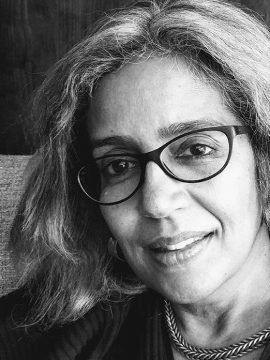
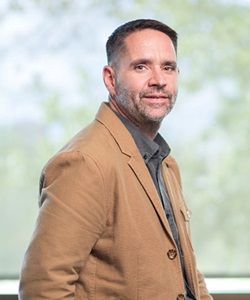
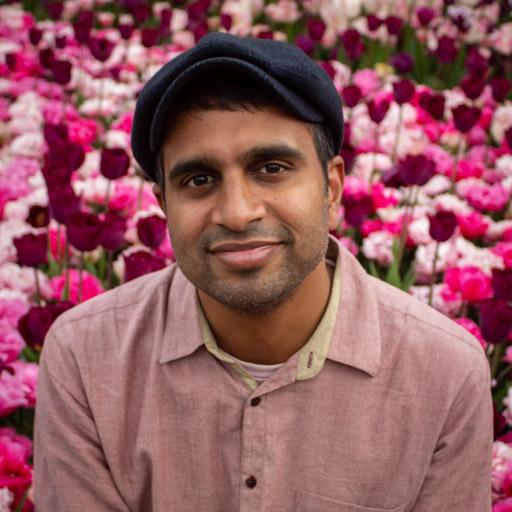
Kathryn Denning is an Associate Professor of Anthropology at York University, cross-appointed to Science and Technology Studies and History graduate programs. She earned her PhD from the University of Sheffield, and MA/BA from McMaster University. Currently on leave and not accepting new graduate students, her office is in Vari Hall 2036. Her research examines humanity's relationship with 'Others' through three primary lenses: the ancient (archaeology), the animal (zoos), and the alien (SETI/astrobiology). She investigates social and ethical implications of space exploration, Mars colonization ethics, and interstellar communication. Her work combines archaeological theory with contemporary scientific practice. Denning maintains active collaborations with NASA Astrobiology Institute and SETI Institute, co-leading projects on intelligence evolution and astrobiology ethics. She serves on multiple space research committees including the IAA SETI Permanent Study Group and co-chairs NASA's Astrobiology & Society Focus Group.
Dr. Natalie Coulter is Associate Professor of Communication and Media Studies at York University and Director of the Institute for Research on Digital Literacies. Her research examines youth media cultures, digital literacies, and the intersection of gender with consumer culture in children's media. Research Leadership: Directs the Institute for Research on Digital Literacies (IRDL) and co-founded the Girls’ Studies Research Network at York University. Serves on scientific committees for international conferences on children's consumption cultures. Publication Impact: Authored 'Tweening the Girl' (2014) examining the evolution of tween marketing, and co-edited 'Youth Mediations and Affective Relations' (2019). Recent work analyzes digital media's role in shaping youth identities and consumer behaviors. Teaching Expertise: Develops curriculum in communications, youth media studies, and critical technology studies. Supervises graduate research on digital cultures and media representations of childhood.
Clive Robertson is an Associate Professor in the Department of Art History and Art Conservation at Queen's University. Since 1972, he has worked as an artist, curator, critic, and historian, with a focus on Canadian and contemporary art post-1960, performance art, and cultural policy studies. His career spans decades of interdisciplinary practice, including founding roles in media art publishing initiatives like Voicespondence Audio Art Publishing and FUSE magazine. Education: MFA in Performance Art Studies (University of Reading, 1971), PhD in Communication Studies (Concordia University, 2006) Robertson’s research explores administrative logic in art production, social movement theory, and cultural policy. His current project, Living in our Sixties , is a documentary on artistic networks from the 1960s. His publications and curatorial work document avant-garde practices, Fluxus collaborations, and artist-run cultures. His academic and artistic contributions include organizing performance festivals, editing international art journals, and advising on cultural policy. He has held administrative roles such as Acting Head (2010–11) and Undergraduate Chair (2008–10) in the Department of Art History. His career bridges creative practice with critical analysis, emphasizing participatory and alternative art forms.
Timothy Compeau is an Assistant Professor of History at Huron University College, part of The University of Western Ontario in London, Ontario, Canada. His research focuses on the British Empire in the 18th and early 19th centuries, with particular emphasis on honor culture and loyalism during the Age of Revolutions. He is the author of Dishonored Americans: The Political Death of Loyalists in Revolutionary America (2023) and co-editor of Seeing the Past with Computers (2019). His work bridges historical scholarship with digital innovation, exploring how technology reshapes public engagement with the past. Education: Compeau holds an MA in Public History from Western University (2006). Professional Projects: He leads the Loyalist Migrations initiative with the United Empire Loyalists Association of Canada, tracing transnational movements of Loyalist families. He also directed the Gananoque Museum Collection restoration project (2006), revitalizing a neglected historical collection into an accessible archive. Teaching: He specializes in digital public history, offering courses on topics like virtual museums, digital genealogy, and ethics in historical representation. Research Interests: His current projects include a book on Loyalist migration networks from Connecticut to Upper Canada. He investigates how historical narratives are contested and constructed in digital spaces, emphasizing ethical practices in crowdsourcing and shared authority in public history. Museum Collaborations: Compeau's work with the Arthur Child Heritage Museum ensures artifacts from the Gananoque Collection are preserved and exhibited. His interdisciplinary approach combines archival research with technological innovation to make history accessible to broader audiences.
Lori Loeb is an Associate Professor at the University of Toronto, specializing in modern British social and cultural history within the Department of History. Her work intersects consumer culture, material culture, and gender studies, particularly focusing on Victorian Britain. PhD, University of Toronto Professor Loeb's research explores the interplay between advertising, women's roles, and societal norms in 19th-century Britain. Her current projects examine Victorian patent medicines and their marketing to female consumers, shedding light on historical intersections of health, commerce, and gender. Her seminal work, Consuming Angels: Advertising and Victorian Women (1994), established her expertise in analyzing advertising as a lens into gender dynamics. The publication reflects her broader interests in consumer behavior, cultural economies, and technological influences on society during the Victorian period.
Liye Xie is an Associate Professor in the Department of Anthropology at the University of Toronto Mississauga (UTM). She is an interdisciplinary anthropological archaeologist specializing in preindustrial technologies, with a focus on bone, stone, and earthen construction tools during China's Neolithic and Early Bronze Age. Ph.D., University of Arizona (2014) M.A., Institute of Archaeology, Chinese Academy of Social Sciences (2005) Her research explores the co-evolution of technology and society, including: Microwear analysis of prehistoric tools Architecture energetics (labor quantification in construction) Cultural transmission and technological traditions Sociopolitical transformation during urbanization Key trends in her recent publications (2006–2020) include experimental archaeology, quantitative analysis of labor systems, and interdisciplinary approaches to understanding technological choices in prehistoric China. She has contributed to journals like Journal of Archaeological Science and Proceedings of the National Academy of Sciences . Scientific awards include the Desmond Morton Research Excellence Award. She mentors graduate students in Chinese archaeology and advises on topics related to Neolithic urbanism, bone/stone tools, and labor management systems.
Dr. Cristie Ford is a Professor at the Peter A. Allard School of Law, University of British Columbia. She holds a B.A. from the University of Alberta, J.D. from the University of Victoria, LL.M. and J.S.D. from Columbia Law School. Her research focuses on administrative law, securities regulation, and regulatory governance, with particular emphasis on innovation’s impact on regulatory frameworks. She authored Innovation and the State: Finance, Regulation, and Justice (Cambridge, 2017) and co-authored Canadian Securities Regulation (5th ed., 2014). Recent publications include 'The Legal Innovation Sandbox' (2024) and 'Regulation as Respect' (2023). Professor Ford has served as Associate Dean for Research and the Legal Profession, advised national and international regulators, and lectured globally. Her work has been cited by the Supreme Court of Canada. She previously practiced law in Vancouver and New York, specializing in securities litigation at Davis Polk & Wardwell LLP. She holds non-practicing membership in the Law Societies of BC and New York. Her research interests include regulatory design, financial innovation, access to justice, and the governance of legal professions. She co-edits Regulation & Governance and sits on editorial boards for leading journals. Her interdisciplinary approach bridges legal theory and practical regulatory challenges, emphasizing adaptive frameworks to address innovation-driven regulatory complexities.
Dr. Kavita Philip is a Professor of English and President’s Excellence Chair in Network Cultures at the University of British Columbia (UBC), affiliated with the Faculty of Arts and Department of English Language and Literatures . She also serves as Co-Director of the Centre for Climate Justice and Advisory Board member for the Public Humanities Hub . Her work bridges humanities, science, and technology through interdisciplinary frameworks emphasizing climate justice, decolonial studies, and network cultures. Her research focuses on public humanities, postcolonial science studies, and the ethical dimensions of technology. Notable projects include collaborative work on climate justice, digital humanities, and initiatives like the Right to Feel podcast. She has received awards such as the President’s Excellence Chair (2020) and Public Humanities Fellowships (2021–2023). Dr. Philip’s teaching emphasizes collaborative learning and ethical engagement with marginalized knowledges. She co-leads grants like the STAIR Grant for STEM/Humanities collaboration and develops pedagogical toolkits for ethical community-based research. Her work centers on redistributive justice, accountability, and reimagining interdisciplinary networks to address global challenges like climate change and authoritarianism. Her Public Humanities Hub leadership highlights efforts to translate academic research into public dialogues, particularly with Indigenous communities and global climate migrants. She critiques colonial legacies in knowledge production and advocates for methodologies that prioritize marginalized voices and ecological justice.
Benoit Dostie is a Full Professor at HEC Montréal, specializing in Labor Economics and Applied Econometrics . He holds the Power Corporation of Canada Chair in the Dynamics of Labor Relations, Compensation and Benefits and is affiliated with CIRANO and IZA . Education: Ph.D. in economics from Cornell University Key Research: Immigrant-native earnings gaps, gender wage disparities, firm-sponsored training, productivity, and labor market policies Recent Work: Advanced econometric models to study innovation, workplace training, and demographic shifts in labor markets His 2025-2020 publications emphasize firm-level productivity , immigrant integration , and gender dynamics across sectors. He has advised 12 graduate students on topics like labor force participation, skill development, and productivity trends. Major scientific awards include Fellowships at CIRANO and IZA. His work informs Canadian policy on aging workforces, payroll taxes, and digital transformation.
Justin Longo is an Associate Professor at the Johnson Shoyama Graduate School of Public Policy (University of Regina campus) and Director of the Digital Governance Lab . His work bridges artificial intelligence , policy analytics , and digital governance , with a focus on the social implications of emerging technologies and transboundary environmental policy . He holds a PhD in Public Policy from the University of Victoria (2013). Key Roles : Cisco Research Chair in Digital Governance (2015-2020), Affiliate Member at the University of Victoria's School of Public Administration (2024-2025), and Fulbright Canada Visiting Scholar at UCLA Law's Institute for Technology, Law & Policy (2023). Research Themes : AI in public administration, digital policy tools, citizen science, and governance of Internet-of-Things (IoT) devices . His recent work includes generative AI for briefing note drafting and facial recognition regulation . His 15 most recent publications span AI governance (2025-2016), digital policy tools (2024), collaborative platforms (2018), and health policy analytics (2021). Notable awards include the Fulbright Canada Visiting Scholar Program (2023) and the Sylvia Ostry Prize in Public Policy (2011). Grants : Over CAD 1.2 million in competitive funding, including SSHRC, SHRF, and MacArthur Foundation support. Teaching : Courses in Digital Governance , Policy Analytics , and Strategic Management , with a focus on generative AI applications in public administration education. Service : Advisor to SSHRC, reviewer for journals like Canadian Public Administration , and organizer of national student case competitions.
Paul Norman serves as an Adjunct Professor specializing in Imaging & Documentation within the Department of Art History and Art Conservation at Queen's University's Faculty of Arts and Science. His work integrates technical imaging methodologies with art conservation practices. His research focuses on Art Conservation and Imaging Science , with particular emphasis on documentation techniques for cultural heritage preservation. Norman applies advanced imaging technologies to analyze and record artworks, ensuring accurate historical documentation while supporting conservation efforts. His interdisciplinary approach bridges technical imaging with art historical scholarship. Within the Department of Art History and Art Conservation, Norman contributes expertise in imaging documentation systems that enhance artifact preservation protocols. His work supports the department's mission to advance conservation science through technological innovation while maintaining rigorous scholarly standards in art historical research.
Stephen Yeager is a Professor in the Department of English at Concordia University, specializing in interdisciplinary research at the intersection of medieval studies, manuscript culture, and digital humanities. His work spans Indigenous studies, media archaeology, and videogame analysis. Research Interests: Medieval studies, law & literature, Indigenous studies, digital culture, media archaeology Teaching: Courses on Tolkien's Old English, the Viking Age, virtual medieval worlds, medieval literature in translation, and videogames as literature Supervision: Accepts graduate students in English (MA), Individualized Programs (MA/MSc), English Literature (PhD), Humanities (PhD), and Individualized Programs (PhD) Yeager's recent publications explore medievalism in digital media, Indigenous perspectives in medieval studies, and critical editions of pre-modern texts. His work redefines traditional medieval scholarship through contemporary frameworks like media ecologies and digital humanities. He engages in public humanities initiatives and critiques colonial legacies in medievalist scholarship. His teaching emphasizes the relevance of medieval literature to modern digital and cultural practices.
Dr. Vijay Kolinjivadi is an Assistant Professor in Sustainable and Equitable Economies at Concordia University's School of Community and Public Affairs, cross-appointed with the Department of Geography, Planning, and Environment. His work critically examines the intersections of political ecology, environmental economics, and social justice, focusing on payments for ecosystem services (PES), the political economy of greening interventions, and the temporal dimensions of ecological crises. PhD in Ecological Economics (McGill University, 2015) MSc in Environmental Policy and Regulation (London School of Economics, 2009) BSc in Ecology (University of Edinburgh, 2006) His research interrogates dominant environmental policy frameworks like the UN Sustainable Development Goals through dialectical and Marxist ecology lenses, emphasizing socio-cultural justice and the recognition of racialized/gendered labor in conservation projects. He also investigates how urban greening initiatives get commodified as investable assets. Recent publications analyze the European Green Deal as imperialist agenda, critique the 'McDonaldization' of conservation practices, and explore how temporal frameworks shape ecological crisis narratives. He co-edits the political ecology blog Uneven Earth and contributes to the Earth Negotiations Bulletin. His work reveals tensions between neoliberal environmental governance and grassroots resistance movements, particularly in contexts involving biodiversity offsets, carbon markets, and climate justice struggles. As team leader consultant for the International Institute for Sustainable Development's Earth Negotiations Bulletin, he documents global environmental negotiations while advocating for decolonial and care-driven academic practices.
Erin Siostrom is an Associate Lecturer in Science Education at the University of the Sunshine Coast, where she has been teaching since 2019. She is also a doctoral candidate in Teacher Education and Leadership at Queensland University of Technology. Education: Master of Education from Queensland University of Technology (2014) Bachelor of Science in Biology from University of the Sunshine Coast (2010) Bachelor of Education (Secondary) from University of the Sunshine Coast (2010) Siostrom's research focuses on science education, teacher education, and education policy. Her work examines the experiences of career-change teachers, disciplinary expertise in primary science and mathematics education, and the historical development of primary specialization in Australian education policy. She investigates why professionals transition to teaching mid-career, the challenges they face, and how educational institutions can better support these transitions. Her publications demonstrate a strong interdisciplinary approach spanning teacher education research and science communication. Her work shows particular interest in how disciplinary knowledge intersects with teaching practice, especially in primary science education, while also addressing broader issues in educational policy and practice. Her research has been published in reputable education journals including Teaching and Teacher Education and the Australian Educational Researcher, contributing valuable insights for educational policymakers and teacher preparation programs. As a doctoral candidate at Queensland University of Technology, Siostrom is actively contributing to the field of teacher education research. Her work on career-change teachers provides practical insights for addressing teacher shortages in Australia, particularly regarding recruitment and retention strategies for mid-career entrants to teaching.
Thomas A. DuBois is the Halls-Bascom Professor of Scandinavian Studies, Folklore, and Religious Studies in the Department of German, Nordic and Slavic at the University of Wisconsin-Madison. His academic work bridges multiple disciplines including Nordic studies, folklore studies, and religious studies, with a particular focus on Indigenous and traditional knowledge systems. He is deeply engaged in the Wisconsin Idea, connecting academic scholarship with public engagement and community collaboration. Professor DuBois's research focuses on the ways people think about and use tradition in their lives, with particular attention to Finnish, Sámi, and medieval Nordic cultures, as well as Indigenous Wisconsin communities and descendants of Nordic settlers in North America and the British Isles. His work spans diverse topics including the Finnish national epic Kalevala, Viking Age religion, medieval Scandinavian saints' lives, Icelandic sagas, lyric and narrative song, shamanism, literature, wood carving, Indigenous cultures, sacral landscapes, and Sámi media. He approaches folklore not as static heritage but as a dynamic process of meaning-making that connects people to their cultural pasts while shaping their contemporary identities. His recent publications reveal a growing interest in collaborative methodologies, Indigenous knowledge systems, and the intersection of traditional knowledge with contemporary educational practices. DuBois has increasingly focused on projects that bridge academic research with community engagement, particularly through digital tools like Siftr that facilitate participatory folklore collection. His work on Sámi snow terminology demonstrates how traditional ecological knowledge can transform contemporary understandings of environmental phenomena. Chancellor's Distinguished Teaching Award (2017) Professor DuBois emphasizes a "learning with" rather than "learning from" approach to teaching, particularly with graduate students and advanced undergraduates. He frequently collaborates with students on research projects that result in shared publications and presentations. His work with the Bradley Learning Community brings academic scholarship into residential living communities for first-year students. DuBois has secured numerous grants supporting his collaborative research projects, particularly those involving Indigenous communities and digital humanities applications in folklore studies. His research projects include the Wiigwaasi-Jiimaan Birchbark Canoe project, the Snow Challenge exploring Sámi snow terminology, The 4 Ps project on Finnish American cooking traditions, and the development of Siftr as a tool for the folklore classroom. These projects often involve collaborations with community members, students, and other scholars, reflecting his commitment to engaged scholarship that serves both academic and public audiences.